Oxalic acid vaporizer cleaning and maintenance guide
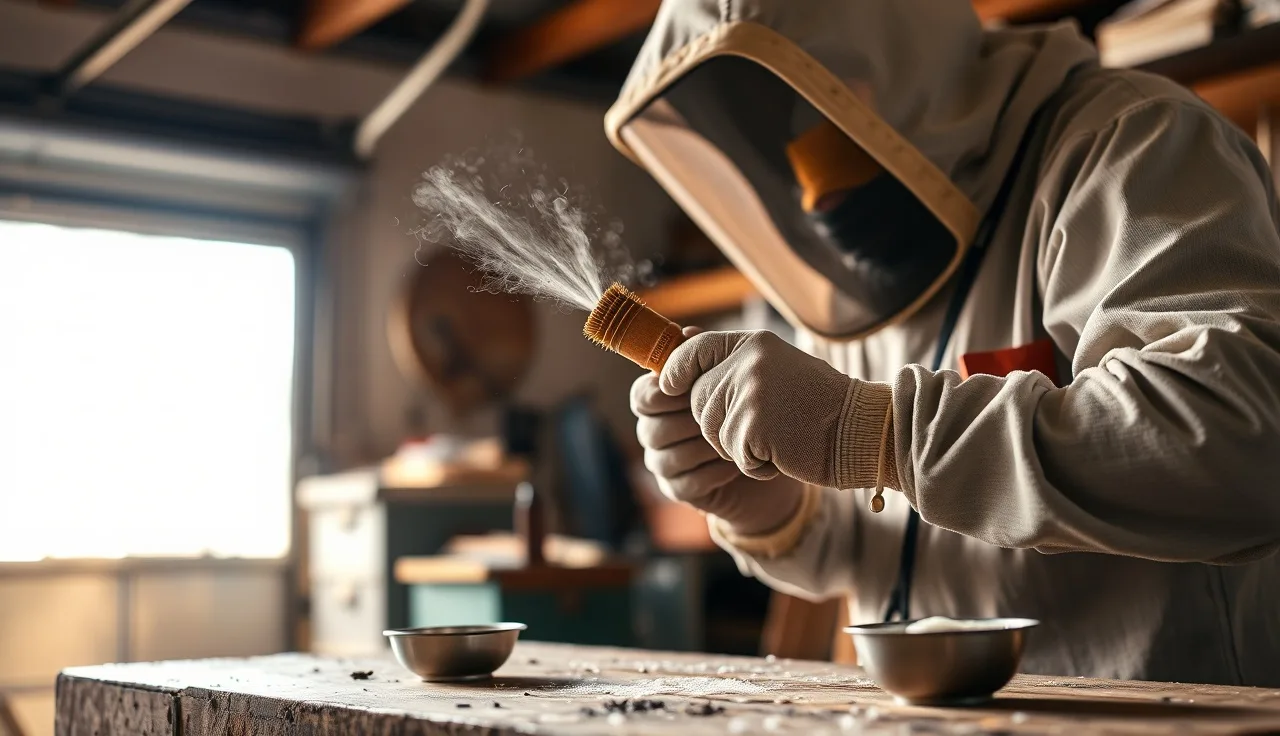
TL;DR
- Oxalic acid residue builds on vaporizer pans and wands after every session.
- Left alone, it corrodes metal, throws off your dose, and clogs the heating element.
- Dry-brush and damp-wipe the pan after each use, descale with baking soda paste monthly during treatment season, inspect the wiring before every use, and store the unit bone dry in a sealed bag.
Why does an oxalic acid vaporizer need regular cleaning?
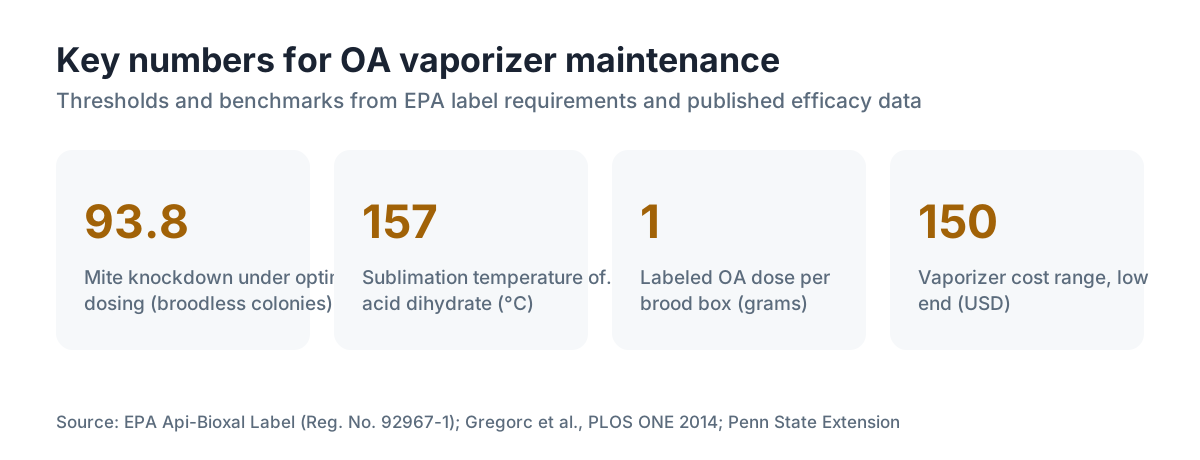
Oxalic acid dihydrate sublimates near 157°C, but the pan never converts every crystal cleanly [8]. A thin white crust of unreacted and re-condensed acid builds on the heating surface, the wand, and the pan lip after every session. Sounds trivial. It isn't.
Residual oxalic acid is hygroscopic. It pulls moisture straight out of the air. On an aluminum or stainless pan, that damp acid film eats the metal slowly. On the wand, it grows into a rough, uneven deposit that changes how fast the pan heats and how evenly the acid sublimates. Uneven sublimation means an uneven dose. You might deliver 80% of the labeled amount into one hive and 120% into the next, which matters for both efficacy and for keeping bee exposure inside safe bounds [2].
Buildup does more than skew your dose. A clogged element runs hotter to push heat through the crust, and that heat kills the element early. A decent vaporizer costs $150 to $300 depending on the model. Cleaning it is the cheapest equipment insurance you own.
What safety gear do you need before cleaning an OA vaporizer?
Same PPE you wore during treatment. Residue on a used pan is milder than fresh vapor, but it still irritates your eyes, nose, and lungs. The EPA Api-Bioxal label requires nitrile or rubber gloves and goggles for handling the acid in any form [4]. Add a fitted N95 or, better, a P100 half-face respirator when you scrub dry crust, because fine particles go airborne the second your brush touches them [9].
Work outside or somewhere with real airflow. Don't clean the thing over your kitchen sink. Rinse water carries dissolved oxalic acid, so it belongs on soil away from ponds, streams, and wells, not down a household drain in any quantity.
Cool and unplugged before you touch it. That sounds obvious. The heating pan holds heat far longer than people expect, easily 10 to 15 minutes after the session ends. Press the underside of the pan and confirm it's cool before you handle anything.
How do you clean an oxalic acid vaporizer after each use?
The after-session clean is quick, and it should happen the same day you treat, before the residue sets overnight.
Let the unit cool all the way down. Carry it outside or to your cleaning spot. Grab a stiff brush (a dedicated brass or nylon parts brush is ideal, never steel bristles on an aluminum pan because they scratch and speed up corrosion) and dry-brush loose crystals off the pan and wand tip first. That powder goes in the trash, sealed, not down the drain.
Now wipe the pan with a damp cloth or paper towel. Don't soak it. Most vaporizers aren't sealed against water at the wiring connections, and moisture in those joints starts a whole separate set of problems. A damp wipe handles routine sessions.
If crust remains, mix a thin paste of baking soda and water. Sodium bicarbonate neutralizes the acid on contact. Brush the paste onto the crust with an old toothbrush, let it sit two minutes, then wipe clean with a damp cloth. Follow with a barely damp wipe of the whole pan surface, then dry it completely with a clean towel before storage.
Wipe the wand exterior the same way. Keep moisture out of the insertion end where the heating element meets the wiring.
How often should you do a deep descaling clean?
Once a month during active treatment season, or after every 15 to 20 sessions, whichever comes first. Run a sideliner operation treating 50 to 100 colonies through a fall oxalic round and the monthly clock will beat the session count.
For a deep clean, soak the pan (if it's removable and the manual allows it) in warm water and baking soda for 10 to 15 minutes. About one tablespoon of baking soda per cup of warm water is a workable ratio. The fizzing is CO2 coming off as the acid neutralizes. When it stops fizzing, the reaction is done. Scrub with a nylon brush, rinse with clean water, dry thoroughly.
Can't remove the pan? Work the baking soda paste in place, scrub, and wipe with damp cloths until the cloth comes back white-free. Then run the vaporizer empty (no acid) for one full heating cycle to drive off any leftover moisture before you store it or use it again.
The Honey Bee Health Coalition's Varroa Management Guide covers general oxalic acid handling if you want a broader safety reference [5].
What parts of the vaporizer should you inspect for wear?
Cleaning is your inspection. Every time you clean, run this check.
Heating element and pan: look for pitting, cracking, or warping. Light discoloration is fine. Deep pits or visible cracks mean the pan needs replacing before your next session. A cracked pan can fail mid-treatment and throw off the temperature in ways you can't predict.
Wiring and connectors: check where the leads meet the wand and where the alligator clips or power connector sit at the other end. Oxalic acid vapor travels back along the wand during treatment and reaches the insulation. Watch for brittle, cracked, or discolored insulation. Bare copper means the wire gets replaced before the vaporizer touches a hive again.
Seal and gasket (if your unit has one): some vaporizers use a gasket around the entrance insert to keep vapor from leaking. Check it for brittleness or deformation. A bad seal lets vapor escape, which drops efficacy and raises your own exposure.
Thermocouples or temperature indicators: higher-end units carry a thermocouple to confirm pan temperature. Keep the probe tip free of residue. A coated tip reads low and can trick you into overheating the pan.
Sourcing replacement parts is covered in the beekeeping supply companies guide.
How do you store an oxalic acid vaporizer between treatment seasons?
Long storage needs a little more work than the after-session wipe.
After your last deep clean of the season, run the vaporizer empty for one full heating cycle so any moisture leaves the element and wand. Let it cool all the way. Then seal it in a zip-close bag or an airtight container. The point is keeping humid air off the metal for months.
Store the vaporizer and any leftover oxalic acid apart. The acid stays in its original labeled container, in a locked cabinet away from children and pets, per the EPA label [4]. Don't bag loose acid with the vaporizer, and don't park an open acid container nearby.
Running a 12V battery-powered unit? Disconnect the battery before storage. Store it separately, on a maintenance charger if it's lead-acid. A lead-acid battery left deeply discharged all winter is usually dead by spring.
Before the first use of the new season, do a full visual inspection (wiring, pan, connectors), run one empty heat cycle to confirm it reaches temperature, and check that your PPE is still in good shape.
What happens if you skip cleaning? What are the real consequences?
Corrosion and an inconsistent dose are the headline problems, and they set off a chain reaction.
Buildup on the pan changes its thermal mass. The element works harder to push heat through the crust, pulls more current from your battery, and runs hotter than it was built to run. That shortens element life, sometimes hard. The beekeepers reporting a dead element after one season are often the same ones who admit they never cleaned the pan.
Uneven sublimation hurts treatment outcomes. Oxalic acid vaporization is often cited at 90%-plus mite knockdown under broodless conditions, but that number assumes a correct dose [6]. A partially clogged pan spreading vapor unevenly won't hit it reliably.
There's a regulatory angle too. The EPA-registered Api-Bioxal label (the primary oxalic acid product registered in the US) calls for using equipment according to its instructions [4]. Running a degraded vaporizer that can't deliver the labeled dose is technically out of step with the label, even if nobody's checking.
Skipping the clean saves nothing. It shifts the cost from 10 minutes now to a new heating element, a blown treatment, and a mite-loaded colony later.
Can you use commercial descalers or vinegar to clean an OA vaporizer?
Short answer: stick with baking soda paste and water.
Vinegar is a mild acid itself (acetic acid, usually around 5%). Using an acid to neutralize an acid residue makes little chemical sense, and it leaves its own film that can mess with clean sublimation. Some beekeepers swear by it. The chemistry doesn't back them up.
Commercial descalers built for kettles and coffee machines often run on citric acid or something stronger. Same problem. They can also leave surfactant residues that volatilize the moment you heat the pan, sending compounds you don't want into a hive.
Baking soda (sodium bicarbonate) is the right call because the neutralization byproducts are water, CO2, and sodium oxalate. Sodium oxalate doesn't volatilize and wipes off cleanly with water. No mystery residues, no off-gassing on the next heat cycle.
Got stubborn hard-water mineral scale (separate from oxalic crust)? A brief soak in distilled white vinegar is fine on the pan only, followed by a thorough baking soda neutralization rinse and complete drying before use. That's a rare edge case, not routine maintenance.
How do you safely dispose of cleaning residue and contaminated materials?
As Api-Bioxal, oxalic acid is a registered pesticide, and the EPA label governs disposal [4]. For the small amounts a home cleanup generates:
Dry brushed-off crystals plus the paper towels or cloths you used go in household trash, inside a sealed plastic bag. Don't compost them. The quantities from routine vaporizer cleaning are small enough that ordinary solid waste disposal fits the label's guidance for small amounts of rinsate.
Rinse water (baking soda mixed with the acid residue) can go on bare ground, away from water bodies, vegetable gardens, and places kids and pets use. Spread it out. Don't dump it all in one spot.
Used nitrile gloves go in the trash. If your gloves are reusable rubber, rinse them with a water-and-baking-soda solution before you take them off.
Never pour a large volume of oxalic acid solution (a mixing error, or leftover treatment mix) down a storm drain. For real volume, call your local household hazardous waste program and follow their instructions.
How does vaporizer maintenance affect varroa treatment efficacy?
This is where equipment care meets actual bee health, so here's the honest version: yes, a dirty vaporizer measurably changes your results, but the published research on exactly how much is thin. The closest data comes from studies on OA dosing accuracy in general [6][7].
A 2014 study in PLOS ONE reported that oxalic acid vaporization hit 93.8% mite mortality in broodless colonies under optimal conditions [6]. "Optimal conditions" bakes in a correct dose from equipment working as designed. Nobody has run a controlled trial on degraded equipment, so there's no clean number for the efficacy drop off a dirty pan. The truth is we don't know the exact figure, but the mechanism for a decline is well understood.
For how mite biology and brood timing shape chemical efficacy, the varroa mite page covers the parasite's life cycle.
The takeaway is simple. Clean equipment is the baseline the label and the research literature assume. If your treatments aren't hitting the mite counts you expect, equipment condition is one of the first variables to rule out.
VarroaVault's free treatment protocol tools include checklists that prompt you to log vaporizer condition before each session, so degradation gets caught before it costs you a treatment.
What's a practical maintenance schedule for the whole treatment season?
Here's a full season for a hobbyist running 5 to 20 hives, or a sideliner running up to 150 colonies.
| Timing | Task |
|---|---|
| Before first use each season | Full visual inspection: wiring, pan, connectors, gaskets. One empty heat cycle to confirm function. Check PPE. |
| After every use | Cool completely. Dry-brush loose crystals. Damp wipe pan and wand exterior. Dry completely before storing. |
| Monthly during treatment season | Deep baking soda descale. Inspect pan surface for pitting or cracking. Check wiring insulation. |
| Mid-season (if treating spring and fall) | Run one empty heat cycle before the new treatment round to confirm even heating. |
| End of season | Deep clean. Empty heat cycle to drive off moisture. Full inspection. Store in sealed bag or container. Disconnect battery. |
| Before next season | Repeat pre-season inspection. Replace any worn parts before you need the unit urgently. |
Sourcing replacement pans, wands, or accessories is covered in the beekeeping supplies overview.
Sideline operations with dozens of colonies should keep a spare pan on hand. Waiting on a shipped part while 80 colonies sit in a broodless window is a bad place to be.
Are there differences in cleaning requirements between vaporizer models?
Yes, and the manufacturer's manual beats generic advice whenever the two disagree. Most hobby-grade OA vaporizers sold in the US fall into a few types.
Basic wand vaporizers (Varrox-style and similar designs): a single stainless or aluminum pan on a heated wand, powered by a 12V battery through alligator clips. Easiest to clean because the pan sits out in the open. Some have removable pans, many don't. Check your manual.
Gas or propane models: uncommon in the US, more common in Europe. Same cleaning principle, but the flame adds a combustion residue variable. Follow the maker's stated pan-cleaning intervals.
Electric cabinet vaporizers (built to treat multiple hives in sequence inside a sealed chamber): these often route vapor through internal pathways that trap residue. The manufacturer's cleaning protocol carries more weight here. Don't crack open the sealed chamber unless the manual spells out the procedure.
One rule for every model: if the manufacturer's cleaning schedule is less frequent than what's here, follow the more frequent one. Equipment companies often write their baseline for a once-a-year hobbyist and don't account for high-use sideliner work.
Frequently asked questions
How often should I clean my oxalic acid vaporizer?
Wipe it down after every single use, before the residue hardens. Do a full baking soda descale once a month during treatment season or after every 15 to 20 sessions. Do a thorough clean before long-term storage. Skipping the after-session wipe is exactly what creates the stubborn buildup that later needs aggressive descaling.
Can oxalic acid residue on the vaporizer harm my bees?
Residue on the pan doesn't transfer to bees directly, but it changes sublimation consistency. A crust-covered pan delivers uneven doses. If the pan runs hot to push heat through the buildup, the vaporized amount per session can exceed the labeled rate. The Api-Bioxal label specifies 1 gram of oxalic acid per brood box. Equipment that can't deliver that consistently undermines efficacy and your safety margin.
What's the best cleaner to use on an OA vaporizer pan?
Baking soda paste mixed with a little water. It neutralizes oxalic acid on contact, and the byproducts (water, CO2, sodium oxalate) wipe away cleanly with no residue that off-gasses on the next heat cycle. Skip commercial descalers, vinegar, and bleach. They either leave their own films or fail to neutralize the acid chemistry.
How do I know if my vaporizer heating element needs to be replaced?
Watch for these signs: the pan takes noticeably longer to reach sublimation temperature, the surface shows pitting or cracking, the unit draws unusually high current, or you smell burning or see arcing at the connections. A visibly cracked or deeply corroded pan gets replaced before the next treatment. Running an empty heat cycle and watching for even heating across the pan is a useful pre-season check.
Do I need to clean the vaporizer wand as well as the pan?
Yes. The wand exterior collects oxalic acid condensate during treatment, especially near the hive entrance where vapor cools. Wipe it with a damp cloth after each use. Pay attention to the section near the pan connection and the entrance insert tip. Keep moisture away from the wiring end of the wand, since water in that electrical connection causes corrosion.
Is it safe to clean the vaporizer indoors?
Avoid it. Dry-brushing oxalic acid crust throws fine particles that irritate your lungs. Even with a respirator, indoor cleaning drops those particles onto your surfaces. Work outside or in a garage with the door open. If you have no choice but to clean indoors, wear a P100 half-face respirator, open the windows, and clean over a surface you can wipe down afterward.
How should I store my OA vaporizer during winter?
After a full end-of-season clean and a dry heat cycle to pull out moisture, seal the unit in a zip-close bag or airtight container. That keeps humid winter air off the metal. Disconnect the battery and store it separately. Keep the unit and any oxalic acid supply in different places. A locked cabinet for the acid, per EPA label requirements, is mandatory.
Can I put vaporizer parts in the dishwasher to clean them?
No. Dishwashers use heat, caustic detergents, and steam that damage electrical components, degrade seals, and warp aluminum pans. Even a removable pan corrodes faster after repeated dishwasher cycles. Stick with hand cleaning: a brush, baking soda paste, and minimal water. Five minutes of careful hand-cleaning beats a machine wash every time.
What should I do if oxalic acid residue gets on my skin during cleaning?
Flush immediately with large amounts of water for 15 to 20 minutes. Oxalic acid irritates skin and mucous membranes. Remove any contaminated clothing. If irritation continues after flushing, get medical attention and bring the product label. The Api-Bioxal label lists first aid steps and the manufacturer emergency contact. Keep gloves on for the whole job so you never reach this point.
Does treating with oxalic acid more frequently require more frequent vaporizer cleaning?
Yes, directly. Every session leaves residue. Run extended oxalic acid programs across multiple splits, or treat at shorter intervals during an outbreak, and you'll hit the monthly deep-clean threshold on session count rather than calendar time. Track your sessions. After 15 to 20 uses, do the full descale no matter how little calendar time has passed.
How do I clean a vaporizer that's been sitting dirty for months?
Soak the pan (if removable) in warm baking soda solution, one tablespoon per cup of water, for 15 to 20 minutes. Scrub with a nylon brush. Repeat if needed. For a non-removable pan, apply thick baking soda paste, let it sit 10 minutes, scrub, and wipe until no white shows on the cloth. Inspect the wiring closely afterward for corrosion from the long exposure. Run an empty heat cycle before using it on bees.
Can I use the same brush I use for OA vaporizer cleaning for other hive tasks?
Keep the brush for vaporizer cleaning only. Leftover oxalic crystals can transfer from the brush to frames or other tools. Label it and store it with the vaporizer. A cheap brass parts brush or stiff nylon brush from a hardware store costs under $5 and lasts a full season. Keep it in the sealed bag with the unit.
Does vaporizer maintenance affect whether my treatment is considered label-compliant?
The Api-Bioxal EPA label requires approved equipment and adherence to application rates. A degraded vaporizer that can't reliably deliver the specified 1 gram of oxalic acid per brood chamber falls out of step with those requirements, even if the equipment itself is approved. Keeping equipment in working order is part of label compliance, more than a nicety.
Sources
- EPA, Api-Bioxal Oxalic Acid Dihydrate Product Label (EPA Reg. No. 92967-1): Api-Bioxal is the EPA-registered oxalic acid product for varroa treatment in the US; label specifies equipment use and application rates
- Honey Bee Health Coalition, Tools for Varroa Management Guide: Consistent dosing from properly functioning equipment is a baseline assumption in OA vaporization efficacy guidance
- EPA, Pesticide Label Requirements for Api-Bioxal (EPA Reg. No. 92967-1): EPA label requires nitrile or rubber gloves and goggles for handling oxalic acid in any form; specifies locked storage away from children and pets
- Honey Bee Health Coalition, Varroa Management Guide (6th edition): HBHC provides oxalic acid handling and treatment protocols referenced by beekeeping practitioners
- Gregorc A. et al., PLOS ONE 2014, Oxalic acid treatment efficacy in broodless colonies: Oxalic acid vaporization achieved 93.8% mite mortality in broodless colonies under optimal dosing conditions
- Underwood R. and Currie R., Pennsylvania State University, Oxalic Acid for Varroa Control: Dosing accuracy from functioning vaporization equipment is a key variable in OA treatment outcome consistency
- UC Davis Honey Bee Research Facility, Varroa Mite Treatment Options: OA vaporization sublimation temperature is approximately 157°C; incomplete sublimation produces residue accumulation on heating surfaces
- Oregon State University Extension, Managing Varroa Mites in Honey Bee Colonies: Proper PPE including N95 or better respirator is required when handling or cleaning up oxalic acid residue in any form
- USDA Agricultural Research Service, Varroa destructor Management and Bee Health: Treatment efficacy against varroa is dependent on correct application rates; equipment condition is an assumed variable in registered product efficacy
Last updated 2026-07-09