Problems caused by using formic acid for bee mites
TL;DR
- Formic acid (Mite Away Quick Strips and Api-Bioxal gel) is one of the few treatments that kills mites under cappings.
- It costs you something for that reach: queen loss of 5 to 15 percent in some trials, dead open brood above 85 degrees F, skin and lung hazards for you, and a narrow safe-use window.
- Knowing the failure modes before you apply separates a clean knock-down from a dead colony.
What is formic acid and how does it work against varroa?
Formic acid is an organic acid that occurs naturally in bee venom and many plants. Inside the hive it works by volatilizing into a vapor, passing through wax cappings, and hitting mites sealed in brood cells. That penetrating vapor is the whole reason beekeepers tolerate its downsides. Most other treatments, oxalic acid included, only kill phoretic mites riding on adult bees. Formic acid reaches the reproductive mites hiding inside a capped cell.
Two EPA-registered formic acid products carry U.S. labels for varroa in honey bee colonies. Mite Away Quick Strips (MAQS) run a 7-day treatment at 68.2 percent formic acid per strip. Api-Bioxal formic acid gel is the other. The MAQS registration is No. 83923-1 [1]. Read the current label every time. Application instructions and temperature limits are legal use conditions, not friendly advice.
The thing that makes formic acid work is the same thing that makes it dangerous to bees and to you. It does not stay where you put it like a contact acaricide. It fills the whole hive as vapor, and the dose any bee, queen, or brood cell absorbs rides on ambient temperature, colony size, ventilation, and how tight the box is. That variability drives nearly every problem below.
Does formic acid kill queens? How often does queen loss happen?
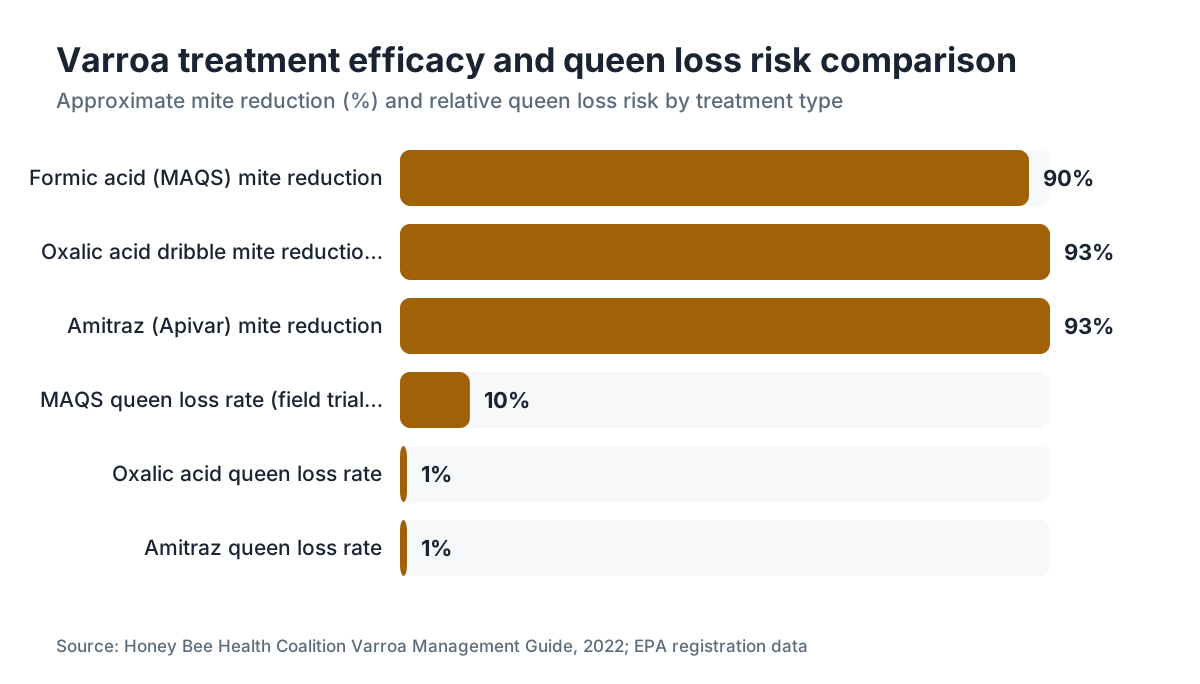
Yes, formic acid kills queens, and it happens often enough to plan for. Queen loss is the number one complaint beekeepers have, and the data backs the worry. Peer-reviewed field trials and the Honey Bee Health Coalition's Varroa management guide put queen loss from formic acid at roughly 5 percent to over 15 percent, depending on method, temperature, and hive setup [2][3].
MAQS trials reported to the EPA at registration showed queen mortality around 8 to 10 percent in some treatment groups, against less than 2 percent in untreated controls [1]. That gap is real. Run 20 hives, apply MAQS, and expect to lose one or two queens. That is not a fringe outcome.
Why does the queen die? The likeliest reason is position. The queen works the center of the brood nest, low in the colony, right above where most strips or pads sit. Vapor is thickest near the source and near the bottom of the cluster, and she spends her day laying in exactly that zone. Some queens look fine right after treatment, then fail to resume normal laying 10 to 14 days later. That pattern points to sublethal damage to her reproductive system rather than an outright kill.
Cutting the risk comes down to a few moves. Treat in the cooler part of the approved range. The MAQS label sets ambient temperatures between 50 and 85 degrees F [1]. Skip peak summer heat even if a cool morning dips into range for an hour. Consider splitting the two-strip dose into one strip at a time over a longer window, which some university extension trials say lowers queen loss without gutting mite kill [4]. And inspect for a live queen and fresh eggs 14 to 21 days after any formic acid treatment.
What does formic acid do to bee brood?
At treatment strength, formic acid kills open brood. Larvae in uncapped cells have no wax barrier, and nurse bees drenched in high-vapor air feed them directly, so open larvae take the worst of it. Capped pupae fare better.
The Honey Bee Health Coalition treats some brood damage as an expected side effect, worst for open larvae near the vapor source [3]. On the comb this looks like spotty patterns a few days after a MAQS application, with sunken or discolored cells where larvae died. New beekeepers sometimes read it as European foulbrood or sacbrood and panic.
Most of that damage is temporary. A healthy queen and a strong nurse force refill the empty cells within one or two brood cycles, about 21 days, and the real population hit is often milder than the comb suggests right after treatment. The dangerous version is brood damage stacked on top of queen loss. Lose the queen and open a big brood gap at the same time, and the colony can crash faster than it can rebuild before winter or the next flow.
Heat makes the brood damage far worse. Above 85 degrees F, formic acid volatilizes much faster than intended, and the vapor spike can wipe out large amounts of open brood and drive queen loss up hard [1]. The 85-degree ceiling on the MAQS label is not there for the bees' comfort. It is a hard line drawn from efficacy and safety data.
What are the temperature limits for using formic acid, and why do they matter?
Temperature is the one variable that decides most formic acid outcomes, and getting it wrong is the most common way beekeepers wreck a colony. The MAQS label sets a daytime high range of 50 to 85 degrees F (10 to 29.4 C) for the full two-strip application [1].
Below 50 degrees F the acid does not volatilize fast enough to reach mite-killing concentrations in the brood nest, and efficacy falls off. Above 85 degrees F it volatilizes too fast, vapor climbs past what bees can take, and queen loss and brood kill spike.
The practical bind is that plenty of beekeepers live where summer regularly clears 85 degrees F during the exact weeks mite loads are building toward danger. A colony heading into fall carrying a heavy mite load is the classic winter-death setup, and late July through August is prime treatment season across most of North America. In the southeastern U.S. or California's Central Valley, sustained 90-plus days those same weeks make MAQS close to unusable for a chunk of the season [10].
Nobody has clean data on how much risk each degree above 85 adds. The manufacturer's literature stops at telling you not to treat in those conditions [1]. Some beekeepers apply one strip instead of two when it is borderline, betting that a lower rate means a lower peak concentration. That is an off-label move done at your own risk with no manufacturer data behind it.
Cold cuts the other way. Treat in early spring with nights below 50 degrees F and your window stretches out, but efficacy gets patchy. Mites in cells survive when the temperature drops and the acid stops volatilizing. A treatment that never fully volatilizes hands you the brood disruption without the mite kill. Penn State Extension notes that formic acid efficacy drops off below 50 degrees F for exactly this reason [9].
Is formic acid dangerous to the beekeeper? What are the safety risks?
Yes, and beekeeper forums tend to wave this off. Formic acid at MAQS and Api-Bioxal gel strengths is a serious chemical hazard. OSHA classifies formic acid as corrosive and sets a permissible exposure limit of 5 parts per million as an 8-hour time-weighted average [5]. Each MAQS strip holds 68.2 grams of formic acid, and handling them bare-handed can burn skin, injure eyes, and irritate your airway.
The MAQS label calls for chemical-resistant gloves (nitrile or rubber), eye protection, long sleeves, and a NIOSH-approved respirator when ventilation is poor [1]. Plenty of beekeepers rip open a package at the hive with none of it on, especially when they are rushing through a yard. That is how people end up with acid burns on their hands or eyes.
Breathing it in is the sneakier risk. Open a MAQS package or set a strip in a warm hive and you release vapor right then. Lean over the open box to do it and your face sits in the plume. A short exposure from one or two strips is unlikely to leave lasting lung damage in a healthy adult, but it hurts and it is nothing to shrug at. Anyone with asthma or reactive airway disease should treat it with extra care.
Storage is its own hazard. Keep formic acid products cool and away from open flame. The MAQS label specifies storage below 95 degrees F and clear of heat sources [1]. Formic acid vapor is flammable above about 18 percent in air, higher than anything a hive produces, but relevant if you stash a case of strips in a hot shed next to a gas water heater.
Mixing with other chemicals is a rare problem but real. Never mix formic acid with strong oxidizers. For most hobby and sideliner operations that never comes up, but it is worth knowing before you crowd your hive chemicals onto one shelf.
Does formic acid treatment affect honey? Can you use it during a honey flow?
Formic acid has no pre-harvest interval, because honey already carries it naturally. The MAQS label allows use with honey supers on the hive [1]. That is a genuine edge over synthetic miticides like Apivar (amitraz) or Apistan (fluvalinate), both of which need supers off before treatment.
The catch is taste, not law. Some beekeepers say honey pulled during or just after an active formic acid treatment carries a faint acid note. Published data is thin and a little mixed. A honey residue study in Apidologie found no significant difference in formic acid concentration between MAQS-treated and untreated colonies when the product was used per label [6]. Background formic acid in honey usually runs 5 to 10 mg/kg, and treated colonies stayed inside that range.
In the field, many commercial beekeepers do run MAQS with supers on, especially in fall or early spring when nothing is flowing. If you keep hobby hives with strong flows and honey headed for your own table or a farmers market, pulling supers during the short treatment window is a reasonable middle path, even though the label does not demand it.
How effective is formic acid at killing varroa mites, and when does it fail?
MAQS registration trials show mite reduction of 85 to 95 percent under good conditions [1][3]. That holds up against synthetic miticides and beats most other organic acids when brood is present. Reaching under the cappings is the reason.
The Honey Bee Health Coalition's Varroa Management Guide states that formic acid is the only organic treatment that penetrates capped brood, and reports field efficacy near 90 percent when applied correctly [3]. That is about as clean a summary as the beekeeping literature offers.
Efficacy drops in a few situations. High-temperature volatilization that kills bees and brood can, oddly, cut effective mite contact because bees abscond or cluster away from the strips. Cold weather chokes off vapor. Very large colonies with heavy propolis sealing around the brood nest can block vapor from spreading. Double deeps with the queen and most brood up top, far from strips on the bottom board, can leave the brood undertreated.
Here is the good news. Formic acid resistance in varroa has not shown up as a practical field problem in North America the way pyrethroid resistance (tau-fluvalinate, coumaphos) has [3]. Formic acid kills through general cellular toxicity in the mite, so resistance builds slower and less easily than it does against receptor-targeted synthetics. That is a big reason extension apiculturists keep formic acid in the organic rotation year after year.
To know if it worked, run an alcohol wash or sugar roll. That is the only reliable read on your actual hive. The University of Minnesota Extension recommends checking mite levels 2 to 3 weeks after treatment to confirm efficacy before you assume the colony is clean [4].
What are the problems with formic acid in specific hive types or configurations?
Standard Langstroth hives are what these products were designed and tested for. Run anything else and you are outside the label data.
Nucs are a specific trap. MAQS is labeled for full-sized colonies with at least 6 frames of bees covering the brood nest. In a 5-frame nuc, vapor concentration relative to colony size runs much higher, and queen loss and brood kill climb with it. A lot of experienced beekeepers skip formic acid in nucs entirely and reach for oxalic acid dribble or extended-release oxalic acid during a broodless stretch instead.
Warre and top-bar hives pose a different problem. In a Warre, where boxes get added from the bottom and brood sits up top, a strip on the hive floor may never build mite-killing concentration in the brood nest. No label data covers these setups, so efficacy is a genuine unknown.
Double deep Langstroth setups can treat unevenly if the queen has pulled most of the brood into the top box. Placing strips between the two brood boxes rather than on the bottom board spreads vapor better in that case, though confirm what your specific product's label allows.
High-altitude yards hit the temperature problem in reverse. Above 6,000 feet, summer highs may never touch 85 degrees F while nights routinely drop below 50. The treatment window shrinks, or the treatment cycles on and off over several days as temperatures swing, giving you inconsistent vapor and unpredictable mite kill.
If you want to understand where in the mite's life cycle formic acid actually matters, the varroa mite biology piece walks through the reproductive stage inside capped cells.
How does formic acid compare to other varroa treatments for risk and effectiveness?
| Treatment | Kills mites in capped brood | Queen loss risk | PHI (honey) | Temp. constraints | Resistance documented? |
|---|---|---|---|---|---|
| Formic acid (MAQS) | Yes | 5-15% field reports | None required | 50-85°F | No |
| Oxalic acid (dribble) | No | Very low | None required | Above 40°F | No |
| Oxalic acid (vaporization) | No (broodless only for best efficacy) | Very low | None required | Above 40°F | No |
| Amitraz (Apivar) | Partial | Very low | Supers off, 56-day strip removal | Wide range | Documented in some regions |
| Tau-fluvalinate (Apistan) | Partial | Very low | Supers off | Wide range | Widely documented |
| Thymol (Api Life VAR) | Partial | Low | Supers off if near harvest | 60-105°F | No |
Source: Honey Bee Health Coalition Varroa Management Guide, 2022 [3]; EPA product registrations [1]
The table makes the trade plain. Formic acid holds a spot no other organic treatment does: it reaches capped brood. You pay for that reach in temperature limits, queen loss, and safety demands the other organic acids skip.
For a hobbyist running a handful of hives, the math usually favors oxalic acid for summer treatments with low brood, and formic acid for spring or fall when brood is present and the weather cooperates. The Honey Bee Health Coalition's Varroa Management Guide, the most cited consensus document in North American apiculture on this, recommends rotating treatment types across seasons rather than leaning on any single product [3].
VarroaVault's free treatment protocol tool maps timing across your local season using your mite thresholds and temperature windows. The EPA label still controls legal use. No tool, guide, or forum thread overrides the label.
What are the signs that formic acid treatment has gone wrong in a colony?
Reading the colony after treatment is what separates a fixable problem from a dead-out. Watch three windows.
In the first 24 to 48 hours after applying MAQS, some agitation, heavy fanning at the entrance, and a small beard of bees outside are normal. The colony is reacting to a harsh new vapor. Large numbers absconding, or a whole cluster abandoning the boxes and hanging outside like a swarm, mean vapor is too high, almost always from heat.
At 3 to 7 days, check for dead bees out front. Some die-off is expected, since mites and weakened bees go down together. A big pile, especially with larvae being dragged out, calls for a quick inspection to see whether brood damage sits within bounds or has run past them.
At 14 to 21 days, inspect hard for three things: fresh eggs proving a laying queen, brood pattern quality (solid capping without new gaps), and a follow-up mite wash. An alcohol wash under 2 mites per 100 bees is generally considered acceptable post-treatment [4].
A sublethally damaged queen sometimes keeps laying for a week or two, then quits. Eggs hatch to young larvae fine, the pattern turns spottier, and the colony starts drawing queen cells. Emergency queen cells 3 to 4 weeks after a formic acid treatment usually mean the original queen was the casualty.
Are there any colonies or situations where you should never use formic acid?
The MAQS label flatly prohibits use in colonies with fewer than 6 frames of bees [1]. Small colonies cannot buffer the vapor. A nuc or a late-season split that has not built up is not a candidate. Treat those with oxalic acid dribble instead.
Cool-summer and high-mountain climates where you cannot count on 10 straight days inside the 50 to 85 degree F range are also poor bets. The product needs sustained, moderate warmth to work right. A 10-day forecast with a heat spike above 85 partway through the treatment should push you to another tool.
Colonies led by package queens or newly installed queens, less than 4 to 6 weeks into laying, carry higher queen loss risk. The likely reason is that a freshly mated queen has not built the chemical identity and acceptance that makes a colony protective of her. Hard published data on this exact question is thin, but experienced beekeepers and several extension recommendations say wait until a new queen has a solid brood pattern before applying formic acid [4].
Do not treat a colony already stressed from something else: starvation, American foulbrood, or suspected pesticide exposure. A stressed colony has less slack to absorb the vapor load, and outcomes get much harder to predict.
For supplies and PPE for chemical treatments, browse the beekeeping supply companies rundown.
What are the regulatory and label compliance issues beekeepers need to know?
Formic acid products are pesticides regulated under the Federal Insecticide, Fungicide, and Rodenticide Act (FIFRA). Using one in any way inconsistent with its label is a federal violation under 7 U.S.C. 136j [7]. That covers applying at unapproved temperatures, using in hive types the label does not name, using in states where the product is not registered, and dosing off-label.
State registration varies. MAQS is registered in all 50 states as of 2024, but states can layer restrictions on top of federal rules. Some warm-climate states add temperature-precaution language. Check your state department of agriculture's current pesticide registration database to confirm status.
The EPA requires commercial applicators of registered pesticides to keep application records, though the specifics vary by state. Hobbyists usually face fewer requirements, but sideliners selling honey or running a small commercial apiary should review their state's applicator rules.
International beekeepers work under different rules. The European Food Safety Authority sets maximum residue limits for formic acid in honey well above typical treatment-derived levels, which effectively allows use in EU member states, though the approved formulations differ from the U.S. market [8]. Canadian beekeepers use MAQS under a registration from Health Canada's Pest Management Regulatory Agency.
The compliance takeaway for a hobbyist is short. Read the current label, the one from the manufacturer or the EPA label database at epa.gov, not a photocopy from three seasons back. Follow the temperature rules. Use the specified PPE. Do not improvise dosing. The rest is manageable.
Frequently asked questions
Can I use formic acid in hot weather if I apply it early in the morning?
No. The MAQS label sets a daytime high limit of 85 degrees F, not a morning low. Once strips are in the hive they keep volatilizing all day. If temperatures will clear 85 at any point during the 7-day treatment window, the label prohibits use. Applying in a cool morning does nothing to lower the midday vapor spike that threatens your queen and open brood.
How long does formic acid stay active in the hive?
MAQS strips run a 7-day treatment. They release vapor throughout, with the highest concentrations usually in the first 24 to 72 hours. After 7 days most of the active acid has volatilized, and the label requires you to remove the strips. Residual acid in the hive drops to near-background levels within a few days of removal.
Does formic acid leave residue in beeswax comb?
Formic acid does not build up in beeswax the way fat-loving synthetics like tau-fluvalinate do. A study on MAQS-treated colonies found no significant increase in formic acid residue in wax above background after treatment [6]. That is a genuine edge over synthetic options, which can sit in wax for years and reach brood in later seasons.
What should I do if my queen dies after formic acid treatment?
Check the population first. With nurse bees and fresh brood present, the colony can raise an emergency queen from larvae under 3 days old. Look for capped queen cells 5 to 7 days after you spot queenlessness. If the colony is too small or too late in the season to requeen itself, introduce a mated queen. Keep a backup queen on hand during formic acid season.
Can formic acid cause bees to abscond from the hive?
Yes, mostly at high temperatures. When formic acid volatilizes faster than ventilation can clear it, colonies may beard heavily or, in bad cases, abscond entirely. It happens most when MAQS goes on above 85 degrees F or when ventilation is choked. Screened bottom boards and avoiding solid bottoms during treatment cut the risk but do not erase it.
Is one MAQS strip safer than two strips for queen survival?
Some extension research suggests a single-strip application lowers queen loss without gutting mite efficacy compared to the full two-strip dose. But single-strip is not an official label option for MAQS. Running one strip instead of two is off-label. The registered use is two strips for full colonies. Talk to your local apiculture extension office before deviating.
Can I use formic acid in a hive that has honey supers on?
Yes for MAQS specifically. The EPA label allows treatment with supers in place, because formic acid has no required pre-harvest interval and shows up naturally in honey. Api-Bioxal gel labels may differ, so read your specific product label. Some beekeepers still pull supers during treatment to avoid any flavor effect, though published data says concentrations stay within natural ranges.
How do I know if formic acid treatment actually worked?
Run an alcohol wash or ether roll on 100 adult bees 2 to 3 weeks after treatment. A good result drops mite levels below 2 mites per 100 bees (2 percent) in most management frameworks. If levels stay above that, the treatment may have failed from heat, bad application, or a mite load heavy enough to need a second round. Never skip the post-treatment check.
Why do my bees seem agitated and aggressive after formic acid treatment?
Formic acid vapor irritates bees. More defensive behavior, heavy fanning, and general agitation in the first 24 to 72 hours after applying MAQS is a normal stress response to the vapor. It usually settles as the bees adjust. Wear full gear for any inspection in that window. If agitation is extreme or drags past 3 to 4 days, check the temperature and consider whether vapor is running too high.
Can I use formic acid in a nuc or small split?
No. The MAQS label requires at least 6 frames of bees. A 5-frame nuc misses that mark, and treating it with MAQS risks severe queen loss and brood kill from lopsided vapor concentration. Use oxalic acid dribble (2 mL of 3.5 percent solution per seam of bees, up to 50 mL total) for small colonies and splits. It is safer, works on phoretic mites, and sits inside label use for small populations.
Does formic acid kill all varroa mites or just some of them?
Under good conditions MAQS hits roughly 85 to 95 percent mite reduction in field trials [1][3]. It does not clear 100 percent. Mites in deep cells or in colonies with poor vapor distribution survive. That is why post-treatment monitoring is non-negotiable. If you started very high (above 5 percent), even a 90 percent knock-down can leave enough mites to rebuild to damaging levels before winter.
What PPE do I actually need when applying MAQS strips?
The EPA label requires chemical-resistant gloves (nitrile or rubber), eye protection, and long sleeves. A NIOSH-approved respirator is required when ventilation is poor. In plain terms: gloves every time, eye protection every time, and either work upwind of open hives or wear a respirator. Skip gloves and get a strip on skin, and you can earn an acid burn that takes days to heal.
How is formic acid different from oxalic acid for treating varroa?
Formic acid penetrates capped brood cells and kills mites in the reproductive stage, which oxalic acid cannot do. Oxalic acid (dribble or vapor) only kills phoretic mites on adult bees, so it works best during broodless periods. Formic acid carries higher applicator risk, more temperature limits, and real queen loss potential. Oxalic acid is gentler with almost no queen loss risk, but needs broodless conditions or repeat treatments to catch mites cycling through brood.
Are there any bee breeds or genetics that handle formic acid better?
No published evidence shows any commercial bee strain meaningfully changes queen loss or brood damage from formic acid. VSH (Varroa Sensitive Hygiene) and Minnesota Hygienic bees still live under the same temperature and dose limits. Some anecdotal reports claim Italian bees show more brood sensitivity than Carniolans, but controlled comparative data on this specific question is missing.
Sources
- EPA, MAQS Mite Away Quick Strips pesticide registration (Reg. No. 83923-1): MAQS label requirements: temperature range 50-85°F, minimum 6 frames of bees, PPE requirements, no honey super PHI, queen loss data from registration trials
- Journal of Economic Entomology, Berry et al., formic acid queen loss field trials: Queen loss rates from formic acid treatments ranging from 5% to over 15% in field conditions depending on temperature and application
- Honey Bee Health Coalition, Varroa Management Guide, 2022: Formic acid is the only organic treatment that penetrates capped brood; efficacy approximately 90% in field studies under correct use conditions; recommendation for integrated seasonal treatment rotation
- University of Minnesota Extension, Varroa Mite Management: Recommendation to check mite levels 2-3 weeks after treatment; single-strip application data; caution with newly installed queens before formic acid treatment
- OSHA, Chemical Hazards: Formic Acid, Occupational Exposure Limits: OSHA permissible exposure limit for formic acid is 5 ppm as an 8-hour time-weighted average; classified as corrosive
- Apidologie, Honey residue study, formic acid in MAQS-treated colonies: No significant difference in formic acid concentrations in honey from MAQS-treated versus untreated colonies; residues remained within natural background range of 5-10 mg/kg; no accumulation in beeswax
- U.S. Government, Federal Insecticide, Fungicide, and Rodenticide Act, 7 U.S.C. 136j: Using a pesticide in a manner inconsistent with its label is a federal violation under FIFRA 7 U.S.C. 136j
- European Food Safety Authority (EFSA), Maximum Residue Limits for formic acid in honey: EFSA MRLs for formic acid in honey set at levels above typical treatment-derived concentrations; formic acid approved for varroa use in EU member states
- Penn State Extension, Integrated Pest Management for Varroa Mites: Efficacy of formic acid drops at temperatures below 50°F due to reduced volatilization; recommendations for post-treatment alcohol wash at 2-3 week interval
- University of California Agriculture and Natural Resources, Bee Health: Varroa Mite Treatment: Temperature constraints on formic acid treatment in warm climate regions; overlap between peak mite buildup season and temperatures exceeding MAQS label limits in California
Last updated 2026-07-09