Using formic acid for bees: the complete treatment guide
TL;DR
- Formic acid is the only organic varroacide that reaches mites inside capped brood cells, which gives it a real edge over oxalic acid when a colony has brood.
- Two products are EPA-registered in the US: MAQS and Formic Pro.
- Both work best between 50°F and 85°F.
- Efficacy in university trials runs 60% to 95% depending on temperature, method, and colony strength.
What is formic acid and why do beekeepers use it on varroa?
Formic acid is a naturally occurring organic acid found in ant venom and, in trace amounts, in honey. Beekeepers reach for it because its vapor moves through the wax cappings on brood cells and kills the varroa mites hiding inside. Oxalic acid can't do that. That one property makes formic acid the strongest organic treatment you have when a colony holds capped brood, which is most of the year.
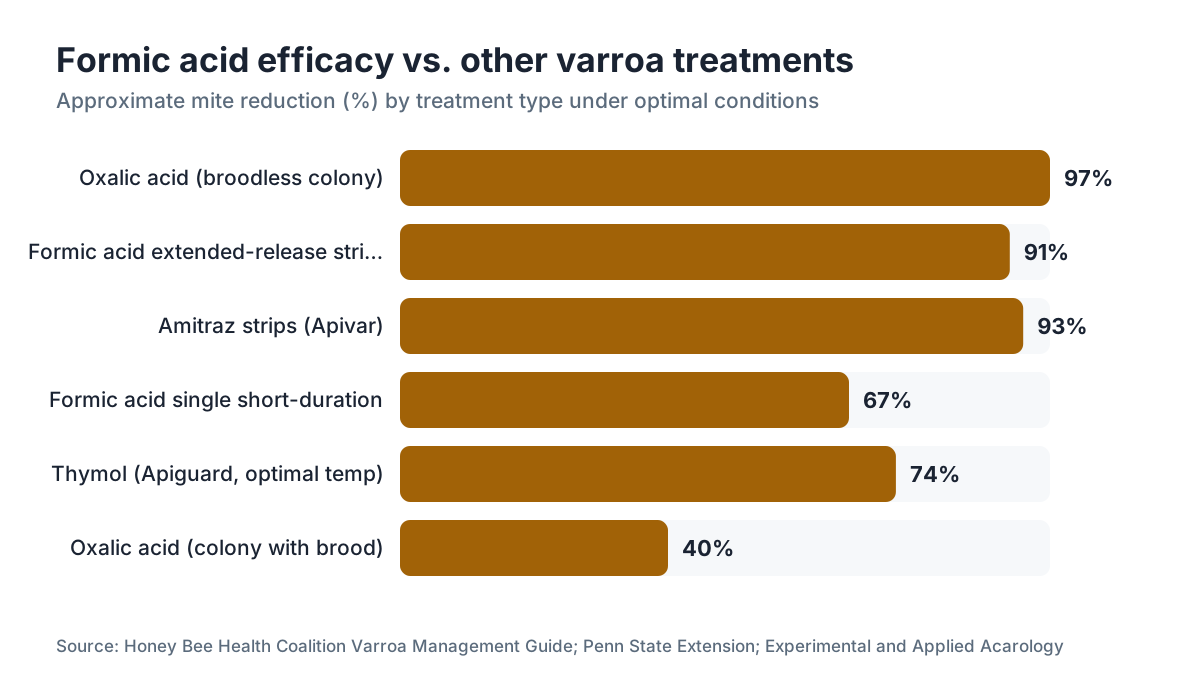
The mechanism is simple. Formic acid turns to vapor at ordinary hive temperatures, and that vapor drifts through the hive air, including into the capped cells where mites breed. A 2003 field study in Experimental and Applied Acarology found that extended-release formic acid strips cut varroa populations by an average of 91% across treatment groups, against 67% for a single short application [1]. The difference is exposure time. Longer vapor contact reaches more of the mites that would otherwise ride out a short treatment inside sealed brood.
For context on what you're fighting, varroa mites are the biggest driver of colony loss in managed honeybee operations worldwide. Any treatment that reaches mites under the cappings is worth learning cold.
What EPA-registered formic acid products can you legally use in the US?
Two products are EPA-registered for varroa control in the United States: MAQS (Mite Away Quick Strips) and Formic Pro. Both use formic acid as the active ingredient and both are registered under section 3 of FIFRA [2]. You cannot legally mix your own formic acid solution and apply it to a hive as a pesticide. The registration requirement means you use a labeled product, full stop.
Here is how the two compare:
| Feature | MAQS | Formic Pro |
|---|---|---|
| Application duration | 7 days | 14 days (or 2 x 7-day strips) |
| Temperature range | 50 to 85°F daytime | 50 to 85°F daytime |
| Min. colony size | 5 frames of bees | 5 frames of bees |
| Can use with honey supers? | Yes (see label) | Yes (see label) |
| Strips per package | 2 | 2 |
| Approximate retail price | $17 to $22 per 2-strip pack | $15 to $20 per 2-strip pack |
| Brood penetration | Yes | Yes |
Prices move around by supplier and region, so check your local beekeeping supply companies for current numbers. The EPA label is the legal document. It sets the exact dose, temperature limits, and re-entry intervals for each product [2].
Straight from the Formic Pro EPA label: "Do not use when daytime temperature is above 85°F or below 50°F." That temperature window is a rule, not a suggestion.
How does formic acid compare to other varroa treatments?
The honest answer depends on what your colony looks like the day you treat.
Oxalic acid is cheaper per application and hits close to 97% in a broodless colony [3], but it does almost nothing when capped brood is present. Formic acid gives up some of that peak number in exchange for working year-round in colonies that have brood. Synthetic miticides like Apivar (amitraz strips) or Apistan (tau-fluvalinate) post higher average kill rates in many conditions, but they carry resistance risk and can't ride along with honey supers in most protocols.
The Honey Bee Health Coalition's Varroa management guide names formic acid as a primary treatment option during the honey production season for one reason: it has no pre-harvest interval that forces you to pull supers [4]. For a sideliner running colonies through a nectar flow, that's a real operational win.
Thymol products (Apilife VAR, Apiguard) live in the same temperature window as formic acid but generally show weaker brood penetration. If you're stuck choosing between treatments, the HBHC decision matrix in their guide is the most practical tool I've used for matching treatment to colony state and season [4].
What temperature do you need for formic acid to work?
Temperature makes or breaks formic acid. The strips need warmth to give off vapor, but too much heat produces vapor so fast it can cook brood and kill queens.
Both MAQS and Formic Pro call for a daytime high between 50°F and 85°F across the treatment period [2]. Below 50°F the strips barely vaporize, so you get no kill. Above 85°F the release rate spikes, brood mortality climbs, and queen loss becomes a documented risk. University of Guelph research found queen loss around 5 to 15% in high-temperature applications, against under 3% when temperatures held inside the label range [5].
So formic acid is a spring and fall treatment across most of North America. July and August heat routinely pushes daytime highs past 85°F, and that window turns unreliable. If your summers stay moderate, you may catch a summer slot. Read the actual 10-day forecast before you open a package.
One trick for borderline temperatures: some beekeepers crack the entrance a little or add a vented bottom board during treatment to move air and hold vapor concentration down. The label allows ventilation adjustments. Read your specific product label before you do anything beyond what it spells out.
How do you apply formic acid strips correctly?
Neither MAQS nor Formic Pro needs mixing. The acid is already soaked into the gel strip at the factory, which is exactly why you can't legally make an equivalent at home in the US. The process is simple, and it punishes skipped steps.
For both products, the general procedure:
- Put on nitrile gloves and chemical-splash safety glasses before you open the package. Formic acid is corrosive, and even the vapor off a strip irritates mucous membranes.
- Check the daytime forecast for the next 7 to 14 days, depending on which product you're using.
- Remove the strip packaging and lay the strips directly on top of the brood-nest frames, one strip per side of the top bars (two strips total for most standard applications). Don't bury them between frames. They need airflow.
- Close the hive up and leave normal bee traffic alone.
- Pull the strips after 7 days (MAQS) or 14 days (Formic Pro). Some Formic Pro protocols run two back-to-back 7-day applications with a 1-day break.
- Do a mite wash 48 to 72 hours after strip removal to confirm the treatment worked [4].
Don't stack strips. Don't apply more than the label says. The dose is calibrated for a reason, and doubling it doesn't double efficacy. It raises the odds of brood and queen damage.
If your colony sits below about 5 frames of bees, the population is too small to buffer the vapor inside the cluster. A small cluster in a big box gets over-exposed. Requeen and build up before you treat, or use an oxalic acid dribble instead.
For keeping treatment dates and mite counts straight across several hives, a free varroa tracking tool like the one at VarroaVault holds your records so you know exactly when each colony was last treated and what the follow-up counts showed.
Is formic acid safe with honey supers on?
This is one of the most common questions, and the answer is yes, with caveats that matter.
Both MAQS and Formic Pro are labeled for use with honey supers in place. Formic acid already shows up in honey at low levels (roughly 0.1 to 1.0 g/kg in untreated honey [6]), so treatment residue is a small bump over the background that's always there. University of Guelph studies found honey formic acid levels dropped back to background within weeks after treatment ended [5].
A few practical notes. If temperatures sit at the high end and you're on a strong flow, fast vapor production can stress bees in the supers. Some beekeepers pull supers for the first 48 hours as insurance, then put them back. The label doesn't require this. It doesn't forbid it either.
For certified organic honey, call your certifier. Formic acid itself is allowed under the USDA National Organic Program [7], but your certifier may want extra paperwork.
What are the risks and side effects of formic acid in the hive?
Formic acid is not gentle. Any beekeeper who treats it as a soft "natural" option and skips the risk list will run into trouble sooner or later.
Queen loss tops the list of reported problems. The vapor stresses queens, and in hot weather or in small colonies where concentration rises unevenly, loss rates climb. Most published field data puts queen loss at 2 to 8% under label conditions [5]. That number sounds small until it's your only laying queen in October. Confirm the queen is present and laying before you treat.
Brood damage comes second. Sealed brood in tight contact with strips, especially in warm weather, can die off. You may find a patch of dead brood right under or beside the strips. It usually clears as new bees emerge, but watch it.
The personal safety risk is real too. Concentrated formic acid (the 85% commercial solution) is severely corrosive to skin, eyes, and airways. Consumer strips are far weaker, but wear gloves and eye protection when you handle them, and stand upwind when you open a treated hive. OSHA lists formic acid as a corrosive with a permissible exposure limit of 5 ppm as an 8-hour TWA [8].
Field resistance to formic acid hasn't been reliably shown in varroa populations through the most recent published reviews. The mechanism is physical (vapor toxicity) rather than binding to a specific receptor, so resistance is considered less likely than with synthetic miticides, though nobody would call it impossible.
Can you mix formic acid yourself for bee treatment?
In the United States, no. Mixing your own formic acid solution and applying it against varroa breaks FIFRA, because you'd be using a pesticide in a way the label doesn't allow, and a homemade batch has no label at all [2]. EPA registration exists to set safe, effective concentrations and methods.
The question "how to mix formic acid for bees" gets asked constantly online, usually by beekeepers who found older European protocols or home-brew guides on forums. In some countries, pharmacy-grade formic acid solutions and DIY applicators (like the Nassenheider vaporizer) are legal and common. That is not the legal setup in the US.
If you run a single hive and the cost of a strip package pinches, ask whether your local club or state apiarist office runs a subsidized treatment program. Several states operate cost-share programs for varroa treatments; USDA NASS and your state department of agriculture are where to check [9].
Outside the US, if your country allows DIY formic acid, European research generally cites a 65% solution applied through an extended-release mat or vaporizer. Go straight to your national veterinary or agriculture authority for the legal specifics instead of trusting a forum thread.
When is the best time of year to use formic acid?
Spring and fall are the sweet spots for most North American beekeepers. The 50 to 85°F window lines up with those seasons, and the timing matches how varroa populations grow.
A spring treatment ahead of the late-spring mite surge can buy you the whole summer. The Honey Bee Health Coalition recommends treating when mite loads reach or near 2 mites per 100 bees (a 2% infestation rate) [4]. Don't wait for 3% or 4%. By then the growth curve is running hard against you.
Fall treatment after you pull honey supers is the other window that counts. You want mites knocked down before the winter bees are raised, because those long-lived bees get parasitized as pupae and emerge damaged, with smaller fat bodies and shorter lives. A colony that enters winter loaded with mites rarely makes it out.
Midsummer formic acid is often impractical across most of the US because of heat. That's where oxalic acid in a broodless split, or a synthetic with a summer label clearance, usually fits better.
Always run a mite wash (alcohol wash or sugar roll) before you commit to treating. Bee Informed Partnership monitoring data keeps showing that plenty of beekeepers treat without knowing their actual mite levels, which lands them in either under-treatment (mites win) or needless chemical exposure (bees lose) [10].
How do you know if formic acid treatment worked?
You need a mite count before and a mite count after. No shortcut exists.
Do an alcohol wash 48 to 72 hours after the strips come out. Aim for fewer than 1 mite per 100 bees (under 1%) for a colony heading into winter, or fewer than 2 per 100 during the active season [4]. If your post-treatment count still sits above threshold, you have options: a second round of formic acid after a break, a switch to oxalic acid, or a rotation to a different mode of action.
A sticky board under a screened bottom board during treatment gives you a daily mite drop as a rough proxy, but sticky board counts don't replace an alcohol wash. The ratio of natural drop to actual infestation swings too much between colonies and seasons. Use it as backup information, not your main measure.
Bee Informed Partnership annual loss surveys keep finding that beekeepers who monitor mite levels lose fewer colonies than those who treat on a calendar without counting [10]. A wash takes 10 minutes. Do it.
What gear and supplies do you need for formic acid treatment?
The checklist is short. Nitrile or chemical-resistant gloves (not plain latex; formic acid can penetrate latex). Chemical-splash safety glasses or a full face shield. Your registered product (MAQS or Formic Pro), stored cool and dry below 86°F until use. A thermometer or weather app to confirm the forecast. A hive tool. And a plan for your post-treatment mite wash.
You don't need a vaporizer, a respirator for strip work (though one is smart if acid fumes bother you), or any mixing equipment, because the product arrives ready to use.
Store leftover strips the way the label says. Both products carry a shelf life of 12 to 18 months from the manufacture date when stored right; check the date on the package. Degraded or badly stored strips can lose formic acid concentration, which means weaker efficacy.
For a fuller view of what belongs in your treatment kit across the season, the HBHC Varroa guide has a supplies appendix worth bookmarking [4]. If you need to restock, comparing prices across beekeeping supply companies is easy; these products sell widely and prices differ a lot between suppliers.
Are there situations where you should not use formic acid?
Yes, several.
Don't treat when daytime temperatures will top 85°F at any point during the treatment window. Check the full 7-day or 14-day forecast, more than the day you apply. One 90°F afternoon midway through can wreck brood and drive up queen loss.
Don't treat colonies that are queenless or holding a virgin queen. Formic acid vapor can foul up mating flights or push a newly mated queen into failure. Confirm a healthy laying queen before you open a package.
Don't treat nucs or packages that haven't reached at least 5 frames of bees. A small cluster can't spread the vapor load safely, and the concentration in a tight space climbs too high.
Don't treat during a dearth when bees are already stressed and robbing is active. Treatment stress stacks on top of the other stressors and can set off or worsen robbing at the entrance.
Pregnant beekeepers and anyone with respiratory conditions should stay away from handling these products and from treated hives during application. The OSHA exposure guidance covers the personal protective side [8].
And formic acid is not a rescue treatment for a collapsing colony. If a hive sits at 5% infestation in August with three frames of bees, it's in crisis and needs a different call: combine it with a healthy colony, or, hard as it is, euthanize it rather than let it seed mites across your other hives.
Frequently asked questions
Can I use formic acid on package bees or a new split?
Wait until the colony is established on at least 5 frames of bees before treating. Package bees arrive stressed from transit, and a new split may have a virgin or newly mated queen. Formic acid vapor in a small cluster can concentrate to damaging levels and can interfere with queen establishment. Monitor mite levels first; most packages start with low mite loads and won't need immediate treatment.
How long does formic acid treatment take?
MAQS strips stay in the hive for 7 days. Formic Pro strips stay for 14 days, or run as two consecutive 7-day applications. After you pull strips, wait 48 to 72 hours and do a mite wash to check efficacy. The full treat-and-verify cycle runs about 2 to 3 weeks from strip placement to a confirmed result.
Does formic acid affect honey taste or quality?
Formic acid already occurs in honey at background levels of roughly 0.1 to 1.0 g/kg. University of Guelph research found honey formic acid levels from treated hives returned to normal background within weeks after treatment ended. Most taste panels can't detect a difference. Both MAQS and Formic Pro are labeled for use with honey supers in place, which tells you the residue profile is acceptable.
What happens if I apply formic acid when it's too hot?
Above 85°F, the strips vaporize too fast. Vapor concentrations inside the hive spike, which raises the risk of brood kill right under the strips and pushes queen loss up. Field reports and university research both document queen loss climbing to 10 to 15% in high-temperature applications. If a heat wave is coming, pull the strips early and re-treat during a cooler window.
Can varroa mites develop resistance to formic acid?
No confirmed field resistance has been documented through current published reviews. The toxicity mechanism is vapor-phase chemical disruption rather than receptor-specific binding, which makes resistance harder to evolve. Rotate modes of action anyway as a precaution; leaning on any single compound forever is never good practice. Synthetic miticides like amitraz and tau-fluvalinate already show documented resistance in some varroa populations.
How much does formic acid treatment cost per hive?
A 2-strip package of MAQS or Formic Pro typically runs $15 to $22 retail, and one package treats one hive for the full cycle. Per-hive cost lands at $15 to $22 plus your time. Buying in bulk from a distributor can cut per-hive cost meaningfully if you run 10 or more colonies. Some state apiarist offices offer cost-share programs that trim the out-of-pocket further.
Can I use formic acid in a top-bar or Warré hive?
Both MAQS and Formic Pro labels describe treatment for Langstroth-style boxes. Top-bar and Warré hives have different geometries, and vapor may distribute differently. The label doesn't address these formats. Some beekeepers adapt strip placement to the brood area with reported success, but there's no published efficacy data for non-Langstroth hives. Contact your product's manufacturer for guidance before applying.
Do I need a prescription or license to buy formic acid for bees?
No veterinary prescription is required for MAQS or Formic Pro in the US. Both sell over the counter at beekeeping supply stores. That's different from tetracycline or tylosin, which do require a veterinary feed directive. You do need to apply these products strictly by their EPA-registered labels; under FIFRA, the label is the law.
Should I remove the queen before formic acid treatment?
No, you don't need to cage or remove the queen as standard practice. The treatment is built for a queenright colony. That said, verify the queen is present and laying before treatment, and check for her again about a week after strips come out. If she was marginal beforehand, the stress may push her over the edge, and you want to catch a queenless situation early.
What's the difference between MAQS and Formic Pro?
Both are EPA-registered formic acid strip treatments with the same active ingredient. Formic Pro uses a 14-day extended release meant to hold lower, steadier vapor levels over a longer stretch; MAQS delivers a faster, higher initial release over 7 days. Formic Pro is often described as carrying lower queen-loss risk in field use, though head-to-head studies are limited. Temperature and application rules are the same for both.
How do I store unused formic acid strips?
Store them in the original sealed packaging in a cool, dry spot below 86°F and out of direct sunlight. Don't freeze them. Both products carry a shelf life of about 12 to 18 months from the manufacture date when stored right; the lot number and expiration date are on the package. Degraded strips can carry lower formic acid concentration, which means weaker efficacy and shaky dosing.
Is formic acid approved for organic honey production?
Yes. Formic acid is allowed under the USDA National Organic Program for varroa control in organic beekeeping. Check with your specific certifier for their documentation requirements, since certifiers sometimes want record-keeping beyond what the NOP rule sets. The organic approval covers the compound itself; your certifier confirms whether the specific registered product format passes.
How do I track mite levels across multiple hives during treatment?
Keep a plain log: colony ID, pre-treatment mite wash result, date strips placed, date strips removed, post-treatment mite wash result. Spreadsheets work fine. Free tracking tools built for varroa management, like the protocol tools at VarroaVault, make it easier to spot which hives keep running high and need a different rotation across seasons.
Sources
- Experimental and Applied Acarology (Springer), formic acid extended-release efficacy study: Extended-release formic acid strips reduced varroa populations by an average of 91% in field trials vs. 67% for single short-duration applications
- EPA, Pesticide Registration (MAQS and Formic Pro registrations under FIFRA section 3): Both MAQS and Formic Pro are EPA-registered varroacides; temperature range 50 to 85°F daytime is a mandatory label requirement
- Penn State Extension, Oxalic acid treatment efficacy in broodless colonies: Oxalic acid efficacy approaches 97% in broodless colonies, but has limited effect when capped brood is present
- Honey Bee Health Coalition, Varroa Management Guide (current edition): HBHC recommends treating at 2% infestation rate; formic acid listed as primary treatment option during honey production season due to no pre-harvest interval
- University of Guelph, School of Environmental Sciences, formic acid queen loss and honey residue research: Queen loss rates of 5 to 15% in high-temperature formic acid applications vs. under 3% within label temperature range; honey residue returns to background within weeks after treatment
- Journal of Apicultural Research (Taylor & Francis), background formic acid levels in untreated honey: Natural formic acid concentration in untreated honey is approximately 0.1 to 1.0 g/kg
- USDA Agricultural Marketing Service, National Organic Program regulations: Formic acid is listed as an allowed substance under the USDA National Organic Program for varroa control in organic beekeeping
- OSHA, Occupational Chemical Database, formic acid entry: OSHA permissible exposure limit for formic acid is 5 ppm as an 8-hour TWA; listed as a corrosive
- USDA National Agricultural Statistics Service, apiary and colony health programs: USDA NASS and state departments of agriculture administer cost-share and treatment subsidy programs for varroa management
- Bee Informed Partnership, annual colony loss survey and monitoring data: Beekeepers who monitor mite levels consistently show lower colony loss rates than those treating on calendar schedule without counting; many beekeepers treat without knowing actual infestation levels
- Cornell University College of Agriculture and Life Sciences, Dyce Lab varroa management resources: General guidance on alcohol wash methodology and threshold-based treatment decisions for varroa
Last updated 2026-07-09