Recapping behavior in bees and varroa mite survival
TL;DR
- Recapping is when worker bees detect a varroa mite under a capped brood cell, uncap it, and re-seal it.
- The disturbance interrupts the mite's tightly timed reproductive schedule.
- Bee lines selected for this trait show 20 to 40% reductions in mite reproductive success.
- It is one part of varroa-sensitive hygiene (VSH), separate from full hygienic removal of infested brood.
What is recapping behavior in honey bees?
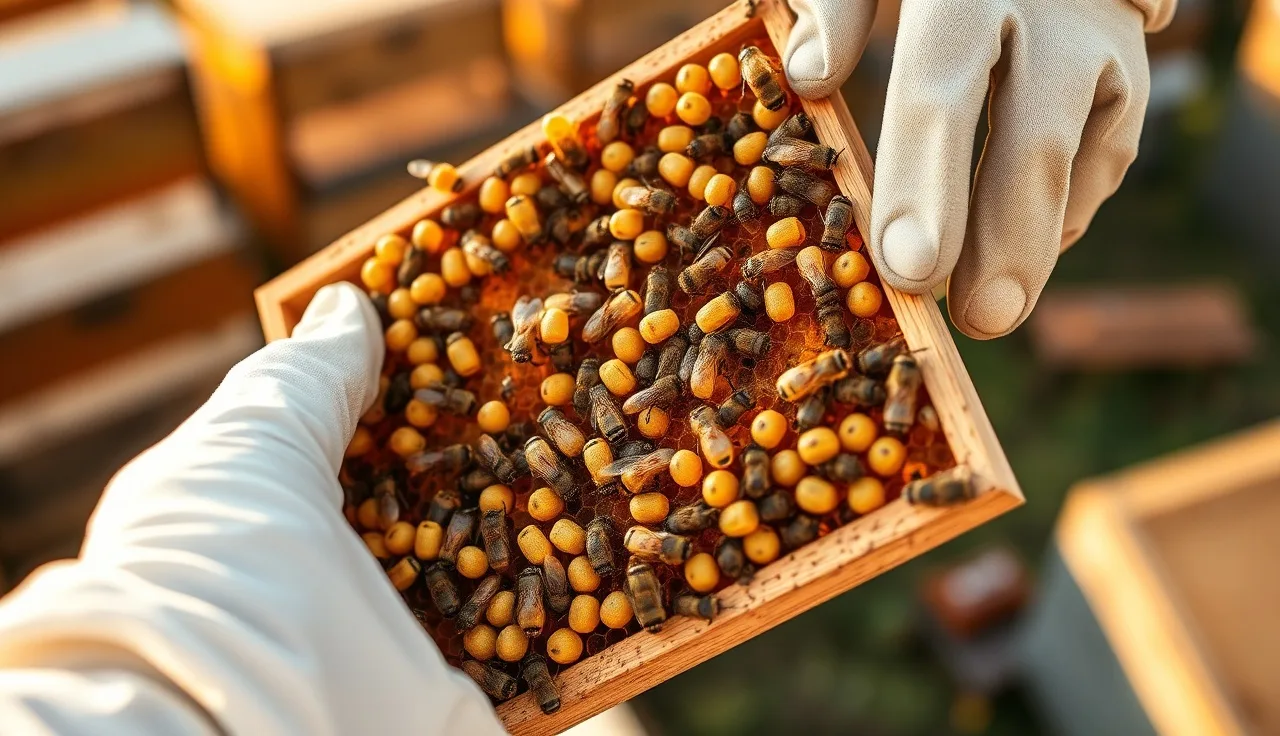
Recapping is exactly what it sounds like. A worker bee uncaps a sealed brood cell, inspects it, and then re-seals it with fresh wax, often without removing the larva or pupa inside. You can spot recapped cells in a strong colony by looking for cappings that appear slightly uneven, thinner, or a different wax color than the sealed brood around them. Experienced beekeepers sometimes call these "bullet cappings" or just describe them as looking patchy.
The behavior sits inside a broader cluster of responses researchers file under the term varroa-sensitive hygiene, or VSH. Full hygienic behavior means the bee uncaps the cell and removes the contents entirely. Recapping is a partial response: the bee detects something wrong, disturbs the sealed environment, and re-seals without finishing the removal. That sounds like a half-measure, and on its own it sometimes is. But the timing matters enormously for the mite inside.
How does recapping actually disrupt varroa mite reproduction?
Recapping works because it hits the mite during a schedule she cannot afford to have disrupted. When a worker uncaps and re-seals a cell, the oxygen and humidity inside change, the pupa gets jostled, and the foundress mite can miss her narrow oviposition window. A delay of even 30 to 48 hours can mean zero or one daughter mite instead of one to three [2].
Here is the biology that makes that possible. A female varroa mite invades a worker cell in the final hours before it is sealed, roughly 15 to 20 hours before capping [1]. She hides in the larval food at the bottom of the cell and waits. She does not lay her first egg until about 60 to 70 hours post-capping, after the pupa defecates and a specific physiological trigger fires. That first egg is almost always male and cannot found a new line. Her second egg, laid around 30 hours later, is female and becomes her reproductive daughter [2].
Worker brood is sealed for about 12 days. That gives the mite almost no slack. Drone brood is capped for 14 to 15 days and is far more forgiving, which is why mites pile into it.
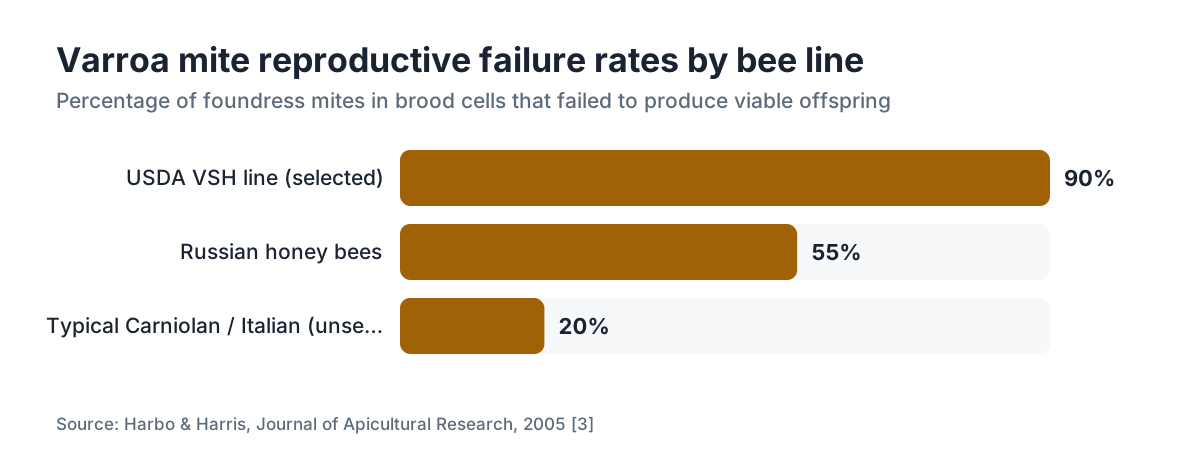
A 2005 study by Harbo and Harris in the Journal of Apicultural Research found that bees selected for VSH traits showed sharply suppressed mite reproduction, with some lines showing over 90% of mites failing to reproduce compared to unselected colonies [3]. Recapping is one of the mechanisms feeding that number, though it is hard to isolate from the other VSH sub-behaviors in a live colony.
Is recapping the same thing as hygienic behavior or VSH?
No, though they overlap. The terms blur even in the scientific literature, so let me be direct about what each one means.
Hygienic behavior classically means a two-step process: bees uncap a cell holding a dead or diseased larva and then remove it. This was first quantified using freeze-killed brood assays by Rothenbuhler in the 1960s and refined by Spivak in the 1990s. A colony counts as hygienic if it removes 95% or more of freeze-killed brood within 48 hours [4].
VSH (varroa-sensitive hygiene) is narrower. It describes detecting and responding to reproductive varroa mites under cappings, more than dead brood. VSH bees may uncap, inspect, and re-cap without removing the pupa. They may pull both mite and pupa. Or they may do nothing you can see while still interrupting mite reproduction through behaviors that are hard to observe.
Recapping is one mechanism inside the VSH phenotype. A colony can score well on freeze-killed brood tests (hygienic) and still show only modest VSH, because the smell of a dead larva differs from the chemical signal of a reproducing mite. The Honey Bee Health Coalition's Varroa mite management guide notes that VSH and hygienic behavior are related but not interchangeable traits when you select for mite tolerance [5].
Practical read: a colony that recaps often is telling you it has some VSH activity. Good sign. It does not promise the colony will control mites without treatment.
What percentage of mite reproduction does recapping actually suppress?
The honest answer varies a lot with bee line, season, and study design. In highly selected VSH lines, the share of mites that produce no viable offspring can top 90% [3]. Most of that comes from a mix of behaviors: recapping, physical removal, and disruptions researchers still cannot fully name.
In typical commercial Carniolan or Italian colonies that were never selected for VSH, studies find background mite reproductive failure of roughly 15 to 30% under normal conditions [10]. That is not nothing. It is also not enough to hold mite populations below treatment thresholds across a full season.
The 20 to 40% figure that shows up in many extension resources as recapping's practical contribution comes from comparing recapped cells to undisturbed cells in the same colony and counting the mites that failed to make viable daughters. The University of Minnesota Bee Lab, one of the main research centers on hygienic behavior, has published across this area [4].
Recapping alone, in non-selected colonies, will not save you from treating. In colonies bred specifically for VSH, it adds to a suppression level that can slow mite population growth in a way you can actually measure.
How can you tell if your colony is recapping?
You can see it if you know the tells. Pull a frame of capped brood and study the surface. Recapped cells tend to show:
- Cappings noticeably lighter than the wax around them (fresh wax is white or pale yellow).
- A slightly irregular, thinner, or more sunken look next to first-capped cells.
- Sometimes a small central hole that never quite closed.
This is not a precise diagnostic. Sunken or discolored cappings can also mean sacbrood, chalkbrood, or plain physical damage. The recapping signal reads cleaner when you see scattered pale-capped cells across a frame of otherwise normal dark cappings, with healthy larvae when you open the pale ones.
The more structured method is the VSH assay: infest a queenright colony with a known number of mites and measure reproductive failure after a set capping period. That is research-grade work most hobbyists will skip. For everyday colony assessment, the Honey Bee Health Coalition recommends tracking mite load over time with alcohol wash or sugar roll counts as your main decision tool, not behavioral observation [5]. See the varroa mite article for a full rundown of mite-counting methods.
If you want to go further, some state extension programs offer VSH queen testing, and USDA-ARS Baton Rouge has released VSH-certified queen stock to breeders.
Which bee lines show the strongest recapping and VSH behavior?
Short answer: bees deliberately selected for VSH, Russian honey bees, and some Africanized honey bee populations [6].
The USDA-ARS lab in Baton Rouge built VSH stock from a subset of Italian bees that showed unusually high mite reproductive failure in the 1990s [9]. Their VSH line, and the commercial queen lines pulled from it, carry the strongest documented recapping and mite-disruption behavior. These queens sell commercially, though quality control swings between breeders. Ask specifically whether queens are "VSH-certified" (tested) or merely "VSH-bred" (descended from VSH stock but not personally tested), because reproductive failure rates drift a lot within a few generations without selection pressure.
Russian honey bees, imported from the Primorsky region of Russia where varroa co-evolved with Apis mellifera for decades, show elevated VSH and recapping activity [12]. USDA studies from 2002 through 2012 found Russian colonies holding lower mite levels than unselected Italian colonies even under equal brood exposure [7].
Africanized bees, the hybrid populations that spread through the Americas after the 1956 introduction of African subspecies into Brazil, show strong hygienic and mite-removal behavior [6]. That is one reason mite loads in feral Africanized colonies in the southern US tend to run lower than in managed European colonies nearby. This is not a push to keep Africanized bees, especially where their defensive behavior is a safety issue. You can read more on that tradeoff in the africanized honey bee article.
Regular Italian and Carniolan stock, the bulk of commercial bees in North America, show moderate VSH activity. Enough to slow mite growth a little. Not enough to stop exponential increase over a season.
Does recapping behavior mean you can skip varroa treatments?
Almost certainly not, unless you run a highly selected VSH or Russian line, monitor closely, and your mite counts stay below treatment thresholds all year.
The Honey Bee Health Coalition's Varroa mite management guide is blunt: "No currently available honey bee stock will completely eliminate the need for varroa management" [5]. That is where the science actually sits. Even in the best VSH colonies studied, some mites still reproduce. A small reproductive rate, compounded over a 6 to 8 month brood season, can still push a mite population to dangerous levels before winter.
Colonies with strong VSH and recapping can stretch the interval between treatments and often hold lower peak mite loads. VSH beekeepers sometimes report one treatment a year instead of two, or fall-only instead of spring and fall. Real gains. They do not erase the need for monitoring.
The VarroaVault protocol OS includes free mite-load tracking tools calibrated to VSH and non-VSH colony behavior, useful if you run a mixed apiary with different queen lines.
If your mite count hits 2% or higher by alcohol wash (about 2 mites per 100 bees) at any point, treat, no matter how hygienic your bees look. That threshold comes from University of Minnesota extension and holds up well against field data [4].
How does varroa mite reproductive biology make the timing of recapping so important?
The mite's reproductive window is narrow and rigidly timed. A foundress mite that enters a worker cell has about 12 days before emergence. Her first egg comes at roughly 60 to 70 hours post-capping, and later eggs follow at about 30-hour intervals [2]. With 12 days sealed and the first reproductive daughter needing to finish development before emergence, the mite has almost no room in her schedule.
Any disruption to that sealed environment, including the brief exposure from uncapping and recapping, can shift the timeline enough to cause one of these:
- The mite's first (male) egg is delayed or dies before hatching.
- The first viable female egg is laid too late for the daughter to fully mature before the adult bee chews off the capping.
- The mite herself gets stressed by the environmental change and fails to lay.
Drone brood is the worst case. The capped period runs 14 to 15 days, long enough for the mite to run two full reproductive cycles in good conditions. That is why researchers consistently find 8 to 10 times higher mite infestation in drone brood than worker brood [2], and why some beekeepers use drone comb removal as a trap. Recapping happens in drone cells too, but the longer capping window gives the mite more margin to recover from the disturbance.
Can you breed for recapping behavior in your own apiary?
You can select for it, but doing it well is harder than it looks.
The practical move for a hobbyist or sideliner is to buy VSH-tested or VSH-certified queens from reputable breeders rather than build the trait from scratch. It is polygenic (multiple genes) and needs steady selection pressure over generations to hold. Without a rigorous testing protocol, VSH activity fades fast [9].
If you want to select locally, here is what that realistically looks like. Track mite loads in all your colonies through the season with alcohol wash at roughly 6-week intervals. Note which colonies keep lower counts despite similar brood frames and similar starting loads. Those low-mite colonies become your queen-rearing candidates, whether or not you can pin down exactly why they perform (VSH, recapping, reduced drone brood, or something else). Raise queens from them. Re-evaluate the daughters over the next 1 to 2 seasons.
This is informal, slow, and hostage to mating variance, since queens mate with 12 to 20 drones from a wide area. But over 3 to 5 years of steady selection, beekeepers in isolated apiaries with little outside drone flight have documented real gains in mite tolerance.
The Honey Bee Health Coalition maintains a directory of VSH and mite-tolerant queen breeders through its Bee Informed resources [5].
What does the research actually say about recapping and colony survival?
The clearest evidence tying recapping and VSH to colony survival comes from studies comparing selected VSH lines against unselected controls under natural mite pressure, without treatment.
Harbo and Harris (2005) in the Journal of Apicultural Research found that VSH colonies kept significantly lower mite population growth than controls over a full season, and pinned it mostly on the high share of non-reproducing mites in brood cells [3]. The study used Italian stock and documented mite reproductive failure above 90% in VSH lines versus around 15 to 20% in controls.
A longer USDA evaluation of Russian honey bees found Russian colonies in mixed apiaries holding lower mite loads over 3 to 4 seasons than Italian controls, backing the idea that behavioral traits including recapping give sustained population-level suppression [7].
Nobody has good data on recapping in isolation, apart from the full VSH phenotype, because the behaviors are co-expressed and hard to switch off independently in a live colony. The closest anyone has come is cell-level video work in transparent observation hives, which confirmed that recapping events line up with mite reproductive failure in those cells. Sample sizes in that work are generally small.
The honest summary: recapping almost certainly adds to mite suppression in VSH bees, the effect is real and measurable at the colony level, and the exact size of recapping's own contribution (versus other VSH sub-behaviors) is still not precisely nailed down.
How does recapping behavior interact with chemical treatments?
Good question most resources skip.
Some organic acid treatments, oxalic acid in particular, do nothing to mites in sealed brood because the acid does not cross the capping. That is why extended-release oxalic treatments (glycerin-based pads, repeated applications across brood cycles) beat a single vaporization when capped brood is present [8].
Here is the interesting part. In a colony with active recapping, more cells open and re-close than in a non-VSH colony. During the brief window a cell is open, any mites inside meet the hive atmosphere, which during an oxalic acid vapor treatment carries acid vapor. This is speculative, but some researchers have suggested colonies with high VSH activity might show slightly better vapor results because recapping opens exposure windows. No clean study has tested that as of this writing.
Synthetic miticides (amitraz products like Apivar, fluvalinate products like Apistan) work by contact as bees move through the hive and brush the strips. Recapping does not change them in any obvious way.
Practical takeaway: pick your treatment by mite count and season, not by your colony's recapping behavior. The EPA-registered product label is your legal and safety guide for any miticide [8]. Behavioral traits complement treatment protocols. They do not replace them.
What should hobbyist beekeepers actually do with this information?
Here is what I would do.
Monitor mite loads on a schedule. Monthly from April through September in a temperate climate. This is not optional and no behavioral trait changes that. Use the Honey Bee Health Coalition's Varroa management guide as your baseline for treatment thresholds [5].
When you buy or raise queens, favor lines with documented VSH or recapping behavior. It costs you nothing extra if you are already buying queens, and it lifts your baseline. Ask the breeder exactly what testing was done. VSH-certified queens from USDA-ARS descended breeders are the gold standard, though not always available.
Watch which colonies consistently win on mite counts. Those are your future queen-rearing candidates.
Learn to read your brood frames. Pale-capped cells spread through a frame of healthy brood are a sign the colony is working. Not diagnostic enough to change your treatment decision, but a real hint about the genetics you are running.
To track all of this across colonies, the free tools at VarroaVault let you log mite wash data and flag colonies by queen line, which takes some guesswork out of selection.
For sourcing equipment and supplies to support your monitoring, see the beekeeping supply companies guide.
Frequently asked questions
Can recapping behavior eliminate varroa mites without treatment?
No. Even in highly selected VSH colonies, some mites still reproduce. The Honey Bee Health Coalition's mite management guide states no currently available bee stock eliminates the need for varroa management. Recapping can meaningfully slow mite population growth, potentially cutting treatment frequency from twice to once a year, but it cannot replace monitoring and timely treatment when counts pass threshold.
How do I know if my bees are recapping cells?
Look for pale, slightly uneven, or thinner cappings scattered across an otherwise normal frame of sealed brood. Recapped cells have fresh lighter wax over older, darker surrounding cappings. This is suggestive, not definitive. Pale cappings can also mean sacbrood or physical damage. Open a few suspect cells and check for a healthy pupa with no disease signs to separate recapping from pathology.
What is the difference between VSH bees and hygienic bees?
Hygienic behavior (freeze-killed brood removal within 48 hours) and VSH overlap but differ. Hygienic bees detect and remove dead or diseased larvae. VSH bees specifically detect and disrupt reproducing varroa mites under cappings, sometimes through recapping rather than removal. A colony can score high on a freeze-killed brood test and still show only moderate VSH, because different smells trigger each behavior.
What percentage of varroa mites fail to reproduce in VSH colonies?
In highly selected USDA VSH lines, studies by Harbo and Harris found over 90% of mites in brood cells failed to produce viable offspring, versus 15 to 20% in unselected Italian controls. That 90% figure comes from the Journal of Apicultural Research (2005) and reflects optimally selected laboratory-grade stock. Commercial VSH queens in real apiaries usually show lower but still meaningful suppression.
Why do mites prefer drone brood over worker brood?
Drone brood is capped 14 to 15 days versus 12 days for workers. That extra time lets the foundress mite complete two full reproductive cycles, potentially two viable daughters instead of one. Studies consistently find mite infestation 8 to 10 times higher in drone brood than worker brood. This is why drone comb trapping, where you remove and freeze capped drone frames, is a legitimate integrated mite management tool.
Do Russian honey bees show recapping behavior?
Yes. Russian honey bees, developed from Apis mellifera populations in Russia's Primorsky region where varroa co-evolved with European bees for decades, show elevated VSH including recapping. USDA field studies found Russian colonies consistently holding lower mite loads than Italian controls over multi-season evaluations. Russian bees also show a fall brood pause, which cuts available mite reproductive habitat independently of their hygienic traits.
How often should I monitor mite levels even if I have VSH bees?
Monthly during the brood season (roughly April through September in temperate climates) is standard. VSH behavior slows mite growth but does not stop it. Alcohol wash counts on a sample of about 300 bees from the brood nest are the most accurate method. Treat at 2% infestation (2 mites per 100 bees) or above, regardless of queen genetics. Threshold guidance comes from University of Minnesota extension publications.
Can I select for recapping behavior in my own colonies at home?
Yes, informally. Track mite loads across all your colonies on the same schedule. Colonies that consistently hold lower counts despite similar conditions are your best queen-rearing candidates. The trait is polygenic and drifts without steady selection pressure, so results take 3 to 5 years to show and are limited by open mating with outside drones. Buying VSH-certified queens from tested breeders is faster and more reliable for most hobbyists.
Does recapping behavior affect how well oxalic acid treatments work?
Oxalic acid in any form does not cross sealed cappings, so it cannot kill mites in capped brood regardless of recapping. The brief uncapping during recapping theoretically exposes mites to hive atmosphere, which during a vapor treatment carries acid. Some researchers have speculated this could slightly improve vapor efficacy in VSH colonies, but no peer-reviewed study has tested it directly, so it should not change your treatment timing or method.
What triggers a bee to recap a cell rather than fully remove the larva?
Researchers do not fully know. The leading idea is that bees detect volatile chemical cues from the reproducing mite, but the cue either sits below a full-removal threshold or does not match the smell that triggers complete hygienic removal. Larval age, mite developmental stage, and individual bee sensitivity all likely shape whether the response is full removal or recapping. This partial response may also fire when bees sense cell disturbance not caused by mites.
How long does it take varroa to reproduce inside a capped worker cell?
The foundress mite lays her first (male) egg about 60 to 70 hours after the cell is capped. The first viable female egg follows roughly 30 hours later. In a 12-day worker capping period, that timing allows one complete reproductive cycle under ideal conditions, producing one viable daughter. Any disruption to that capped period, including a recapping event, can stop the daughter from maturing before the adult bee emerges.
Are there tests I can do to measure VSH behavior in my colonies?
The gold standard is the mite reproductive assay: infest a colony with a known number of mites and measure the share of non-reproducing foundress mites in brood cells after a capping period. That is research-grade and impractical for most beekeepers. A simpler proxy is steady mite monitoring with alcohol wash over multiple seasons, comparing colonies under equal conditions. Some state extension programs and commercial VSH queen breeders offer formal behavioral testing for a fee.
Is there a genetic test for recapping or VSH behavior in queens?
Molecular markers linked to VSH have been identified in research settings, and work continues on practical genetic screening. As of 2025, no commercially available, field-grade genetic test for VSH or recapping is widely sold to hobbyists. Behavioral testing (mite reproductive assay or extended mite count tracking) remains the primary method. Check with USDA-ARS or university bee labs for the current state of marker-assisted selection research.
Does brood temperature affect varroa reproduction and recapping effectiveness?
Brood nest temperature is tightly held by workers at around 34 to 35 degrees Celsius. Varroa reproductive timing is calibrated to that range. Big temperature swings, as happen in very small or stressed colonies, can slow mite development and, by chance, improve the odds that recapping disrupts a full reproductive cycle. But weak colonies that cannot hold temperature also cannot mount strong hygienic responses, so this is not a practical management lever.
Sources
- Rosenkranz, P., Aumeier, P., & Ziegelmann, B. (2010). Biology and control of Varroa destructor. Journal of Invertebrate Pathology, 103, S96, S119.: Female varroa mite invades worker cell in final hours before capping, roughly 15 to 20 hours prior to sealing.
- Donze, G., & Guerin, P.M. (1994). Behavioral attributes and parental care of Varroa mites parasitizing honey bee brood. Behavioral Ecology and Sociobiology, 34(5), 305 to 319.: First (male) mite egg laid approximately 60 to 70 hours post-capping; first viable female egg follows roughly 30 hours later; drone brood capped 14 to 15 days vs 12 for workers.
- Harbo, J.R., & Harris, J.W. (2005). Suppressed mite reproduction explained by the behaviour of adult bees. Journal of Apicultural Research, 44(1), 21 to 23.: VSH colonies show over 90% mite reproductive failure compared to 15 to 20% in unselected Italian controls; recapping contributes to this suppression.
- University of Minnesota Bee Lab, hygienic behavior research and Varroa monitoring/treatment threshold guidance (Spivak et al.): Hygienic colony defined as removing 95% or more of freeze-killed brood within 48 hours; alcohol wash treatment threshold around 2%.
- Honey Bee Health Coalition, Varroa Mite Management Guide: No currently available honey bee stock eliminates the need for varroa management; VSH and hygienic behavior are related but not interchangeable; treatment thresholds and monitoring protocols.
- Spivak, M., & Reuter, G.S. (2001). Resistance to American Foulbrood in Honey Bees. Journal of Invertebrate Pathology, 78(3), 162 to 168.: Africanized honey bee populations show elevated hygienic and mite-removal behavior compared to European stock.
- USDA Agricultural Research Service, Russian Honey Bee evaluation research (Baton Rouge): Russian honey bee colonies maintained lower mite loads than Italian controls over 3 to 4 season evaluations; Russian bees show elevated VSH activity.
- U.S. EPA, Pesticide Registration (oxalic acid and miticide product labels): Oxalic acid does not penetrate sealed brood cappings; EPA-registered label is the legal guide for miticide use.
- Harbo, J.R., & Harris, J.W. (1999/2002). Selecting honey bees for resistance to Varroa. Apidologie.: VSH stock developed from Italian bees showing unusually high mite reproductive failure; trait is polygenic and requires consistent selection pressure to maintain.
- Büchler, R., et al. (2010). Tolerance and resistance to Varroa. Journal of Apicultural Research, 49(1), 85 to 95.: Background mite reproductive failure rate in unselected European bee lines is approximately 15 to 30%; this is not sufficient to prevent exponential mite population growth over a season.
- Boecking, O., & Spivak, M. (1999). Behavioral defenses of honey bees against Varroa jacobsoni Oud. Apidologie, 30(2 to 3), 141 to 158.: Recapping is observable as cells with lighter, thinner, or irregular cappings; it is distinct from full hygienic removal and represents a partial VSH response.
- Rinderer, T.E., et al. (2001). Resistance to the parasitic mite Varroa destructor in honey bees from far-eastern Russia. Apidologie, 32(4), 381 to 394.: Russian honey bee populations co-evolved with varroa in Primorsky region; import program and initial field evaluations documented lower mite infestation rates.
Last updated 2026-07-09