Residue buildup in oxalic acid vaporizers: how to clean them properly
TL;DR
- Oxalic acid leaves a hard, yellowish-brown crust in the vaporizer bowl and pan after each use.
- Remove it by soaking the cooled bowl in warm water, scrubbing with a nylon brush, rinsing twice, and drying completely before storage.
- Do this every 3 to 5 treatments or whenever residue thickens.
- Always wear nitrile gloves and an N95 or better respirator during cleaning.
What is the residue that builds up in an oxalic acid vaporizer?
Load oxalic acid dihydrate crystals into a vaporizer bowl, heat them, and most of it sublimates into vapor. Not all of it leaves cleanly. Some fraction decomposes and some re-condenses before it ever clears the pan. What you're left with is a mix of unreacted oxalic acid, calcium oxalate from wax or propolis contamination, and carbonized organic debris that drifted back from the hive. The result is a hard, yellowish to dark-brown crust that bonds to the metal bowl and the surrounding pan.
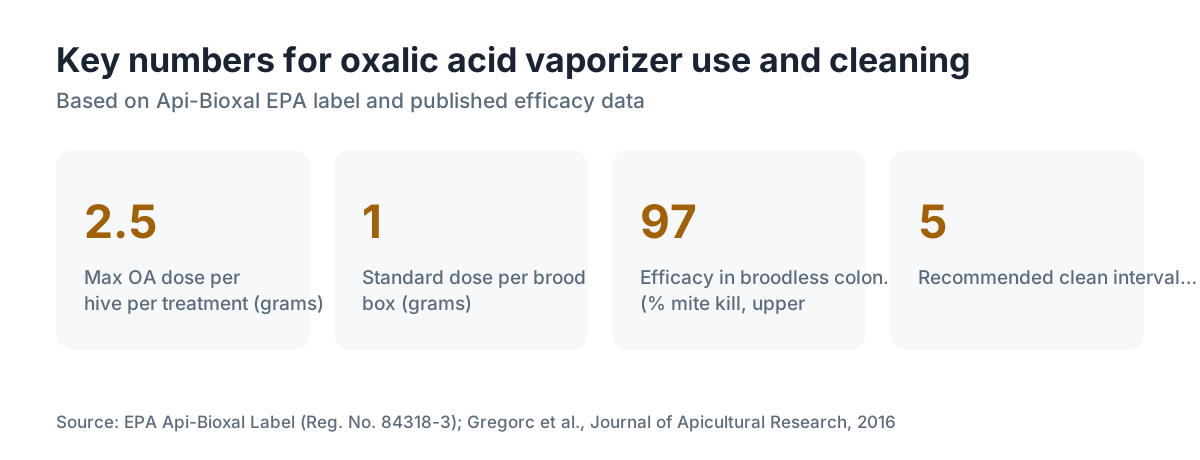
This crust matters for two reasons. First, buildup adds mass to the pan, and that throws off your dose. The EPA-registered label for Api-Bioxal, the only oxalic acid product approved for use on honey bee colonies in the United States, specifies 1 gram of oxalic acid dihydrate per brood box treated, with a maximum of 2.5 grams per hive per treatment [1]. If old residue is sitting in your bowl, you're adding 1 gram on top of however much dried crust is already there, and your actual dose becomes a guess.
Second, oxalic acid is corrosive. Let it sit wet or humid against metal and it accelerates pitting, and it can eventually crack or warp the bowl. A clean bowl lasts years. A neglected one can fail in a single season.
How often should you clean an oxalic acid vaporizer?
Clean the bowl after every 3 to 5 treatment sessions, or the moment residue thickens enough to change how evenly the crystals spread across the pan. If you run an extended treatment series (say, 3 treatments at 5-day intervals for a broodless colony), clean the bowl before you start the next hive or the next series, not in the middle of a series.
A visual inspection takes ten seconds. Tilt the cooled, unplugged vaporizer toward a light. If you see a crust thicker than roughly 1 mm, or any dark, carbonized buildup that won't brush away with a dry nylon brush, do a full wet clean. If the bowl still looks shiny and residue is minimal, a dry brush is enough.
At the end of every season, do a full wet clean before long-term storage no matter how the bowl looks. Moisture trapped under residue during winter storage is a common cause of pitting.
What safety gear do you need before cleaning a vaporizer?
The same hazards that make oxalic acid work against varroa make the residue dangerous to handle carelessly. Dry residue turns into airborne dust the moment you start brushing.
At minimum you need nitrile or rubber gloves (not fabric, which absorbs the acid), safety glasses or a face shield, and a NIOSH-approved respirator rated N95 or better. The Api-Bioxal label requires respiratory protection during application, and the same logic applies during cleaning because you're disturbing dried oxalic acid [1]. If you're cleaning indoors, open a window or set up a fan pushing air away from your face.
Oxalic acid isn't acutely lethal in the quantities involved here, but it's a respiratory and skin irritant, and chronic low-level exposure is poorly studied in beekeeping settings. The Honey Bee Health Coalition's Varroa management guide notes that applicators must follow all label PPE requirements, including during equipment handling [2]. Take that seriously even for the mundane job of washing a pan.
Step-by-step: how to clean oxalic acid residue from a vaporizer bowl
Step 1: Let the vaporizer cool completely. Never clean a hot or even warm bowl. The acid reacts more aggressively with skin when hot, and thermal shock can crack a ceramic-coated bowl. Unplug from any power source. Wait at least 30 minutes after the last treatment.
Step 2: Take the vaporizer outside or to a well-ventilated workspace. Put on your gloves, glasses, and respirator now, before you open the bowl or brush anything.
Step 3: Use a stiff nylon brush (not metal, which scratches the bowl coating) to knock loose any dry, flaky residue into a small trash bag. Seal the bag and dispose of it as you would any oxalic acid waste. Don't blow it off with compressed air unless you want to inhale a cloud of acid dust.
Step 4: Fill a small container with warm water. Submerge the bowl or pan portion of the vaporizer (the part that holds the crystals) and let it soak for 10 to 15 minutes. Oxalic acid dissolves readily in water, and most residue releases after a short soak. For stubborn crust, add a small pinch of baking soda to the water. The mild alkalinity neutralizes the acid and loosens carbonized deposits. You'll see a small fizz where the baking soda hits acid residue.
Step 5: Scrub with the nylon brush until the bowl surface is clean. Rinse twice with clean water. The rinse water carries dissolved oxalic acid, so pour it down a sink drain with running water rather than onto soil near food gardens.
Step 6: Dry the bowl completely before you reassemble or store it. Air drying for 24 hours works fine. If you're in a hurry, wipe with a dry cloth and leave the disassembled parts spread out for a few hours. Trapped moisture is the enemy here.
That's the whole process. It takes maybe 20 minutes of actual work and 15 minutes of passive soaking.
Can you use baking soda or other household products to neutralize the residue?
Baking soda (sodium bicarbonate) is the go-to neutralizer, and it actually helps you clean. Oxalic acid (H2C2O4) reacts with sodium bicarbonate to form sodium oxalate, water, and carbon dioxide. The fizzing action mechanically loosens deposits. A light paste of baking soda and water applied to stubborn spots, left for 5 minutes, then scrubbed off is the most effective approach for heavy buildup.
Skip vinegar and other acids for cleaning. They won't neutralize oxalic acid. They just add another acid to the mix and do nothing for the residue. Skip bleach too, which can create chlorine gas if it contacts any oxalic acid still present. Plain water and baking soda are all you need.
WD-40 and similar penetrating oils come up on beekeeper forums for loosening carbonized deposits on the outside of the vaporizer body. That's fine for exterior metal but keep oil away from the bowl where your crystals go. Any oil residue in the bowl will combust when you heat it, and you don't want unknown combustion products going into a hive.
What happens if you don't clean the vaporizer and just keep using it?
The first problem is dosing. As residue piles up, you're loading 1 gram of fresh crystals on top of an unknown quantity of old material. You can't tell how much of that old material will revaporize, decompose, or just sit there. Inconsistent dosing means inconsistent efficacy, and inconsistent treatment is one of the main routes to treatment failure and varroa rebound.
The second problem is equipment life. A study in the Journal of Apicultural Research found oxalic acid residue in treated colonies stayed measurable for weeks after treatment, which tells you the compound is persistent and reactive enough to keep working on whatever surface it sits on [3]. A metal bowl carrying a thickening crust of acid corrodes slowly and continuously. The bowl may warp, crack its coating, or develop pinholes.
Third, a fouled bowl heats unevenly. The thick crust insulates parts of the bowl surface, so one side of the crystal load vaporizes before the other. You get partially vaporized crystals that drip or run rather than sublimate, which can send visible liquid oxalic acid down into the hive. That's a bee health problem more than an equipment problem.
Varroa management isn't a single-tool problem. If you're building a full seasonal protocol, resources like the varroa mite overview and the Honey Bee Health Coalition guide can help you fit vaporizer treatments into a year-round plan.
Is residue in the vaporizer a sign that your treatment dose was wrong?
Not necessarily. Some residue is normal and unavoidable. Sublimation is never 100% efficient, and a little re-condensate and hive debris lands back in the bowl no matter how carefully you load it. A thin, powdery residue after a treatment is normal.
Here's what's abnormal: a large pool of wet or tacky material in the bowl after the cycle ends. That points to a bowl that didn't reach a high enough temperature to fully vaporize the load, or to an overloaded bowl. The Api-Bioxal label for vaporizer application specifies a maximum of 2.5 grams of oxalic acid dihydrate per hive, but most practitioners use 1 gram per brood box and 1 gram per super [1]. Using more than the label allows isn't more effective, it creates exactly this residue problem, and it's an EPA label violation.
If you routinely see wet residue, check your power source. Most vaporizers are calibrated for a 12V battery at a certain amp-hour rating. A weak battery means lower power delivery, lower bowl temperature, and incomplete vaporization.
How do you clean the wand, nozzle, and tube of an oxalic acid vaporizer?
The bowl gets all the attention, but the wand tube and nozzle opening also collect residue, especially beeswax condensate mixed with oxalic acid. This wax-acid mix is stickier and harder to remove than pure oxalic acid residue.
For the tube and wand body: once fully cooled, run a pipe cleaner or a cotton swab dampened with warm water through the inside of the tube. You usually don't need soaking here because the deposits are thinner. Wipe the outside with a damp cloth.
For the nozzle: the small opening can clog with wax-acid buildup. A partial clog changes the vapor flow rate and hurts how well vapor spreads inside the hive. Soak the nozzle end in warm water for 10 minutes and use a toothpick or a small wire (gently) to clear the blockage. Don't force a metal tool into a ceramic nozzle tip.
Check the nozzle opening against light after cleaning. You should see a clear, unobstructed hole. If you can't clear it, some manufacturers sell replacement nozzle tips. Replacing a nozzle costs far less than replacing the whole unit.
How should you store an oxalic acid vaporizer between uses?
Store it dry, clean, and disassembled if your model allows it. Reassembling a vaporizer with even a little moisture trapped inside the bowl is a setup for corrosion over a winter.
Keep it somewhere with stable temperature and low humidity. A garage shelf is fine if your winters are dry. If you're in a humid climate, put the bowl and wand in a sealed bag with a silica gel packet.
Don't store it in the same sealed container as your Api-Bioxal or oxalic acid crystals. The crystals are slightly hygroscopic, meaning they pull moisture from the air, and storing acid and metal together in an enclosed space is asking for trouble.
If you're building out your beekeeping gear, a good starting point for sourcing hardware is a reputable beekeeping supply companies list or whatever your local extension service recommends. Vaporizer models differ in bowl material and cleaning tolerance, so the manufacturer's instructions always beat general advice.
VarroaVault's free protocol tools can schedule treatment dates and cleaning reminders across multiple hives and apiaries, handy once you're running more than 5 or 6 colonies.
Are there differences in residue buildup between vaporizer models?
Yes, and it mostly comes down to bowl material and heating element design. Stainless steel bowls collect less adherent residue because the smooth surface gives carbonized deposits less to grip. Aluminum bowls oxidize faster and can develop a rough surface texture over time that holds residue more stubbornly.
Vaporizers that use a direct-heat resistive element in contact with the bowl run hotter at the surface, which means more complete vaporization per load but also more thermal stress on the bowl coating over time. Indirect-heat designs (where the element heats a plate and the bowl sits on that plate) run at slightly lower surface temperatures and may leave marginally more residue per treatment, though the difference in practice is small.
Varrox-style open-pan vaporizers have a wide, flat pan that's easy to clean because you can reach every surface. Enclosed tube-style vaporizers direct vapor into the hive more efficiently, but the enclosed pan is harder to clean thoroughly, especially at the edges where the pan meets the tube fitting.
Model aside, the cleaning process is the same: cool completely, dry brush, warm water soak, nylon scrub, double rinse, dry fully. Some manufacturers recommend a light coat of food-grade mineral oil on the outside metal surfaces (not the bowl interior) after cleaning and drying, as a rust inhibitor. Check your manual.
| Vaporizer style | Bowl access | Typical residue pattern | Cleaning difficulty |
|---|---|---|---|
| Open-pan (Varrox-style) | High | Even crust, easy to see | Low |
| Enclosed tube | Low | Builds at tube junction | Medium |
| Wand-style (ProVarroa, etc.) | Medium | Wax-acid mix in nozzle | Medium |
| DIY/shop-built | Varies | Depends on build | Varies |
What are the legal requirements for oxalic acid vaporizer use and equipment care in the US?
In the United States, oxalic acid for varroa treatment must be applied using an EPA-registered product. Right now that's Api-Bioxal (EPA Reg. No. 84318-3), registered by Véto-Pharma [1]. The label is a legal document. Using oxalic acid from non-registered sources (bulk hardware store crystals, for instance) violates federal pesticide law under FIFRA, the Federal Insecticide, Fungicide, and Rodenticide Act [4].
The label requires specific PPE during application. It doesn't spell out equipment cleaning procedures, but cleaning dirty equipment with common-sense PPE (respirator, gloves, eye protection) lines up with EPA label compliance and with OSHA standards for handling corrosive materials [5].
State rules vary. Some states require a pesticide applicator license or registration even for personal-use varroa treatments. The National Pesticide Information Center runs a hotline and maintains state-by-state pesticide regulation contacts if you need to check your state's requirements [6]. Check before your first treatment, not after.
Rinsing cleaning water (which carries dissolved oxalic acid) down a household drain is generally fine at the concentrations involved in cleaning one or two vaporizers. Don't dump large volumes of concentrated residue solution onto soil or into waterways.
What does the research say about oxalic acid efficacy and residue in hives?
The Honey Bee Health Coalition's Varroa management guide, updated in 2022, states that oxalic acid vaporization works against phoretic mites (mites on adult bees) but doesn't kill mites inside capped brood cells [2]. That's why broodless-period treatment is most effective. For colonies with brood, repeated treatments at 5-day intervals catch mites as they emerge from capped cells.
A 2020 study in PLOS ONE found oxalic acid residues in honey from treated colonies fell below the European Union's maximum residue level of 900 mg/kg, and in most cases sat near baseline natural levels, which suggests correctly dosed vaporizer treatments don't produce meaningful honey residue concerns [7]. The study also found residue levels in honey weren't meaningfully different between vaporizer-treated and untreated control colonies, because oxalic acid occurs naturally in honey.
On mite mortality: a study in the Journal of Apicultural Research found roughly 90 to 97 percent efficacy for oxalic acid vaporization in broodless colonies, which matches what experienced practitioners report [3]. Efficacy drops in colonies with substantial capped brood, which is why treatment timing relative to the brood cycle matters more than how clean your vaporizer is. But clean equipment makes sure each treatment delivers the labeled dose, which keeps you at the upper end of that efficacy range.
Frequently asked questions
Can I use my oxalic acid vaporizer without cleaning it between every single treatment?
Yes, you don't need to clean after every single treatment. A dry brush between sessions and a full wet clean every 3 to 5 treatments covers most beekeepers. The exception: if you see visible thick crust or wet residue after a treatment, clean before the next use. At minimum, do a thorough clean at the end of each season before storage.
What is the white or yellowish powder left in my vaporizer bowl after treating?
That's unreacted oxalic acid dihydrate that re-condensed as vapor cooled, mixed with carbonized material from wax or propolis blown back from the hive. It's mildly to moderately acidic depending on how much moisture is present. Treat it like the crystals themselves: wear gloves and a respirator when handling it, and dispose of it as chemical waste, not in compost.
Is it safe to rinse oxalic acid vaporizer residue down the kitchen sink?
For small cleaning quantities, washing with running water down a household drain is generally acceptable. The concentrations involved in cleaning one vaporizer bowl are very low once diluted. Avoid pouring concentrated residue onto garden soil or near water sources. If your kitchen sink makes you uneasy, use a utility sink or outdoor hose instead.
Can oxalic acid residue damage the vaporizer bowl permanently?
Yes, over time. Letting wet or damp residue sit in the bowl between uses accelerates oxidation and pitting of the metal. Pitting creates a rougher surface that grips future residue even harder, which compounds the problem. Cleaning and fully drying the bowl before storage prevents most corrosion. Replace a pitted or warped bowl rather than trying to clean it.
Do I need special tools to clean an oxalic acid vaporizer?
No special tools. A stiff nylon brush (an old toothbrush works well), a small soaking container, warm water, and baking soda cover everything. Pipe cleaners handle the wand tube. Avoid metal brushes or steel wool on coated bowl surfaces. The most important 'tools' are the safety items: nitrile gloves, eye protection, and an N95 respirator.
How do I clean a clogged nozzle on an oxalic acid vaporizer?
Soak the nozzle end in warm water for 10 to 15 minutes to dissolve the wax-acid buildup that usually causes clogs. Then use a wooden toothpick to gently clear the opening. Hold the nozzle up to a light to confirm the hole is fully clear before reassembling. Don't force metal tools into ceramic nozzle tips. If soaking doesn't clear it, replacement nozzle tips are usually available from the manufacturer.
Can I clean an oxalic acid vaporizer with rubbing alcohol or acetone?
Not recommended. Alcohol and acetone don't dissolve oxalic acid residue any better than water, and they can degrade plastic components, rubber gaskets, and some bowl coatings. Warm water with baking soda lifts and neutralizes the residue better than any solvent. Save the isopropyl alcohol for disinfecting hive tools.
How does improper cleaning affect varroa treatment efficacy?
Residue buildup leads to inaccurate dosing because you're adding fresh crystals on top of unknown quantities of old material. The Api-Bioxal label specifies 1 gram per brood box, up to 2.5 grams per hive. If you can't see the bowl surface clearly, you can't dose accurately. Inconsistent dosing is linked to treatment failure and varroa rebound, which is the leading cause of winter colony loss.
What PPE do I need to clean an oxalic acid vaporizer?
At minimum: nitrile or rubber gloves, safety glasses or a full face shield, and a NIOSH-approved N95 respirator or better. The Api-Bioxal EPA label requires respiratory protection during application, and cleaning disturbs dry residue that becomes airborne dust. Work in a ventilated space. Don't skip the respirator just because you're doing a quick clean.
Is the residue in my vaporizer toxic to bees if I treat without cleaning?
The residue itself isn't selectively more toxic than fresh oxalic acid, but a fouled bowl changes the treatment dynamics. Heavy residue causes uneven heating, which means some crystals vaporize incompletely and may drip liquid oxalic acid into the hive. Liquid oxalic acid at the hive entrance or on frames can burn bees directly. That's a risk with very heavy buildup, not with normal light residue.
How do I dispose of the residue and rinse water from cleaning an oxalic acid vaporizer?
Dry, brushed-off residue goes into a sealed trash bag in the regular waste stream, similar to how you'd dispose of small quantities of household cleaning chemicals. Rinse water in small quantities can go down a household drain with running water. Never dump concentrated residue or rinse water onto vegetable garden soil or into ponds, streams, or storm drains.
Can I use the same vaporizer for multiple hives in one session without cleaning between hives?
Yes, you can treat multiple hives in one session without cleaning between them. A quick visual check between hives is good practice: look for obvious heavy buildup or visible pooled liquid. If the bowl looks normal, move to the next hive. The full wet cleaning protocol is for between treatment series or end of season, not between individual hives in a single day.
Does the type of water (hard vs. soft) matter for cleaning the vaporizer bowl?
Tap water quality has minimal effect on cleaning oxalic acid residue. Hard water leaves its own mineral deposits if you don't dry the bowl fully, which is a reason to do a final rinse with distilled water if your tap water is very hard. The bigger issue is always drying completely before storage. Mineral deposits are a minor aesthetic problem. Trapped moisture is a corrosion problem.
Sources
- EPA, Api-Bioxal Specimen Label (EPA Reg. No. 84318-3): Api-Bioxal label specifies 1 gram of oxalic acid dihydrate per brood box, maximum 2.5 grams per hive per treatment, and requires respiratory and skin PPE during application
- Honey Bee Health Coalition, Varroa Management Guide (2022 edition): Oxalic acid vaporization is effective against phoretic mites but not mites in capped brood; applicators must follow all label PPE requirements including during equipment handling
- Gregorc A. et al., Journal of Apicultural Research, 2016: Oxalic acid vaporization achieves roughly 90 to 97 percent efficacy against varroa in broodless colonies; oxalic acid residue in treated colonies was measurable for weeks post-treatment
- EPA, Federal Insecticide Fungicide and Rodenticide Act (FIFRA) overview: Using unregistered pesticide products (such as bulk oxalic acid not registered under Api-Bioxal) is a federal violation under FIFRA
- OSHA, Occupational Chemical Database: Oxalic Acid: Oxalic acid is a respiratory and skin irritant; OSHA standards for corrosive materials require appropriate PPE during handling and cleaning of contaminated equipment
- National Pesticide Information Center (Oregon State University): State-by-state pesticide regulation contacts for verifying applicator license or registration requirements for varroa treatments
- PLOS ONE, 2020 study on oxalic acid residues in honey after vaporization treatment: Oxalic acid residues in honey from vaporizer-treated colonies were below the EU maximum residue level of 900 mg/kg and near natural background levels, consistent across treatment and control groups
- Penn State Extension (extension.psu.edu): Oxalic acid vaporization is one of the approved varroa treatment methods; proper application equipment maintenance is part of treatment protocol
- University of Minnesota Extension (extension.umn.edu): Consistent and accurate dosing of varroa treatments depends on equipment being in proper working order; inconsistent treatment is a contributor to mite population rebound
- Oregon State University Extension (extension.oregonstate.edu): Repeated oxalic acid vaporization at 5-day intervals is recommended for colonies with capped brood to intercept mites emerging from cells
Last updated 2026-07-10