Shook swarm timing relative to nectar flow: when to do it right
TL;DR
- Run a shook swarm 4 to 6 weeks before your main nectar flow starts.
- That gives the colony time to rebuild before foraging peaks.
- Doing it at or during the flow risks starvation and lost honey.
- The real target is a clean brood break, because that's when oxalic acid knocks varroa down hardest, near 90 percent in one dose.
What is a shook swarm and why does timing matter so much?
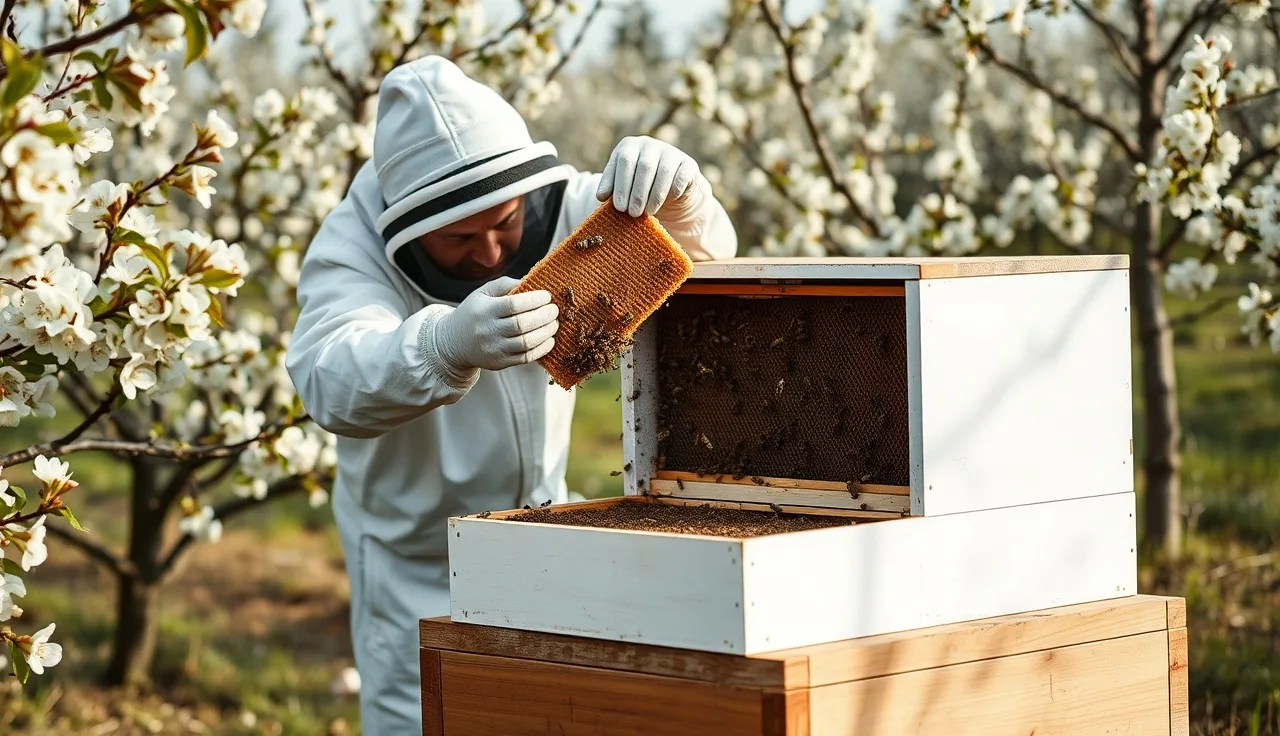
A shook swarm is exactly what it sounds like. You shake every bee off every frame into a clean new hive body, give them only foundation or empty drawn comb, and pull all the existing brood frames out entirely. The colony rebuilds from nothing. No capped brood means a complete brood break, and that break is the whole reason people do this. It cuts off the varroa reproductive cycle and forces the entire mite population phoretic (riding on adult bees), where oxalic acid can reach and kill them [1].
Timing is the game. Do it too late and your bees pour energy into drawing comb and raising brood right when they should be filling supers. Do it too early in spring and a cold snap can kill a cluster that has no warm brood to help hold temperature. Do it during a strong flow and you just threw away your honey crop. The window is real, but it's narrow, and it slides by weeks depending on your location and your main forage plant.
When should you do a shook swarm relative to the nectar flow?
Four to six weeks before the main flow starts. That's the standard recommendation from UK and US extension programs [2]. It gives the queen roughly three weeks to get a new brood cycle running, then another one to three weeks for those bees to emerge and join the foragers before the flow peaks.
Here's what that looks like on a calendar. If your main flow is oilseed rape (canola) opening April 20, you want to shook swarm between March 9 and March 23. If your flow is white clover starting June 1, you have until late April. The arithmetic is easy. The local bloom dates are what trip people up.
Running the procedure during the flow itself is almost always a mistake. The colony burns energy drawing comb and rearing brood right when foragers should be packing nectar. Honey yield drops hard, and colonies that can't draw comb fast enough may stall out completely. A few beekeepers force a mid-flow brood break on purpose for mite control when they have no other option, but they eat the honey loss and feed heavily to keep the colony alive [3].
After the flow is a third option. Beekeepers use it to reset mite loads heading into summer dearth or the autumn buildup. It works for mites, but it carries real starvation risk when no nectar is coming in to help draw fresh comb. Heavy sugar syrup feeding is not optional in that case.
What does a shook swarm actually do to varroa mite levels?
The brood break is the mechanism. Varroa mites reproduce only inside capped brood cells. Strip out all the capped and open brood, and every surviving mite is stranded phoretic on adult bees, usually for three to four weeks until new brood gets capped again [4]. That gap is your treatment window.
Oxalic acid (the active ingredient in Api-Bioxal and other EPA-registered oxalic acid dihydrate products) hammers phoretic mites and does almost nothing to mites sealed inside cells. The EPA-registered oxalic acid label directs single-dose drizzle or spray applications for use "when little or no brood is present." A shook swarm creates exactly that condition [5].
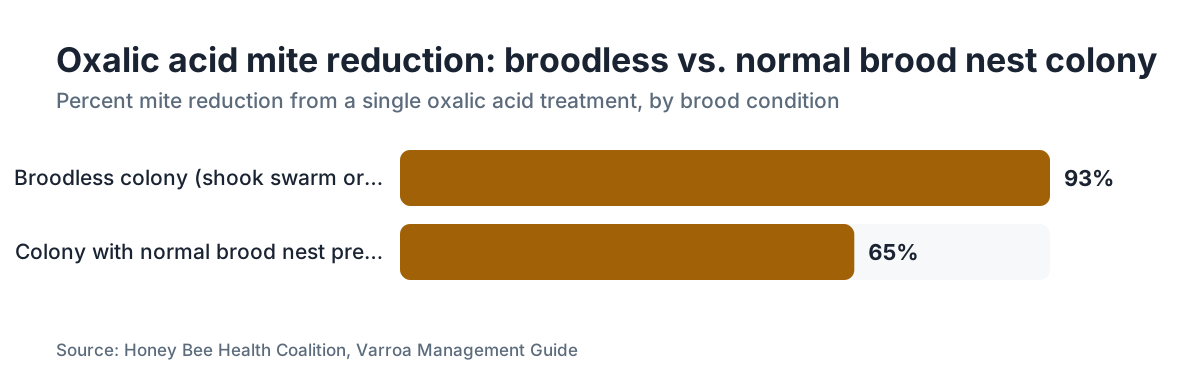
The Honey Bee Health Coalition's Varroa management guide puts oxalic acid efficacy in a broodless colony at roughly 90 to 97 percent mite reduction from a single treatment [1]. In a colony with a normal brood nest, that same treatment lands closer to 60 to 70 percent, because most mites sit protected inside cells. The shook swarm amplifies the treatment. It doesn't replace it. You still have to apply the oxalic acid at the right moment, usually five to seven days after the shook swarm, once any larvae you missed have been capped.
For the biology behind the pest you're managing, the varroa mite article here walks through the full reproductive cycle.
How does local nectar flow timing affect when you can run a shook swarm?
Your local flow calendar is the single biggest variable in this whole plan. Flows swing wildly across North America and the UK. A beekeeper on the California coast gets flows in February and March from eucalyptus and manzanita. A Minnesota beekeeper may see nothing dependable until dandelion in May and clover in June. A UK beekeeper near arable ground keys the whole season to oilseed rape in April [9].
Three questions to answer before you plan a date:
- When does your first strong flow start?
- Is that flow dependable, or does it hinge on weather?
- Can you commit to feeding 1:1 syrup for three to four weeks if the weather kills natural nectar income?
If your first flow is early (before the end of March across much of the US), you're doing this in late winter, and the colony has to be big enough to survive on a frame or two of honey with no brood warmth. A colony of six or fewer frames of bees is probably too small to shook swarm safely in cold weather [2].
If your main flow lands in midsummer, you have room to breathe. Early to mid spring gives plenty of rebuild time, the weather is warming, and dandelion or fruit tree bloom can feed the colony through recovery instead of forcing you to pour syrup from the bag.
What are the risks of doing a shook swarm at the wrong time?
Starvation tops the list. A shook swarm colony has no capped stores, no open nectar, and no brood to fall back on. Time it wrong or catch bad weather, and the cluster can starve in days. That's not a hypothetical. Keep 1:1 sugar syrup on the hive immediately, and check after 48 hours to confirm the bees are taking feed [3].
Chilling is next. In cold weather a broodless colony clusters tighter and gives off less heat. Nighttime temperatures below about 45°F (7°C) can stress a freshly shook-swarmed colony that hasn't started drawing comb. Most UK guidance sets a practical floor of steady daytime temperatures above 15°C (59°F) before you run the procedure [2].
Queen loss is a real one. Shaking bees off frames stresses the queen, and she can get injured or squashed in the process. Mark her before you start. Confirm she's in the new box and laying within five to seven days after.
Missed honey crop rounds it out. If you're three weeks from a good flow instead of six, you'll recoup some honey but harvest less than a colony you left alone. Be honest about the tradeoff. Mite control that saves the colony beats a few extra pounds of honey from a hive that crashes in August.
Do you need to feed after a shook swarm, and how much?
Yes. Feed right away and feed heavily. The colony has no stores and has to draw fresh comb fast. Use 1:1 sugar syrup (equal parts sugar and water by weight) to push wax production, in a feeder that holds at least a quart and preferably a gallon [3].
How long you feed depends on whether a flow is running. If you timed the shook swarm four to six weeks before the flow, you might feed two to three weeks until real forage kicks in. If no flow is coming, feed until the colony has drawn comb across most of the bottom box and the queen has a solid brood pattern going, usually three to four weeks.
Some beekeepers add a thin pollen substitute patty at the start to give nurse bees protein for that first round of brood. Beehive pollen dynamics are worth understanding if you haven't thought hard about protein nutrition in early spring colonies.
Don't add supers until the colony has filled the lower box with brood and capped stores. Give them space too early and you slow the comb drawing and drag out the rebuild.
What equipment do you need for a shook swarm?
The list is short. A new hive body (or a scorched, thoroughly cleaned one), fresh foundation or clean drawn comb, a board or screen to shake bees onto (or a way to shake straight into the box), and a feeder. That's the core kit.
If you're running this specifically for oxalic acid treatment, you also need an oxalic acid product registered for use where you live. In the US, look for oxalic acid dihydrate on the EPA-registered label and check your state department of agriculture for any state-level registration [5]. The Honey Bee Health Coalition's Varroa management guide has a treatment comparison table worth reading before you buy anything [1].
To track mite counts before and after (which you should absolutely do), you need an alcohol wash or sugar roll kit. Count before you start to confirm the colony actually needs the intervention. Count again four to six weeks after treatment to prove it worked. Most extension programs set the action threshold at 2 mites per 100 bees during the season and 1 mite per 100 bees going into winter [1].
VarroaVault has free mite-counting tools and a protocol builder if you want a structured way to track this across multiple hives.
Can you do a shook swarm on a weak colony, or is there a minimum colony size?
There's a practical floor. A colony needs enough adult bees to cover the frames they'll draw and keep the cluster warm enough for the queen to keep laying. Most guidance sets the minimum at five to six frames of bees (roughly 15,000 to 18,000 bees) [2]. Below that, the cluster may be too small to warm the brood nest, especially if temperatures dip.
Weak colonies also abscond more readily after a shook swarm. The disruption is severe, and there's no brood to anchor them to the site. Clipping the queen's wing is a debated measure that can cut absconding risk, though plenty of beekeepers skip it.
If a colony sits below the minimum, combine it with a stronger one first, wait three to four weeks for the merged unit to build up, then shook swarm the combined colony. You get the full brood-break benefit without gambling on a marginal cluster.
How does a shook swarm compare to other brood-break methods for varroa control?
A shook swarm is the most thorough brood break you can create, and the most disruptive. Here's how the main options stack up:
| Method | Brood break complete? | Colony disruption | Rebuild time | Requires new equipment? |
|---|---|---|---|---|
| Shook swarm | Yes (all brood removed) | High | 4-6 weeks | Yes (clean box) |
| Queen cage (trap) | Yes (after 24 days) | Low | 1-2 weeks | No |
| Split + requeen | Partial (splits the mite load) | Medium | 3-4 weeks | Yes (second hive) |
| Remove queen 24 days | Yes | Low-medium | 2-3 weeks | No |
| Nucleus method | Yes (makes a nuc) | Medium | 3-4 weeks | Yes (nuc box) |
Queen caging gets a similar brood break with less disruption and no starvation risk, but it takes 24 days from caging to brood emergence, so the timing math against the nectar flow works out differently [8]. The shook swarm creates the break in a single day [4].
For a colony already showing high mite loads (above 3 per 100 bees) with a flow eight or more weeks out, the shook swarm plus oxalic acid is probably the fastest, most effective single move you have. That's my honest read, and it lines up with the Honey Bee Health Coalition's guidance for colonies in crisis [1].
What should you do with the removed brood frames?
This is where a lot of beekeepers either waste the resource or make a mite mistake. Those frames are packed with emerging and developing bees, and with varroa sealed inside the cells. You have two reasonable choices.
Option one: put the brood frames in a nucleus box with a mated queen or a frame of eggs and let them grow into a separate colony. The emerging bees populate the nuc and you end up with a new unit. The catch is that you kept every varroa in those capped cells alive. You'll need to treat the nuc with a brood-tolerant product (amitraz strips or hop beta acids like HopGuard) once the brood emerges [5].
Option two: kill the brood frames by freezing (72 hours at 0°F / minus 18°C kills all mites and brood), then melt the wax for recycling. This is the stronger mite move because it wipes out those in-cell mites entirely. It feels wasteful the first time. It isn't.
Don't just stack the removed frames in a corner of the apiary. Open brood releases pheromones that pull in robbers and hive beetles, and sealed brood keeps developing and releasing mite-laden bees that drift back into your hived colonies.
How do you know if your shook swarm worked?
Look for eggs five to seven days after the shook swarm. If the queen is present and laying, you'll see a tight, even egg pattern on the new comb. No eggs by day 10 is trouble. It means the queen was lost or she's failing.
Check mite levels four to six weeks after your oxalic acid treatment with an alcohol wash. Count mites per 100 bees. If you started above 3 and you're now at 1 or below, the intervention worked [1]. If levels are still up, you probably had brood left in the hive at treatment time, or the colony reinfested from neighboring hives through robbing or drifting.
Comb-drawing speed tells you about nutrition. A colony drawing comb across all 10 frames within three weeks is healthy and well fed. One that's drawn only four or five frames in that time either doesn't have enough bees or isn't getting enough syrup. Adjust the feeding.
Tracking mite data in a consistent format across seasons is what separates beekeepers who keep improving from those who repeat the same losses. A structured protocol tracker, like the free tools at VarroaVault, keeps the record-keeping from turning into a chore.
Are there situations where a shook swarm is the wrong choice?
Yes. A handful of scenarios call for a different approach.
Late-season colonies. If it's July or August and you're six weeks from your last dependable fall flow, a shook swarm sends the colony rebuilding into autumn with barely any time to store winter reserves. The mite problem may be real, but a well-timed oxalic acid vapor treatment in late fall on a naturally broodless colony often serves you better.
Aggressive or Africanized colonies. The extreme disturbance of a shook swarm on a hot colony is genuinely dangerous. If you're in an area where africanized honey bees are present, a caging or split method gets you a brood break with far less exposure.
New packages or nucs. A package or nuc installed within the last four to six weeks doesn't have the population or stores to survive the disruption. Wait until it builds up to at least six full frames of bees.
Colonies with disease. If you see American Foulbrood signs, do not shook swarm. Shaking bees into new equipment spreads spores. AFB colonies must be handled under your state department of agriculture's rules, and in most US states that means destruction and burning of infected material [7].
Frequently asked questions
How many weeks before the flow should I do a shook swarm?
Four to six weeks is the standard target. That gives the queen time to get a brood cycle running and lets newly emerged bees join the foragers before the flow peaks. Six weeks is the safer end if your colony is medium-sized or your spring weather is unpredictable.
Can I do a shook swarm during a nectar flow?
Technically yes, but you'll pay for it. The colony redirects energy from nectar storage into comb drawing and brood rearing, so honey yield drops. Some beekeepers accept that when mite loads are critical and the flow is the only time they have a populated colony to work with. Feed regardless, because incoming nectar alone rarely covers the energy deficit in the first two weeks.
What temperature is too cold for a shook swarm?
Most UK guidance sets a practical floor of steady daytime highs above 15°C (59°F) and nighttime lows above about 7°C (45°F). Below those, the cluster can't warm a new brood nest efficiently without the insulation capped brood normally gives. In the US, waiting for reliably frost-free nights is the practical rule.
Do I need to feed after a shook swarm?
Yes, immediately and generously. The colony has no stores and needs energy for wax production. Start with 1:1 sugar syrup in a feeder that holds at least one quart. Keep feeding until a strong flow starts or the colony has drawn comb across most of the hive body with visible capped stores, usually two to four weeks.
When do I apply oxalic acid after a shook swarm?
Wait five to seven days. That lets any open larvae left in the hive get capped, which you then verify by inspecting before you treat. Once you confirm all brood is sealed or absent, treat the same day. The EPA-registered oxalic acid label directs single-dose drizzle applications for use 'when little or no brood is present.'
Can a shook swarm cause a colony to abscond?
It can. The disruption removes all brood, which is the main pheromone anchor holding a colony on site. Risk is higher in hot weather and with colonies carrying Africanized genetics. Making sure the queen is in the box, reducing the entrance to one bee space, and feeding immediately all cut absconding risk.
How long does it take a shook swarm colony to fully recover?
Expect four to six weeks to return to full foraging strength. The first brood emerges around day 21, and those young bees need another two to three weeks to become foragers. A colony shook swarmed four weeks before a strong flow may harvest a modest crop; one shook swarmed six weeks out usually performs close to a normal colony by peak flow.
What mite count justifies doing a shook swarm?
There's no universally agreed threshold specifically for shook swarm intervention, but the Honey Bee Health Coalition recommends treating at 2 or more mites per 100 bees during the brood-rearing season. If a colony is already at 3 or above in early spring and a brood break is feasible before the flow, the shook swarm plus oxalic acid is one of the highest-efficacy options available.
What do I do with the brood frames I remove?
Two real options. Freeze them for 72 hours at 0°F (minus 18°C) to kill all mites and brood, then melt the wax. Or place them in a nuc with a queen, let the brood emerge, then treat the nuc for mites once it's broodless. Do not leave removed frames open in the apiary. They attract robbers and release mite-laden emerging bees back into your colony.
Is a shook swarm the same as an artificial swarm?
No. An artificial swarm copies natural swarming by moving the queen and flying bees to a new location while leaving the brood and house bees at the original site, creating a brood break only in the queenright unit. A shook swarm strips all brood out of a single colony and puts everything into a clean box. The break from a shook swarm is more complete and immediate.
Can I do a shook swarm if I don't know where my queen is?
It's risky. If you shake bees into the new box and the queen isn't with them, you've got a queenless shook swarm with no way to raise emergency queens off fresh foundation. Mark your queen before you start, or at minimum do a thorough frame-by-frame check to find her first. Losing the queen is the most common reason the procedure fails.
Does a shook swarm help with diseases other than varroa?
Yes, for some. Shook swarming onto clean comb breaks the cycle of brood disease like sacbrood and can reduce chalkbrood by removing infected cells. It also clears out old comb, which builds up pesticide residues and pathogen spores over time. It does nothing for American Foulbrood, which spreads via spores that travel with the bees themselves; AFB needs regulatory intervention, not a shook swarm.
How does a shook swarm affect honey production that season?
Expect reduced production compared to an undisrupted colony if you're within four weeks of the flow. Timed six or more weeks out, some beekeepers report near-normal yields because the colony rebuilds fully before peak forage. Colonies shook swarmed during the flow produce noticeably less, sometimes 50 percent or more below control hives in the same apiary.
Should I use drawn comb or foundation in the new hive body?
Drawn comb is better if you have it disease-free and recently used. The queen can start laying right away without waiting for wax. Fresh foundation delays the first brood cycle by five to 10 days and needs enough young nurse bees with active wax glands to draw comb. If you use foundation, feed 1:1 syrup immediately and don't skip it.
Sources
- Honey Bee Health Coalition, Varroa Management Guide (latest edition): Oxalic acid efficacy in broodless colony approximately 90 to 97 percent; action threshold of 2 mites per 100 bees during brood-rearing season and 1 mite per 100 bees before winter
- National Bee Unit (UK), BeeBase: Shook Swarm Technique: Minimum colony size of 5 to 6 frames of bees; minimum temperature thresholds; recommended timing 4 to 6 weeks before main flow
- University of Minnesota Extension, Bee Lab: Varroa Mite Control: Shook swarm feeding requirements and risks of starvation; 1:1 syrup recommendation for comb drawing
- Penn State Extension, Varroa Mite Integrated Pest Management: Varroa mites are phoretic for 3 to 4 weeks after a brood break before new cells are capped; reproductive cycle in brood cells
- US EPA, Oxalic Acid Pesticide Registration and Labels: EPA-registered oxalic acid label directs single-dose drizzle/spray applications for use when little or no brood is present; state registration requirements apply
- University of Florida IFAS Extension, Honey Bee Diseases and Pests: Old comb accumulates pesticide residues and pathogen spores; American Foulbrood management and comb replacement
- North Carolina State University Extension Apiculture, Varroa Mite Management: Brood-break methods compared; queen-caging method requires 24 days from caging to complete brood emergence for full phoretic window
- Oregon State University Extension, Pacific Northwest Honey Bee Survey: Local nectar flow calendars vary by weeks across North American regions; timing of mite treatments must account for regional forage plants
- Michigan State University Extension, Integrated Pest Management for Honey Bees: Colonies with high mite loads (above 3 per 100 bees) in early spring benefit most from combined brood-break plus oxalic acid intervention
Last updated 2026-07-10