Risks of shook swarm for hobbyist beekeepers
TL;DR
- Shook swarm moves adult bees to a fresh hive and destroys all capped brood, which collapses varroa numbers fast.
- For hobbyists, the real dangers are starvation from lost stores, accidental queen loss, robbing, and bad timing.
- Done wrong, it kills the colony you were trying to save.
- Feed hard, protect the queen, and treat the same day.
What is a shook swarm and why do beekeepers use it for varroa?
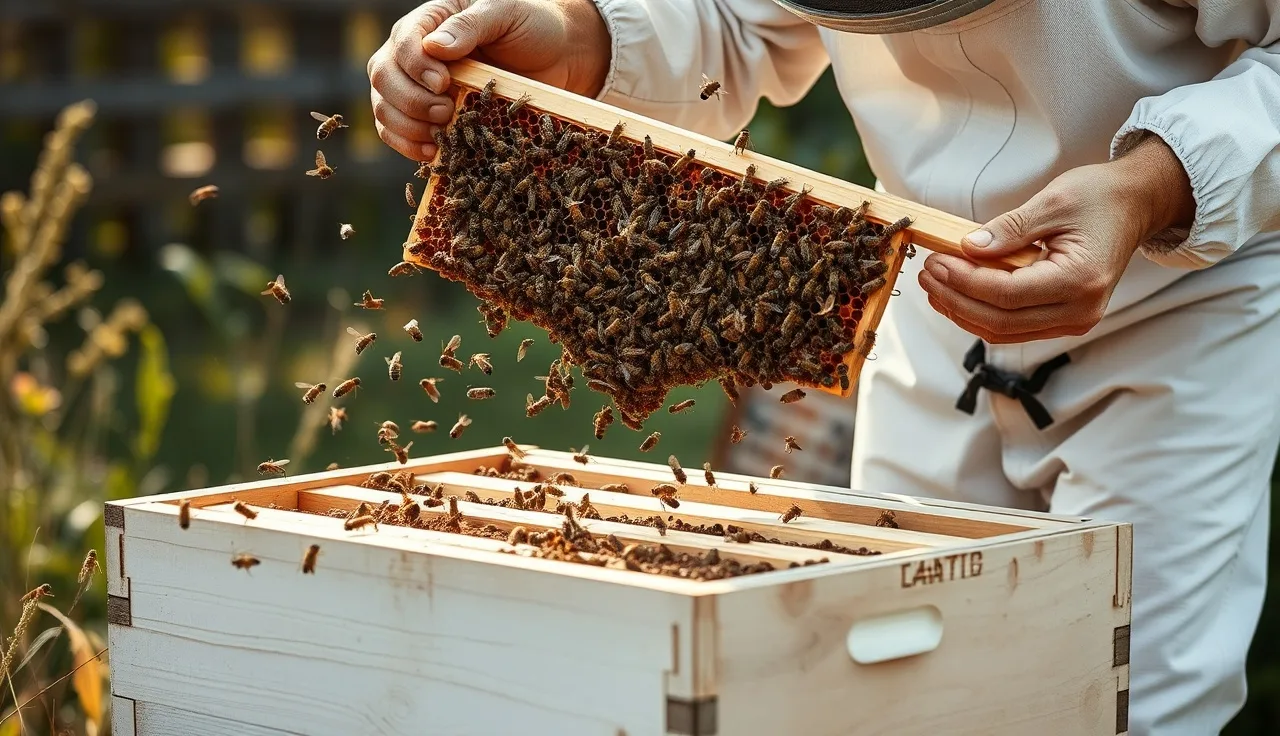
A shook swarm means exactly what it sounds like. You shake every bee off every frame into a new, clean hive body fitted with fresh foundation or empty drawn comb, then you take the old equipment away entirely. All the capped brood, all the open brood, and everything living on those frames gets removed from the colony's future. The bees restart on blank comb.
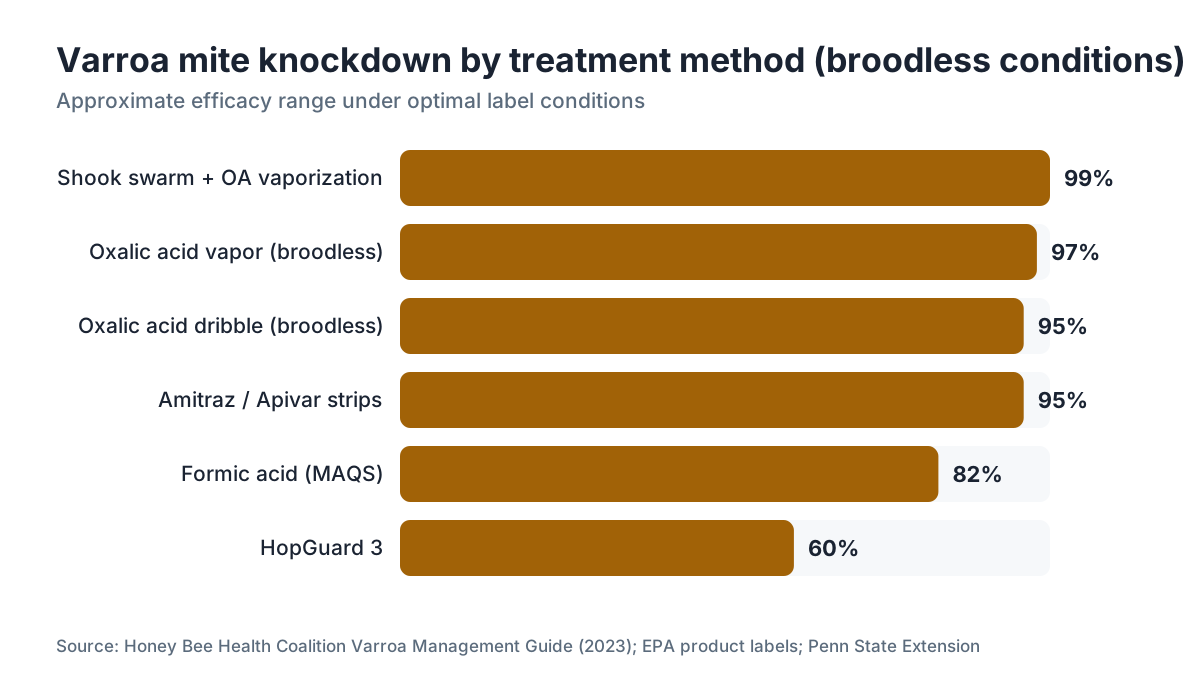
The varroa logic is simple. Roughly 80 to 90 percent of mites in a colony at any given time are reproducing inside capped worker brood [1]. Kill the brood, kill most of the mites. The technique imposes a complete brood break, so there is no capped cell for any remaining phoretic mite to hide in for three to four weeks. Add an oxalic acid dribble or vaporization to the broodless colony right afterward and you can get very close to a 95 to 99 percent mite knockdown in one operation [2].
That is why shook swarm has fans in the UK's National Bee Unit, in Scandinavian pest management programs, and among some American beekeepers who run it as a spring reset. The appeal is real. So are the risks, and they scale up badly when the beekeeper is new or short on resources.
How does shook swarm reduce varroa mites compared to other treatments?
Shook swarm plus oxalic acid sits at the top of the knockdown range and leaves zero chemical residue in the new wax the bees draw. That combination is why experienced beekeepers value it. The catch: every other method below leaves you with a functioning, brood-rearing colony throughout treatment. Shook swarm does not.
The table compares shook swarm against the most common options. Numbers come from published efficacy data and EPA-registered product labels.
| Method | Approx. mite knockdown | Brood break required? | Timing constraints | Residue in wax? |
|---|---|---|---|---|
| Oxalic acid dribble (broodless) | 90-99% [2] | Yes | Winter or induced break | No |
| Oxalic acid vapor (broodless) | 90-99% [2] | Yes | Winter or induced break | No |
| Amitraz (Apivar strips) | 90-99% [3] | No | Temp 50-85°F, no super | Yes, trace |
| HopGuard 3 (hop beta acids) | 40-80%, varies [4] | No | Honey super removed | No |
| Formic acid (Mite Away Quick Strips) | 68-95% [3] | No | Temp 50-85°F | Minimal |
| Shook swarm + OA vaporization | 95-99%+ [2] | Induced by technique | Spring ideally | No |
You are running a severely stressed colony for several weeks. Anything that goes wrong during that window hits harder than it would at any other time of year.
For a broader picture of varroa mite biology and how mites move through a colony, that background helps explain why the brood-break mechanic works so well.
What are the biggest risks of shook swarm for hobbyist beekeepers?
Read this section carefully before you decide to try it.
Starvation. When you transfer bees onto empty comb, you strip away all the honey and pollen that sat in the old frames. A freshly shook colony has no reserve. If a cold snap, rain, or a dearth follows within the first week, the bees can starve in 48 to 72 hours. Colonies in nutritional stress also show weaker immune competence and higher susceptibility to secondary pathogens like Nosema and viral disease [9]. You must feed immediately and keep feeding until the bees have drawn comb and the queen is laying well.
Queen loss. The single most common hobbyist mistake is losing the queen during the shake. She gets left on a frame, stranded in the old box, or injured in the chaos. If you are not 100 percent certain she went into the new hive, verify her presence within 48 hours. A queenless shook swarm cannot requeen itself. There are no larvae young enough to raise emergency queens, because you removed all the brood. Your window to introduce a mated queen or a frame of young larvae is maybe 24 to 48 hours before the situation gets very hard to recover.
Absconding. Bees on blank comb with no brood to anchor them will sometimes leave, especially in hot weather or after a location change. Laying a piece of old brood comb across the top bars (removed before capping) can help, though the technique is debated. Some beekeepers lightly mist the new comb with diluted lemongrass oil. Controlled data on either is thin, but both cost nothing to try.
Robbing. A freshly shook colony is weak. The old brood frames you set aside are dripping with honey and smell strong. Within hours you can trigger a robbing frenzy from neighboring hives. Every frame with stores goes straight into a sealed container, a freezer, or extraction gear. Never leave them sitting outside.
Disease carryover. Shook swarm does not cure American foulbrood. If AFB spores are in the old comb, they are also on the bees you just transferred. You may be re-infecting clean foundation before the colony draws it. Check for AFB thoroughly first. If you find it, the legal response in most US states is notifying your state apiarist and often destroying equipment, not shaking a swarm [5].
Your own inexperience. I'll say this plainly: shook swarm is not a beginner technique. It takes fast, confident handling, the ability to find and protect the queen under pressure, immediate feeding, and a readiness to intervene within 24 hours. If you have fewer than two full seasons and have never worked through a thorough inspection under mild stress, this technique has a real chance of ending your colony. The other methods in the table above are safer starting points.
When is the best time of year to do a shook swarm, and does timing affect the risk?
Timing shapes almost everything about whether this works. The standard recommendation in the UK, where the technique is best documented, is early spring before the main flow: a laying queen, bees clustering in a single brood box, and daytime temperatures reliably above 55°F [6]. At that point the population is building, the bees are eager to draw comb, and nectar is coming in (or you can fake it with syrup).
A summer shook swarm during a flow sounds appealing because incoming nectar solves the starvation risk. But warm weather speeds up robbing, and the colony is at peak population, which makes the operation messier and harder to control.
Fall is generally wrong for hobbyists. There is no time to rebuild before winter, and a colony on empty comb in September across most of the US will not survive unless the beekeeper can accurately predict what food inputs remain.
Winter is wrong for obvious reasons, except in mild climates where oxalic acid on a naturally broodless colony is a cleaner, far less risky way to get essentially the same mite knockdown.
The sweet spot is roughly March through early May in most of the US, adjusted by local bloom. The Honey Bee Health Coalition suggests timing varroa interventions around local forage calendars, which vary a lot by region [1].
Does shook swarm fix the varroa problem permanently or does it just reset the clock?
It resets the clock. Reinfestation from neighboring hives and from your own bees' drifting and robbing starts immediately. Fries and colleagues found in the Journal of Apicultural Research that treated colonies in dense apiaries can climb back to pre-treatment mite levels within four to eight weeks, depending on regional mite pressure and neighboring colony density [7].
The brood break buys time and gives your oxalic acid treatment ideal conditions to work. But if you skip post-operation monitoring and don't intervene again before the mite load climbs, you'll be right back where you started by midsummer. Integrated varroa management needs monitoring every four to eight weeks throughout the season, not a single knockout treatment [1][8].
For planning a full-season monitoring schedule, tools like the free varroa management calculator at VarroaVault translate an alcohol wash or sticky board count into a treatment decision and flag your best re-check dates.
How do you feed a colony after a shook swarm, and how much does it need?
Feed heavily and immediately. The colony has no reserves. A 1:1 sugar syrup (1 part sugar to 1 part water by weight or volume) stimulates comb drawing and gives the bees enough carbohydrate to survive. A standard hobbyist hive needs roughly a quart to half-gallon of syrup per day when bees are actively drawing comb in warm weather. Expect to go through 10 to 20 pounds of sugar in the first two weeks.
Protein matters too. Without stored pollen and without incoming pollen (early spring flows can be unreliable), nurse bees cannot make the brood food the queen's new eggs will need. A commercial pollen substitute patty placed directly over the cluster is the practical fix. Check it every five to seven days and replace it when it's gone or dried out.
Skip frame feeders that force you to open the hive constantly during the first two weeks. Every inspection disturbs a stressed colony. Top feeders or entrance feeders you can refill without cracking the brood chamber are better in this phase.
If the colony refuses syrup, that usually means either a natural flow is strong enough to substitute or something is badly wrong: possibly queenlessness or disease. Investigate.
Can shook swarm spread disease between hives in your apiary?
Yes, and it's an underappreciated risk. The old frames you remove are loaded with honey, pollen, and possibly pathogens. Leave them sitting in the apiary and bees from every hive in range will rob them out within hours, carrying whatever is in those frames (Nosema spores, chalkbrood, sacbrood) back home.
AFB is the nightmare scenario. The spores survive for decades in old wax and honey [5]. If AFB is present and you let those frames get robbed out across your apiary, you can infect multiple colonies in an afternoon. This is not theoretical. State apiarists document cases every season where a beekeeper's attempt to reclaim stores from pulled frames spread AFB through a small operation [10].
The safe disposal path: freeze the old frames at 0°F for at least 48 hours to kill wax moth eggs and other pests, then either extract the honey for human use (AFB is not a human health risk) or melt the wax down and render new comb. Store the processed frames in sealed bags until you need them. Don't stack them in the open. Don't let bees near them.
If you're buying new beekeeping supplies anyway, this is a good moment to retire the old dark comb you'd have replaced eventually.
What equipment do you need to do a shook swarm safely?
You need a new or thoroughly cleaned brood box fitted with frames. The frames should carry either fresh foundation or clean drawn comb. If you use drawn comb, make sure it has no disease history and has been stored in a sealed bag or freezer. A solid bottom board and a tight entrance reducer go in from the start, both to hold heat and to make robbing harder.
You also need a way to feed immediately: a top feeder, a frame feeder, or a division board feeder loaded with syrup. Have at least 10 pounds of sugar on hand before you start.
A clean queen excluder placed on top of the new brood box for the first 24 to 48 hours can prevent absconding. The idea is that once the queen starts laying, the bees commit to the new spot. Pull the excluder once you've confirmed laying.
Have a cardboard box or a sealed container ready for the old frames the moment you pull them. Every second they sit open in the apiary invites robbing.
If your plan includes oxalic acid after the shake, have your vaporizer or dribble solution ready to go the same day or within 24 hours. The whole point is the broodless window. Wait even a few days and the queen has started laying, cells are capped, and your knockdown drops hard. Many beekeepers apply OA dribble right after the shake, before the new box is even closed.
If you're sourcing gear, checking beekeeping supply companies ahead of time (rather than scrambling the morning of) saves a lot of stress.
How do you protect the queen during a shook swarm?
This step is where hobbyists lose colonies most often. You have two real options: find the queen first and cage her, or work carefully enough that you can track her the whole time.
Caging her first is the better move for most people. Go through each frame methodically, find her, and place her in a hair-roller cage or a standard queen cage with a few attendant workers. Set the cage somewhere safe (a shirt pocket or a small box) while you set up the new hive. Once every bee is shaken into the new box, open the cage and let the queen walk in, or set the cage between two frames with the candy plug toward the cluster as you would with a new queen introduction. Some beekeepers prefer the slow release so the colony accepts her cleanly after the stress of the operation.
If you can't find her on the first pass, don't shake anything. Take a break, put the frames back, close up for 20 to 30 minutes, and try again. Shaking without knowing where the queen is risks leaving her on an old frame headed for your disposal pile.
Mark your queens. A small spot of paint (Posca pens work well) on the thorax makes finding her much faster. It costs almost nothing and removes most of the stress from operations like this one.
Is shook swarm legal and does it require any permits or notifications?
The technique itself is not regulated. You can rearrange your own bees any way you like. Several things you might do around a shook swarm do touch state law, though.
Most US states require you to register your hives with the state department of agriculture, and some require inspection before you buy or move equipment [10]. If you're disposing of old frames showing signs of AFB, you're typically required to notify your state apiarist rather than handle it yourself. Burning AFB-infected equipment is mandatory in many states and often must be done under official oversight [5].
Oxalic acid is an EPA-registered pesticide, and its label is a legal document. The label allows application to broodless colonies or, in the extended-release formulation, to colonies with brood [2]. Apply it immediately after a shook swarm while the colony is broodless and you're within standard label guidance. Off-label application is illegal under federal law.
Beyond that, there are no permits, no notifications, and no restrictions on the shook swarm technique itself.
What should you do if the shook swarm colony fails or goes queenless?
First, confirm what you're actually dealing with. A queenless colony after a shook swarm shows no eggs or young larvae, restless bees that make a distinctive roaring sound when you tap the side, and possibly laying workers within two to three weeks if it drags on. Laying workers drop multiple eggs per cell, usually on the cell walls rather than the bottom. That's a very bad sign.
Catch queenlessness within the first 72 hours and your options are good. Introduce a mated queen directly (a cage introduction with candy plug gives the best acceptance rate) or give the bees a frame of eggs and young open brood from another hive so they can raise an emergency queen. The second option adds two to three weeks before you have a laying queen, and that delay stretches your colony's vulnerable period.
If you find laying workers, the prognosis is difficult. The standard approach: move the hive 100 feet or more from its stand, shake all the bees onto the ground, and let the flying bees (the ones that can navigate home) return to the apiary. Laying workers are generally non-flying bees that walk back. Then introduce a mated queen into the reduced population back at the original stand. This is a stressful multi-step rescue and it doesn't always work.
Honestly, if a shook swarm fails completely and you have no spare queens or brood frames, your practical move may be to combine the failed colony with a healthy one using the newspaper method and start over. Losing a colony hurts, but folding the bees into a strong unit beats watching them dwindle through August.
Are there safer alternatives to shook swarm that hobbyists should consider first?
For most hobbyists, yes. You can get the same brood-break benefit with less collateral damage.
A nucleus split done six to eight weeks before your main colony hits a critical mite threshold gives you a brood break in the queenright portion while the parent colony raises a new queen. It also hands you an extra colony or a replacement queen. You still treat both portions, but nobody starts on empty comb.
A simple queen removal followed by oxalic acid 24 days later (long enough for all brood to emerge) gets you a nearly broodless state without the starvation risk. You do need to manage the queenless period carefully.
For many hobbyists running one to five hives, an Apivar strip application (amitraz, EPA-registered) in early fall after pulling honey supers is the lowest-risk, highest-efficacy option in the table above, especially if you monitor and catch the problem before mite loads pass the 2 percent alcohol-wash trigger the Honey Bee Health Coalition flags [1].
Shook swarm is genuinely useful. It belongs in the toolkit. But reach for it when you have the experience to run it confidently, the resources to carry the colony through the vulnerable weeks, and a specific reason a simpler treatment won't do. To track where your mite levels sit and plan the right move, VarroaVault's free varroa tools let you input wash counts and get treatment timing tuned to your region and season.
Frequently asked questions
Will shook swarm kill my colony if I do it wrong?
It can. The most common fatal mistakes are losing the queen during the shake, failing to feed immediately so the colony starves, and triggering a robbing attack from the old frames left in the open. Go in without a caged queen, a feeder loaded with syrup, and a sealed container ready for the old frames, and the odds of a bad outcome are meaningfully high. This technique rewards preparation.
How long does it take for the colony to recover after a shook swarm?
If everything goes right, you'll see eggs in the new comb within two to four days (the queen often starts laying the same day or the next). Full recovery to pre-operation strength takes roughly six to eight weeks. During that window the colony is vulnerable to weather, robbing, and secondary infections. Steady feeding for the first two to three weeks is the main thing that shortens recovery.
Can you do a shook swarm on a small colony or a nuc?
Technically yes, but the risk is higher. A small colony has fewer bees to generate warmth, fewer nurse bees to feed larvae when the queen restarts laying, and less resilience if anything goes wrong. Most practitioners want at least five to six frames of bees before attempting this. A colony smaller than that is better served by a simpler treatment and a feeding program to build it up first.
Do I need to treat with oxalic acid immediately after the shook swarm?
You don't have to, but you should. The point of the technique for varroa control is the broodless window. The queen starts laying within 24 to 48 hours, and cells get capped again in nine to ten days. Oxalic acid works best on broodless colonies, and efficacy drops sharply once brood is capped. Apply the dribble or vapor the same day or within 24 hours at the latest.
What do I do with the old frames and comb after a shook swarm?
Get them out of the apiary immediately to stop robbing. Freeze them at 0°F for 48 hours to kill wax moth eggs, then extract any usable honey or render the wax. If you suspect American foulbrood, do not extract the honey into your apiary environment and contact your state apiarist before doing anything else. Never leave pulled frames sitting open where other bees can reach them.
Does shook swarm work against American foulbrood?
No. AFB spores live on the adult bees themselves, in the honey they've consumed, and throughout the hive environment. A shook swarm moves infected bees onto clean comb, and they re-infect it quickly. If you suspect AFB, a shook swarm will likely spread the disease and waste a colony. Contact your state department of agriculture apiarist. Most states require official oversight of AFB management.
How do I prevent the bees from absconding after a shook swarm?
The main levers: cage the queen for 24 to 48 hours so her presence anchors the colony, use a reduced entrance so the hive feels defensible, keep the new hive in the same spot as the old one so foragers return correctly, and start feeding immediately. Some beekeepers lay a single piece of old brood comb (no capped cells) across the top bars briefly. Warm, dark, fed colonies abscond far less than cold or hungry ones.
Is shook swarm the same as an artificial swarm?
They're related but different. An artificial swarm splits a colony to simulate a natural swarm by moving the queen and flying bees to a new box on the original stand. It usually leaves brood and emerging bees in the old box. A shook swarm shakes all adult bees onto new comb and removes all brood entirely. The mite knockdown is more aggressive because it eliminates all capped cells rather than separating them temporarily.
What mite level justifies trying a shook swarm instead of a standard treatment?
There's no published threshold that specifically points to shook swarm over other treatments. The Honey Bee Health Coalition flags a 2 percent alcohol wash result (roughly 2 mites per 100 bees) as a spring and summer treatment trigger. Shook swarm is sometimes used at very high mite loads, above 5 to 8 percent, where a beekeeper wants maximum knockdown without chemical residue in new comb. But high mite loads often mean already compromised bees, which makes the technique riskier, not easier.
Can I do a shook swarm with a new or unmarked queen I've never seen before?
You can, but finding an unmarked queen in a mid-season colony under the stress of an inspection is genuinely hard. Mark her first, at a routine inspection, before you plan the shook swarm for a later date. Hunting for an unmarked queen while trying to run the transfer fast enough to minimize stress is a recipe for losing her. Marked queens make the whole operation faster and safer.
How much does a shook swarm cost in supplies versus buying a treatment?
The main costs are the new brood box and frames if you don't have spares (roughly $30 to $80 depending on supplier and whether you use foundation), the sugar for feeding ($10 to $20 for the first two weeks), and oxalic acid if you apply it ($15 to $30 for a vaporizer's worth of product). An Apivar treatment runs about $8 to $15 per hive in a pack. The shook swarm's equipment cost is a one-time investment if you keep the box, but the labor and risk are higher.
Can shook swarm be used in combination with requeening?
Yes, and some beekeepers plan it this way on purpose. They do the shook swarm, apply oxalic acid to the broodless colony, and then introduce a mated queen from a hygienic or mite-resistant line instead of releasing the original queen. The logic is that you're resetting the mite load and the genetics at once. The risk is queen acceptance after the stress of the operation, so a cage introduction with a candy plug is safer than a direct release here.
Does shook swarm work in all climates or only certain regions?
It works anywhere you have a suitable window: temperatures reliably above 55°F for at least two weeks post-operation, a forage source or your willingness to feed heavily, and a colony healthy enough to survive the reset. In hot southern climates, the window may be very early spring or fall. In cold northern climates, the spring window is ideal but shorter. In subtropical climates with year-round brood, timing is more flexible but absconding pressure is higher.
Sources
- Honey Bee Health Coalition, Varroa Management Guide (2023 edition): Roughly 80-90% of varroa mites reproduce in capped worker brood; the HBHC recommends monitoring every 4-8 weeks and using a 2% alcohol wash result as a spring/summer treatment trigger.
- EPA, Oxalic Acid Registration and Label (EPA Reg. No. 87243-1): Oxalic acid is EPA-registered for varroa control; label specifies application to broodless colonies for dribble method and broodless or with-brood colonies for extended-release formulations; efficacy in broodless colonies is 90-99%.
- Pennsylvania State University Extension, Varroa Mite Management: Apivar (amitraz) and formic acid-based treatments show 90-99% and 68-95% efficacy respectively under label conditions; both are EPA-registered.
- University of Minnesota Extension Bees, HopGuard and Organic Acid Treatments: HopGuard 3 (hop beta acids) shows variable efficacy of 40-80% depending on colony conditions and application method.
- USDA Agricultural Research Service, American Foulbrood Disease: AFB spores survive for decades in old wax and honey; most US states require notification of the state apiarist and official oversight of AFB management including regulated burning of infected equipment.
- UK National Bee Unit (Animal and Plant Health Agency), Managing Varroa (2017): The UK NBU recommends shook swarm as a spring varroa management technique before the main nectar flow, with daytime temperatures above 55°F to protect the broodless cluster.
- Journal of Apicultural Research, Reinfestation of honey bee colonies by Varroa destructor after treatment (Fries et al.): Treated colonies in high-density apiaries can reinfest to pre-treatment mite levels within four to eight weeks due to drifting and robbing behavior from neighboring colonies.
- Cornell University Dyce Lab for Honey Bee Studies, Varroa Mite Management: Integrated varroa management requires ongoing monitoring throughout the season; a single treatment event does not provide season-long control.
- University of California Agriculture and Natural Resources, Honey Bee Pest Management: Colonies in nutritional stress show reduced immune competence and are more susceptible to secondary pathogens including Nosema and viral diseases.
- Virginia Department of Agriculture and Consumer Services, Apiary Program: Most US states require hive registration and notification of state apiarists when AFB is discovered; regulations on frame disposal and equipment burning vary by state.
Last updated 2026-07-10