Solo beekeeper varroa management: time-saving tips that actually work

TL;DR
- A solo beekeeper running 1-20 hives can cut varroa labor by 40-60%.
- Batch inspections, use alcohol wash instead of sticky boards, time treatments to the colony's broodless windows, and keep a one-line decision log per visit.
- The real time sink isn't the treatments.
- It's the extra trips you make because you missed a monitoring window.
Why is varroa management so time-consuming for solo beekeepers?
The treatments themselves are fast. What eats your day is the back-and-forth: a check here, a forgotten record there, a second trip because you weren't sure the reading was right. A hobbyist running five hives alone can burn four to six hours a month on that scattered approach, and most of it is avoidable.
The Honey Bee Health Coalition's Varroa Management Guide states the core problem plainly: "The goal is to keep mite levels below the economic threshold before the colony produces the winter bees that will carry the colony through to spring." [1] There's a time cost hiding in that sentence. Skip the schedule and you're always behind, and catching up with an overloaded colony costs you more time and more dead bees.
Working alone puts you at a structural disadvantage. You're carrying frames, counting mites, writing numbers, and deciding what to do all at the same time, with nobody to hold the other end. The fix isn't working faster. It's designing your season so the decision is already made before you crack the lid.
For background on the mite itself and why you can't ever fully eliminate it, see our guide to the varroa mite.
What is the fastest reliable method to monitor mite levels?
Alcohol wash. Full stop.
Sticky boards are passive. They give you a daily mite drop that's hard to read without a baseline, swings with temperature and colony strength, and tells you nothing about the mites hiding in capped cells. [2] Sugar roll is gentler but undercounts by 20-40% against alcohol wash in controlled comparisons. [3] For a solo beekeeper who needs a number they can act on right now, an alcohol wash on a 300-bee sample is the standard.
Here's the time math. Setting a sticky board takes about two minutes, but then you drive back in 24 to 72 hours, count the drop, and do the arithmetic. That's two trips. An alcohol wash takes eight to ten minutes per hive start to finish: scoop bees from the brood area into a mesh jar, add 70% isopropyl alcohol, shake for 60 seconds, pour through fine mesh into a white bowl, count the mites, divide by three for mites per 100 bees. [1] One trip. One number. One decision.
The University of Minnesota Extension sets a 2% infestation rate (2 mites per 100 bees) as the summer treatment threshold. [4] Above it, you treat. Below it, you write down the date and check again in three to four weeks. That framework means you never stand at the hive agonizing. The number decides for you.
For a supply list including mesh wash jars and inspection tools, the beekeeping supplies overview is a decent starting point.
How do you batch hive inspections to save the most time?
Batching is the biggest time multiplier a solo beekeeper has. Every time you suit up, drive out, and set up, you pay a fixed cost no matter how many hives you touch. Check one hive and drive home, that overhead lands on a single colony. Check all five, and the same overhead splits five ways.
So don't open a hive for a "quick look" unless it's a real emergency. Set inspection days and hold the line. Most hobbyists do fine with one proper inspection day every three to four weeks in the active season, with a mite wash built into every one of those visits.
A batching protocol for five hives is simple. Arrive, light the smoker once, work all five colonies in sequence, record mite counts on a notepad or phone, decide on the spot, and treat before you leave. Experienced hands finish in about 90 minutes. Five separate visits across a month, at 30 to 45 minutes each including travel and setup, run you 2.5 to 3.5 hours for the exact same information.
The Honey Bee Health Coalition also recommends treating every colony in a yard at once where you can. [1] Drifting mite-laden bees will reinfest a freshly treated hive from an untreated neighbor, so synchronizing protects the biology. It also means no second trip a week later for the one straggler hive that crossed threshold.
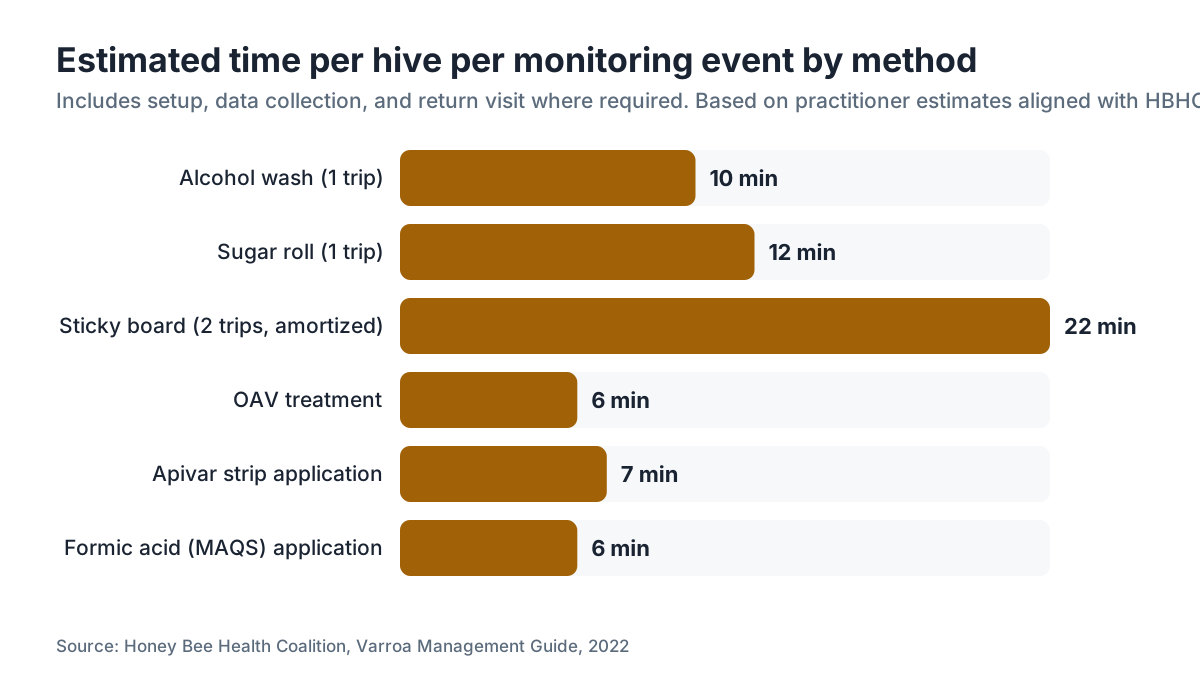
Which varroa treatments are fastest to apply for a beekeeper working alone?
Speed matters when there's no second person to hold frames or hand you the lighter. Here's an honest comparison of the common options.
| Treatment | Application time per hive | Follow-up visit needed | Works through capped brood | EPA-registered |
|---|---|---|---|---|
| Oxalic acid dribble (Api-Bioxal) | 3-5 min | No | No (lower efficacy with brood) | Yes [5] |
| Oxalic acid vaporization (OAV) | 4-7 min | No | No (some efficacy with brood) | Yes [5] |
| Apivar strips (amitraz) | 5-8 min | Yes, remove at 42-56 days | No | Yes [6] |
| Formic acid (Mite-Away Quick Strips) | 4-6 min | No | Yes | Yes [7] |
| HopGuard 3 (hop beta acids) | 5-8 min | Yes, reapply | Best when broodless | Yes |
For solo work, oxalic acid vaporization is the fastest effective option once you own a sublimator (about $150-250 for a decent electric model). Plug it in, load the tray, slide it in for two to three minutes per hive, move on. The EPA label for Api-Bioxal allows a single treatment when brood is present and up to three treatments at five-day intervals during a broodless period. [5]
Apivar strips are the lowest-skill option and the most forgiving on a busy calendar. Open the hive, hang two strips between brood frames, close up, and come back in 42 to 56 days to pull them. [6] For someone who can't always hit a precise follow-up date, that wide window is genuinely useful.
Formic acid through MAQS penetrates capped brood, which is a real edge, but it needs air temperatures between 50 and 85F (10 to 29C) during treatment, and the vapors are strong enough that you work carefully and don't linger. [7] It's not what I'd reach for when the goal is speed.
Check the beekeeping supply companies page for sourcing, and always confirm your state's registration for the product you pick, because some states add restrictions on certain active ingredients.
How do you build a simple mite monitoring calendar that doesn't fall apart?
Twenty minutes of planning once a year saves hours of reactive scrambling. Here's how to build one that survives past June.
Start with your local winter bee window. Across most of the northern United States, colonies raise long-lived winter bees from mid-August through mid-September. [1] Those bees have to be raised in a low-mite environment or they're compromised before winter even arrives. Work backward from that window to set your hard monitoring dates.
A simple annual skeleton:
- Late April or early May: first alcohol wash as colonies build. Treat if above 2%.
- Every 3-4 weeks through June: monitoring washes.
- Late June or early July: major treatment decision ahead of summer dearth.
- August 1 (non-negotiable): mite wash, and treat if you have any doubt, because this is the last real window before winter bees are raised.
- October or November: oxalic acid dribble or vapor during the natural or induced broodless period.
Write those dates on a paper calendar you hang somewhere you actually pass every day. Add a phone reminder 48 hours ahead so you can carve out the time. That's the whole system. It doesn't need to be digital. It needs to be visible and tied to your real schedule.
Want something more structured? VarroaVault's free protocol tools include a seasonal mite monitoring calendar template you can bend to your local conditions. The goal is identical either way: a written record of your last wash date and result kills the "I think I checked in June" problem that turns into an August disaster.
If you're still building out your apiary, beekeeping supply companies has a side-by-side comparison of major suppliers.
Does the brood break method save time or create more work?
A brood break, whether natural (winter cluster) or induced by caging the queen for 21 to 24 days, clears out the capped brood so a single oxalic acid treatment kills nearly all the mites, instead of the 40-70% that OA hits when brood is present. [1] The real question is whether that efficiency pays for the labor of managing a caged queen.
Honest answer: for most solo hobbyists, induced brood breaks cost more time than they save. Caging a queen means finding her (the hardest part of any inspection), keeping the cage secure for three weeks, and confirming the colony doesn't supersede her or go queenless. Do that for five hives at once, alone, and the error rate climbs fast.
The exception is the fall broodless period, which most colonies in temperate climates enter on their own between October and December depending on latitude. That's a free brood break. A single oxalic acid vaporization or dribble in that window is the highest-efficacy treatment a hobbyist can run, and it costs about 10 minutes total. [5][10] Use that window. It's the best time savings on the whole calendar.
In warm climates where colonies never go fully broodless, three OAV treatments at five-day intervals is the approved alternative under the Api-Bioxal label. [5] That's three short visits, but they have to land on the right five-day spacing, which takes a bit of planning.
How do you track mite counts without spending hours on record-keeping?
Skip the spreadsheet. You need four things per visit: the date, the hive ID, the mite count per 100 bees, and what you did about it. That's one line in a pocket notebook or one note on your phone. Five hives, five lines. A full monitoring record takes under two minutes when the system is simple.
Complexity is what kills these systems. I've watched beekeepers build elaborate sheets that ask them to calculate drone brood percentage and seasonal adjustment factors in the field. They quit filling them in by June. A format you'll actually use beats a perfect format you abandon.
Want a little more structure? The Honey Bee Health Coalition's Varroa Management Guide has a one-page monitoring log that covers everything a treatment decision needs. [1] Print a stack, keep them in a ziplock in your bee bag, done.
The number that matters most is the trend. A hive at 1.8% that read 0.8% three weeks ago worries me more than a hive at 2.1% that read 2.3% last check. The threshold tells you whether to act. The direction tells you whether the treatment you already ran is working or whether things are falling apart faster than you expected.
What equipment investments save the most time over a season?
Not all the gear is worth your money. Here's my honest read on what actually pays for itself in time.
An electric oxalic acid vaporizer is the single highest-return purchase for varroa work. A good one costs $150-250 and drops treatment time under five minutes per hive. If you're currently fussing with formic acid pads or repeat dribble applications, the season-long savings are real. Models like the Varrox Eddy have a solid track record in hobbyist hands, though prices and stock move around, so check current listings.
A honey refractometer isn't a varroa tool, but the principle carries: anything that hands you a number in one step, without sending you back for a second visit, earns its keep.
A mesh alcohol wash kit (purpose-built jars with screened lids) runs $15-30 and replaces the improvised two-jar rig most beginners start with. You'll be faster and spill less.
Screen bottom boards with monitoring trays get marketed as passive mite monitors, but sticky counts are hard to interpret and force a second visit. They're fine as summer ventilation. I wouldn't buy them for mite counting.
Frames of drawn or foundationless comb rotated in for drone brood removal are a free mechanical control. Pulling one frame of capped drone brood removes 200-300 mites at once. [1] The cost is one frame swap per visit. For hobbyists willing to keep up with it, that's a real supplement to chemical treatment, not a replacement.
For sourcing, free shipping honey bee supply companies covers which suppliers offer free-shipping thresholds worth caring about when you order once or twice a season.
How many hives can one person realistically manage with tight varroa protocols?
It depends on your treatment method and how far you drive to the yard. With batched inspections and OAV for treatment, one person holding down a full-time job outside beekeeping can run 10-20 hives without letting varroa control slip. Push past that and you start thinning out monitoring frequency, which is exactly where colony losses take off.
University of California Cooperative Extension estimates a hobbyist spends 15-30 hours per colony per year across all beekeeping tasks, varroa included. [8] Not all of that is mites, but monitoring and treatment are a real slice, especially when a product demands multiple follow-up visits.
At 20 hives with tight batching and OAV, a realistic varroa time budget looks like this:
- Monitoring (6 visits x 20 hives x 10 min each): about 20 hours per season
- Treatment applications (3 events x 20 hives x 6 min each): about 6 hours
- Record keeping: about 2-3 hours
- Total varroa-specific time: roughly 28-30 hours per season
At 30 hives without better systems, that number climbs faster than the hive count does, because you start losing colonies, then spend time on splits and requeening, then make more reactive trips. The math rewards staying smaller and managing well over growing fast and managing reactively.
What are the most common time-wasting mistakes solo beekeepers make with varroa?
Reactive monitoring is the biggest one. Checking mites only when something looks wrong is like checking your oil only after the warning light comes on. By the time the visible signs show (deformed wing virus, crawling bees, a population crash), the colony is already in deep trouble and your options are narrow. [2]
Second mistake: treating without confirming it worked. You hang Apivar strips, leave them six weeks, pull them, and never run a wash to see if the mites actually dropped. If the treatment failed (resistance, sloppy placement, reinfestation), you've burned six weeks you could have used to catch it. A post-treatment wash two weeks after removal takes about 10 minutes and catches failures early. [10]
Third: inconsistent records that force you back onto memory. Memory fails. "I think I treated this one in July" is not a treatment record. One line per visit is all it takes, but you have to actually write it.
And then there's the forum trap. Some beekeepers pour hours into debating treatment philosophy instead of treating. Organic-only, treatment-free, soft treatments only: these are real arguments, but they turn into a time sink when they push action past the threshold window. The science is clear enough that untreated varroa in managed colonies drives collapse and spreads mites to the neighbors. [1] Pick a protocol you can run consistently, and run it.
How do you handle varroa management when you're short on time during a busy season?
Triage first. Not every hive needs equal attention at the same moment. If you washed three weeks ago and a hive read 0.5%, it isn't today's problem. Spend your limited time on the hives that sat near or above threshold last check.
Second, use the fastest reliable monitoring you've got. In a crunch, alcohol wash still beats a sticky board because it gets you a usable number in one trip.
Third, if you can only do one thing, treat instead of monitor. No time to run a wash but you know August is here? Hanging Apivar strips takes about eight minutes per hive and buys six weeks of protection. Run the proper wash on the other side. That's not the ideal order, but it beats no action in the window before winter bee production.
VarroaVault's free tools include a quick-decision guide built for exactly this: a short flowchart based on your last mite count, the date, and how long since you treated, so you can decide in two minutes whether to monitor, treat, or wait. It's made for beekeepers who don't have time to overthink at the hive.
If the time shortage is chronic instead of occasional, reconsider your hive count. Ten well-managed hives will out-produce and out-survive twenty neglected ones.
Frequently asked questions
How often should a solo beekeeper check mite levels?
Every three to four weeks during the active season, with a non-negotiable check around August 1 before winter bee production starts. The Honey Bee Health Coalition warns that letting six or more weeks lapse between summer checks sharply raises the odds of missing a treatment window. Add a pre-winter check after brood drops off, and that rounds out the annual minimum.
Can I use sticky boards instead of alcohol wash to save time?
Sticky boards feel faster but aren't, because they need two trips: placing the board, then returning to count the drop. They also undercount against alcohol wash and can't tell you mite life stage. Alcohol wash hands you a usable number in one visit. University of Minnesota Extension recommends alcohol wash as the most accurate field method for hobbyists.
What is the 2% mite threshold and where does it come from?
The 2% threshold (2 mites per 100 bees on an alcohol wash) is the widely used summer treatment trigger in the United States, referenced by University of Minnesota Extension and the Honey Bee Health Coalition. Below 2% in summer, a colony usually keeps pace with mite reproduction. Above it, mite growth outruns colony recovery without help. Some researchers argue for a 1% trigger in August, given the stakes for winter bees.
Is oxalic acid vaporization safe to do alone?
Yes, with proper PPE. The EPA label for Api-Bioxal requires a respirator rated for organic vapors (an N95 is not enough; you need a half-face respirator with OV/P100 cartridges), gloves, and eye protection. Seal all hive entrances during vaporization and keep the hive closed for at least 10 minutes after. Working alone is fine as long as you follow the label every time.
How long does it take to treat 10 hives with oxalic acid vaporizer?
About 50-70 minutes total, including setup and moving between hives. Per hive runs 4-7 minutes: seal the entrance, load the tray with the labeled dose (typically 2.17 grams of Api-Bioxal per hive), heat for about 2.5 minutes, wait, unseal, move on. The fixed setup (suiting up, loading gear) is about 10 minutes no matter how many hives you treat.
What's the cheapest effective varroa monitoring tool for a solo hobbyist?
Two mason jars, some window screen mesh, and 70% isopropyl alcohol from a pharmacy. The mesh-topped jar holds the bees for shaking; a solid jar or white bowl catches the mites after you pour through. Total cost under $10. A purpose-built kit with screened lids runs $15-30 and is faster, but the DIY rig works fine. The method is what matters, not the hardware.
Can mite-resistant bee genetics actually reduce how much monitoring a solo beekeeper needs to do?
Yes, meaningfully. Colonies bred for varroa-sensitive hygiene (VSH) or recapping behavior show much lower mite growth rates in field studies. The USDA Baton Rouge Bee Lab has documented VSH colonies holding lower mite loads with less frequent treatment. [9] The catch: VSH genetics dilute fast when your queens open-mate with feral drones, so the benefit needs ongoing queen management to hold.
Should I treat all my hives at the same time even if some have low mite counts?
The Honey Bee Health Coalition recommends treating every colony in an apiary at once when any hive hits threshold, specifically to stop mite transfer through drift and robbing. A high-mite hive next to a treated one will reinfest it within weeks. Synchronizing the yard is a little more work upfront and far less reactive cleanup over the season.
Does splitting hives help reduce varroa levels?
Yes. A split creates a temporary broodless period in the queenless half, disrupting mite reproduction for 21 to 24 days. Mites emerge from cells with no new capped brood to enter, which leaves them exposed to a single OA treatment. The tradeoff is the time to make and manage the split, plus lower honey from a colony building back up. Most solo beekeepers find it worthwhile as a planned spring tool, not a reactive one.
What's the best varroa management approach for a beekeeper with only one or two hives?
Same protocol, smaller scale. One or two hives makes batching pointless, so your efficiency comes from fast monitoring (alcohol wash) and treatments with long dwell times (Apivar strips). The August check is especially important for small operations because you have no spare colonies to absorb a loss. A single colony at 4% mites in August has a high chance of not seeing spring without intervention.
How do I reduce the chance of varroa reinfestation between treatments?
Robbing is the main vector. Late-summer dearth triggers robbing, and bees from high-mite colonies carry mites to their neighbors fast. Reduce entrances to a single bee-width during dearth. Never leave open supers, wet cappings, or harvested frames out near hives. Treating your whole yard at once, as the Honey Bee Health Coalition recommends, cuts reinfestation risk far more than treating hives one at a time over several weeks.
Can I skip the fall varroa treatment if my summer counts were low?
This is the most common cause of winter colony loss. Summer counts can read fine in July and balloon by October, because mite reproduction accelerates as the bee population drops and the mite-to-bee ratio rises. The fall oxalic acid treatment during the broodless period is the highest-efficacy single treatment on the calendar. Skipping it on the strength of a July count is a bet most solo beekeepers lose at least once before they stop making it.
How do I know if my varroa treatment actually worked?
Run an alcohol wash two to four weeks after treatment ends and compare it to your pre-treatment count. A good result drops mite levels below 2%, ideally under 1%. If counts stay above threshold after a full Apivar course (42-56 days) or a post-OAV check, suspect amitraz resistance and call your state apiarist or extension service. Never assume a treatment worked without a confirming wash.
Sources
- Honey Bee Health Coalition, Varroa Management Guide (2022): Treatment threshold of 2% during summer; treat all colonies in a yard simultaneously; winter bee production window; drone brood frame removal removing 200-300 mites; monitoring log templates
- USDA Agricultural Research Service, Varroa Destructor biology overview: Sticky boards measure mite drop and are harder to interpret than direct sampling; visible symptoms appear after serious infestation is established
- Macedo et al., Journal of Apicultural Research, 2002, Comparison of monitoring methods for Varroa: Sugar roll consistently undercounts mites by 20-40% compared to alcohol wash in controlled comparisons
- University of Minnesota Extension, Varroa mite monitoring and management: 2% mite infestation rate (2 mites per 100 bees on alcohol wash) is the recommended summer treatment threshold; alcohol wash is the most accurate field monitoring method
- EPA, Api-Bioxal (oxalic acid) product registration and label: Api-Bioxal is EPA-registered for OAV use; single treatment allowed with brood present; up to three treatments at five-day intervals during broodless period; OV/P100 respirator required
- EPA, Apivar (amitraz) label and registration: Apivar strips are EPA-registered; application time is 42-56 days; two strips per colony placed between brood frames
- EPA, Mite-Away Quick Strips (formic acid) label and registration: MAQS is EPA-registered; temperature range of 50-85F required during application; penetrates capped brood
- University of California Cooperative Extension, Beekeeping in California (UC ANR publication): Hobbyist beekeepers spend an average of 15-30 hours per colony per year across all beekeeping tasks
- USDA ARS Baton Rouge Bee Lab, Varroa-sensitive hygiene (VSH) trait documentation: VSH colonies show significantly lower mite population growth rates; VSH genetics can dilute through open mating
- Penn State Extension, Varroa mite management in honey bee colonies: Oxalic acid vaporization effective treatment option; fall broodless period provides highest-efficacy treatment window; post-treatment wash recommended to confirm efficacy
Last updated 2026-07-10