Spotty brood pattern causes: varroa and everything else
TL;DR
- A spotty brood pattern means capped cells are missing, uncapped, or sunken at random across a frame.
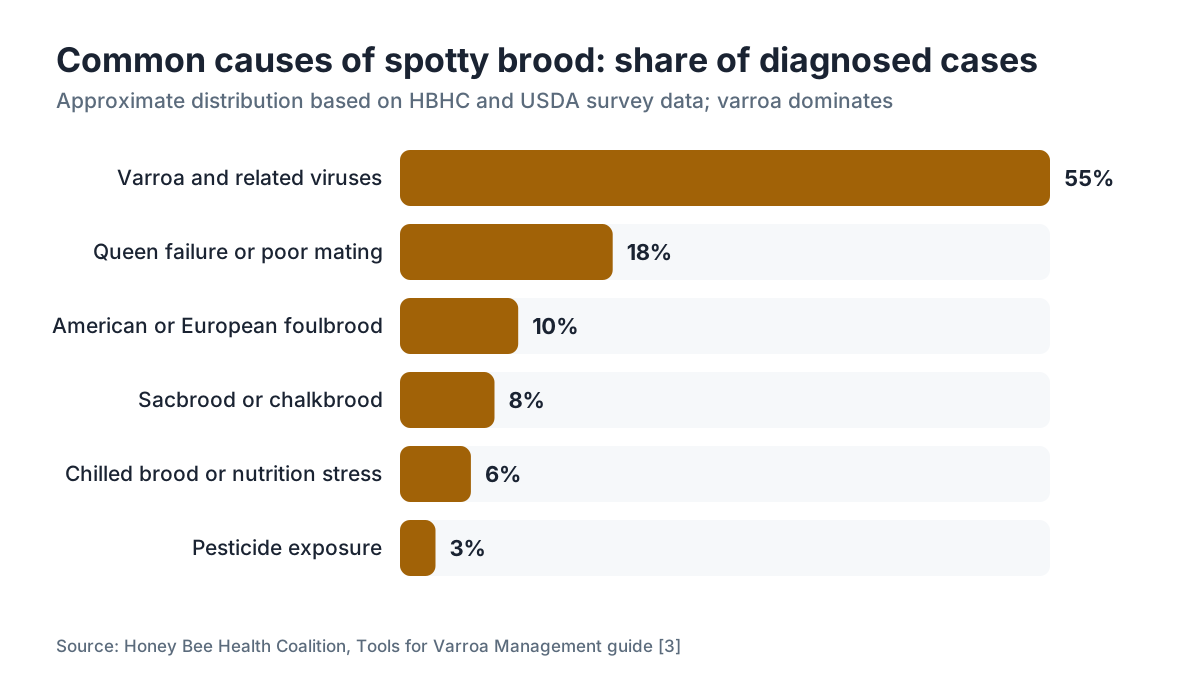
- The eight main causes are varroa, American foulbrood, European foulbrood, sacbrood virus, chalkbrood, a failing or poorly-mated queen, chilled brood, and pesticide exposure.
- Varroa is the most common culprit in North American hives today.
- Each cause has distinct signs that let you narrow it down before you treat.
What does a spotty brood pattern actually look like?
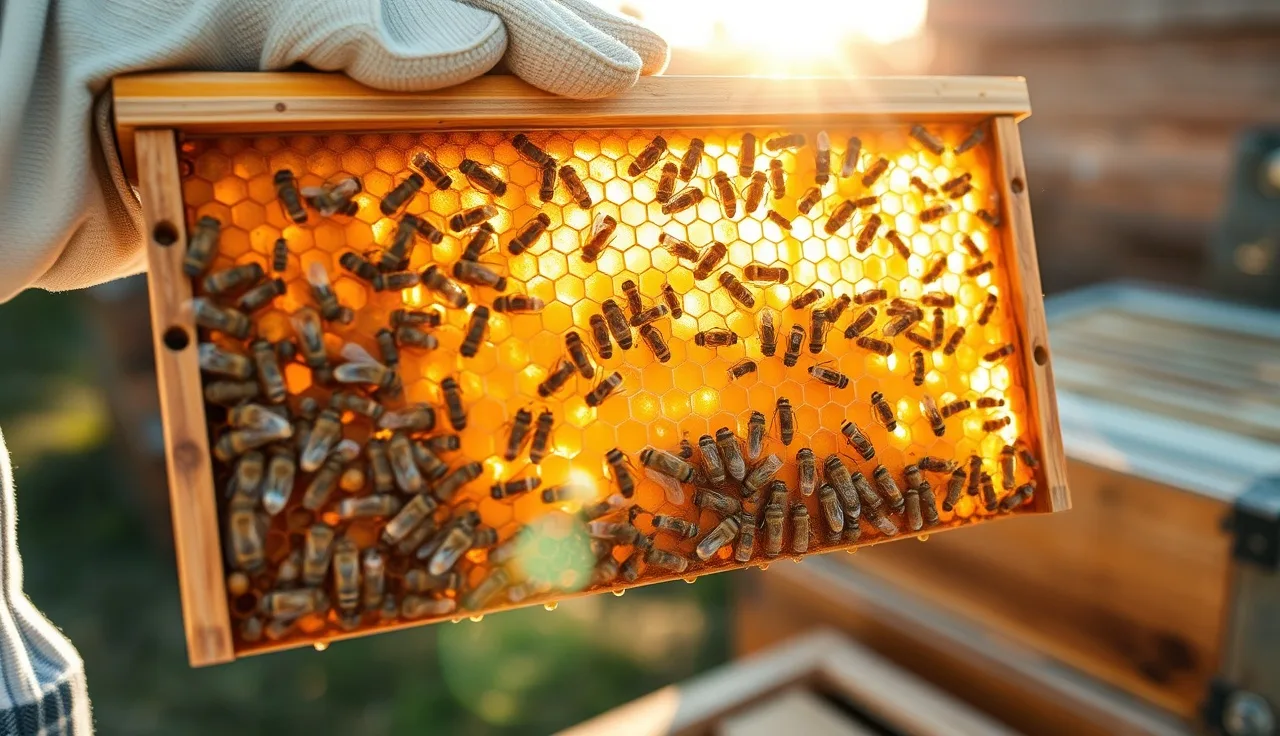
A healthy brood frame looks almost like a dartboard bull's-eye: a dense, unbroken oval of capped worker brood in the center, with a ring of open brood and pollen around the outside. When that oval has random empty cells scattered through it, cells with sunken or punctured cappings, or larvae at wildly different stages sitting next to each other, you have a spotty pattern.
Beekeepers call it "shotgun brood" when the empty cells scatter widely. The gaps are not the problem. They are the symptom. The problem is whatever is killing or removing pupae and larvae before or just after capping.
One distinction matters. A handful of empty cells in an otherwise solid field is normal. Workers supersede cells for reasons you will never see. The pattern turns into a real signal when empty cells account for more than roughly 10 to 15 percent of a capped-brood area, or when you start seeing discolored larvae, a foul odor, or mites in the cells.
How does varroa cause a spotty brood pattern?
Varroa destructor is the most likely reason for spotty brood in any managed North American colony right now [1]. The mite reproduces inside capped brood cells, feeding on developing pupae. Worker bees detect the damage and uncap affected cells to pull out the contents, which is the colony's hygiene response. That uncapping leaves the scattered empty cells you see.
Two mechanisms run at once. A high mite load causes direct physical damage: mites feed on the fat body of the developing bee and transmit viruses, especially Deformed Wing Virus (DWV), which stunts or kills the pupa. On top of that, varroa suppresses the immune system of developing bees, so secondary infections finish the job even when the mite itself does not [2].
The visual signature of varroa-driven spotty brood carries a few extra clues. Open the capped cells near the empty ones and look for adult mites on the pupa or the cell walls. You may see pupae with crumpled wings that never formed, or white chalky-looking pupae that are actually virus-damaged rather than chalkbrood. If your mite wash or sticky board count runs high (above a 2 percent mite load in brood season, per the Honey Bee Health Coalition's threshold), varroa is your most likely culprit [3].
For a full breakdown of the mite itself, see our varroa mite reference guide.
Could American foulbrood cause this pattern?
Yes, and American foulbrood (AFB) is the one you cannot afford to miss. AFB comes from the spore-forming bacterium Paenibacillus larvae, and it is the most serious brood disease in beekeeping. It kills pupae after capping, so the first thing you notice is a spotty pattern of sunken, discolored cappings with tiny holes workers have chewed in them [4].
The field test is the ropy test. Insert a twig or matchstick into a suspect cell and pull it out slowly. AFB-infected material strings out in a brown, elastic thread 2 to 3 centimeters long before it snaps. The smell is distinctive too: decaying, often compared to old glue or rotting flesh, much stronger than normal hive odor.
AFB is a regulated disease in most U.S. states and Canadian provinces. If you confirm it, you are legally required to notify your state apiarist in most jurisdictions, and untreated equipment must either be burned or sterilized. State departments of agriculture and the USDA run inspection programs for exactly this reason [4]. Do not guess on AFB. If the ropy test is positive, call your state apiarist before you do anything else.
Oxytetracycline (Terramycin) and tylosin (Tylan) are registered treatments, but they suppress symptoms without killing spores [10]. A colony with clinical AFB often cannot be saved by antibiotics alone.
What about European foulbrood and sacbrood?
European foulbrood (EFB) comes from Melissococcus plutonius. Unlike AFB, it kills larvae before capping, so the spotty pattern here comes from larvae dying in open cells. Infected larvae turn from white to yellow, then brown, and twist in the cell. They look melted. The smell is sour, like vinegar, not the rotting-glue smell of AFB [4]. EFB does not rope. Do the twig test, and if nothing strings out, AFB is off the table.
EFB is often stress-related. Colonies that are queenless, nutritionally stressed, or hit by a cold snap are more vulnerable. Many recover without treatment once the stress clears and a good queen is laying. For severe infections, oxytetracycline is labeled for EFB as well.
Sacbrood virus is a different animal. Infected larvae die just before or at capping. The larva's skin forms a tough sac filled with watery fluid, turning from white to yellow to dark brown or black. Lift the larva with a toothpick and it holds together in a curved shape, like a tiny slipper, and the fluid does not rope or smell strongly [4]. Sacbrood is a virus, so there is no chemical treatment. Requeening with a hygienic-bred line clears most cases because hygienic workers find and remove infected larvae faster.
Does chalkbrood cause a spotty pattern?
Chalkbrood comes from the fungus Ascosphaera apis. It mummifies larvae, turning them into hard, chalk-white or gray-black pellets that workers drag out and drop at the entrance or on the landing board. Those mummies at the entrance are usually how beekeepers first notice it [4].
The spotty pattern from chalkbrood is distinctive because you may actually see the chalk mummies still sitting in open or partially-capped cells before workers pull them. The cells look normal except for the small white or gray capsule inside. No ropy texture, no foul smell.
Chalkbrood flares up in cool, damp conditions, especially in spring when colony population is low and the cluster cannot cover all the brood. Most colonies clear it on their own once population builds and weather warms. A hygienic queen line helps a lot. Better ventilation, and not insulating in a way that traps moisture, cuts recurrence.
Can a failing queen cause spotty brood without any disease?
Absolutely. Queen quality is probably the second most common non-disease cause of spotty brood after varroa. A failing queen makes patchy patterns for several reasons. She may be running low on stored sperm and laying unfertilized eggs in worker cells (those become drones, which have domed cappings and stand out in a worker frame). She may be physically failing and skipping cells. Or she may be old enough that her pheromone signal has weakened and workers are starting to lay (laying workers produce unfertilized eggs that become small drones, often several per cell).
A poorly-mated queen can look the same right after installation. If she did not mate with enough drones during her mating flights, she runs out of viable sperm faster than a well-mated queen and the pattern falls apart early.
The key question is: do you see eggs? A failing queen often still lays, just poorly. Laying workers, by contrast, fill cells with multiple eggs, and those eggs sit on the sides of cells rather than the bottom center. If you see multiple eggs per cell, think laying workers before you think failing queen. Either way the fix is requeening, but the process differs, because a laying-worker colony often rejects an introduced queen and needs special handling.
A good hygienic queen from a reputable breeder is probably the highest-return investment you can make in colony health, and that goes well past brood pattern. It shapes your whole varroa management plan.
What is chilled brood and when does it happen?
Chilled brood happens when larvae or pupae sit below about 93°F (34°C) long enough to die. The brood cluster in a healthy colony holds that temperature constantly, but a population crash can leave peripheral brood uncovered.
The most common scenario is a fall treatment or inspection that briefly shrinks the cluster, paired with a cold snap. Spring hives that swarmed heavily, or colonies that lost large numbers of bees to pesticide exposure, can also end up unable to cover their brood.
Chilled brood looks like early European foulbrood: larvae may be discolored, slightly twisted, and dead in open cells. But there is no foul smell, no ropy texture, and if you study the frame you will often see the dead area matches exactly the edge of where the cluster could reach. The pattern is geometric, unlike the random scatter of varroa-driven spotty brood.
The fix is shrinking the brood area the colony has to cover. Consolidate frames, remove empty ones, or drop the colony into a smaller box until population recovers.
Can pesticide exposure cause spotty brood?
Yes. Sublethal pesticide exposure is a real and underreported cause of spotty brood, especially near farmland in spring and early summer. Systemic neonicotinoids like imidacloprid, clothianidin, and thiamethoxam get taken up by flowering crops and end up in pollen and nectar. Foragers carry contaminated pollen home, nurse bees feed it to larvae, and the larvae die [5].
The visual pattern of pesticide-killed brood has no unique signature that cleanly separates it from other causes. You may see dead larvae in open cells (like EFB), or uncapped and missing pupae (like varroa). The useful clue is timing and geography: did the spotty pattern show up suddenly after nearby fields were treated? Did it line up with a major nectar or pollen flow from an ag crop? Are neighboring hives crashing the same way?
Beekeepers who suspect a pesticide kill should document it and report it to the EPA's pesticide incident reporting system and their state apiarist [6]. Collecting dead bees and a sample of fresh pollen from the suspected frames and sending them to a certified lab is the only way to confirm it.
Treating a pesticide-hit colony is mostly supportive: supplement nutrition, cut stress, and let the colony rebuild if the queen survives. There is no antidote.
How do you tell the causes apart? A diagnostic guide
The table below sums up the most useful field diagnostics for each cause. Work through it methodically instead of guessing.
| Cause | Brood stage affected | Cell capping | Key visual/smell sign | Lab/field test |
|---|---|---|---|---|
| Varroa | Capped pupa | Uncapped/missing | Mites visible in cell; crumpled-wing adults | Mite wash >2% load [3] |
| American foulbrood | Capped pupa | Sunken, perforated, brown | Ropy string 2-3 cm; rotten-glue smell | Twig/ropy test; lab culture |
| European foulbrood | Open larva | N/A (dies uncapped) | Twisted, yellowed/brown larva; sour smell | No rope; smell test; lab PCR |
| Sacbrood virus | Late larva/pupa | Capped or uncapped | Fluid-filled sac; "slipper" shape; no smell | Physical inspection |
| Chalkbrood | Late larva | Open or capped | Chalk mummies in cells or at entrance | Visual; mummies are diagnostic |
| Failing queen | Any (unfertilized eggs) | Domed drone caps in worker cells | Multiple eggs per cell; drone scatter | Find and assess queen |
| Chilled brood | Any | Open or capped | Dead at cluster edge; no smell | Cluster-to-dead-brood geometry |
| Pesticide | Open larva | Open (die young) | Sudden onset after ag spray; dead foragers | Lab analysis of pollen/bees |
Start with a mite wash. If your mite load is above threshold, treat for varroa first. Many apparent disease problems resolve or become clearly distinguishable once mite pressure comes off. The Honey Bee Health Coalition's varroa management guide and its brood disease identification tools are the best free references for this work [3].
If you want a structured way to track mite loads and brood health together, VarroaVault's free monitoring tools walk you through seasonal mite wash schedules and give you a record to look back on when brood patterns start changing.
Does spotty brood always mean something is wrong?
Not always. A few situations make a naturally irregular brood pattern that is no emergency.
After swarming, the replacement queen takes 10 to 16 days to start laying after she emerges, and her first few frames often look patchy while she finds her rhythm. Give a newly-mated queen two full laying cycles (roughly 4 to 6 weeks) before you judge her pattern.
Small colonies in very early spring often carry irregular brood because the cluster is small and the queen is ramping up. As long as the larvae look pearly white and well-fed, a little irregularity in February or March is not a crisis.
Some genetic lines also lay slightly less dense patterns than others while staying perfectly healthy. This is why it helps to know what your own queens look like when they are performing well. Keep notes.
What should you do first when you see spotty brood?
Step one is always a mite wash. Do it before you open the hive again, or right during the inspection. Collect 300 bees from the brood nest (not the entrance), wash in alcohol, and count mites [11]. If the load is at or above 2 percent during the active brood season, treat. Do not wait. Varroa is the most common cause, and treating it removes a major confounding variable [3].
Step two is a systematic brood inspection. Pull each brood frame and look at it in good light. Check the age spread of larvae, look for discoloration, smell the frame, and probe any suspicious cells with a twig. Take photos. You want a record.
Step three is checking for the queen. See if she is present, read her laying pattern, and look for multiple eggs in cells.
If you end up with a high mite load and classic varroa signs, treat per the label of your chosen miticide (oxalic acid, Apivar, Apiguard, or HopGuard are the main EPA-registered options in the U.S.) [7]. If you have a strong suspicion of AFB, stop and call your state apiarist before you move frames between hives or use any equipment elsewhere.
For organizing your beekeeping supplies and treatment materials ahead of each season, see our guide to beekeeping supply companies.
Does spotty brood affect colony population long-term?
Yes, and it hits hard. Each missed bee is a gap in the workforce 21 days from now. A worker bee lives roughly 6 weeks in summer [8]. The colony's ability to forage, nurse, build wax, and hold the nest temperature depends entirely on a steady supply of newly emerged bees. Anything that breaks that supply compounds fast.
Varroa makes this worse than the spotty pattern alone suggests. Varroa-damaged bees that do emerge are immunologically weaker, shorter-lived, and worse at navigating [2]. A 2019 study in PLOS ONE found forager lifespans in mite-infested colonies ran roughly 23 percent shorter than in clean colonies, so the population deficit is deeper than the frame implies [9].
The Honey Bee Health Coalition has documented colony loss data showing U.S. beekeepers lost an annual average of 39 to 45 percent of managed colonies over the 2018 to 2023 period, with varroa and varroa-vectored viruses named as the primary driver [3]. That is not a background statistic. It is what happens when spotty brood goes unaddressed across a season.
Spotty brood is the hive telling you something. The sooner you answer, the more bees you keep.
Frequently asked questions
Is a spotty brood pattern always caused by disease?
No. A newly-mated queen, a small spring cluster, a recently swarmed colony, or a brief cold snap can each produce an irregular brood frame with no disease involved. The key checks: are the larvae pearly white and well-fed, is the queen present and laying, and is the mite load below threshold? If all three are yes, watch the pattern over one laying cycle before assuming disease.
How do I tell the difference between varroa-caused spotty brood and American foulbrood?
Varroa spotty brood often shows empty or uncapped cells with mites visible inside and no strong smell. American foulbrood shows sunken, punctured cappings on capped brood, a ropy string when you probe the cell with a twig, and a rotting-glue odor. Do the twig test first. If the infected material strings 2 to 3 cm before snapping, call your state apiarist immediately.
What mite level causes visible spotty brood from varroa?
Visible brood symptoms usually appear when mite loads climb above 2 to 3 percent (2 to 3 mites per 100 bees) during the brood season, though colony response varies. The Honey Bee Health Coalition recommends treating at 2 percent during the active season and at 2 percent or above in late summer before the winter bee population is raised. Do not wait for brood symptoms to confirm a mite problem.
Can I treat spotty brood caused by varroa without removing the queen?
Yes. Most miticide treatments do not require removing the queen. However, oxalic acid dribble or vaporization works best during a broodless period because the product only kills phoretic mites on adult bees, not mites inside capped cells. If you cannot create a broodless period, Apivar strips (amitraz) work through a full brood cycle and reach mites in cells as they emerge.
What does sacbrood look like compared to other brood diseases?
Sacbrood larvae die just before or at capping and form a tough fluid-filled sac. Lift the larva with a toothpick and it curves into a shape like a tiny slipper, gray to brown, and the sac holds together without roping or smelling strongly. That combination (sac shape, no rope, no odor) sets it apart from AFB and EFB. It is a virus with no chemical treatment; requeening with a hygienic line is the standard response.
How do I know if spotty brood is from a failing queen or from disease?
Look for eggs. A failing queen usually still lays, just inconsistently, and you may see scattered drone-capped cells in the worker area because she is laying unfertilized eggs. Disease generally kills larvae or pupae after they are laid, so you see dead or discolored contents in the cells rather than just empty cells. If you find multiple eggs per cell, think laying workers rather than disease. A mite wash rules out varroa either way.
Should I requeen a colony with spotty brood?
Depends on the cause. If mite load is high, treat first. If the queen is old (over two years), failing, or producing consistently poor patterns after two laying cycles, requeening is the right call. If the spotty pattern is from disease, fix the disease before or alongside requeening. Introducing a new queen into a sick colony does not solve the underlying problem, and a good queen in a varroa-overloaded hive will still produce patchy brood.
Is chalkbrood serious enough to require treatment?
Rarely. Chalkbrood from Ascosphaera apis is self-limiting in most colonies. Improve ventilation, reduce moisture, and make sure the colony is populous enough to cover its brood. Requeening with a hygienic line speeds recovery because hygienic workers detect and remove mummified larvae faster. No chemical treatment is registered or recommended. If chalkbrood persists through two or three brood cycles despite good management, requeening is the practical fix.
Can pesticides from nearby farms cause spotty brood in my hives?
Yes. Neonicotinoids and other systemic pesticides taken up by crops end up in pollen and nectar. Nurse bees feed contaminated pollen to larvae, which can kill them in open cells. The pattern looks like European foulbrood but appears suddenly after nearby spraying with no foul odor. If you suspect pesticide exposure, collect dead bees and fresh pollen, document the timing, and report to your state apiarist. Lab testing is the only confirmation.
How often should I check my brood pattern for varroa-related issues?
Do a full brood inspection every 7 to 10 days during active brood season if you have had any varroa history or treatment gaps. Run a mite wash at least once a month during brood season, and again in late summer before the winter bee generation is raised. The Honey Bee Health Coalition recommends treating whenever the mite load hits 2 percent or above. Do not rely on brood pattern alone to monitor mites; you can have high loads before visible symptoms appear.
What is the best way to photograph spotty brood for a diagnosis?
Pull the frame in direct sunlight or bright shade and photograph straight on to the face of the frame. Fill the shot with the frame. Take one wide image showing the whole frame and one close-up of the suspect area. Include a gloved finger or hive tool for scale. Photos shot at an angle wash out the cell depth and make it hard to see eggs or larvae. Send them to your state apiarist or local bee inspector for a second opinion.
Does spotty brood in a new package or nucleus colony mean something went wrong?
Not necessarily. A queen establishing in a new installation often starts with a patchy first frame while she ramps up her laying rate. Give her 2 to 3 weeks before judging. If the second and third frames look better, she is fine. If the pattern stays irregular or you see dead larvae, do a mite wash immediately, because packages are not always treated before sale and can arrive with heavy mite loads.
Can I use the same hive equipment from a colony that died with spotty brood?
It depends on the cause. If the colony died from AFB, the equipment holds heat-resistant spores that can persist for decades; most regulations require burning or sterilization with lye. For varroa-related collapse or non-AFB disease, the equipment is generally safe to reuse after normal cleaning. If you are not sure of the cause, store the equipment sealed and have it inspected by a state apiarist before reuse.
Sources
- USDA Agricultural Research Service (ars.usda.gov), Bee Research Laboratory: Varroa destructor is the primary pest of managed honey bee colonies in North America and the most common driver of colony loss.
- Nazzi et al., 2012, PLOS Pathogens: Synergistic parasite-pathogen interactions mediated by host immunity can drive the collapse of honey bee colonies: Varroa suppresses the immune system of developing bees and vectors Deformed Wing Virus, causing stunted or killed pupae.
- Honey Bee Health Coalition, Tools for Varroa Management guide (honeybeehealthcoalition.org): The HBHC recommends treating when mite load reaches 2 percent (2 mites per 100 bees) during the active brood season; average U.S. colony losses 2018-2023 were 39-45 percent annually with varroa as the primary driver.
- USDA Agricultural Research Service (ars.usda.gov), honey bee disease diagnostic resources: Visual field diagnostics for AFB, EFB, sacbrood, and chalkbrood including ropy test, larval color, and odor characteristics.
- EPA, Pollinator Protection (epa.gov): Systemic neonicotinoids (imidacloprid, clothianidin, thiamethoxam) taken up by crops are found in pollen and nectar and can kill bee larvae when fed by nurse bees.
- EPA, Report a Pesticide Incident (epa.gov): Beekeepers can report pesticide kill incidents to the EPA's pesticide incident reporting system and to state apiarists.
- EPA, Pollinator Protection and registered miticides (epa.gov): Oxalic acid, amitraz (Apivar), thymol (Apiguard), and HopGuard are the main EPA-registered miticides for Varroa in U.S. managed hives.
- University of Minnesota Extension (extension.umn.edu), honey bee resources: Summer worker bees live approximately 6 weeks; colony population depends on continuous brood production to replace forager losses.
- Coulon et al., 2019, PLOS ONE: study of Varroa impact on forager lifespan: Forager lifespans in mite-infested colonies were approximately 23 percent shorter than in mite-free colonies in a 2019 PLOS ONE study.
- Penn State Extension (extension.psu.edu), honey bee resources: AFB is a regulated disease in most U.S. states requiring state apiarist notification; oxytetracycline and tylosin are registered antibiotics but do not eliminate spores.
- North Carolina State University Extension (ces.ncsu.edu), apiculture program: Alcohol wash method: 300 bees from the brood nest, washed in alcohol, mite count divided by 300 gives percent infestation.
Last updated 2026-07-10