Storing Apivar strips: the complete guide to shelf life and safety
TL;DR
- Store Apivar strips (amitraz 3.3%) at 41 to 77°F (5 to 25°C), in their original sealed foil packaging, away from heat, light, and humidity.
- Unopened strips stay effective for 2 years from the manufacture date printed on the box.
- Once the foil pouch is open, use the strips within the same treatment season.
- Never freeze them.
What are the official storage conditions for Apivar strips?
The EPA-registered Apivar label lists a storage range of 41°F to 77°F (5°C to 25°C). That window is tighter than most beekeepers assume. A garage in July in Georgia or Arizona blows past 77°F before noon, and that matters because amitraz, the active ingredient, breaks down faster as the temperature climbs. Keep the box somewhere climate-controlled year-round if you can.
Dark, dry, and cool is the short version. Direct sunlight speeds up breakdown even through cardboard. Humidity can degrade the foil pouches over time, especially in a barn or outbuilding that swings hot and cold with the weather. A dedicated shelf inside your house, a basement with stable temps, or a mini-fridge set just above 40°F all work well. The fridge option surprises people, but it's completely fine and probably the best call for anyone in the Sun Belt. [1]
Keep strips away from food, animal feed, and anything you'd eat or touch without gloves. Amitraz is toxic to dogs and some other mammals at low doses, so treat it the way you'd treat any veterinary pesticide. A locked cabinet is genuinely smart if kids or pets share the space. [2]
How long do Apivar strips last before they expire?
Unopened Apivar strips have a shelf life of 2 years from the manufacture date. That date sits on the outer carton and sometimes on the foil pouch itself. Veto-Pharma prints it as a "manufacture date" rather than an expiration date on some lots, so add 24 months to whatever date you find. [1]
Once you break the foil seal, the clock speeds up. Use opened strips within the same treatment season, ideally within a few weeks. Amitraz is volatile, meaning it slowly off-gasses even at room temperature. An open pouch sitting in a warm supply room through winter is losing efficacy you paid for. If you have leftover opened strips after a fall treatment, the honest advice is to throw them out rather than gamble on a weak treatment the following spring.
Strips stored outside the recommended range for a long stretch can look fine and still carry degraded amitraz. There's no field test for potency. So here's the practical rule: if you can't confirm proper storage, treat the strips as suspect and order fresh. Skimping on a replacement pack and running a failed treatment on a colony costs far more than the strips ever did. [3]
What happens if Apivar strips get too hot or too cold?
Heat is the bigger enemy. Temperatures consistently above 77°F (25°C) speed up amitraz degradation. Studies on amitraz stability in other formulations show meaningful breakdown above 30°C (86°F), and while the strip-form data is proprietary to the manufacturer, the labeled ceiling reflects that same chemistry. [4] A few hours on a hot car seat won't necessarily ruin a sealed strip. Repeated or prolonged exposure above the limit does shorten effective life and can shave down the 6 to 8 week in-hive efficacy window you're counting on.
Freezing is less clearly harmful but still off the table. The label says store above 41°F (5°C), and at freezing temps the polyethylene strip can turn brittle. More practically, freeze-thaw cycling can break the foil seal, which then lets in humidity and air. If strips freeze accidentally once, let them warm to room temperature slowly and inspect the packaging before use. Don't refreeze.
Cold matters for in-hive use too. Apivar needs a minimum colony temperature to release amitraz vapor at therapeutic rates. The label recommends applying when ambient temperatures top 59°F (15°C) and brood is present. That's a separate issue from storage, but it's the same chemistry: the volatility that drives the storage rules also decides when treatment actually works. [1]
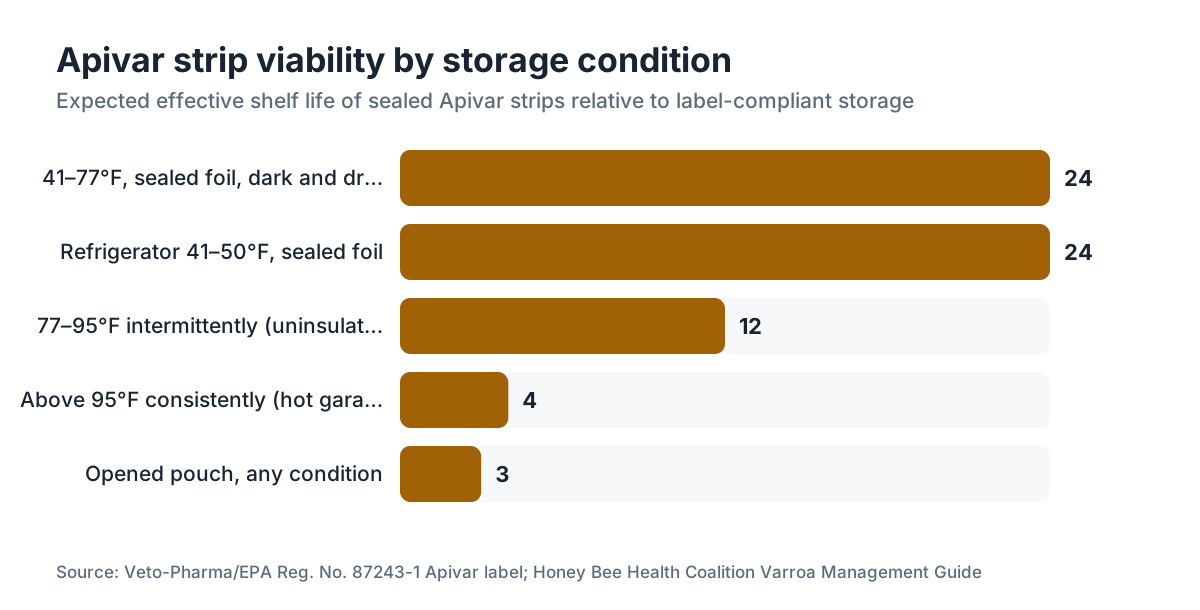
Storage temperature effects on Apivar efficacy at a glance
The table below sums up what each storage condition means for strip viability. These ranges reflect label guidance from Veto-Pharma and general amitraz stability data. [1][4]
| Storage condition | Sealed pouch | Opened pouch | Notes |
|---|---|---|---|
| 41 to 77°F (5 to 25°C), dark, dry | Up to 2 years from manufacture | Use within the season (weeks, not months) | Ideal; label-compliant |
| Below 41°F (refrigerated, not frozen) | Acceptable; may extend life slightly | Same caution applies | Let warm to room temp before opening |
| Below 32°F (frozen) | Not recommended | Not recommended | Pouch seal and strip material at risk |
| 77 to 95°F (25 to 35°C) intermittently | Reduced shelf life; monitor | Discard sooner | Common in uninsulated garages and sheds |
| Above 95°F (35°C) consistently | Potentially significant degradation | Discard | Do not use; treatment failure risk |
Here's the bottom line: if you're buying a full season's supply in spring, store it inside your house, not out in the beekeeping shed.
Can you store Apivar strips in a refrigerator or freezer?
Yes to the fridge, no to the freezer. A refrigerator set between 41 to 50°F is perfectly acceptable and may be the best option for beekeepers in hot climates who can't guarantee cool storage elsewhere. Three steps make it work. Keep strips in their original sealed foil pouches (refrigerator humidity will eventually get in if you unwrap them). Put the pouch in a secondary zip-lock or container to stop condensation when you pull it out. Let it come to room temperature before opening. Open a cold foil pouch right away and condensation can wet the strips, which you don't want. [1]
Freezing is a different story. The label says above 41°F, and there are real mechanical risks to the pouch seal and strip polymer at sub-freezing temps. Don't freeze them on purpose. If they freeze by accident, the strips are probably usable if the seal looks intact and the strips aren't brittle or cracked, but you're in territory the manufacturer hasn't tested and won't stand behind. Order fresh if you have any doubt. At roughly $50 to 70 for a 10-strip pack in the U.S. market (prices vary by supplier; check current prices at beekeeping supply companies), a replacement pack is far cheaper than a dead colony. [5]
How should you store Apivar strips you've already used?
Used strips are a real disposal question that most guides skip. After 6 to 8 weeks in the hive, Apivar strips still hold residual amitraz. They are hazardous waste, not trash. The Apivar label instructs users to wrap used strips in newspaper or paper and dispose of them in the trash where that's legal, but some states have stricter pesticide disposal rules. Check your state's department of agriculture or pesticide regulatory program for local guidance. [2][6]
Do not compost used strips. Do not burn them (amitraz combustion produces toxic fumes). Do not leave them in open containers where pets or children could reach them. And don't store used strips with your new strips hoping to tell them apart later. You won't.
If you run a lot of hives and pile up used strips, most county hazardous waste programs accept veterinary pesticides. The National Pesticide Information Center (NPIC) at Oregon State University can help you find local disposal options and runs a hotline: 1-800-858-7378. [7]
For tracking your varroa mite treatment history alongside storage lots and expiration dates, VarroaVault's free protocol tools let you log treatment batches by manufacture date so you always know which strips are freshest.
Does packaging affect how you should store Apivar?
Apivar comes in foil-sealed pouches for a reason. Amitraz is volatile, and the foil barrier slows off-gassing and keeps out oxygen and moisture. Break that seal and you've started the degradation clock no matter how you reseal the pouch. Zip-lock bags, plastic bins, and tape closures are all slower vapor barriers than the original foil. Use the original pouch and reseal it as tightly as you can if you have leftover strips after opening.
Some beekeepers transfer strips to plastic containers or glass jars thinking that's safer. It isn't. Most plastics and glass don't block amitraz vapor the way the foil laminate does. A strip left in a sealed glass jar still off-gasses into that headspace, and the active ingredient no longer sits evenly on the strip when you go to use it. Keep them in the foil.
Buying in bulk to save money makes sense, but only if you can actually use the strips within 2 years and you have proper storage. A case of 50 strips baking in a hot shed for 18 months may fail when you finally reach for it. Coordinate with other beekeepers if you're buying a large lot you can't use alone. Many local clubs and sideliner operations split bulk orders for exactly this reason: freshness. [3][5]
What do extension programs and the Honey Bee Health Coalition say about Apivar storage?
The Honey Bee Health Coalition's Varroa Management Guide, one of the most widely cited practitioner resources in North American beekeeping, lists Apivar (amitraz) as a Tier 1 chemical treatment and says strips should be stored per label instructions and used before expiration to keep their efficacy. The guide's treatment matrix is blunt that efficacy data assumes label-compliant use, and storage is part of that. [3]
University extension programs echo the label. Penn State Extension's bee program notes that amitraz-based treatments are temperature-sensitive both in storage and during application. The University of Minnesota Bee Lab and others point out that treatment failures with otherwise reliable chemicals often trace back to bad storage or application outside the recommended temperature window rather than true resistance. [8][9]
The EPA's pesticide registration for Apivar (EPA Reg. No. 87243-1) carries the legally binding label language. The label is the law under FIFRA (the Federal Insecticide, Fungicide, and Rodenticide Act). Using strips stored outside label conditions and having a treatment fail doesn't only cost you a colony. Technically, using a pesticide in a manner inconsistent with its labeling violates federal law. That's no reason to panic over one hot afternoon in the car. It is a reason to take the storage requirements seriously as a baseline. [2][6]
How can you track expiration dates across multiple lots of Apivar?
If you run more than a handful of hives, you're probably buying Apivar at least once a year and maybe across multiple lots. Lot numbers and manufacture dates sit on the outer carton in small print, often on the end flap. Write the manufacture date on each pouch with a permanent marker when you open the case. That one step takes ten seconds and has saved plenty of beekeepers from grabbing the older lot last.
First in, first out. Newer lots go behind older lots on the shelf, just like a pantry. If you buy strips in spring and have leftovers from fall, put the fall leftovers at the front and use them first, as long as they're still inside the 2-year window and were stored properly.
Digital tracking helps at scale. A simple spreadsheet with lot number, manufacture date, strip count, and storage location takes minutes to keep and catches expiration issues before they turn into treatment failures. VarroaVault's protocol tracking tools include treatment logging by lot, which is handy if you're also recording mite wash results and want to line up treatment timing with outcome. [3]
For beekeepers buying through group orders or free shipping honey bee supply companies, ask the supplier about lot age before you buy. You don't want to order 50 strips and get product that's already 18 months old with only 6 months of shelf life left.
Are there any signs that Apivar strips have gone bad?
Here's the frustrating truth: there's no reliable visual sign that amitraz has degraded to sub-therapeutic levels. The strips still look like strips. They still feel the same. The faint chemical odor of amitraz may be weaker on degraded strips, but that's not a real test, because the odor also shifts with temperature and with how sensitive your nose is.
What you can check is physical. Look for damage to the foil pouch (punctures, torn seals, heat discoloration). Inspect the strips for brittleness, cracking, or odd discoloration beyond the normal off-white to light yellow. Strips that got wet and dried may show water staining or warping. Any of those signs is reason enough to replace the lot.
The real test is mite wash results before and after treatment. A properly stored and applied Apivar treatment should knock mite counts down by at least 90% over the 6 to 8 week period in a typical colony. [3] If efficacy is poor and you've ruled out reinfestation from nearby colonies, questionable storage history is one of the first things to revisit. Amitraz resistance in varroa is documented but still relatively rare in North America compared to pyrethroid resistance. In most regions, degraded product explains a failed treatment more often than resistance does. [10]
What's the right way to dispose of expired or suspect Apivar strips?
Expired strips, strips with compromised packaging, and strips you know were stored badly go out as pesticide waste, not regular trash or recycling. The Apivar label allows wrapping used strips in newspaper and trashing them where local rules permit, but truly suspect or unused expired product deserves more careful handling. [2]
Contact your county extension office or state department of agriculture for local hazardous waste collection dates. Many counties run annual or twice-yearly collection events for pesticides, including bee treatments. State ag departments and the EPA maintain lists of collection sites. [6]
Never pour liquid residue down a drain (that applies to amitraz solutions, not strips specifically), and never burn strips. Amitraz thermal decomposition can produce formamide compounds. Wrap strips in several layers of newspaper, seal them in a plastic bag, and store them somewhere secure until you can get them to a collection site if regular disposal isn't appropriate in your state. [7]
For current options in your area, your state's department of agriculture pesticide program is the right first call. The USDA's Agricultural Research Service and state land-grant universities often publish region-specific guidance too. [4]
Common Apivar storage mistakes and how to avoid them
The most common mistake is storing strips in a shed, garage, or outbuilding that's climate-controlled in name only. Thin walls, poor insulation, and no active cooling mean the interior on a summer afternoon can top 100°F (38°C). One hot season can ruin a full year's supply.
Second most common: buying in bulk without realistic planning. A 50-strip case sounds economical until you do the math. If you treat 8 colonies twice a year, you'll need maybe 32 to 48 strips annually, and the case takes more than a year to burn through. That's fine if storage is excellent. It's a problem if it isn't.
Third: forgetting to check manufacture dates when buying from online retailers or distributors. Older stock is perfectly legal to sell. Ask when the lot was manufactured. Reputable suppliers will tell you.
Fourth: mixing opened lots in the same pouch. Combine two lots and you've lost the ability to track either one for expiration.
Fifth, and maybe the most underappreciated: transferring strips to a different container thinking it's safer or handier. It isn't. The original foil is the best packaging you have. Use it until the strips go in the hive. [1][3]
Frequently asked questions
How long can Apivar strips be stored before they expire?
Apivar strips have a shelf life of 2 years from the manufacture date printed on the carton, when stored sealed in their original foil pouches at 41 to 77°F (5 to 25°C). Once the foil is opened, use the strips within the current treatment season. Strips stored outside the recommended temperature range may degrade faster with no visible sign of reduced potency.
Can I store Apivar strips in the refrigerator?
Yes. A refrigerator set between 41 to 50°F is a good option, especially in hot climates. Keep strips in their original sealed foil pouch, place the pouch in a zip-lock bag to prevent condensation, and let strips return to room temperature before opening. Do not freeze. The label minimum is 41°F (5°C), and sub-freezing temps can compromise the foil seal and strip material.
What temperature is too hot for storing Apivar?
The Apivar label sets the maximum storage temperature at 77°F (25°C). Temperatures consistently above this, especially above 86 to 95°F (30 to 35°C), speed up amitraz degradation. A garage, shed, or car trunk on a warm day can easily exceed 77°F. Even a few weeks of repeated high-heat exposure can shorten effective shelf life and risk subtherapeutic treatment performance.
How do I know if my Apivar strips have gone bad?
There's no reliable visual test for amitraz potency loss. Check the foil pouch for punctures, broken seals, or heat damage. Inspect strips for brittleness, cracking, or unusual discoloration. If the storage history is unknown or you know temps exceeded the label range for a long stretch, replace the strips. Poor mite wash results after a full treatment course can also point to degraded product.
Can I use Apivar strips from a previous season?
Only if they're within the 2-year manufacture window, the foil pouch was sealed and undamaged, and storage was label-compliant. Opened strips left over from a prior season aren't worth the risk: amitraz keeps off-gassing from opened pouches, and a subtherapeutic treatment does more harm than good by letting mite populations rebound while you think you've treated. Buy fresh strips.
How should I dispose of used Apivar strips?
The Apivar label allows wrapping used strips in newspaper and placing them in household trash where local rules permit. Never compost or burn them. Check your state's department of agriculture for stricter local rules. Truly suspect, expired, or excess unused strips are best treated as pesticide waste and taken to a county hazardous waste collection event. The NPIC hotline (1-800-858-7378) can help you find local options.
Does the foil packaging actually matter, or can I store strips in a plastic bag?
The original foil pouch matters. Foil laminate is a far better vapor and moisture barrier than plastic bags or containers. Amitraz is volatile and off-gasses through most plastics. Storing open or resealed strips in plastic bags or glass jars speeds up potency loss. Once the foil is opened, reseal the original pouch as tightly as you can and store it inside the cardboard carton.
How many Apivar strips do I need per hive, and how does that affect how much to buy at once?
Apivar uses 2 strips per brood box for 6 to 8 weeks, with most beekeepers treating twice per year (spring and fall). A standard 10-hive operation needs roughly 40 strips annually. Buy only what you can use within the 2-year shelf life under proper storage. Buying a 50-strip case for 5 hives means you risk holding strips too long unless storage conditions are excellent.
Is it safe to store Apivar strips near food or beekeeping equipment?
No. Store Apivar away from food, animal feed, and anything with direct human or pet contact. Amitraz is acutely toxic to dogs even at low doses. Keep strips in a locked or secured cabinet if children or pets have access to the storage area. Store separately from honey extraction equipment, frames, and anything that goes near food. This is standard label guidance and basic pesticide safety.
Can Apivar strips freeze if left in an unheated space in winter?
The label recommends storage above 41°F, and freezing isn't recommended. Sub-freezing temperatures can make the polyethylene strip brittle and may compromise the foil pouch seal. If strips freeze accidentally once, let them warm to room temperature slowly and inspect the packaging before use. Repeated freeze-thaw cycling is more likely to cause problems than a single accidental freeze. When in doubt, order fresh strips.
What does the EPA label actually say about Apivar storage?
The Apivar label (EPA Reg. No. 87243-1) specifies storage at 41 to 77°F (5 to 25°C), in the original sealed packaging, away from food, feed, and water. The label is the legally binding document under FIFRA; using Apivar in a manner inconsistent with the label, including using strips stored outside these conditions, technically counts as a violation. The label also specifies disposal instructions for used strips and personal protective equipment requirements.
How do Apivar strips compare to other varroa treatments in terms of storage requirements?
Oxalic acid (Api-Bioxal) is more stable in storage but requires careful handling as a corrosive. Formic acid products (MAQS, Formic Pro) have strict temperature windows for storage and application, similar to or narrower than Apivar. HopGuard (hops beta acids) has its own temperature sensitivity. Apivar's foil-sealed 2-year shelf life is one of the more manageable storage profiles among registered treatments, as long as you stay under 77°F.
Does buying Apivar in bulk save money, and is it worth the storage challenge?
Bulk purchases (cases of 50 strips or more) typically run 15 to 25% cheaper per strip than 10-strip packs, but only save money if you actually use the strips within the 2-year shelf life under proper conditions. For a sideline operation of 20-plus hives with cool, stable storage, bulk buying makes real sense. For hobbyists with 2 to 5 hives and a shed as their only storage, smaller packs are probably smarter.
Sources
- Veto-Pharma / EPA Reg. No. 87243-1, Apivar product label: Apivar must be stored at 41 to 77°F (5 to 25°C) in original sealed packaging; strips have a 2-year shelf life from manufacture date
- EPA, Pesticide Registration: Apivar label requirements under FIFRA: Using a pesticide inconsistent with its label violates FIFRA; disposal instructions require wrapping used strips in newspaper where local rules allow
- Honey Bee Health Coalition, Varroa Management Guide (6th ed.): Apivar listed as Tier 1 chemical treatment; efficacy data assumes label-compliant storage and use; a properly applied Apivar treatment should reduce mite counts by at least 90% over 6 to 8 weeks
- USDA Agricultural Research Service, amitraz stability and formulation research: Amitraz degradation accelerates significantly above 30°C (86°F) in tested formulations; ARS and land-grant universities publish region-specific pesticide disposal and handling guidance
- University of Florida IFAS Extension, Honey Bee Pest Management: Apivar 10-strip packs range approximately $50 to 70 in the U.S. retail market; pricing varies by supplier and year
- EPA, Safe Disposal of Pesticides guidance and state pesticide programs: State agriculture departments and EPA maintain lists of pesticide collection sites; some states have stricter disposal rules than the federal label allows
- National Pesticide Information Center (NPIC), Oregon State University: NPIC provides pesticide disposal guidance and a hotline (1-800-858-7378) for questions about amitraz and other veterinary pesticides
- Penn State Extension, Varroa Mite Management for Honey Bees: Amitraz-based treatments are temperature-sensitive in both storage and application; treatment failures often trace to improper storage or application outside recommended temperature windows rather than resistance
- University of Minnesota Extension, Bee Lab varroa management resources: Subtherapeutic treatment outcomes may reflect degraded product from improper storage rather than true amitraz resistance, which remains relatively uncommon in North American varroa populations
- Apidologie, peer-reviewed research on Varroa destructor resistance to amitraz: Amitraz resistance in Varroa destructor is documented but still relatively rare in North America compared to pyrethroid resistance; degraded product is a more common explanation for treatment failures
Last updated 2026-07-09