Storing drawn comb from a varroa deadout safely
TL;DR
- Drawn comb from a varroa deadout is worth saving, but move fast.
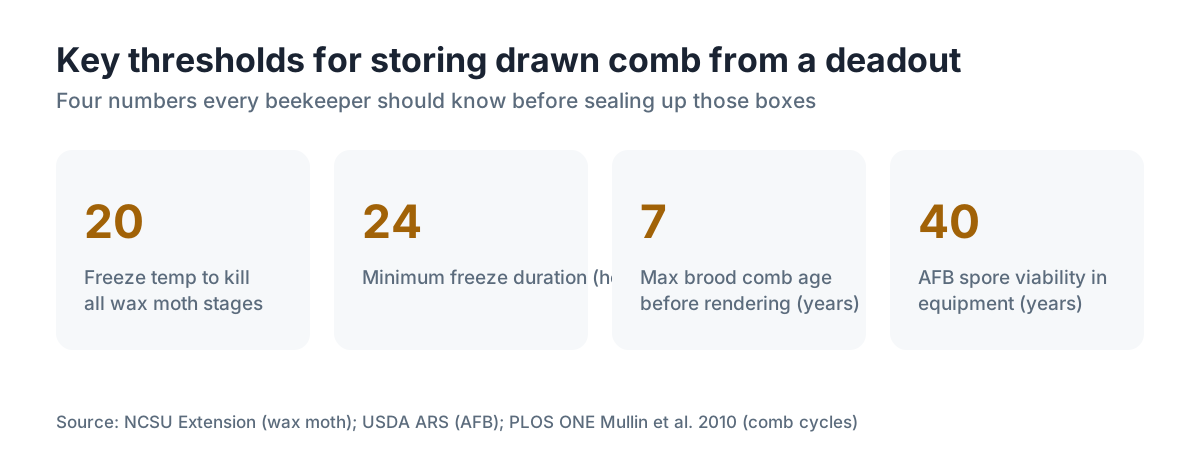
- Freeze frames at 20°F or colder for at least 24 hours to kill wax moth eggs and any lingering mites.
- Inspect every frame for American foulbrood first, because no freezer or fumigant kills those spores.
- Store sealed boxes somewhere cool and dark.
- Most mite-crash comb is safe to reuse once you rule out AFB.
Is it safe to reuse comb from a deadout caused by varroa?
Yes, in most cases. A colony that collapsed under a mite load did not necessarily leave behind contaminated wax. The mites die fast without bees. A single varroa mite dies within a day or two at room temperature with no host to feed on [1], so the frames you pull from a mite-crashed hive are not crawling with live mites waiting to hitch a ride onto your next package.
The real risk is what rode in alongside the varroa. Heavy mite loads suppress bee immunity and open the door to viruses like Deformed Wing Virus and Sacbrood, but those viruses do not survive in wax long enough to matter for a healthy, well-managed colony. Bacterial disease is the exception. American Foulbrood (AFB) is the one thing you must rule out before you store or reuse anything. AFB spores stay viable in comb and equipment for 40 years or more [2], and no freezer treatment, no fumigant, and no chemical approved for beekeeper use will touch them.
The short version: if you can confidently say the hive did not have AFB, the comb is worth keeping. If you are not sure, or you see ropy brown scales in the cells, stop. Call your state apiarist before moving any equipment.
For context on what varroa does to a colony before it collapses, see our varroa mite overview.
How do you tell if comb from a deadout has American foulbrood?
Pull every frame and study the brood cells in good daylight or under a bright headlamp. This is the step most beekeepers rush, and it is the one you cannot afford to skip. Healthy capped brood has slightly convex, tan cappings. AFB cappings look sunken, greasy, and perforated, and the cells smell like rotting wood or a barnyard.
The ropiness test is the field standard. Insert a twig or matchstick into a suspicious cell, stir gently, and pull it out slowly. If the contents stretch into a thread an inch or more before breaking, AFB is almost certainly present [3].
If the colony died in winter with no brood, you lose that visual check. Look at the cell walls instead. Old AFB scales (dried residue of infected larvae) lie flat in the bottom of cells as a dark brown, hard-to-remove crust. They do not smell, but they hold more viable spores than anything else in the hive [11].
Find signs of AFB, or fail to rule it out, and your state likely requires burning the affected equipment. Many states run apiary inspection programs with free or low-cost testing. The USDA APHIS plant protection and quarantine site maintains a directory of state apiarists [4].
Not sure what normal deadout brood residue looks like next to AFB? The Honey Bee Health Coalition's Tools for Varroa Management guide includes a disease identification appendix worth bookmarking [5].
What else should you check before storing comb from a deadout?
Once AFB is off the table, go through the frames for a few other issues.
European Foulbrood (EFB) looks similar to AFB, but the smell is more sour, the larvae die before capping, and the ropiness test comes back negative. EFB is caused by the bacterium Melissococcus plutonius, which does not persist in comb the way AFB does. Frames from an EFB-affected colony are generally reusable after cleaning and freezing, though some extension programs recommend oxytetracycline treatment on reused frames if EFB was confirmed [6].
Chalkbrood mummies (white or black chalk-like pellets in cells) come from a fungus. They pose no serious long-term storage hazard, but physically remove them or let a healthy colony clean them out.
Nosema is a gut pathogen spread through feces. Old, dark comb with heavy fecal streaking is a possible reservoir. The size of that risk is debated, but frames that soiled are also poor for brood rearing and not worth the storage space.
Check the honey stores too. Fermented or crystallized honey in cells can cause dysentery in a new colony. A fresh package or nuc will clean out liquid honey, but crystallized stores the bees cannot liquefy just sit there and cut down on usable cells. Heavily crystallized frames are usually better extracted or melted down than stored.
The physical condition of the wax matters. Dark, multiple-generation brood comb has cocoon linings that slowly shrink cell diameter. Several extension programs recommend rotating out and rendering any frame with more than five or six brood cycles on it, regardless of disease status [7].
How do you freeze comb from a deadout to kill wax moths and small hive beetles?
Freezing is the cheapest and most reliable way to protect stored comb. Wax moths are the biggest storage threat you face. Greater wax moth (Galleria mellonella) larvae can wreck a year's worth of drawn comb in a few weeks if frames sit warm and unsealed.
The protocol is simple. Slide frames into a sealed plastic bag or wrap them in a garbage bag so condensation does not soak the comb when you pull them back out. Put them in a chest freezer set to 20°F or colder. Leave them at least 24 hours. Some extension programs call for 48 hours on heavy frames to make sure the core of the comb reaches lethal temperature [8].
That temperature and time kills every life stage of wax moth: eggs, larvae, pupae, and adults. It also kills small hive beetle adults and eggs. It does nothing to AFB spores, which is exactly why AFB screening comes first.
After freezing, let the frames warm back to room temperature slowly, still bagged, so condensation does not soak into the wax. Once they hit room temperature, unwrap them and let any surface moisture evaporate before you seal them into storage boxes.
For a hive's worth of comb (8 to 10 frames per box), a standard chest freezer handles two to three boxes at a time. Work in batches if you have a lot of equipment to process.
What is the best way to store drawn comb after freezing?
Keep wax moths out and keep moisture down. That is the whole job. Here is what actually works.
Stack your supers or brood boxes with the frames inside and seal every joint. Masking tape, newspaper stuffed into gaps, or purpose-made box seals all work. Top and bottom should be either a solid cover and solid bottom board, or screened panels that are then covered. Wax moth adults are determined. They will find a quarter-inch gap.
Store the boxes somewhere cool and dark. A garage or outbuilding that stays below 50°F for much of the year is fine. Wax moths do not reproduce below about 50°F, and their development slows sharply between 50 and 65°F [8]. A basement that holds 45 to 55°F year-round is ideal.
Do not store comb in a heated indoor space unless it is inside a chest freezer. Room-temperature storage in a house invites both wax moths (if a single adult gets in) and mold from household humidity.
Paradichlorobenzene (PDB) crystals are the only fumigant registered for use on stored comb in the United States under an EPA label. The label specifies placing PDB crystals on top of the frames in each box (not on the bottom), sealing the stack, and airing the boxes out thoroughly for at least a week before introducing bees, because PDB residues repel bees and can taint honey [9]. PDB does not leave permanent residues in wax the way some other chemicals would, but the airing step is not optional.
Naphthalene (mothballs) is a different chemical, and people mix the two up. It is not registered for beehive comb and should never be used. Its residues are hard to remove and can harm bees [9].
Store comb outside in a cold climate and the freeze-thaw of winter handles wax moths on its own. You still need to physically exclude pests in spring and fall, when mild temperatures wake the moths back up.
When you are sourcing replacement frames, boxes, or bottom boards for equipment you lose to deadouts, check beekeeping supply companies for current availability and pricing.
How long can you safely store drawn comb?
Well-stored comb lasts many years. Beekeepers routinely reuse comb that is three, four, even five seasons old with no trouble. The wax itself does not break down in a sealed, cool space.
The practical limit is cocoon buildup in brood comb. Each brood cycle leaves a thin cocoon lining in the cell. Over time that shrinks the cell diameter and raises the pesticide residue load in the wax. Research published in PLOS ONE found that pesticide residues in wax accumulate over repeated brood cycles, with miticide residues (coumaphos in particular) detectable for years in old comb [10]. Most extension programs suggest a ceiling of five to seven years for brood comb before rendering.
Honey comb has no cocoon buildup and stores essentially forever if you keep pests out. The main change is crystallization of leftover honey in cells, which bees handle fine unless it is severe.
Inspect stored boxes once a month through the warm months. Look for wax moth frass (it looks like sawdust mixed with silk webbing) near the bottom of boxes or between frames. Catching frass early means you can pull frames, re-freeze, and re-seal before real damage sets in.
Can varroa mites survive in stored comb long enough to infest a new colony?
No, not in any practical sense. Varroa destructor is an obligate parasite of honey bees. Without adult bees to feed on, adult mites die within a few days at room temperature, and faster still at the temperatures used for comb storage.
The only life stage that lingers in comb after a collapse is mites sealed inside capped brood cells. Once those bees emerge (or die without emerging), those mites die too. A colony that crashed weeks before you process the equipment has essentially no viable varroa left by the time you inspect and freeze.
Freezing settles the question. Twenty-four hours at 20°F kills any remaining varroa regardless of life stage [1]. Follow the freeze protocol and this is a non-issue.
The real varroa transmission route is robbing, not stored comb. A colony dying from varroa gets robbed by its neighbors, and mites ride home on the robber bees. That happens in real time, between live colonies, not through equipment in your garage. If you had a deadout this season, check your surviving colonies' mite loads right away and look hard at your treatment calendar. The free protocol tools at VarroaVault can help you map treatment windows against your colony population and local forage calendar.
Should you clean or scrape comb before storing it from a deadout?
Light propolis scraping on the top bars and frame rails is worth doing. It makes boxes stack squarely and keeps them from gluing themselves together. You do not need to scrub the comb itself.
If there is visible mold on frames, scrape it off and set those frames in sunlight for a few hours. UV light kills surface mold spores well and degrades some viral particles in comb. A few hours of direct midday sun does the job.
Do not wash comb with water. Wet wax grows mold fast, and the frames take forever to dry all the way through. If you feel you must rinse something, rinse only the wooden parts and dry them in the sun before reassembling.
Honey-soaked frames that have fermented need dealing with before storage. Set them out for other bees to rob clean (do this away from your apiary so you do not trigger a robbing frenzy at your hives), or extract what honey you can and freeze the frames. Either way, clear the residual honey before long-term storage. Fermented honey hardens into a cell-blocking mass over time.
Capping wax and burr comb scraped off a deadout can go straight into the wax melter. Do not save cappings from a suspected AFB hive.
How should you handle frames from a deadout that had a lot of stored pollen?
Pollen frames are a mixed blessing in storage. Fresh pollen is a resource a new package or split will lean on hard. But pollen spoils faster than honey or wax, and frames packed with old pollen can develop mold and an off smell.
If the pollen looks bright, shows no obvious mold, and came out of a dry hive, freeze and store those frames. A new colony installed on comb with pollen ready to go gets a real head start on brood rearing.
If the pollen is compacted, dark, or moldy, remove it or let a healthy colony clean it out. Old fermented pollen (sometimes called bee bread at various stages of fermentation) does not harm bees, but heavily deteriorated pollen sealed in storage goes rancid and draws pests.
For more on what bees do with stored pollen and how it affects colony nutrition, see beehive pollen.
What do you do with comb you cannot or should not save?
Old dark brood comb past its useful life, comb with confirmed or suspected AFB, and frames that are structurally shot should be rendered or destroyed.
For AFB-infected equipment, many states require burning rather than rendering. Burning is the only reliable way to destroy AFB spores in wood and wax [2]. Check your state's apiary inspection regulations. Violating AFB destruction rules can bring fines and spread disease to your neighbors' hives.
For comb that is just old and dark but not diseased, a solar wax melter or a double-boiler setup on a propane burner does the job. Melt the wax, strain out the slumgum (the dark debris), and pour the clean wax into molds. You get usable beeswax for candles, foundation, or trade. Old brood comb yields less clean wax per pound than cappings, but it is not worthless.
Do not pour melted slumgum on the ground near your hives. The residue still smells strongly of wax and honey, and it draws robbers.
If you end up replacing equipment after a rough deadout season, an honest look at current supply options through beekeeping supply companies beats impulse buying at a conference.
What is the step-by-step protocol for processing a varroa deadout?
Here is the sequence most experienced beekeepers actually follow, in practical order.
- Do not disturb the deadout right away. Wait a few days so robbing activity from neighboring colonies dies down. Moving equipment while robbing is active spreads disease and puts you in the middle of a lot of upset bees.
- Pull frames and inspect for AFB, as described above. If you find it, stop and call your state apiarist [4].
- Photograph the frames if anything looks off. A photo record helps when you need advice from your state apiarist or a local inspector.
- Sort frames into three piles: (a) keep and freeze, (b) extract honey then freeze, (c) render. Mark the boxes clearly.
- Bag frames intended for freezing and put them in a chest freezer at 20°F or below for at least 24 hours [8].
- After freezing, let frames warm to room temperature in the bags before unwrapping, so condensation does not soak the wax.
- Stack frames back in boxes, seal all gaps, and store in a cool dark spot.
- Scrape and clean the woodenware (hive bodies, bottom boards, covers) with a hive tool. A propane torch lightly scorching the interior surfaces kills surface organisms, though it does nothing for AFB.
- Decide on PDB crystals if you are in a high wax moth area and your storage space is not cold year-round. Follow the label exactly [9].
- Check mite levels in your surviving colonies now. A dead neighbor colony signals that mite pressure across your apiary was high. The Honey Bee Health Coalition's Varroa management guide gives seasonal monitoring thresholds [5].
That's the whole process. Most beekeepers can finish it for one hive in two to three hours.
What about equipment from a deadout that might have had pesticide exposure?
This comes up less often than varroa as a deadout cause, but it is worth covering. If you suspect a pesticide kill rather than a mite collapse (sudden death of foragers piled outside the entrance, a full box of honey and pollen but dead bees with no disease signs), the comb and honey from that hive should not go to another colony or to human consumption until you know what happened.
Pesticide residues in wax are a real and lasting problem. Coumaphos, an acaricide plenty of beekeepers have used against varroa, accumulates in wax over repeated treatments and has been associated with queen failure and drone sterility at high concentrations [10]. If you have run coumaphos strips for several years in the same equipment, older brood comb from that hive may carry meaningful residue.
For a suspected pesticide kill from agricultural chemicals, contact your state department of agriculture. Many states run pesticide kill investigation programs. Do not disturb the scene more than you have to before they can sample [4].
Pesticide residue in wax is one more reason to rotate old comb out on a five-to-seven-year schedule, disease history or not.
Frequently asked questions
Can varroa mites survive in stored comb and infect a new colony?
No. Varroa mites die within one to two days without adult bees to feed on, and freezing comb at 20°F for 24 hours kills any remaining mites in every life stage. The chance of mite transmission through stored equipment is essentially zero if you follow a standard freeze protocol before storage. The real transmission risk is robbing, which happens in real time between live colonies.
How long do I need to freeze comb to kill wax moth eggs?
At 20°F or colder, 24 hours is the minimum exposure to kill all wax moth life stages, eggs included. Some extension programs suggest 48 hours for thick frames so the center of the comb reaches lethal temperature. Bag frames before freezing to stop condensation when you pull them out, and let them warm to room temperature in the bag before you unwrap.
How can I tell if my deadout had American foulbrood?
Look for sunken, greasy, perforated cappings on brood cells and a foul, ropy odor. Run the matchstick test: stir the cell contents and pull out slowly. If the liquid stretches into a thread over an inch long before breaking, AFB is almost certain. Also check for dark brown scales stuck to cell walls in brood frames. Find any of these signs and contact your state apiarist before moving equipment.
Is it safe to use honey from a deadout hive?
Honey from a hive that died from varroa with no AFB or other reportable disease is generally safe for people, assuming no contact with miticide-loaded wax. But if the cause of death is uncertain, or there is any AFB suspicion, do not extract that honey for human use. Fermented or crystallized honey should not be used for human consumption regardless of disease status.
Can I store drawn comb outdoors in winter?
In climates where outdoor temperatures stay at or below freezing for most of winter, outdoor storage suppresses wax moths on its own and needs no fumigant. You still have to exclude mice and other pests. Seal boxes with hardware cloth or tight lids. In spring, once temperatures climb above 50°F, move equipment to cold storage or inspect often and re-freeze if you find wax moth activity.
How many times can I reuse drawn comb before it needs to be replaced?
Most extension programs suggest retiring brood comb after five to seven years, or roughly five to seven brood cycles, whichever comes first. Cell diameter shrinks with each cocoon lining, cutting space for bees and concentrating pesticide residue in the wax. Honey comb has no such limit. Comb from a deadout counts the same as comb from a living colony; age and cycle count decide when to render, not the colony's death.
Should I use paradichlorobenzene (PDB) crystals on stored comb?
PDB is the only fumigant with an EPA label specifically for stored honeycomb. It works well when your storage space is not reliably cold. Place crystals on top of the frames in each stacked box, seal the stack, and air frames for at least a week before introducing bees. PDB residues repel bees and can taint honey if you skip the airing. Never use naphthalene mothballs; they are not labeled for beehive use and leave persistent residues.
What happens if I store comb without freezing it first?
If wax moth eggs or small larvae are present when you seal the boxes, you can lose the comb entirely. Greater wax moth larvae destroy a full super of drawn comb in a matter of weeks at room temperature. The frass and silk webbing they leave is a mess for bees to clean up and can turn a new colony off affected frames. Freezing first costs almost nothing and prevents all of it.
Do I need to notify anyone when a colony dies?
Requirements vary by state. Some states require reporting colony losses above a certain number, or reporting suspected AFB cases specifically. In most states, voluntary registration of your apiary with the state apiarist gets you inspection services and sometimes free disease testing. The USDA APHIS website maintains contact information for state apiary programs. Even where reporting is not required, calling your state apiarist when you suspect AFB is strongly advisable.
Can I install a package or nuc directly onto comb from a deadout?
Yes, after you rule out AFB and freeze the comb. Installing a new colony onto drawn comb gives it a big head start; bees skip the energy cost of building wax, and the queen can lay right away. Make sure the comb is fully aired out if you used PDB, and that no wax moth damage remains. A small new package may ignore frames of heavy crystallized honey, so mix those toward the outside of the brood box.
How do I protect stored comb from mice?
Mice are the second most destructive comb pest after wax moths and often get overlooked. They chew through wax and wood and nest inside boxes over winter. Use tight-fitting inner covers and bottom boards, or block entrances with hardware cloth no larger than 3/8 inch. Stacking boxes on a pallet off the ground helps. Check storage boxes monthly through winter; a mouse nest found in February is easier to handle than one found in April when you want the frames.
Is dark brood comb from a deadout worth saving or should I just melt it down?
It depends on age and condition. Comb that is three to four seasons old, structurally sound, and disease-free is worth saving; drawn comb has real value for colony establishment. Comb that is very dark, has visibly shrunken cells, carries a heavy pesticide history, or is structurally damaged is better rendered. When in doubt, a new colony tells you fast: bees are slow to accept and use heavily degraded comb even when it is technically clean.
What temperature kills wax moth eggs and larvae in stored comb?
Every life stage of the greater wax moth dies at 20°F within 24 hours. At slightly warmer temperatures you need longer exposure: 5°F for 2 hours, or 20°F for 4.5 hours, are sometimes cited. But 24 hours at 20°F is the practical safe standard most extension programs use because it accounts for thermal mass in thick frames and leaves a comfortable margin.
Sources
- Pennsylvania State University Extension, Varroa mite biology and management: Varroa mites die within one to two days without adult honey bees to feed on.
- USDA Agricultural Research Service, American Foulbrood disease overview: American Foulbrood spores can remain viable in comb and equipment for 40 years or more.
- University of Florida IFAS Extension, Honey bee diseases and pests: The ropiness test (matchstick test) is the field-standard method for identifying American Foulbrood; a thread stretching one inch or more indicates AFB.
- Honey Bee Health Coalition, Tools for Varroa Management guide (6th edition): The Honey Bee Health Coalition guide includes disease identification guidance and seasonal mite monitoring thresholds for beekeepers.
- University of Minnesota Extension, Bee diseases: European foulbrood: European Foulbrood does not persist in comb the way AFB does; frames are generally considered reusable after cleaning and freezing.
- University of Florida IFAS Extension, Honey bee colony comb management: Extension programs recommend rotating out and rendering brood comb after roughly five or six brood cycles regardless of disease status.
- North Carolina State University Extension, Wax moth control and comb storage: Freezing comb at 20°F for at least 24 hours kills all life stages of the greater wax moth; wax moths do not reproduce below approximately 50°F.
- U.S. EPA, Paradichlorobenzene pesticide registration and label requirements for beehive comb storage: Paradichlorobenzene (PDB) is the only fumigant registered for use on stored honey comb; comb must be aired for at least one week before bees are introduced; naphthalene is not registered for beehive use.
- PLOS ONE, Pesticide residues in beeswax and bee bread from honey bee colonies (Mullin et al., 2010): Pesticide residues including coumaphos accumulate in beeswax over multiple treatment cycles and remain detectable for years; high coumaphos concentrations have been associated with queen failure and drone sterility.
- Ohio State University Extension, Honey bee health: inspecting for disease: AFB scales (dried residue of infected larvae) in cell walls hold viable spores and are the most dangerous reservoir in old equipment.
Last updated 2026-07-10