Transporting an oxalic acid vaporizer to out-yards safely
TL;DR
- Carry your oxalic acid vaporizer and crystals in separate, clearly labeled, sealed containers.
- Use a dedicated plastic tote lined with a trash bag, store the vaporizer cool and disconnected from any power source, and wear nitrile gloves when handling the acid.
- EPA label law requires OA to stay in its original container at all times during transport.
Why transporting an OA vaporizer to out-yards is riskier than it looks
Most beekeepers treat the drive to an out-yard as an afterthought. Load the truck, grab coffee, go. But oxalic acid dihydrate is a corrosive substance, and a vaporizer that's been used even once has crystalline OA residue baked onto its heating pan. That residue doesn't just sit there harmlessly. It can shake loose on a bumpy dirt road, get onto your hands when you reach into a tote, or drift into your face if you open a bag too fast.
The EPA classifies oxalic acid as a pesticide when used in a hive, and the label is federal law [1]. That matters on the road because the label requires OA to remain in its original manufacturer container throughout storage and transport. You can't just dump crystals into a zip-lock bag and toss it in the glove compartment. An opened or re-packaged container is a label violation, full stop.
Beyond the regulatory angle, there's a practical safety one. Vaporizers get hot, and if you don't let yours cool completely before packing it, you're creating a burn and fire risk in an enclosed vehicle. A wand that hit 400°F (204°C) during a treatment can still sit above 150°F ten minutes later. That's hot enough to melt plastic, scorch cardboard, and give you a serious contact burn.
None of this should scare you off OA vaporization. It's still one of the most effective mite treatments available, and it's approved for use even on colonies with honey supers [9]. The trip to the out-yard just deserves a five-minute packing protocol instead of a grab-and-go.
What does federal law actually require for transporting oxalic acid?
Keep it in the original container, label intact, lid sealed. That's the whole EPA requirement, and it governs any EPA-registered oxalic acid product. Api-Bioxal is the only OA product registered for use in honey bee colonies with a label that allows vaporization [1].
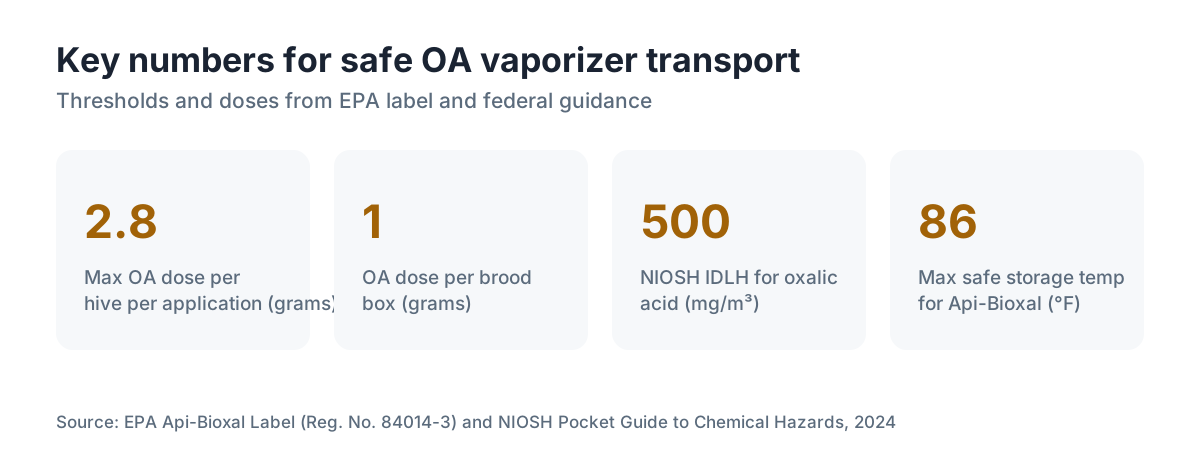
Api-Bioxal's label (EPA Reg. No. 84014-3) states that the product must be stored in its original container away from heat and direct sunlight [1]. "Away from heat" is doing real work there. A dark pickup bed in July can hit 140°F, which is well above the storage temperature most manufacturers recommend (typically below 86°F or 30°C).
There's no federal DOT hazmat placard requirement for the small quantities a hobbyist or sideliner carries, usually 175-gram or 350-gram retail containers. DOT hazmat rules kick in at threshold quantities far above what any beekeeper hauls to an out-yard [3]. But "no placard required" isn't "no rules apply." State regulations can add requirements, and a few states run their own pesticide transport rules, so check with your state department of agriculture.
Hauling multiple containers across state lines means you're moving a registered pesticide across jurisdictions, and both states' laws apply. Nobody is stopping beekeepers on rural highways for this. But if you're ever in a wreck and a container breaks open, you want to show you handled it right.
How should you cool down the vaporizer before loading it?
Treat your last hive, disconnect the battery or unplug the wand, then wait. This is the step most people skip in a hurry. A good minimum is 20 to 30 minutes in open air before the vaporizer goes into any closed container. Propane-style vaporizers need longer, because they carry more mass and hold heat stubbornly.
Here's a simple test. Hold your bare palm six inches above the heating pan. If you feel radiant heat coming off it, it isn't ready. An infrared thermometer costs about $15 to $20 and makes the call objective. You want the pan below 100°F before it goes into a tote.
Once it's cool, use a dry paper towel or old rag to brush visible OA crystals off the pan into a waste bag before loading. Don't blow on it. Don't hit it with compressed air. You're trying to keep OA dust out of the air, because that's the main inhalation hazard. NIOSH lists oxalic acid as a respiratory and mucous membrane irritant at low concentrations [5].
Store the cooled wand in a dedicated sleeve. An old cotton pillowcase works fine and keeps residual dust contained during the drive.
What container setup works best for hauling the vaporizer and acid together?
Keep the acid and the vaporizer physically separated in your vehicle. Same tote is fine. Same bag is not. The logic is simple: if anything spills or leaks, you don't want OA crystals touching a hot or damaged wand, or dusting the inside of your car.
Here's the setup I'd actually use.
Tote setup for out-yard runs
| Item | Container | Notes |
|---|---|---|
| Api-Bioxal (OA crystals) | Original manufacturer bottle, sealed | Label must be readable and intact |
| Cooled vaporizer wand | Cotton pillowcase or dedicated nylon pouch | Residual crystal dust stays contained |
| Power cable / battery leads | Zippered bag | Prevents accidental shorting |
| Nitrile gloves (2+ pairs) | Loose in tote | Wear for any handling of acid or wand |
| N95 or half-face respirator | Zippered bag | Required PPE per Api-Bioxal label |
| Safety glasses or goggles | Hard case | Eye protection required per label |
An 18-gallon Rubbermaid tote with a locking lid handles most sideline operations. Line it with a heavy-duty trash bag. If a bottle ever cracks, the bag catches the spill and you're not scrubbing OA crystals out of truck carpet.
Store the tote in the truck bed or a cargo area with airflow, not in the passenger cabin. OA doesn't throw dangerous fumes at room temperature in a sealed container, but there's no reason to share cabin air with a pesticide for a 90-minute drive.
Disconnect the battery from the wand before transport on battery-powered vaporizers. This isn't only a heat precaution. It prevents accidental activation. A vaporizer that fires up inside a sealed tote with OA crystals present is a bad situation you never want to test.
What PPE do you need with you during transport, more than when treating?
The Api-Bioxal label spells out PPE for handling [1]. You need chemical-resistant gloves (nitrile at minimum), protective eyewear, and respiratory protection. An N95 particulate respirator is the labeled floor, though a half-face respirator with OV/P100 cartridges is what most serious varroa managers run for repeated exposure.
The Honey Bee Health Coalition's Varroa Management Guide recommends a respirator when handling OA in any form, and notes that vaporization creates the highest inhalation exposure of any OA application method [2]. That PPE rides with you to the out-yard, ready before you open the tote. Gloves left at home defeat the whole point.
Put a pair of nitrile gloves on before you even load or unload the tote. OA crystals cling to the outside of the acid bottle after a few uses, and that residue transfers to your hands and then to your eyes or mouth. Hand-to-face contact is the exposure route people underestimate most, not direct inhalation.
Carry at least four pairs of nitrile gloves on any out-yard run. Two pairs per person if you bring a helper. Gloves are cheap. An OA splash to the eye is not.
How do you handle a spill of oxalic acid crystals in the vehicle?
Don't panic, and don't dry-sweep. Dry-sweeping OA crystals throws them into the air, which is exactly what you don't want inside an enclosed vehicle.
Gloves and respirator on before you touch anything. Wet the spill with a damp cloth or damp paper towels and wipe it up. Collect all contaminated material in a sealable plastic bag for disposal. Rinse the area with water and dry it.
For a spill on skin, rinse with plenty of water for at least 15 minutes. For a spill in the eyes, flush with water for 15 to 20 minutes and get medical attention [1]. OA is a reducing acid, and it damages tissue through both acidity and the way it binds calcium.
The NIOSH Pocket Guide to Chemical Hazards lists oxalic acid's immediately dangerous to life and health (IDLH) concentration at 500 mg/m³, but irritation starts at much lower levels [5]. So a small crystal spill in an open truck bed is not an emergency. The same spill in a closed car with no ventilation and no PPE is something to take seriously.
Air out the vehicle before you get back in.
Can you transport a 12V battery-powered vaporizer safely in a passenger vehicle?
Yes, with the right precautions. Most backyard and sideliner beekeepers run their OA vaporizer off a 12V sealed lead-acid (SLA) battery or a lithium battery pack. These are the same batteries in electric fences and deer feeders. Nothing exotic.
For transport: leave the battery at operating voltage (not dead, just not brimming full), disconnect it from the wand, and store it upright. SLA batteries can leak sulfuric acid if tipped or cracked, so keep them in a battery box or a plastic tote of their own. Never store a connected battery and wand together in an enclosed space.
Lithium packs weigh less and carry essentially no leak risk, but they bring their own transport considerations. Most consumer-grade lithium packs beekeepers use fall well below FAA cargo thresholds and DOT ground transport limits, so you're fine on the road. Protect the pack from physical damage and extreme heat, same as any lithium device.
One operational note. If you're treating at an out-yard and running the vaporizer off your truck battery through jumper-style clamps, keep the truck off, not idling. Idling can send electrical noise and voltage spikes into the wand and shorten its life.
What's the best way to organize an out-yard treatment run from start to finish?
A repeatable system saves time and keeps you safe. Here's what a well-run out-yard OA trip looks like in practice.
The night before: check your OA supply (Api-Bioxal in its original, sealed container). Charge your battery. Lay out your PPE: gloves, respirator, goggles, long-sleeved shirt. Confirm you have enough OA for the number of hives you're treating, at the right dose rate. The Api-Bioxal label specifies 1 gram of OA dihydrate per brood box, with a maximum of 2.75 grams total per hive per application [1].
Packing the vehicle: the cooled, disconnected vaporizer goes into its cotton sleeve, then into the tote. The OA bottle goes into the same tote but separated. PPE bag on top. Tote lid locked. Tote in the bed or cargo area.
At the out-yard: gloves on before you open the tote. Respirator on before you open the OA bottle or handle the wand. Do your treatments, disconnect the wand right after the last hive, and let it cool in open air while you finish inspections or other yard work.
Driving home: cooled wand back in the sleeve, back in the tote. Don't rush this step. A wand packed too hot into a sealed tote bakes OA vapor into the container walls.
Running multiple out-yards and trying to track treatment timing, mite wash counts, and brood break windows? VarroaVault's free varroa management tools keep the records straight across locations without paper.
For a broader look at varroa biology and why timing your OA treatments around the brood cycle matters so much, the varroa mite overview is worth reading before your next run.
Does the broodless condition matter for OA vaporization, and how does it affect your out-yard schedule?
This is an efficacy question more than a logistics one, and it shapes how you plan out-yard runs. Oxalic acid vapor works on phoretic mites, the ones riding on adult bees, not on mites sealed inside capped brood cells. A single OA vaporization in a colony with brood knocks down phoretic mites but leaves the mites in capped cells untouched [2].
The Honey Bee Health Coalition's Varroa Management Guide, the most thorough free reference on this, recommends repeated vaporization (typically 3 treatments, 5 days apart) when brood is present, or a single treatment during a broodless period for maximum efficacy [2]. For out-yards, that has real scheduling weight: you may need 3 trips instead of 1, spaced 5 days apart, for each treatment cycle.
Create a broodless window by caging the queen or splitting the colony before your planned treatment, and a single out-yard trip does the job. In cold-climate winter, naturally broodless colonies are the easy case: one trip, one treatment, very high kill against surviving phoretic mites.
Plan your runs around the brood cycle, not the calendar. A mite wash or sticky board count before you leave tells you whether treatment is urgent enough to make multiple trips worthwhile right now.
Are there any transport restrictions specific to certain states or regions?
Most states add nothing on top of EPA label rules for the quantities hobbyists and sideliners carry. A few do. California, for one, has its own Department of Pesticide Regulation (CDPR) that can layer extra handling, storage, and transport requirements on top of the federal label [6]. Some California counties require a County Agricultural Commissioner permit to buy or apply OA, even for personal use.
In states with agricultural inspection stations (California, Arizona, New Mexico, and others near borders), you could in theory be asked to declare pesticides. In practice this almost never happens to a beekeeper carrying small quantities in original containers, but it's worth knowing the rule exists.
Check with your state department of agriculture before any interstate out-yard run. University extension services in your state often keep a current summary. The University of California's statewide Integrated Pest Management program, for instance, publishes pesticide handling and transport guidance that covers beekeepers [7].
For most beekeepers in most states: keep OA in original containers, carry the label (a photocopy is legally acceptable, and many states allow digital copies), and store it away from heat and food. That's the practical floor.
What should you do if you're stopped and asked about the chemicals in your vehicle?
Stay calm, be transparent, and have your label ready. Law enforcement and emergency responders almost never stop a beekeeper over OA specifically, but accidents happen. If a first responder sees a bottle with a corrosive symbol in your truck, they'll ask questions.
The Api-Bioxal label is your best friend here. It names the product, the active ingredient, the registered use, first aid procedures, and emergency contact information (Chemtrec: 1-800-424-9300, listed on the label) [1]. Keep a printed copy in the tote or the glove box.
OA isn't classified as a hazardous material under DOT rules at hobbyist quantities, so you don't need a Safety Data Sheet (SDS) in your vehicle by law. But printing one takes 30 seconds and removes all ambiguity. The SDS for Api-Bioxal is publicly available from the manufacturer, Véto-pharma [8].
If you're ever in an accident and the OA container breaks open: follow the label's spill instructions, call 911, and reference the Chemtrec number on the label for hazmat guidance. Don't try to clean it up yourself in a roadway.
What are common mistakes beekeepers make when hauling OA equipment to remote locations?
The list is shorter than you'd think, and the same errors come up again and again.
Packing the vaporizer hot. This is the big one. Beekeepers finish the last treatment, disconnect the wand, and toss it in the truck because they want to get home. Twenty minutes later the tote interior sits at 120°F and reeks of burned OA. Let the wand cool completely, every time.
Storing OA loose or in an unlabeled container. Crystals in a zip-lock bag look like sugar. They've been mistaken for sugar. It's also a federal label violation.
Forgetting PPE at home. PPE that stays in the barn does nothing at an out-yard. Keep a dedicated PPE bag in the tote, and check it when you restock OA.
No spill containment. A tote with no liner turns a cracked bottle into a serious cleanup problem. Line the tote. It's one trash bag.
Using extension cords or improvised power connections. Some beekeepers running AC-powered vaporizers string long extension cords from a generator in the truck bed. That's fine electrically if the cord gauge is adequate, but it creates a tripping hazard and an accidental-activation risk if the vaporizer gets jostled while still connected. Disconnect power every time you move between hives.
Shopping for a reliable vaporizer and other beekeeping supplies? Resistance to road vibration and a good cable strain relief on the wand connector are worth looking for. Cheap wand connectors fail on rough roads.
Frequently asked questions
Can I leave oxalic acid in my truck overnight between out-yard visits?
Yes, as long as the container is original, sealed, and the truck isn't exposed to extreme heat. The Api-Bioxal label requires storage below 86°F (30°C) and away from direct sunlight. A hot truck cab in summer can exceed safe storage temps quickly. If temperatures are moderate, a sealed tote in a shaded truck bed overnight is fine. In hot weather, bring the OA inside.
Is oxalic acid vaporizer transport different from transporting the liquid dribble form?
Slightly. The liquid oxalic acid solution (mixed at 3.5% in sugar syrup for dribble application) is a corrosive liquid, which spills more aggressively than crystals. Crystals are easier to contain. Both must stay in original labeled containers. The liquid form carries a higher spill risk during travel, so double-bagging inside the tote is smarter for liquid than for the dry Api-Bioxal crystals.
Does OA vaporization treatment kill mites in capped brood cells?
No. Oxalic acid vapor only reaches phoretic mites on adult bees, not mites inside sealed brood cells. This is why multiple treatments spaced 5 days apart are recommended when brood is present, to catch mites as they emerge. During a broodless period, a single treatment achieves much higher efficacy. The Honey Bee Health Coalition's Varroa Management Guide covers this in detail.
What respirator do I actually need for OA vaporization, and does it matter during transport?
For vaporization treatment, a half-face respirator with P100 particulate filters is the practical standard; N95 is the labeled minimum. During transport of sealed, cool equipment, respiratory risk is very low. But wear your nitrile gloves when loading and unloading the tote regardless, since crystal residue on the wand or bottle exterior is the main exposure route during transport.
Can I transport the vaporizer in the passenger cabin of my car?
You can, but a covered cargo area or truck bed is better. A sealed tote with a cooled vaporizer and sealed OA presents minimal fume risk, but there's no upside to sharing cabin air with any pesticide for a long drive. If you do put it in the cabin, crack a window and keep the tote lid firmly closed. Never transport with the wand still connected to a power source.
How long does Api-Bioxal stay effective in the original container?
The manufacturer (Véto-pharma) lists the shelf life on the product packaging, typically 2-3 years from manufacture date if stored under label conditions (cool, dry, away from sunlight). Check the lot number and expiration date before each season. OA crystals don't become toxic with age, but they can absorb moisture and clump, which affects dose measurement accuracy.
Do I need a pesticide applicator license to transport or apply Api-Bioxal?
In most states, no license is required for beekeepers applying Api-Bioxal to their own colonies. The product is labeled for use by beekeepers without a license for personal hives. However, a few states, including California, may require a county permit. Check with your state department of agriculture before purchasing. Transporting the product doesn't trigger licensing requirements separate from application rules.
What is the dose of Api-Bioxal per hive for vaporization?
The Api-Bioxal label specifies 1 gram of oxalic acid dihydrate per brood box, with a maximum of 2.75 grams per hive per application. Most vaporizer pans are calibrated to accept 1-2 grams. Always weigh your dose on a small gram scale rather than eyeballing it; consistent dosing matters for both efficacy and safety.
Can I haul my OA vaporizer setup on an ATV or utility vehicle for remote apiaries?
Yes, and this is common for apiaries on rough terrain. The same rules apply: cooled wand, sealed OA in original container, PPE accessible. On an ATV, secure the tote with a bungee or strap so it can't tip. Road vibration on a UTV is harder on equipment than a truck, so check your wand connector and cable after each run. A rigid tote beats a soft bag in this application.
Is it safe to transport OA vaporizer equipment in the same cooler I use for food?
No. Keep pesticides completely separate from food and drink containers, always. This is basic pesticide handling practice and also common sense. OA crystal residue transfers easily to surfaces, and consuming any OA is harmful. Use a dedicated tote for beekeeping chemicals and equipment that never doubles as a food cooler.
How do I dispose of empty Api-Bioxal containers after an out-yard run?
The Api-Bioxal label provides disposal instructions: rinse the container three times with water, add the rinse water to your treatment materials, and dispose of the container in trash or recycling per local regulations. Many agricultural areas have pesticide container recycling programs. Don't leave empty containers at an out-yard or in the field.
What if I spill OA crystals in my truck bed during an out-yard run?
Put on gloves and a respirator before cleanup. Dampen the spill with water, don't dry-sweep, which would throw the crystals into the air. Wipe up with damp cloths or paper towels and bag all contaminated material. Rinse the truck bed area with water. For skin contact, rinse with running water for 15 minutes. The crystals are a problem mainly through inhalation or eye contact, not skin absorption.
Sources
- EPA, Api-Bioxal Specimen Label (EPA Reg. No. 84014-3), Véto-pharma: Api-Bioxal label requirements: original container storage, dose rate (1g OA dihydrate per brood box, max 2.75g per hive), PPE requirements, and Chemtrec emergency contact
- Honey Bee Health Coalition, Varroa Management Guide (latest edition): OA vaporization efficacy is limited to phoretic mites; recommends 3 treatments 5 days apart when brood is present, or single treatment during broodless period; PPE required including respirator
- U.S. Department of Transportation, Pipeline and Hazardous Materials Safety Administration, Hazmat Regulations Overview: DOT hazmat placard and documentation thresholds for corrosives; small hobbyist quantities of OA fall below DOT hazmat classification thresholds for ground transport
- Penn State Extension, Apiculture program: Practical guidance on OA vaporizer cool-down and safe handling before packing equipment for transport
- NIOSH, Pocket Guide to Chemical Hazards: Oxalic Acid: Oxalic acid IDLH 500 mg/m³; irritation effects at lower concentrations; respiratory and mucous membrane irritant; inhalation is primary hazard during vaporization
- California Department of Pesticide Regulation, Pesticide Use and Licensing: California CDPR may layer additional pesticide handling, storage, and transport requirements on top of EPA label requirements; county permits may be required
- University of California Statewide Integrated Pest Management Program (UC IPM): Pesticide handling and transport guidance relevant to California beekeepers, including OA products
- Véto-pharma, Api-Bioxal Safety Data Sheet (SDS): Safety Data Sheet for Api-Bioxal listing chemical hazard classification, spill response, and emergency contact information for transport incidents
- USDA Agricultural Research Service, Bee Research: OA vaporization approved for use on colonies with honey supers; efficacy data on phoretic mite kill rates
- EPA, Pesticide Registration and Container Requirements (40 CFR Part 165): Federal requirements for pesticide container labeling, storage, and disposal including triple-rinse procedures for empty containers
Last updated 2026-07-10