Treating a caught swarm for varroa: what to do right away
TL;DR
- Caught swarms carry varroa, usually at lower loads than the hives they left.
- A fresh swarm has no capped brood for days to weeks, and that broodless gap is the best window all year to hit mites hard with oxalic acid, either dribbled or vaporized.
- Do a quick wash, treat within 2 to 5 days, then retest at 4 to 6 weeks once brood resumes.
Do caught swarms actually have varroa mites?
Yes. Assume every swarm you catch in North America carries varroa, whether it came off a managed hive or a feral colony in an oak tree. The mites ride the adult bees, tucked under the abdominal plates during their phoretic phase. Queen, workers, and drones all serve as hosts.
The good news is that swarm loads run lower than the source colony. A swarm is a population bottleneck. Only the mites riding adult bees at the moment of departure come along; the ones sealed inside capped brood stay behind with the parent hive. A study in Apidologie found swarm clusters carried significantly lower phoretic mite rates than their source colonies, though the mites were still there [1].
The bad news is that "lower" is not "zero." Left alone, those mites breed fast once the new colony builds capped brood. A colony that starts with a modest load and gets no treatment can reach a damaging level (generally 2 to 3 mites per 100 bees) within a single brood cycle [9]. Don't let a low starting count talk you out of treating.
Why is the broodless window after catching a swarm so valuable?
A fresh swarm has no drawn comb and nowhere for the queen to lay, so for a stretch of a few days to two or three weeks nearly every mite is phoretic and riding an adult bee where treatments can reach it. That is the whole advantage. Miss it and you are back to fighting mites that hide inside sealed cells.
Varroa spend most of their reproductive life inside capped brood, shielded from almost everything you can apply. Oxalic acid, the best low-residue option here, kills phoretic mites at very high rates and does close to nothing against mites under cappings [3]. A broodless colony treated with oxalic acid can lose 90 to 97% of its mites in a single application, per EPA label data and university field trials [4][10].
This is the best treatment opportunity on the whole beekeeping calendar. It beats treating a full colony in July, because in July most of the mites are hidden. Install a swarm on drawn comb and you have maybe 48 to 72 hours before the queen fills those cells. Install on bare foundation and you likely have a week or more.
Start checking for eggs by day 3 or 4 so you know when the window is closing.
Once the queen is laying and cells are capping, the advantage is gone and you switch to a longer-acting product or a multi-application schedule.
Should you test the mite load before treating a swarm?
Short answer: test if it is quick and calm, but a swarm is almost always worth treating regardless of the count. For an established hive, test-first makes sense because you weigh treatment cost and disruption against real risk. A fresh swarm changes that math.
Testing costs time. An alcohol wash or sugar roll on a 300-bee sample takes a few minutes and some fuss on an unsettled cluster [2]. Oxalic acid vaporization has very low toxicity to bees, minimal residue, and costs pennies per application. If you plan to treat no matter what, testing first only eats into the window.
A baseline is still worth having. Record a count before treatment and again 4 to 6 weeks later, and you have hard evidence of whether the treatment worked and how fast the population is climbing back. The Honey Bee Health Coalition's Varroa Management Guide calls alcohol wash the gold-standard monitoring method and sets the action threshold at 2 mites per 100 bees during brood-rearing season [2].
Here is what I actually do: a fast alcohol wash while the bees are clustered and calm right after installation, treat within 48 to 72 hours no matter the result, and wash again at 4 to 6 weeks to confirm the knockdown held. The alcohol wash protocol lives on most state extension apiculture pages, including the UC Davis bee program [5].
Which varroa treatments work best on a newly caught swarm?
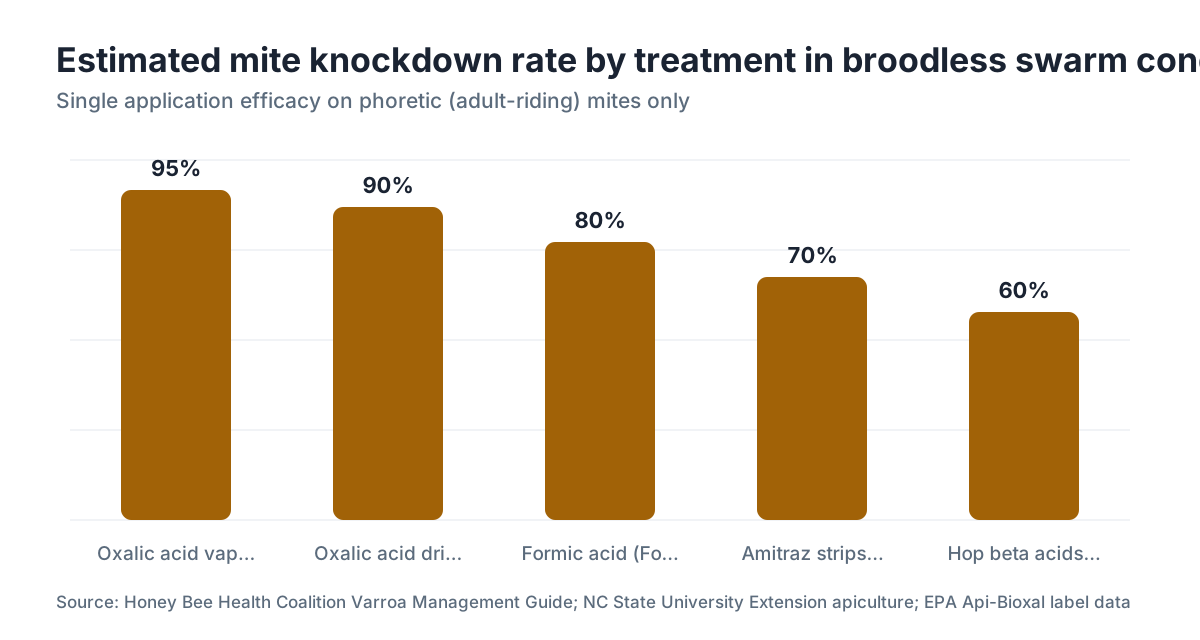
Oxalic acid wins for a fresh swarm because the broodless or low-brood state is exactly where it performs best. Here is how the main options stack up:
| Treatment | Works broodless? | Works with brood? | Application method | Residue in wax/honey? | Notes |
|---|---|---|---|---|---|
| Oxalic acid vaporization | Yes, very effective | Partial only | Vaporizer | Negligible at label rates [4] | Best choice for fresh swarm |
| Oxalic acid dribble | Yes, very effective | Partial only | Syringe/dribble | Negligible | Good if no vaporizer |
| Apivar (amitraz strips) | Yes | Yes | Strips left 6-8 weeks | Yes, low | Works but slower; carries through brood resumption |
| Formic acid (MAQS/Formic Pro) | Yes | Yes | Pads on frames | Minimal | Temperature-sensitive; can stress a small cluster |
| HopGuard 3 (hop beta acids) | Yes | Partial | Strip on frames | No | Labeled broodless; efficacy data thinner than OA |
| Apiguard / ApiLife Var (thymol) | Not ideal | Yes | Tray/tablet | Minimal | Needs warm temps; poor fit for a small swarm |
Oxalic acid vaporization is what I would reach for, and it is what most university extension programs recommend for broodless conditions [4][5]. One treatment at 1 gram of OA per brood box, repeated once 7 to 10 days later if any brood is starting to cap, covers the window.
No vaporizer? The dribble method works too. A 3.5% oxalic acid solution applied between frames at 5 mL per seam, not to exceed 50 mL total per colony, is EPA-registered and effective [4]. Coverage is a little less even in a swarm that hasn't settled onto frames, but it still does the job.
Apivar strips are a fair fallback if you want a single product to carry the colony through the first brood cycle. The strips need 6 to 8 weeks of bee contact, so install at setup and pull on schedule. Amitraz resistance is documented in some U.S. varroa populations, so monitor after you treat [6].
Formic acid works broodless and also reaches into capped cells, which sounds ideal. The catch is that small swarm clusters can suffer in the confined airspace with formic fumes, and formic acid needs ambient temperatures between roughly 50 and 85 degrees Fahrenheit (10 to 30 Celsius) to work safely [3]. Catch a swarm in a cold spring snap or a summer heat wave and formic acid turns into more trouble than it is worth here.
For the varroa mite biology behind these choices, that background explains why the broodless window matters so much mechanically.
How do you actually apply oxalic acid to a swarm in a new box?
Vaporization is simple but demands a few precautions. You need a commercial OA vaporizer (widely available from beekeeping supply companies), oxalic acid labeled for bees (Api-Bioxal, the only EPA-registered OA product with a honey bee label in the U.S. [4]), a respirator rated for acid vapor (N95 is the floor; a half-face respirator with acid-gas cartridges is better), and hive bodies you can seal.
Vaporization steps for a newly hived swarm:
- Install the swarm and let them settle at least an hour before treatment, ideally until dusk when the foragers are all home.
- Seal the entrance with a foam plug or tape.
- Load the vaporizer with 1 gram of OA per brood box (one box for a fresh swarm).
- Insert it through the bottom board or per the vaporizer's instructions, keeping seams sealed.
- Run the heating cycle per the manufacturer's spec (usually 2.5 to 3 minutes to fully vaporize).
- Leave the hive sealed for at least 10 minutes after you pull the vaporizer.
- Open the entrance.
Do not crack the hive open to inspect right after treatment. The bees are agitated and the residual vapor is still working. Give them 30 minutes to an hour.
For the dribble method, mix to 3.5% OA (or use a pre-measured product) and apply 5 mL per seam of bees, frame by frame. Do not exceed 50 mL per colony per the label [4]. This is harder in a swarm that isn't yet clustered on frames, so vaporization is usually the cleaner call.
Read and follow the EPA-registered label every time. Under FIFRA the label is the law, and states can pile restrictions on top of federal requirements, so check your state department of agriculture if anything is unclear [7].
What if you can't treat immediately after catching the swarm?
Life happens. You catch a swarm at 6 p.m. on a Tuesday and your oxalic acid is two days out in a shipping box. Here is how to ride out the delay without panicking.
Don't install the swarm on drawn comb if you can avoid it. Bare foundation slows the queen's laying, which stretches your broodless window. A queen started on foundation may not have larvae capping for 10 to 14 days after installation. That buys you time.
Keep the cluster cool and well ventilated if they are still in a temporary catch box. Overheated bees die, and a stressed swarm is a fragile one.
Inspect gently around day 3 to 5 and find eggs. Eggs are your clock. Once you spot them, you have roughly 8 to 9 days before those cells cap. Capped cells are where the oxalic acid window closes, so treat before you see them.
Miss the ideal window and you haven't lost the colony. You have just dropped from ideal to standard. Switch to a longer-acting product like Apivar, or run multiple OA vaporizations spaced every 5 days to catch mites as they emerge before they recap. The Honey Bee Health Coalition guide lays out the multi-treatment OA schedule in detail [2].
The obvious lesson is to buy supplies before you need them. A vaporizer and a small stock of Api-Bioxal on the shelf means you are ready the day a swarm lands. If you need to restock, check beekeeping supplies sources that carry Api-Bioxal and EPA-registered gear.
Does the source of the swarm change the treatment urgency?
It shifts your assumptions, not your decision. A swarm off a known, well-managed apiary (say a neighbor's hive with a recent clean test) may carry fewer mites than a feral swarm that has lived untreated in a tree for years. But you rarely know the history, and even a "clean" managed colony can throw a swarm that carries mites.
Feral swarms often get credit for higher genetic diversity and better hygienic behavior, and some researchers have measured lower mite reproduction in feral colonies, but that never means zero mites [1]. Don't skip treating a feral swarm because you read that wild bees are mite-resistant. Some are. Most aren't, at least not enough to survive with no management at all.
Africanized honey bees are a separate matter in southern states. Swarms of unknown origin caught in Texas, Florida, Arizona, California, and other areas where africanized honey bees are established deserve caution before you assume they are safe to hive. That is a defensiveness and identification concern, separate from varroa, but worth flagging if you trap swarms in those regions.
Treat every swarm regardless of suspected origin. One oxalic acid vaporization costs almost nothing. A collapse from a mite-bomb swarm costs you the whole colony.
How do you monitor mite levels after treating the swarm?
Post-treatment monitoring is where most hobbyists slip. They treat, feel good, and don't check again until the colony looks sick. By then the mite population has usually rebounded past the point of an easy fix.
Here is a schedule that works for a treated swarm.
Weeks 1 to 2 after installation: confirm the queen is laying, the bees are drawing comb, and the colony is settling in. Keep inspections light.
Weeks 4 to 6 after the first OA treatment (roughly when the first full brood cycle finishes): do an alcohol wash. Take 300 adult bees off a brood frame, wash in 70% isopropyl alcohol for 60 seconds, filter through fine mesh, and count. More than 6 mites in that 300-bee sample (2 per 100 bees) means the population is climbing and needs another treatment [2].
If you used Apivar strips, check at 8 weeks and pull the strips on schedule. Leaving them in past the labeled window raises resistance pressure [6].
Sticky boards (bottom board inserts) give a rough read on mite drop but are less reliable than an alcohol wash for actual infestation rates. Treat them as a supplement, not your main tool.
VarroaVault's free mite tracking tools log wash results over time and flag when you are nearing threshold, which earns its keep once you are running more than a few hives.
After that first check at 4 to 6 weeks, test monthly through brood season (roughly April through October across most of North America) and treat whenever you cross threshold.
Can you combine varroa treatment with other new-swarm management tasks?
Some tasks pair fine with treatment. A couple conflict. Here is the practical breakdown.
Feeding: 1:1 sugar syrup to drive comb building is compatible with oxalic acid vaporization. Feed before and after treatment without worry. Skip feeding while Apivar strips are in place if you want to minimize any residue uptake through wax, though the risk at label rates is low [6].
Queen inspection: do your first queen check before treatment, not after. A newly installed swarm sometimes loses its queen during the catch or the install. If she is dead or missing, there is no point treating and you need to requeen right away. Confirm she is present, then treat.
Adding drawn comb: drawn comb speeds buildup but shortens your broodless window fast. If you have drawn comb, add it after the OA treatment, not before. You get the full broodless efficacy first, then hand them resources to build faster.
Merging with another colony: treat both colonies for varroa before you combine a caught swarm with a weak hive. Merging a mite-loaded swarm into a colony with its own mite problem just gives you one bigger problem.
Marking the queen: fully compatible with OA timing. Mark her after the settling period, before or after treatment, your call.
What does a complete swarm varroa protocol look like from day one?
Here is the sequence I would actually run, day by day.
Day 0 (catch day): install the swarm in a hive body with empty frames or bare foundation. Confirm the queen is present. Don't add drawn comb yet. Set a sticky board if you have one.
Days 1 to 3: let the bees settle. Inspect briefly for eggs to start the broodless clock. Begin light 1:1 sugar syrup feeding to push comb drawing.
Days 2 to 5 (ideal treatment window): run an alcohol wash on a 300-bee sample. Treat with oxalic acid vaporization at 1 gram of OA per hive body, entrance sealed. Record the date and the mite count.
Days 7 to 10: second OA vaporization if any brood is starting to cap. This catches mites that were under cappings during the first treatment and have since emerged.
Days 10 to 14: light inspection. The queen should be laying steadily with a healthy brood pattern. Add drawn comb now if you have it.
Weeks 4 to 6: alcohol wash. Compare to baseline. Over 2%, treat again with a product suited to a colony now in full brood (Apivar, formic acid, or a multi-application OA schedule). Log the result.
Monthly through summer: keep monitoring, treat when you cross threshold. The Honey Bee Health Coalition puts the threshold at 2% during brood season and 1 to 2% heading into winter [2].
Fall (before winter bees are being raised, roughly 6 weeks ahead of your first frost): treat again if over threshold. This is the treatment that matters most all year, because it protects the long-lived winter bees that carry the colony to spring [2].
None of this is complicated. It is just consistent. Most colony losses come not from impossible mite loads but from loads that were measurable and treatable, and nobody checked.
Are there any situations where you should not treat a swarm immediately?
A few edge cases earn a second thought before you treat.
Temperature extremes: oxalic acid vaporization has a wide operating range and works fine in most conditions. Formic acid does not. If you use MAQS or Formic Pro, read the label: MAQS is labeled for 50 to 85 degrees Fahrenheit (10 to 29 Celsius), and Formic Pro carries similar limits [3]. Treating a small swarm cluster with formic acid in a heat wave can cost you the queen or a pile of dead bees. Use OA in those conditions.
Very small swarms: a swarm under about 3 frames of bees (roughly 5,000 to 7,000 bees) is already stressed, and a harsh treatment can tip it into terminal decline. OA vaporization at the right dose is generally tolerated even by small clusters, but be precise. The 1 gram per box rate assumes a standard 10-frame Langstroth box; for a very small swarm in a nucleus box, some beekeepers use 0.5 to 0.75 grams, though that is off-label dosing and you should follow the specific product label [4].
Treatment-free goals: if you are managing treatment-free and selecting for mite-resistant stock, you might deliberately leave a caught swarm untreated to evaluate its natural resistance over time. That is a legitimate move for someone doing active selection work. It is a bad move for a hobbyist who just wants the colony to live. Be honest with yourself about which one you are.
Otherwise, treat the swarm. There are very few good reasons not to.
Frequently asked questions
How long after catching a swarm should I wait before treating for varroa?
Not long. Give the bees 24 to 72 hours to settle and confirm the queen is present and alive, then treat. The broodless window is your best shot at a highly effective treatment. Wait until the colony has capped brood and you lose the advantage of full phoretic mite exposure. Treat by day 3 to 5 at the latest if you installed them on drawn comb.
Is oxalic acid safe to use on a swarm with no capped brood?
Yes. Oxalic acid vaporization and dribble are both EPA-labeled for broodless or low-brood conditions, and the broodless state makes OA more effective, not less. At label rates (1 gram per box for vaporization, 5 mL per seam up to 50 mL total for dribble), bee mortality stays minimal and knockdown of phoretic mites usually runs 90 to 97% in university trials.
Do feral swarms need varroa treatment, or are they naturally resistant?
Most feral swarms need treatment. Some feral populations show better hygienic behavior and lower mite reproduction than managed bees, but that is not immunity. Varroa can still climb to damaging levels in feral colonies, sometimes just more slowly. Don't assume a feral swarm is safe without testing. Treat it like any other caught swarm and monitor over the following months.
Can I use Apivar strips in a newly caught swarm?
Yes. Apivar (amitraz) strips work through adult bee contact over 6 to 8 weeks, covering the broodless period and running into early brood production. Install the strips at setup and pull them on schedule. The drawbacks versus OA are slower results, higher cost, and documented amitraz resistance in some varroa populations. OA is still the better first choice for the broodless window.
What mite count is considered dangerous in a newly installed swarm?
The Honey Bee Health Coalition sets the action threshold at 2 mites per 100 bees during brood-rearing season. For a fresh swarm before brood is established, even 1 to 2% warrants treatment given how fast mites compound once brood starts. Because OA treatment is low-risk and cheap, most experienced beekeepers treat swarms regardless of the exact wash result.
How do I do an alcohol wash on a swarm that hasn't settled into frames yet?
Collect bees from the main cluster mass, not from loose stragglers. Use a wide-mouth jar with a mesh lid and scoop about 300 bees (roughly half a cup) from the cluster. Add 70% isopropyl alcohol, seal, and shake for 60 seconds. Pour through the mesh and count the mites in the liquid. It is a little awkward on an unsettled swarm but doable within the first few days after installation.
Will varroa treatment kill the swarm queen?
Oxalic acid vaporization and dribble at label rates do not meaningfully raise queen mortality when done right. The risk is higher with formic acid, which can cause queen loss in small colonies or at high temperatures. Confirm the queen is alive before treating. If you treat a very small cluster with any product, check her status 5 to 7 days later to confirm she is still laying normally.
How many oxalic acid treatments does a swarm need?
Usually one to two in the broodless window. A single well-timed OA vaporization when all mites are phoretic can hit 90 to 97% knockdown. A second treatment 7 to 10 days later catches mites that were under newly capped cells during the first pass and have since emerged. Once brood is fully established, shift to your standard seasonal monitoring rather than continuing OA-only.
Can I treat a swarm I installed in a bait hive or cutout differently than a box swarm?
The same principles apply. The key variable is whether there is capped brood. A bait hive a swarm has occupied for a week or two may already have capped brood, so check before assuming you still have a broodless window. A fresh cutout from an established colony will almost certainly have capped brood and needs a longer-acting product like Apivar or a multi-application OA schedule spaced every 5 days.
Does feeding sugar syrup to a swarm affect varroa treatment?
Syrup feeding is compatible with oxalic acid treatments and does not meaningfully affect efficacy. Feeding is actually encouraged for new swarms to drive comb production. Apivar label guidance generally allows feeding to continue. Avoid feeding medicated syrups (like fumagillin, which is no longer available in the U.S. anyway) alongside varroa treatments without checking for interactions.
Is Api-Bioxal the only legal oxalic acid product I can use on honey bees in the U.S.?
Api-Bioxal is the only EPA-registered oxalic acid product with a honey bee label in the United States. Using raw or industrial oxalic acid on bees is off-label under FIFRA, which regulates pesticide use. Api-Bioxal is widely available from beekeeping suppliers and priced competitively. Use the registered product and follow the label.
What if I caught a swarm but don't have any varroa treatment supplies on hand?
Order Api-Bioxal and a vaporizer right away (or the dribble version if you don't own a vaporizer). Install the swarm on bare foundation to slow the queen's laying and stretch the broodless window. Check for eggs every 2 to 3 days to track the clock. You likely have 7 to 14 days before cells start capping, which should be enough time to get supplies if you order immediately. Don't let the window close untreated.
How does varroa in a swarm compare to varroa in a package or nucleus colony?
Packages usually ship from southern producers who treated before packaging, so their mite loads are often certified below a threshold. Nucleus colonies vary widely by producer. Swarms are an unknown quantity. In practice, treat all three on installation using the same broodless-window logic: OA before brood is capped, monitor afterward, and don't assume any source is clean without testing.
Sources
- Apidologie (journal of bee research), swarm phoretic mite load literature: Swarm clusters carry significantly lower phoretic mite rates than the source colonies they originate from, though mites are still present.
- Honey Bee Health Coalition, Varroa Management Guide (latest edition): Alcohol wash is the recommended monitoring method; action threshold is 2 mites per 100 bees during brood season; 1-2% threshold before winter cluster.
- University of Minnesota Extension, Varroa mite management: Oxalic acid kills phoretic mites at high rates but does little to mites inside capped cells; formic acid requires ambient temperatures of roughly 50-85 F for safe, effective use.
- U.S. EPA, Api-Bioxal Oxalic Acid Dihydrate label (EPA Reg. No. 83623-1): Api-Bioxal is the EPA-registered oxalic acid product for honey bee varroa treatment; label specifies 1 gram per brood box for vaporization, 5 mL per seam up to 50 mL for dribble; negligible residue in wax and honey at label rates.
- UC Agriculture and Natural Resources, California Master Beekeeper Program: Oxalic acid vaporization is recommended for broodless colony treatment; alcohol wash is described as the gold standard for mite monitoring.
- U.S. EPA, Apivar (amitraz) product label and resistance documentation: Apivar strips should be used for 6-8 weeks per label; prolonged use beyond labeled duration increases resistance pressure; amitraz resistance is documented in some U.S. varroa populations.
- U.S. EPA, Pesticide Registration under FIFRA: Under FIFRA, pesticide use must follow the registered label; states may add restrictions beyond federal label requirements.
- USDA Agricultural Research Service, Varroa destructor biology and control: Varroa mites reproduce inside capped brood cells and spend most of their life cycle protected from topical treatments; the phoretic phase occurs on adult bees between reproductive cycles.
- Penn State Extension, Varroa mite identification and management: A colony starting with even a modest mite load and receiving no treatment can exceed damaging thresholds within a single brood cycle; prompt post-swarm treatment is recommended.
- North Carolina State University Extension apiculture program: Broodless or low-brood periods, including swarm conditions, offer the highest oxalic acid efficacy, with field trials showing 90-97% knockdown in a single well-timed application.
Last updated 2026-07-09