Treating for nosema and varroa simultaneously: what actually works
TL;DR
- You can treat nosema and varroa at the same time.
- The catch is that they need different timing windows and some products fight each other inside the hive.
- Varroa is almost always the higher priority.
- Fumagillin is off-label in the US now, so nosema management leans on nutrition and comb hygiene instead of a reliable drug.
Do nosema and varroa actually occur together, and how common is it?
Yes, and more often than most hobbyists expect. A colony carrying a heavy mite load runs a weakened immune response, and that same worn-down population catches Nosema ceranae more easily. A USDA National Agricultural Statistics Service colony health survey found roughly 30-35% of sampled colonies tested positive for Nosema spp. in a given year, while varroa was present in most managed colonies [11]. Those two numbers overlap constantly.
Nosema ceranae, which has mostly replaced Nosema apis in the US, infects the midgut lining of adult bees. Spores shed in feces and ride from bee to bee on shared comb. Varroa destructor feeds on the fat body (not hemolymph, as folks believed for decades) and carries a load of RNA viruses, deformed wing virus chief among them. When both are active at once, the fat body takes hits from two directions, and the population can drop faster than either pathogen would manage alone.
Here's the practical read. Pull a sample for a mite wash, and if your counts are up, assume nosema may be riding along too. Treating varroa is never a wrong move. The nosema question just deserves its own look.
Which disease should you treat first when both are present?
Varroa, every time. There's no honest debate about the order. A colony crashing under a mite load over 3% (3 mites per 100 bees, the economic threshold most extension programs use) can die inside weeks no matter what you do about nosema [1]. Nosema ceranae grinds a colony down slowly. Varroa kills fast.
The Honey Bee Health Coalition's varroa guide puts a late-summer wash or sugar roll threshold at 2 mites per 100 bees as a reasonable trigger, with some researchers using 3% [1]. Get mites under that line first.
If counts sit below threshold and you have real reason to suspect heavy nosema (widespread dysentery on the front board, a tiny bee population next to a big brood area, or a lab-confirmed count above 1 million spores per bee), then nosema moves up the list. That combination is rare, though. Most of the time varroa is driving the bus.
What are the current approved nosema treatments in the United States?
Here's where the honest answer gets uncomfortable. Fumagillin, the old standard for nosema, is not registered for use in the United States. It left the US market after its manufacturer lost registration, and the EPA hasn't brought it back [2]. Canadian beekeepers can still get Fumagilin-B under a veterinary health product license. US beekeepers cannot legally use it.
So US beekeepers have no drug-based nosema treatment. What the research and extension literature backs instead:
- Good nutrition. Protein-fed colonies tolerate nosema better. Work published in PLOS ONE found bees with access to high-quality pollen showed better nosema resistance than nutritionally stressed colonies [3].
- Comb replacement. Old, dark comb holds spores for years. Rotating comb out every few years shrinks the reservoir.
- Spring buildup management. Moving colonies onto good forage early lets populations outgrow the infection.
- Dry hive conditions. Wet hives favor spore germination, so ventilation matters.
Some beekeepers ask about thymol products for nosema. There's early research that thymol may dent Nosema ceranae spore viability, but no EPA-registered product makes that claim in the US, and the evidence isn't strong enough to bank on.
The bottom line is blunt. In the US right now, no silver-bullet drug exists for nosema. Varroa has Apivar, Api-Bioxal, Mite-Away Quick Strips, HopGuard 3, and more. Nosema has good management and nothing else. That gap is real, and it's worth sitting with.
What varroa treatments are available and which ones can you use alongside nosema management?
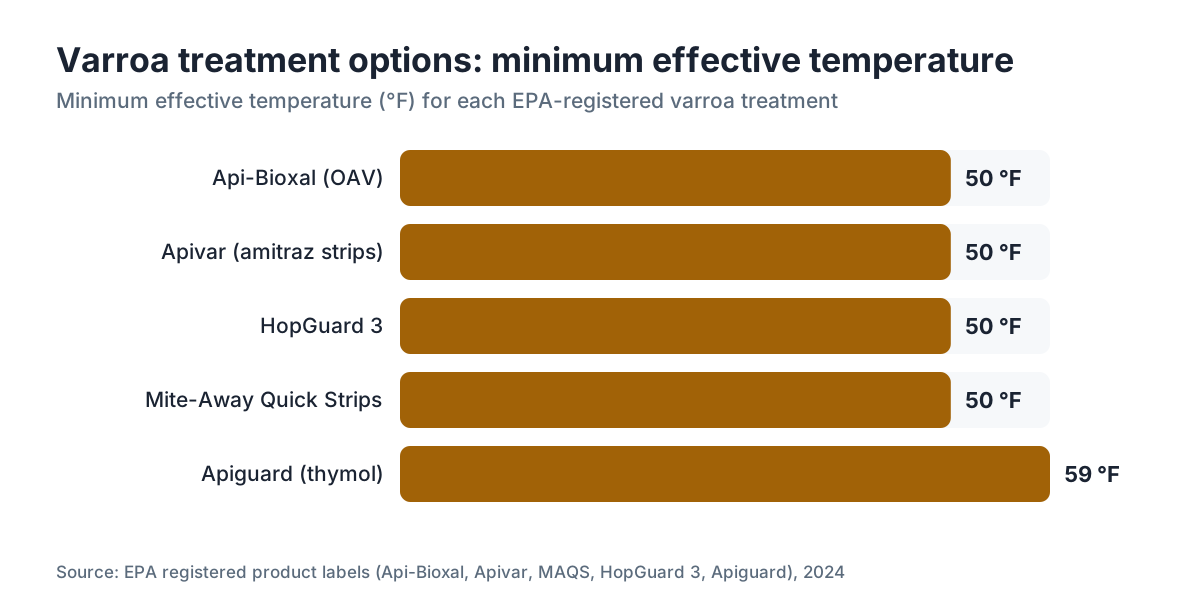
EPA-registered varroa treatments fall into a few chemical classes, each with its own temperature range, application window, and effect on the colony [4].
| Treatment | Active ingredient | Temperature window | Brood penetration | Honey super OK? |
|---|---|---|---|---|
| Apivar strips | Amitraz | 50-105°F | Moderate (multiple exposures) | No |
| Api-Bioxal (oxalic acid dribble) | Oxalic acid dihydrate | Any, above 50°F preferred | None (broodless only) | No |
| Api-Bioxal (vaporization) | Oxalic acid dihydrate | Above 50°F recommended | Low (requires 5+ treatments) | No |
| Mite-Away Quick Strips | Formic acid | 50-85°F | Yes (penetrates capped brood) | No |
| HopGuard 3 | Hops beta acids | 50-100°F | Minimal | Yes (with conditions) |
| Apiguard | Thymol | 59-105°F | Low | No |
None of these touch nosema directly, but a few interactions matter for running both at once.
Formic acid (MAQS) evaporates and fills the hive with fumes. Opening the colony over and over for nosema inspections or comb swaps during a MAQS treatment disrupts it and can cut efficacy. Do your comb work outside the 7-day MAQS window.
Oxalic acid vapor doesn't seem to bother supportive nosema measures. Feed syrup right through an OAV series if you want, since good nutrition helps bees carry nosema stress.
Amitraz (Apivar) strips stay in for 6-8 weeks. Supplemental feeding and comb management during that stretch are fine. No known pharmacological conflict exists between amitraz and the nutrition work you'd do for nosema.
Can you feed syrup and treat for varroa at the same time?
Yes, with one caveat. Don't feed heavy 2:1 syrup while honey supers are on, and most varroa treatments ban supers anyway. A 1:1 syrup fed in spring or fall during a varroa cycle works fine alongside Apivar, OAV, and thymol treatments.
Feeding genuinely helps with nosema. Well-fed colonies with decent glycogen stores handle Nosema ceranae better. The Penn State Honey Bee Lab lists nutrition support as one of the main non-chemical tools for nosema [5]. Feeding 1:1 syrup with a pollen substitute patty while your amitraz strips work is a sound combined move.
One thing to skip: adding essential oil supplements (Honey-B-Healthy and similar emulsified lemongrass or spearmint products) to syrup while a thymol varroa treatment runs. You're piling volatiles onto a hive that already has thymol fumes going, and the bees may take less syrup. Not dangerous. Just counterproductive.
What does a practical combined protocol look like in late summer?
Late summer, roughly August into September across the northern US, is the treatment window that decides how healthy your winter bees will be. It's also when nosema loads tend to climb as the colony shrinks. Two problems, one window.
Here's a protocol that handles both:
Week 1: Do a mite wash. Counts at or above 2 mites per 100 bees mean you start varroa treatment now. For most hobbyists, Apivar (amitraz strips) or a MAQS treatment are the workable picks. With brood in the box, OAV alone won't cut it.
Same day, pull a nosema sample. Send it to a university diagnostic lab (several extension programs charge $10-20 a sample) or run a rough count yourself on a compound microscope at 400x. A count above 1 million spores per bee generally signals real infection.
Week 1-8: Run your varroa treatment per label. Feed 1:1 syrup if stores are light and drop in a pollen substitute patty. That props up nutrition and eases nosema stress.
Week 2-4: If spore counts are high, swap out the worst comb. One or two frames of ancient, dark comb traded for foundation or clean drawn comb cuts the spore reservoir in a way you can feel. You can do this during an Apivar treatment without hurting efficacy.
End of treatment: Follow-up mite wash 2-3 weeks after treatment ends. You want counts below 1 mite per 100 bees heading into winter.
For treatment selection tuned to your region and colony, the free protocol tools at VarroaVault walk you through the decision tree using your mite counts and local temperature window.
To source treatments and gear, check beekeeping supply companies and compare what's near you.
What does a spring combined protocol look like?
Spring is a different animal. Varroa numbers sit at their annual low right after the winter cluster breaks, then climb fast once brood rearing ramps. Nosema ceranae stays active year-round, but spring is when the signs show up: spotty brood, slow buildup, dysentery on the landing board.
Spring protocol:
Early spring (cluster still tight, overnight temps below 50°F): OAV on broodless or near-broodless colonies is very effective. Three treatments 5 days apart knock mites way down. It's also a good moment to check nosema, since you can open the cluster and look at bees without much disruption.
Mid-spring (temps steady above 50°F, brood expanding): Once mites push past 2%, switch to something that reaches capped brood, like MAQS or Apivar. Feed 1:1 syrup and pollen sub to back nosema recovery and colony growth at the same time.
Avoid: running a thymol treatment (Apiguard, ApiLife Var) in early spring while temps sit below 59°F. Thymol evaporates poorly when it's cold and gives weak mite kill. If your spring runs cold, amitraz or OAV is the safer bet.
When spring nosema signs are severe, the honest answer is that US options are thin without fumagillin. Get the colony onto good forage fast, consider a full comb replacement if the population is very low, and re-queen if it hasn't turned around by late May. Some colonies carrying heavy spring nosema just don't come back.
Are there any treatment combinations that are actually dangerous or prohibited?
A short list of things you should not do:
Don't run two varroa treatments at once. Apivar strips plus OAV together isn't a label-compliant use, and it's harder on bees than either alone. Resistance pressure climbs too. One treatment per cycle.
Don't apply fumagillin in the US. It isn't registered, and using an unregistered pesticide in a food-producing colony breaks federal law under FIFRA [6]. Canadian product can't be legally imported.
Don't use oxalic acid vapor in any way the EPA-registered label doesn't describe. The Api-Bioxal label sets dosing per brood box, treatment intervals, and required protective equipment. "Mega-dosing" with bigger volumes shows up on beekeeper forums, but it isn't safe for bees, and residues above label use can push past permitted levels [4].
Formic acid plus thymol at the same time isn't dangerous in a toxicology sense, but both are volatile, and the combined off-gassing can cost you the queen and drive bees off frames. No reason exists to run them together.
How do you know if the nosema is actually causing the problem, or if varroa is the real driver?
This is a genuinely hard call, and plenty of beekeepers (and extension agents) have missed it. The symptoms overlap badly. Both varroa and heavy nosema produce small populations, failing queens, slow spring buildup, high winter mortality, and scattered brood.
The cleanest tell is a mite wash paired with a nosema spore count on the same batch of bees. Mites high, nosema low, varroa is driving it. Mites low, spore count above 1 million per bee, nosema is the likely culprit. Both elevated, you've got a compounding problem.
Lab nosema diagnosis needs a compound microscope at 400x. The Penn State Honey Bee Lab runs diagnostic services, as do many state land-grant extension programs [5]. Fifty to a hundred freshly dead or forager bees in isopropyl alcohol ship fine.
One rough field clue. Nosema ceranae often does NOT throw the classic fecal streaking on the hive front that Nosema apis did. N. ceranae bees may just die quietly in the field with no obvious dysentery. That's exactly why symptom-only diagnosis fails, and why a lab spore count matters.
What does the research say about nosema and varroa interacting in the same colony?
The interaction has been studied, though the literature is thinner than you'd like. A study by Genersch and colleagues in the Journal of Invertebrate Pathology found colonies carrying multiple stressors (varroa, Nosema, and viral load together) had much higher winter mortality than colonies with a single stressor [7]. The lesson: it's the combination that kills, not any lone pathogen.
A 2020 paper in Scientific Reports found varroa-parasitized bees carried higher Nosema ceranae spore counts than non-parasitized bees in the same colonies, which hints that varroa may raise nosema susceptibility directly [8]. The mechanism isn't settled. Impaired immunity from fat body damage is the leading guess.
Bee Informed Partnership colony loss data, compiled through university partners like the University of Maryland, consistently shows beekeepers who hold mite levels below 2% across the season lose fewer colonies, which is indirect evidence that controlling varroa also cuts the compounding harm from co-infections like nosema [12].
Nobody has a clean randomized controlled trial proving varroa treatment lowers nosema spore counts. The best available read is that varroa suppression improves bee immunity, and healthier bees carry nosema better. That's a reasonable inference from the data, not a proven mechanism.
What about re-queening as part of a combined treatment strategy?
Re-queening is underused for both problems. A new queen gives you a natural brood break, one of the best moments to apply oxalic acid dribble or OAV, because mite loads plunge when there's no capped brood for mites to hide in. If nosema is in play too, the brood break means the young bees raising the new brood haven't been feeding on nosema-tainted royal jelly and nurse secretions as long.
Timing counts. Re-queen in late summer (July into August) and the brood break lands right when mite suppression matters most for winter bee production. A colony with a new queen, treated through the brood break, entering fall with good stores is about the best setup you can hand a hive.
If the old queen came from a line with no hygienic selection, that's another reason to swap her. VSH (Varroa Sensitive Hygiene) and hygienic-trait queens don't wipe out varroa, but they measurably slow mite population growth, which buys more time between treatment cycles [9].
For more on varroa mite biology and how re-queening lines up with the mite reproductive cycle, that background is worth reading before you plan summer management.
Where can you get a nosema diagnosis and what does it cost?
Several routes exist in the US:
State apiarist offices. Many state departments of agriculture run free or low-cost nosema diagnostics for registered beekeepers. Check your state ag department website.
University extension labs. Penn State, University of Maryland, and other land-grant schools run bee diagnostic services. Costs run $10-30 per sample depending on the school and what you're testing for [5].
Bee Informed Partnership. BIP has coordinated national diagnostic sampling and published nosema prevalence data. Its network includes university collaborators who process samples.
DIY microscopy. With a microscope at 400x, you can run a crude spore count yourself. Crush 10-15 bees in a little distilled water, put a drop on a slide, and count spores across several fields. The USDA has published a guide to this method [11].
For sampling gear and general supplies, see beekeeping supplies for what you'll need.
The honest word on timing: by the time a lab result comes back (usually 1-3 weeks), the hive has already moved on. Nosema diagnosis works best for confirming a pattern across hives or seasons, not for a same-week treatment call. A mite wash, by contrast, gives you an answer in 20 minutes.
How does nosema affect winter preparation and should it change your fall protocol?
Nosema ceranae stays active through winter, unlike Nosema apis, which historically faded in the cold. That changes fall prep. A colony going into winter with a high nosema load loses foragers faster through fall and may enter winter with fewer bees than the late-summer count suggested.
Fall adjustments if you suspect high nosema:
Feed harder. Getting stores above 60-80 pounds for a double-deep means bees don't have to fly as early in spring, which cuts nosema spread from cleansing flights that happen before the weather settles.
Check protein stores. Pollen substitute patties in August and September make sure the winter bees being raised right now get enough protein. Protein-short winter bees are more open to nosema.
Consider replacing comb in fall instead of spring. Rotating old comb out now pulls the spore reservoir before the long winter confinement when bees get re-exposed nonstop.
The VarroaVault protocol tools include seasonal checklists that help you organize fall prep while you juggle mite treatment timing and nosema-adjacent steps.
The one thing not to do: skip the fall varroa treatment while you focus on nosema nutrition work. Mite suppression before winter is non-negotiable. The Honey Bee Health Coalition holds that the single most impactful action for overwintering success is keeping mite levels below 2% through October [1].
Frequently asked questions
Can you use Apivar strips and treat for nosema at the same time?
Yes. Apivar (amitraz) strips have no known interaction with the supportive nosema options available in the US, which are mostly nutrition-based. You can feed syrup, add pollen substitute, and swap old comb while strips are in. Just follow the Apivar label for placement and the 6-8 week duration. No drug treatment for nosema is registered in the US right now.
Is fumagillin available in the US for treating nosema?
No. Fumagillin (sold as Fumagilin-B) lost its US registration and is not legally available to American beekeepers. Canadian beekeepers can still access it through a veterinary health product authorization. US beekeepers have no EPA-registered drug treatment for nosema as of 2024. Management relies on good nutrition, comb rotation, and putting colonies on quality forage.
What is the mite threshold that should trigger immediate treatment?
Most extension programs and the Honey Bee Health Coalition recommend treating when a mite wash or alcohol wash shows 2 mites per 100 bees in peak summer, or 2% infestation. In late summer (August-September), some practitioners treat at or even below 2%, because the population is shrinking and each mite hits a higher share of the winter bee cohort.
How do you collect a nosema sample to send to a lab?
Collect 50-100 freshly dead bees or foragers returning to the hive. Put them in a sealed zip-lock bag or small vial with 70% isopropyl alcohol. Label the sample with your name, colony ID, and date. Ship to your state apiarist or a university extension diagnostic lab. Most labs charge $10-30 per sample and return results within 1-3 weeks.
Does treating varroa help reduce nosema infection?
Indirectly, yes. Research in Scientific Reports found varroa-parasitized bees carried higher Nosema ceranae spore counts than non-parasitized bees in the same colonies, which suggests varroa suppresses immunity in ways that raise nosema susceptibility. Controlling varroa improves bee health, and healthier bees carry nosema better, though no study has shown varroa treatment directly cuts spore counts.
Can you use oxalic acid vaporization while also feeding syrup for nosema support?
Yes. OAV and syrup feeding are compatible. OAV doesn't contaminate honey stores when used per the Api-Bioxal label, and feeding 1:1 syrup at the same time supports the nutritional health that helps bees carry nosema stress. Just make sure supers are off during OAV treatment and that you're using the correct PPE the Api-Bioxal label specifies.
What does dysentery on the front board actually indicate in spring?
Brown or yellowish streaking on the landing board and hive front in spring historically pointed to Nosema apis, which causes classic dysentery. Nosema ceranae, now the dominant strain in the US, does not reliably produce this symptom. Spring streaking can also come from poor stores or a long winter confinement. Don't diagnose a nosema species from visual signs alone. A lab spore count is necessary.
Should you re-queen a colony that has both high mites and high nosema?
Often yes, especially in late summer. Re-queening creates a brood break, the best window for oxalic acid efficacy. A new queen resets the brood cycle, cutting the population of infected nurse bees that spread nosema. If the colony is too weak to raise a new queen successfully, consider combining it with a healthier colony after you treat the stronger one.
How long does it take to see improvement after addressing both varroa and nosema?
Varroa treatment shows up in mite wash counts within 2-3 weeks of starting an effective product. Population improvement takes 4-6 weeks minimum, since it depends on a full brood cycle completing. Nosema recovery is harder to measure. Clinical signs may ease within 4-8 weeks if nutrition is fixed and the spore reservoir drops through comb replacement, but lab spore counts can stay elevated longer.
Are there any natural or organic options that address both varroa and nosema?
Oxalic acid and formic acid are both USDA National Organic Program compliant varroa treatments. For nosema, no certified organic drug treatment exists anywhere in North America right now. Thymol has been studied for anti-nosema properties in lab settings, but no registered product makes that claim for field use. Good nutrition and comb replacement are the closest thing to a natural nosema protocol.
Can a colony recover from a combined nosema and varroa crash without treatment?
Very rarely, and mostly in research or feral contexts where Varroa Sensitive Hygiene behavior is strong. For managed colonies, an untreated mite load above 5% is almost always fatal within months. Nosema on top accelerates the decline. For a managed colony the answer is no: without active mite treatment, recovery isn't realistic. Nosema management alone cannot make up for uncontrolled varroa.
What temperature is needed for effective varroa treatment in fall, and does it affect nosema management timing?
Temperature needs vary by product. Amitraz strips (Apivar) work from 50-105°F. Oxalic acid is effective above 50°F. Formic acid (MAQS) needs 50-85°F. Thymol needs 59°F minimum. Fall nosema management (nutrition, comb work) has no temperature restriction. In practice, match your varroa treatment to your fall temperature window first, then layer in nutrition support afterward.
How do you confirm a nosema diagnosis without a microscope?
You can't confirm it reliably without a microscope or lab test. No field test matches a mite wash for nosema. Signs like slow buildup, weak populations, and crawling bees are non-specific and fit a dozen other problems. If you suspect nosema and lack a microscope, send a preserved sample to your state apiarist or a university extension lab. Many offer the service for under $20.
Sources
- Honey Bee Health Coalition, Tools for Varroa Management Guide (8th edition): Mite threshold of 2 mites per 100 bees in summer triggers treatment; maintaining below 2% through October is the single most impactful overwintering action
- EPA, Fumagillin Registration Status: Fumagillin is not registered for use in the United States as of 2024
- PLOS ONE, Nutrition and Nosema resistance in honey bees: Bees with access to high-quality pollen showed better nosema resistance than nutritionally stressed colonies
- EPA, Api-Bioxal Product Label (Registration No. 87243-2): Api-Bioxal label specifies dosing per brood box, treatment intervals, and required protective equipment for oxalic acid dihydrate use
- Penn State Extension, Honey Bee Lab Diagnostic Services: Nutrition support is a primary non-chemical tool for nosema management; lab diagnostic services available for $10-30 per sample
- EPA, Federal Insecticide, Fungicide, and Rodenticide Act (FIFRA) Overview: Using an unregistered pesticide in a food-producing colony is a federal violation under FIFRA
- Genersch et al., Journal of Invertebrate Pathology, multi-stressor colony mortality study: Colonies with multiple stressors including varroa, Nosema, and viral load had much higher winter mortality than colonies with single stressors
- Scientific Reports (2020), Varroa parasitism and Nosema ceranae spore loads: Varroa-parasitized bees had higher Nosema ceranae spore counts than non-parasitized bees in the same colonies
- USDA Agricultural Research Service, VSH Bee Breeding Program: VSH (Varroa Sensitive Hygiene) trait queens measurably slow mite population growth in managed colonies
- USDA National Agricultural Statistics Service, Honey Bee Colony Health Survey: Roughly 30-35% of surveyed colonies tested positive for Nosema spp. in any given year; varroa was present in most managed colonies; guide to DIY spore counting published by USDA
- University of Maryland Extension, Bee Informed Partnership colony loss data: Beekeepers who maintain mite levels below 2% through the season have consistently lower total colony losses in BIP survey data
Last updated 2026-07-09