How to tell if your varroa treatment is failing (and what to do)
TL;DR
- Varroa treatment failure means mite loads stay above threshold or climb again within weeks of completing a labeled treatment.
- Key signs include mite wash counts above 2 percent after treatment ends, visible deformed wing virus symptoms, brood pattern collapse, and bees washing off.
- Confirm with an alcohol wash or sugar roll, then switch chemical classes before the colony crashes.
What counts as varroa treatment failure?
Treatment failure is not a vague feeling that something is wrong. It has a measurable definition: your mite load stays at or above the action threshold after completing a full, correctly applied treatment course, or it rebounds to threshold within four to six weeks of finishing.
The Honey Bee Health Coalition's Varroa management guide sets a common action threshold of 2 mites per 100 bees (2 percent) for a summer colony and 1 percent or lower going into fall, when every surviving mite will be overwintering with the cluster [1]. If you run an alcohol wash at the end of treatment and you are still at or above those numbers, the treatment did not work well enough. Full stop.
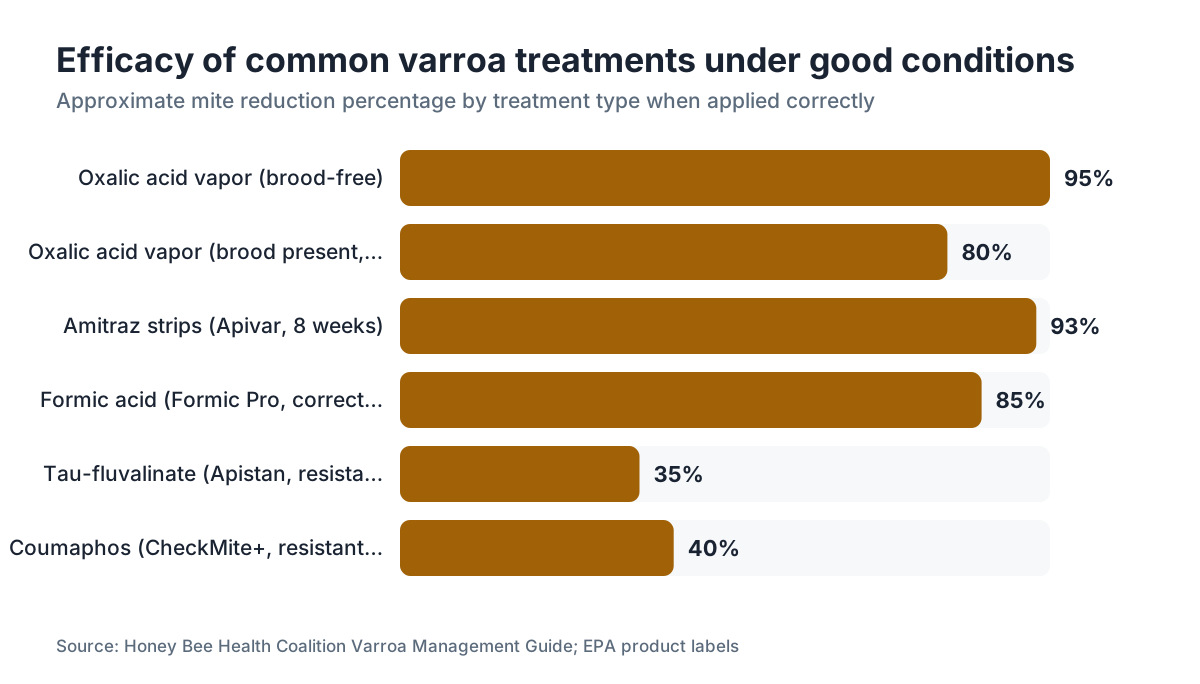
That said, no treatment is expected to hit 100 percent efficacy. Oxalic acid vaporization in a brood-free colony achieves 90 to 97 percent efficacy in controlled conditions, but during a normal brood cycle efficacy drops considerably because mites riding inside sealed cells are shielded from vapor [2]. Amitraz strips (Apivar) typically produce 90 to 99 percent reduction over 6 to 8 weeks under good conditions. If you are seeing less than roughly 85 to 90 percent reduction, something went wrong, whether that is application error, product age, resistance, or a reinfestation source.
The practical test is simple: wash before you start, note the count, wash again two weeks after the treatment period ends, and calculate your reduction rate. A colony that starts at 4 percent and finishes at 0.5 percent is doing fine. A colony that starts at 4 percent and finishes at 3.2 percent has a problem.
What are the early warning signs that a varroa treatment is not working?
Some signs show up in the hive before you ever run a formal count. Learn to read them.
Deformed wing virus (DWV) is the most visible red flag. Bees with shriveled, crumpled, or stubby wings crawling at the hive entrance almost always indicate a high mite load and active virus transmission [3]. One or two crawlers in a large colony is not an emergency, but if you are seeing a dozen or more on a warm afternoon, your mite situation is likely out of control.
Brood pattern matters too. A shotgun pattern, with empty cells scattered randomly across a frame of capped brood, can indicate hygienic behavior dealing with mite-damaged pupae, or it can reflect other diseases. It is not diagnostic by itself, but combined with other signs it fits the picture of a mite-hammered colony.
Bee population drop is sneaky. Varroa shortens adult bee lifespan by vectoring viruses that suppress immune function [3]. A colony that seemed normal in June but looks thin in August despite good weather and forage has probably been under mite pressure for weeks. By the time population decline is obvious, the damage is already deep.
Finally, watch the bees physically groom each other and clean the bottom board. A healthy, mite-stressed colony will be actively washing and chewing mites. If you find whole live mites on the sticky board or in the debris without much mite fragmentation, that can suggest mites are riding freely and the bees are not successfully removing them. Fragmented mite parts, on the other hand, suggest the bees are fighting back.
How do you confirm treatment failure with a mite count?
A sticky board count will not confirm failure. It tells you mites are falling but not how many mites are in the colony. You need a sample-based method.
The alcohol wash is the gold standard. Collect approximately 300 bees (about half a cup) from a brood frame, making sure the queen is not in the sample. Submerge in 70 percent isopropyl alcohol, shake for 60 seconds, pour through a fine mesh strainer, and count the mites in the wash liquid [1]. Divide mites by bees to get your percentage. If you have 9 mites from a 300-bee sample, that is 3 percent and well above threshold.
Sugar roll is less accurate but produces a live sample you can return to the hive. Studies put its efficacy at recovering about 60 to 70 percent of mites compared to alcohol wash, so it will undercount [4]. If you prefer it for colony preservation reasons, that is fine, but apply a mental correction factor and err toward intervention when counts are borderline.
When to test after treatment: wait until the full labeled treatment period is complete, then test two weeks later. That gap allows any mites that were under capped brood during treatment to emerge and become detectable. Testing the day you pull a strip will give you a falsely low count because recently emerged phoretic mites have not yet fully distributed through the sampling frame.
For a colony you suspect is failing mid-treatment, you can run a wash at the treatment midpoint (say, week four of an eight-week Apivar strip) to check direction. If counts are already near baseline by midpoint, good. If they are barely moving, you may be dealing with resistance or an application problem.
What mite wash results indicate a treatment has failed?
Here is a straightforward reference table for interpreting post-treatment alcohol wash results [1][5]:
| Result (mites per 100 bees) | Interpretation | Action |
|---|---|---|
| 0 to 0.9% (spring/summer) | Treatment succeeded | Retest in 4 to 6 weeks |
| 1.0 to 1.9% (summer) | Borderline; monitor closely | Retest in 2 weeks; prepare alternate treatment |
| 2.0%+ (summer) | Treatment failure or reinfestation | Switch chemical class immediately |
| 1.0%+ (late summer/fall prep) | Failure; colony at risk for winter | Act within days |
| Any count rising week-over-week post-treatment | Active reinfestation or resistance | Confirm source; treat again |
The 2 percent summer threshold and 1 percent fall threshold come from the Honey Bee Health Coalition guide and are widely cited by university extension programs including Penn State and University of Minnesota [1][5]. Some researchers argue the fall threshold should be even tighter, closer to 0.5 percent in September, because the long-lived winter bees being damaged now will need to carry the colony through five or six months.
One number worth memorizing: a colony that enters October at 3 percent mites has roughly a 50 percent chance of dying before spring, based on survey data from multiple overwintering studies. That figure varies by region and management, but it gives you a sense of the stakes.
Why do varroa treatments fail? The main causes
Resistance is real but probably not the most common cause of failure. Before you blame the mite, audit your own process.
Application error is the leading reason treatments underperform. With oxalic acid vapor, the most common mistakes are vaporizing at too low a dose (1 gram per brood box is standard, 2 grams for double-deep colonies in some protocols), skipping repeat treatments needed during the brood cycle, or using a poorly calibrated vaporizer [2]. With amitraz strips, incorrect placement matters more than most people think. Strips need to hang between frames in the cluster, not stuck to the outside walls of the box. The EPA label for Apivar specifies placement between combs of the brood nest [6].
Temperature is a major variable for formic acid products. Mite Away Quick Strips (MAQS) and Formic Pro have minimum temperature requirements. Formic Pro is labeled for use between 50 degrees F and 85 degrees F (10 to 29 degrees C), and using it outside that window reduces efficacy and increases bee toxicity risk [7]. If you applied a formic product during a cold snap and wondered why it flopped, temperature is likely the answer.
Robbing and reinfestation can look exactly like resistance. A colony that shows good mite reduction at week four but climbs back to threshold by week six may simply be receiving mite-laden drifters or robbers from a struggling nearby colony. The Honey Bee Health Coalition calls this "mite bombs," and it is particularly common in late summer when weaker colonies in the neighborhood are collapsing and their foragers drift into healthier hives [1]. If your mites keep rebounding despite correct treatment, look within a half-mile radius for other hive sources.
Actual resistance to amitraz (the active ingredient in Apivar) has been documented in U.S. Varroa populations, though published data on its prevalence in hobbyist apiaries is limited [8]. Resistance to tau-fluvalinate (Apistan) and coumaphos (CheckMite+) is well established and widespread enough that most extension programs no longer recommend those products as first-line treatments in regions with long treatment histories [5].
Expired or improperly stored product also matters. Oxalic acid is relatively stable, but amitraz degrades with heat. Storing Apivar strips in a hot truck or shed over summer before deploying in August will give you a weaker-than-labeled dose.
How is varroa resistance different from a treatment application problem?
This is genuinely hard to distinguish in the field, and nobody has a perfect answer. The practical way to tell them apart is to rule out application issues first.
Check your timing, temperature conditions, dose, and strip or pad placement against the product label. If everything was correct, consider whether reinfestation from outside could explain the rebound. If you have ruled both out and you are seeing the same pattern across multiple colonies with different mite starting levels, resistance becomes a more plausible explanation.
A more rigorous approach is the acaricide bioassay, which involves exposing mite samples to a standardized dose of the chemical and measuring mortality. The USDA Beltsville Bee Lab has historically offered this service to beekeepers, though turnaround times and availability vary [9]. University extension programs in some states also provide guidance on submitting samples. This is worth doing if you manage more than ten or twenty colonies and keep seeing treatment failure despite correct application.
For most hobbyists with two to ten hives, the pragmatic answer is: if one labeled treatment done correctly is not working, switch chemical classes. Rotating between oxalic acid, formic acid, and amitraz is standard resistance management practice and is recommended by the Honey Bee Health Coalition [1]. Using the same product year after year, or worse, using it at sub-lethal doses repeatedly, is how you create selection pressure for resistance in your local mite population.
What should you do immediately when you suspect treatment failure?
First, confirm the failure with an alcohol wash. Do not react to symptoms alone. DWV crawlers and a thin cluster could also reflect a failing queen, a disease like sacbrood, or pesticide exposure. Run the count, get a real number, then act.
If the count confirms failure, your next step depends on what you used and how long ago you completed it.
If you are currently mid-treatment with Apivar and your midpoint count is not declining, you can remove the strips and switch immediately to a different chemical class. You do not need to wait out the full eight weeks. The EPA label does not require you to complete the course before switching, and losing that time could cost you the colony [6].
Switch to a product with a different mode of action. Amitraz (Apivar) works on octopamine receptors in the mite's nervous system. Oxalic acid works by direct contact toxicity. Formic acid penetrates cell caps and affects mite respiration. If amitraz failed, oxalic acid or formic acid is the logical next step, chosen based on your brood status and season. Oxalic acid dribble or vapor is most effective in brood-free colonies or during winter cluster. Formic acid works with brood present [1][7].
The Varroa management tools at VarroaVault can help you pick the right next treatment based on your hive's brood status and the current date, which matters more than most beekeepers realize when choosing between these options.
Document everything: the date you started and ended the original treatment, the brand, lot number, storage conditions, and your pre- and post-treatment counts. If you end up submitting samples for resistance testing, this record is essential. Even if you do not, your log helps you see patterns across seasons and apiaries.
When is a colony too far gone to save after treatment failure?
Hard question, and the answer is not always "never give up."
A colony with an adult bee population below about two frames of coverage, heavy DWV symptoms across most foragers, and a failing or absent queen is unlikely to recover even with perfect treatment. The damage from varroa-vectored viruses is cumulative and largely irreversible at the individual bee level. You can kill the mites, but you cannot repair a bee with DWV.
The more useful calculation is whether the colony can rebuild through winter, or whether it will dwindle below cluster survival threshold before spring. A rough rule of thumb from extension guidance: a colony needs at least five to six frames of bees going into November in northern states to have a reasonable chance of surviving a normal winter [5]. If your post-treatment colony is at three frames of bees in September, you face a decision about combining it with a healthier colony rather than treating and hoping.
Combining a failing varroa-damaged colony with a healthy one is a real option. Use the newspaper method, remove the failing queen, and introduce the combined colony to a single brood box. You will want to make sure the stronger colony's mite load is under control before combining, or you are just transferring the problem. Run an alcohol wash on the recipient colony first.
Do not feel bad about treating a severely failing colony as a dead loss for the season. Resources spent on a colony that will not make it through winter are better put toward building up survivors and toward getting into next spring with strong, healthy nuclei.
How do you tell treatment failure from reinfestation from neighboring colonies?
Reinfestation is one of the most frustrating situations in varroa management because you can do everything right and still end up with high mite loads. The telltale pattern is a clean bill of health right after treatment, then a climb back to threshold within four to six weeks.
Robbing is the main vector. When a nearby colony collapses under mite pressure, its foragers carry mites with them as they drift or rob stronger hives in the area. Studies have measured mite-laden robbers moving mites at a rate that can drive a previously clean colony back above threshold in as little as three weeks [10].
How do you know if this is happening? A few clues: your counts are fine immediately post-treatment, you see robbing activity at the entrance (lots of fighting, bees carrying out other bees), and you know of other hives within a quarter to half mile that are unmanaged, feral, or belong to a less attentive beekeeper. Entrance reducers help during robbing season. So does being direct with nearby beekeepers about shared mite management responsibility.
If you manage multiple apiaries, moving a clean colony into a yard with high mite pressure will result in reinfestation. Consider apiary-level mite management: treat all colonies in the same yard at the same time, even if some appear below threshold, to prevent the mite-laden collapse of one colony from cycling back through the others.
For understanding the broader biology of the mite itself, the varroa mite overview covers how mites spread within and between colonies, which informs your reinfestation risk assessment.
How do you adjust your monitoring schedule after a suspected treatment failure?
After a treatment failure, tighten your monitoring cadence. The standard recommendation is one wash every 30 days during the active season [1]. After a confirmed failure and a switch to a new treatment, test at week two, week four, and two weeks post-treatment. That is more frequent than standard guidance, but the stakes justify it.
Keep records in a consistent format. At minimum: date, colony ID, number of bees sampled, mite count, calculated percent, and any treatment applied or changed. A beekeeper with three years of consistent records can see patterns that a single season's data will never reveal, like whether a particular apiary location consistently shows reinfestation in August, or whether a given colony line consistently runs lower mite loads and might be worth breeding.
Some beekeepers add a sticky board check between alcohol washes as a directional indicator. It will not tell you absolute mite load, but a suddenly spiking natural mite drop (the count of mites falling naturally per 24 hours) after a period of low counts can flag that something changed and prompt you to run a formal wash earlier than scheduled. A drop rate above 8 to 10 mites per 24 hours during the main season is generally considered an indicator of a colony above threshold, though this figure varies by source and season [4].
For beekeepers sourcing their monitoring supplies, the beekeeping supply companies section of this site lists suppliers that carry alcohol wash kits, sticky boards, and other monitoring equipment.
Does the type of varroa treatment affect failure rates?
Yes, significantly. Each treatment type has a different efficacy profile, mode of action, resistance risk, and set of conditions where it works well or poorly.
Oxalic acid (Api-Bioxal is the only EPA-registered brand for U.S. use as of this writing) [2] is highly effective in brood-free conditions. During a natural winter cluster or after an enforced broodless period, a single vaporization treatment can achieve over 95 percent reduction. With brood present, multiple treatments are needed across the brood cycle, and the aggregate efficacy is lower. Here is the part that matters: no documented resistance to oxalic acid exists in Varroa destructor at this time, which makes it a reliable fallback when other products have failed.
Formic acid (Formic Pro and MAQS) penetrates capped brood cells, giving it an advantage over most other treatments in colonies with active brood. Efficacy is in the 80 to 90 percent range under good conditions [7]. The main failure modes are temperature (too cold or too hot) and application in very strong colonies where ventilation reduces the formic acid concentration below effective levels.
Amitraz (Apivar) has a long track record and high efficacy in most U.S. apiaries, but documented resistance exists in some populations [8]. If you have been using Apivar as your only treatment for several consecutive seasons in the same apiary, it is time to rotate regardless of whether you have seen failure yet.
Coumaphos (CheckMite+) and tau-fluvalinate (Apistan) have such widespread resistance issues that they should be considered last-resort options and only after resistance testing or when all other options are unavailable [5].
Heat treatments (devices like the Varroa Controller or HiveWarm) are non-chemical options that work by raising brood temperature above the mite's survival threshold. They have no resistance risk, but they require specialized equipment and precise application. Efficacy data from independent studies ranges widely, from about 70 to over 90 percent depending on conditions and operator experience. They are not yet mainstream but are a legitimate tool for beekeepers who want to avoid synthetic chemicals entirely.
What does a varroa treatment protocol look like after you fix a failure?
After you have confirmed failure, switched treatments, and completed the new treatment course, the next job is preventing the same problem from recurring. That means building a protocol with built-in verification checkpoints.
A practical post-failure protocol for a summer/fall colony looks like this: Run a baseline alcohol wash. Apply new treatment (different chemical class from the failed one) per label. Test at the treatment midpoint. Remove or complete treatment per label. Test two weeks after treatment ends. If below threshold, shift to a 30-day monitoring schedule. If still above threshold, consult your state apiarist or an extension specialist, because you may be dealing with resistance and need bioassay data.
For oxalic acid vaporization with brood present, the common extended protocol is three treatments, five days apart, to cover the full drone brood cycle and catch mites emerging from cells. The USDA AMS and some extension programs publish specific timing guides for this approach, though the Api-Bioxal label itself specifies a maximum of three treatments per year for the dribble method and does not explicitly number treatments for vaporization, leaving some flexibility [2].
The Honey Bee Health Coalition guide puts it plainly: "Monitoring is the only way to know if a treatment has worked." [1] That quote should be taped inside every beekeeper's toolbox lid. Treating without testing is guessing, and varroa moves too fast for guesswork to work for long.
Frequently asked questions
How long after a varroa treatment should I wait before testing mite levels?
Wait until the full labeled treatment period is complete, then test two weeks after that. The two-week gap lets mites that were sealed under brood capping during treatment emerge and become detectable in a sample. Testing the day you pull Apivar strips, for example, will give you a deceptively low count that does not reflect the real population.
Can varroa mites become resistant to oxalic acid?
No confirmed resistance to oxalic acid has been documented in Varroa destructor populations as of current published literature. Oxalic acid works by direct contact toxicity rather than through a specific receptor, which makes developing resistance biologically harder for the mite. This is one reason oxalic acid is a reliable fallback when amitraz or formic acid treatments have failed.
What is the action threshold for varroa that signals I need to treat or retreat?
The Honey Bee Health Coalition sets the general summer action threshold at 2 mites per 100 bees (2 percent) on an alcohol wash. For fall, ahead of winter prep, many extension programs recommend treating at 1 percent or lower, because overwintering bees damaged by mites and viruses now will need to carry the colony through five or six months without replacement.
Why are my mite counts rising again after I just finished a full treatment?
Rebounding counts after a complete treatment most often point to reinfestation from collapsing colonies in the area, not treatment resistance. Robbing bees and drifters carry mites from high-load colonies into yours. Other possible causes are that mites survived under capped brood during treatment and have now emerged, or that your treatment efficacy was lower than expected. Run a new wash to confirm the count, then decide whether to treat again or investigate nearby hive sources.
Are there visible symptoms I can check without running a mite count?
Yes, though they are not a substitute for counting. Bees with deformed, shriveled wings crawling at the entrance are the clearest visible sign of heavy mite load and active deformed wing virus. A collapsing population in late summer despite good forage, spotty brood with sunken or punctured cappings, and a general decline in colony energy can all accompany high mite pressure, but none of these alone confirms mite failure over other causes.
What is the most accurate way to count varroa mites at home?
The alcohol wash (70 percent isopropyl alcohol, approximately 300 bees from a brood frame, 60-second shake) is the most accurate field method available to hobbyists. It consistently recovers more mites than a sugar roll, which studies put at roughly 60 to 70 percent recovery rate. Sugar roll has the advantage of releasing live bees, but if accuracy matters more than bee survival in the sample, use alcohol wash.
Can I use two varroa treatments at the same time to fix a failure faster?
Generally no. Combining products raises the risk of bee toxicity without a proportional mite-killing benefit, and it is not supported by most product labels. Some beekeepers do pair oxalic acid vaporization with formic acid in specific protocols, but this requires careful timing and experience. For most hobbyists dealing with a confirmed failure, switching to a single different chemical class and applying it correctly per label is the right move.
What temperature does formic acid need to work effectively?
Formic Pro requires ambient temperatures between 50 degrees F and 85 degrees F (10 to 29 degrees C) for effective application, as stated on its EPA-registered label. Below 50 degrees, the acid does not volatilize adequately. Above 85 degrees, it can cause bee and queen mortality. Applying formic acid outside this window is a common cause of poor results and is one of the first things to check when diagnosing a suspected formic acid treatment failure.
Should I combine a mite-failing colony with a healthy one or treat it separately?
It depends on the failing colony's bee population. If it still has four or more frames of bees and a viable queen, treat it separately with a new product and monitor closely. If it is below three frames, heavily symptomatic with DWV, and going into fall, combining with a healthy colony using the newspaper method is often the better call. Make sure the recipient colony is at or below threshold before combining, or you transfer the mite problem.
How do I know if Apivar is the cause of treatment failure or if I applied it wrong?
Check placement first. Apivar strips must hang vertically between frames in the active brood cluster, not stuck to box walls. One strip is labeled for up to five frames of bees, two strips for larger colonies. Confirm the strips stayed in place for the full six to eight weeks and that temperatures were adequate for bee cluster activity around the strips. If all that checks out and efficacy was still poor across multiple colonies, consider resistance testing through a university or the USDA Beltsville lab.
What is a mite bomb colony and how do I protect my hives from one?
A mite bomb is a collapsing colony with very high mite loads whose foragers drift into or rob healthier neighboring colonies, transferring mites in the process. It can drive a clean colony back above threshold in three to four weeks. To reduce the risk, use entrance reducers during late-summer robbing season, manage all colonies in your apiary simultaneously, and try to identify and treat or remove struggling colonies in your immediate area before they collapse.
How often should I monitor mites during the active season?
The Honey Bee Health Coalition recommends monitoring at least once a month during the active season, with additional tests at the beginning and end of any treatment period. After a confirmed treatment failure and a switch to a new product, testing at week two, week four, and two weeks post-treatment gives you a clear picture of whether the new approach is working before you lose the window to act.
Do feral or unmanaged colonies near me affect my varroa treatment outcomes?
Yes, they can. Feral colonies in buildings, trees, or unmanaged equipment in your area can harbor high mite loads and serve as a reinfestation source. Foragers from a collapsing feral colony may drift into your hives. There is limited practical action you can take against truly wild colonies, but knowing they exist helps explain mite rebounds that otherwise seem unexplained. More frequent monitoring in affected apiaries is the main mitigation.
Sources
- Honey Bee Health Coalition, Varroa Management Guide (latest edition): Action thresholds of 2 percent summer and 1 percent fall, monitoring frequency recommendations, and mite bomb reinfestation dynamics
- EPA, Api-Bioxal (oxalic acid) product label and registration: Api-Bioxal is the only EPA-registered oxalic acid product for U.S. hive use; dosing and treatment frequency guidance
- USDA Agricultural Research Service, Varroa destructor and Deformed Wing Virus overview: Varroa vectors DWV and other viruses that shorten bee lifespan and cause wing deformity symptoms visible at the colony entrance
- Pennsylvania State University Extension, Varroa mite monitoring methods: Comparison of alcohol wash and sugar roll efficacy; sugar roll recovers approximately 60 to 70 percent of mites versus alcohol wash; natural mite drop interpretation guidance
- University of Minnesota Extension, Honey bee varroa management: Fall threshold recommendations, Apistan and CheckMite+ resistance status, colony overwintering population minimums
- EPA, Apivar (amitraz) product label: Apivar strips must be placed between combs of the brood nest per the registered label; labeled treatment duration is 6 to 8 weeks
- EPA, Formic Pro product label and registration: Formic Pro temperature use range is 50 to 85 degrees F (10 to 29 degrees C); formic acid penetrates capped brood cells
- Journal of Economic Entomology, Sammataro et al., Acaricide resistance in Varroa destructor: Documented resistance to amitraz in Varroa destructor populations; established resistance to tau-fluvalinate and coumaphos
- USDA AMS Beltsville Bee Lab, Varroa resistance testing services: USDA Beltsville offers acaricide bioassay services to beekeepers to identify resistance in local mite populations
- Apidologie, Le Conte et al., Varroa reinfestation dynamics and robbing behavior: Robbing and drifting bees can re-infest a treated colony rapidly enough to drive counts back above threshold within three to four weeks
Last updated 2026-07-10