USDA organic certified varroa treatment options explained
TL;DR
- USDA organic certification allows four varroa treatments: oxalic acid, formic acid, thymol, and hop beta acids.
- All four carry EPA-registered labels and appear on the National Organic Program's allowed-substances list.
- None are synthetic acaricides.
- Which one you reach for depends on brood state, temperature, and your treatment window.
- This article covers all four.
What does USDA organic certification actually allow for varroa control?
Four active ingredients qualify for varroa control under USDA organic certification: oxalic acid, formic acid, thymol, and hop beta acids. Every other option, including the synthetic acaricides most beekeepers reach for, is off the table for a certified operation.
The National Organic Program (NOP), run by USDA's Agricultural Marketing Service, writes the rules for certified organic beekeeping in the United States. For pest and disease management, beekeepers may use only substances from the National List of Allowed and Prohibited Substances, codified at 7 CFR Part 205. Synthetic acaricides like fluvalinate (Apistan) and coumaphos (CheckMite+) are prohibited outright. [1]
Each of the four approved ingredients has an EPA-registered product label and appears on USDA's allowed-substances list under 7 CFR 205.603 as a non-synthetic acid or botanical. [2] That double clearance, EPA registration plus NOP allowed status, is the floor a treatment has to clear before a certified operation can legally use it.
Here's the part nobody markets. Organic certification does not make a treatment safer, easier, or more effective than a conventional one. It means the active ingredient meets the NOP's source and processing criteria, full stop. Some of these treatments are genuinely fussy to apply. Misuse can kill queens and wreck colonies as fast as any synthetic ever did.
Which specific products are approved for organic beekeeping operations?
Four active ingredients have registered organic-compatible products in the U.S. right now. Below are the main commercial formulations as of mid-2025, with the treatment window and brood tolerance for each.
| Active ingredient | Main commercial products | Treatment window | Brood-tolerant? |
|---|---|---|---|
| Oxalic acid dihydrate | Api-Bioxal | Broodless periods (dribble/vaporization); vaporization allowed with capped brood | Vaporization only |
| Formic acid | Mite Away Quick Strips (MAQS), Formic Pro | Spring and fall; some brood penetration | Partial |
| Thymol | ApiLife VAR, Apiguard | Late summer/early fall; temp 60-105°F | No |
| Hop beta acids | HopGuard 3 | Any time of year; can treat with brood | Yes |
Api-Bioxal is the only oxalic acid product with a full EPA label that names organic use directly. [3] MAQS and Formic Pro both carry EPA registrations and are listed by the Organic Materials Review Institute (OMRI). [4] ApiLife VAR and Apiguard are thymol-based; Apiguard holds an EPA registration and gets cited by university extension programs as organic-compatible. [5] HopGuard 3 contains potassium salts of hop beta acids, is OMRI-listed, and is the only product whose label language covers year-round use including the presence of brood. [6]
One word on sourcing. These products move through most beekeeping supply companies, and some suppliers sell seasonal bundles. Check the label yourself before you buy. Formulations and label conditions change, and the version on the shelf may not match the one you read about two seasons ago.
How does oxalic acid work against varroa mites?
Oxalic acid kills varroa by direct contact. It's a dicarboxylic acid that shows up naturally in plants like rhubarb and spinach, and when a mite riding an adult bee meets the acid, its cuticle and internal chemistry come apart. [7] What it does not do is reach into capped brood. That single limitation drives every timing decision you make with it.
Api-Bioxal goes on three ways: dribble (an aqueous solution drizzled between frames), spraying (package bees only), and vaporization (sublimation). Vaporization wins for established colonies because you can treat without cracking the hive open. The label allows repeated vaporization treatments to catch mites across several brood cycles, which partly offsets the fact that it can't touch sealed cells. The University of Minnesota Extension names the late-winter broodless period as the single best timing, when nearly every mite is phoretic on adult bees. [8]
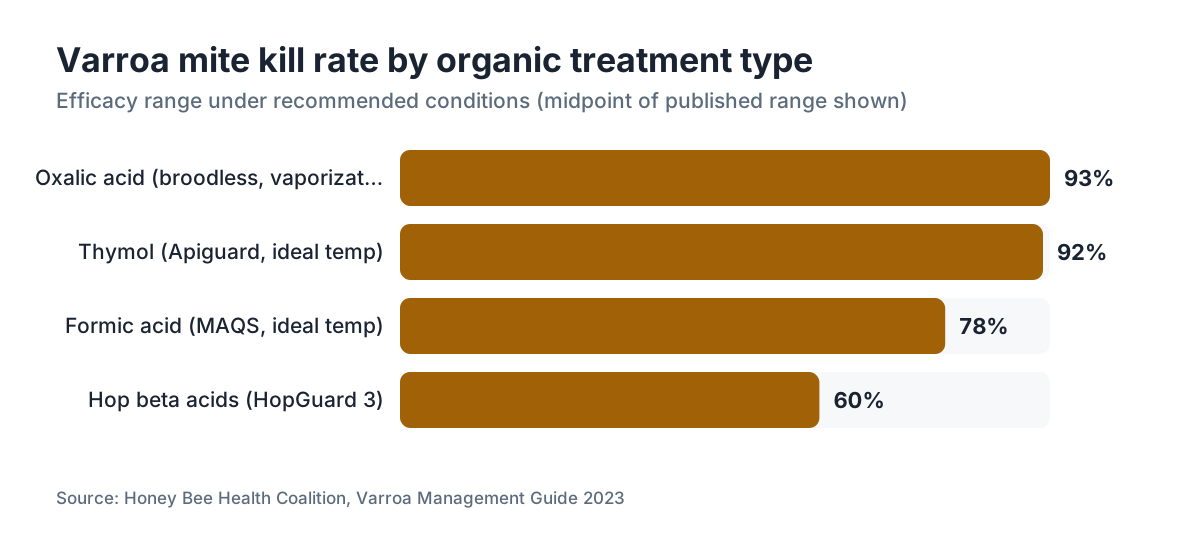
The numbers back that up. A single oxalic acid dribble during a natural broodless period kills roughly 90 to 95% of mites in well-run trials, per data summarized in the Honey Bee Health Coalition's Varroa Management Guide. [9] Add brood to the picture and efficacy falls off a cliff, because mites inside sealed cells simply aren't exposed.
Vaporization is not the place to cut safety corners. You need a NIOSH-approved respirator rated for acid vapors, eye protection, and everyone else standing well back. Oxalic acid vapor burns lungs and eyes. Treat it like the irritant it is.
How does formic acid work, and when should you use it?
Formic acid is the one organic-approved treatment that reaches mites inside capped brood to a meaningful degree. It volatilizes at room temperature, and the vapor passes through cell cappings. [9] That's why it earns its keep during spring and fall buildup, when brood is present but the colony hasn't hit peak population yet.
Mite Away Quick Strips (MAQS) release formic acid from slow-release polymer pads set on the top bars. Formic Pro uses a similar extended-release setup. MAQS runs a single 7-day treatment; Formic Pro runs 14 days. Brood penetration comes with a catch, and that catch is temperature. MAQS carries a label range of 50 to 92°F ambient; Formic Pro wants 50 to 85°F. [4] Push past the top of that range and formic acid vapor builds up inside the hive fast enough to kill your queen or scorch brood.
The Honey Bee Health Coalition puts formic acid efficacy against mites in sealed cells at 60 to 95%, depending on conditions. [9] That's lower and shakier than oxalic acid against phoretic mites. So the play is straightforward: formic acid is usually your best organic option in spring, when brood is unavoidable but temperatures still behave. In a heat wave, it's a bad bet.
If you have a formic acid allergy or a respiratory condition, handle these with chemical-resistant gloves and stay out of the fumes. The label is legally binding and specific to the product. Read it before you tear open the package.
How does thymol work for varroa, and what are the temperature limits?
Thymol is a monoterpene phenol pulled from thyme oil. Varroa absorb it through the cuticle, and at working concentrations it scrambles their nervous system and reproduction. [5] It acts as a vapor inside the hive, which ties its efficacy directly to ambient temperature.
The usable range runs roughly 60 to 105°F (15 to 40°C). Below 60°F, thymol won't volatilize fast enough to reach a killing concentration. Above about 105°F, it damages brood. That window basically pins thymol to late summer and early fall across most of North America, right after the honey supers come off and before the nights turn cold.
Apiguard goes on as a gel tray above the brood nest, two 25-gram doses two weeks apart. ApiLife VAR uses wafer strips on a slightly different schedule. Neither reaches mites in capped brood reliably, so like oxalic acid, thymol only works on phoretic mites.
University of Florida IFAS Extension puts thymol efficacy at 87 to 97% when applied at the right temperature and timing. [5] That's competitive with the other organic options when conditions cooperate. The trouble is that plenty of beekeepers slap thymol on too late in the season, when the nights already run cold, then get weak results and blame the product instead of the calendar.
What are hop beta acids, and is HopGuard 3 really usable year-round?
Hop beta acids come from hops (Humulus lupulus), the same plant that flavors beer. HopGuard 3 puts potassium salts of those acids on cardboard strips hung between frames. [6] Mites contact the strips, and the active ingredient disrupts their physiology. Here's the honest part: the mechanism is thinner in peer-reviewed literature than the other three, and published efficacy data on HopGuard 3 is thinner still.
Label flexibility is the whole pitch. HopGuard 3 is labeled for any time of year, including during honey production and with brood present. That genuinely sets it apart from the other organic options. The label allows three consecutive treatments, 7 days apart. [6]
Efficacy wobbles more than the other products. A 2019 review in the journal Insects found hop beta acid treatments knocking mites down 50 to 70% in some trials. [10] That trails oxalic acid in a broodless colony and formic acid under ideal temperatures. It doesn't make the product useless. It makes it a reasonable pick when you have to treat in summer with brood present, and thymol's too risky because it's too hot, and formic acid's a gamble because the temperature keeps swinging.
I'd treat HopGuard 3 as a tool for plugging gaps in your treatment calendar, not as your first-line knockdown.
Do organic treatments work as well as synthetic acaricides?
In ideal conditions, oxalic acid vaporization matches the best synthetics. Outside ideal conditions, the organic options lose ground fast. That's the honest summary, and it's where marketing ends and practice begins.
Amitraz (Apivar) hits 93 to 99% mite reduction in well-run trials. [9] Oxalic acid vaporization in a broodless colony lands in that same range. Formic acid and thymol, at their best, get you to 87 to 97%. HopGuard 3 trails at 50 to 70% in some studies.
The gap opens up the moment conditions slip. Brood present, temperature wrong, application slightly off, treatment interval stretched: the organic treatments are less forgiving of any of that than the synthetics. That's no reason to skip them. It's a reason to check mite loads before and after every single treatment with an alcohol wash or sticky board count.
If you need organic certification, the strategy writes itself. Use oxalic acid in broodless periods for maximum knockdown. Use formic acid when brood is unavoidable in spring or fall. Use thymol in late summer when the temperature cooperates. Stack treatments across the season instead of leaning on one application to do everything. The Honey Bee Health Coalition's Varroa Management Guide walks through combination protocols and is the best free reference on this. [9]
To track mite counts and treatment timing across a season, VarroaVault's free protocol tools let you log washes, set treatment windows, and watch efficacy over time.
Can you use organic varroa treatments during a honey flow?
Two of the four can go on with supers in place: formic acid (MAQS and Formic Pro) and HopGuard 3. Oxalic acid and thymol generally can't. That single distinction matters a lot for commercial and sideliner operations timing treatments around honey supers, because it affects both product safety and label compliance.
Oxalic acid (Api-Bioxal): the label says supers should be removed or absent when treating by dribble or vaporization in most scenarios, though the exact wording depends on the application method. Pull the current Api-Bioxal label straight from the EPA, because this language has shifted across revisions. [3]
Formic acid (MAQS, Formic Pro): the MAQS label actually allows application with honey supers in place, which is unusual and handy. Formic Pro permits super presence under specific conditions too. That's a real edge if you can't pull supers mid-flow. [4]
Thymol (Apiguard, ApiLife VAR): supers off. Thymol can taint honey at higher concentrations, and the labels say so. [5]
HopGuard 3: labeled for use during honey production, supers on. [6]
Read the current label every time before you treat. Labels are legal documents, and the EPA revises them. What was true two years ago may be wrong now. Penn State's Department of Entomology keeps solid label summaries, but the EPA label itself is the last word. [11]
What temperatures do you need for each organic varroa treatment?
Temperature is the variable that quietly sinks the most organic treatments. Here are the working ranges by product.
- Oxalic acid (vaporization or dribble): effective across a wide range, down to about 37°F (3°C) for vaporization. Bees cluster tight in the cold, but the vapor still reaches phoretic mites. That's exactly why the late-winter broodless window works so well. [8]
- MAQS (formic acid): 50 to 92°F per label. Formic Pro: 50 to 85°F. [4]
- Apiguard (thymol): 60 to 105°F. Below 60°F, the gel won't release vapor fast enough to matter. [5]
- HopGuard 3: no strict temperature restriction on the label, which is a chunk of its appeal in variable weather. [6]
What this means on the ground: if you keep bees in the upper Midwest or mountain West, thymol has a tiny usable window in your climate. Down in the deep South, the lower bound of formic acid's range is what binds you in late fall. Match the treatment to your actual forecast, not the average climate numbers for your region.
How do you monitor whether organic treatments actually worked?
Treatment without monitoring is a guess with extra steps. The standard for measuring varroa is an alcohol wash: collect about 300 adult bees off the brood nest frames, wash them in alcohol or soapy water, and count the mites that drop. [9] You express the result as mites per 100 bees, the infestation rate. A sugar roll works too, but the alcohol wash is more accurate.
Action thresholds shift by season and source. The Honey Bee Health Coalition recommends treating at 2 mites per 100 bees during the spring and summer brood-rearing season, with lower thresholds as colonies head toward winter. [9] Some extension programs run a 3% summer threshold. That spread reflects real uncertainty in the literature about where intervention pays off best.
Check before you treat to confirm you actually have a mite problem. Then check again 4 to 6 weeks after treatment to see if it worked. If post-treatment counts still sit above threshold, either mites drifted in from neighboring colonies (an underrated problem) or the treatment went on wrong.
To understand why timing matters this much, the varroa mite overview on this site walks through the biology and mite life cycle and pairs well with this article.
What does organic varroa treatment cost compared to conventional options?
Organic treatments run 20 to 100% more per colony than most synthetics, though the gap has shrunk as oxalic acid went mainstream. Here are rough 2025 retail ranges (prices vary by supplier and package size).
- Api-Bioxal (35g, treats about 1 to 10 colonies depending on method): roughly $20-30. [12]
- MAQS (2-strip pack, treats 1 colony): roughly $16-22. Formic Pro (2-strip pack): roughly $18-24.
- Apiguard (single tray, treats 1 to 2 colonies): roughly $6-10 per tray, and you need two trays per cycle.
- HopGuard 3 (10 strips, treats 1 to 2 colonies per application): roughly $18-25.
For comparison, Apivar (amitraz) strips run about $8-14 per colony treatment. So the organic premium is real, and for a sideliner running 50 hives it stacks up fast.
There's one big offset. Buy Api-Bioxal in bulk (225g or larger) and the per-colony vaporization cost drops hard, sometimes under $2 per colony treating a broodless cluster. If you already own a vaporizer, oxalic acid vaporization is among the cheapest effective varroa treatments there is, organic or not. The vaporizer itself runs $150-400 depending on the model.
For seasonal deals and supplier price comparisons, see free shipping honey bee supply companies.
Are there new organic varroa treatments in development or coming soon?
Keep your expectations low here. Registering a new pesticide with the EPA, even a plant-derived one, takes years and millions of dollars in efficacy and safety data. The pipeline isn't empty. It just crawls.
Essential oil blends, especially ones with carvacrol and eugenol, have shown activity against varroa in research. A 2021 study in PLOS ONE reported mite mortality from certain plant-derived compounds, but nothing new has cleared EPA registration since HopGuard 3. [13] Oxalic acid glycerin-impregnated strips, used in some other countries, have come up in U.S. regulatory discussions but hold no full EPA label as of mid-2025.
Don't count on a new product landing in the next two to three years. So learn to run the four existing options well instead of waiting for something easier. The tools already exist. The hard part is applying them correctly and doing it every time.
Frequently asked questions
Is oxalic acid safe to use on organic honey bee colonies?
Yes. Oxalic acid dihydrate (Api-Bioxal) is approved under USDA's National Organic Program and carries an EPA registration. It's a naturally occurring substance found in many plants. Follow the label for application method, wear acid-vapor respiratory protection during vaporization, and observe the label's restrictions on honey super presence. Applied correctly, it's among the safest and most effective varroa treatments available.
Can you treat varroa organically when brood is present?
Two options work with brood present. Formic acid (MAQS or Formic Pro) penetrates capped cells to some degree and kills mites inside. HopGuard 3 is labeled for use with brood present and year-round. Oxalic acid and thymol don't reach mites in sealed cells effectively, so they're best during broodless periods or when brood is minimal. Efficacy drops with brood present regardless of product.
What is the action threshold for treating varroa in an organic hive?
The Honey Bee Health Coalition recommends treating when alcohol wash results reach 2 mites per 100 bees during the brood-rearing season (spring through late summer). Some extension programs use 3% as a summer threshold. In late summer and fall, lower thresholds make sense because mite populations entering winter have an outsized effect on colony survival. Always confirm with an alcohol wash before and after treatment.
Do organic varroa treatments leave residues in honey or wax?
Oxalic acid occurs naturally in honey and wax at low levels. Studies have not found that approved OA treatments raise honey residues significantly above background. Formic acid also occurs naturally in honey. Thymol can taint honey flavor at high concentrations, which is why labels require removing supers. Follow current label instructions, since they reflect the most recent residue data the EPA has accepted.
Can you use ApiLife VAR or Apiguard in hot summer weather?
Not safely. Both thymol-based products have an upper temperature limit around 105°F and need ambient temperatures above 60°F for adequate volatilization. Most beekeepers use them in late summer or early fall, after honey supers come off and before nights cool below 60°F. Treating in a heat wave risks brood damage or queen loss from excess thymol vapor concentration inside the hive.
Is OMRI listing the same as USDA organic certification for bee treatments?
No. OMRI (Organic Materials Review Institute) listing means a product has been independently reviewed against NOP standards, which gives certifiers and beekeepers confidence it's allowed. It isn't the same as USDA certification itself. Your certifying agent has final say. Some certifiers accept OMRI listing as sufficient documentation; others want you to check against the National List directly. Confirm with your specific certifier before using a new product.
How many times can you apply oxalic acid vaporization in a season?
The Api-Bioxal label allows up to three vaporization applications per year per colony for established colonies, applied 5 to 7 days apart. Some state programs and university extensions suggest a series of three vaporizations during a natural broodless period for maximum effect. Always follow the current EPA-registered label, since application limits have changed across label revisions.
Can small-scale hobbyist beekeepers use organic varroa treatments without being certified organic?
Absolutely. Any beekeeper can use organic-approved treatments like oxalic acid, formic acid, thymol, and hop beta acids regardless of certification status. The USDA certification requirement only applies if you're marketing your honey as certified organic. The products sell through regular beekeeping supply channels. Using them comes down to following the EPA label correctly, certification or not.
What's the best organic varroa treatment for a beginner?
Oxalic acid vaporization during a winter broodless period is the most practical starting point. It needs a one-time vaporizer purchase (around $150-400), takes 2 to 3 minutes per hive, kills 90 to 95% of mites in broodless colonies, and is among the lowest-cost treatments per colony once you own the gear. Start with a late-winter treatment, when the colony is naturally broodless and phoretic mite levels peak.
Does formic acid really kill varroa mites inside sealed brood cells?
Yes, to a meaningful degree. Formic acid vapor passes through cell cappings, which is its main advantage over oxalic acid and thymol. The Honey Bee Health Coalition puts published efficacy at 60 to 95% against mites in sealed cells, depending on temperature and application. That variability is real. Formic acid in sealed cells is less reliable than oxalic acid against phoretic mites, but it's the best brood-penetrating organic option available.
Are there organic varroa treatments approved for use during honey production?
Formic acid (MAQS) and HopGuard 3 both carry label language allowing use with honey supers in place under specific conditions. Oxalic acid and thymol-based products generally require removing supers before treatment. Read the current product label before treating, because these conditions are specific to formulation, application method, and label version. The EPA label is the legal document; extension summaries help but come second.
How does HopGuard 3 compare to oxalic acid for killing varroa?
Head to head, oxalic acid vaporization during a broodless period beats HopGuard 3. OA hits 90 to 95% mite reduction in ideal conditions; hop beta acid trials have shown 50 to 70% reductions in some studies. HopGuard 3's edge is label flexibility: year-round use, no temperature restrictions, works with brood present. It's a reasonable bridge treatment or a fallback when season or conditions rule out the others.
What does the National Organic Program actually say about synthetic varroa treatments?
Under 7 CFR Part 205.603, synthetic materials are prohibited in organic livestock production unless specifically listed as allowed. Synthetic acaricides like fluvalinate (Apistan), coumaphos (CheckMite+), and amitraz (Apivar) aren't on the allowed list, so they're prohibited for certified organic operations. Violations can cost you your certification. The regulation text is publicly available at the USDA Agricultural Marketing Service website.
Sources
- USDA Agricultural Marketing Service, National Organic Program, 7 CFR Part 205: Synthetic acaricides are prohibited under the National Organic Program; only allowed substances from 7 CFR 205.603 may be used in certified organic beekeeping
- USDA AMS, National List of Allowed and Prohibited Substances, 7 CFR 205.603: Oxalic acid, formic acid, thymol, and hop beta acids appear as allowed non-synthetic or botanical substances for pest management in organic livestock production
- EPA, Pesticide Product and Label System (Api-Bioxal registration): Api-Bioxal is the EPA-registered oxalic acid product for varroa control with explicit organic use language and application method restrictions regarding honey supers
- OMRI, Mite Away Quick Strips and Formic Pro listings: MAQS and Formic Pro are OMRI-listed for organic use; MAQS label specifies 50-92 degrees F temperature range and allows honey super presence during treatment
- University of Florida IFAS Extension, Honey Bee Research and Extension Laboratory: Thymol treatments achieve 87-97% efficacy when applied at correct temperatures (60-105 degrees F) and timing; thymol acts as a vapor and disrupts mite nervous system and reproduction
- EPA, Pesticide Product and Label System (HopGuard 3, BetaTec Hop Products): HopGuard 3 is labeled for year-round use including during honey production and with brood present; three consecutive 7-day treatments are allowed
- USDA Agricultural Research Service, Bee Research Laboratory: Oxalic acid kills varroa by direct contact, disrupting the cuticle and internal chemistry of mites on adult bees; it does not penetrate capped brood
- University of Minnesota Extension, Bee Squad / Varroa management resources: Oxalic acid vaporization during the late-winter broodless period is the most effective timing, when nearly all mites are phoretic on adult bees; vaporization works down to about 37 degrees F
- Honey Bee Health Coalition, Varroa Management Guide (2023 edition): Single OA dribble during broodless period achieves 90-95% mite kill; formic acid achieves 60-95% in sealed brood; amitraz achieves 93-99%; action threshold is 2 mites per 100 bees during brood-rearing season
- Insects (MDPI), review of natural product efficacy against Varroa destructor, 2019: Hop beta acid treatments achieved mite reductions in the 50-70% range in multiple trials, showing more variability than oxalic acid or formic acid under ideal conditions
- Penn State Department of Entomology, honey bee and varroa extension resources: University extension programs maintain label summaries for varroa treatments, but the EPA label itself is the definitive legal source for application conditions
- Mann Lake Ltd., retail pricing reference 2025: Api-Bioxal 35g retail price approximately $20-30; bulk packages reduce per-colony vaporization cost to under $2 per colony; Apivar (amitraz) strips run approximately $8-14 per colony
- PLOS ONE, study on plant-derived compounds and Varroa destructor control, 2021: Essential oil compounds including carvacrol and eugenol showed varroa mortality in laboratory and field studies but no new EPA-registered product has resulted as of mid-2025
Last updated 2026-07-09