Oxalic acid vaporization exposure time per hive body: what the label actually says
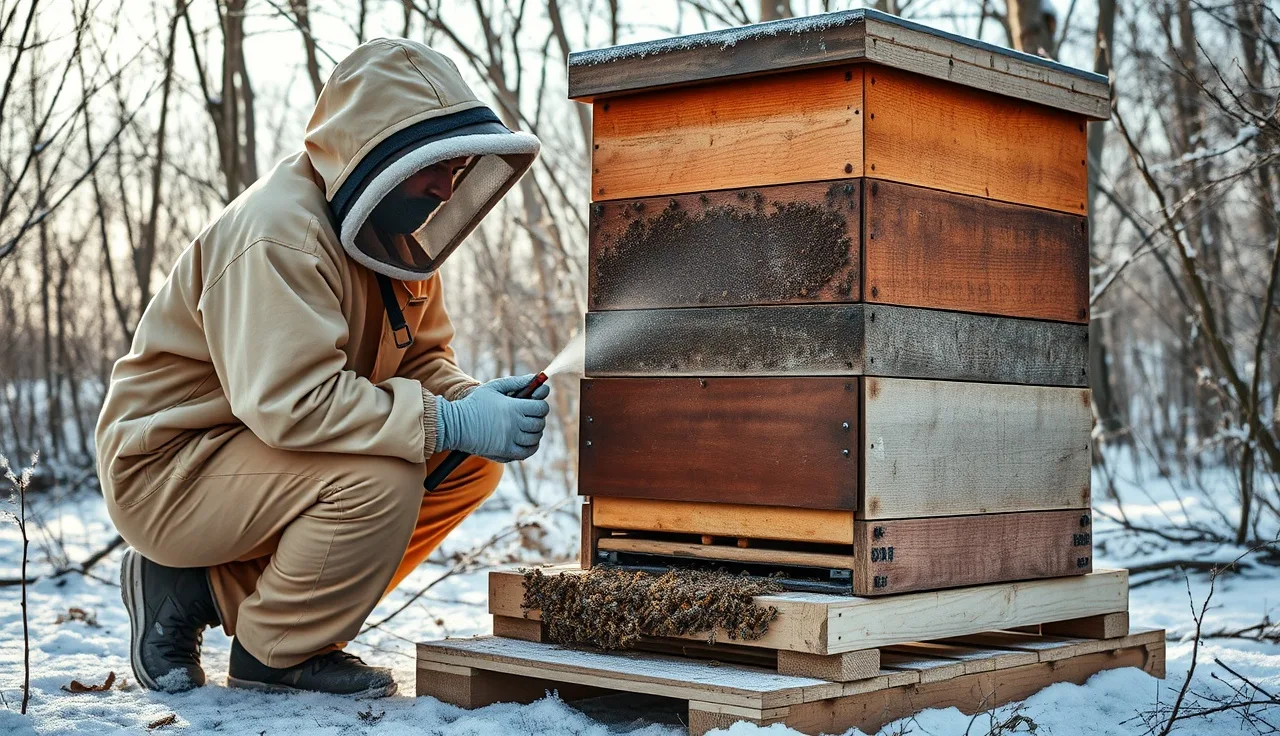
TL;DR
- The EPA-registered label for Api-Bioxal oxalic acid vaporization specifies a minimum 2.5-minute exposure time per hive body.
- With two boxes you run 5 minutes, three boxes 7.5 minutes.
- Sealed entrances for the full exposure window are required.
- Treating during broodless periods (or three repeated treatments in brood-right colonies) delivers the best efficacy.
What does the Api-Bioxal label actually say about exposure time?
The short answer: 2.5 minutes per hive body, with all entrances sealed during the entire treatment. That number comes straight from the EPA-registered Api-Bioxal label, which is the only legal source of guidance for oxalic acid vaporization in the United States. [1]
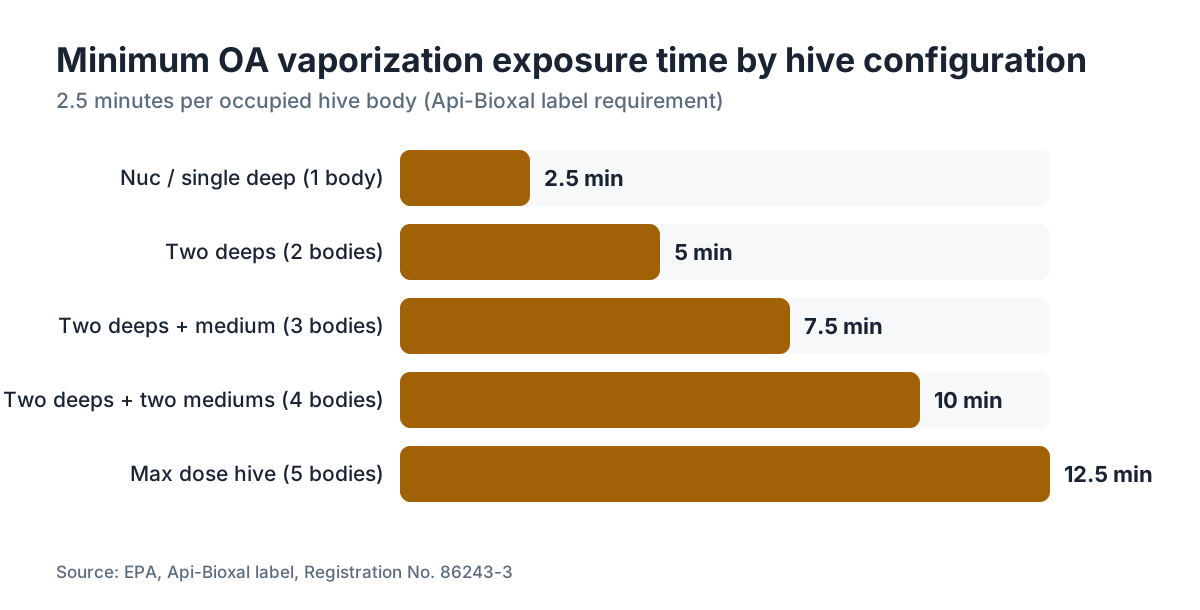
The label wording is worth quoting directly. Api-Bioxal's prescribing information states that the vaporizer should be left in the hive entrance "for a minimum of 2.5 minutes for each hive body present." [1] So a single-box nuc needs 2.5 minutes. A standard two-box colony (a deep brood box plus a honey super or second brood box) needs 5 minutes. Three boxes means 7.5 minutes.
That math is simple, but beekeepers get it wrong in two opposite directions. Some pull the vaporizer after a flat 2.5 minutes no matter how tall the stack is. Others run 10-minute treatments thinking more is better. Neither is correct under the label, and drifting from label requirements puts you in violation of federal pesticide law (FIFRA). [2]
The clock starts when the vaporizer plate reaches temperature and you've pushed the wand fully into the entrance, not when you flip the power switch. Most modern vaporizers reach operating temperature in 30 to 45 seconds. Factor that into your timing if you're counting from power-on.
Why does exposure time per hive body matter for mite kill?
Oxalic acid vapor kills varroa by direct contact. The vapor needs time to diffuse through every chamber in the colony, coat the bees, and reach mites clinging to bee bodies in the lower cluster, the upper cluster, and the gaps between frames. A colony spread across three boxes has roughly three times the internal volume of a single-body hive, and the vapor has to travel the whole distance. [3]
Under-expose, and the vapor concentration in the upper boxes may never reach a lethal threshold for mites. Extension research from Penn State and the Honey Bee Health Coalition's Varroa management guide both name poor vapor distribution as one of the main reasons beekeepers report "it didn't work." [3][4]
Over-exposure doesn't buy you meaningful extra kill. It just adds acid exposure to the bees and to you as the applicator. The 2.5-minute-per-body figure is the sweet spot drawn from European research that preceded U.S. registration. Nobody has clean data on the dose-response curve at the extreme high end inside a sealed hive, but the consensus from the original Swiss and German work that informed the label is that efficacy plateaus well before 10 minutes per box. [3]
The sealed entrance rule matters as much as the timing. If vapor leaks out through cracks, propolis gaps, or an unsealed top cover, the concentration inside never builds. Stuff a cloth or foam into any obvious gaps before you start the clock.
How do you calculate total treatment time for multi-story hives?
Count every hive body the bees occupy, including honey supers if bees are clustering in them. The label does not exempt honey supers from the count. [1]
| Hive configuration | Hive bodies | Minimum exposure |
|---|---|---|
| Nuc (5-frame) | 1 | 2.5 min |
| Single deep | 1 | 2.5 min |
| Two deeps | 2 | 5.0 min |
| Deep + medium super | 2 | 5.0 min |
| Two deeps + medium | 3 | 7.5 min |
| Two deeps + two mediums | 4 | 10.0 min |
A few notes on counting. If a super is empty and has no cluster contact, some beekeepers argue it doesn't need to be counted. That's a gray area the label doesn't resolve cleanly. My honest advice: if bees are walking in it, count it. An extra 2.5 minutes costs you nothing but time.
Queen-right colonies in heavy honey flows sometimes stack five or six boxes. That's 12.5 to 15 minutes of exposure per hive. At scale, this adds up fast. Treat 30 hives at 12.5 minutes each and you're budgeting more than six hours of vaporization time alone, before you count moving equipment, pulling on safety gear, and walking between hives. This is one reason many sideliners time their OA vapor treatments to hit the broodless period in winter, when colonies contract to one or two boxes. [4]
Does treatment timing (broodless vs. in-brood) change how long you need to vaporize?
The exposure time per hive body stays the same regardless of brood status. What changes is efficacy and how many treatments you need.
Oxalic acid in any form (vapor or drizzle) kills only phoretic mites, the ones riding on adult bees. It cannot penetrate capped brood cells. During a broodless period, nearly 100% of mites are phoretic, so a single well-run treatment can hit 90-plus percent mite knockdown. [4] When brood is present, a big share of the mite population sits safe inside cells, and one treatment might knock down only 40 to 60 percent of the total infestation.
The Honey Bee Health Coalition's Varroa management guide, now in its third edition, recommends three vapor treatments spaced four to five days apart when colonies have brood. [4] That repeated schedule catches mites as they emerge from cells between applications. You still apply the full 2.5-minutes-per-body dose each time.
For most hobbyist beekeepers in temperate climates, the late-November through early-January window offers a reliable broodless period, though it shifts by region and by year. A quick alcohol wash before you treat tells you your actual mite load and helps you decide whether one treatment is enough or three are needed. An alcohol wash or sugar roll targeting 300 bees is the standard sampling method recommended by most university extension programs. [5]
What PPE and safety steps does the label require during vaporization?
This is non-negotiable, and it's where beekeepers most often cut corners. The Api-Bioxal label requires a NIOSH-approved respirator for oxalic acid vapors, a full face shield (or safety goggles if a full respirator covers the eyes), chemical-resistant gloves, and long-sleeved protective clothing. [1]
The reason is simple. Oxalic acid vapor is corrosive to mucous membranes, lung tissue, and eyes. Short exposures at hive concentrations are unlikely to cause acute injury if you stand upwind, but cumulative exposure over a season of treatments is the real concern. The beekeeper treating dozens of hives, week after week, is the one at risk. A P100 or OV/P100 combination cartridge respirator is the right call. Disposable N95 masks are not rated for acid vapors.
Some beekeepers at association meetings use the "I just hold my breath and step back" method. I get the impulse. It's still not compliant, and it's not worth the lung exposure over a career of beekeeping.
Keep people and pets at least 15 to 20 feet from hives under treatment. Wait at least 15 minutes after treatment before opening hives so vapor can dissipate. [1] On a cold, still morning the vapor lingers longer than on a warm breezy day, so err toward longer wait times.
How does hive body count affect vaporizer oxalic acid dose?
This is a separate question from time, and the label addresses it separately. Api-Bioxal is dosed by weight: 1 gram of oxalic acid dihydrate per hive body, with a maximum of 5 grams per colony per treatment. [1]
A single-body colony gets 1 gram. A three-body colony gets 3 grams. A five-body colony hits the 5-gram cap, and you don't add more even if the stack runs six or seven boxes. The 5-gram maximum per treatment is a hard ceiling. [1]
This matters because most vaporizers have a fixed pan or cup, and some beekeepers pre-load one dose for every hive regardless of stack height. Treat tall colonies and you have to adjust both the gram load and the exposure time. Get one right but not the other and you leave efficacy on the table.
A good field habit: write the box count on a piece of tape on your vaporizer case before you start an apiary, then set your timer for each hive. It takes 30 seconds and heads off the arithmetic errors that creep in after your fifteenth hive in a row.
Can you treat through an upper entrance or does vapor entry point matter?
The Api-Bioxal label specifies lower entrance treatment. [1] Vapor diffusion works from the bottom up because warm vapor rises and spreads through the cluster on its own. Treating through an upper entrance or a top vent can leave the lower parts of the colony under-exposed.
That said, some hive designs (top-bar hives, certain horizontal hives, hives with reduced or screened bottom boards) make bottom-entry treatment hard or impractical. The label gives no specific guidance for non-Langstroth setups. If your equipment won't allow standard bottom-entry treatment, you're in off-label territory, and I'd check with your state apiarist or the Honey Bee Health Coalition resources for current guidance on alternative configurations. [4]
Screened bottom boards deserve a note of their own. Some beekeepers leave the sticky board or a solid insert in place during treatment to stop vapor loss through the screen. That's generally good practice and fits the "seal all entrances" requirement, even though the label doesn't spell it out. Lose vapor through the bottom and the timed exposure may never reach adequate concentration, even when your clock says you hit the target. [3]
How many times per year can you vaporize a colony, and does that change with hive body count?
The Api-Bioxal label caps treatments at three per year for the vaporization method. [1] That limit applies to the colony, not per box. A six-body tower colony and a one-body nuc both get a maximum of three annual treatments.
The scheduling question is how to fit three treatments into your calendar while actually hitting the mites when they're most exposed. Most efficacy research points to the broodless-period single treatment as the highest-value option if you can only do one. Use all three in a single broodless window (three treatments four to five days apart) and you're running one treatment event rather than three independent ones, which is the right approach for brood-right situations. [4]
A mite monitoring calendar tied to your local bloom and brood cycles helps here. VarroaVault's free protocol tools let you map treatment windows against your mite count history, so you can decide whether to spend your three annual applications all at once in winter or split them across spring and fall pressure events.
If mite levels are still high after three OA vapor treatments in a season, rotate to a different chemical class. Amitraz (Apivar) or formic acid (Mite Away Quick Strips) are the standard rotations. Resistance management matters, and using OA vapor as your only tool year after year is a weak long-term strategy. [4][6]
What temperature and weather conditions affect how well vaporization works?
The label requires outdoor temperature above 0°C (32°F). [1] Practical experience from most beekeepers and extension resources says 40°F to 50°F is a more reliable floor for adequate vapor movement and bee activity through the cluster. Below 40°F, bees cluster tightly and the vapor may not penetrate the full cluster mass even with extended exposure. [5]
Rain and high wind are problems for different reasons. Rain can push vapor back into the entrance, cutting effective concentration. Wind scatters vapor at unsealed gaps faster than you can build concentration inside. Calm, dry days are best. If you're treating in a northern climate in January at 25°F because that's the only broodless window you get, it's still worth doing, but expect slightly reduced efficacy versus ideal conditions. Nobody has a precise temperature-efficacy curve published at treatment-relevant ranges. The general read among researchers and the HBHC is that cold trims efficacy somewhat, and that the higher proportion of phoretic mites during broodless periods partly makes up for it. [4]
Heat is a rarer concern but worth naming. Treating in full sun above 90°F can shorten the vaporizer's productive time because the pan cools faster, and bee physiology at high temperatures means faster respiration and more vapor intake, which isn't necessarily bad for mite kill but does raise bee stress.
What are common mistakes that cause OA vaporization treatments to fail?
Here they are, in rough order of how often they turn up in apiculture extension post-mortems and beekeeper forums:
- Using a flat 2.5 minutes for every hive regardless of stack height. This under-treats multi-body hives and is probably the single most common efficacy failure.
- Not sealing entrances. If you can see vapor wisping out of propolis gaps or a poorly-fitting inner cover, your concentration inside is too low.
- Treating once during brood season and expecting broodless-season results. It doesn't work that way. Three treatments, four to five days apart, when brood is present. [4]
- Under-dosing the gram weight. One gram per hive body is the minimum, not the target. Some beekeepers use a fixed 1-gram scoop for everything.
- Not monitoring mite levels after treatment. A post-treatment alcohol wash 48 to 72 hours later tells you whether the treatment knocked mites down. Skip it and you're flying blind. [5]
- Waiting too long after the broodless window opens. In many temperate regions, the broodless period lasts only four to eight weeks. Every week you delay is a week of ideal treatment opportunity gone. [4]
- Old or degraded oxalic acid. OA powder pulls moisture from the air over time, which throws off both weight and vaporization behavior. Store it sealed in a cool, dry place and check the expiration date. [1]
For sourcing, reputable beekeeping supply companies carry properly sealed and labeled Api-Bioxal in standard weights. Buying from agricultural grey markets or importing unlabeled OA from overseas is a FIFRA violation, and it exposes you to liability if honey tests positive for residues above tolerance. [2]
Is vaporization safe to use when honey supers are on?
This is one of the most common questions beekeepers ask, and the honest answer: the Api-Bioxal label permits vaporization with honey supers on that are intended for human consumption, unlike the drizzle and spray methods, which prohibit super use. [1] That's one of the major advantages of vaporization over other OA delivery methods.
The EPA set a tolerance (maximum residue limit) of 900 parts per million oxalic acid in honey, and naturally occurring OA in honey runs from 8 to 58 ppm depending on plant source, well under the tolerance threshold. [7] Studies measuring OA residues after vaporization treatment have generally found no significant rise above natural background levels. [3]
That said, vaporizing into a super loaded with capped honey during an active flow, when bees are fanning hard and vapor dissipates quickly, is a poor bet for mite control (not a safety issue, an efficacy one). You're better off treating during low-flow or pre-flow periods when the colony is more contained. If you do treat with supers on, count those boxes and run the full 2.5 minutes per body.
How does vaporization compare to other OA delivery methods for brood-right colonies?
Three methods of OA delivery are currently EPA-registered: vaporization, drizzle (dribble), and extended-release sponge products. [1][6]
| Method | Works with capped brood? | Supers allowed? | Max annual treatments | Application notes |
|---|---|---|---|---|
| Vaporization | No (phoretic only) | Yes | 3 per year | 2.5 min/body, sealed |
| Drizzle/dribble | No (phoretic only) | No | 1 per year | 5 mL/seam of bees |
| Extended-release (Oxalic Acid Shop towel/sponge) | Partial (slow release) | No | Per label | 45-day residual |
Vaporization wins on convenience for multi-hive operations and on super compatibility. The drizzle method costs less in equipment and is the go-to for nucs and packages, but the single-application limit and the no-supers restriction are real constraints. Extended-release products aim to handle the brood problem by keeping OA present across multiple brood cycles, though their efficacy data is still accumulating next to the longer track record of vaporization. [4][6]
For a hobbyist with one to ten hives, vaporization during the broodless period is the most efficient approach. If you have brood present and mite counts are high, run three rounds of vapor or switch to formic acid or amitraz, which do penetrate brood cells. [4] The varroa mite management toolbox has more options than ever, but none of them work if the timing and dosing are off.
Frequently asked questions
What is the minimum vaporization exposure time for a single brood box?
The Api-Bioxal label requires a minimum of 2.5 minutes for a single hive body. The entrance must be sealed for the full duration. This applies to nucs, single deeps, and any configuration with only one box occupied by bees. Starting your timer before the vaporizer is fully inserted and at temperature leaves you short of the actual exposure minimum.
Do honey supers count toward the hive body total when calculating exposure time?
Yes. If bees are present in a honey super, it counts as a hive body and adds 2.5 minutes to your exposure window. The Api-Bioxal label permits vaporization with honey supers on, one of its advantages over other OA methods, but you still need to time for the full stack height.
How much oxalic acid should I load for a three-box colony?
Three grams, one per hive body. The label maximum is 5 grams per colony per treatment regardless of how many boxes are present. A three-body colony gets 3 grams and 7.5 minutes of exposure. A five-body colony hits the 5-gram cap. Always use a calibrated scale; volume scoops are unreliable for OA powder.
Can I vaporize through an upper entrance instead of the bottom?
The Api-Bioxal label specifies lower entrance treatment. Vapor rises naturally from the bottom up, which spreads it through the cluster more effectively. Upper-entrance or top-vent treatment is off-label. If your hive design forces it, consult your state apiarist. Treating from the top may leave the lower colony under-exposed even with a full timed treatment.
How soon after vaporization can I open the hive?
Wait at least 15 minutes after treatment is complete before opening any hive. This lets vapor dissipate to safe levels for you and reduces disruption to the colony. On cold, still mornings vapor lingers longer than in warm or breezy conditions. When in doubt, wait 20 to 30 minutes and keep your respirator on until you're well clear of the area.
Does vaporization work if my colony has a screened bottom board?
It works, but insert the solid sticky board or a temporary plug during treatment to stop vapor loss through the screen. Unsealed screens let concentration drop below effective levels before the exposure window closes. Sealing all openings, including screen bottoms, is consistent with the label requirement to close all hive entrances during treatment.
How many OA vapor treatments can I do in one year?
The Api-Bioxal label permits a maximum of three vaporization treatments per colony per year. This limit applies regardless of hive size. For brood-right colonies, most extension guidance recommends three treatments spaced four to five days apart as a single treatment event. For broodless colonies, one well-timed treatment usually provides high efficacy.
What temperature is too cold to vaporize?
The Api-Bioxal label sets the minimum at 0°C (32°F). In practice, most beekeepers and extension resources recommend above 40°F for reliable vapor movement through the cluster. At very low temperatures bees cluster too tightly for vapor to penetrate fully. Treat on the warmest available day within your target treatment window if cold temperatures are a constraint.
Will repeated OA vapor treatments cause mite resistance?
No documented OA resistance in varroa mites has been confirmed as of the most recent Honey Bee Health Coalition guidance. Oxalic acid has a contact-physical mode of action, not a neurological one, which makes resistance development much less likely than with synthetic miticides. Even so, rotating chemical classes is sound integrated pest management practice and keeps your options open if conditions change.
Does the exposure time change when treating in winter versus summer?
The label exposure time, 2.5 minutes per hive body, is constant regardless of season. What changes is efficacy. Winter broodless treatments let a single application reach nearly all mites. Summer treatments with brood present require three rounds to catch mites as they emerge from cells. Dose and timing in minutes stay the same; treatment frequency is what you adjust.
Is it safe to vaporize without a respirator if I stand upwind?
No. The Api-Bioxal label requires a NIOSH-approved respirator for oxalic acid vapors. Standing upwind reduces but does not eliminate exposure, especially as you move around multiple hives. A P100 or OV/P100 combination cartridge respirator is the correct protective equipment. N95 masks are not rated for acid vapors. Cumulative exposure over seasons of beekeeping is the real concern, not any single treatment.
What do I do if mite counts are still high after three OA vapor treatments?
Switch chemical classes. Amitraz (Apivar strips) or formic acid (Mite Away Quick Strips) are the standard rotations. Both penetrate capped brood cells, which OA vapor cannot. Three OA vapor treatments at the label dose and timing should sharply reduce phoretic mite loads; persistent high counts after that usually point to a brood infiltration problem that needs a brood-penetrating treatment.
Can I use a homemade vaporizer or is only a commercial unit legal?
The Api-Bioxal label requires a vaporizer that meets EPA equipment specifications. Homemade vaporizers are not EPA-approved devices, and using them with registered pesticide products puts you in off-label territory under FIFRA. Commercial vaporizers sold for OA treatment by reputable beekeeping supply companies are built to hit the temperature range needed to vaporize OA without burning it into formic or acetic acid byproducts.
Sources
- EPA, Api-Bioxal (oxalic acid) pesticide label, Registration No. 86243-3: 2.5 minutes minimum exposure per hive body; 1 gram per hive body up to 5 gram maximum; lower entrance application; all entrances sealed; three treatments per year maximum; PPE requirements; 0°C minimum temperature; honey supers permitted
- EPA, Federal Insecticide, Fungicide, and Rodenticide Act (FIFRA) overview: Using a registered pesticide in a manner inconsistent with its labeling is a violation of FIFRA
- Rademacher E, Harz M. Oxalic acid for the control of varroosis in honey bee colonies. Apidologie, 2006.: Vapor distribution through hive bodies, efficacy plateau timing, and residue levels in honey following OA vapor treatment
- Honey Bee Health Coalition, Tools for Varroa Management guide, 3rd edition: Three vapor treatments 4-5 days apart for brood-right colonies; broodless period single-treatment efficacy; rotation recommendations; monitoring after treatment
- Penn State Extension, honey bee and varroa management resources: Alcohol wash sampling of 300 bees as standard monitoring method; temperature considerations for OA efficacy
- EPA, Pollinator protection and pesticide registration resources: Three registered OA delivery methods: vaporization, drizzle, and extended-release; comparative label restrictions for supers and brood
- EPA, Pesticide tolerances (40 CFR Part 180), oxalic acid residues: EPA tolerance of 900 ppm oxalic acid in honey; natural OA background in honey 8-58 ppm
- University of Minnesota Extension, honey bee resources: Broodless treatment timing recommendations; regional variation in broodless windows
- University of California Agriculture and Natural Resources, bee resources: Practical guidance on sealed entrances, screened bottom boards, and equipment for OA vapor treatment
- USDA ARS, Bee Research Laboratory, Beltsville MD: Research on OA vapor mode of action and phoretic mite mortality
Last updated 2026-07-09