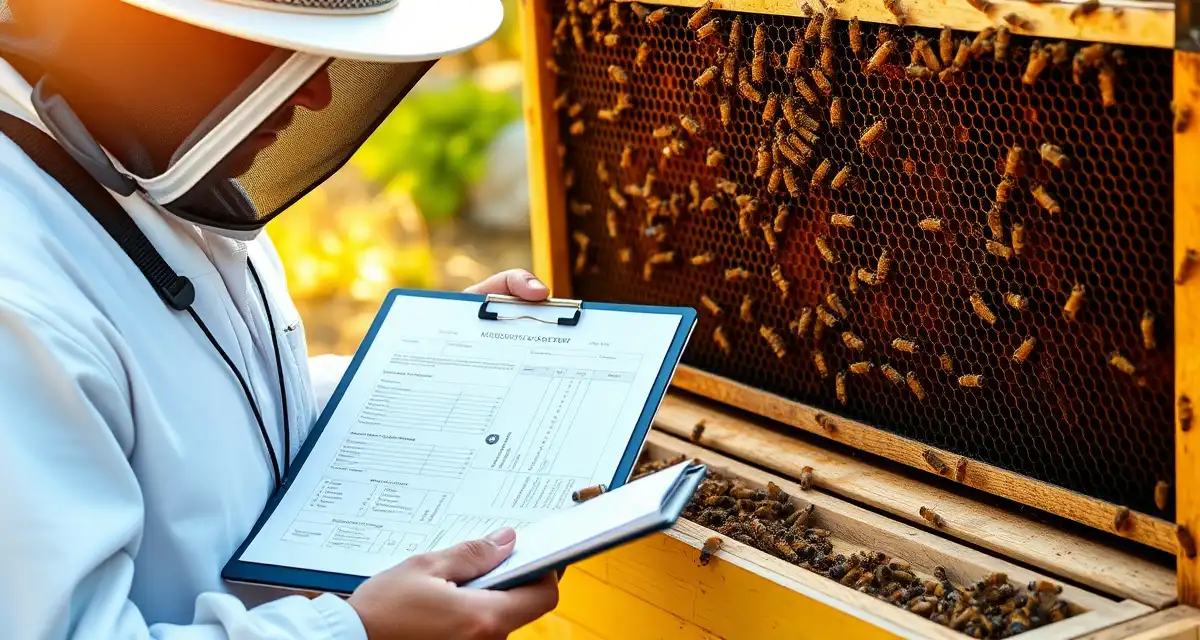
Documenting Hive Loss to Varroa: Records That Support Claims and Analysis
Insurance carriers who receive well-documented colony loss reports approve claims in an average of 12 days versus 47 days for undocumented claims. But the insurance case is secondary. The primary value of documenting a loss is understanding what happened and whether your management program needs to change.
A colony death is data. If you can reconstruct what the mite load was doing in the 6 months before the loss, when treatment happened and what efficacy you got, and how the colony was declining in strength, you have a meaningful picture of whether this was a varroa failure, a different cause, or something systemic in your program.
TL;DR
- This guide covers key aspects of documenting hive loss to varroa: records that support claims
- Mite monitoring should happen at minimum every 3-4 weeks during active season
- The 2% threshold in spring/summer and 1% in fall are standard action points based on HBHC guidelines
- Always run a pre-treatment and post-treatment mite count to calculate efficacy
- Treatment records including product name, EPA number, dates, and counts are required for state inspection compliance
- VarroaVault stores all monitoring and treatment data with automatic threshold comparison and state export formatting
What to Document at Time of Discovery
When you find a dead colony or one that's clearly failing, do this before disturbing the equipment:
Take photos. Document the inside of the hive: cluster position, remaining bee population (or lack thereof), stores, brood pattern. A photo of a varroa-killed colony (small cluster with abundant food, dead bees with deformed wings scattered on bottom board, mites visible on white board) is very different from a starvation death (bees dead in cells head-first, empty frames) or pesticide kill (large numbers of bees at entrance or bottom board, sudden death).
Log the discovery in VarroaVault immediately. Date, colony ID, observed condition. Note whether the hive was empty (absconded or collapsed), had a small dead cluster, had a substantial dead cluster, or had bees present but clearly failing.
Check the bottom board for mite wash. The natural mite fall on the bottom board tells you something about the mite load at time of death. High mite fall indicates mites were present in significant numbers. Zero mite fall in an empty hive suggests absconding from an overwhelmed colony rather than the mites dying with the bees.
Look for DWV symptoms. Bees with deformed (crumpled, vestigial) wings on the bottom board or at the entrance are a varroa-DWV indicator. This is one of the clearest field signs of mite-related collapse.
Pulling the Complete Colony Record
After logging the discovery, pull the full history for that colony in VarroaVault:
- All mite counts for the past 12 months
- All treatment events with efficacy calculations
- Colony strength notes from inspections
- Queen status and any queen events
- Any alerts that fired and whether action was taken
This is where record-keeping pays off. If you've been logging regularly, you can see the complete picture:
A colony that had a 1.2% count in June, a 2.8% count in August (above threshold, treatment was logged), a post-treatment count showing 88% efficacy in September, then a 2.1% count in October before pack-down, should have survived winter. A loss from that colony suggests a different cause than mites.
A colony with a June count of 1.5%, no August count logged, no fall treatment record, and no pack-down count is a likely varroa failure. The record gap is as informative as the records that exist.
Generating a Colony Loss Report for Insurance
VarroaVault's colony loss report exports a PDF containing:
- Complete mite count history (dates, methods, percentages)
- All treatment records (product, dose, date, PHI, efficacy)
- Colony strength notes from inspections
- Any alerts fired with response actions
- A summary of the colony's management history
This document provides the "care and management" evidence that insurers require for livestock loss claims. It demonstrates that you were actively monitoring and treating according to established guidelines.
Before submitting an insurance claim:
- Generate the colony loss report from VarroaVault.
- Include your photos from discovery.
- Note the estimated colony value based on acquisition records or current market prices.
- Check your policy for required documentation specific to your carrier.
Learning From the Loss: Self-Analysis
Insurance aside, the more valuable use of loss documentation is program improvement. Ask:
Was this a monitoring failure? If the last count before the loss was more than 60 days prior, the loss may reflect a count gap that allowed an infestation to develop undetected.
Was this a treatment failure? If a treatment was applied but efficacy was below 80%, a resistance event may have allowed the population to continue growing post-treatment.
Was this a timing failure? If the fall treatment happened in October instead of August, the winter bee cohort was likely already compromised before treatment. The colony may have died not from high mites at winter entry but from the quality of the winter bees raised in a high-mite August environment.
Was this a reinfestation issue? If counts were well-controlled through August but spiked in September, a robbing event from a collapsing neighbor may have overwhelmed a treated colony.
Documenting the cause category in VarroaVault after a loss (varroa suspected, varroa confirmed, cause unknown, other) creates a longitudinal loss record that shows patterns across seasons and apiaries.
Frequently Asked Questions
How do I document a colony loss caused by varroa?
Start at discovery: take photos of the hive interior showing the dead cluster, bottom board, and any DWV-symptomatic bees. Log the discovery immediately in VarroaVault with date, colony ID, and observed condition. Then pull the full colony record to review the 12-month mite count and treatment history. The combination of physical documentation and digital records gives you a complete picture of what happened and when the management program deviated from adequate control.
What records does my insurer need for a varroa colony loss claim?
Most livestock insurers require evidence of care and management, including monitoring and treatment records. VarroaVault's colony loss report exports a PDF with complete mite count history, all treatment records, inspection notes, and a management summary. Supplement this with photos taken at discovery. Check your specific policy for required documentation, as requirements vary by carrier. Well-documented claims average 12 days to approval versus 47 days for undocumented claims.
Does VarroaVault generate a colony loss report?
Yes. From any hive record, you can generate a colony loss report PDF containing the complete mite count history, all treatment records with efficacy calculations, colony strength notes, and any alerts fired during the hive's management history. This document is designed to meet insurer documentation requirements and to support your own program analysis after a loss event.
How do I know if my varroa treatment is working?
Run a mite count 2-4 weeks after the treatment ends and compare it to your pre-treatment count. The efficacy formula is: ((pre-count - post-count) / pre-count) x 100. A result above 90% indicates effective treatment. Results below 80% should trigger investigation for possible resistance, application error, or reinfestation. Log both counts in VarroaVault to track efficacy trends across treatment cycles.
How often should I check mite levels in my hives?
At minimum, once per month (every 3-4 weeks) during the active season. Increase to every 2 weeks when counts are near threshold or after a treatment to verify it worked. In fall, monitoring frequency matters most because the window to treat before winter bees are raised is narrow. VarroaVault's monitoring reminders can be set to your preferred interval for each apiary.
What records should I keep for varroa management?
Each record should include: date of count or treatment, hive identifier, monitoring method used, number of bees sampled, mites counted, infestation percentage, treatment product name and EPA registration number, dose applied, treatment start and end dates, and PHI end date. State apiarists typically expect this level of detail during inspections. VarroaVault captures all of these fields in a single log entry.
What is Documenting Hive Loss to Varroa: Records That Support Claims and Analysis?
Documenting hive loss to varroa is the practice of systematically recording mite monitoring data, treatment history, and colony strength metrics before and after a colony dies. This documentation serves two purposes: supporting insurance claims (well-documented claims resolve in 12 days versus 47 days for undocumented ones) and diagnosing whether your varroa management program needs adjustment. A colony death is valuable data when you can reconstruct what happened in the months leading up to it.
How much does Documenting Hive Loss to Varroa: Records That Support Claims and Analysis cost?
The documentation practices described in this guide are free — they involve your own record-keeping habits and monitoring data. VarroaVault, the platform referenced throughout the article, stores monitoring and treatment records, runs automatic threshold comparisons, and formats data for state inspection export. Pricing for VarroaVault depends on your subscription tier. The records themselves — mite counts, treatment logs, colony strength notes — cost nothing but time and consistency.
How does Documenting Hive Loss to Varroa: Records That Support Claims and Analysis work?
Effective hive loss documentation works by capturing mite load trends over time, not just a single snapshot. You monitor mite levels every 3–4 weeks during active season, record pre- and post-treatment counts to measure efficacy, and log colony strength alongside each inspection. When a colony dies, this data lets you reconstruct a timeline: when mite levels crossed the 2% spring/summer or 1% fall thresholds, whether treatment was timely, and whether efficacy was adequate.
What are the benefits of Documenting Hive Loss to Varroa: Records That Support Claims and Analysis?
The primary benefit is understanding what actually killed your bees and whether your management program is working. Secondary benefits include faster insurance claim resolution and state inspection compliance. When you can show mite count trends, treatment dates with EPA registration numbers, and efficacy calculations, you have evidence for both regulators and yourself. Beekeepers who maintain these records can identify systemic problems in their programs rather than attributing every loss to bad luck.
Who needs Documenting Hive Loss to Varroa: Records That Support Claims and Analysis?
Any beekeeper who uses varroa treatments, carries colony insurance, or operates under state inspection requirements needs this documentation. Commercial beekeepers face the highest stakes — multi-hive losses without records leave insurance claims unresolved and make program analysis impossible. Hobbyist beekeepers benefit too: even one documented loss cycle reveals whether your monitoring frequency and treatment timing are actually protecting colonies, which is information you cannot get from a single mite count taken after the fact.
Related Articles
- VarroaVault Hive Health Dashboard: Every Hive's Status at a Glance
- Hive Inspection Checklist: What to Look for at Every Visit
- How to Manage Varroa in a 300-Hive Commercial Operation: Systems and Scale
Sources
- American Beekeeping Federation (ABF)
- USDA ARS Bee Research Laboratory
- Honey Bee Health Coalition
- Penn State Extension Apiculture Program
- Project Apis m.
Get Started with VarroaVault
The information in this guide is most useful when you have your own mite count data to apply it to. VarroaVault stores every count, flags threshold crossings automatically, and builds the treatment history you need for state inspections and effective management decisions. See pricing and free tools at varroavault.com.