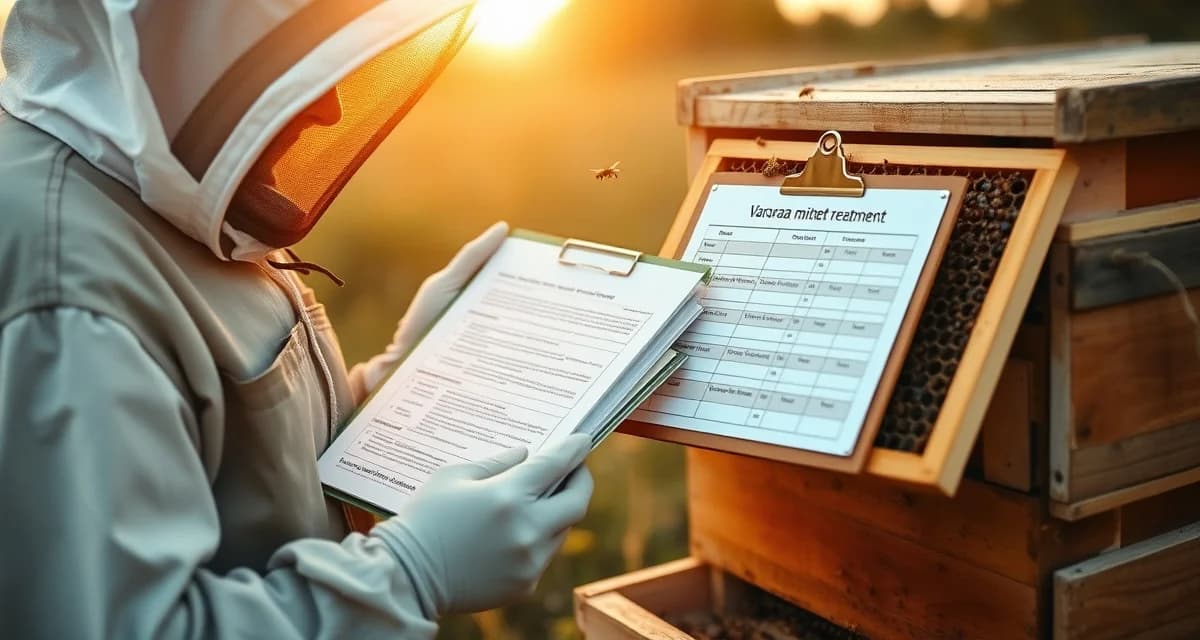
What Varroa Records Should I Provide When Selling Hives?
Colonies sold with documented varroa treatment records command 12-18% higher prices than those sold without documentation. That premium reflects what knowledgeable buyers know: an undocumented hive is a risk, and a well-documented hive with a clean treatment history is a known quantity.
As varroa awareness has grown in the beekeeping community, the expectation for treatment documentation has shifted. Serious buyers -- particularly those who have lost purchased hives in the past due to undisclosed mite problems -- now routinely ask for records. If you can't provide them, you're either accepting a lower price, limiting your buyer pool, or hoping the buyer doesn't know to ask.
TL;DR
- This guide covers key aspects of what varroa records should i provide when selling hives?
- Mite monitoring should happen at minimum every 3-4 weeks during active season
- The 2% threshold in spring/summer and 1% in fall are standard action points based on HBHC guidelines
- Always run a pre-treatment and post-treatment mite count to calculate efficacy
- Treatment records including product name, EPA number, dates, and counts are required for state inspection compliance
- VarroaVault stores all monitoring and treatment data with automatic threshold comparison and state export formatting
What Records Buyers Legitimately Want
A buyer purchasing a used colony has reasonable interest in knowing:
Recent mite count history. At minimum, the most recent alcohol wash result and when it was taken. Ideally, 3-6 months of count data showing the mite trend.
Most recent treatment events. What was used, when, at what dose, and whether the treatment achieved adequate efficacy. A buyer who knows a colony received Apivar in October and came back at 0.3% post-treatment has much more confidence than one buying "treated this fall" without details.
PHI clearance status. If the colony has honey supers or is being sold during an active flow season, the buyer needs to know whether any treatments applied recently have cleared PHI.
Queen information. Age, source, any requeening events. Not strictly varroa-related, but buyers typically want this alongside treatment records.
treatment rotation history. Not always requested, but knowledgeable buyers building a managed apiary may want to know what active ingredient classes have been used so they can plan their own rotation.
What Records Don't Need to Be Shared
You're not obligated to share your entire beekeeping operation's records with a buyer. What you share should be specific to the colony being sold. Per-colony records are exactly what VarroaVault organizes -- the hive sale export generates a buyer-readable colony health summary with full treatment and count history for that specific hive ID.
Preparing a Sale Record Package
A complete sale record package for a single colony typically fits on one page and includes:
- Hive establishment date (when the colony started or when you acquired it)
- Queen information (current queen's age, source, any requeening dates)
- Varroa count log (last 3-6 months of count results with dates)
- Treatment log (all treatments in the current season, with product, EPA registration number, dose, and result)
- Most recent count result (taken within 30 days of sale, ideally)
- PHI status (any active PHI windows that affect what the buyer can do with the colony)
If your most recent count is older than 30 days, consider doing a fresh count before sale. A count the day before listing reassures buyers and is worth the 10 minutes.
Exporting From VarroaVault for a Sale
The hive sale export in VarroaVault generates a buyer-readable colony health summary with full treatment and count history for any hive in your account. The export is formatted for readability -- not a raw data dump, but a structured summary that a buyer can review without needing to understand the database format.
To generate a sale export:
- Open the hive record for the colony being sold
- Select "Export" from the hive menu
- Choose "Buyer Sale Summary"
- Select the date range (typically current season or last 12 months)
- Download as PDF or email directly to the buyer
The sale summary includes the hive's count trend graph, the treatment log with all required fields, and a plain-language summary of the current health status. It reads like a used car history report -- clear, organized, and comprehensive.
The varroa inspection records for resale guide covers what's typically required by state regulations when selling bees, which may go beyond voluntary disclosure standards.
Setting a Price That Reflects Your Documentation
Documentation justifies a premium. When you list a colony at $450 instead of $380, the difference is defensible if you can show:
- A current alcohol wash result below 1%
- A complete fall treatment record with post-treatment verification
- A queen of known age from a reliable source
- A documented treatment history showing rotation and monitoring
Buyers who have experienced varroa-related losses from undocumented purchased hives understand the value of this information. You're not just selling a box of bees -- you're selling documented health history and the peace of mind that goes with it.
The varroavault data export page covers all available export formats for VarroaVault records.
What Protection Records Provide the Seller
Providing complete records also protects you as a seller. If a buyer contacts you two months after purchase claiming the colony had varroa problems you should have disclosed, you can point to the pre-sale alcohol wash result, the treatment history, and the PHI status record. If the records show a clean colony at sale, the buyer's subsequent varroa problems are almost certainly from management issues or reinfestation after purchase -- not from what you sold them.
This matters both for reputation and, in some states, for any regulatory implications of selling unhealthy bees. Documented records are your evidence that the colony's health at point of sale was as represented.
Frequently Asked Questions
What records should I provide a buyer when selling a hive?
At minimum: the most recent mite count result (within 30 days of sale), all treatment events in the current season with product name, date, dose, and EPA registration number, any active PHI windows, and basic queen information. Ideally, you'd include the last 3-6 months of count data so the buyer can see the mite trend rather than just a single data point. A clean count history and recent treatment with good efficacy results add significant value to the sale documentation.
How do I export a hive's treatment history for a buyer?
In VarroaVault, open the hive record, select Export, and choose "Buyer Sale Summary." This generates a formatted PDF showing the hive's count trend graph, full treatment log with all required fields, current health summary, and PHI status. You can download it and email it to a prospective buyer or include it in your hive listing. The format is readable without any knowledge of VarroaVault -- it's designed to be a standalone document that makes sense to any beekeeper.
Does VarroaVault generate a sale summary for individual hives?
Yes. VarroaVault's hive sale export creates a buyer-readable colony health summary for any hive in your account. The summary includes the treatment and count history for a selectable date range (typically the current season or last 12 months), formatted as a clean PDF that presents the information as a structured health record. The export takes about 30 seconds to generate and gives buyers the documentation they need to make a confident purchase decision.
How do I know if my varroa treatment is working?
Run a mite count 2-4 weeks after the treatment ends and compare it to your pre-treatment count. The efficacy formula is: ((pre-count - post-count) / pre-count) x 100. A result above 90% indicates effective treatment. Results below 80% should trigger investigation for possible resistance, application error, or reinfestation. Log both counts in VarroaVault to track efficacy trends across treatment cycles.
How often should I check mite levels in my hives?
At minimum, once per month (every 3-4 weeks) during the active season. Increase to every 2 weeks when counts are near threshold or after a treatment to verify it worked. In fall, monitoring frequency matters most because the window to treat before winter bees are raised is narrow. VarroaVault's monitoring reminders can be set to your preferred interval for each apiary.
What records should I keep for varroa management?
Each record should include: date of count or treatment, hive identifier, monitoring method used, number of bees sampled, mites counted, infestation percentage, treatment product name and EPA registration number, dose applied, treatment start and end dates, and PHI end date. State apiarists typically expect this level of detail during inspections. VarroaVault captures all of these fields in a single log entry.
What is What Varroa Records Should I Provide When Selling Hives??
When selling hives, you should provide mite monitoring logs showing counts every 3-4 weeks during active season, pre- and post-treatment mite counts to demonstrate treatment efficacy, and full treatment records including product name, EPA registration number, application dates, and colony response. State inspection compliance typically requires this documentation. A clean, complete varroa record history proves the colony is a known quantity rather than an undisclosed risk, which is exactly what serious buyers are looking for.
How much does What Varroa Records Should I Provide When Selling Hives? cost?
Keeping varroa records costs nothing beyond your time and a reliable tracking method. Paper logs are free but prone to loss and formatting errors. Digital tools like VarroaVault automate the record-keeping process, store monitoring and treatment data with automatic threshold comparisons, and generate state-compliant export formats on demand. The real financial question is what poor records cost you: undocumented hives typically sell for 12-18% less than those with complete treatment histories.
How does What Varroa Records Should I Provide When Selling Hives? work?
Varroa record-keeping works by logging mite counts from alcohol wash or sugar roll tests taken every 3-4 weeks during active season, then recording any treatments triggered when counts exceed 2% in spring or summer or 1% in fall. Each treatment entry captures the product name, EPA number, application dates, and follow-up mite counts. This creates a verifiable timeline of mite pressure and colony response that buyers and inspectors can review.
What are the benefits of What Varroa Records Should I Provide When Selling Hives??
Complete varroa records benefit sellers by commanding 12-18% higher sale prices and attracting more serious buyers. For buyers, documented hives eliminate the guesswork and risk of purchasing a colony with hidden mite problems. Records also demonstrate state inspection compliance, support credibility with commercial buyers, and provide a clear baseline for the new owner to continue effective mite management from day one rather than starting blind.
Who needs What Varroa Records Should I Provide When Selling Hives??
Anyone selling nucleus colonies, full production hives, or mated queens benefits from maintaining varroa records. Hobbyist beekeepers selling locally, sideliners expanding their operation, and commercial producers supplying pollination services all face buyers who increasingly expect documentation. State apiarists and inspection programs may also require treatment records. If you have lost buyers or accepted lower offers due to missing records, this documentation practice is directly relevant to your operation.
Sources
- American Beekeeping Federation (ABF)
- USDA ARS Bee Research Laboratory
- Honey Bee Health Coalition
- Penn State Extension Apiculture Program
- Project Apis m.
Get Started with VarroaVault
The information in this guide is most useful when you have your own mite count data to apply it to. VarroaVault stores every count, flags threshold crossings automatically, and builds the treatment history you need for state inspections and effective management decisions. See pricing and free tools at varroavault.com.