How varroa mites damage drone viability and queen mating
TL;DR
- Varroa mites hit drone brood hardest, cutting sperm viability by up to 39% and gutting drone flight ability.
- Colonies under heavy mite load raise fewer, weaker drones, so queens mate with poor sperm, store less of it, and fail sooner.
- Dropping mite counts before your queen-rearing or mating season is the single best thing you can do for mating quality.
What does varroa actually do to drones?
Most beekeepers file varroa under worker-bee problem. Makes sense: workers are the bees you see, and worker losses are what crash a colony. But varroa infests drone brood at roughly 8 to 10 times the rate of worker brood, because drone cells stay capped longer (about 24 days versus 12 for workers) and the mites squeeze out more reproductive cycles per cell [1]. That's not a rounding error. Every drone emerging from an infested hive has a real chance of having been fed on during development.
The damage shows up in several ways. Drones from infested cells weigh less, live shorter lives, and in controlled studies fly measurably worse. A study by Duay, De Jong, and Engels found that drones from varroa-infested cells had significantly reduced body weight and shorter lifespans than drones from mite-free cells [2]. Lighter, shorter-lived drones lose the competition at drone congregation areas (DCAs), where queen mating happens.
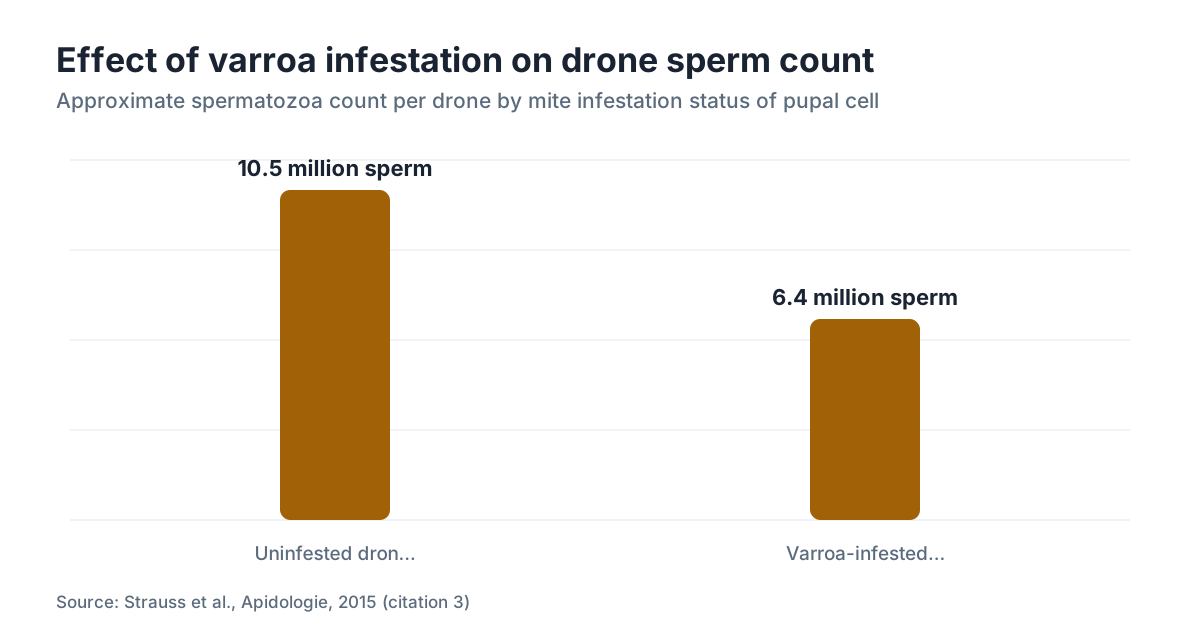
The sperm count problem is the part that should worry you. Research from the Institute of Bee Health in Bern found that varroa infestation during drone development reduced spermatozoa by up to 39% and dropped sperm viability [3]. A healthy drone carries around 10 to 11 million spermatozoa. Lose 39% and you're down to roughly 6 to 7 million. A queen mates with 12 to 20 drones and fills her spermatheca with 5 to 7 million sperm total, so what each drone brings to the table matters.
How does mite pressure reduce drone population in an apiary?
Here's where it turns systemic. Varroa doesn't only damage individual drones. It suppresses the drone population across the whole apiary and, because drones fly several kilometers to DCAs, across the wider neighborhood.
Colonies under mite stress often cut back or halt drone rearing as part of general decline. Workers in struggling colonies pull drone brood during lean periods, and varroa-weakened colonies are almost always resource-stressed even when nectar is coming in, because the mites and the viruses they carry (especially Deformed Wing Virus, DWV) wreck worker physiology and foraging [4]. So the effect compounds: mites damage the drones that do get produced, and the colony produces fewer of them.
For anyone doing queen rearing or relying on locally-mated queens, this bites. If the apiaries within a few kilometers of your mating nucs carry high mite loads, the drone pool at the DCA is already compromised. Your virgins mate with damaged drones no matter how clean your own hives are. That's exactly why some commercial queen producers run isolated mating yards far from other bees.
A single drone congregation area can pull drones from 200 or more colonies [5]. If even a third of those colonies sit above a 3% infestation rate, the collective sperm quality in that DCA takes a hit. Nobody has good apiary-scale data on how that translates to queen failure rates in the field. The mechanism is clear, though, and the individual-drone data is solid.
Does varroa affect queen spermatheca filling and storage?
Yes, indirectly and possibly directly. The indirect path is simple: if a queen mates with drones carrying fewer, less viable sperm, she loads her spermatheca with a compromised supply. Queens store 5 to 7 million sperm after mating and draw on that supply for the rest of their laying life, which runs 2 to 5 years [6]. A queen who starts short or with weak sperm burns through it faster and starts laying unfertilized eggs (drones) at a higher rate earlier. That reads as a failing queen, and plenty of beekeepers requeen her without ever tracing the problem back to mite pressure at mating time.
The direct path is less settled but worth knowing. Varroa can infest queen cells, though less often than drone or worker cells. When it does, the developing queen takes the same kind of developmental damage. There's thin data on how often this dents queen quality in practical beekeeping versus the lab, so treat it as a contributing factor, not the main event.
What's solid: a colony under high mite load raises fewer nurse bees with full hypopharyngeal glands, which means larvae (including queen larvae in queenright splits) may get lower-quality royal jelly. The Honey Bee Health Coalition's Varroa Management Guide notes that varroa's effect on brood nutrition and bee physiology reaches queen quality in infested colonies [7].
For a fuller look at how mites work inside the hive, see our overview of varroa mite biology and lifecycle.
Which viruses does varroa transmit that harm drones and queens?
Varroa is a vector as much as a parasite. The viruses it moves around often do more real damage than the mite's feeding alone. Deformed Wing Virus is the most studied and the most punishing to drones [4].
DWV-infected drones show deformed wings, shortened abdomens, and disorientation, which ends any chance of flying to a DCA. The sneaky version is subclinical DWV, where drones look normal but carry high viral loads. These drones can fly, can reach the DCA, and carry virus in their semen. A 2006 study by Yue and Genersch found DWV in drone semen and raised the possibility of venereal transmission from infected drones to queens during mating [8]. If that holds up at scale, varroa-vectored viruses could spread through the mating system even without direct mite contact.
Black Queen Cell Virus (BQCV) and Sacbrood Virus (SBV) also track with varroa infestation, though their specific effects on drone viability and queen mating are less characterized than DWV's. Chronic Bee Paralysis Virus (CBPV) hits adult bees and could in theory impair drone flight, but the data there is thinner still.
The practical read: DWV prevalence tracks mite load closely. Get mite counts below 2% before the main drone-rearing season (early spring through midsummer across most of North America) and you cut viral pressure on the drone pool, giving your queens the best shot at clean mating.
What mite infestation level starts damaging drone quality?
No study has drawn a clean line below which drone damage hits zero. We do have useful reference points.
The Honey Bee Health Coalition recommends treating when infestation reaches 2% during brood-rearing season (2 mites per 100 bees on an alcohol wash or sugar roll) [7]. At 3% or above, colonies already show population stress. Most of the drone-damage research ran at infestation rates above 3 to 5%, but subclinical viral transmission via mites likely starts far lower.
For queen rearing, I go stricter: aim below 1% in any colony feeding drones into your mating area. That's tighter than the general treatment threshold, and honestly it's hard to guarantee in an open-mating system where you can't control your neighbors. In your own yard, it's doable with steady monitoring and prompt treatment.
The table below lays out approximate thresholds and the matching risk to drone and queen quality, drawn from HBHC guidance and the available research.
| Mite infestation rate (bees) | General colony risk | Drone quality risk | Recommended action |
|---|---|---|---|
| Below 1% | Low | Low | Monitor monthly |
| 1-2% | Moderate | Moderate | Plan treatment |
| 2-3% | High (treat threshold) | High | Treat promptly |
| Above 3% | Severe | Very high | Treat immediately |
These ranges come from the HBHC Varroa Management Guide thresholds [7] plus the research on drone developmental damage at elevated infestation levels [2][3].
Does removing drone brood help control mites without hurting queen mating?
Drone brood removal is a legitimate varroa tool, one of the few non-chemical options with real evidence behind it. Pulling capped drone frames every 21 days removes a chunk of the mites that would otherwise reproduce in those cells. Some work suggests it can cut mite populations by 30 to 50% when done consistently and paired with other management [9].
There's a tradeoff if you also want healthy drone populations for queen mating. You can't cull drone brood hard from every hive in your operation and still expect a strong, high-quality drone pool at the local DCA. The fix most queen rearers use is segmentation: designate specific drone-mother colonies that get no drone brood removal, manage those colonies hard on mites through other means (oxalic acid vaporization, Apivar, or another registered treatment), and cull drone comb in the rest of your hives.
If you're not rearing queens and you only want mite suppression, drone brood removal earns its place from late winter through early spring, ahead of a chemical treatment. It won't replace treatment. It can slow mite buildup and buy you time. Consistency is everything: miss a single 21-day cycle and you've let a full generation of mites reproduce in those frames, which erases most of the benefit.
For mapping your season, the free planning resources at VarroaVault can help you slot drone brood removal in alongside your treatment windows and mating schedule.
How do you protect queen mating quality in a high-mite-pressure area?
This is the question most queen rearers actually need answered. The honest answer: you can only fully control what happens in your own hives.
Start with timing. Get the colonies rearing your drone-mother lines and your mating nucs down to low mite counts during the window drones are being raised. Drones take 24 days from egg to emergence, so your suppression window has to open at least 3 to 4 weeks before planned mating flights. Treatments that shine in broodless or low-brood conditions (oxalic acid dribble or vapor) drop mite loads fast, but they won't touch capped drone brood already in the cells. Plan for that.
Next, think about where you site your mating nucs. Distance from other apiaries matters. Extension apiculturists generally suggest mating yards do better with at least 3 to 5 km of separation from heavily infested apiaries, though that's a hard ask for most hobbyists. In practice, talking to nearby beekeepers and pushing collective mite management beats chasing isolation, and it works better.
Third, test your queens after mating. A brood inspection showing a tight, consistent laying pattern with minimal drone brood in worker cells is a fair proxy for good spermatheca filling. Queens with spotty brood and early drone-laying may have mated poorly, either from low sperm quantity off damaged drones or from fewer mating flights completed because of weather or stress.
And if local mite pressure stays high, consider sourcing queens from breeders who run isolated, mite-managed mating yards. That's not an admission of failure. It's a practical call.
Can varroa-related drone damage cause a colony to become drone-layer or laying-worker?
Not directly, but the pathway exists and it's worth understanding. Varroa doesn't cause laying workers on its own. Laying workers show up when a colony has gone queenless for several weeks with no queen or open brood present to suppress worker ovary development [10].
Here's how varroa sets the stage. A poorly mated queen carrying inadequate or low-viability sperm starts failing within 6 to 18 months. She lays more unfertilized eggs (drones) in worker cells, then her laying rate drops. The colony tries to supersede her, but that can fail if no viable replacement gets raised. If the colony goes queenless without a successful replacement, and the beekeeper misses the window to step in, the colony slides into laying workers.
Separately, varroa-weakened colonies carry fewer nurse bees, which makes queen rearing less reliable even when the colony does attempt supersedure. Fewer nurse bees means less royal jelly for queen larvae means a worse replacement queen. It's a downward spiral that varroa speeds up at every step.
This is different from Africanized honey bee colonies, which show aggressive, unpredictable swarming and supersedure behavior. For more on how genetics drive colony behavior, see our article on africanized honey bee characteristics.
What does the research say about varroa's long-term effect on colony genetics?
This angle gets ignored. Over time, if the drone pool in a region stays degraded by varroa, the genetic diversity available to queens at DCAs shrinks. Queens that fail early from inadequate sperm storage get replaced more often, by beekeepers or by the bees through supersedure. Each replacement is another roll of the dice on mating quality.
A 2015 paper from researchers at the Institute of Bee Health in Bern (Strauss and colleagues) documented that varroa infestation during drone development reduced spermatozoa counts and sperm quality, with direct implications for queen fertility and colony reproductive success [3]. The authors noted the damage went past physical loss: it included reduced sperm motility, which drags down fertilization efficiency inside the queen.
On diversity, there's theoretical concern that regions with poor collective mite management end up with smaller effective drone populations at DCAs, which cuts the polyandry (multiple mating) queens depend on for colony health. Honey bee polyandry links to better disease resistance, steadier thermoregulation, and cleaner division of labor [5]. Anything that trims the number or quality of drones a queen mates with chips away at those benefits.
Nobody has good long-term, population-level data on varroa's effect on regional drone pools specifically. The closest work is theoretical modeling built on known DCA dynamics and observed mite-related drone mortality. The concern is grounded in real mechanism, and it's worth taking seriously at the apiary level.
What treatments are registered and effective before queen mating season?
The goal before mating season is to drive mite loads as low as they'll go without wrecking your drone-mother colonies' brood cycles. A few options stand out.
Oxalic acid vapor (OAV via shop vaporizer, registered under EPA Section 3 for use in Apis mellifera colonies) [11] works well in early spring while brood is still limited. Treat a colony with little or no capped brood and you get maximum efficacy, because most mites are phoretic (riding adult bees) and exposed to the vapor. This is my go-to for dropping counts fast before the drone-rearing push.
Apivar (amitraz strips) is effective but needs 6 to 8 weeks and comes with temperature limits (above 50 degrees F, below 90 degrees F). It overlaps your brood cycle, so full efficacy takes longer, but it's a reliable spring choice in most climates [12].
HopGuard (potassium salts of hop beta acids) is approved for use during honey flow and in nucs and splits, which makes it practical for mating nucs. It's less effective than amitraz or oxalic acid in head-to-head research, but it's a reasonable pick where comb residue worries you or where you're treating small units [13].
Read and follow the EPA-registered label for any product. Timing relative to honey supers, brood conditions, and ambient temperature all shape both efficacy and safety. The EPA maintains registration records for approved bee treatments [11].
For a full comparison of treatments by season and colony state, VarroaVault's free protocol tools help you match treatment choice to your timing and hive setup.
Still building out your apiary? Our guide to beekeeping supplies covers the monitoring and treatment gear worth keeping on the shelf.
How should you monitor drones to assess mite pressure in your apiary?
Most beekeepers monitor mites on adult worker bees (alcohol wash or sugar roll), and that's the standard and still the right primary method. If you're specifically worried about drone quality and mite pressure on your drone population, a few extra checks earn their keep.
Drone brood inspection: pull a frame with capped drone cells and cut through the cappings with a capping scratcher or a wide hive tool. Look for mites in the cells, eggs or juveniles on the developing drones, or brown spotting on drone pupae (a sign of mite activity). Even one mite per 10 cells inspected points to significant drone-brood infestation.
Adult drone sampling: you can toss drones into an alcohol wash to gauge phoretic mite rates on drones specifically. Some research suggests mite rates on drones run higher than on workers, which means a worker-only wash slightly underestimates total colony mite load. This isn't standard practice for most hobbyists, but if you manage drone-mother colonies, run it a couple of times a season.
Observational proxy: healthy drone populations are easy to spot in spring and summer, with drones flying out in afternoon warmth and clustering near the entrance in early morning. If a strong colony shows almost no drones during prime drone season, that's worth investigating. Mite pressure is one possible cause, alongside nutritional stress or aggressive drone-culling in queenright colonies.
The standard HBHC recommendation is to monitor colonies every 30 days during the active season and after every treatment [7]. For drone-quality purposes, add a drone brood check in early spring before you start any queen-rearing work.
Frequently asked questions
Why do varroa mites prefer drone brood over worker brood?
Drone brood cells stay capped about 24 days, versus roughly 12 for worker brood. That longer capping period gives varroa more time to complete reproductive cycles, so a mite in a drone cell produces more offspring per cycle. Research estimates varroa infests drone brood at 8 to 10 times the rate of worker brood, which leaves drones disproportionately affected even in colonies with moderate overall mite counts.
Can a queen fail early because of poor-quality sperm from varroa-damaged drones?
Yes, this is a realistic mechanism. Drones from mite-infested cells carry up to 39% fewer spermatozoa with reduced motility. A queen mating with several damaged drones may store a smaller or weaker sperm supply in her spermatheca, exhaust it sooner, and begin drone-laying earlier than expected. Many beekeepers mistake this for a genetically inferior queen when the root cause is mite pressure during the mating season.
How far do drones fly to mate, and does that mean my neighbor's mite problem affects my queens?
Drones typically fly 1 to 7 kilometers to reach drone congregation areas, with most mating within 3 to 5 km of the hive. A single DCA can draw drones from 200 or more colonies. So yes, high mite loads in nearby apiaries compromise the regional drone pool your virgin queens mate with. That's why collective mite management across a neighborhood or beekeeping club matters for queen quality.
Does Deformed Wing Virus spread from drones to queens during mating?
A 2006 study by Yue and Genersch found DWV in drone semen and raised the possibility of venereal transmission. Varroa vectors DWV, and subclinically infected drones (normal-looking but carrying high viral loads) may pass the virus to queens during mating. The full scale of this effect in the field isn't well-characterized, but it's a legitimate concern and one more reason to keep mite loads low before mating season.
Should I cull drone brood before queen mating season to reduce mites?
It depends on your goals. Drone brood removal cuts mite populations, but it also thins the drone pool available for queen mating. A practical approach: cull drone comb in most colonies but keep one or two designated drone-mother colonies with no brood removal, managing those on mites through other treatments. That lets you reduce overall mite pressure while preserving a healthy drone contribution for mating.
What alcohol wash mite count should I aim for before queen rearing?
The Honey Bee Health Coalition's general treatment threshold is 2% during brood season. For colonies contributing drones to queen mating, I target below 1% before and during drone-rearing. That's stricter than the general threshold but fits the evidence that even moderate mite loads degrade drone sperm counts. Test colonies at least 4 weeks before planned mating dates so you have time to treat and reassess.
Can varroa mites infest queen cells?
Yes, though less often than worker or drone cells. When a mite enters a queen cell before capping, the developing queen can take feeding damage and viral transmission. Evidence that this commonly causes queen failure in the field is limited, but it's a reason to monitor queen cells during periods of high hive mite load, especially in commercial queen-rearing operations.
What is the effect of varroa on genetic diversity in a honey bee population?
Varroa shrinks the effective drone population at congregation areas by shortening drone lifespans, cutting flight ability, and causing direct mortality. Queens practice polyandry, mating with 12 to 20 drones, and colony genetic diversity depends on a large, healthy drone pool. Persistent mite pressure across a region can narrow the effective mating diversity available to queens, theoretically reducing the disease resistance and behavioral stability tied to high genetic diversity.
How long after mite treatment can I safely start queen rearing?
It depends on the treatment. Oxalic acid residues in beeswax are minimal and clear quickly; most practitioners start queen rearing within 1 to 2 weeks of an OAV treatment. Amitraz strips (Apivar) should come out before you introduce queen cells or graft, and a 2-week clearance is generally recommended. Always check the EPA-registered label for your product, and verify with a post-treatment mite wash before starting grafts.
Does poor drone quality affect a queen's number of mating flights?
Not directly. The number of mating flights depends on the queen's own physiology, weather, and how many drones show up at the DCA. But if drone quality is low (fewer viable sperm per drone), the queen may fail to fill her spermatheca even after several flights. The result is functionally the same as making fewer successful mating contacts, even when she flew the normal number of times.
Is there a varroa-resistant drone line I can use to improve mating outcomes?
Yes. Several breeding programs select for varroa-sensitive hygiene (VSH) and recapping behavior. Drones from VSH lines pass those traits to offspring queens mate with in open mating, though the effect gets diluted by the many other drones around. For consistent expression, instrumental insemination with VSH drones or very isolated mating yards stocked with VSH drone-mother colonies are more reliable but logistically demanding for hobbyists.
How does varroa damage to nurse bees affect queen rearing?
Nurse bees parasitized by varroa have reduced hypopharyngeal gland development, so they make lower-quality and lower-quantity royal jelly. Queen larvae need abundant, high-quality royal jelly to develop properly. Colonies under high mite pressure produce nutritionally compromised nurse bees that may rear smaller, less fertile queens even when queen-rearing conditions otherwise look fine. That's one more pathway from colony mite load to poor queen quality.
What's the best time of year to treat mites to protect spring queen mating?
Late winter or very early spring, ideally during a broodless or near-broodless stretch, is optimal. Treating then catches most mites in their phoretic stage on adult bees, which maximizes efficacy. Oxalic acid vapor or dribble works well at this stage. The timing drops mite load before the spring drone-rearing push, protecting the drone cohort that will be available during the main mating season, roughly April through June across most of North America.
Can I test whether my mated queens are carrying adequate sperm?
Not on the beeyard without a lab. Commercial queen producers sometimes send queen samples for spermatheca analysis, where a lab counts and assesses sperm viability. For hobbyists, the practical proxy is a tight, consistent brood pattern with few missed cells and appropriate ratios of capped worker brood to drone brood. A queen showing early drone-laying in worker cells, especially in her first season, warrants a closer look.
Sources
- Honey Bee Health Coalition, Varroa Management Guide (5th ed.): Varroa mites infest drone brood at rates roughly 8 to 10 times higher than worker brood due to the longer capping period of drone cells.
- Duay P, De Jong D, Engels W. (2003). Decreased flight performance and sperm production in drones of the honey bee (Apis mellifera) slightly infected by Varroa destructor mites during pupal development. Genetics and Molecular Research.: Drones from varroa-infested cells had significantly reduced body weight and shorter lifespans than drones from mite-free cells.
- Strauss U, et al. (2015). Seasonal variation in Varroa destructor fertility and its association with sperm quality of drone honey bees. Apidologie.: Varroa infestation during drone development reduced spermatozoa counts by up to 39% and reduced sperm motility.
- Genersch E, Aubert M. (2010). Emerging and re-emerging viruses of the honey bee (Apis mellifera L.). Veterinary Research.: Deformed Wing Virus is vectored by varroa mites and causes flight inability, shortened lifespan, and subclinical infection in drones.
- Palmer KA, Oldroyd BP. (2000). Evolution of multiple mating in the genus Apis. Apidologie.: Honey bee queens mate with 12 to 20 drones on average; polyandry is associated with colony disease resistance, thermoregulation stability, and labor efficiency.
- Cobey S. (2007). Comparison studies of instrumentally inseminated and naturally mated honey bee queens and their progeny. Apidologie.: Queens typically store 5 to 7 million spermatozoa in the spermatheca after mating, which must last the entire laying life of 2 to 5 years.
- Honey Bee Health Coalition, Varroa Management Guide: HBHC recommends treating colonies when mite infestation rates reach 2% (2 mites per 100 bees) during the brood-rearing season; the guide notes varroa's impact on brood nutrition extends to queen quality.
- Yue C, Genersch E. (2006). RT-PCR analysis of Deformed wing virus in honeybees (Apis mellifera) and mites (Varroa destructor). Journal of General Virology.: DWV was detected in drone semen, suggesting venereal transmission from infected drones to queens during mating is possible.
- Wilkinson D, Smith GC. (2002). A model for the mite-bee-virus interactions in varroa-infested colonies. Journal of Apicultural Research.: Consistent drone brood removal every 21 days can reduce varroa mite populations by 30 to 50% when used as part of integrated management.
- University of Florida IFAS Extension, Honey Bee Biology: Laying workers develop when a colony has been queenless for several weeks and no open brood or queen pheromone is present to suppress worker ovary activation.
- U.S. EPA, Pesticide Registrations for Honey Bee Varroa Mite Products: Oxalic acid is registered under EPA Section 3 for use in Apis mellifera colonies as a varroa treatment via vapor or dribble methods.
- Apivar (amitraz) EPA-registered label, Veto-pharma: Apivar strips require 6 to 8 weeks of treatment and must be used at ambient temperatures above 50°F and below 90°F for efficacy and safety.
- HopGuard 3 EPA-registered label, BetaTec Hop Products: HopGuard (potassium salts of hop beta acids) is approved for use during honey flow and in nucs and splits, with moderate efficacy compared to amitraz or oxalic acid.
Last updated 2026-07-09