Varroa in swarm cells and newly emerged queens explained
TL;DR
- Varroa mites do enter queen cells, swarm cells included, but at lower rates than worker cells and far lower than drone cells.
- Virgin queens rarely emerge carrying meaningful mite loads.
- The bigger story is the brood break: swarming and splits stall mite reproduction and open a broodless window where oxalic acid hits close to 95% efficacy.
Can varroa mites actually get into queen cells?
Yes. Varroa mites enter queen cells before capping, the same way they enter worker and drone cells. The foundress mite hides in the royal jelly at the bottom of the cell, waits for the cell to be capped, then starts reproducing on the pupa inside. Queen cells are not safe from varroa.
Rates run lower than worker cells, though, and much lower than drone cells. A study in Apidologie by Garrido and Rosenkranz (2004) found natural queen cells carried measurable varroa infestation, but the biology of the queen cell makes for a tougher environment for mite reproduction. Queen larvae develop faster than workers in some respects, and the flood of royal jelly may interfere with mite development. The exact mechanism is still argued over. [1]
The mites that do get in face a different thermal setup too. Queens get reared at a slightly different temperature than workers, and the cell shape is different. None of this makes queen cells immune. It means that if you check a sample of queen cells, you may find fewer infested cells than your overall mite load would predict.
What is the varroa infestation rate in queen cells compared to worker and drone cells?
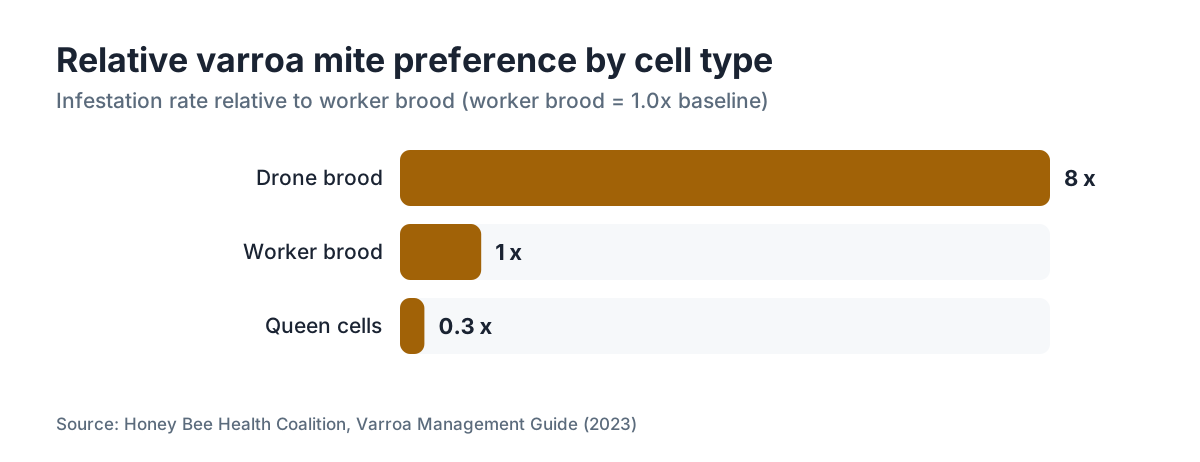
Queen cells sit at the bottom of the mite preference ladder, often 1 to 5 percent infestation, while drone brood runs up to 8 to 10 times the worker rate. The numbers shift by study and colony, but the pattern holds well enough to plan around.
| Cell type | Typical varroa infestation rate | Notes |
|---|---|---|
| Worker brood (capped) | 5-20%+ in unmanaged colonies | Varies with season and colony history |
| Drone brood (capped) | Up to 8-10x worker brood rate | Mites strongly prefer drone cells [2] |
| Queen cells | Lower than worker cells, often 1-5% | Small sample sizes in most studies; varies |
Drone cells pull mites at roughly 8 times the worker rate, according to research cited by the Honey Bee Health Coalition in their Varroa Management Guide. [2] Queen cell data is thin next to worker and drone data, partly because colonies make few queen cells and sampling them wrecks your queen supply. Treat those percentages as directional, not gospel.
Here's what actually matters for management: a low rate is not zero. In a heavily loaded colony, even a small chance per cell means some of your queen cells hold mites.
Do mites actually reproduce successfully inside a queen cell?
Often no. This is where the queen cell becomes a special case. Mite reproduction inside a queen cell gets disrupted more than in worker cells, and far more than in drone cells. Garrido and Rosenkranz documented reproductive success well below worker-cell levels. [1]
Two things drive it. The queen's pupal development runs faster than a worker's, and the foundress mite needs time. She lays her first egg (a non-reproductive male) and then female eggs at roughly 30-hour intervals. If the host pupates and emerges quickly, the mite runs out of cycles. On top of that, the volume of royal jelly and the chemistry of a queen cell appear to cut mite fecundity, though the studies don't fully agree on why. [1]
So a mite in a queen cell may raise fewer viable offspring than she would in a worker cell, and far fewer than in a drone cell. Queen cells are not efficient mite nurseries. They're also not sterile. Any offspring that finish development leave with the queen or right after, and they can then infest brood in the recipient colony.
Does a virgin queen herself carry varroa mites when she emerges?
Rarely, and even when she does, she's a dead-end route for mite transmission. Varroa needs living bee brood to reproduce. A newly emerged virgin queen is not capped brood. Mites found riding on her are almost always phoretic mites (the hitchhiking stage), not mites that bred inside her cell.
Phoretic mites can hop onto a virgin queen just like any other adult bee. If the colony's phoretic load is high, a few may be on her body when you spot her. That still doesn't make queen cells a mite amplifier. Once she's laying, she spends nearly all her time in the center of the cluster, and workers groom her constantly. Mites generally prefer worker bees in the brood nest as phoretic hosts.
One nuance. A virgin queen on a mating flight could in theory pick up phoretic mites from the drones she mates with. There's no strong evidence this matters. Nobody has good population-level data on this specific question.
How does swarming affect varroa mite populations?
Swarming is one of the strongest natural mite-control events a colony can go through, and the reason is the brood break. Beekeepers who fake swarm conditions on purpose are borrowing this exact biology.
When a prime swarm leaves, it takes the old mated queen. Back in the parent colony, days to weeks pass with no capped worker brood while the virgin queen emerges, mates, and starts laying. Every mite that would normally slip into worker brood is stuck in phoretic mode the whole time. Phoretic mites can't reproduce. Their summer lifespan is short, so some just die during the break without ever breeding. [3]
The swarm itself starts with a brood break too, but a short one. It has no drawn comb with brood when it lands. Workers draw comb fast once installed, and the old queen usually starts laying within a few days. That break is often too short to cut the swarm's mite load much. Counts in established swarms run lower than the parent hive, but not to zero.
Fries and Camazine (2001), writing in Apidologie, found that natural swarming and the brood break that follows can substantially reduce varroa populations in parent colonies. [3] How much depends on the length of the break and the starting mite load.
Does an artificial swarm or split lower varroa mite counts?
Yes, and it's one of the most underused tools a hobbyist has. Move most of the capped brood (and the mites breeding inside it) away from the queen, and the queenless portion goes broodless. Every phoretic mite in that half now has nowhere to reproduce. Treat that broodless split with oxalic acid and you hit close to 95 percent of the phoretic mites when there's truly no capped brood present. [4]
The Honey Bee Health Coalition frames brood breaks (from splits, queen caging, or swarm cells) as a treatment window where oxalic acid reaches efficacy it simply cannot manage in a colony full of capped brood. [2] That's the strategic reason to build queen events into your mite calendar.
For a few hives, the timing runs like this. Make the split in late spring or early summer. Treat the broodless portion right away with oxalic acid. Now you've knocked mites back in both daughter colonies heading into the stretch when populations climb fastest. VarroaVault has free split-and-treat protocols built around this same approach.
One caution. A split with frames of capped brood still holds every mite locked in those cells. Your alcohol wash or sugar roll only reads phoretic mites. After the split, the phoretic count drops, then rebounds as brood-internal mites emerge. Plan your follow-up monitoring for that bounce.
Is it safe to introduce a queen or queen cell from a swarm into another hive?
From a varroa standpoint, generally yes, with a couple of caveats. A single queen cell or a mated queen carries no meaningful mite population. The real question when you move queens around is the mite load in the recipient colony and in the colony of origin.
Raise queens from a high-mite colony and the queens themselves aren't the vector. But that origin colony probably has a high phoretic load, and if you move frames of bees along with the queen, you move phoretic mites with them. Alcohol-wash or sugar-roll a 300-bee sample from any colony you pull from, and check the count before you mix bees between hives.
Swarm cells add a wrinkle. They show up during a colony's swarm impulse, which often lines up with crowding and a high phoretic load in the main cluster. That doesn't mean the cells are loaded with mites. It's a signal to check mite levels before swarm season gets out ahead of you.
Should you treat a newly hived swarm for varroa?
Yes, and sooner than most hobbyists expect. New swarms look healthy and busy, which breeds false comfort. They still carry phoretic mites from home. Once the queen lays and capped brood appears, those mites get fresh brood to breed in, and the population can climb fast in a colony with no varroa history to speak of.
The window right after hiving, before any capped brood, is a gift. Oxalic acid by dribble or vapor has very high efficacy against phoretic mites in a broodless colony. [4] The EPA-registered label for Api-Bioxal (the oxalic acid product approved in the US) specifies one treatment when no brood is present, or multiple treatments at 5 to 7 day intervals if brood is present. Follow the current label. [5]
How fast does that window close? In summer, a hived swarm with an already-mated queen can have eggs within 24 to 48 hours. Capped worker brood shows up about 8 to 9 days after those eggs are laid. So your true broodless window can be as short as 8 to 12 days. Miss it and you switch to a brood-tolerant treatment: extended-release oxalic acid, formic acid, or a thymol product, chosen for your temperature range and local rules.
Does the mite load in a swarm reflect the parent colony's mite load?
Roughly, but swarms tend to run a bit lower than the hive they left. Part of it is selection: a swarm skews toward younger bees, and younger bees carry lower phoretic loads than old foragers. Part of it is math: the parent colony's mites get split between the swarm, the bees left behind, and whatever brood stays home.
Still, a swarm from a heavily infested colony is a heavily infested swarm. The dilution is real but modest. Don't assume a swarm is clean because you never saw trouble in the source hive. Beekeepers who catch feral swarms learn this the hard way. The swarm looks fine through summer, then collapses in late fall from a load that built up unseen.
The Honey Bee Health Coalition treats any newly caught swarm as a colony with unknown mite history: monitor first, then treat proactively if the count crosses 2 percent (2 mites per 100 bees) at any point in the active season. [2]
How does varroa affect queen quality, and can infested queen cells produce inferior queens?
The research here is genuinely thin, and honest beekeepers should be careful with strong claims. There's a reasonable theory that a queen developing in a cell with active varroa could suffer developmental damage, the way worker bees from infested cells emerge with deformed wings or lower weight from deformed wing virus (DWV) carried by the mites. [6]
Deformed wing virus is the most economically damaging virus varroa moves around. It causes crumpled, useless wings, and at high titers it also brings neurological and behavioral deficits with no visible physical sign. [6] A queen from an infested cell could in theory pick up a high DWV titer, and early evidence links DWV in queens to shorter lifespan and higher supersedure rates. But the controlled trials establishing that for queens are limited next to the worker-bee literature.
The safer read: high colony mite loads hurt queen quality, not because every queen cell is infested, but because the colony rearing those queens has high viral loads in its brood and adults, and those viruses can reach queen larvae through royal jelly and nurse-bee feeding. Managing mites at the colony level is the best thing you can do for queen quality.
Can you use swarm cells or queen rearing as part of a varroa management plan?
Yes. Some of the most effective treatment-light operations run queen events as the backbone of their mite management. It goes by a few names: brood break management, IPM splitting, walk-away split with oxalic acid.
The idea is simple. Force a brood break by splitting the colony, requeen the queenless half with swarm cells or grafted cells, and treat with oxalic acid during the broodless window. Done in late spring or early summer, this can knock mites back toward zero in the treated split right before mite pressure ramps up. You're compressing months of possible mite reproduction into a single reset.
The Honey Bee Health Coalition's Varroa Management Guide lists brood interruption and splitting as IPM strategies that cut treatment frequency without giving up mite control. [2] Extension programs in several states, Penn State and the University of Minnesota among them, publish protocols for pairing splits with oxalic acid. [7][8]
Timing. The sweet spot across most of the US runs late April through June, before the summer mite explosion but after colonies are strong enough to split. In the South it opens earlier. In northern states, June is often the earliest date for reliable splits with queen cells.
Want a full-season framework that ties split timing to threshold-based decisions? VarroaVault's free protocol tools are worth pulling up alongside your local extension's timing.
For the wider biology, see our overview of the varroa mite, and for gear to support splits and queen rearing, beekeeping supply companies is a practical next read.
What treatments are safe to use near queen cells or virgin queens?
This is real and underrated. Some varroa treatments damage queen cells or harm virgin queens, and the labels aren't always blunt about it. Here's the landscape based on label guidance and known biology.
Oxalic acid (Api-Bioxal) by vaporization: the label directs you to treat when no queen cells or virgin queens are present, or with caution, depending on label version. Oxalic acid vapor is corrosive and can damage delicate brood and queens at high concentrations. Some beekeepers report no trouble treating with queen cells present, others report cell losses. Safest practice is to treat before queen cells are capped, or after the new queen has hardened and mated. [5]
Formic acid (Mite Away Quick Strips, Formic Pro): formic acid at treatment strength is hard on queens and queen cells. The labels specifically warn against use when virgin queens are present or during queen rearing. Temperature matters too. Mite Away Quick Strips need roughly 50 to 85F to work safely and well. [9]
Thymol (ApiLife Var, Apiguard): thymol products are generally gentler on queens than formic acid, but can still cause queen problems in high heat. Label guidance varies by product.
Amitraz strips (Apivar): amitraz contact strips are among the least disruptive to queens during queen rearing when used at label rates for the indicated period. Read the current label anyway. [10]
The consistent line across extension programs and the HBHC guide: during active queen rearing or a swarm season, schedule oxalic and formic acid around your queen events, not through them. Amitraz, or a broodless oxalic treatment right after the new queen emerges and before she starts laying, is usually the most practical play.
Frequently asked questions
Can varroa mites survive inside a queen cell long enough to infest the emerging queen?
Yes, mites can survive the full development period of a queen cell, but reproductive success is lower than in worker or drone cells. The mites that do complete a cycle leave with the queen as mobile phoretic mites. The queen herself doesn't carry a significant burden, but those mites can move to worker brood in the new colony right after emergence.
Will a brood break from a swarm actually reduce mite counts noticeably?
Yes, especially in the parent colony. During the broodless stretch after the prime swarm leaves, every reproducing mite that would normally cycle into capped worker cells is stuck in phoretic mode. Phoretic mites have shorter lifespans and cannot reproduce, so the population drops. Fries and Camazine (2001) documented substantial mite population reductions from natural swarming and the resulting brood break.
How long is the broodless window in a parent colony after a swarm leaves?
It runs from when the swarm leaves until the virgin queen begins laying, usually 2 to 4 weeks depending on how long she takes to emerge, mature, mate, and start laying. Weather delays mating flights, which stretches the window. Through this time the colony has no new capped worker brood, which makes it an ideal window for oxalic acid treatment.
Should I test mite levels in a swarm I just caught?
Yes. Run an alcohol wash or sugar roll on a 300-bee sample within the first 1 to 2 weeks after hiving, while the colony may still be broodless or nearly so. If the count crosses 2 mites per 100 bees (2%), treat immediately. Even if it's lower, plan a follow-up count about 30 days after laying resumes, when brood-internal mites will have emerged and become measurable.
Can the varroa mites in a swarm infest a new area if the swarm moves into a feral location?
Yes, and it's one way varroa spreads between areas and between managed and feral colonies. Feral colonies started from mite-carrying swarms usually collapse within 1 to 3 years without treatment. Before they collapse they can spread mites to managed hives through robbing and drifting. This is a real concern in areas trying to limit mite spread through local bee breeding programs.
Do varroa mites prefer swarm cells or regular worker cells?
Worker cells, and drone cells most of all, are far more preferred. Drone cells attract varroa at roughly 8 times the worker rate, per research cited by the Honey Bee Health Coalition. Queen cells attract mites at lower rates than worker cells. The order runs drone brood, then worker brood, then queen brood. That doesn't make queen cells immune, just a less attractive target.
Is a queen raised in a high-mite colony at risk of reduced quality or shorter lifespan?
There's early evidence that deformed wing virus, which varroa transmits, can infect queen larvae through royal jelly and nurse-bee feeding. High DWV titers in queens may link to earlier supersedure and shorter productive lifespan, though controlled trials specific to queens are limited. Managing colony mite loads is the most practical way to protect queen quality, more reliable than trying to select for mite-free queen cells.
Can I use oxalic acid while queen cells are present in the hive?
Use caution. The Api-Bioxal label doesn't flatly prohibit treatment with queen cells present, but oxalic acid vapor is corrosive and can damage capped queen cells at close range. Many beekeepers treat without trouble, yet queen cell losses to vaporization get reported. Safest timing is before queen cells are capped, or after the new queen has fully mated and begun laying.
What is the best varroa treatment to use immediately after a swarm is hived?
Oxalic acid, by dribble or vaporization, is the strongest option during the broodless window right after hiving. Api-Bioxal is the EPA-registered product in the US and reaches close to 95% knockdown of phoretic mites with no capped brood present. The window before the queen's first brood is capped runs about 8 to 12 days in summer. Miss it and switch to a brood-tolerant treatment suited to your temperature range.
Does making an artificial swarm (walk-away split) actually help control varroa?
Yes, when you pair it with oxalic acid during the resulting brood break. The queenless half has no capped brood once you move the queen out. Every phoretic mite in that half is then reachable by oxalic acid. Studies and extension protocols from Penn State and the University of Minnesota support combining brood interruption with oxalic acid as an IPM strategy that can cut chemical treatment burden across the season.
How soon after a virgin queen starts laying can I treat for varroa again?
For oxalic acid in a broodless colony, treat before she begins laying, ideally right after she emerges, though that timing is tricky in practice. Once she's laying and capped brood appears (about 8 to 9 days after first eggs), the broodless window closes. Switch to a brood-tolerant treatment then. Plan a mite count 30 to 35 days after laying resumes to catch the full picture.
Do feral swarms that move into tree cavities have high varroa loads?
Often yes, especially by their second or third season. Feral colonies getting no treatment usually show climbing mite loads until collapse, which typically hits within 2 to 3 years of establishment. First-year feral swarms may carry moderate loads inherited from the source colony but haven't yet run through exponential in-colony mite growth. Don't assume a feral swarm is mite-free or genetically resistant without monitoring.
Can I use formic acid when there are capped queen cells in the colony?
No. Formic acid at treatment concentrations is highly damaging to queen cells and virgin queens. Mite Away Quick Strips and Formic Pro carry label warnings against use during queen rearing or when virgin queens are present. If you need to treat a colony with emergency or swarm cells, wait until the queen is mated and laying, then treat between laying cycles or use a different product class.
Sources
- Apidologie, Garrido & Rosenkranz (2004), 'Volatiles of the honey bee larva initiate oogenesis in the parasitic mite Varroa destructor' and related queen-cell reproduction work: Varroa reproductive success in queen cells is substantially lower than in worker cells; mites can enter and survive but often fail to complete a full reproductive cycle
- Honey Bee Health Coalition, Varroa Management Guide (latest edition): Drone cells attract varroa at roughly 8 times the rate of worker cells; brood breaks are a recognized IPM strategy; threshold of 2% phoretic mite load recommended for treatment decision
- Fries & Camazine (2001), 'Implications of horizontal and vertical pathogen transmission for honey bee epidemiology', Apidologie: Natural swarming and the resulting brood break can substantially reduce varroa populations in parent colonies
- USDA Agricultural Research Service, honey bee and varroa research program: Oxalic acid achieves close to 95% efficacy against phoretic varroa mites in colonies with no capped brood present
- EPA, Api-Bioxal (oxalic acid) product label, Registration Number 86922-1: Api-Bioxal label specifies treatment once when no brood is present, with caution around queen cells; multiple treatments allowed at 5-7 day intervals when brood is present
- Wilfert et al. (2016), 'Deformed wing virus is a recent global epidemic in honeybees driven by Varroa mites', Science: Deformed wing virus is the most economically damaging virus vectored by varroa, causing wing deformities and neurological deficits in adult bees; varroa is the primary transmission route globally
- Penn State Extension, 'Managing Varroa Mites in Honey Bee Colonies': Brood interruption combined with oxalic acid treatment is a recognized IPM approach for varroa management; splitting colonies creates broodless windows for more effective oxalic acid application
- University of Minnesota Bee Lab, Varroa mite management resources: University of Minnesota protocols support combining splits with oxalic acid treatments as an effective strategy for reducing mite loads heading into summer
- EPA, Mite Away Quick Strips (formic acid) product label: Mite Away Quick Strips label warns against use when virgin queens are present or during queen rearing; temperature range 50-85F required for safe and effective application
- EPA, Apivar (amitraz) product label: Apivar strips used at label rates are among the less disruptive treatments for queen rearing operations; label specifies treatment duration and placement protocols
- National Pesticide Information Center, 'Amitraz General Fact Sheet': Amitraz is an EPA-registered miticide for varroa control; mode of action differs from oxalic and formic acid treatments, supporting rotation to reduce resistance risk
- Genersch et al. (2010), 'The German bee monitoring project: a long term study to understand periodically high winter losses of honey bee colonies', Apidologie: Colony losses correlate strongly with varroa infestation levels and associated viral loads; colonies from swarms with unknown mite history show elevated collapse rates within 1-3 years
Last updated 2026-07-09