Hygienic behavior in queens and varroa resistance explained
TL;DR
- Hygienic behavior is a heritable trait where worker bees detect and remove diseased or mite-infested capped brood before mites reproduce.
- Queens bred from hygienic stock pass this trait to their daughters.
- Colonies scoring above 95% on freeze-killed brood tests carry meaningfully lower varroa loads.
- Selecting for this trait compounds over time instead of demanding repeated chemical inputs.
What is hygienic behavior and why does it matter for varroa?
Hygienic behavior is a two-step job that worker bees do on their own. They first uncap cells holding dead, diseased, or mite-infested pupae, then pull out the contents within 48 hours. Both steps have to happen fast for the behavior to break varroa's cycle, because a reproducing female mite needs that sealed cell to finish raising her offspring. If workers rip open the cap and drag out the pupa before the foundress mite's daughters reach adulthood, those young mites die or scatter without producing anything viable.
Varroa's whole population depends on reproduction inside capped brood. The mite's net reproductive rate per foundress is the engine that pushes a colony from a couple percent infestation into collapse territory in one season. Cut into successful reproduction inside cells and you flatten that curve. Hygienic behavior does exactly that, for free, every day, without you cracking the lid.
Researchers at the University of Minnesota Bee Lab, including the late Marla Spivak, found that colonies scoring 95% or higher on freeze-killed brood assays carried significantly lower mite loads than non-hygienic colonies in the same apiary [1]. The Honey Bee Health Coalition's Varroa management guide names hygienic behavior as one of the recognized natural mechanisms colonies use to suppress mite reproduction [2].
It won't carry the whole load by itself. Even a highly hygienic colony can build mites, especially where drifting and robbing keep dragging mites in from the neighbors. But the trait buys time, stretches the window between treatments, and cuts how hard you lean on chemicals. That's a real edge for anyone running more than a few hives.
How is hygienic behavior inherited, and what does the queen have to do with it?
The genetics here are worth understanding. Hygienic behavior is largely controlled by two separate loci, one governing uncapping and one governing removal [3]. Both have to be present for the trait to show up fully. A colony expresses strong hygienic behavior only when enough workers carry the right alleles at both loci, so the queen's genetics set the ceiling and the drones she mated with fill in the rest.
A queen mates with 10 to 20 or more drones, which makes her workforce a patchwork of half-sisters from different patrilines. One patriline might carry the uncapping allele but not the removal allele, or the reverse. How many workers end up with the full combination decides the colony's score. That's why two daughters from the same hygienic queen can perform very differently in the field. They mated with different drone populations.
Here's the practical takeaway. Buying a hygienic queen from a good breeder gets you the right maternal genetics, but open mating in a normal apiary hands you drone genetics you can't pick. Your colony's actual score depends partly on luck. Instrumental insemination programs and isolated mating stations exist to shrink that variance, and most hobbyists and sideliners can't reach them.
The queen still matters a lot. Starting from a line tested and selected for hygienic behavior across multiple generations gives you a far better baseline than starting from untested stock. The USDA-ARS Baton Rouge Bee Lab and several university programs have built lines with consistently high scores, including the Minnesota Hygienic line developed around this exact trait [1].
For the wider picture of why the brood phase decides so much, the biology of the varroa mite fills in the background on queen genetics and colony defense.
How do you test a colony for hygienic behavior?
The standard field method is the freeze-killed brood assay, sometimes called the pin test or the liquid nitrogen assay. You find a capped brood patch of roughly 100 cells, mark the area, kill the pupae inside without wrecking the cappings, then come back 48 hours later and count how many cells got uncapped and emptied.
Two common ways to kill the pupae. Liquid nitrogen poured into a small container pressed against the comb for 30 to 60 seconds, or a sharpened pin pushed through each capping one cell at a time. Liquid nitrogen gives more even kill depth and is what most researchers use, but it means handling a cryogen safely. The pin method is open to any beekeeper and lines up reasonably well with liquid nitrogen results in most published comparisons [4].
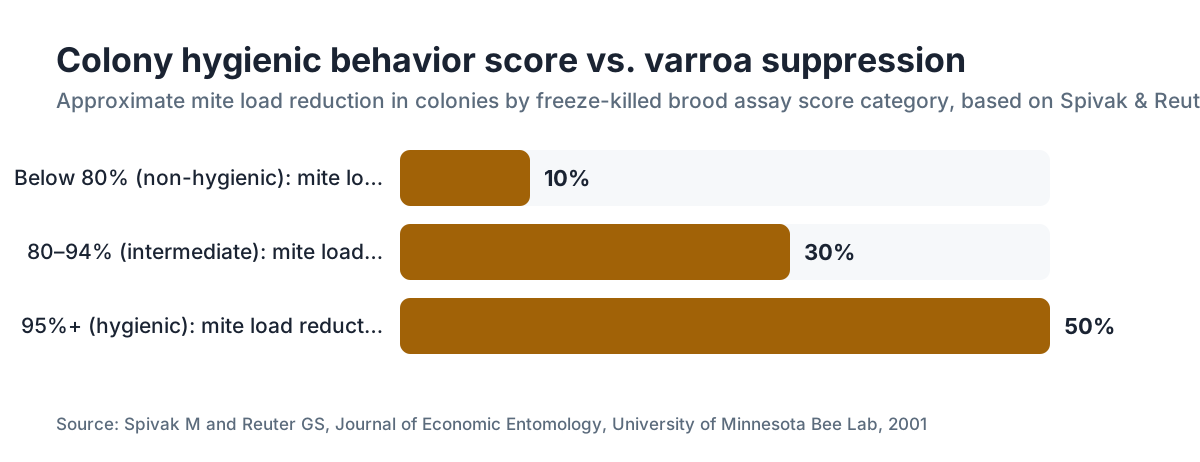
Scoring is simple. Count the total cells in your marked patch. Return at 48 hours. Count how many are fully cleared, meaning uncapped with the contents gone. Divide by total cells, multiply by 100. A score above 95% is the threshold Spivak and colleagues used to define high hygienic colonies [1]. Scores between 80 and 95% are intermediate. Below 80%, the colony probably isn't suppressing mite reproduction through this mechanism.
A few caveats. Test in summer when the colony has a strong adult population, because a weak colony scores low no matter its genetics. Watch the weather too. Run the test when daytime highs clear 60°F so bees are actively working brood. And test more than once if you're making breeding calls. One test carries real variability. Two or three across a season give you confidence.
The Honey Bee Health Coalition has a downloadable guide to the freeze-killed brood assay that walks the whole procedure step by step [2]. That's the easiest place to start if you've never done it.
If you're logging hygienic scores next to alcohol wash mite counts, tools at VarroaVault let you track both streams in one place and see whether your hygienic colonies are actually turning their scores into lower mite loads over the season.
What is suppressed mite reproduction (SMR) and how is it different from hygienic behavior?
Suppressed mite reproduction (SMR) is a related but separate trait. In SMR colonies, foundress mites in capped cells either fail to reproduce or throw a much higher share of infertile offspring, even without workers uncapping and clearing those cells. The mechanism isn't fully pinned down, but it looks like worker-deposited compounds in the capping wax or brood food interfere with mite reproduction directly [5].
The USDA-ARS Baton Rouge lab coined the term and did most of the foundational work. In high-SMR colonies, the share of non-reproducing mites in capped cells ran substantially higher than in non-SMR colonies, regardless of hygienic scores. Some researchers now use Varroa Sensitive Hygiene (VSH) for a specific version of the trait, where workers preferentially target cells holding reproductive mites [5].
VSH and hygienic behavior get swapped in casual beekeeper talk, but they aren't identical. Hygienic behavior removes all dead or abnormal brood without discriminating. VSH is more targeted. Workers appear to sense a reproducing mite specifically and go after those cells first. VSH bees have shown mite suppression in trials even when general hygienic scores weren't especially high.
For breeding decisions, the distinction matters when you're sourcing queens. VSH-selected queens come from programs that measure mite reproductive success inside brood cells, which takes far more lab work than a freeze-killed brood test. You won't measure VSH yourself in the field. You can measure hygienic behavior, and the two traits are genetically correlated enough that selecting for hygienic behavior usually captures some VSH benefit along the way.
How much does hygienic behavior actually reduce mite levels in real colonies?
Beekeepers want one clean number and the data hands back a messy range. That's honestly because field conditions swing so widely.
In controlled trials where colonies started with similar mite loads and got managed identically except for queen stock, hygienic colonies showed mite population growth roughly 30 to 50% lower than non-hygienic colonies over a single season [1]. Some VSH trials in Louisiana showed even stronger effects, with mite levels in VSH colonies staying below economically damaging thresholds for long stretches without treatment, while non-VSH controls blew past those thresholds within weeks [5].
The assay score itself tracks with mite removal. Colonies scoring 95% or above cleared mite-infested brood significantly faster than colonies below 80%, as documented in Spivak and Reuter's 2001 study in the Journal of Economic Entomology [1].
Here's the catch. In apiaries under heavy mite pressure from surrounding colonies, through mite-laden drifter bees and robbing, even the most hygienic colonies fight to keep mites down. Reinfestation can run fast enough to swamp the trait's benefit. That's why most researchers and extension specialists treat hygienic behavior as a resistance mechanism that lowers your treatment burden, not one that removes it. Think of it as raising the floor, not knocking out the ceiling.
The table below pulls together findings from published trials comparing hygienic and non-hygienic colony mite trajectories.
Where do you get hygienic queens, and how do you evaluate a breeder?
Several sources exist, quality varies wildly, and the term 'hygienic queen' isn't regulated anywhere in the US. Any breeder can slap it on without testing a single colony.
The most reliable starting point is queens from programs that publish their testing protocols and scores. The University of Minnesota Bee Lab historically maintained and distributed the Minnesota Hygienic line and put out documentation on testing methods [1]. The USDA-ARS VSH program in Baton Rouge has released VSH genetics into commercial programs, and some queen producers in the southeast US keep those lines going [5]. The Bee Informed Partnership tracks breeder participation in queen quality studies and works as a reasonable secondary reference [6].
When you call a breeder, ask specific questions. What assay do they use to select breeders? What minimum hygienic score do they select on? How many generations have they been at it? How do they manage drone populations? Breeders doing serious work have real answers. A breeder who says 'our bees are naturally hygienic' with no data is telling you nothing.
Expect to pay a premium. Tested hygienic queens from documented programs usually run $35 to $60 or more, against $25 to $35 for commodity queens. That gap reflects real selection costs and is usually worth it if you're committed to breeding-based management.
You can also raise your own hygienic queens once you find a high-scoring colony in your yard. That's the slower path, and it lets you select for local adaptation on top of hygienic behavior. Standard queen-rearing techniques apply. The selection criterion is just the freeze-killed brood score, on its own or alongside traits like production and temperament.
For finding suppliers, start with extension resources instead of random searches. The beekeeping supply companies landscape covers both equipment and queen suppliers, and land-grant extension apiculture programs often keep updated breeder lists.
Can you breed for hygienic behavior yourself with a small operation?
Yes, and plenty of serious hobbyists and sideliners do exactly this. It takes patience and records, not a lab.
The process runs like this. Test all your colonies each season with the freeze-killed brood assay. Find your top-scoring colony. Rear queens from it. Requeen your lowest-scoring colonies with daughters from your best. Repeat that selection pressure across seasons. You're doing simple truncation selection: keep the top performers as parents, cull or requeen the bottom.
The catch is uncontrolled mating. Your selected queen's daughters mate with local drones, which may or may not carry hygienic alleles. In a rural area with few other managed colonies, your own drones dominate and your selective pressure builds faster. In a suburban yard ringed by other beekeepers' colonies, the drone pool is diluted and progress crawls.
Some beekeepers answer this by running a drone-mother colony, a separate hive picked for its drone production and hygienic score, to flood the local area with drones from good stock. It's not perfect, but it tips the odds.
Genomic and marker-assisted selection tools exist at the research level and may reach more beekeepers in coming years. They aren't practical yet for the average small operation. The freeze-killed brood assay stays the workhorse.
Keep written records. One season tells you almost nothing. Three or four seasons of data, tracking hygienic scores and mite wash counts colony by colony, starts to show which queen lines are actually holding up and which are drifting back toward the mean.
How does hygienic behavior compare to other varroa-resistant traits?
Hygienic behavior is one of several traits tied to natural mite resistance. The others that come up most are grooming behavior, recapping behavior, and brood interruption from swarming or supersedure.
Grooming behavior is workers removing mites from their own bodies or each other's (allogrooming). It's documented in Apis cerana, the eastern honey bee that co-evolved with Varroa destructor, and to a smaller degree in Apis mellifera populations. Scoring mite fall onto sticky boards after induced grooming is one way to measure it [7]. Grooming and hygienic behavior look genetically independent, so a colony can be high in one and low in the other, or high in both.
Recapping behavior, where workers reseal cells that got partly opened, was once thought to suppress mite reproduction. Current evidence says recapping shows up more in some populations, but its contribution to mite suppression is modest next to hygienic behavior and SMR [5].
Brood interruption from a swarm or a deliberate brood break pulls the capped brood phase out temporarily, stopping mite reproduction mechanically. It's a management technique, not a genetic trait, and it works with hygienic behavior. A hygienic colony that swarms rebuilds with workers that quickly clean up any capped cells left behind.
Feral and survivor populations earn a mention. Some feral colonies in North America have gone years without treatment and show mixed combinations of these traits, often both hygienic behavior and SMR. Thomas Seeley's lab at Cornell studied survivor colonies near Ithaca, New York and documented several resistance mechanisms running at once in long-surviving feral populations [8]. Their work suggests that under varroa selection without treatment, resistance traits stack up, but the process takes many generations and comes with heavy early losses.
Against bees that evolved with varroa over a long stretch, the biology of africanized honey bees is relevant. Africanized populations show higher hygienic behavior and grooming scores than European honey bees, likely because they carry more Apis mellifera scutellata genetics, a subspecies with longer co-evolutionary exposure to mites.
| Trait | What it does | Heritable? | Field-testable? | Mite impact |
|---|---|---|---|---|
| Hygienic behavior | Removes infested brood | Yes (2 loci) | Yes (freeze-killed assay) | Moderate to strong |
| VSH / SMR | Disrupts mite reproduction in cell | Yes | Requires lab work | Strong |
| Grooming (allo) | Removes mites from adult bees | Yes | Partially (sticky board) | Moderate |
| Recapping | Reseals opened cells | Yes | Hard to measure | Weak to moderate |
| Brood interruption | Removes brood phase | Management-driven | N/A | Temporary, strong |
Does requeening with a hygienic queen fix your mite problem immediately?
No. Expecting it to is one of the most common disappointments beekeepers report.
When you introduce a hygienic queen, she starts laying within a few days of acceptance. Her eggs take 21 days to reach adult workers. For the first month or more after requeening, the colony's adult workforce is still the previous queen's daughters. The colony's hygienic behavior reflects that old crew. You won't see a real change in performance until the new queen's daughters make up most of the adult population, which takes six to eight weeks minimum under normal brood-rearing.
During that turnover window, if your mite load is already high, the colony is in trouble no matter how good the new queen's genetics are. That's why you should never treat requeening as an emergency mite tool. Treat first if mite levels sit above action thresholds, then requeen for long-term resistance. The EPA registers several acaricides for varroa including oxalic acid, amitraz, and fluvalinate-based strips. Use what fits your season and colony state while the new genetics take hold [9].
After the workforce fully turns over, run a freeze-killed brood test to confirm the colony performs as expected. Don't assume a queen from a good breeder scores high in your specific colony. The drones she mated with shape the outcome.
What role do extension services and research programs play in hygienic queen availability?
Land-grant university extension programs are where most of the useful information on selecting and testing for hygienic behavior lives. The University of Minnesota, North Carolina State University, Cornell, UC Davis, and others run apiculture programs that publish testing protocols, breeder lists, and data from their own selection work [1][10].
The Honey Bee Health Coalition, which brings together university researchers, USDA scientists, beekeeping organizations, and industry partners, published its Varroa management guide as a consensus document covering resistance traits including hygienic behavior [2]. That guide is free, updated periodically, and is the single best reference for practitioners who want peer-reviewed recommendations in plain language.
USDA-ARS runs bee breeding programs at the Baton Rouge, Louisiana lab (VSH genetics) and historically at the Beltsville, Maryland lab. These programs don't sell queens straight to hobbyists. They release genetics into commercial queen-breeding operations, which is how VSH traits spread into the commercial supply [5].
State departments of agriculture sometimes fund local breeding programs or queen improvement efforts, though coverage varies a lot by state. Your state apiarist's office is a good first call to find out whether any such program runs in your region.
VarroaVault's free protocol tools help you build a multi-year selection program by giving you a place to log freeze-killed brood scores, mite wash data, and queen parentage colony by colony, so your breeding calls come from records instead of memory.
Is hygienic behavior enough to manage varroa without chemicals?
Probably not for most beekeepers in most places, and anyone who tells you otherwise is selling something.
High-hygienic colonies in low-mite-pressure settings, run by beekeepers who also select for VSH and keep isolated mating, have survived without treatment in research settings. The Seeley survivor bee work near Ithaca showed wild colonies under natural selection can persist without human treatment [8]. But those feral colonies started with heavy losses, the survivors are locally adapted, and the apiary density around them looks nothing like most managed beekeeping.
In a typical apiary with colonies packed at normal densities, with neighboring beekeepers' hives feeding in drifter bees and mites, hygienic behavior alone probably won't hold mite populations below action thresholds through a full season. The Honey Bee Health Coalition recommends pairing genetic resistance traits with monitoring and, when thresholds get exceeded, treatment [2].
The realistic goal is fewer treatments and lower chemical inputs, not zero. A colony with genuinely high hygienic behavior may need treatment once a season instead of two or three times. That's a real benefit for the bees and for your time and money. Across several seasons of selection, your treatment frequency can keep dropping as your local gene pool improves.
That's the honest version of treatment-free beekeeping. It's a direction you travel, not a switch you flip by buying one hygienic queen.
Frequently asked questions
How long does it take to see hygienic behavior improvements after requeening?
Expect six to eight weeks before the new queen's daughters make up most of the adult workforce. That's when the colony's hygienic score starts reflecting the new genetics. During the transition, your mite management still rides on the old workforce. If mite loads are high at requeening, treat first and let the new genetics take hold while the population turns over.
What score on the freeze-killed brood test indicates a truly hygienic colony?
The threshold from Spivak and Reuter's foundational research is 95%: colonies that removed 95% or more of freeze-killed brood within 48 hours were classified as hygienic. Scores between 80 and 95% are intermediate and show some benefit but aren't reliably resistant. Below 80% is effectively non-hygienic for mite management. Test more than once to confirm, since a single test can vary by 10 to 15 percentage points depending on colony population and temperature.
Can I test my own colonies for hygienic behavior without liquid nitrogen?
Yes. The pin test, where you push a fine pin through each capping in a marked patch of 100 or more cells, is open to any beekeeper and needs no cryogens. It lines up reasonably well with liquid nitrogen assay results in most published comparisons, though some researchers find it slightly less consistent. Mark the patch, pin every cell, return in 48 hours, count cleared cells. The scoring is identical to the liquid nitrogen version.
Is Minnesota Hygienic the same as VSH?
No, though they're related. Minnesota Hygienic refers to a specific line selected by Marla Spivak's lab at the University of Minnesota, mainly using freeze-killed brood assay scores. VSH (Varroa Sensitive Hygiene) is a trait identified by the USDA-ARS Baton Rouge lab where workers preferentially target cells holding reproducing mites. Both involve hygienic worker behavior, but VSH is more targeted and was selected using a different assay measuring mite reproductive success directly. Many commercial 'hygienic' lines crossbreed both programs.
Do hygienic bees also remove American foulbrood-infected larvae?
Yes. Hygienic behavior was originally studied for American foulbrood (AFB) resistance, not varroa. Bees that remove freeze-killed brood also tend to clear AFB-infected and chalkbrood-infected larvae more efficiently. The trait isn't pathogen-specific. It responds to any brood throwing off abnormal chemical or mechanical cues. So selecting for hygienic behavior for varroa carries a co-benefit for disease resistance more broadly.
How does drone genetics affect hygienic behavior scores in a colony?
A lot. Because hygienic behavior needs two separate genetic loci both present in a worker, and because workers are daughters of the queen crossed with 10 to 20 or more drones, the share of workers carrying both loci depends on the drone population. A hygienic queen mated in an area full of non-hygienic drones can produce a colony with lower scores than expected. Isolated mating or running a drone-mother colony from high-scoring stock improves consistency.
What is the difference between grooming behavior and hygienic behavior in bees?
Hygienic behavior targets capped brood: workers detect and remove dead or mite-infested pupae from sealed cells. Grooming behavior targets adult bees: workers remove mites from their own bodies (autogrooming) or each other's (allogrooming). The two traits look genetically independent and can sit at different levels in the same colony. Both cut mite loads through different mechanisms, and both are heritable.
Are Africanized bees more hygienic than European honey bees?
Generally yes. Africanized bees, carrying significant genetics from Apis mellifera scutellata, show higher hygienic behavior and grooming scores on average than European honey bees in most comparative studies. Apis mellifera scutellata originated in sub-Saharan Africa with longer exposure to varroa-related selection than European subspecies. This partly explains why Africanized colonies in South and Central America tend to survive varroa with less chemical intervention, though other life history traits also contribute.
How often should I replace queens to maintain hygienic behavior in my apiary?
Annual or biennial requeening with tested stock is the common recommendation among beekeepers focused on resistance traits. Queen genetics don't degrade over her lifetime, but older queens fail, and colonies that supersede naturally introduce uncontrolled genetics. Annual replacement from documented high-scoring stock keeps your genetics intentional. If you run your own selection program, replace the lowest-scoring colonies first and rear from your highest-scoring colonies each season.
Can hygienic behavior be detected with a DNA test?
Genomic tools for spotting hygienic behavior alleles exist at the research level. The two-locus model gives some targets, and marker-assisted selection has been explored in several breeding programs. Still, no commercially available, practical DNA test for hobbyists or sideliners exists yet. The freeze-killed brood assay stays the standard field test because it measures actual behavior, which is what matters, rather than genotype alone. Genomic tools may turn practical within the next decade.
Does brood interruption (like a split or swarm) affect hygienic behavior scores?
Brood interruption is a management technique that cuts mite reproduction by removing the capped brood phase. It doesn't change a colony's genetic hygienic score, but it works with it. Once new brood gets capped after a brood break, a hygienic colony polices it effectively. Combining a brood break with requeening from high-scoring stock is a strong approach: the break knocks mite levels down, the new queen raises the behavioral floor going forward.
Is there any regulation or certification of 'hygienic queen' claims by breeders?
No federal or state regulation in the US governs the term 'hygienic queen.' Any breeder can use it without published testing data. Your best protection is asking specific questions about testing protocol, minimum selection scores, and how many generations they've been selecting. Programs tied to university extension services or the USDA-ARS are more likely to have verifiable, documented selection histories.
How does colony size affect hygienic behavior scores on the freeze-killed brood test?
Colony population matters. A weak colony with fewer adult bees available to inspect and process brood scores lower on any hygienic test, regardless of genetics. Always test in summer when the colony sits at or near peak population. If you're comparing colonies, test on the same day under the same conditions. Colonies that recently split or swarmed give misleading low scores until their population recovers.
Sources
- Honey Bee Health Coalition, Varroa Management Guide: Hygienic behavior recognized as a natural mechanism for mite suppression; coalition recommends combining genetic resistance with monitoring and treatment when thresholds are exceeded
- Lapidge KL et al., Genetics, 2002, two-locus model of hygienic behavior: Hygienic behavior in honey bees is controlled by two separate genetic loci, one for uncapping and one for removal
- Harbo JR and Harris JW, Journal of Apicultural Research, USDA-ARS, 1999: Pin test and liquid nitrogen assay results correlate reasonably well for scoring hygienic behavior in field colonies
- USDA-ARS Honey Bee Breeding, Genetics, and Physiology Lab, Baton Rouge, VSH research summary: VSH (Varroa Sensitive Hygiene) colonies show substantially higher proportions of non-reproducing mites in capped cells; VSH trait has been released into commercial queen-breeding programs
- Bee Informed Partnership, queen quality studies: Bee Informed Partnership has tracked breeder participation in queen quality studies and publishes data on colony performance
- Ruttner F and Hager H, Apidologie, 1981, grooming behavior in Apis mellifera: Grooming behavior for mite removal is heritable in Apis mellifera and can be scored using sticky boards after induced grooming events
- Seeley TD et al., PLOS ONE, Cornell University, 2015, survivor bees in Ithaca NY: Feral survivor colonies in Ithaca, NY showed multiple mite-resistance mechanisms operating simultaneously including hygienic behavior and SMR after surviving without treatment
- US EPA, Pesticide registrations for varroa treatments in honey bees: EPA registers oxalic acid, amitraz, and fluvalinate-based acaricides for varroa control in honey bee colonies
- NC State University Apiculture Extension, bee breeding and varroa resources: NC State extension publishes hygienic behavior testing protocols and maintains breeder resources for the southeast US
Last updated 2026-07-09