Where to buy VSH queens for varroa resistance
TL;DR
- VSH (Varroa Sensitive Hygiene) queens come from a small network of certified breeders, most of them in the southeastern U.S.
- Prices run $35 to $80 or more depending on certification level and season.
- Buying from a USDA ARS program breeder or a documented VSH source beats trusting a catalog word.
- That's the surest path to real suppression genetics.
What is a VSH queen and why does the source matter?
A VSH queen heads a colony whose workers find and rip out mite-infested capped brood before those mites can breed. VSH stands for Varroa Sensitive Hygiene. It's a specific behavior, not the same as general hygienic behavior, and definitely not the same as a catalog stamping 'mite-resistant' on a package. The label gets abused, so the source is the whole ballgame.
The trait was identified and bred at the USDA Agricultural Research Service (ARS) Honey Bee Breeding, Genetics, and Physiology Laboratory in Baton Rouge, Louisiana [1]. In near-pure VSH colonies, mite populations can stay suppressed with little or no chemical help. ARS trials found that colonies headed by VSH queens held varroa below the economic threshold without acaricide treatment under controlled conditions [1].
Here's the catch. Any breeder can type 'VSH' into a product listing. Without third-party verification or a breeding program tied to the ARS line, you're buying on faith. Nail down the certification chain before you hand over money. Everything else in this article follows from that one point.
How does USDA VSH queen certification work?
The USDA ARS built an evaluation protocol to confirm that queens sold as VSH carry the trait at a high enough frequency to actually suppress mites. Testers sample capped brood, count the mites inside cells, and calculate the 'non-reproducing mite percentage.' A colony qualifies as VSH when 95% or more of the mites in capped cells fail to reproduce [1].
Breeders who want to use the certified designation submit colonies for this evaluation. The ARS has historically shared stock with cooperating queen producers, and some of those producers sell daughter queens to the public. Queens one generation removed from certified stock get called 'VSH-derived' or 'VSH-influence.' That's honest language. It also means the trait can be diluted depending on the drones the queen mates with locally.
That dilution is the core practical tension. Even a genuinely certified VSH queen mates with local drones in an open-mating setup, and those drones usually carry no VSH genetics. Her workers end up with mixed genes, so the behavior shows up only partway. Instrumental insemination from VSH drone stock preserves the trait most reliably, but almost no hobbyist is set up for it. For the rest of us, buying from breeders who run isolated mating yards or controlled mating is the next best thing.
Which breeders actually sell certified VSH queens?
The short honest answer: the list is small, the stock sells out fast, and you should order early in the year.
A few well-established sources have historically sold VSH or VSH-derived queens to the public:
Glenn Apiaries (Fallbrook, CA) has sold VSH-line queens for years and publishes detailed genetics information. They ship to most U.S. states.
Taber's Honey Bee Genetics (Vacaville, CA) has offered VSH stock and posts background on its breeding program.
C.F. Koehnen & Sons (Glenn, CA) is one of the larger commercial queen producers in the country and has offered VSH-influenced stock.
Louisiana producers connected to the ARS Baton Rouge lab have sold VSH queens, and the ARS itself sometimes provides queens to researchers and cooperating beekeepers. Contact the lab directly if you want the most current list of cooperating producers [1].
Honey Bee Genetics (Vacaville, CA) has offered VSH and hygienic stock.
None of those are endorsements, and availability shifts season to season. Some producers have dropped VSH queens from their retail lineup; others have added them. The only reliable way to get a current list is to contact the USDA ARS Baton Rouge lab or check with your state apiarist, who often tracks regional breeders selling tested stock [2].
For a broader starting point, the Honey Bee Health Coalition's 'Tools for Varroa Management' guide points to resources for finding locally adapted stock, even though it doesn't run a VSH breeder directory [3].
How much do VSH queens cost, and what affects the price?
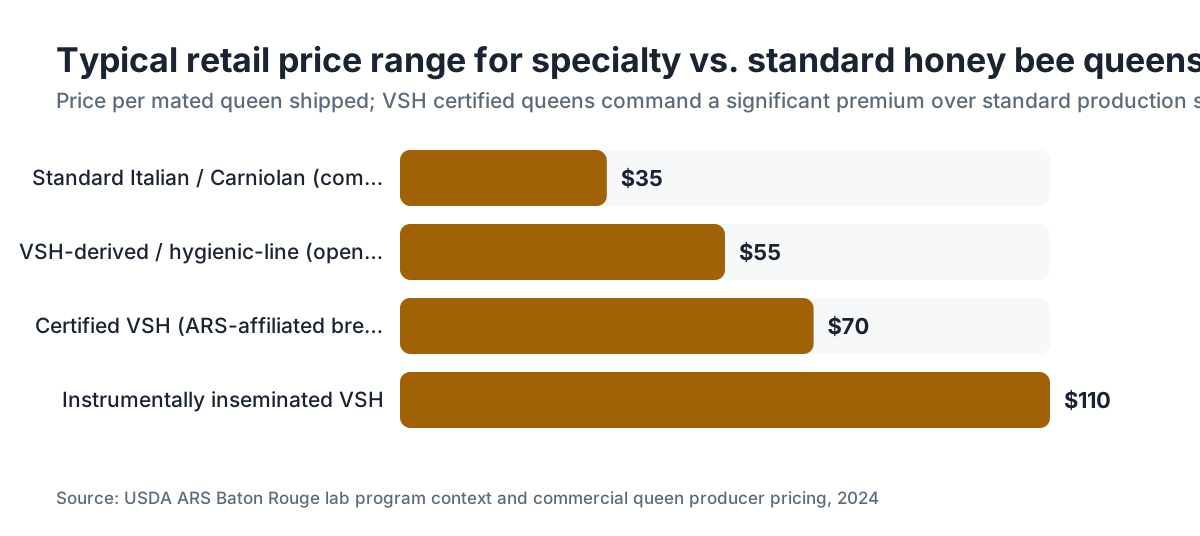
Plan on $35 to $80 for a single mated VSH or VSH-derived queen, with the top of that range covering certified stock or instrumentally inseminated queens. A handful of specialty breeders charge $100 or more for queens out of tightly controlled mating programs.
A standard Italian or Carniolan queen from a large commercial producer typically runs $25 to $45. So you're paying a real premium for VSH genetics, and you should be.
Several things push the price up. Certified VSH stock is scarcer than general production queens. Isolated mating yards, colony evaluations, and detailed breeding records cost the producer time and money. Shipping a live queen safely adds more, and most producers charge $10 to $20 for expedited shipping. That's not optional when you're mailing a live insect.
Bulk pricing sometimes exists for sideliners buying 5 or 10 at a time. If you're in a local club, pooling an order with other members is one of the most practical ways to drop the per-queen cost and split shipping. Ask whether your state beekeeping association runs a group-buy program. Several do.
For shopping logistics and suppliers who carry equipment alongside queens, the beekeeping supply companies page has a broader roundup worth checking.
What is the difference between VSH, hygienic, and 'mite-resistant' queens?
This is where beekeepers get confused, and it's a real source of disappointment after the money is spent.
VSH (Varroa Sensitive Hygiene) is a specific, measurable trait aimed at removing mite-reproducing capped brood. The USDA ARS selected and defined it, and it has a testable threshold: 95% or more non-reproducing mites [1].
Hygienic behavior is the broader trait where bees detect and remove diseased or dead brood. All VSH bees are hygienic, but not all hygienic bees are VSH. Hygienic behavior helps with American foulbrood and chalkbrood too. Marla Spivak's lab at the University of Minnesota documented that highly hygienic colonies removed freeze-killed brood within 48 hours and carried lower disease loads than unselected stock [4]. The Minnesota Hygienic line is a well-documented source of this broader trait.
'Mite-resistant' or 'mite-tolerant' is marketing language with no standard meaning. Any breeder can use it. It might mean a colony survived a winter with moderate mite loads. It might mean nothing measurable. Ask the producer what testing they actually do, what their non-reproducing mite percentage is, and whether an independent lab or state apiarist has evaluated their colonies.
In open-mated conditions, VSH queens often behave more like 'hygienic with some VSH influence' than pure VSH. That's still a real benefit. The trait cuts mite reproductive success enough to slow population growth, buying you more time between treatments. That's not nothing. It just doesn't replace monitoring.
Does buying a VSH queen mean you can stop treating for varroa?
No, and be suspicious of anyone who tells you otherwise.
In closed research setups with instrumental insemination and isolated drone populations, VSH colonies have held low mite levels without chemical treatment [1]. That is not what happens in most hobbyist yards. Your VSH queen mates with local drones. Her workers carry mixed genetics. The trait gets diluted. Mite loads can still climb, especially in late summer when the mite-to-bee ratio tips.
The Honey Bee Health Coalition is blunt about this in its Varroa management guide: monitoring is always step one, no matter the queen genetics [3]. The guidance is to use an alcohol wash or sugar roll to measure mites per 100 bees and treat when counts reach 2 mites per 100 bees in spring or 2 to 3 per 100 bees heading into winter. VSH genetics may help you stay under that line longer. They don't guarantee it.
Think of a VSH queen as a slower fuse, not a firebreak. Monitor every colony every 4 to 6 weeks during the active season. Keep a treatment plan ready. The varroa mite overview walks through the biology behind why mite populations explode even in well-run colonies, which explains why no single tool, genetics included, does the job alone.
If you want to track monitoring data and treatment thresholds across your whole operation, VarroaVault's free protocol tools are one practical way to stay organized.
When should you order VSH queens, and how far in advance?
Order early. That's the single most important logistical point in this whole article.
Most VSH producers are small operations running 1 to 3 mating yards. They rear queens in a narrow spring and summer window, and their best stock sells out, sometimes weeks before the season even opens. Glenn Apiaries has historically opened order books in January or February for spring delivery. Wait until May because a colony suddenly went queenless, and you probably won't find certified VSH queens available.
The realistic timeline: place your order January through early March for May or June delivery. Need a queen urgently for a queenless hive in July? You'll pick from whatever's left, which may not be certified VSH stock at all.
Some beekeepers keep a spare VSH queen in a nucleus colony (nuc) so a replacement is always on hand. A mated queen in a 4-frame nuc holds for 4 to 6 weeks fine if there's enough food and young bees. Worth considering if you run more than 5 colonies.
Shipping windows matter too. Most producers ship Monday through Wednesday so queens don't sit in a postal facility over a weekend. If your spring runs cold, coordinate timing with the producer so the queen doesn't land in a cold snap.
Are there regional VSH breeders or programs outside the southeastern U.S.?
The ARS work started in Louisiana, and most historically certified producers have sat in California, the Gulf Coast, and the Southeast, where queen-rearing season runs longest. Regionally adapted stock is a real consideration, though, and several programs are working on VSH-influence bees that hold up in northern climates.
The USDA ARS Baton Rouge lab has worked with breeders in multiple states through its stock improvement program [1]. Some state beekeeping associations, including ones in Minnesota, Ohio, and the Pacific Northwest, run queen-rearing programs that emphasize hygienic and mite-tolerant traits, even if they don't market the stock as certified VSH.
The Bee Informed Partnership, a multi-university collaboration, has done work on colony health and genetics that sometimes surfaces information on regional breeders [5]. Its website and annual colony loss reports are worth bookmarking.
If you're in the Midwest or Northeast, buying VSH-derived queens from a California or Louisiana producer is still reasonable. The genetics are what you're paying for. The queen's colony adapts to your local forage and climate as the worker population turns over. Local drone influence is the real wildcard, and there's not much you can do about that without a controlled mating program.
Your state apiarist's office is genuinely one of the best under-used resources here. Many state agriculture departments track or certify queen breeders and know who in your region is doing serious work [2].
How do you verify that a VSH queen is actually VSH after she arrives?
You can't tell by looking at the queen. The trait lives in her workers' behavior, and it takes a few weeks after she starts laying before you can watch it play out.
The research method is a brood sampling protocol: pull capped brood frames at a set age, uncap cells, and check the mites inside to figure out what percentage are non-reproducing (no eggs, no nymphs). A colony with strong VSH expression runs 80 to 95% or more non-reproducing mites [1]. It's slow work and takes practice to do accurately. Most hobbyists won't bother, and that's fine.
Practical proxies that suggest VSH is working: mite loads by alcohol wash stay consistently low (under 1 to 2 per 100 bees) across a full season without treatment, or your counts climb unusually slowly next to colonies headed by unselected queens. That's indirect evidence, not proof, but it's realistic at small scale.
A freeze-killed brood test (the 'pin test' or liquid nitrogen test) measures general hygienic behavior, not VSH specifically. The Minnesota Hygienic protocol inserts a section of freeze-killed capped brood and checks whether bees clear it within 24 to 48 hours [4]. Colonies that pass reliably are hygienically active, which is a useful proxy.
Alcohol wash stays the most reliable practical tool for tracking whether your mite load is actually dropping over time. The Honey Bee Health Coalition's 'Tools for Varroa Management' guide has a step-by-step alcohol wash protocol and current treatment thresholds [3].
What are the honest limitations of VSH queens for hobbyist beekeepers?
VSH queens are not a magic fix. They're one tool among several, with real constraints sellers don't always mention.
Open mating dilutes the trait. Unless you run a controlled mating program, your VSH queen mates with local drones. Where feral or unmanaged colonies are common, that drone pool holds essentially no VSH genetics, and your colony lands somewhere on a spectrum of partial expression.
VSH queens cost more and are harder to find than standard production queens. Lose one to a laying-worker mess, an absconding swarm, or a failed introduction, and replacing her with equivalent genetics on short notice is genuinely hard.
Introduction can fail. VSH queens aren't immune to rejection. Standard protocol applies: cage the queen for 3 to 5 days, confirm the colony is truly queenless, and check for acceptance before you call it a win.
The colony still needs managing. Frame inspections, swarm control, adequate space, and varroa monitoring don't stop because a VSH queen is in the box. Beekeepers who bet on genetics alone tend to find out in October, when the colony is collapsing under a mite load that built up unnoticed.
All that said: VSH genetics are one of the most promising tools for sustainable, long-term varroa management. They earn the price and the logistics, especially paired with a disciplined monitoring schedule. VarroaVault's free varroa protocol tools help you build that schedule so the genetics you paid for actually get a shot.
How does VSH queen quality compare to other mite-resistant genetics programs?
Several genetics programs are worth knowing, and they differ in what they select for and how hard they test.
USDA ARS VSH line is the most thoroughly documented, with published peer-reviewed research behind the trait and a formal evaluation protocol [1].
Minnesota Hygienic (from Marla Spivak's lab at the University of Minnesota) selects for general hygienic behavior. Well-studied, widely available, and shown to cut disease and mite loads versus unselected stock [4].
Russian Honey Bees from the USDA ARS Russian Honey Bee Breeding Program in Baton Rouge show natural mite tolerance developed through coevolution with varroa in the Primorsky region of Russia [11]. The USDA maintained the program, and a registered association of Russian bee breeders exists for buyers.
Gotland Island bees from Sweden and various European programs show mite-resistant traits selected through natural colony survival, though U.S. commercial availability is thin.
Local survivor stock programs run by regional clubs select bees that made it with low or no chemical inputs. Rigor and results vary a lot.
For most U.S. hobbyists, the practical choice is VSH-line queens from a certified or documented program, Minnesota Hygienic queens, or Russian bee stock. All three have real evidence behind them. VSH queens tend to show the strongest specific mite-suppression effect in controlled trials. Minnesota Hygienic queens are often easier to find locally and tend toward a calmer temperament that suits new beekeepers.
None of these are the africanized honey bee, which shows extreme mite tolerance partly from shorter brood cycles and aggressive grooming but brings management problems that rule it out for most hobbyists.
Frequently asked questions
Can I buy VSH queens online and ship them to any state?
Most states allow mailed queen bees, but a handful have restrictions or require a health certificate. California, Hawaii, and a few others have specific rules. Check with your state department of agriculture before ordering from out of state. The producer should know the shipping regulations for your state and can usually tell you upfront if they can ship to you. Expect 2 to 3 day shipping via USPS Priority or FedEx.
How long does a VSH queen live, and how often should I requeen?
A mated VSH queen lives 2 to 5 years, same as any honey bee queen. Most commercial beekeepers and many sideliners requeen every 1 to 2 years to keep egg-laying strong and genetics predictable. Hobbyists sometimes run queens longer if the colony stays healthy and productive. There's no hard rule, but a queen past 2 years old is statistically more likely to fail or start laying poorly.
What is the success rate for introducing a VSH queen to an existing colony?
Queen introduction across all types runs roughly 80 to 95% when done correctly, based on beekeeping literature, though nobody has clean controlled data specific to VSH queens. A 3 to 5 day candy-plug cage introduction, confirming the colony is queenless, and checking for acceptance before removing the cage all improve odds. Combining a failing colony onto the new queen with a newspaper divide is another option if the colony is weak.
Will a VSH queen work in a small hobbyist apiary with only 2 or 3 hives?
Yes, absolutely. VSH genetics operate at the colony level regardless of apiary size. Trait expression may be diluted by open mating with local drones, just as in any apiary. For a 2 or 3 hive operation, a VSH queen is worth the investment because losing even one colony to varroa collapse hurts at that scale. Keep monitoring with alcohol wash no matter the queen genetics.
Is there a difference between VSH queens and Varroa-resistant queens sold at local farm stores?
Almost certainly yes. Farm store queens are usually commercially produced Italian or Carniolan stock with no documented VSH genetics or testing. 'Varroa-resistant' on a farm store package is a marketing claim, not a certified trait. If you want genuine VSH genetics, buy from a producer who documents their breeding program and can point to ARS-affiliated stock or independent testing.
How many VSH queens should I order if I want to convert my whole apiary?
One VSH queen per hive you want to convert. Running 5 colonies? Order 5 queens, maybe 6 for a backup. You don't requeen everything at once in practice; staggering over a season or two is common. Order in late winter for spring delivery, and confirm availability with the producer before counting on a specific number.
Can I raise VSH queens from a purchased VSH queen using standard queen-rearing methods?
Yes, with an important caveat. If you graft from a VSH queen, her daughter queens still mate with local drones in an open-mating setup, and trait expression in the resulting colonies gets diluted. To propagate VSH genetics reliably, you need either a controlled mating yard stocked with VSH drones or instrumental insemination. For most hobbyists, buying fresh certified queens is more practical than home rearing.
What mite count should I expect in a colony with a good VSH queen?
In well-expressed VSH colonies, counts often stay below 1 per 100 bees through most of the active season without chemical treatment, per USDA ARS research. In open-mated field conditions with partial expression, expect counts lower than unselected colonies but still variable. Monitor every 4 to 6 weeks. Treat if counts exceed 2 mites per 100 bees in spring or going into winter, per Honey Bee Health Coalition thresholds.
Are Russian honey bees a better choice than VSH queens for varroa suppression?
They're different, not simply better or worse. Russian bees developed varroa tolerance through natural selection over decades and show multiple mechanisms, including mite grooming and reduced mite reproductive success. VSH was selected more recently through directed breeding for one measurable trait. Russian bees sometimes bring management challenges like defensive behavior and a tendency to swarm. Both are legitimate; choose based on your management style and local availability.
Do state apiarists maintain lists of VSH queen breeders?
Many do, or can point you toward breeders who took part in state or federal breeding programs. Your state department of agriculture usually has a state apiarist or apiculture contact. This is one of the most underused resources for finding vetted breeders. Some states also run their own queen-testing or certification programs alongside the federal VSH work.
How does VSH queen genetics interact with Oxalic acid or other varroa treatments?
There's no known negative interaction between VSH genetics and any approved varroa treatment, including Oxalic acid, Apivar (amitraz), or Apiguard (thymol). The genetics and the chemicals work through completely different mechanisms. In a colony with partial VSH expression that still needs treatment, an Oxalic acid dribble or vaporization during a broodless period stays effective. VSH genetics change how often you treat, not whether treatments work.
Is there a way to test my current queens for VSH traits before buying new ones?
The brood sampling method (counting non-reproducing mites in capped cells) is the standard test, but it's labor-intensive and needs handling mites under magnification. A freeze-killed brood test gives a proxy for general hygienic behavior, not VSH specifically. For most hobbyists, an ongoing alcohol wash monitoring program is the practical answer: if counts stay consistently low without treatment, your colony may have some VSH expression. If counts climb, you have your answer.
Sources
- USDA Agricultural Research Service (ARS), Honey Bee Breeding, Genetics, and Physiology Research, Baton Rouge, LA: VSH trait defined as 95%+ non-reproducing mites in capped cells; colonies maintained low mite levels without acaricide in controlled trials; Russian bee program also based here
- Honey Bee Health Coalition, Tools for Varroa Management Guide: Monitoring is always step one regardless of queen genetics; alcohol wash threshold of 2 mites per 100 bees recommended for treatment
- University of Minnesota Bee Lab (Marla Spivak), Hygienic Behavior and the Minnesota Hygienic Line: Highly hygienic colonies remove freeze-killed brood within 48 hours and show reduced disease and mite loads compared to unselected stock
- Bee Informed Partnership, Colony Loss Reports: Multi-university collaboration tracking colony health; annual loss data and breeder resources available
- Spivak M, Reuter GS. Resistance to American foulbrood disease by honey bee colonies, Apis mellifera, bred for hygienic behavior. Apidologie, 2001: Documented that hygienic bee lines showed significantly lower American foulbrood infection rates compared to unselected lines
- Delaplane KS, Hood WM. Effects of delayed acaricide treatment in honey bee colonies parasitized by Varroa jacobsoni. Journal of Apicultural Research, 1999: Colonies exceeding treatment thresholds without intervention showed rapid exponential mite population growth and colony losses
- U.S. EPA, Pollinator Protection (registered varroa miticides): Approved varroa miticides including Oxalic acid, amitraz (Apivar), and thymol (Apiguard) carry no restrictions on use in colonies with VSH or hygienic queen genetics
- North Carolina State University Extension: VSH and hygienic queen genetics reduce rate of mite population increase but do not eliminate need for monitoring in open-mated apiary conditions
- Mississippi State University Extension: Queen introduction success rates and best practices for candy-plug cage introduction in managed colonies
- Rinderer TE et al., Resistance to the parasitic mite Varroa destructor in honey bees from far-eastern Russia. Apidologie, 2001: Russian honey bees developed multiple varroa tolerance mechanisms through coevolution in Primorsky region; USDA ARS developed the U.S. Russian bee breeding program
Last updated 2026-07-09