Oxalic acid resistance in varroa: is it actually possible?
TL;DR
- No laboratory or field study has confirmed oxalic acid-resistant varroa mites as of 2025.
- Oxalic acid works through direct cell damage rather than a metabolic pathway, which makes resistance harder to evolve than with synthetic acaricides.
- But resistance is theoretically possible, and sloppy application could speed it along.
- Rotate treatments, time applications to broodlessness, and track your mite loads.
What do we actually know about oxalic acid resistance in varroa so far?
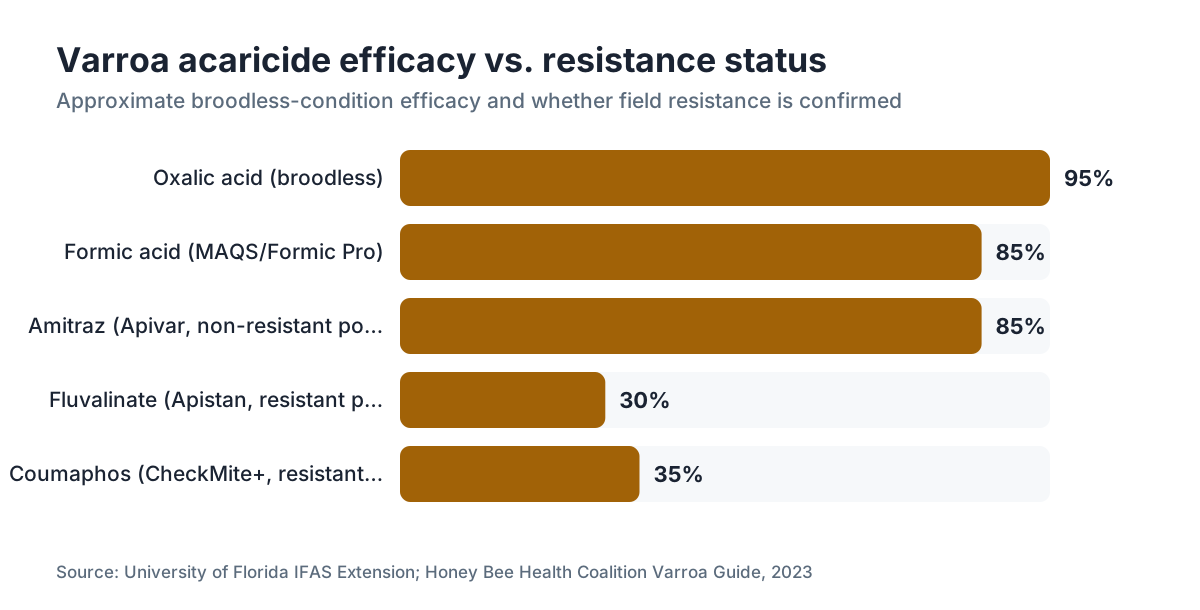
The short answer: no confirmed resistance exists anywhere in the world right now. As of 2025, no peer-reviewed study documents oxalic acid-resistant Varroa destructor populations in managed colonies. That's the fact, and it's genuinely reassuring next to what happened with fluvalinate and coumaphos, where resistance spread widely within a decade of heavy use.[1]
But "no confirmed resistance" is not the same as "resistance is impossible." Researchers have been clear on that distinction. The Honey Bee Health Coalition's Varroa management guide notes that while oxalic acid has a strong safety profile relative to synthetic treatments, beekeepers should still rotate actives and monitor rigorously, precisely because complacency is how resistance gets a foothold in any population.[2]
Field experience says the same thing. Colonies treated correctly with oxalic acid still show high efficacy. A University of Florida extension review put broodless oxalic acid dribble or vaporization efficacy at 90 to 99 percent under proper conditions.[3] That's not the number you'd see if resistance were quietly spreading. So the baseline is good. The real questions are how long it stays that way, and what would have to change biologically for it to slip.
How does oxalic acid kill varroa mites, and why does that matter for resistance?
Oxalic acid is an organic acid. When a mite contacts it directly, the acid disrupts the pH of the mite's hemolymph (its body fluid) and damages soft tissue. It's not a neurotoxin, and it doesn't block a specific enzyme the way neonicotinoids or pyrethroids do.[4]
That mechanism matters enormously for resistance risk. Most resistance evolves like this: a pesticide hits one specific protein or enzyme, random mutations in that target gene occasionally reduce binding, mites carrying that mutation survive better, and over generations the resistant genotype spreads. Oxalic acid's broad physical acid damage makes that route much harder. A mite would have to fundamentally change its cuticle chemistry or pH buffering capacity, more than tweak one receptor.
Still, "harder" is not "impossible." Insects and arachnids have evolved resistance to almost everything humans have thrown at them when selection pressure runs high enough. A paper in Pest Management Science noted that while no oxalic acid resistance has emerged, the theoretical mechanisms (cuticle thickening, enhanced acid neutralization) exist in other arthropod systems.[5] We just haven't seen them in varroa yet.
The practical takeaway: oxalic acid's mode of action gives it a real resistance buffer compared to synthetic acaricides. It's not a permanent get-out-of-jail-free card.
Why did resistance develop so fast with synthetic treatments like Apistan and Apivar?
Fluvalinate (sold as Apistan) was registered for varroa control in the US in 1987. Resistance turned up in European field populations by the mid-1990s, roughly a decade later.[6] Coumaphos (CheckMite+) ran into the same problem. That's a sobering timeline.
Both compounds work through specific target-site mechanisms. Fluvalinate disrupts sodium channels in nerve cells. Coumaphos inhibits acetylcholinesterase. A single point mutation in those targets can hand a mite high-level resistance. Varroa has a short generation time, huge population sizes inside a hive, and beekeepers often treated repeatedly with the same product year after year, sometimes leaving strips in longer than the label allowed. That applied continuous low-level selection pressure. A near-perfect recipe for resistance.
Oxalic acid doesn't fit that profile. The mode of action is physical, not a single biochemical target. Application is episodic, not chronic. And the EPA-registered products (Api-Bioxal is the main one) have specific use protocols that cap total annual treatments.[7] Those guardrails help. They only work if beekeepers actually follow them.
Could varroa evolve resistance to oxalic acid under real-world conditions?
Theoretically, yes. Here's what would have to happen.
Variation in susceptibility would need to exist in the current varroa population. Some evidence points to mild natural variation in how sensitive individual mites are to oxalic acid, though the studies are small and inconsistently designed. If that variation carries even a small heritable component, repeated strong selection could shift allele frequencies over generations.
Generation time for varroa inside a capped cell runs about 9 to 11 days. A colony under active mite pressure can churn out multiple mite generations per summer. In theory, a colony could see 15 to 20 varroa generations in a single warm season. Fast enough for selection to work.
The scenario that worries researchers most isn't a beekeeper using oxalic acid once or twice a year correctly. It's a beekeeper (or many beekeepers across a region) vaporizing repeatedly, treating during brood-present conditions where efficacy is already low and surviving mites may carry a subtle physiological advantage, and doing that for years across many colonies with mite drift and bee exchange between apiaries. That concentrated, repeated, sublethal exposure is what has produced resistance in other systems.
Nobody has good regional data on how broadly oxalic acid vaporization is being used in the US, or how often protocols get followed. That's a real gap.
What does the current research say about varroa populations and oxalic acid efficacy?
The most relevant baseline is the 90 to 99 percent efficacy figure for broodless treatments, which has held up fairly consistently across multiple studies in Europe and North America.[3] If resistance were actively spreading, you'd expect that number to trend down in populations with a long oxalic acid history. Nobody has documented that yet.
A German study published in Apidologie tracked oxalic acid efficacy across colonies treated multiple times over three years and found no statistically significant drop in efficacy.[8] Three years, not thirty. Not definitive, but a real data point.
The Honey Bee Health Coalition notes in its guide that oxalic acid stays effective in properly managed, broodless colonies and recommends it as a first-line treatment, especially when colonies are broodless in winter or during a managed brood break.[2]
Where efficacy complaints show up, the usual culprits are brood presence (oxalic acid doesn't penetrate capped cells well), undertreating the dose, treating in cold weather below about 50 degrees Fahrenheit when mites aren't actively moving on bees, or failing to get full colony contact during vaporization. Those are technique failures, not resistance. Worth being precise about that distinction.
How does the brood-present limitation affect resistance risk?
Oxalic acid's biggest practical limit is that it doesn't reach mites inside capped brood cells. During a full brood cycle, roughly 70 to 80 percent of the varroa population sits in capped cells at any given moment.[9] Treat with oxalic acid when brood is present and you kill only the phoretic mites riding adult bees. The majority of the population walks away untouched.
From a resistance standpoint, a large fraction of the mite population never sees the treatment. That cuts two ways. It reduces selection pressure, because most mites aren't being challenged. But it also means treatments are less effective, which pushes beekeepers to treat more often to compensate, which raises exposure in the phoretic fraction.
The EPA label for Api-Bioxal allows multiple oxalic acid vaporizations in a season when brood is present.[7] Used correctly, that's a legitimate extended-treatment protocol. Used without mite monitoring, it's a way to hit a subset of the population repeatedly under exactly the conditions that could, over time, enrich for more-tolerant phoretic mites.
This is not a current crisis. It is a reason to track mite loads before and after treatment instead of vaporizing on a calendar.
How do you know if your oxalic acid treatment actually worked?
Do an alcohol wash before treatment and again 72 hours to two weeks after. An alcohol wash gives you an accurate mite count per 100 bees. If you treat a broodless colony and your post-treatment count doesn't fall below 1 or 2 mites per 100 bees, something went wrong.[9]
The action threshold in the Honey Bee Health Coalition guide sits around 2 to 3 mites per 100 bees during brood-rearing season, and ideally under 1 per 100 heading into winter.[2] Those thresholds come from correlation data with colony survival, not arbitrary picks.
Suppose a treatment that should hit 90 to 99 percent efficacy leaves you with 10 mites per 100 bees instead of under 1. The likely explanations: more brood was present than you thought, application was technically flawed, colony size or ventilation threw off vapor distribution, or your pre-treatment load was so high that even a 90 percent knockdown left plenty behind. Resistance sits far down that list right now. Monitoring builds the data that lets you tell these possibilities apart.
For tracking multiple hives, VarroaVault's free mite tracking tools let you log treatment dates and mite counts in one place so you can spot trends across seasons instead of reacting hive by hive.
Should you rotate away from oxalic acid to prevent resistance?
This is where opinions genuinely differ, and I'll tell you mine.
The standard integrated pest management (IPM) principle is to rotate actives with different modes of action. For varroa, that means cycling among oxalic acid, amitraz (Apivar), and formic acid (Mite Away Quick Strips or Formic Pro). Each has a different mechanism, so mites with reduced sensitivity to one should still be susceptible to the others.[2]
The case for rotation isn't that oxalic acid is failing now. It's that if you only ever use one product, you're betting everything on that product staying effective forever. Given what happened with Apistan in the 1990s, that bet is worth hedging.
My actual practice: oxalic acid in winter when broodless, amitraz-based strips as a primary summer treatment when brood is present and the mite load demands it, and mite washes before and after every treatment. That rotation keeps pressure on different pathways and gives each product a rest.
Some beekeepers have gone to oxalic acid exclusively because they're committed to avoiding synthetics. I respect that. But if that's you, at minimum use the vaporization protocol during a managed brood break rather than treating into capped brood, and monitor aggressively. The varroa mite page here has more on the full mite lifecycle behind these decisions.
What are the EPA-registered oxalic acid products and what do their labels say about use limits?
In the United States, the primary registered oxalic acid product for varroa control is Api-Bioxal, manufactured by Véto-pharma and registered by the EPA.[7] The label specifies:
- For dribble application in broodless colonies: one treatment per year.
- For vaporization (sublimation): up to three times per treatment event, with treatments spaced according to the brood cycle if applied when brood is present.
The label also sets a minimum temperature (above 50 degrees Fahrenheit for dribble, with separate guidance for vaporization) and protective equipment requirements, including a respirator. Oxalic acid vapor damages lungs and eyes. Beekeeper safety here is no footnote.
Using oxalic acid above label rates or more often than allowed is both illegal and counterproductive for resistance. It's also bad for the bees. Doses higher than recommended raise bee brood mortality without a matching gain in mite kill.[3]
Buying "raw" oxalic acid from woodworking or cleaning suppliers and treating without an EPA label puts you outside the law in the US, with no data on purity or correct dosing. Stick to Api-Bioxal.
How does oxalic acid resistance risk compare to resistance risk with other varroa treatments?
Here's a direct comparison of the main registered treatments by resistance status and mechanism.
| Treatment | Active ingredient | Mode of action | Resistance confirmed? | Notes |
|---|---|---|---|---|
| Api-Bioxal | Oxalic acid | Acid contact damage | No | Broodless efficacy 90-99% [3] |
| Apivar | Amitraz | Octopamine receptor agonist | Yes (Europe, some US) [6] | Rotate to slow spread |
| Apistan | Fluvalinate | Sodium channel disruption | Yes, widespread [6] | Limited use in US now |
| CheckMite+ | Coumaphos | Acetylcholinesterase inhibitor | Yes, documented [6] | Effectiveness compromised |
| MAQS / Formic Pro | Formic acid | Acid vapor contact | No confirmed resistance | Temperature-sensitive application |
| Hopguard 3 | Hop beta acids | Uncertain mechanism | No confirmed resistance | Limited efficacy data in brood [2] |
The two organic acids (oxalic and formic) have no confirmed resistance and work through physical or general acid mechanisms rather than receptor-specific targets. Both belong in a rotation. The synthetic acaricides carry resistance problems of varying severity, with fluvalinate essentially compromised across many populations.
Amitraz (Apivar) resistance has turned up in European varroa populations and in some US apiaries, though it's less widespread here than fluvalinate resistance.[6] Reason enough to use it strategically, not continuously.
What should beekeepers actually do differently right now?
Nothing dramatic needs to change. Oxalic acid is still your best tool for broodless treatments. Here's the protocol that holds up to scrutiny.
First, monitor. Do a mite wash before every treatment and two weeks after. If you're not measuring, you're not managing. The Honey Bee Health Coalition's Varroa guide lays out the alcohol wash protocol in plain language, and it takes about ten minutes per hive.[2]
Second, time treatments to broodlessness. The highest-efficacy window is when the queen has stopped laying and there's no capped brood. Natural broodlessness in winter works. A managed brood break (caging the queen for 24 days to interrupt the brood cycle) also works and can be done in summer if your mite load is getting away from you.
Third, rotate. Alternate oxalic acid with a different-mechanism product on a seasonal basis. Summer treatment with amitraz or formic acid, winter treatment with oxalic acid, is a reasonable and widely recommended cycle.[2]
Fourth, follow the label exactly. Correct dose, correct temperature, correct equipment. A clean application beats a sloppy one every time, and sloppy applications may be exactly how sublethal selection pressure builds.
For keeping treatment records and mite count logs across multiple hives, VarroaVault's free protocol tools are worth bookmarking. Tracking is what turns anecdote into actual evidence of whether your approach is working.
Could oxalic acid resistance emerge faster in some regions than others?
Probably yes, though nobody has the data to map it precisely yet.
Regions with high beekeeping density, frequent mite drift and package or nuc exchange between apiaries, and years of heavy oxalic acid use are higher-risk than isolated apiaries with low treatment frequency. Mites move between colonies constantly on drifting bees and swarms. If a sub-population with even slightly reduced oxalic acid sensitivity develops in a densely managed region, it can spread.
Commercial migratory beekeeping is an interesting wildcard. Large operations move hives across states and treat many colonies on tight schedules. If those operations lean on oxalic acid as their primary treatment for years without rotating, they'd be applying strong, consistent selection pressure across enormous mite populations. A different exposure profile than a hobbyist with six hives in a rural backyard.
University apiculture programs, including Penn State's Center for Pollinator Research and the University of Florida's Honey Bee Research and Extension Lab, are watching for efficacy signals that might suggest shifting varroa susceptibility.[3][10] If resistance shows up anywhere first, it'll probably show up in their data before it shows up in your hive. Subscribe to their newsletters. This is a developing story on a decade timescale, not a this-season emergency.
Frequently asked questions
Has oxalic acid resistance in varroa ever been confirmed anywhere in the world?
No. As of 2025, no peer-reviewed study has confirmed oxalic acid-resistant Varroa destructor populations in any managed colony anywhere. Efficacy of broodless treatments holds at 90 to 99 percent in properly conducted applications. That said, resistance to other varroacides (fluvalinate, coumaphos) developed within roughly a decade of widespread use, so the absence of resistance now doesn't guarantee its absence permanently.
Why is oxalic acid considered less likely to cause resistance than Apistan or Apivar?
Oxalic acid kills mites by direct acid contact damage, disrupting pH and soft tissue broadly rather than blocking one specific enzyme or receptor. Resistance evolves most easily when a single gene change can reduce a pesticide's binding to its target. Oxalic acid's broad physical mechanism makes that single-mutation shortcut much harder. Not impossible, but the biochemical path to resistance is more complex than for synthetic acaricides.
How many times can you use oxalic acid on the same hive per year?
The EPA-registered Api-Bioxal label allows one dribble treatment per year in broodless colonies. For vaporization, the label permits multiple applications within a treatment event, but total use should follow the label precisely. Exceeding label rates or frequency is illegal in the US and raises the risk of building selection pressure toward reduced mite susceptibility. Read the current Api-Bioxal label before treating.
Does vaporizing oxalic acid repeatedly through the brood season increase resistance risk?
Potentially, yes. Repeated vaporization when brood is present exposes only the phoretic mite fraction (roughly 20 to 30 percent of the population at any time). That repeated sublethal selection on the same subset of mites structurally resembles the conditions that produced resistance to synthetic acaricides. It doesn't mean resistance is imminent, but it's a reason to pair vaporization protocols with mite monitoring and periodic rotation to a different active.
What's the most effective way to use oxalic acid to keep efficacy high long-term?
Treat during broodlessness, when mite contact rates run highest and efficacy reaches 90 to 99 percent. Time winter treatments to the natural broodless window or use a managed brood break in summer. Verify efficacy with alcohol wash mite counts before and two weeks after treatment. Rotate to a different-mechanism product (amitraz or formic acid) for at least one treatment per year. Follow the Api-Bioxal label dose and temperature guidelines exactly.
Can I tell from my mite counts if resistance is developing in my hive?
Mostly, yes, but you need a baseline. Take an alcohol wash count before treatment and again 10 to 14 days after. A broodless oxalic acid treatment should drop your mite count by 90 percent or more. If you consistently see less than 70 to 80 percent reduction after correct application, something is wrong. Check for brood presence first. Genuine resistance would look like persistently poor efficacy across multiple correctly applied treatments over multiple seasons.
Should I stop using oxalic acid to protect its effectiveness?
No. Stopping doesn't protect effectiveness; thoughtful use does. Oxalic acid remains the best available treatment for broodless colonies, with no confirmed resistance and strong efficacy. The goal is avoiding the conditions that drive resistance: year-round exclusive use, sublethal dosing, and treating continuously without monitoring. Rotate treatments, follow the label, and monitor mite loads. That's the evidence-based path to keeping oxalic acid working.
Do formic acid and oxalic acid share cross-resistance risk?
No evidence suggests cross-resistance between formic and oxalic acid. They're both organic acids but work through somewhat different contact mechanisms, and neither has a single receptor-site target the way synthetic acaricides do. Using both organics in rotation, along with a synthetic like amitraz when needed, spreads selection pressure across at least three different killing mechanisms. That's sounder IPM than leaning on any single product, organic or synthetic.
What temperature is too cold for oxalic acid to work properly?
For dribble application, the Api-Bioxal label recommends treating above 40 to 50 degrees Fahrenheit, when bees are clustered but not frozen solid. Below that, bees can't distribute the acid through contact. For vaporization, the threshold is similar: mites need to be mobile and on adult bees rather than deeply clustered for good contact. Cold-weather treatments in January or February in northern climates can work but require attention to cluster size and hive access.
Is there any research actively monitoring for oxalic acid resistance in varroa populations?
Yes. University apiculture labs including Penn State's Center for Pollinator Research and the University of Florida's Honey Bee Research and Extension Lab monitor varroa treatment efficacy on an ongoing basis. The Honey Bee Health Coalition also tracks management outcomes broadly. No resistance signal has been published as of 2025, but this is an active area of attention, not a closed question. Follow extension newsletters for emerging findings.
What happened with fluvalinate resistance and how long did it take to develop?
Fluvalinate (Apistan) was registered for varroa control in the US in 1987. Field resistance turned up in European populations by the mid-1990s, roughly eight to ten years after widespread use began. Heavy, repeated, exclusive use without rotation drove it. Resistance mechanisms involved changes to the sodium channel target site. This timeline is the main historical reason researchers watch new varroacides carefully, even ones with less resistance-prone mechanisms like oxalic acid.
Can mites from resistant colonies spread to my hives even if I've never used that product?
Yes. Varroa spreads between colonies via drifting bees, swarms, and beekeeping equipment. If a neighbor's apiary has mites with reduced sensitivity to a compound, those mites can arrive in your hive on drifting foragers or on purchased packages and nucs. This is one reason regional resistance monitoring matters as much as hive-level monitoring. It's also a reason to source bees and equipment carefully and keep mite loads low enough that incoming mites don't find a large resident population to join.
Is oxalic acid safe to use in honey supers?
No. The Api-Bioxal label requires removing honey supers before treatment. Oxalic acid residues in honey are a regulatory and food safety concern. Naturally occurring oxalic acid is already present in honey at low levels, but treatment can raise residues above background. Always treat when supers are off. This is both a legal requirement and a practical one: treating with supers on puts your honey crop at risk and violates the EPA label.
Sources
- USDA Agricultural Research Service, Bee Research (agency research homepage): No confirmed oxalic acid resistant varroa populations documented in field conditions as of recent literature reviews
- Honey Bee Health Coalition, Tools for Varroa Management: HBHC recommends mite thresholds of 2-3 mites per 100 bees during brood season and under 1 per 100 going into winter; recommends rotating acaricides with different modes of action
- University of Florida IFAS Extension, Entomology and Nematology Department: Broodless oxalic acid dribble or vaporization efficacy cited at 90 to 99 percent under proper application conditions
- US EPA, Pesticide Registration (Api-Bioxal, oxalic acid dihydrate): Oxalic acid mode of action described as contact-based acid damage distinct from neurotoxic acaricides
- Pest Management Science (journal homepage, Wiley): Theoretical resistance mechanisms such as cuticle thickening and acid neutralization exist in other arthropod systems but have not been observed in varroa
- USDA Agricultural Research Service, Bee Research (fluvalinate and coumaphos resistance summaries): Fluvalinate resistance documented in European varroa populations by mid-1990s, roughly a decade after 1987 US registration; coumaphos and amitraz resistance also confirmed in some populations
- US EPA, Pesticide Registration (Api-Bioxal product label, Véto-pharma): Api-Bioxal label specifies one dribble treatment per year for broodless colonies; vaporization protocol allows multiple applications; requires removal of honey supers before treatment
- Apidologie (journal homepage, Springer): German multi-season study tracked oxalic acid efficacy across colonies treated multiple times over three years with no statistically significant reduction in efficacy
- Penn State Extension (Insects and Pests, honey bee management): Approximately 70-80 percent of varroa population is in capped brood cells at any given time during brood season; post-broodless treatment target is under 1-2 mites per 100 bees
- Penn State Center for Pollinator Research (Department of Entomology): Penn State apiculture research monitors varroa treatment efficacy and resistance indicators on an ongoing basis
- USDA ARS, Carl Hayden Bee Research Center: USDA research supports broodless treatment timing and rotation of acaricides as primary strategies to preserve oxalic acid efficacy
Last updated 2026-07-09