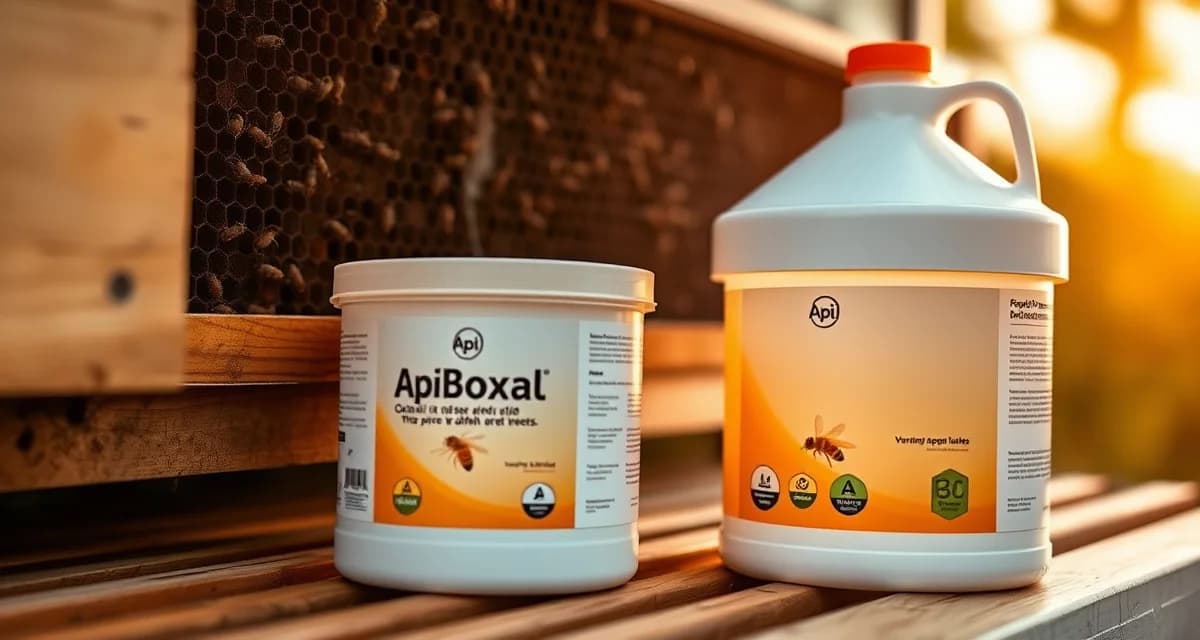
OA Label Requirements: What You Must Follow When Using Api-Bioxal
Using OA in a manner inconsistent with the Api-Bioxal label is a federal FIFRA violation even if the treatment is effective. That's not a technicality. The Federal Insecticide, Fungicide, and Rodenticide Act (FIFRA) governs the use of every registered pesticide in the United States, and "the label is the law" isn't marketing language, it's the legal standard. Effective off-label use is still a violation.
Api-Bioxal (oxalic acid dihydrate 5.7%) is the only EPA-registered oxalic acid product for use in managed honey bee colonies in the United States. Any use of OA that doesn't follow the Api-Bioxal label, including homemade OA solutions mixed from bulk oxalic acid, constitutes an illegal pesticide application.
This guide covers exactly what the Api-Bioxal label requires.
TL;DR
- Oxalic acid (Api-Bioxal) is approved for dribble and vaporization methods; both kill only phoretic mites on adult bees
- Vaporization is more effective than dribble when brood is present because bees can contact vaporized acid across the colony
- The extended vaporization protocol (every 5 days for 3 applications) compensates for mites in capped brood
- Oxalic acid has no PHI restriction for honey supers when used according to the Api-Bioxal label
- Efficacy during true broodless periods can reach 95%; with brood present, efficacy drops to 50-70%
- Always wear a respirator and eye protection during vaporization; oxalic acid vapor causes lung damage
Registered Application Methods
The Api-Bioxal label currently registers three application methods:
1. Dribble (sublimation solution):
Mixed with sugar syrup at 3.5% oxalic acid concentration. Applied directly onto the bees between frames at 5mL per seam (inter-frame space with bees). Label specifies maximum of 50mL per colony regardless of size.
2. Vaporization (sublimation by heat):
Api-Bioxal powder is placed in a registered electric or torch vaporizer and sublimated inside the sealed hive entrance. Registered dose: 1 gram of oxalic acid per hive body. Label specifies up to 3 applications at minimum 5-day intervals.
3. Extended-release (sponge strips):
A newer registered method using preloaded sponge strips that slowly release OA vapor over an extended period. Follow the specific dosage on the strip product label.
Important: The dribble and vaporization methods have different efficacy profiles and different label restrictions. They are not interchangeable without following the specific instructions for each.
Colony Status Requirements
Dribble method: The label specifies dribble application when colonies are broodless or have very little brood. This isn't merely a recommendation, it's a label requirement that reflects both efficacy and safety. Dribble on heavily brooded colonies is less effective (mites in sealed cells aren't reached) and may cause higher bee mortality.
Vaporization method: The label allows vaporization in colonies with or without brood, including through winter. Multiple applications at 5-day intervals in broodless colonies achieve the highest efficacy.
Honey Super Restrictions
The Api-Bioxal label prohibits application when honey supers intended for human consumption are present on the hive for either the dribble or vaporization method.
This is one of the most commonly violated label requirements. Many beekeepers assume OA is safe for honey production because it's an organic-approved compound. The label restriction exists not because OA is particularly dangerous to honey at typical levels, but because the registration process requires evidence of non-contamination that hasn't been fully established for application with supers on.
Practical implication: Remove all honey supers before applying OA in either method. Wait until supers are removed, apply treatment, and do not add supers until the treatment period is complete (or until the next season, for dribble treatments).
Pre-Harvest Interval
The Api-Bioxal label does not list a traditional PHI in the same way as synthetic acaricides, because OA is naturally present in honey. However, the honey super restriction serves the same functional purpose, don't apply when supers intended for harvest are on the hive.
VarroaVault logs OA applications with a super-removal confirmation field that documents compliance with this requirement. When you log an OA application, the app asks you to confirm supers were removed before treatment and logs this confirmation with the treatment record.
Use the [pre-harvest interval tracker](/pre-harvest-interval-tracker) in VarroaVault to manage the overall honey production compliance calendar alongside OA applications.
Safety Requirements on the Label
The Api-Bioxal label specifies required PPE for applicators:
For dribble method:
- Chemical-resistant gloves
- Eye protection (goggles or face shield)
For vaporization method:
- Full-face respirator with OA-rated filter cartridges (not a dust mask, a P100 respirator at minimum, OA-rated)
- Chemical-resistant gloves
- Long-sleeved clothing and pants
- Avoid skin and eye contact
The label also specifies:
- Hive entrance must be sealed during vaporization and remain sealed for a minimum of 10 minutes after application
- Do not apply in windy conditions that would disperse vapor toward the applicator
- Keep bystanders (including non-PPE-equipped assistants) away from the treatment area during vaporization
OA vapor is a serious respiratory irritant. The label requirements for vaporization PPE are not conservative suggestions, they reflect documented occupational exposure risks.
Number of Applications and Intervals
Dribble: One application per year per colony when used as standalone treatment. If used in conjunction with a brood break management program, one application per broodless period.
Vaporization: Up to 3 applications per treatment cycle at minimum 5-day intervals. Label allows multiple treatment cycles per year with appropriate intervals between cycles.
Combination: The label does not currently register using both dribble and vaporization in the same treatment cycle.
What the Label Does Not Permit
These uses are off-label and constitute FIFRA violations:
- Mixing homemade OA solutions from bulk oxalic acid sold as a wood bleach or cleaning compound, even if the concentration matches Api-Bioxal
- Applying OA in any form other than the three registered methods above
- Applying when honey supers are on the hive
- Applying to colonies other than honey bees (bumble bee colonies, solitary bees)
- Applying in quantities greater than the label maximums
- Applying without the required PPE
Logging Api-Bioxal Applications Correctly
VarroaVault's treatment log includes an Api-Bioxal label compliance summary embedded in the OA treatment entry screen. The summary displays key label requirements for the selected application method (dribble vs. vaporization), confirms you've acknowledged the honey super restriction, and logs the applicator name and PPE confirmed.
The OA bee treatment guide covers practical application technique. The OA dribble calculator in VarroaVault calculates the correct dose based on your colony's seam count.
Frequently Asked Questions
What does the Api-Bioxal label require?
The Api-Bioxal label requires application using only registered methods (dribble, vaporization, or extended-release strips), at the specified doses (5mL per seam for dribble; 1g per hive body for vaporization), with honey supers removed from hives intended for human consumption harvest, with appropriate PPE (chemical-resistant gloves and eye protection for dribble; full-face respirator, gloves, and protective clothing for vaporization), and with the hive entrance sealed during and for 10 minutes after vaporization. The label limits dribble to one application per broodless period and vaporization to up to 3 applications per treatment cycle at minimum 5-day intervals. Applications must be recorded with applicator name, product, method, dose, date, and colonies treated.
Can I use OA vaporization with honey supers on?
No. The Api-Bioxal label specifically prohibits application by either the dribble or vaporization method when honey supers intended for human consumption are present on the hive. This is a label requirement, not merely a recommendation. Remove all honey supers before treating and do not replace them until the treatment period is complete. This restriction applies regardless of the OA concentration used or the application method. While oxalic acid is naturally present in honey at low levels, the registration restricts application with supers in place. Violating this restriction constitutes an off-label use under FIFRA.
Does VarroaVault log Api-Bioxal applications in a label-compliant way?
Yes. VarroaVault's OA treatment log entry displays an embedded Api-Bioxal label compliance summary for the selected application method. The entry requires confirmation that honey supers were removed before treatment, records the applicator name and PPE acknowledgment, and logs the application method, dose, and treatment date. For vaporization entries, the system asks for the number of applications and the interval between them, and flags entries that use intervals shorter than the 5-day minimum. The completed treatment record includes all fields required for a compliant treatment log entry under FIFRA, with a timestamp from the server at the time of entry.
How many oxalic acid vaporizations can I do per year?
The Api-Bioxal label allows up to three vaporization treatments per year per hive. Under the extended protocol for colonies with brood present, three applications spaced 5 days apart count as one treatment event. Always follow current label instructions as registration requirements can be updated.
Can I use oxalic acid from the grocery store instead of Api-Bioxal?
No. In the United States, only EPA-registered Api-Bioxal is legal for treating honey bees. Industrial or food-grade oxalic acid is not registered for bee use and cannot be used legally. Using unregistered products violates federal pesticide law and may affect honey marketability. Api-Bioxal is widely available from beekeeping suppliers.
Is oxalic acid safe to use on brood?
Oxalic acid in dribble form is damaging to brood when applied directly; the label specifies use on broodless colonies for dribble application. Vaporized oxalic acid is less directly damaging to brood than dribble and is approved for use with brood present, though efficacy on mites in capped brood is limited. Always follow the label for the application method you are using.
What is OA Label Requirements: What You Must Follow When Using Api-Bioxal?
Api-Bioxal label requirements are the federally mandated rules governing how beekeepers must apply oxalic acid (OA) to honey bee colonies in the United States. Under FIFRA, the label is legally binding — not advisory. Api-Bioxal (oxalic acid dihydrate 5.7%) is the only EPA-registered OA product for U.S. managed colonies. The label specifies approved application methods (dribble and vaporization), dosing, timing, protective equipment, and colony conditions. Using OA outside these requirements — including homemade solutions — constitutes an illegal pesticide application regardless of effectiveness.
How much does OA Label Requirements: What You Must Follow When Using Api-Bioxal cost?
Api-Bioxal label compliance isn't a product you purchase — it's a legal obligation that comes with using Api-Bioxal itself. The product is available from beekeeping suppliers, typically ranging from $20–$50 depending on quantity. There are no additional licensing fees for hobbyist beekeepers. Commercial applicators may face state-level certification requirements. The real cost of non-compliance is legal: FIFRA violations can result in fines or penalties, making proper label adherence the most economical approach for any beekeeper.
How does OA Label Requirements: What You Must Follow When Using Api-Bioxal work?
Api-Bioxal works by exposing varroa mites to oxalic acid, which is toxic to the mites but safe for bees at label-approved doses. Two methods are approved: dribble application delivers OA solution directly onto bees between frames, and vaporization sublimates OA crystals into a gas that bees contact throughout the hive. Both methods kill only phoretic mites — those on adult bees — not mites inside capped brood. The extended vaporization protocol (3 treatments every 5 days) compensates for mites emerging from brood during treatment.
What are the benefits of OA Label Requirements: What You Must Follow When Using Api-Bioxal?
Following the Api-Bioxal label provides multiple benefits: legal protection under FIFRA, predictable efficacy based on EPA-reviewed data, and no pre-harvest interval (PHI) restrictions for honey supers when used as directed. Proper label compliance also protects beekeeper health through required PPE guidelines, prevents oxalic acid residue buildup from overdosing, and ensures treatments are timed correctly for maximum mite kill. Off-label use offers none of these assurances and exposes beekeepers to regulatory liability even when the treatment appears to work.
Who needs OA Label Requirements: What You Must Follow When Using Api-Bioxal?
Any U.S. beekeeper using oxalic acid for varroa management needs to understand Api-Bioxal label requirements — hobbyists, sideliners, and commercial operations alike. FIFRA applies regardless of hive count or whether honey is sold. Beekeepers switching from informal OA practices (such as using bulk oxalic acid purchased outside beekeeping channels) especially need this guidance. State apiarists, extension agents, and beekeeping clubs working with new beekeepers should also be familiar with label requirements to ensure accurate information is passed along during training.
Sources
- American Beekeeping Federation (ABF)
- USDA ARS Bee Research Laboratory
- Honey Bee Health Coalition
- Penn State Extension Apiculture Program
- Project Apis m.
Get Started with VarroaVault
Oxalic acid is one of the most effective and accessible varroa treatments available, but timing and application method determine whether you get 95% efficacy or 50%. VarroaVault tracks your broodless window, application method, and pre/post mite counts so you can see what's actually working in your operation. See pricing and free tools at varroavault.com.