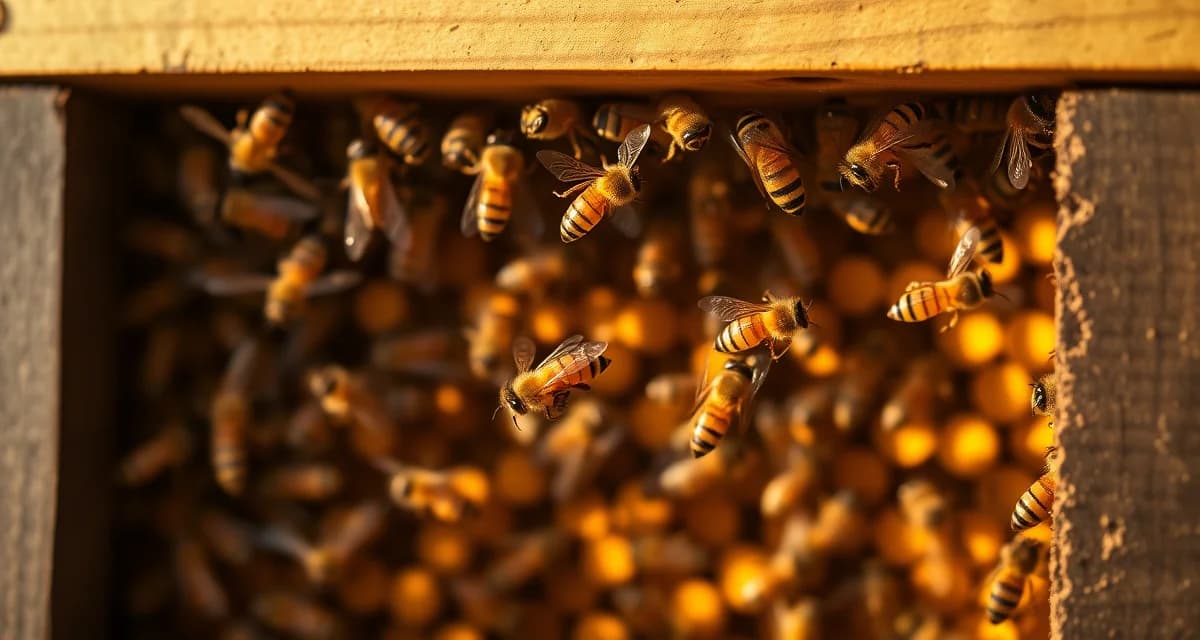
Varroa Spread Through Robbing: Protecting Weak Colonies
If you've ever watched a robbing frenzy unfold, you know how fast it escalates. What starts as a few bees sniffing around an entrance becomes a sustained assault that can strip a weak colony of stores in a matter of hours. But the loss of honey isn't the only damage. Every robbing bee that enters that hive is carrying phoretic mites with her, and every bee that returns to her home colony brings mites back the other way.
A confirmed robbing event from a heavily infested source colony can double a target colony's mite load within 2 weeks. That's not a slow drift effect, that's a rapid inoculation. Which is why knowing when a robbing event happened, and being ready to monitor afterward, matters as much as stopping the robbery itself.
TL;DR
- This guide covers key aspects of varroa spread through robbing: protecting weak colonies
- Mite monitoring should happen at minimum every 3-4 weeks during active season
- The 2% threshold in spring/summer and 1% in fall are standard action points based on HBHC guidelines
- Always run a pre-treatment and post-treatment mite count to calculate efficacy
- Treatment records including product name, EPA number, dates, and counts are required for state inspection compliance
- VarroaVault stores all monitoring and treatment data with automatic threshold comparison and state export formatting
How Robbing Transmits Varroa
During robbing, hundreds or thousands of bees from surrounding colonies flood through a weak colony's entrance. They bypass the normal defense mechanisms because the defending colony is too small to hold them off. These invaders move freely through the hive, touching bees, accessing brood, and distributing any phoretic mites they're carrying.
Meanwhile, the colony being robbed loses bees, brood, and stores. Weakened further, it becomes even more susceptible to mite reproduction in its remaining capped brood.
The reverse also happens. If the colony being robbed was already highly infested, the robbers carry mites back to their own hive, spreading the problem outward to whatever colonies are participating in the robbery. A single hot collapsed hive can inoculate an entire apiary during a robbing event.
This is why collapsed, untreated colonies, whether yours or a neighbor's, are genuinely a community beekeeping problem. They act as mite bombs that explode during robbing season.
Recognizing a Robbing Event
Robbing looks different from normal traffic at a busy entrance:
- Bees fighting at the entrance, wrestling and biting
- Bees flying erratically and hovering facing the hive entrance rather than departing in a clear line
- Wax cappings being dropped outside the entrance as stores are ripped out
- The defending colony getting overwhelmed and retreating inside
- Dramatically more bees than usual around a typically quiet hive
Early robbing can sometimes be stopped by reducing the entrance to a single bee width, spraying a little water around the entrance, or temporarily blocking it for 30-60 minutes. Full-scale robbing is much harder to stop. Weak colonies in fall are especially vulnerable.
Logging Robbing Events and Following Up
Here's what most beekeepers don't do: note when a robbing event happened and then count mites in the affected colony two weeks later. Instead, they manage the immediate crisis and move on. Then they're puzzled by elevated counts at the next regular inspection.
Logging a robbing event in VarroaVault triggers a recommended follow-up mite count for affected colonies. That automation keeps you on track without requiring you to remember. You note the event, the platform reminds you when to check.
Pair the robbing log with your regular mite count tracking so you can see whether counts spiked after the event. If they did, you have evidence to support immediate treatment. If they didn't, you've confirmed the colony held.
Also check the colonies that participated as robbers. Depending on where they originated and how infested the target colony was, they may have picked up a significant mite load during the event.
Protecting Weak Colonies Before Robbing Season
The best approach is keeping colonies strong enough to defend themselves. A full-strength colony with a good population can usually hold off robbers indefinitely. The colonies that get robbed out are almost always compromised: a colony that recently lost a queen, a split that hasn't built up yet, a hive already struggling under high mite pressure.
If you know you have weak colonies heading into fall, reduce entrances as early as August. A single-bee entrance in late summer is not too conservative. You can always open it up. You can't undo a robbing event.
Keep strong colonies away from weak ones in the same yard layout. A strong colony positioned directly in front of or next to a weak one is a setup for disaster. The robbing impulse is strongest when a struggling colony's scent is right next door.
Set up treatment threshold alerts on weak colonies that you're monitoring more closely so you don't let a mite problem compound the strength issue.
Frequently Asked Questions
How does robbing spread varroa mites?
During robbing, bees from surrounding colonies flood into a weak hive and move freely through the brood nest and cluster. Phoretic mites riding on robbing bees transfer to host bees inside the target colony. Conversely, if the robbed colony had high mite levels, robbers carry mites back to their home colonies. A confirmed robbing event from a heavily infested source colony can double the target colony's mite load within 2 weeks. It's one of the fastest varroa transmission events possible in an apiary.
How do I protect weak colonies from robbing?
Reduce entrances to a single bee width as early as August. Remove any strong colonies from positions directly adjacent to weak ones if possible. Avoid harvesting honey or feeding syrup in ways that release scent and attract attention. If a colony is truly too weak to defend itself, consider combining it with a stronger colony rather than trying to nurse it through robbing season separately. A combined colony with adequate population can defend what two weak ones could not.
How do I log a robbing event in VarroaVault?
In the VarroaVault hive log, add a robbing event entry for each affected colony, noting the date, approximate duration, and any visible source colony if known. Once you log a robbing event, VarroaVault automatically schedules a recommended mite count follow-up at 14 days for those colonies. The follow-up reminder appears in your dashboard and via notification so you don't have to track it manually.
How do I know if my varroa treatment is working?
Run a mite count 2-4 weeks after the treatment ends and compare it to your pre-treatment count. The efficacy formula is: ((pre-count - post-count) / pre-count) x 100. A result above 90% indicates effective treatment. Results below 80% should trigger investigation for possible resistance, application error, or reinfestation. Log both counts in VarroaVault to track efficacy trends across treatment cycles.
How often should I check mite levels in my hives?
At minimum, once per month (every 3-4 weeks) during the active season. Increase to every 2 weeks when counts are near threshold or after a treatment to verify it worked. In fall, monitoring frequency matters most because the window to treat before winter bees are raised is narrow. VarroaVault's monitoring reminders can be set to your preferred interval for each apiary.
What records should I keep for varroa management?
Each record should include: date of count or treatment, hive identifier, monitoring method used, number of bees sampled, mites counted, infestation percentage, treatment product name and EPA registration number, dose applied, treatment start and end dates, and PHI end date. State apiarists typically expect this level of detail during inspections. VarroaVault captures all of these fields in a single log entry.
What is Varroa Spread Through Robbing: Protecting Weak Colonies?
Varroa spread through robbing refers to the rapid transfer of varroa mites between bee colonies during robbing events. When forager bees from one colony invade a weaker hive to steal honey, they carry phoretic mites with them—and bring mites back when they return home. A single robbing event from a heavily infested source colony can double a target colony's mite load within just two weeks, making it one of the fastest routes of mite transmission in an apiary.
How much does Varroa Spread Through Robbing: Protecting Weak Colonies cost?
Protecting weak colonies from robbing-driven varroa spread is a core beekeeping practice, not a commercial product, so there is no direct cost. However, the expense of treating varroa infestations after a robbing event—including approved treatments like oxalic acid or formic acid products—can range from a few dollars to over $30 per colony. Investing in entrance reducers, robbing screens, and regular mite monitoring tools is far cheaper than managing a collapsed colony.
How does Varroa Spread Through Robbing: Protecting Weak Colonies work?
During a robbing event, bees from stronger colonies force their way into a weaker hive to steal stored honey. Phoretic varroa mites—those riding on adult bees—transfer between colonies in both directions during this contact. Robber bees deposit mites as they move through the target hive, and mite-laden bees from the weak colony may also hitchhike back with the robbers. This bidirectional exchange creates rapid, large-scale mite inoculation that standard drift-based spread cannot match in speed or volume.
What are the benefits of Varroa Spread Through Robbing: Protecting Weak Colonies?
Understanding robbing as a varroa vector gives beekeepers a critical early warning trigger. Knowing a robbing event occurred prompts immediate follow-up mite monitoring rather than waiting for the next scheduled check. This allows faster intervention, keeping mite loads below the 2% threshold in spring and summer and 1% in fall per HBHC guidelines. Early treatment preserves colony strength, reduces apiary-wide reinfestation pressure, and keeps treatment records accurate for state inspection compliance.
Who needs Varroa Spread Through Robbing: Protecting Weak Colonies?
Any beekeeper managing multiple hives is at risk, but those with colonies of uneven strength face the greatest exposure. Hobbyists, sideliners, and commercial operations alike need to understand this dynamic. New beekeepers are especially vulnerable because weak nucleus colonies and first-year hives are prime robbing targets. Beekeepers in areas with high colony density—community apiaries, migratory operations, or yards near other hives—should treat robbing-linked varroa transfer as a routine risk to monitor and plan for proactively.
Related Articles
- Varroa Management During Pollination Season: Protecting Your Asset
- How to Count Varroa Mites in a Nucleus Colony: Adapting the Standard Method
Sources
- American Beekeeping Federation (ABF)
- USDA ARS Bee Research Laboratory
- Honey Bee Health Coalition
- Penn State Extension Apiculture Program
- Project Apis m.
Get Started with VarroaVault
The information in this guide is most useful when you have your own mite count data to apply it to. VarroaVault stores every count, flags threshold crossings automatically, and builds the treatment history you need for state inspections and effective management decisions. See pricing and free tools at varroavault.com.