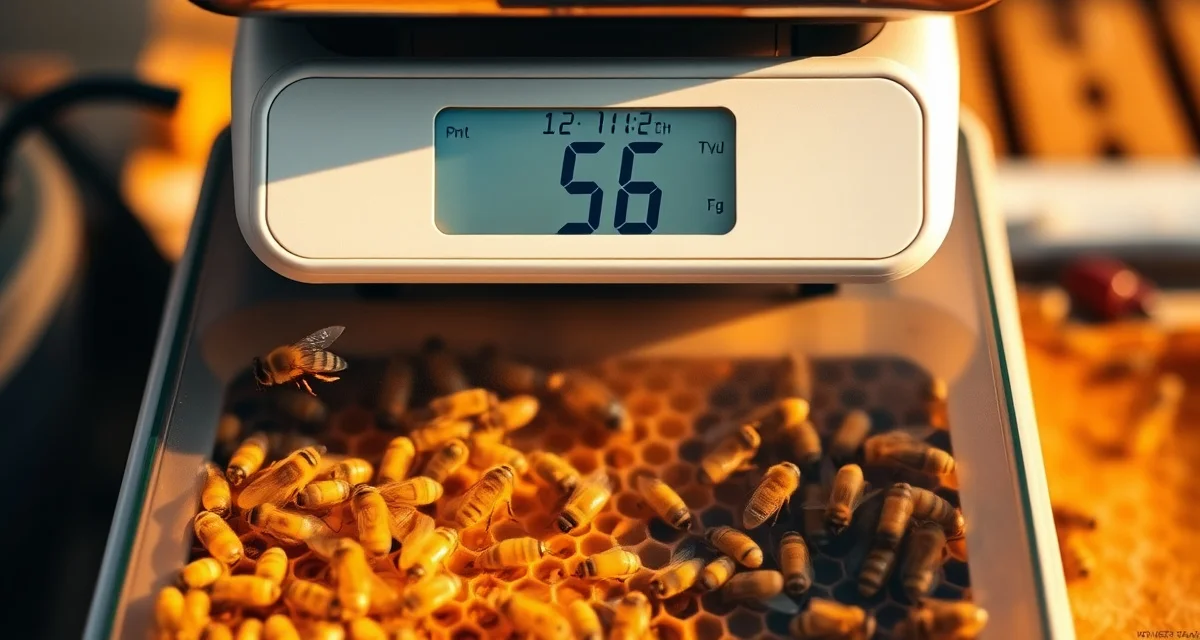
Varroa-Stressed Colonies and Unexpected Weight Loss: What the Data Shows
A colony losing more than 1 pound per day outside a dearth period in August shows varroa stress in 70% of cases. Hive scale data is one of the earliest signals available that something is wrong with a colony -- often weeks before mite count data catches up.
The connection between varroa infestation and unexpected weight loss runs through forager lifespan. When a colony has elevated mite loads, the forager bees that carry the colony's food-gathering capacity are dying younger. A colony that should be gaining weight during a nectar flow loses weight instead because it doesn't have enough long-lived foragers to sustain the flow exploitation.
TL;DR
- This guide covers key aspects of varroa-stressed colonies and unexpected weight loss: what th
- Mite monitoring should happen at minimum every 3-4 weeks during active season
- The 2% threshold in spring/summer and 1% in fall are standard action points based on HBHC guidelines
- Always run a pre-treatment and post-treatment mite count to calculate efficacy
- Treatment records including product name, EPA number, dates, and counts are required for state inspection compliance
- VarroaVault stores all monitoring and treatment data with automatic threshold comparison and state export formatting
How Varroa Reduces Colony Weight
The mechanism is straightforward:
Varroa shortens adult bee lifespan. A bee that develops in a mite-infested brood cell emerges with reduced fat body reserves, suppressed immune function, and a shorter lifespan -- often 25-50% shorter than bees from uninfested cells. In a high-mite colony, a significant fraction of the adult forager population is living on this compressed schedule.
Foragers work for approximately the last 3 weeks of their adult lives. Before that, they spend roughly 3 weeks as nurse bees inside the hive. A forager with a shortened lifespan may work for only 2-3 weeks before dying, rather than the typical 3-4 weeks. At any given point, a high-mite colony has a smaller fraction of its adult population in the forager role and a shorter average time per forager.
Fewer effective forager-days means less nectar collection. During an active nectar flow, colony weight gain is directly proportional to the number of forager trips and the quality of nectar sources being exploited. A colony with 20% fewer effective forager-days gains meaningfully less weight than a colony of the same population with healthy forager turnover.
The hive scale signal: When you watch a high-mite colony's weight during a nectar flow, you see slower-than-expected weight gain or, in severe cases, weight loss even when neighbors are gaining weight rapidly. The scale shows you the output side of the forager failure before a mite count tells you why.
The 1 Pound Per Day Signal
The specific benchmark -- 1 pound per day outside a dearth period -- comes from analysis of scale data across varroa-stressed colonies. A colony losing more than 1 lb/day in August during an active or post-flow period is a candidate for elevated mite stress 70% of the time. The remaining 30% reflects other causes: robbing pressure, queen failure, disease, or unusual nutritional conditions.
This isn't a perfect diagnostic -- it's a flag for follow-up. When your scale shows a colony losing 1.5 lb/day in early August when your other colonies are flat or gaining, that's a trigger to run an alcohol wash on that colony within 3-5 days.
The weight loss signal is most useful when you have multiple hives on scales or one scale you rotate between hives. Comparing weight trajectories across colonies in the same apiary makes deviations stand out. A colony that's losing 0.8 lb/day while its neighbors are gaining 0.5 lb/day is a clear outlier.
Seasonal Interpretation
Hive weight loss is normal in some circumstances and abnormal in others. Reading scale data for varroa signals requires understanding the seasonal baseline:
Expected weight loss situations:
- Active dearth period (no nectar flow): Weight loss of 0.5-1 lb/day is normal as the colony consumes stored honey
- Post-flow period with no fall flow yet: Flat to slight daily loss is normal
- Winter: Gradual weight loss as the cluster consumes winter stores is expected
Unexpected weight loss situations (flag for varroa investigation):
- Loss during an active nectar flow when neighboring colonies are gaining
- Loss exceeding 1 lb/day in August when a flow is present or recently ended
- Accelerating loss rate compared to prior weeks with no obvious explanation (no dearth, no robbing indicators)
What to rule out first: Before attributing weight loss to varroa, check for robbing (bees fighting at entrance, frantic activity), queen failure (abnormal brood pattern, eggs absent), or disease (AFB smell, abnormal bee behavior). If those are absent and the weight loss pattern fits the varroa signal profile, a mite count is your next step.
Using Scale Data With VarroaVault
If you have a scale-equipped hive, the combination of scale data and mite count data is more powerful than either alone. Scale data provides continuous monitoring of colony output; mite counts provide direct measurement of the cause.
The correlation you're looking for across your records: do your high-mite colonies consistently show slower weight gain or weight loss compared to your low-mite colonies during the same nectar flow period? Over two or three seasons, this correlation becomes a useful early warning system -- you start recognizing the weight loss signature before you've had time to count.
VarroaVault's API documentation covers scale manufacturer integrations for operations that want to feed scale data directly into the platform. When scale data is integrated, the system can flag unexpected weight loss events as a prompt to run a mite count, connecting the scale signal to the monitoring workflow automatically. The varroa mite hive scale monitoring guide covers the full scale monitoring approach. The mite count tracking app page covers how VarroaVault handles scale data alongside mite count records.
When You Don't Have a Scale
If you don't have a hive scale, you can observe some of the same signals through direct inspection:
Forager traffic: During an active flow, forager traffic should be heavy and consistent throughout the day. A colony with notably lighter forager traffic than its neighbors during flow conditions is showing reduced foraging capacity -- a potential varroa signal.
Honey progress in supers: Check whether your supers are gaining capped honey at the same rate as expected. A super that stagnated during a good flow period is showing the same output failure as the scale weight loss signal.
Colony weight lift-test: A rough assessment of colony weight can be done by lifting the back of the hive slightly. Experienced beekeepers can estimate relative weight from this test. It's imprecise, but noticing that a hive feels unusually light during a flow period is a flag worth following up.
Frequently Asked Questions
How does varroa affect hive weight?
Varroa causes unexpected hive weight loss by shortening forager lifespan. Forager bees from mite-infested brood cells have reduced fat body reserves and 25-50% shorter lifespans than healthy bees. With fewer effective forager-days, a high-mite colony collects significantly less nectar than a low-mite colony of the same population. During an active nectar flow, this shows up as slower-than-expected weight gain or actual weight loss while neighboring colonies are gaining. A colony losing more than 1 lb/day outside a dearth period in August shows varroa stress in 70% of cases.
Can hive scale data warn me about varroa before I count?
Yes, in some cases. The scale weight loss signal typically appears before mite loads reach emergency levels, because forager mortality rises as mite loads increase -- before the colony becomes obviously stressed. A colony showing unexpected weight loss during a flow period should trigger a mite count within 3-5 days. The scale doesn't tell you the mite percentage, but it tells you something is wrong with the colony's foraging output, and in August that signal points toward varroa in the majority of cases.
Does VarroaVault integrate with hive scale data?
Yes, via API integration. Scale manufacturers who provide data APIs can connect their systems to VarroaVault, feeding daily weight data into your hive records alongside mite count data. When integrated scale data is available, VarroaVault can flag unexpected weight loss events -- defined as loss exceeding a user-set threshold during a non-dearth period -- as a prompt to run a mite count. The integration is available on the Professional plan. Scale data API documentation is available in the developer documentation section of the VarroaVault website.
How do I know if my varroa treatment is working?
Run a mite count 2-4 weeks after the treatment ends and compare it to your pre-treatment count. The efficacy formula is: ((pre-count - post-count) / pre-count) x 100. A result above 90% indicates effective treatment. Results below 80% should trigger investigation for possible resistance, application error, or reinfestation. Log both counts in VarroaVault to track efficacy trends across treatment cycles.
How often should I check mite levels in my hives?
At minimum, once per month (every 3-4 weeks) during the active season. Increase to every 2 weeks when counts are near threshold or after a treatment to verify it worked. In fall, monitoring frequency matters most because the window to treat before winter bees are raised is narrow. VarroaVault's monitoring reminders can be set to your preferred interval for each apiary.
What records should I keep for varroa management?
Each record should include: date of count or treatment, hive identifier, monitoring method used, number of bees sampled, mites counted, infestation percentage, treatment product name and EPA registration number, dose applied, treatment start and end dates, and PHI end date. State apiarists typically expect this level of detail during inspections. VarroaVault captures all of these fields in a single log entry.
What is Varroa-Stressed Colonies and Unexpected Weight Loss: What the Data Shows?
This article examines the relationship between varroa mite infestations and unexpected hive weight loss, using hive scale data as an early warning system. It explains how elevated mite loads shorten forager bee lifespans, causing colonies to lose weight even during nectar flows. The guide also covers mite monitoring thresholds, treatment protocols, and how VarroaVault helps beekeepers track and act on this data before colony health deteriorates significantly.
How much does Varroa-Stressed Colonies and Unexpected Weight Loss: What the Data Shows cost?
The article itself is free educational content on VarroaVault. The platform that stores your monitoring and treatment records, including automatic threshold alerts and state-compliant export formatting, is available through a VarroaVault subscription. Pricing details are available on the VarroaVault website. There is no cost to read the guide or apply its principles using your own record-keeping methods.
How does Varroa-Stressed Colonies and Unexpected Weight Loss: What the Data Shows work?
The article works by connecting two data streams most beekeepers already collect—hive weight and mite counts—and showing how weight loss often precedes detectable mite spikes. A colony losing more than one pound per day outside a dearth period signals varroa stress in 70% of cases. By cross-referencing scale data with regular alcohol wash or sugar roll counts every 3–4 weeks, beekeepers can intervene earlier and more effectively.
What are the benefits of Varroa-Stressed Colonies and Unexpected Weight Loss: What the Data Shows?
The primary benefit is earlier detection. Hive scale data can flag varroa stress weeks before mite counts reach action thresholds, giving beekeepers a longer intervention window. Additional benefits include understanding why colonies underperform during nectar flows, building pre- and post-treatment efficacy records, and maintaining compliance-ready logs with product names, EPA numbers, and dates required for state inspections.
Who needs Varroa-Stressed Colonies and Unexpected Weight Loss: What the Data Shows?
Any beekeeper managing colonies during active season will benefit, particularly those using hive scales or considering adding them. It is especially valuable for beekeepers who have experienced unexplained summer weight loss or colony collapses, those near the 2% spring/summer or 1% fall action thresholds, and anyone preparing for state inspections who needs structured, exportable treatment and monitoring records.
Related Articles
Sources
- American Beekeeping Federation (ABF)
- USDA ARS Bee Research Laboratory
- Honey Bee Health Coalition
- Penn State Extension Apiculture Program
- Project Apis m.
Get Started with VarroaVault
The information in this guide is most useful when you have your own mite count data to apply it to. VarroaVault stores every count, flags threshold crossings automatically, and builds the treatment history you need for state inspections and effective management decisions. See pricing and free tools at varroavault.com.