Varroa mite treatment in Australia: what works right now
TL;DR
- Varroa destructor was confirmed in New South Wales on 22 June 2022, ending Australia's long freedom from the mite.
- Beekeepers in affected areas can now use oxalic acid, formic acid, amitraz, and synthetic pyrethroids under state permit or label conditions.
- Counts above 2 to 3 mites per 100 bees mean treat now.
- The national eradication program formally ended in 2024.
How did varroa mites get into Australia?
Australia was the last major honey producing nation without Varroa destructor. That ended on 22 June 2022, when the New South Wales Department of Primary Industries confirmed the mite at the Port of Newcastle [1]. The likely pathway was an illegal or accidental introduction through international shipping, a route biosecurity agencies had flagged as high risk for years.
Within weeks, detections spread across the Hunter Valley and then into Greater Sydney. The national response, run jointly by NSW DPI and Plant Health Australia under the Emergency Plant Pest Response Deed, set up a mandatory eradication zone requiring destruction of hives within a set radius of each detection [2]. That eradication effort transitioned to a management program in 2024, an admission that full eradication was gone.
Managing varroa is now part of the job in Australia, the same way it has been in Europe, North America, and Asia for decades. The learning curve is steep. The tools exist, and knowing which ones are legal and available here is where you start.
What varroa treatments are approved or available in Australia right now?
Fewer products are registered here than in the US or EU, but the main chemical families are present. That is the honest answer to the question most Australian beekeepers ask first.
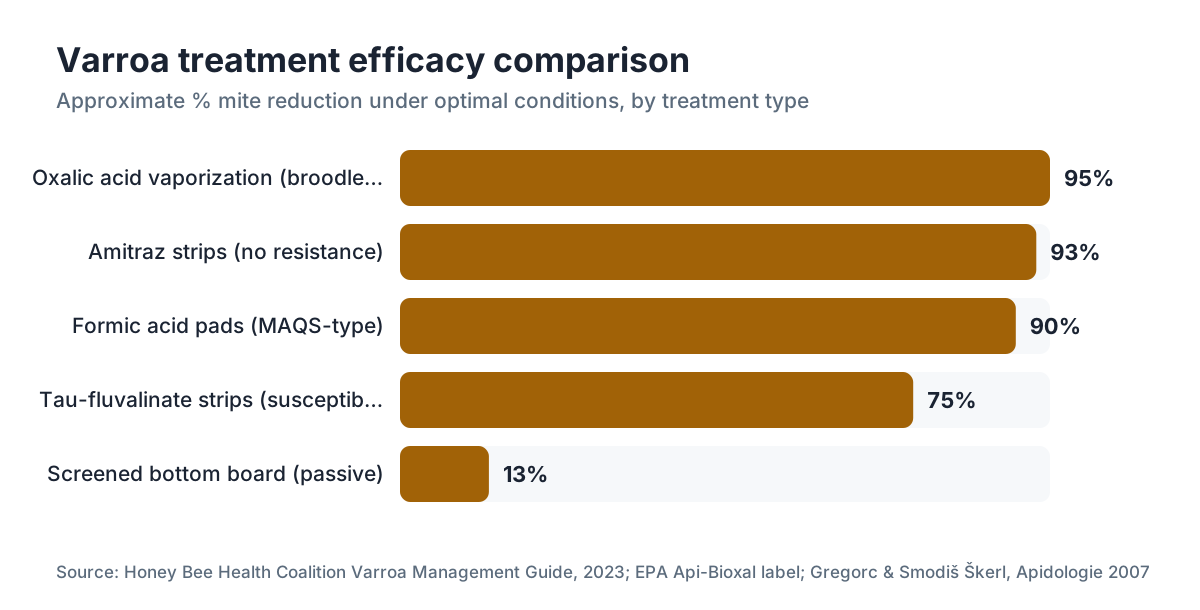
Oxalic acid (OA) is the foundation treatment for broodless colonies and is registered in Australia under the Agricultural and Veterinary Chemicals Code [3]. Products such as Api-Bioxal (EPA approved in the US [4]) have equivalents or imports available through veterinary and agricultural chemical suppliers. OA kills by direct contact with mites riding on adult bees. Applied as a trickle or by vaporization, it delivers roughly 90 to 95% efficacy in broodless hives across controlled trials. Efficacy falls hard once capped brood is present, because OA cannot get through the wax cap.
Formic acid comes in long release pad form. MAQS (Mite Away Quick Strips) has been the dominant formic product internationally, and similar treatments are being registered or permitted in Australia as the program evolves. Formic acid is the only mite treatment that gets through capped brood cells, which makes it useful during a flow when a brood break is impractical [5].
Amitraz (the active in Apivar strips) has been permitted under the NSW and Queensland emergency frameworks. It works as an octopamine receptor disruptor in the mite. Strips sit in the brood nest for 6 to 10 weeks and deliver over 90% efficacy in trials, provided you use them correctly and the mites have not yet developed resistance [6].
Tau-fluvalinate and flumethrin (the synthetic pyrethroids in Apistan and Bayvarol strips) are registered in some states. Pyrethroid resistance in Varroa is widespread worldwide, so efficacy swings a lot. Many apiarists reach for them only when resistance status is unknown or other options are gone.
Registration status moves fast in an emergency response. Check the current APVMA (Australian Pesticide and Veterinary Medicines Authority) register before you buy anything [3].
| Treatment | Active ingredient | Requires brood break? | Typical efficacy | Notes for Australia |
|---|---|---|---|---|
| Oxalic acid trickle/vaporization | Oxalic acid dihydrate | Yes (broodless) | 90-97% broodless | Registered; most accessible |
| Formic acid pads (MAQS-type) | Formic acid | No | 85-95% | Temperature-sensitive; permits evolving |
| Amitraz strips (Apivar-type) | Amitraz | No | 90-99% | Permitted under emergency provisions |
| Tau-fluvalinate strips (Apistan) | Tau-fluvalinate | No | Variable (resistance risk) | Check current APVMA status |
| Flumethrin strips (Bayvarol) | Flumethrin | No | Variable (resistance risk) | Check current APVMA status |
What does a varroa treatment calendar look like for Australian seasons?
Australia's seasons run opposite to the Northern Hemisphere, and most varroa advice online assumes spring starts in March and winter falls in December. A treatment calendar built for Australia flips that frame entirely.
Climate variation here is enormous. A beekeeper in tropical Far North Queensland runs year round brood and almost no natural brood break. A beekeeper in highland Victoria or Tasmania gets a real winter cluster where the colony is effectively broodless for weeks. Your local season decides which treatments work and when.
Autumn (March to May) treatment window. This is probably the most important treatment of the year. Winter bees, the long lived bees that carry the colony through to spring, are being raised right now. High mite levels in autumn mean those winter bees emerge from parasitized cells with shortened lifespans and heavy viral loads. Treat before the winter bee cohort is fully committed. An amitraz strip run or a formic acid treatment before Easter (roughly March) is standard for temperate zones. The Honey Bee Health Coalition's Varroa Management Guide, which Australian beekeepers are increasingly adapting, calls the pre-winter treatment the single most important intervention in the annual cycle [5].
Winter (June to August) treatment window. Cold southern winters produce natural brood breaks, and that is your oxalic acid window. A broodless or near broodless colony treated with OA trickle or vaporization sees mites knocked down to near zero. Beekeepers in southern NSW, Victoria, and Tasmania aim for a mid winter OA treatment, checking with an alcohol wash first to confirm brood status.
Spring (September to November) treatment window. Colony buildup is also mite buildup. Mite populations can double every three to four weeks as brood production ramps up. Monitor every 2 to 4 weeks through spring. It is not optional. If counts pass 2 per 100 bees before the main flow, treat with formic acid pads, or amitraz strips if there is time before supers go on.
Summer (December to February) treatment window. Active nectar flows create a conflict: most chemical treatments cannot be used with honey supers on, because of residue risk. This is where formic acid's label conditions matter. MAQS and similar products carry specific temperature limits (generally 10 to 29 degrees C for efficacy and safety), and Australian summers push well above that in many regions. Monitor through summer and work the swarm impulse, which creates partial brood breaks you can exploit with OA.
A varroa calendar for Australian beekeepers is really a monitoring calendar with treatments triggered by threshold, not by date. The dates just tell you which tool to have ready.
For a printable seasonal calendar adapted to Australian conditions, VarroaVault offers a free protocol template you can customize by climate zone.
How do you monitor varroa mite levels in your hive?
Monitoring is the foundation. You cannot manage what you have not measured, and guessing mite load is how beekeepers lose colonies without ever knowing why.
The two main methods are the alcohol wash and the sugar roll. The alcohol wash is more accurate [5]. Collect a roughly 300 bee sample (about half a cup) from a frame of open brood, where mites prefer to be, into a jar with 70% isopropyl alcohol. Swirl, wait 60 seconds, shake the alcohol through a fine mesh into a white tray, and count the mites. Divide by the number of bees, multiply by 100, and you have mites per 100 adult bees. The sugar roll is a live bee alternative: same sample size, roll in powdered sugar, shake onto a white surface. It is gentler on bees but undercounts by 20 to 40% compared to the alcohol wash.
The treatment threshold cited most in the research is 2 to 3 mites per 100 bees. The Honey Bee Health Coalition states: "A threshold of 2% (2 mites per 100 bees) during the brood-rearing season is generally recommended as the point at which treatment is warranted" [5]. Some researchers push for treating at even 1% in late summer or autumn because of the winter bee timing problem above.
A sticky board (a white board coated with petroleum jelly under a screened bottom board) gives a passive mite drop count but is harder to read. A natural 24 hour drop above roughly 8 to 10 mites per day points to a heavy infestation, but it will not give you the clean percentage an alcohol wash does.
New Australian beekeepers should run an alcohol wash once a month through spring and summer, and once every six weeks in autumn. Hit or approach 2%, and you act.
What is the economic and colony survival impact of untreated varroa in Australia?
The data from countries that have fought varroa for decades is grim. In the United States, USDA survey data put managed colony winter losses at 37.7% in 2022 to 2023, with varroa and the viruses it carries cited as primary drivers by surveyed beekeepers [7]. Deformed Wing Virus (DWV), which varroa transmits while feeding on developing pupae, is the proximate cause of most of those deaths. Varroa is the vector.
Australia had none of this before 2022. The honey bee pollination contribution to Australian agriculture is estimated at $4 billion to $6 billion per year across dependent crops, with almonds, canola, and much of horticulture inside that figure [11].
For the hobbyist or sideliner, the stakes are immediate. A colony that runs untreated through one summer to autumn cycle, starting at even 1%, can reach 10 to 15% infestation by late autumn. At that level collapse usually follows within one to two months. There is no dramatic death event to warn you. The colony just dwindles.
How does oxalic acid treatment work and when should Australian beekeepers use it?
Oxalic acid is an organic acid found in rhubarb and other plants. At label doses it is acutely toxic to Varroa destructor but tolerable to honey bees. It kills by direct contact: when bees move through OA treated space, or when OA vapor condenses on their bodies, the mites riding on them die. It does not get through wax. That is the key limitation.
There are three delivery methods: trickle, vaporization (sublimation), and extended release OA products. Trickle means dripping a 3.5% OA solution onto bees in the cluster at about 5 mL per seam. Vaporization heats solid OA crystals in a pan device and fills the hive with vapor. Vaporization usually gives higher efficacy and better penetration into the cluster, and multiple studies show 90 to 97% efficacy in truly broodless conditions [4].
Beekeepers in southern temperate zones get a clear vaporization window in mid winter, especially June and July, when many colonies go broodless or near broodless. In subtropical Queensland or coastal NSW, you may need to force a brood break by caging the queen for 24 to 25 days to let all capped brood emerge, then treat with OA during the broodless gap.
OA is the lowest residue treatment going and leaves no meaningful contamination in honey or wax at label doses. That appeals to beekeepers supplying boutique markets. The APVMA register carries the current label conditions for OA products sold in Australia [3].
See our overview of varroa mite biology for why the brood cycle drives treatment timing.
How does amitraz strip treatment work and what are the risks?
Amitraz is a formamidine acaricide. In Varroa it disrupts octopamine receptors, driving hyperactivity and detachment from the host bee. Strips impregnated with amitraz (Apivar is the best known brand globally, with equivalents under Australian emergency permits) sit between brood nest frames for 6 to 10 weeks. Mites pick up the chemical as they move between bees and brood frames.
Efficacy in trials runs above 90% when mites lack resistance, confirmed across European and North American field work [6]. The problem is resistance. Amitraz resistant varroa has been confirmed in multiple US states and European countries after repeated use. Resistance builds when the same mode of action gets applied generation after generation with no rotation.
Australia is new to varroa, so amitraz resistance is not yet documented in local populations. That gives Australian beekeepers a window to use amitraz well, and a reason to start rotating chemical families now to hold resistance off. Do not run amitraz every treatment cycle. Rotate: OA in winter, amitraz in autumn, formic acid in spring, back to OA.
Amitraz carries a pre-harvest interval. Supers must be off during treatment, and no honeycomb intended for extraction can be present. The current APVMA label for any registered Australian product sets the exact conditions [3]. Never treat with amitraz strips while supers are on.
Are there non-chemical varroa management options for Australian beekeepers?
Yes, and they work. They just cost you more hands-on time.
Drone brood removal. Varroa reproduces far faster in drone brood than worker brood, roughly three to five times as many mites per cell. Put a drone foundation frame in the hive, let bees fill it with drone brood, then freeze or remove it before the drones emerge. You pull a disproportionate share of mites out of the population. Regular drone brood culling can cut mite growth rates by 30 to 50% in trials, though it will not control a heavy infestation on its own [5].
Brood breaks (queen removal or caging). Removing the queen or caging her for 24 to 25 days breaks the brood cycle and forces every mite out of the cells and onto adult bees. A follow up OA treatment then hits near complete efficacy. This is slow and stresses the colony, but for organic certified operations or beekeepers minimizing synthetic chemicals, it is the main alternative.
Screened bottom boards. A screened bottom board lets mites that fall off bees drop through and out of the hive rather than climbing back on. Studies suggest a passive reduction of roughly 10 to 15%. Worth having. Nowhere near enough on its own.
Genetic selection. Hygienic behavior and Varroa Sensitive Hygiene (VSH) traits in queens are real and heritable. VSH bees detect and remove varroa infested capped brood. Some US and European breeders have produced lines that hold lower mite loads without treatment, though full treatment free management on VSH genetics alone stays controversial. In Australia, breeding programs for varroa resistant stock are now a research priority, but no commercially available VSH certified Australian queens exist at scale yet.
What did Australia's varroa eradication program involve and why did it end?
NSW DPI opened an Emergency Response from the June 2022 detection under Australia's national biosecurity framework. The response involved mandatory hive destruction inside eradication zones, surveillance at apiaries within buffer zones, and restrictions on hive movement across zone boundaries [2]. Beekeepers inside destruction zones were compensated under the Emergency Plant Pest Response Deed, which splits costs between government and industry.
By mid 2023, the spread was too wide for eradication to work. The mite turned up in hives across hundreds of kilometers of the Sydney basin and Hunter Valley. In late 2023 and into 2024, the program shifted formally from eradication to transition to management: accepting that varroa is established and focusing on the tools, training, and registered treatments beekeepers need for the long haul [2].
This was not a failure of effort. It is the biology. Varroa moves with swarms, with migratory beekeeping gear, and through feral hive populations that no one can manage at a landscape scale. Every country that has tried full eradication after widespread establishment has failed. New Zealand's 2000 incursion spread despite early detection and an aggressive response.
The end of the eradication program means Australian beekeepers no longer face mandatory destruction orders in most areas. It also means the responsibility is now entirely theirs. Varroa will not be managed by a government program. It gets managed hive by hive.
How do you build a practical varroa management routine as a new Australian beekeeper?
Start with monitoring, not treatments. Get an alcohol wash kit (a mason jar, 70% isopropyl, a 1/8 cup measure, a white tray) and run a wash on every hive, once a month, from your first full spring with bees. Write the number down somewhere permanent. A notebook works. A spreadsheet works better.
If you are starting colonies in 2024 or 2025 in an affected state, assume varroa is present. Do not assume a clean looking hive is mite free. A colony can look healthy and busy right up until the mite population crosses the collapse threshold.
A workable routine:
- Monitor monthly (alcohol wash). Record the mite percentage.
- Hit 2%, treat immediately, wherever you are in the season.
- Plan two to three treatments a year as a baseline: one in autumn before winter bees are raised, one in winter if you get a brood break, one in spring before the main flow.
- Rotate chemical families. Never lean on a single active ingredient every cycle.
- Read the label. Every treatment has conditions around temperature, super removal, and withholding periods. Labels are legal documents.
For beekeepers running more than a few hives, a digital record system that tracks mite counts by hive and date is genuinely useful. VarroaVault's free protocol tools include a monitoring log and a seasonal calendar built for Southern Hemisphere conditions.
If you are sourcing equipment, Australian beekeeping supply companies have started stocking varroa monitoring and treatment supplies in numbers they never needed before 2022. Availability varies by state.
What are the movement and regulatory restrictions on beekeepers in varroa-affected areas of Australia?
As of 2024 to 2025, the formal eradication zone restrictions under the NSW Emergency Response have largely shifted to an ongoing management framework. State biosecurity law still applies, and there are standing requirements Australian beekeepers have to understand.
In New South Wales, the Biosecurity Act 2015 (NSW) creates a general biosecurity duty on everyone to manage known biosecurity risks, which now covers varroa [8]. Apiarists must register with NSW DPI. Moving hives between states still triggers interstate biosecurity requirements. Each state sets its own conditions, and a health certificate or inspection may be required before movement.
Queensland has separate biosecurity management plans. Agriculture Victoria has published updated conditions for incoming apiaries from NSW. Western Australia, South Australia, and Tasmania hold strict border controls on bee movement from affected eastern states and run their own varroa readiness plans [2].
The practical rule: do not move hives across state borders without checking current conditions with the destination state's agriculture department. These conditions change as the surveillance picture shifts. Plant Health Australia carries the national framework [2], but state level implementation varies and can be tighter.
There is also a National Varroa Mite Response Plan, updated several times since 2022. The current version sets out surveillance, management, and reporting requirements. Beekeepers who find varroa in a previously negative area are legally required to report it.
Where can Australian beekeepers find reliable information and support for varroa management?
The information landscape shifted fast after 2022, and some resources Australian beekeepers had relied on for decades never covered varroa. Here is where the good information actually sits.
NSW DPI Varroa Response pages get updated as the regulatory situation moves and carry current treatment permissions, zone maps, and registration information [1].
Plant Health Australia publishes the national emergency response documentation and the transition to management framework [2].
APVMA maintains the current register of permitted and registered varroa treatments for Australian conditions [3].
The Honey Bee Health Coalition's Varroa Management Guide is the most useful science based treatment reference in English. It is written for US conditions, but the biology, monitoring protocols, and efficacy data transfer directly. The Coalition publishes it as a free PDF [5].
University extension resources from US land grant universities (Penn State Extension, University of Minnesota Bee Lab, NC State Apiculture) get heavy use from Australian beekeepers right now, because those institutions carry decades of varroa experience. Many Australian state apiary officers draw on them directly.
Australian beekeeping clubs and the Australian Honey Bee Industry Council (AHBIC) have also been publishing updated guidance as the situation develops [11]. Club meetings in affected areas are the fastest way to hear what is actually working on the ground in your microclimate.
For ongoing monitoring support and protocol tools, VarroaVault's free resources are built for exactly this kind of systematic mite management.
Frequently asked questions
Is varroa mite now established across all of Australia?
As of 2024, Varroa destructor is confirmed established in New South Wales, mostly in the Sydney basin and Hunter Valley. The eradication program formally transitioned to management in 2024, accepting that eradication is no longer feasible in NSW. Queensland, Victoria, South Australia, Western Australia, and Tasmania hold strict border surveillance and have not confirmed establishment, though the risk continues.
Can I use Api-Bioxal (oxalic acid) in Australia?
Api-Bioxal is the EPA-registered OA product in the US. Australia's equivalent registered products are listed on the APVMA register. Oxalic acid dihydrate is the active ingredient and is permitted here for varroa treatment under current APVMA registrations. Confirm the specific product and label conditions on the APVMA website before purchase, because the register is updated regularly.
What mite count percentage means I need to treat immediately?
The Honey Bee Health Coalition recommends a treatment threshold of 2 mites per 100 bees (2%) during the brood-rearing season. In late summer and autumn, some apiarists treat at 1%, because high mite loads then damage the winter bee cohort that carries the colony through to spring. Use an alcohol wash, not a sugar roll, for the most accurate count.
How often should I monitor for varroa in Australia?
Monthly alcohol wash monitoring is the recommended minimum through spring and summer, when mite populations can double every 3 to 4 weeks alongside expanding brood. In autumn, monitor every 2 to 4 weeks given the importance of protecting winter bees. In winter, monitor once before and once after any treatment to confirm efficacy. Record every result by date and hive.
Can I treat for varroa with honey supers on the hive?
For most chemical treatments, no. Amitraz strips and synthetic pyrethroid strips require supers off to avoid contaminating honey. Formic acid products (MAQS-type) have label conditions permitting use with supers on in some circumstances, but those include specific temperature ranges and honey contamination is still possible. Oxalic acid vaporization should not be used with supers on. Read the current Australian product label.
What is the penalty for not registering my hives with NSW DPI?
Under the Biosecurity Act 2015 (NSW), all apiarists must register hives. Failure to meet registration and notification requirements can bring significant fines. Beyond penalties, unregistered beekeepers are not eligible for compensation under the Emergency Plant Pest Response arrangements if their hives are affected. Registration is also required to legally buy and use some restricted varroa treatments.
Do feral honey bee colonies spread varroa in Australia?
Yes. Feral colonies are unmanaged reservoirs of varroa and its associated viruses. They are one of the main reasons eradication proved impossible in NSW after the initial incursion. Feral colonies also drift and swarm into managed apiaries. Beekeepers near bushland should monitor more often, because mite pressure from feral sources can reinvest treated hives. There is no practical way to treat feral colonies at landscape scale.
How do I know if my varroa mites have developed resistance to a treatment?
The clearest sign is a mite count that does not drop much after a completed treatment course. A well-applied amitraz treatment in a brood-present colony should cut mite loads by 90% or more. If your post-treatment count sits only slightly below the pre-treatment count after full exposure time, suspect resistance. The Honey Bee Health Coalition guide recommends rotating chemical families to slow resistance. No resistance testing labs run in Australia yet for routine beekeeper use.
Can I move my hives from NSW to Queensland or Victoria right now?
Interstate hive movement is subject to state biosecurity requirements that change as the varroa situation evolves. As of 2024, moving hives from NSW to Queensland requires compliance with Queensland Biosecurity Act provisions and may require health certification. Victoria has separate requirements. Contact the destination state's agriculture department before moving any hives. Illegal movement from a varroa-affected zone is a serious biosecurity offence.
Is there any compensation for beekeepers who lost hives during the eradication program?
Beekeepers whose hives were destroyed under the NSW DPI eradication zone orders were eligible for compensation under the Emergency Plant Pest Response Deed, which shares costs between federal and state governments and the beekeeping industry via AHBIC. Claims had to be lodged within set timeframes. With the transition to management complete, mandatory destruction orders in most areas have ended. Beekeepers with questions about outstanding claims should contact NSW DPI directly.
What varroa treatment calendar should I follow in Queensland?
Queensland's subtropical to tropical climate means colonies rarely go broodless, which limits oxalic acid efficacy. A Queensland calendar should prioritize autumn (February to April) amitraz strip treatments before cooler months add colony stress, and spring (August to October) monitoring with formic acid if mite loads rise before the flow. Artificial brood breaks (queen caging) are the main way to open an OA treatment window in warm zones.
Are there varroa-resistant bee breeds available in Australia?
No commercially available VSH (Varroa Sensitive Hygiene) certified Australian queen lines exist at scale as of 2024 to 2025. Research programs are underway, and some breeders are starting selection work. Hygienic behavior traits are heritable and worth prioritizing when sourcing queens, but no Australian queen available now will hold colony health without chemical treatment support. That is likely to change over the next 5 to 10 years.
How does varroa mite affect honey production in Australian apiaries?
High varroa loads cut colony strength directly by shortening worker lifespan through Deformed Wing Virus and other pathogens the mite transmits. A colony carrying 5% infestation going into spring builds up more slowly, peaks at a lower population, and produces far less honey than a treated colony. US data consistently shows treated colonies outproducing untreated by 30 to 60% in honey yield under high mite pressure.
Sources
- NSW Department of Primary Industries, Varroa Mite Response: Varroa destructor was confirmed in New South Wales on 22 June 2022 at the Port of Newcastle
- Plant Health Australia, National Varroa Mite Response: Australia's Varroa emergency response transitioned from eradication to management in 2024 under the Emergency Plant Pest Response Deed
- US EPA, Pesticide Registration (Api-Bioxal): Api-Bioxal (oxalic acid dihydrate) is EPA-registered for Varroa treatment; vaporization delivers 90-97% efficacy in broodless colonies in controlled trials
- Honey Bee Health Coalition, Varroa Management Guide (2023 ed.): A threshold of 2 mites per 100 bees during the brood-rearing season is recommended as the treatment trigger; autumn pre-winter treatment is described as the most important intervention in the annual cycle
- Gregorc & Smodiš Škerl, Apidologie (2007), Amitraz strip efficacy in Varroa treatment: Amitraz strip treatments deliver over 90% efficacy against Varroa in colonies without amitraz resistance, confirmed across multiple European field trials
- USDA NASS, Honey Bee Colonies Survey 2022-23: US managed colony winter losses averaged 37.7% in 2022-23, with varroa and varroa-vectored viruses cited as primary drivers by surveyed beekeepers
- NSW Legislation, Biosecurity Act 2015 (NSW): The Biosecurity Act 2015 (NSW) creates a general biosecurity duty on all persons to manage known biosecurity risks, including varroa, and requires apiarist registration
- Australian Honey Bee Industry Council (AHBIC): Honey bee pollination contributes an estimated $4-6 billion per year to Australian agriculture across dependent crops including almonds, canola, and horticulture
Last updated 2026-07-09