Varroa mite treatment methods: every option compared
TL;DR
- Varroa treatments split into four groups: organic acids (oxalic, formic), thymol-based essential oils, synthetic acaricides (amitraz, tau-fluvalinate, flumethrin), and biotechnical methods like drone brood removal.
- None works everywhere.
- Your best pick depends on brood state, temperature, mite load, and local resistance.
- Oxalic acid on a broodless colony hits 90-99% kill; that's the highest-value single treatment most hobbyists have.
Why treating for varroa is non-negotiable
Varroa destructor kills colonies. That's the short version. The longer version is that the mite feeds on developing bee fat body tissue [1], but the knockout punch comes from the viruses it carries, especially Deformed Wing Virus. A colony carrying a heavy mite load in late summer walks into winter with a cohort of short-lived, immune-compromised bees. It rarely sees spring.
The Honey Bee Health Coalition's Varroa Management Guide puts it bluntly: "without treatment, most honey bee colonies in the United States will die within one to three years of becoming infested with Varroa." [2]
US colony losses have run around 40-45% per year in recent survey cycles [3], and varroa keeps showing up as a top contributing factor. In the UK, the British Beekeepers Association and the National Bee Unit name varroa as the main driver of managed colony losses too. Ignoring mites isn't a strategy. It's a decision to lose the hive on a slower clock.
How do you know when to treat? Understanding mite thresholds
Mite counts drive treatment decisions, not the calendar. Pull a 300-bee sample (roughly half a cup) from the brood nest and run an alcohol wash or sugar roll. Count the mites that drop, then figure mites per 100 bees. That number is your trigger.
The Honey Bee Health Coalition recommends treating at 2% (2 mites per 100 bees) during the brood-rearing season, and 1-2% in late summer when the winter bees are being reared [2]. Penn State Extension sets a slightly higher bar, 3% during the brood season for established colonies [4]. The gap is real disagreement, and nobody has clean data on exactly where harm accelerates. I use 2% as my trigger. By the time you count, treat, and the treatment finishes its run, mite levels have already climbed past where you started.
Timing matters as much as the number. Late summer, roughly August in the Northern Hemisphere, is the window that decides everything. The bees reared in August and September are your overwintering bees. Raise them alongside high mite loads and their fat body development is wrecked before they even emerge from the cell [1]. A clean late-summer treatment is the highest-leverage move a hobbyist can make.
Winter treatments, applied when the colony is broodless, work exceptionally well for oxalic acid. The mite has nowhere to hide except on adult bees. More on that below.
What are the main types of varroa mite treatments?
Treatments fall into four groups. Each has real strengths and real limits.
| Category | Examples | Brood penetration | Temperature sensitive | Resistance risk |
|---|---|---|---|---|
| Organic acids | Oxalic acid, formic acid | Low (OA), Moderate (FA) | Yes (both) | Low |
| Essential oils | Thymol (ApiLife Var, Apiguard) | Low-moderate | Yes (must be warm) | Low |
| Synthetic acaricides | Amitraz (Apivar), tau-fluvalinate (Apistan), flumethrin (Bayvarol) | High (strip treatments) | No | High |
| Biotechnical | Drone brood removal, brood breaks, queen trapping | High (removes capped brood) | No | None |
The organic acids and thymol get grouped as "soft" treatments. The synthetics are the "hard" options. Most experienced beekeepers rotate both across a season and across years. Lean on one chemistry for too long and you're breeding resistant mites.
UK beekeepers work with a different registered product list than US beekeepers. Apiguard (thymol), Api-Bioxal (oxalic acid), Apivar (amitraz), Apistan (tau-fluvalinate), and MAQS (formic acid) are all authorized in Great Britain through the Veterinary Medicines Directorate [5]. Bayvarol (flumethrin) is authorized in the UK as well. Check current VMD authorization before you buy. The list changes.
Oxalic acid: what it does and when it works best
Oxalic acid is the treatment I hand every new hobbyist first. It's cheap, has no credible resistance concerns, leaves no lasting wax residue, and hammers phoretic mites (the ones riding on adult bees). Api-Bioxal is the EPA-registered product in the US [6], and it's sold under the same name in the UK under VMD authorization.
Here's the catch. Oxalic acid does not touch capped brood. Mites sealed inside a cell are completely safe from it. So the treatment shines in exactly two windows: winter, when the colony is broodless, and any artificial brood break you make by caging the queen.
Two application methods dominate. Dribble means mixing 2.1 g of OA per 100 mL of 1:1 sugar syrup and trickling it between the frames. It works well for small winter clusters. Vaporization sublimates OA into a vapor that coats every bee surface. Vaporization reaches more bees and I prefer it for any colony with brood present, though it still won't kill anything under a capping. The EPA-registered extended-release option in the US is Api-Bioxal in its extended-release formulation. DIY shop-towel strips soaked in OA are popular but not EPA-registered, so skip them if you run a commercial operation.
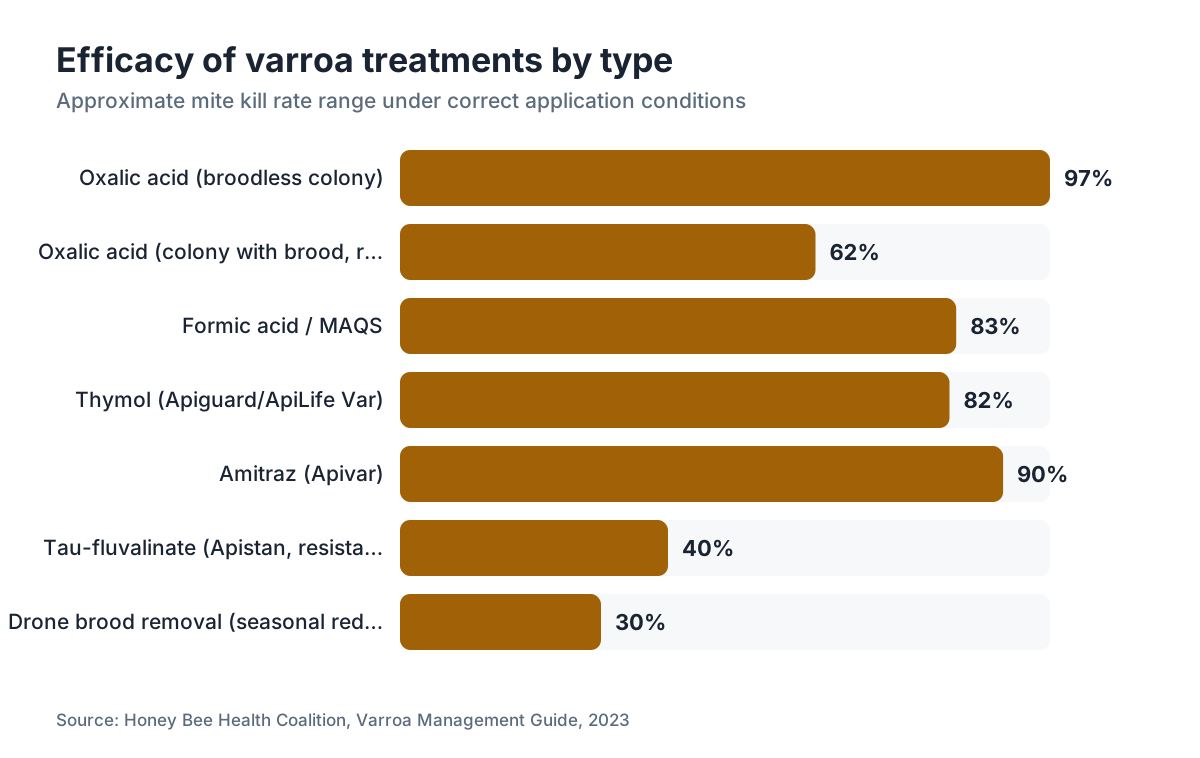
Efficacy in a broodless colony is the headline number: studies show 90-99% mite knockdown from a single OA vaporization when no brood is present [7]. Add brood and that figure often falls to 50-70% per application, which is why you need repeated treatments or a brood break during the season.
UK beekeepers searching varroa mite treatment UK options will find Api-Bioxal at most suppliers. Doses, application methods, and authorized use are on the product's VMD data sheet [5].
Formic acid: the one treatment that kills mites in capped brood
Formic acid is the only organic treatment that gets through the cap and kills mites inside sealed cells alongside the pupae. That's a genuine edge during the brood season, when most of your mites are hiding in a protected reproductive phase.
Mite Away Quick Strips (MAQS) is the EPA-registered two-strip product in the US. Formic Pro is another registered option. In the UK, MAQS is VMD-authorized [5]. Both release formic acid vapor over a set period, usually 7 days for MAQS.
The temperature limit is strict. MAQS needs ambient temperatures between 10 and 29.5 C (50 to 85 F). Too hot and you risk killing the queen and cooking brood. Too cold and it won't volatilize enough to work. In practice that pins its use to roughly May through early September in most temperate climates.
Queen loss is the other cost. Manufacturer data and independent field studies put queen loss around 5-15% depending heavily on temperature and colony strength [12]. I won't treat during a heat wave, and I confirm the queen is laying well before I apply. Efficacy from the HBHC guide runs 75-90%+ when applied correctly [2]. It isn't as clean as oxalic acid on a broodless colony, but it's the best tool for the whole mite population when brood is present and you don't want to cage the queen.
Thymol treatments: Apiguard and ApiLife Var explained
Thymol, the active compound in thyme oil, disrupts varroa's nervous system. Apiguard (a thymol gel) and ApiLife Var (a thymol-soaked wafer) are the two main registered options in both the US and UK [5][6].
Thymol needs warmth to volatilize. Most labels want a minimum ambient temperature around 15 C (59 F), with best results between 15 and 30 C. That makes thymol a spring-through-early-fall treatment only. In cooler climates, including much of the UK and the northern US, the effective window is roughly May through August.
Published trials quote 74-93% efficacy, but real-world results skew toward the low end unless you control temperature and application well [2]. Thymol suppresses brood in some colonies and can slow queen laying for a while. Most hives snap back once treatment ends.
The upside is straightforward. Thymol is cheap, organic, and no field population has shown resistance to it. In the UK, Apiguard is one of the most-used products among hobbyists, mostly because it's inexpensive and easy to apply.
Our beekeeping supplies overview covers the hive tools and protective gear you'll want on hand before any treatment day.
Synthetic acaricides: Apivar, Apistan, and Bayvarol
Synthetic strips work faster and care much less about temperature than organics, which makes them useful for emergency knockdowns or late-season situations where you can't wait for the right weather.
Apivar (amitraz) is a plastic strip loaded with amitraz, a class of acaricide separate from the older tau-fluvalinate products. Strips hang between frames for 6-10 weeks, releasing low-level amitraz the whole time. Amitraz resistance exists but stays far less widespread than tau-fluvalinate resistance in most regions [2]. Apivar is EPA-registered in the US and VMD-authorized in the UK [5][6].
Apistan (tau-fluvalinate) ruled strip treatments for decades, but resistance is now widespread in varroa populations worldwide, including the UK and US [9]. If your counts barely move after an Apistan treatment, resistance is the likely answer. A university diagnostic lab can confirm it by testing mites from your hive, but the case for widespread tau-fluvalinate resistance is strong enough that I no longer reach for Apistan as a first-line treatment.
Bayvarol (flumethrin) is available in the UK and parts of Europe but is not currently EPA-registered in the US. It's a pyrethroid chemically close to tau-fluvalinate, so cross-resistance is possible, though not guaranteed.
Every synthetic strip carries one hard rule: pull the strips exactly when the label says. Leaving them in longer builds up residue in the wax and speeds resistance selection. Beeswax from hives dosed repeatedly with pyrethroids can carry tau-fluvalinate at levels detectable in honey and wax, which is both a contamination problem and a sign of misuse [10].
No synthetic acaricide goes on during a honey flow with supers in place. Every registered label states this plainly. Pull the supers before treating, put them back after.
Biotechnical methods: do drone brood removal and brood breaks actually work?
Biotechnical methods skip chemicals entirely. They use varroa's own biology against it.
Varroa strongly prefer drone brood, reproducing there at roughly 8-9 times the rate they manage in worker cells [1]. Drone brood removal takes advantage of that. You insert a frame of drone-sized foundation, wait for the bees to fill and cap it, then cut it out and freeze it. Done consistently, this pulls out a disproportionate share of the mite population and can cut seasonal mite load by 20-40% [11]. It won't clear a heavy infestation alone.
A brood break works differently. Cage the queen for 3-4 weeks and brood rearing stops. Once all the existing capped brood emerges, every remaining mite is phoretic and exposed to oxalic acid. A brood break paired with OA vaporization is arguably the strongest non-synthetic strategy going, with efficacy near 95% in practice. Managing a caged queen takes skill and carries its own risks.
These methods eat labor. A hobbyist with five hives can run a brood break program without much trouble. A sideliner with 50 hives probably can't do it hive by hive. But for anyone trying to cut chemical inputs, or working a colony that's shrugging off synthetic treatments, biotechnical methods are serious tools.
The varroa mite overview walks through the mite's full life cycle, which is worth reading before you design a biotechnical plan around it.
How do varroa treatments differ in the UK vs the US?
The treatments themselves are mostly the same on both sides of the Atlantic. The regulation is where they split. In the US, varroa treatments register with the EPA as pesticides and must carry an EPA registration number on the label. In the UK, they're classified as veterinary medicinal products and get authorized by the Veterinary Medicines Directorate [5].
That difference matters in practice. UK beekeepers have to source VMD-authorized products, and the authorized list lives on the VMD website. Recent listings cover Api-Bioxal (oxalic acid), MAQS and Formic Pro (formic acid), Apiguard and ApiLife Var (thymol), Apivar (amitraz), Apistan (tau-fluvalinate), and Bayvarol (flumethrin) [5].
One more UK wrinkle: some treatments call for a veterinary prescription or a valid supplier record, though most beekeeping suppliers are set up to handle the paperwork. Your local association can tell you the current rules for your region, and the National Bee Unit (part of APHA, a DEFRA agency) publishes guidance on all of it [8].
US beekeepers should know Api-Bioxal's label spells out application methods and doses precisely. Using OA any way not on the label, including certain DIY extended-release setups, is off-label. Plenty of beekeepers do it anyway, but the regulatory risk is real for a commercial operation.
What's the most effective varroa treatment rotation strategy?
Rotating chemistry is the most practical resistance defense you have. The rule is simple: don't run the same class of chemistry in back-to-back treatments if you can help it. Treat with amitraz (Apivar) in summer, then use oxalic acid over winter. Use thymol in spring, follow with formic acid in late summer.
The Honey Bee Health Coalition flatly recommends rotating between chemical classes to slow resistance [2]. It doesn't take a spreadsheet. A basic two-year rotation for a hobbyist looks like this:
- Year 1: Spring monitoring. Late summer treatment with Apivar (amitraz). Winter oxalic acid (broodless).
- Year 2: Spring monitoring. Late summer treatment with MAQS or Formic Pro (formic acid). Winter oxalic acid.
Oxalic acid in winter is nearly a constant in well-built protocols. It's highly effective, has no resistance concerns, and costs almost nothing per hive. A 1-lb container of Api-Bioxal runs about $20-30 in the US and treats dozens of hives.
Want a protocol built around your own conditions, mite load at monitoring, and treatment windows? The free tools at VarroaVault walk you through a season-specific plan for your apiary.
Penn State Extension's apiculture program keeps an annually updated varroa management calendar worth bookmarking [4]. The Honey Bee Health Coalition's Varroa Management Guide (free download) is probably the single most authoritative public resource on timing and efficacy [2].
What do varroa treatments cost, and are any a waste of money?
Cost per hive per treatment swings a lot. Here's a realistic breakdown on current US retail pricing (UK prices track similarly in GBP):
| Treatment | Approximate cost per hive | Treatment duration | Application ease |
|---|---|---|---|
| Oxalic acid (Api-Bioxal, vaporized) | $0.50-$2.00 | 1-3 applications | Moderate (needs vaporizer) |
| Oxalic acid (dribble) | $0.25-$1.00 | Single application | Easy |
| Formic acid (MAQS) | $8-$15 | 7 days | Easy |
| Thymol (Apiguard) | $4-$8 | 4-6 weeks | Easy |
| Amitraz (Apivar) | $8-$14 | 6-10 weeks | Easy |
| Tau-fluvalinate (Apistan) | $5-$10 | 6-8 weeks | Easy |
The oxalic acid vaporizer itself runs $100-$200 for a decent battery-powered unit. Many beekeepers call it the best equipment buy after their first year. Spread across even a handful of hives over several seasons, the per-hive cost disappears.
Apistan is a questionable spend given documented resistance. Unless a diagnostic lab recently confirmed your local mites are still susceptible, I wouldn't put it ahead of amitraz or the organics. Spending $10 on a treatment that kills 40% of mites instead of 90% is worse than spending nothing, because you've wasted the treatment window on top of the money.
For vendors that stock registered treatment products, our beekeeping supply companies guide covers the reputable ones.
What are the safety and honey contamination risks of varroa treatments?
Every registered varroa treatment in the US and UK carries specific withdrawal periods and instructions to protect honey meant for people. The core rule: no treatments while honey supers are on the hive. Oxalic acid is the partial exception; the EPA label permits certain application forms with supers on in some circumstances. Read the specific product label every single time.
Formic acid occurs naturally in honey at trace levels, which is part of why it's classed as organic, but high-dose applications can push levels up temporarily. Labels spell out the withholding conditions. MAQS, for instance, can be applied with supers in place per its label, but if you're unsure, don't harvest honey produced during treatment for human consumption.
Amitraz breaks down fairly fast in honey, but wax accumulates amitraz residues with repeated use. Studies have found amitraz metabolites in wax even after a single treatment [10]. That doesn't make Apivar dangerous at labeled use. It does make over-treating a bad idea.
Beekeeper safety is not a formality. Oxalic acid vaporization demands an acid-rated respirator, goggles, and gloves. OA vapor corrodes respiratory tissue. Formic acid vapor is caustic too. Treat both as genuine hazards. The EPA product labeling database carries every registered label [6].
How should you monitor whether a treatment actually worked?
Treating and walking away is a mistake. You need to know the treatment actually knocked mites down. Standard practice: count mite loads before treatment, then recheck 4-6 weeks after the treatment ends.
Treated with Apivar (a 6-10 week strip)? Run an alcohol wash or sticky board count after the strips come out. If counts are still over threshold, either the treatment failed (possible amitraz resistance, less common than fluvalinate resistance) or mites are pouring in from neighboring colonies.
Natural mite drop on a sticky board is a rougher gauge but still useful: a heavy drop in the first days to weeks after a vaporized or strip treatment is a good sign it's working. The HBHC guide lists background drop-rate benchmarks, though alcohol wash counts are more reliable for a precise read [2].
Reinfestation is a real problem, and monitoring is how you catch it. If counts climb again within 4-6 weeks of a treatment that worked, drifting or robbing bees from untreated neighbors are the likely source. There's no clean fix for neighborhood mite pressure beyond monitoring often and keeping your own colonies low enough to resist the incoming load.
VarroaVault's free monitoring tracker logs wash counts across multiple hives and flags which colonies are trending toward threshold. That lets you treat the hives that need it instead of blanketing every box on a calendar.
Frequently asked questions
Can I treat for varroa mites without chemicals?
Yes, partially. Biotechnical methods like drone brood removal, brood breaks combined with oxalic acid (a naturally occurring organic acid), and queen trapping can cut mite loads a lot. A brood break plus oxalic acid vaporization approaches 95% efficacy in a broodless colony. These take more labor than strip treatments and may not be enough alone during a severe infestation, but they're a legitimate management strategy.
What is the most effective varroa mite treatment?
In a broodless colony, oxalic acid vaporization is the most effective single treatment, with 90-99% knockdown in studies. For colonies with brood present, formic acid (MAQS or Formic Pro) is the only organic option that kills mites inside capped cells. Amitraz (Apivar) is the most reliable synthetic given widespread fluvalinate resistance. The best pick depends on brood state, temperature, and local resistance patterns.
When is the best time of year to treat for varroa?
Late summer, roughly July through August in the Northern Hemisphere, is the top-priority window because you're protecting the winter bees being reared then. A second treatment during the broodless winter period with oxalic acid cleans up remaining mites at excellent efficacy. Spring monitoring should tell you whether an extra treatment is needed before the main honey flow.
How long does a varroa mite treatment take to work?
It depends on the product. Oxalic acid vaporization kills phoretic mites within hours, but treating a colony with brood needs multiple applications over several weeks to catch mites as they emerge. Apivar strips work continuously over 6-10 weeks. MAQS works over 7 days. For any treatment, let the full labeled duration run before you judge efficacy with a post-treatment mite count.
What varroa treatments are approved in the UK?
UK-authorized products (as of recent VMD listings) include Api-Bioxal (oxalic acid), MAQS and Formic Pro (formic acid), Apiguard and ApiLife Var (thymol), Apivar (amitraz), Apistan (tau-fluvalinate), and Bayvarol (flumethrin). These are classified as veterinary medicinal products. Always confirm current authorization on the VMD website before buying, since the list updates.
Can varroa mites become resistant to treatments?
Yes. Tau-fluvalinate (Apistan) resistance is now widespread in varroa populations worldwide. Amitraz resistance is emerging in some regions. Organic treatments (oxalic acid, formic acid, thymol) have shown no meaningful resistance so far. Rotating between chemical classes, using correct doses, and pulling strips on schedule are the main ways to slow resistance.
Is it safe to treat a hive for varroa while the honey supers are on?
For most treatments, no. Apivar, Apistan, Bayvarol, and Apiguard labels require removing honey supers before treatment. MAQS is labeled for use with supers on in some circumstances, but honey produced during treatment should not be harvested for sale. Oxalic acid label instructions vary by application method. Read the specific product label and follow it exactly.
How often should I check my hive for varroa mites?
The Honey Bee Health Coalition recommends monitoring every 4-6 weeks during the brood season, and at least once in late summer before deciding whether to treat for winter. An alcohol wash or sugar roll of a 300-bee sample is the most reliable method. Sticky board counts are less precise but fine for trend monitoring between full wash counts.
What mite level means I need to treat?
The most commonly cited threshold during the brood season is 2% (2 mites per 100 bees) from an alcohol wash. Some extensions use 3%. In late summer when winter bees are being reared, treat at 1-2% because the stakes are higher. In winter, if you're monitoring a broodless colony, treat if you detect any significant mite presence. Err toward earlier treatment rather than waiting.
Can I make my own oxalic acid treatment at home?
In the US, off-label use of oxalic acid is technically illegal, and the EPA registration of Api-Bioxal specifies approved formulations and methods. Plenty of beekeepers mix their own dribble solutions from technical-grade OA, but that isn't EPA-compliant. In the UK, using products not on the VMD authorization list is similarly problematic. For commercial or sideliner operations, stick with registered products.
Do I need to treat every hive in my apiary at the same time?
Treating all hives at once makes a real difference. If some colonies still carry high mite loads, drifting and robbing move mites into your treated colonies and drive up reinfestation. Synchronized treatment across an apiary, and ideally coordinated with nearby beekeepers, beats treating hives on separate schedules.
What varroa treatment works in cold weather?
Oxalic acid vaporization works in cold weather and is the treatment of choice for winter broodless colonies. Synthetic strip treatments (Apivar, Apistan) also work at cooler temperatures as long as bees stay clustered near the strips. Thymol and formic acid both need minimum temperatures to volatilize and generally aren't suitable for cold-weather treatment.
Is Apivar or oxalic acid better for varroa?
They fit different situations. Oxalic acid is better for broodless colonies (winter or after a brood break), where it hits 90-99% efficacy with no resistance risk. Apivar is better during the brood season because its slow-release strips kill mites as they emerge over 6-10 weeks. Many beekeepers run Apivar in late summer and OA in winter for a complementary two-treatment protocol.
How do I treat a nucleus colony (nuc) for varroa?
Nucs take the same registered products as full colonies, at reduced doses proportional to the frames of bees covered. For oxalic acid dribble, apply to each seam of bees. For vaporization, a single treatment with standard dosing usually suits even a small nuc box. Thymol gel products like Apiguard come in half-dose packets made for nucs. Check the product label for small-colony guidance.
Sources
- USDA Agricultural Research Service, Varroa destructor biology: Varroa mites feed on honey bee fat body tissue during development, and mites reproduce preferentially in drone brood at rates roughly 8-9 times higher than in worker brood
- Honey Bee Health Coalition, Varroa Management Guide (2023 edition): Without treatment most honey bee colonies will die within one to three years; treatment thresholds, efficacy data, and rotation strategy recommendations across all major treatment classes
- USDA NASS Honey Bee Colony Loss Survey: Annual managed honey bee colony losses in the United States have averaged approximately 40-45% in recent survey years
- Penn State Extension, Varroa Mite Management: Penn State Extension sets the varroa treatment action threshold at 3 mites per 100 bees during the brood season and publishes an annual varroa management calendar
- UK Veterinary Medicines Directorate, Authorized Veterinary Medicines database: Authorized varroa treatments in the UK include Api-Bioxal, MAQS, Formic Pro, Apiguard, ApiLife Var, Apivar, Apistan, and Bayvarol as veterinary medicinal products
- US EPA, Pesticide Product Label System (Api-Bioxal and Apivar registered labels): EPA registration of Api-Bioxal (oxalic acid) and Apivar (amitraz) for varroa treatment in honey bee colonies, with labeled application methods and rates
- University of Minnesota Extension, Varroa Mite Treatments: Oxalic acid vaporization in a broodless colony achieves approximately 90-99% mite knockdown in a single treatment
- APHA National Bee Unit (UK DEFRA agency), Varroa guidance: The National Bee Unit publishes guidance on varroa management and authorized treatment products for UK beekeepers, including regional monitoring advice
- Cornell University College of Agriculture and Life Sciences, Honey Bee Health: Tau-fluvalinate resistance is widespread in varroa mite populations in the US and internationally, and cross-resistance with other pyrethroids is possible
- Journal of Apicultural Research, amitraz residue accumulation in beeswax: Studies detect amitraz metabolite residues in beeswax after strip treatments; repeated use accelerates accumulation and potential contamination of hive products
- University of California Agriculture and Natural Resources, Integrated Pest Management for Varroa: Drone brood removal as a biotechnical control method can reduce mite population by 20-40% over a season when applied consistently
- NC State Extension, Honey Bee Apiculture, Varroa mite treatment methods and timing: Formic acid (MAQS) queen loss rates in field conditions range from approximately 5-15% depending on temperature and colony strength
Last updated 2026-07-09