Varroa resistant bee genetics for hobbyist breeders
TL;DR
- Varroa-resistant bee genetics, mainly VSH (Varroa Sensitive Hygiene) and hygienic behavior, can cut mite loads by 50 to 90 percent versus unselected stock.
- Hobbyists make real progress by buying proven stock, raising queens from their lowest-mite colonies, and tracking results across generations.
- No single trait is a silver bullet.
- Consistent selection pressure over three to five years is what moves the needle.
What makes a honey bee "varroa resistant" in the first place?
Varroa resistance is not one gene you either carry or don't. It's a cluster of behaviors and physical traits that, together, slow how fast Varroa destructor breeds and spreads through a colony. The three researchers have measured and named are VSH (Varroa Sensitive Hygiene), SMR (Suppressed Mite Reproduction), and general hygienic behavior. VSH bees detect and uncap cells holding reproducing mites, pulling out the mite along with the pupa. SMR was the earlier name for that same phenomenon, coined before anyone understood the mechanism. Hygienic behavior is broader. It covers uncapping and removing diseased or parasitized brood of any kind, not only mite-infested cells [1].
There's more. Grooming behavior, where bees pull mites off each other and sometimes bite off a mite's legs. And mite-biting, selected for specifically in some Russian lines. None of these traits are cleanly heritable, because honey bee mating scrambles the deck: a queen mates with 15 to 20 drones from who-knows-where. But the traits respond to selection, and the research is clear that colonies bred from high-VSH stock carry far fewer mites over time [2].
Here's the mental model that helps. Varroa resistance means "lower mite growth rate," not "zero mites." Even the best VSH colonies have mites. The target is a mite reproductive rate below 1.0, meaning each mite produces fewer than one surviving female per brood cycle, so the population shrinks instead of grows. A colony holding that line without treatment is genuinely resistant.
Most unselected commercial stock runs a reproductive rate well above 1.0. That's why mite populations explode so fast in hives left alone.
What bee lines have the strongest evidence for varroa resistance?
Four lines carry the most documented, field-tested evidence: USDA VSH bees, Russian honey bees, Gotland island survivors, and locally adapted feral survivors. Each has a different history and a different set of tradeoffs.
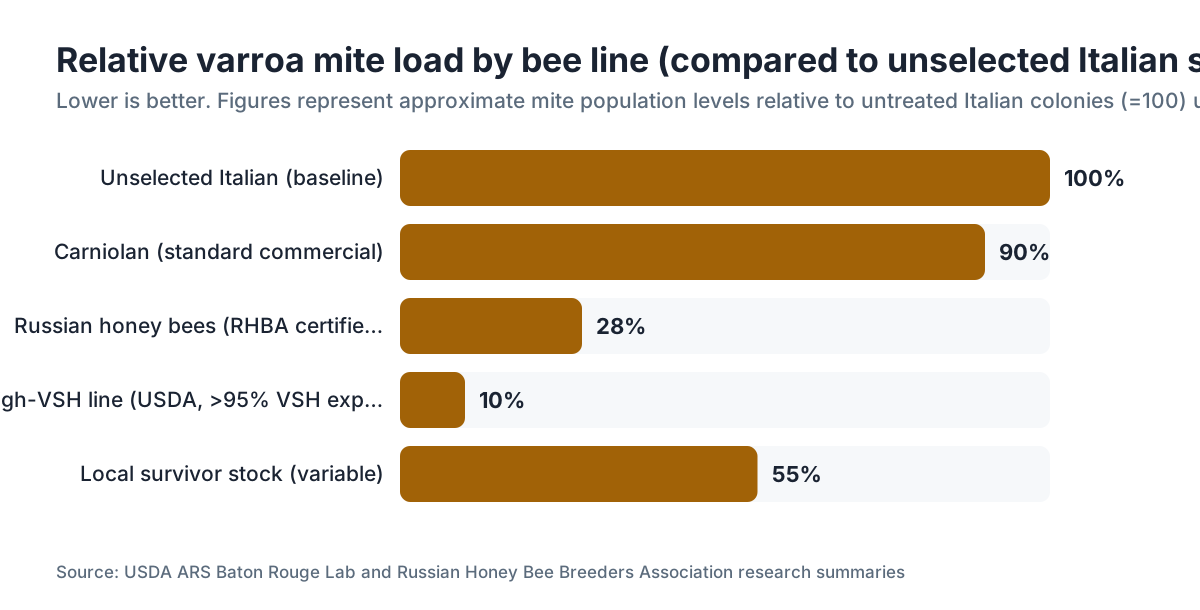
USDA VSH line. Developed at the USDA Honey Bee Breeding, Genetics, and Physiology Laboratory in Baton Rouge, Louisiana, starting in the early 1990s. The lab identified VSH as a quantitative trait, one you can measure and select for. Colonies expressing greater than 95 percent VSH show mite population growth near zero even without treatment [2]. The catch: pure VSH lines can run defensive and sometimes light on honey. Most practical use crosses VSH stock with productive Italian or Carniolan queens to balance the traits.
Russian honey bees. Imported from the Primorsky region of Russia in 1997, where bees lived alongside Varroa jacobsoni for roughly 150 years before Varroa destructor reached North America. The Russian Honey Bee Breeders Association (RHBA) keeps a registry of certified Russian stock. Studies show Russian colonies hold mite levels at a third to a quarter of Italian colonies under similar conditions [3]. Russian bees are thrifty too, shrinking their brood nest hard in a dearth, which chokes off mite reproduction on its own. They can be more defensive and slow to build in spring.
Gotland feral survivors. In the late 1990s, a varroa introduction wiped out essentially every untreated feral and managed colony on the Swedish island of Gotland. By around 2007, feral populations had bounced back and showed measurable VSH-like traits, having survived with zero chemical treatment. This is a well-documented natural selection event, studied by researchers at Lund University [4]. The lesson for you isn't "import Swedish bees." It's that survivor stock from your own region, bees pressured by mites without treatment, is worth capturing and testing.
Locally adapted survivors. The most accessible option, and arguably the most practical for a hobbyist. Feral colonies surviving in your area untreated for several years are, by definition, managing mites somehow. A trap-out, a cutout, or a purchase of local survivor queens hands you genetics already tuned to your climate and forage. The risk is everything you don't know yet: defensiveness, temperament, traits beyond mite survival.
One warning on Africanized bees. Africanized populations do show strong hygienic behavior and hard grooming (see the africanized honey bee page for their biology), but the defensiveness runs severe enough that breeders in the southern U.S. should be careful about pulling in feral stock that might carry Africanized genetics.
How do you measure varroa resistance traits in your own colonies?
You can't select for what you don't measure. Three tests run at the hobby level, no lab required: the alcohol wash (or sugar roll) for mite load, the freeze-killed brood assay for hygienic behavior, and direct mite counts inside brood cells.
Alcohol wash for mite load. The most reliable way to count mites on adult bees. Take a sample of about 300 bees (roughly half a cup), wash it in 70 percent isopropyl alcohol, and count the mites that drop. Divide mites by bees for a percentage. The Honey Bee Health Coalition recommends treating at 2 percent during the honey flow and 1 to 2 percent in late summer heading into winter [5]. For selection, compare colonies under matched conditions: same apiary, same week, same queen age. Colonies that stay under 1 percent through summer with no treatment are your breeders.
Freeze-killed brood assay. This measures hygienic behavior directly. Cut a section of capped brood (about 100 cells), kill the pupae by freezing the comb with liquid nitrogen or dry ice, put it back in the hive, then check at 24 and 48 hours. A highly hygienic colony uncaps and clears 95 percent or more of the dead brood within 48 hours [1]. Colonies clearing under 80 percent at 48 hours are weak candidates. The test takes practice. A pin test (killing pupae one at a time with a pin) works as a lower-tech stand-in, though it reads more variable.
Direct mite counting in brood cells. More work, but it reads VSH-like behavior straight. Uncap drone or worker brood and check each cell for mites and for signs of successful reproduction (a foundress plus offspring). A high-VSH colony shows plenty of non-reproducing foundress mites sitting alone with no offspring. The USDA protocol for this is detailed and worth reading before you try it [2].
For a hobbyist running a few dozen colonies or fewer, here's a workable protocol: alcohol wash every colony three or four times a season, then run the freeze-killed brood assay on your lowest-mite candidates. Keep records. Track each colony's mite percentage by date, year over year. Breeding daughters from your bottom 20 percent for mite load, every single season, is how the needle moves.
How does honey bee genetics actually work and why does it make breeding hard?
Honey bee genetics are strange in ways that hit every breeding program. Queens are diploid (two copies of each chromosome). Drones are haploid (one copy), grown from unfertilized eggs. A queen mates with 10 to 20 or more drones on her mating flights and stores sperm from all of them in her spermatheca. So a single colony isn't one family. It's a stack of subfamilies, each fathered by a different drone.
That polyandry helps colony health and diversity. It also makes trait selection harder. Say you pick a queen for low mite load and strong hygienic behavior, then she mates with 15 random drones from a neighbor's untreated Italian hives. Roughly half her offspring carry drone genetics that dilute exactly what you selected for. The brood you're grading is a genetic mixed bag.
Three tools fight back: instrumental insemination, geographic isolation, and drone flooding. Instrumental insemination (II) gives you full control over drone genetics, but the gear is expensive, the skill takes time, and the failure rate is real. Most hobbyists skip it. Geographic isolation means parking your mating nucs far from other beekeepers' drones, ideally several miles out. True isolation is close to impossible for most of us, but even thinning the outside drone density helps. Drone flooding means saturating the area around your mating nucs with drones from your selected stock, so your virgins are more likely to catch your chosen drones. It works decently at scale, but you need many drone-heavy colonies from your lines to pull it off.
The honest take: you won't match the genetic precision of the USDA lab or a dedicated II program. Selection still works anyway. Raise queens from your best colonies (lowest mite load, highest hygienic score), cull or requeen your worst, and you'll see improvement across generations. "Several" generations means three to five years of steady work, not one good season.
What's the difference between VSH, SMR, and hygienic behavior? Are they the same thing?
These three terms get swapped around on beekeeping forums, and it creates real confusion. They're related but not identical.
Hygienic behavior (HB) is the widest category. It's the tendency of bees to detect, uncap, and remove dead, diseased, or abnormal brood. Walter Rothenbuhler first described it in the 1960s, tied to American foulbrood resistance. Bees with strong HB handle chalkbrood, sacbrood, and other diseases better, on top of mites. You measure HB with the freeze-killed brood assay described above [1].
SMR (Suppressed Mite Reproduction) came out of 1990s USDA work. Researchers noticed that in some colonies, a high share of mites in brood cells had no offspring. They named it suppressed mite reproduction. The mites were there, just not breeding successfully.
VSH (Varroa Sensitive Hygiene) is the mechanism behind SMR, pinned down a few years later. It turned out SMR bees were reading the chemical cues from reproductive mites and uncapping those cells to yank the pupae, breaking the mite's reproduction. So VSH is a targeted form of hygienic behavior aimed at reproductive mites. VSH bees score well on a freeze-killed brood assay. HB bees don't automatically show strong VSH. A colony can clear dead brood fast yet fail to single out mite-infested cells. The USDA now uses VSH as the preferred term [2].
For breeding, split it like this. The freeze-killed brood assay tells you about HB. Mite load over time, plus direct brood inspection for non-reproducing mites, tells you about VSH. The colony you want to breed from shows both: fast brood removal (HB) and stubbornly low mite loads (VSH).
Can a hobbyist actually start a meaningful varroa-resistant breeding program?
Yes, with honest expectations. You aren't going to invent a new bee line in your backyard in two years. What you can do is steadily push your local population toward better mite tolerance by raising queens from your lowest-mite colonies and starting from reputable VSH or Russian stock.
A workable program runs like this. Start with the best-documented resistant stock you can buy from a breeder who actually tests their colonies, over anyone advertising "survivor bees" with no data behind the phrase. The Honey Bee Health Coalition's varroa guide lists selection criteria worth asking any breeder about [5]. Run alcohol washes on every colony at least three times a season: spring buildup, peak of the main flow, and late summer before winter prep. Write down every number. After two or three seasons, the data shows you which colonies hold under 1 percent without treatment. Those are your breeders.
From your best colonies, raise queens with whatever method you're comfortable running: grafting, the Miller method, or walk-away splits. Get mating nucs away from your main apiary if you can, or flood the area with drones from your selected lines. Mark every queen with the year, and keep her mother's mite history attached to the record.
Requeen or cull any colony that hits 3 percent or above during the season. Don't breed from it, even if it's your gentlest and most productive hive. This sounds harsh. It is. It's also how selection works. You're applying the pressure nature would apply if you never treated, minus the part where you lose all your colonies.
One tracking tool worth knowing: VarroaVault's free protocol tracking lets you log wash results and flag breeder candidates across seasons without a spreadsheet nightmare. A paper notebook works fine too. The data collection matters more than the software.
Realistic timeline: hobbyist breeders who stick with it see average colony mite loads drop, often 30 to 50 percent below their starting stock, within three to five years. That's real progress, even if you never touch the 95 percent VSH expression of a USDA research line.
Where can you buy varroa-resistant queens and stock to start with?
Getting your founding genetics right matters a lot, because you can only select from the variation that already exists in the stock you start with. Buying from a random commercial producer who doesn't test mite levels in breeder colonies is a coin flip.
The Russian Honey Bee Breeders Association (RHBA) maintains a member registry with stock certified to meet Russian bee standards [3]. VSH stock comes from breeders working with the USDA Baton Rouge lab program. The fastest filter is one question: do you test breeder colonies with alcohol washes, and what are your average colony mite loads? A good breeder has numbers ready. A mediocre one talks about their bees' "genetics" in vague terms.
University extension programs sometimes run queen rearing workshops or keep demonstration apiaries with tested stock. The NC State Apiculture program and the University of Minnesota Bee Lab have both worked this ground [6][7]. Your state beekeeping association is a better route to local breeders who test than ordering blind online.
Starting out with beekeeping supplies and basic colony management? Put your money on one well-sourced VSH or Russian queen over five cheap queens of unknown parentage. The mite math works out better across a full season.
Tested VSH or Russian queens run roughly $35 to $65 each as of 2024, against $25 to $40 for standard commercial queens. The premium is real, and it earns its keep if the breeder can show you mite data.
How do VSH and hygienic bee traits interact with standard varroa treatments?
Resistant genetics and treatments aren't an either/or choice, especially in the early years of a breeding program. A colony with good VSH still benefits from a summer oxalic or formic acid treatment when mite loads spike from immigration off collapsing hives nearby. Resistant bees aren't immune bees.
Here's the practical move for a selection program. Treat any colony that crosses threshold, even your best breeders, because losing a colony to varroa helps no one. But log that the colony needed treatment, and weigh that against it in your selection calls. A colony that keeps needing treatment despite good-looking genetics might have a mite immigration problem from neighbors (common in dense suburban apiaries) rather than a genetics problem. Or it might just have middling VSH expression.
Oxalic acid, by vaporization and by dribble, is EPA-registered for varroa control in honey bee colonies [8]. Formic acid (as Formic Pro or Mite-Away Quick Strips) penetrates capped brood, so it hits phoretic and reproducing mites during the main season [9]. In a breeding program, treatments are insurance, not a substitute for selection. The long game is lifting your stock's average mite tolerance until routine treatments come less often and at lower doses.
A study in Apidologie found colonies bred from high-VSH lines held meaningfully lower mite levels across the season than unselected controls, even when both got the same treatment schedule. The takeaway: resistance traits stack on top of treatment efficacy instead of replacing it [10].
For the biology of what Varroa destructor is doing inside the hive, the varroa mite overview covers the life cycle and how each treatment mechanism targets it.
What role does brood break play in varroa resistance genetics?
A brood break, where the queen stops laying and no capped brood is present, is one of the strongest mite-cutting events in a hive's year. It ties to genetics because some lines are far more likely to naturally pause or shrink their brood cycle.
Russian bees are the clearest case. They run tight brood-rearing cycles keyed to nectar flow, cutting the brood nest hard during a dearth. That natural break means mites reproducing in capped cells suddenly have nowhere to go. Phoretic mites then sit exposed to grooming, natural die-off, or treatment. The USDA Baton Rouge station has documented that Russian colonies' brood-break behavior drives their lower mite levels on its own, separate from VSH or mite-biting [3].
For breeding, track it. When you're grading colonies, note which ones pull back their brood nest during a dearth. A colony holding wall-to-wall brood through August with nothing blooming may run a higher mite risk than one that backs off. Pair brood-break tendency with VSH and the advantages compound.
You can also force a brood break as a management move, caging the queen for 24 days, a standard timing trick. But a colony that does it on its own, or one that answers a short queen cage with aggressive mite removal when you release her, is telling you something useful about its genetics.
What are the limitations of varroa-resistant genetics that hobbyists should know?
Resistance isn't a fix you breed in once and forget. A few real limits.
Mite immigration is out of your hands. An 80 percent VSH colony sitting next to a collapsing, mite-loaded hive catches a surge of phoretic mites drifting in on returning foragers and drones. Resistant genetics slow the colony's internal mite reproduction. They don't stop immigration. In high-density beekeeping areas, that flood can swamp even excellent genetics.
Genetic drift happens. Run a small operation and raise queens from only two or three breeders, and you're working a narrow genetic base. Over years, inbreeding drags on colony fitness (smaller populations, more brood disease, weaker queen reproductive quality) even if mite resistance holds. Bringing in unrelated VSH or Russian queens now and then refreshes the pool.
Selection pressure needs consistency. Skip a couple years of testing and selecting, and the traits slide back toward the population average, especially without drone control. This is not set-and-forget.
Productive traits can get sacrificed. Early USDA VSH lines were sometimes flagged as underperforming on honey next to Italian stock. That's less true of modern VSH lines backcrossed for productivity, but it's still a live concern. Select purely on mite load, ignore honey and temperament, and you may end up with resistant bees you don't enjoy keeping.
VSH and HB are quantitative traits, not switches. Any population holds a spread. A colony at 70 percent HB beats one at 40 percent but trails one at 95 percent. The distribution shifts under selection over generations. It won't snap to 100 percent overnight. Or ever.
How do you evaluate a queen breeder's claims about varroa resistance?
This is where hobbyists get burned. "Survivor bees," "locally adapted," and "treatment-free" are marketing lines that mean close to nothing without data underneath. Ask four things.
First: do you test mite loads in your breeder colonies, and can you share numbers? A real breeder can tell you their breeding queens averaged X percent mite load at Y date under Z treatment regime (or none). Specific numbers are a good sign. Warm fuzzy statements about how the bees "do great" untreated are a bad one.
Second: do you run the freeze-killed brood assay or a comparable hygienic test, and what do your breeders score? Under 80 percent uncapping at 48 hours isn't a strong candidate. Over 95 percent is excellent.
Third: are you selecting from local genetics, and for how many generations? A breeder who imported VSH queens two years ago and is selling the daughters without further selection is handing you first-generation diluted VSH crossed with whatever drones flew that spring. Not necessarily bad. Not the same as someone who's been selecting locally for five years.
Fourth: are you tied to any verified program? RHBA certification for Russian bees is a real credential with real standards [3]. USDA VSH-affiliated breeders have met stock verification requirements [2]. Extension programs sometimes list vetted local breeders.
Ask those four, compare the answers, and the serious breeders separate from the marketing noise fast. The Honey Bee Health Coalition's varroa guide also lays out what selection criteria should look like, giving you an outside reference to check any claim against [5].
Frequently asked questions
How many generations of selection does it take to see real varroa resistance in my own bees?
Most practitioners report meaningful improvement, often a 20 to 40 percent drop in average colony mite loads, after three to five generations of steady selection. That's roughly three to five years at one queen generation per year. Progress leans heavily on how much drone genetic control you have. Buying from a strong VSH breeder first compresses the timeline, because you start from a higher baseline.
Do varroa-resistant bees still need mite treatments?
Usually yes, especially early in a program and in apiaries under heavy mite pressure from neighboring colonies. Resistant genetics lower a colony's internal mite reproduction rate, but they don't block immigration. Most breeders running VSH or Russian stock still treat when alcohol wash counts pass 2 percent during the season, just less often than with unselected stock. Treatment and genetics work together. They aren't competing options.
What is the alcohol wash mite threshold for deciding whether a colony is a good breeder?
There's no universal number, but most researchers and experienced breeders treat colonies consistently under 1 percent mite load through summer (peak mite season), with no treatment applied, as breeder candidates. Colonies still under 2 percent going into fall without treatment count as strong performers too. Always compare colonies tested at the same time and from the same apiary to control for local mite pressure.
Can I use feral survivor bees from my area as breeding stock?
Yes, and hobbyists underrate this. Feral colonies surviving three or more years untreated in your region have shown some level of mite tolerance tuned to local conditions. Trap-outs, cutouts, and swarm captures are your access points. Test them with alcohol washes and hygienic behavior assays before you breed from them. The main risks are unknown defensiveness and, in southern states, possible Africanized genetics.
What is the freeze-killed brood test and how do I do it?
Cut a section of capped worker brood (about 100 cells) from a frame, seal it in a plastic bag, and freeze it 24 hours. Put the frozen section back in the hive. Check at 24 hours and again at 48: count how many cells have been uncapped and cleared. A colony scoring 95 percent or higher at 48 hours shows strong hygienic behavior and is a solid breeder candidate. Under 80 percent at 48 hours is a poor candidate.
What's the difference between Russian bees and VSH bees?
Russian bees are a geographic ecotype imported from the Primorsky region of Russia, where they lived alongside varroa for roughly 150 years. Their resistance comes from a blend of traits: brood-break behavior, mite-biting, and some VSH-like behavior. VSH (Varroa Sensitive Hygiene) is a specific trait developed and measured by USDA researchers, expressed as the percentage of mites that fail to reproduce in capped cells. VSH can show up in any bee line, not only Russian bees.
Does grooming behavior actually reduce varroa mite counts?
It contributes, though probably less than VSH. Studies find mite fragments and damaged mites on the bottom boards of colonies that groom actively, confirming the behavior removes and injures mites. Grooming alone rarely crashes a mite population on its own. It's most useful as one of several complementary traits in a resistant colony. Selecting for observable grooming (checking bottom boards for damaged mites) is a legitimate, if labor-heavy, tool.
How does drone genetics affect my queen-rearing results?
A lot. A queen you raise from a high-VSH mother may mate with 15 to 20 drones from nearby colonies of unknown genetics. Each drone gives a different trait set to the subfamily it fathers. If surrounding apiaries run unselected commercial stock, your queen's offspring get diluted away from your selected traits. Drone flooding (many drones from your stock), geographic isolation, or instrumental insemination are the main ways to control it.
Is it worth paying extra for certified VSH or Russian queens?
If the breeder can show mite data and certification, yes. Certified VSH queens typically cost $35 to $65 against $25 to $40 for standard commercial queens. The gap pays off within one season if it saves you one oxalic acid treatment and avoids a colony loss. Buying cheap queens of unknown genetics and hoping for resistance is not a plan. Your founding genetics set a ceiling on what selection can reach.
Can I combine oxalic acid treatments with a VSH breeding program?
Yes, and most experienced breeders do. Treating when mites exceed threshold protects your selected colonies from dying to varroa while you build resistant genetics over generations. The rule: treat when you need to, but record which colonies needed it and use that in your breeding calls. A colony that needed two treatments this season is a worse breeder candidate than one that needed none.
What records do I need to keep for a varroa resistance breeding program?
At minimum: colony ID, queen origin (mother colony and year), alcohol wash results with dates, any treatments applied and when, and hygienic behavior assay scores for breeder candidates. Note whether each queen came from your own breeding or a purchase. Across seasons, this record shows which lineages perform and which don't. A paper notebook works. The discipline of writing it down is what matters, not the format.
How does mite immigration from nearby colonies affect my breeding results?
It's a real confounder. When a heavily mite-loaded colony nearby collapses, hundreds of mite-carrying bees can drift into your hives within days. A colony with good VSH genetics limits how fast those immigrants breed, but it can still be overwhelmed. In dense beekeeping areas, this makes reading genetic resistance harder. Note any known nearby collapses when you interpret a sudden mite spike in an otherwise strong colony.
Are there specific bee races or subspecies other than Apis mellifera that show varroa resistance?
Apis cerana, the Asian honey bee, is the original host of Varroa destructor and shows near-complete resistance, but it's a different species from Apis mellifera and not practical for North American hobbyists. Within Apis mellifera, subspecies from regions with longer varroa co-evolution, including some African lines, show stronger resistance traits. The Africanized hybrid (Apis mellifera scutellata crosses) shows strong hygienic behavior, but the defensiveness limits practical use.
Sources
- Honey Bee Health Coalition, Varroa Management Guide: Hygienic behavior is measured by the freeze-killed brood assay; colonies clearing 95%+ of dead brood within 48 hours score as highly hygienic
- USDA ARS Honey Bee Breeding Genetics and Physiology Laboratory, VSH research overview: Colonies with greater than 95% VSH expression show mite population growth rates near zero; VSH is measured as the proportion of reproductive mites in brood cells
- Lund University, Gotland survivor bee research: Feral honey bee populations on Gotland, Sweden recovered from varroa-induced collapse by around 2007 showing measurable VSH-like traits after surviving without treatment
- Honey Bee Health Coalition, Tools for Varroa Management: The HBHC recommends treating when mite infestation reaches 2% during the honey flow and 1-2% in late summer; outlines breeder selection criteria for varroa resistance
- NC State University Apiculture Program: NC State Apiculture maintains demonstration apiaries and queen rearing education programs relevant to varroa-resistant stock development
- University of Minnesota Bee Lab: University of Minnesota Bee Lab conducts research and outreach on hygienic behavior and varroa-resistant bee breeding for practical beekeepers
- US EPA, Pesticide registration for oxalic acid varroa control: Oxalic acid is EPA-registered for varroa mite control in honey bee colonies, approved for vaporization and dribble application methods
- US EPA, Formic Pro pesticide registration: Formic acid products including Formic Pro are EPA-registered for varroa treatment and penetrate capped brood to kill mites in cells
- Apidologie journal, VSH breeding and mite control research: Colonies bred from high-VSH lines maintained significantly lower mite levels across the season compared to unselected controls even under the same treatment schedule
- USDA Agricultural Marketing Service, bee health and inputs resources: USDA AMS maintains resources on bee health management and listing of approved inputs relevant to varroa management in certified operations
Last updated 2026-07-09