Varroa treatment in November with brood still present

TL;DR
- When colonies still have brood in November, oxalic acid vaporization is your best option because it reaches mites in and out of cells.
- Apivar (amitraz strips) also works with brood present but needs 6-8 weeks of contact time.
- A single oxalic acid dribble is not enough when brood is present.
- Mite loads above 3% in fall colonies threaten winter survival.
Why is November varroa treatment so complicated when brood is still present?
Most varroa mites hide inside capped brood cells. Any treatment that only kills phoretic mites (the ones riding on adult bees) will leave most of your infestation untouched. In a broodless colony, roughly 90-95% of mites are phoretic and exposed. In a colony with active brood, 70-85% of mites sit protected inside capped cells at any given moment. [1]
November with brood present is a bad combination for two reasons. First, you're late. The winter bees your colony needs, the fat, long-lived bees that survive to spring, get raised in September and October. High mite loads in that window shorten their lifespan and compromise their fat bodies. By the time you're treating in November, some damage is already done. Second, the brood still present is extending the reproductive cycle of mites that should be getting cut off by now.
Late beats never. A colony limping into December with a 5% mite load will almost certainly die before March. One you treat effectively, even in November, has a real chance.
What varroa treatments actually work when brood is present in November?
Oxalic acid vaporization wins for most hobbyists in November. Amitraz strips work too if temperatures cooperate. Formic acid and thymol usually fail this late because they need warmth. A single oxalic acid dribble is close to useless with brood present. Here's the honest breakdown by product:
Oxalic acid vaporization (OAV) is your strongest option with brood present. Repeated treatments every 5 days over 3-4 cycles spread through the hive as vapor and kill phoretic mites each round. Each treatment catches newly emerged mites before they re-enter cells. The Honey Bee Health Coalition's Varroa management guide notes that OAV with brood present requires multiple applications to be effective, and field data generally support 3-5 treatments over the active brood period. [2] The EPA-registered label for Api-Bioxal (the only oxalic acid product registered for use in the U.S.) allows up to 3 applications per year with at least a 7-day interval between treatments. [3]
Amitraz strips (Apivar) work with brood present because the bees spread the active ingredient through contact over weeks, and mites exiting brood cells meet treated bees. Apivar needs 6-8 weeks of contact time at temperatures above about 50°F (10°C). In November, falling temperatures are your enemy. Below 50°F the strips release amitraz much more slowly, and cold clusters of bees may not contact strips left in the brood box. [4]
Formic acid (MAQS or Formic Pro) penetrates capped cells and kills mites inside, which sounds perfect. The catch is temperature. MAQS requires 50-85°F for the full treatment period. Formic Pro has a slightly wider range, but you still need sustained temperatures above 50°F for the treatment to volatilize and work. In much of the U.S., November daytime highs are marginal or too cold for reliable formic acid efficacy. Cold-weather formic acid kills queens without killing mites. [5]
Oxalic acid dribble (single application) is widely used for broodless colonies and works very well there. With brood present, a single dribble is mostly wasted because it only hits phoretic mites in one moment. The Honey Bee Health Coalition explicitly states a single OA dribble is not recommended when brood is present. [2]
Thymol (Apiguard, ApiLifeVar) requires temperatures of 59-105°F for the 4-week treatment period. By November in most northern states, that window has closed.
| Treatment | Works with brood? | Nov temp requirement | Application effort |
|---|---|---|---|
| OA vaporization (repeated) | Yes, with multiple rounds | Tolerates cold, bees must cluster | Medium (multiple visits) |
| Apivar strips | Yes, if 6-8 weeks at >50°F possible | Needs >50°F for activity | Low (set and wait) |
| Formic acid (MAQS/Formic Pro) | Yes (penetrates cells) | Needs >50°F consistently | Medium |
| OA dribble (single) | No (phoretic only) | Cold-tolerant | Very low |
| Thymol (Apiguard) | With brood, poor efficacy in cold | Needs >59°F | Low-medium |
The practical winner for most hobbyists in November is OAV done repeatedly, paired with a realistic look at whether temperatures support Apivar if you want a set-it-and-check-it approach.
How many oxalic acid vaporizations do you need when brood is present?
Plan on 3-5 treatments spaced 5-7 days apart. That's the most commonly cited protocol. [2] The logic: a full varroa reproductive cycle inside a cell runs about 12-14 days from when a mite enters a cell before capping to when an adult bee emerges. Vaporize every 5-7 days and you catch newly phoretic mites before they re-enter cells, slowly grinding down the population.
The Api-Bioxal label allows a maximum of 3 treatments per year. [3] That's a real constraint. If you've already done treatments earlier in the season, count your applications. Some beekeepers read the label as allowing 3 per treatment event (course of treatment), but the EPA label language is per year. Read the label you have, because the regulatory constraint is real and the label is the law.
A monitoring check after your treatment series tells you whether it worked. Wash or roll at least 300 bees and count mites. If you're still above 2-3% in late fall, you face a decision: a second treatment course (if the label permits) or an honest assessment of whether the colony can survive.
For managing your treatment timing and mite counts, a tool like VarroaVault's free protocol builder can schedule your OAV rounds and track results across hives, which helps when you're juggling multiple colonies at different brood stages.
What mite level is too high for a colony to survive winter?
Aim for 2-3% mite infestation (mites per 100 bees) or lower going into fall. The Honey Bee Health Coalition puts the economic threshold for fall at 2% for alcohol wash or sugar roll. [2] Some university extension programs use 3% as the action threshold for fall treatment decisions.
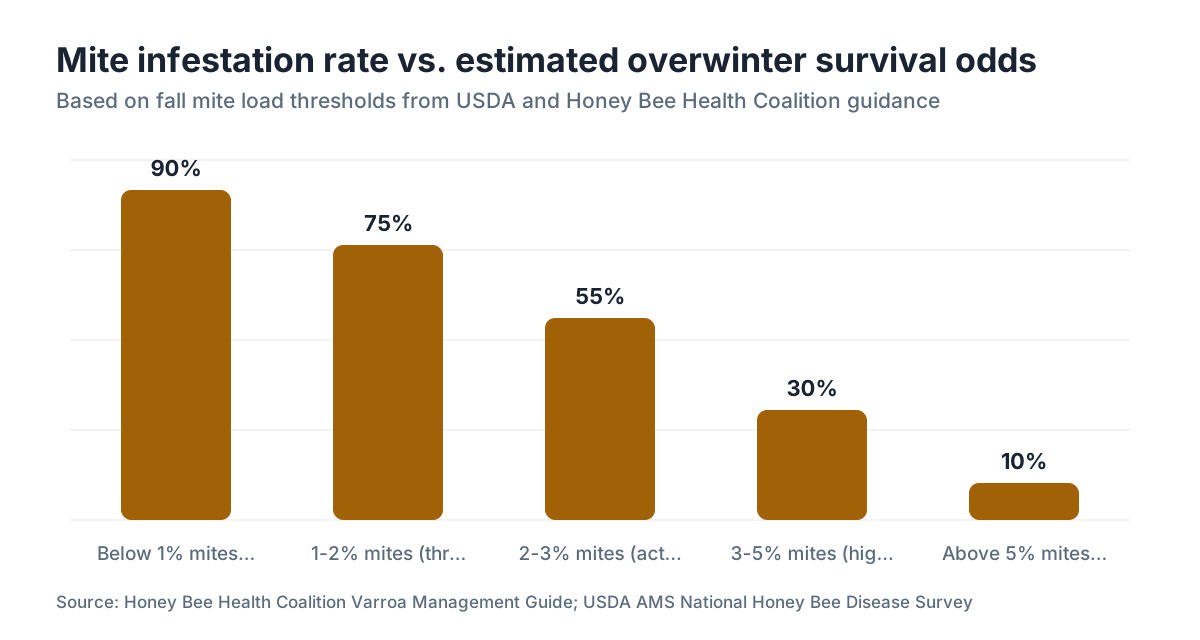
Overwinter colony losses stay strongly linked to high fall mite loads. Data from the USDA National Honey Bee Disease Survey show colonies entering winter above 3% run higher spring mortality. [6]
Here's the rough picture. At 2% in October, many colonies survive but some don't. At 5%, you're looking at a colony that is almost certainly going to collapse by February, usually taking the brood nest with it in a crash. At 8% or higher, the colony may not make it to the new year.
The damage to winter bees matters as much as the raw mite count. Varroa feeding on developing pupae shortens adult bee lifespan and cuts fat body stores. [7] Bees raised in high-mite conditions in September and October live shorter lives, which is why late fall treatment helps but cannot fully undo the harm of a heavy summer infestation.
Will Apivar work if I put it in during November?
It can, but you're racing the clock. Apivar needs sustained contact between bees and the amitraz-releasing strips, plus temperatures above roughly 50°F for the strips to release active compound at a useful rate. The label calls for a 6-8 week treatment period. [4]
If you're in the mid-Atlantic or southern U.S. where November daytime temperatures regularly hit 55-65°F, Apivar is a reasonable choice. Place strips where the cluster is actively moving and bees will contact them. Pull the strips after 8 weeks (not sooner) and monitor.
If you're in Minnesota, Wisconsin, or upstate New York, November Apivar is a gamble. The cluster may already be tight, nighttime temperatures may sit below 40°F consistently, and the contact period may not finish before the cold makes it moot. In those conditions, OAV is more reliable because it doesn't depend on sustained temperature for volatilization the way strips do (though even vaporized OA works best when bees are present and active to spread it through contact).
Never leave Apivar strips in longer than 8-10 weeks. Prolonged exposure is the main driver of amitraz resistance in varroa, and resistance is already documented in some U.S. populations. [8]
How do you know if the brood is still present in November?
You have to look. A quick inspection on a mild November day (above 50°F) when bees are flying will tell you. Remove a few frames in the center of the cluster and check for capped brood. If you see any capped worker brood, you have mites protected inside cells.
Some colonies in warmer climates (Texas, Florida, the Gulf Coast) never fully go broodless. Colonies in the Pacific Northwest often carry brood into December. Even in cold climates, a warm fall can push broodlessness into late November or December.
A thermal camera can detect a brood nest through the hive body in winter without opening the hive, though the resolution needed to confirm brood specifically is not always achievable with consumer-grade tools.
If you can't inspect safely, assume brood is present if your colony is strong and the fall has been mild. Treating with OAV under that assumption costs you little if you're wrong (the treatment still works on phoretic mites) and saves the colony if you're right.
Learn more about the biology behind your colony's seasonal cycles at our varroa mite hub, which covers the full mite reproductive timeline in detail.
Is it safe to treat bees in cold November temperatures?
The answer depends on the treatment. OA vaporization is safe at quite cold temperatures, and some beekeepers vaporize in near-freezing conditions. The concern is not bee safety but treatment efficacy: if the cluster is very tight and bees are not moving, vapor may not circulate well through the hive. Sealing the hive entry for 10 minutes after vaporization keeps vapor concentration up.
Apivar and formic acid carry the temperature constraints described above. Applying formic acid pads below their labeled minimums is ineffective and risks killing your queen, because the acid volatilizes unevenly in cold and drops at the wrong rate.
Opening the hive briefly in cold weather is generally fine for the bees. A few minutes of inspection on a calm day above 45°F won't kill a healthy cluster. Leaving the hive open for long stretches in cold and wind is more stressful. Work fast.
Never vaporize oxalic acid without proper personal protective equipment. The vapor is toxic to human lungs and eyes. Use an OA-rated respirator (N95 is insufficient; you need an acid-vapor cartridge respirator), safety glasses, and gloves. Seal the hive and stay clear of the entrance during the vaporization period. [3]
What if my colony goes broodless partway through treatment?
That's the ideal scenario. If you start an OAV series and the colony becomes broodless mid-course, your final treatments hit a 90-95% phoretic mite population. A single OA treatment in a broodless colony exceeds 90% efficacy in most studies. [1]
If you started with Apivar strips and the colony goes broodless, the strips keep working as long as temperatures allow. You don't need to switch products. Finish the 6-8 week contact period.
Keep monitoring even after broodlessness. Mite counts can look great right after a treatment and then tick back up if even a small amount of capped brood was present that you missed. A follow-up alcohol wash or drone comb check two weeks after treatment completion gives you real data.
The Honey Bee Health Coalition's guide recommends monitoring mite levels every 4 weeks in fall and after any treatment to confirm efficacy. [2]
What mistakes do beekeepers most often make with late-season varroa treatment?
The biggest one is doing a single OA dribble and thinking the job is done. A dribble is fast, cheap, and satisfying. With brood present, it does very little. That false sense of security is genuinely dangerous.
The second common mistake is treating too late to save the winter bees. By November, the bees that carry the colony through winter are already hatched. Killing mites now helps the few bees still being raised and cuts the phoretic load, but it cannot undo damage already done to the fat bodies and immune systems of bees raised in August and September under high mite pressure. Treat in August. Treat in September. November treatment is still worth doing, but know its limits.
Third: applying formic acid or thymol when temperatures are too cold, generating queen loss without mite loss. Check the label temperature requirements. If you can't meet them, use OAV.
Fourth: pulling Apivar strips early because winter is coming. Strips pulled before 6 weeks have not finished their treatment cycle. You've exposed your colony to amitraz without finishing the job.
Fifth: skipping the post-treatment mite wash. You genuinely don't know if treatment worked without measuring afterward. Assume nothing.
How does late brood affect winter bee quality and colony survival odds?
Winter bees are built differently from summer bees. They carry larger fat bodies, higher titers of vitellogenin (a protein that underlies both longevity and immunity), and they live 4-6 months instead of 4-6 weeks. These bees come from the late-summer and fall brood cycles, mostly late August through October.
Varroa feeding on developing pupae during that window suppresses vitellogenin expression and shortens adult lifespan. Research from the Amdam lab at Arizona State documented that varroa-parasitized bees emerge with compromised fat bodies. [7] Bees with suppressed vitellogenin don't live as long, can't store as much energy, and mount weaker immune responses to other pathogens like Nosema and the deformed wing virus that varroa spreads.
Late-season brood in November means some of those winter bees are still being made. A colony heavily parasitized in September but treated effectively in November can still raise a few weeks' worth of healthier bees before shutting down. It's not ideal, but it beats doing nothing. The goal is getting mite loads low enough that whatever brood is still being raised in November hatches into a less-parasitized environment.
Colonies that enter winter with very few bees due to high fall mite loads cannot hold cluster temperature. The cluster shrinks, the winter becomes unbreakable, and the colony starves or freezes even if the individual remaining bees are healthy. That's why fall mite management ties so directly to spring survival.
What should your varroa management plan look like from October through January?
A practical fall-through-winter protocol for most northern U.S. beekeepers runs like this:
October: Take an alcohol wash. If mite load is above 2%, treat immediately. Run an OAV series (3 rounds, 5-7 days apart) or Apivar strips if temperatures will cooperate through late November. This is your primary treatment window.
November (with brood present): If you're starting treatment now, go with repeated OAV rounds. Accept that you missed the ideal window and do it anyway. Take a mite wash before and after to document where you started and whether treatment worked.
November (if broodless): This is ideal for a single OA dribble or a final OAV treatment. Efficacy is high. A single application in a confirmed broodless colony can knock mite loads down by 90% or more.
December-January: For most northern beekeepers, intervention is limited. If the cluster is tight, opening the hive stresses the bees. An oxalic acid dribble is possible on mild days above 40°F if you can find the cluster and apply the solution, but it's mechanically difficult. OAV is the only realistic treatment in a tight winter cluster. Some beekeepers use a single OAV treatment in December or January on confirmed broodless colonies as insurance.
Track everything. Date of treatment, product used, application method, pre-treatment mite count, post-treatment mite count. VarroaVault's free mite tracking and protocol tools can organize this across multiple hives, which makes year-over-year pattern recognition much easier.
For sourcing quality equipment and protective gear for OAV treatments, checking established beekeeping supply companies helps you compare respirators, vaporizers, and monitoring supplies.
Frequently asked questions
Can I do an oxalic acid dribble with brood present in November?
A single OA dribble with brood present is largely ineffective. It only kills phoretic mites on adult bees at that moment, leaving 70-85% of your mite population protected inside capped cells. The Honey Bee Health Coalition explicitly does not recommend a single dribble when brood is present. You need either repeated OA vaporization sessions or a different product that works with capped brood.
What temperature is too cold for varroa treatment in November?
It depends on the product. OA vaporization can be done in near-freezing temperatures, though treatment efficacy may drop if the cluster is very tight. Formic acid (MAQS) requires 50-85°F for the full application period. Apivar strips need sustained temperatures above about 50°F to release amitraz at useful rates. Thymol-based treatments need 59°F minimum. Always check the label for your specific product.
How do I know when my colony is truly broodless?
You need to inspect. On a mild day above 50°F, open the hive and pull a few central frames. No capped worker brood means broodless. In most northern U.S. states, colonies go broodless sometime in November or December, though warmer falls can delay this into late December. If you can't inspect, assume brood is present in any colony that was actively laying in October.
How many times can I use oxalic acid vaporization in one year?
The EPA-registered Api-Bioxal label allows a maximum of 3 treatments per year. Individual treatments within a course must be spaced at least 7 days apart. Count all OA vaporization treatments from any point in the year. If you treated in summer and again in fall, you may have already reached your label limit. The label is legally binding regardless of whether you think more treatments would help.
Will varroa mites develop resistance to oxalic acid?
So far, no confirmed oxalic acid resistance has been documented in varroa populations. OA is a naturally occurring organic acid that likely works through physical and osmotic mechanisms rather than a specific receptor site, which may make resistance harder to develop. Amitraz (Apivar) resistance is documented in some U.S. populations, which is one reason OA remains a valuable tool. Rotating treatments is still generally recommended practice.
Can Apivar strips be used alongside oxalic acid in the same colony?
Most practitioners and the Honey Bee Health Coalition advise against combining treatments simultaneously without good reason. Using OAV while Apivar strips are in place is generally not necessary and adds chemical exposure to the colony. The better approach is to complete one treatment course, take a mite wash to assess efficacy, and then decide if a second treatment with a different product is needed.
What mite count after treatment means my colony is safe for winter?
Aim for below 2% (2 mites per 100 bees) after treatment going into winter. Some extension programs use 3% as their threshold. Below 1% is ideal. Take your post-treatment wash 3-4 weeks after completing treatment to allow any mites emerging from treated brood to show up in your count. A colony at 4% or above after a completed treatment course is at serious risk and may need a second intervention if label permits.
Is November too late to save a colony with high mite loads?
Not necessarily, but the odds get worse the later you treat. If the colony still has a decent population of bees and adequate food stores, reducing mite loads in November gives remaining and newly hatching bees a better chance. A colony with 5% mites and a strong cluster in November, treated effectively with OAV, has a reasonable shot at spring. A colony that is already dwindling and mite-heavy may not pull through regardless of treatment.
Does varroa treatment in November harm the winter cluster?
OA vaporization causes minimal disturbance to the cluster. Brief hive opening for a few minutes on a mild day is not harmful. Formic acid applied at marginal temperatures can stress or kill queens without delivering the mite kill. Avoid any treatment that requires sustained warm temperatures if conditions don't support it. The risk of not treating an infested colony far exceeds the risk of careful OAV application in November.
Should I treat varroa in November if I'm in the southern U.S. where bees never go broodless?
Yes, and you need a year-round treatment plan rather than a fall protocol. In Florida, Texas, and similar climates, colonies maintain brood continuously, meaning mite populations build without a natural broodless break. Repeated OAV rounds or Apivar strips used on a rotating schedule are your tools. Temperature is rarely a limiting factor, but you must stay vigilant year-round and monitor every 4 weeks.
What PPE do I need for oxalic acid vaporization?
An acid-vapor cartridge respirator (not an N95, which does not protect against acid vapor), safety glasses or a face shield, and chemical-resistant gloves at minimum. The Api-Bioxal label specifies these requirements. Vaporize from outside the hive, seal the entrance for 10 minutes, and do not re-enter the hive during that period. Oxalic acid vapor is a respiratory hazard; the correct respirator is non-negotiable.
What is the deformed wing virus connection to late-season varroa treatment?
Varroa is the primary vector for deformed wing virus (DWV), which it transmits to developing pupae during feeding. DWV causes wing deformities, shortened lifespan, and neurological damage. High varroa loads in fall mean high DWV prevalence in winter bees, compounding the survival problem beyond just physical parasitism. Reducing varroa in November directly reduces DWV transmission to any remaining brood being raised.
Can I combine a November OAV treatment with a mite wash in the same visit?
Yes, and it's good practice. Take your mite wash sample first (before any OA vapor exposure), then do your vaporization. This gives you a true pre-treatment baseline. Come back 3-4 weeks later for your post-treatment wash. Doing both in one hive visit is efficient and means one fewer hive disturbance in late fall, which matters when the colony is preparing for winter.
Sources
- Honey Bee Health Coalition, Varroa Management Guide (6th ed.): In a colony with brood, 70-85% of mites are protected inside capped cells at any given moment; in a broodless colony, 90-95% are phoretic.
- Honey Bee Health Coalition, Varroa Management Guide: Fall economic threshold is 2% mite infestation; a single OA dribble is not recommended with brood present; repeated OAV is recommended for colonies with brood; monitoring every 4 weeks in fall is advised.
- EPA, Api-Bioxal (oxalic acid) pesticide label: Api-Bioxal label allows up to 3 applications per year with at least a 7-day interval between treatments; PPE requirements include acid-vapor cartridge respirator.
- Pennsylvania State University Extension, Varroa Mite Treatment Guide: Apivar requires 6-8 weeks of contact time and temperatures above approximately 50°F for adequate amitraz release.
- University of Minnesota Extension, Varroa Mite Management: MAQS (formic acid) requires 50-85°F for the full treatment period; cold application risks queen loss without adequate mite kill.
- USDA Agricultural Marketing Service, National Honey Bee Disease Survey: Overwinter colony losses are strongly correlated with high fall mite loads; colonies entering winter above 3% show significantly higher spring mortality.
- Amdam et al., Journal of Experimental Biology, varroa effects on vitellogenin in honey bees: Varroa-parasitized bees emerge with suppressed vitellogenin expression, shorter adult lifespan, and compromised fat bodies.
- USDA ARS Bee Research Laboratory, Amitraz Resistance in Varroa: Amitraz resistance has been documented in some U.S. varroa populations; prolonged Apivar strip exposure is a primary driver of resistance development.
- Cornell University College of Agriculture and Life Sciences, Honey Bee Extension: A single OA treatment in a confirmed broodless colony exceeds 90% efficacy against varroa.
- EPA Office of Pesticide Programs, Formic Pro and MAQS labels: MAQS label specifies 50-85°F temperature range for the complete treatment period.
Last updated 2026-07-10