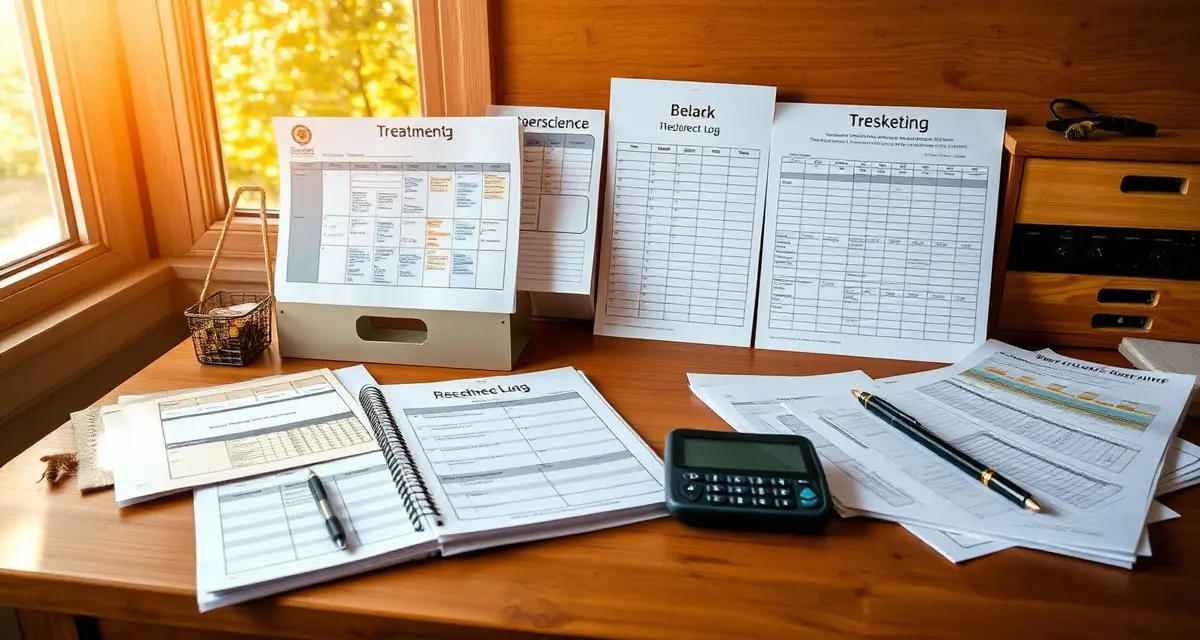
How Long to Keep Varroa Treatment Records: State and Federal Requirements
FIFRA record-keeping requirements for restricted-use pesticide users mandate 2-year record retention for all applications. Most registered varroa acaricides are not classified as restricted-use, but FIFRA's general pesticide record-keeping provisions still apply to commercial beekeeping operations, and many states have their own requirements that meet or exceed federal minimums.
If you're keeping paper records, how long do you hold onto them? If you use digital records, do they expire? Here's the legal framework and practical guidance.
TL;DR
- This guide covers key aspects of how long to keep varroa treatment records: state and federal
- Mite monitoring should happen at minimum every 3-4 weeks during active season
- The 2% threshold in spring/summer and 1% in fall are standard action points based on HBHC guidelines
- Always run a pre-treatment and post-treatment mite count to calculate efficacy
- Treatment records including product name, EPA number, dates, and counts are required for state inspection compliance
- VarroaVault stores all monitoring and treatment data with automatic threshold comparison and state export formatting
Federal Requirements Under FIFRA
The Federal Insecticide, Fungicide, and Rodenticide Act requires agricultural producers who apply federally restricted-use pesticides to keep records for 2 years. The records must show:
- Brand name of the pesticide
- EPA registration number
- Crop, animal, or site treated
- Amount applied
- Date applied
- Location (for field applications)
Most registered varroa treatments (Apivar, Api-Bioxal, MAQS, Formic Pro, Apiguard) are general-use pesticides, not restricted-use. The strict FIFRA 2-year record requirement applies specifically to restricted-use products.
However, the intent of FIFRA's record provisions extends to all pesticide applications, and state regulations often codify record-keeping requirements for general-use pesticides as well. Additionally, any commercial beekeeper who uses USDA NRCS EQIP program funding must maintain records for the program's documentation period (typically 3 years after the final payment).
State-by-State Requirements
State requirements vary significantly. Below is a general overview; always verify with your state department of agriculture or state apiarist for the current requirement in your state.
2-year minimum (aligned with FIFRA): Most states default to a 2-year minimum for commercial pesticide application records, including varroa treatment records for commercial beekeeping operations.
3-year requirements: Several states require 3 years of records for commercial beekeeping operations, particularly those receiving state agricultural program support or those subject to enhanced inspection protocols.
Organic certification (additional requirement): If you're certified organic under USDA NOP, your certifier requires records covering the current certification period plus typically 3 prior years. This can extend your practical record retention obligation to 5+ years.
Pollination contract compliance: Some pollination brokers and growers now require 90-day treatment records as part of contract compliance. These requirements are contractual rather than regulatory, but failing to produce them can affect your contract standing.
Practical Record-Keeping Guidelines
Given the variation in requirements, the most practical approach is:
Keep all treatment and count records for a minimum of 3 years. This satisfies most state and federal requirements, typical organic certification periods, and EQIP documentation obligations.
Keep inspection and state registration records indefinitely. These have no standard destruction date and may be needed for appeals or disputes years after the original event.
Keep sale documentation records for 5+ years. If you sold colonies with documented treatment histories, that documentation may be relevant in the event of a dispute about colony health or PHI compliance years later.
How VarroaVault Handles Record Retention
VarroaVault archives all treatment and count records permanently with no data deletion policy. Records you logged on day 1 of your account are available in your account as long as it's active. There is no automatic purge schedule and no data aging policy that removes old records.
This means:
- You can retrieve records from 3 years ago in VarroaVault at any time
- You can generate a 3-year treatment history report for inspection or certification purposes
- Your records don't disappear when you switch to a new season or start fresh in a new year
The export feature lets you generate a date-filtered report covering any specified period. A 2-year or 3-year export for a specific apiary or your entire operation generates in minutes and can be saved as a PDF for external retention (useful if you ever discontinue your VarroaVault subscription).
Paper Records: Creating a Reliable Retention System
If you're keeping paper records alongside or instead of VarroaVault, here's a practical system:
Annual folders: Create a folder for each calendar year. Label it "Varroa Records 2025" or similar. File all treatment logs, count records, and inspection reports in that year's folder.
Keep 3 years active: Maintain the current year plus 2 prior years in accessible storage. Archive older records in labeled boxes or digital scans.
Scan and back up: Scanning paper records to PDF and storing them on a cloud backup service is the most reliable long-term solution. Paper degrades; digital files don't (with proper backup).
Cross-reference treatments with PHI: When you file a treatment record, note the PHI expiry date on the record. This makes PHI compliance verification simpler if records are reviewed months or years later.
What to Do If You Can't Find Old Records
If you're asked to produce records from 2-3 years ago and you can't find them:
- Be honest about what you have. Claiming records exist and then being unable to produce them is worse than acknowledging you don't have them.
- If you have partial records (some dates but not all), present what you have.
- Going forward, implement a systematic digital record-keeping system so this doesn't recur.
State inspectors and certifying agents generally respond better to "I didn't keep records but I'm implementing a system now" than to missing records without explanation.
Frequently Asked Questions
How long must I legally keep varroa treatment records?
The federal minimum under FIFRA for restricted-use pesticide records is 2 years. Most state regulations require 2-3 years for commercial beekeeping treatment records. USDA NOP organic certification typically requires 3+ years of records. The safest approach for commercial operations is to retain all treatment and count records for a minimum of 3 years.
Does VarroaVault keep my records indefinitely?
Yes. VarroaVault has a permanent archive policy with no data deletion schedule. Records you logged from your first day as a user remain available in your account at any time. You can retrieve, view, and export records from any date in your account history.
Can I retrieve records from 3 years ago in VarroaVault?
Yes. Use the date-range filter in VarroaVault's export feature to generate a report covering any specified historical period. A 3-year treatment and count history export generates in minutes and can be saved as a PDF. For long-term backup, it's good practice to export an annual report each January covering the completed season.
How do I know if my varroa treatment is working?
Run a mite count 2-4 weeks after the treatment ends and compare it to your pre-treatment count. The efficacy formula is: ((pre-count - post-count) / pre-count) x 100. A result above 90% indicates effective treatment. Results below 80% should trigger investigation for possible resistance, application error, or reinfestation. Log both counts in VarroaVault to track efficacy trends across treatment cycles.
How often should I check mite levels in my hives?
At minimum, once per month (every 3-4 weeks) during the active season. Increase to every 2 weeks when counts are near threshold or after a treatment to verify it worked. In fall, monitoring frequency matters most because the window to treat before winter bees are raised is narrow. VarroaVault's monitoring reminders can be set to your preferred interval for each apiary.
What records should I keep for varroa management?
Each record should include: date of count or treatment, hive identifier, monitoring method used, number of bees sampled, mites counted, infestation percentage, treatment product name and EPA registration number, dose applied, treatment start and end dates, and PHI end date. State apiarists typically expect this level of detail during inspections. VarroaVault captures all of these fields in a single log entry.
What is How Long to Keep Varroa Treatment Records: State and Federal Requirements?
Varroa treatment record-keeping requirements refer to the legal obligations beekeepers must follow under FIFRA and state regulations to document pesticide applications. These records typically include the product name, EPA registration number, application dates, hive counts, and pre/post mite counts. Keeping accurate records ensures compliance during state inspections, supports effective mite management decisions, and provides a defensible paper trail if questions arise about pesticide use on your operation.
How much does How Long to Keep Varroa Treatment Records: State and Federal Requirements cost?
There is no cost associated with the legal requirement to keep varroa treatment records — compliance is simply a regulatory obligation for beekeepers, particularly commercial operations. However, tools like VarroaVault offer paid digital record-keeping solutions that automate data entry, flag threshold exceedances, and generate state-formatted inspection reports, saving time and reducing the risk of non-compliance penalties that could far exceed any software subscription cost.
How does How Long to Keep Varroa Treatment Records: State and Federal Requirements work?
Under FIFRA, commercial beekeepers must retain records of restricted-use pesticide applications for at least 2 years. Most varroa acaricides are general-use, but federal and state provisions still apply. Records should document the product name, EPA number, application date, hive locations, and mite counts. Many states require additional fields or longer retention periods, so check your state apiarist's guidelines. Digital platforms can automate retention and flag when records approach expiration thresholds.
What are the benefits of How Long to Keep Varroa Treatment Records: State and Federal Requirements?
Maintaining thorough varroa treatment records offers several practical benefits beyond legal compliance. Accurate logs help you evaluate treatment efficacy by comparing pre- and post-treatment mite counts, refine your rotation schedule to prevent resistance, and demonstrate responsible stewardship to inspectors or buyers. In states with mandatory reporting, up-to-date records prevent fines. For operations selling honey or pollination services, documented mite management also supports food safety and contract requirements.
Who needs How Long to Keep Varroa Treatment Records: State and Federal Requirements?
Any beekeeper operating commercially is subject to FIFRA record-keeping provisions and likely state apiary regulations as well. Hobby beekeepers are generally not federally required to keep pesticide records, but many states extend requirements to all registered beekeepers regardless of scale. Sideline and sideliner operations fall in a grey zone and should verify local rules. Anyone using prescription or restricted-use treatments, or selling hive products, should treat record-keeping as mandatory best practice regardless of hive count.
Related Articles
Sources
- American Beekeeping Federation (ABF)
- USDA ARS Bee Research Laboratory
- Honey Bee Health Coalition
- Penn State Extension Apiculture Program
- Project Apis m.
Get Started with VarroaVault
The information in this guide is most useful when you have your own mite count data to apply it to. VarroaVault stores every count, flags threshold crossings automatically, and builds the treatment history you need for state inspections and effective management decisions. See pricing and free tools at varroavault.com.