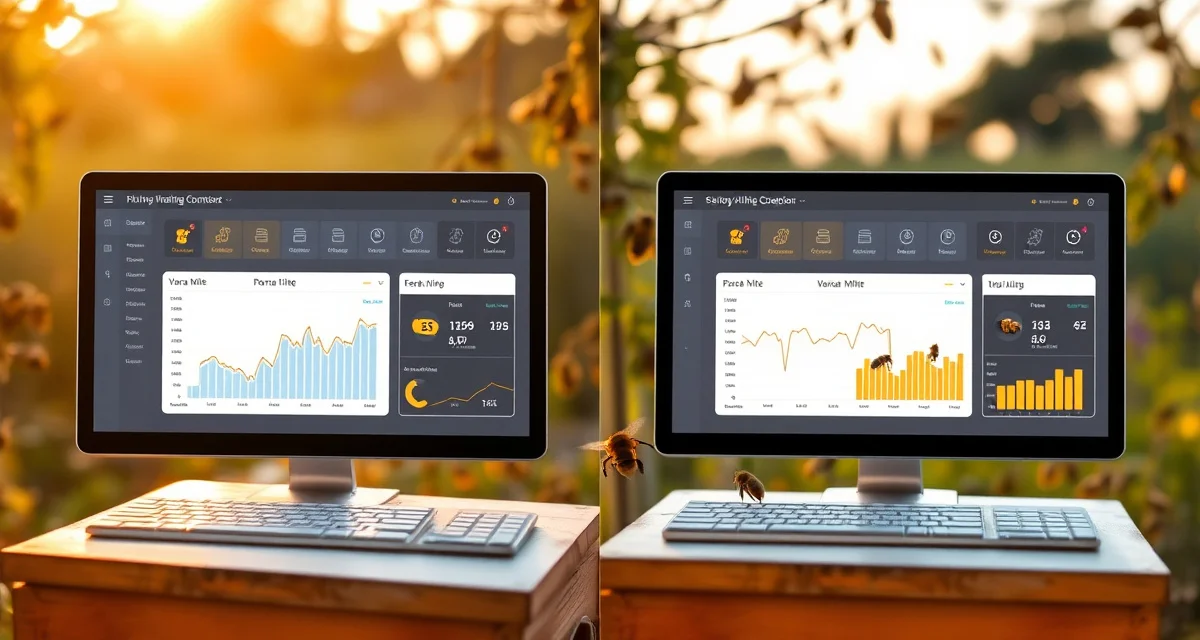
VarroaVault vs ApiaryBook: A Detailed Comparison
Both VarroaVault and ApiaryBook let beekeepers record information about their colonies. But they are built around different assumptions about what beekeepers need most. This comparison covers the key features side by side and explains where the differences matter in practice.
Who Each App Is Built For
ApiaryBook is a general-purpose beekeeping journal. It is designed to log hive inspections, record queen status, track honey production, and note observations. It serves hobbyist and small-scale beekeepers who want a digital replacement for a paper notebook.
VarroaVault is built specifically around Varroa mite management. The design premise is that Varroa is the single biggest driver of colony loss, and that beekeepers need purpose-built tools to monitor, treat, and document mite control. It handles general hive records too, but the monitoring and treatment features are the core of the product.
Varroa Monitoring Features
This is where the two apps diverge most clearly.
VarroaVault:
- Dedicated mite count entry for alcohol wash, sugar roll, and sticky board methods
- Automatic infestation percentage calculation from raw mite and bee counts
- Real-time threshold comparison against season-adjusted HBHC guidelines (2% spring/summer, 1% fall)
- Trend graphs showing mite levels over time across multiple monitoring rounds
- Monitoring reminders tied to seasonal windows
- Yard-level aggregated mite data for commercial operations
ApiaryBook:
- Mite counts can be entered as a general inspection note
- No automatic threshold calculation
- No season-adjusted threshold alerts
- No monitoring trend visualization specific to mite data
- No sampling reminders
If monitoring is a core part of your management, the gap here is significant. With ApiaryBook, tracking whether your mite levels are trending up or down requires manually reviewing past notes and doing your own math. VarroaVault does this automatically and surfaces the information where you need it.
Treatment Logging and Rotation Tracking
VarroaVault:
- Structured treatment records capture product name, active ingredient class, application date, removal date, and temperature at application
- Chemical class history prevents accidental back-to-back use of the same active ingredient
- Treatment efficacy tracking: pre- and post-treatment mite counts linked to treatment records
- Temperature window alerts flag when a scheduled treatment falls outside its safe range
- Resistance management flags based on rotation recommendations
ApiaryBook:
- Treatment entries exist as a treatment category within inspection records
- No chemical class tracking or rotation alerts
- No pre/post treatment efficacy linking
- No temperature restriction guidance
For a beekeeper running three hives, ApiaryBook's treatment logging may be sufficient. For anyone managing more than a dozen colonies or caring about resistance management, the lack of structured treatment data becomes a real gap.
Calendar and Scheduling
VarroaVault:
- Season-aware treatment calendar showing optimal windows by product type and climate region
- Varroa treatment calendar builder lets you plan the full year in advance
- Reminders for monitoring rounds, treatment start/end dates, and post-treatment efficacy checks
- Honey super conflict warnings: alerts when a scheduled treatment conflicts with super timing
ApiaryBook:
- Calendar view of past and scheduled inspections
- Basic reminder functionality for inspections
- No treatment-specific scheduling or product timing guidance
Commercial and Multi-Yard Features
VarroaVault:
- Yard-level dashboards aggregate mite data across colonies in each location
- Batch operations allow applying treatment records to multiple hives at once
- Yard run list and batch treatment workflows for multi-apiary management
- Operations-level reporting for regulatory compliance and insurance documentation
- User roles for operations with multiple staff members
ApiaryBook:
- Supports multiple apiaries
- No batch treatment entry
- No yard-level mite aggregation
- Designed primarily for single-user hobbyist use
This is a meaningful distinction for commercial operations and sideliners with 20 or more hives spread across multiple locations.
Record Keeping and Compliance
VarroaVault:
- Exportable treatment history reports formatted for state inspection requirements
- Timestamped records with product, dose, and duration documentation
- Supports varroa management record keeping requirements for USDA programs, state apiarist requests, and pollination contracts
- Data retention across multiple seasons for trend analysis
ApiaryBook:
- Exportable inspection logs in CSV format
- Records are general inspection notes rather than structured treatment documentation
- Adequate for personal record keeping; may require reformatting for formal compliance requests
Pricing
Both apps offer free tiers. ApiaryBook's free tier covers basic hive logging. VarroaVault's free tier includes mite monitoring up to a limited number of hives, with full commercial features on paid plans. Pricing details are current at varroavault.com.
When to Choose Each
Choose ApiaryBook if:
- You run a small operation (under 10 hives) and mainly want a digital inspection journal
- Varroa monitoring is something you do occasionally and record in general notes
- You do not need treatment rotation tracking, resistance management alerts, or threshold calculations
Choose VarroaVault if:
- Varroa management is a priority in your operation, at any scale
- You want automatic threshold comparisons and monitoring trend data
- You need structured treatment records with chemical class tracking
- You manage multiple yards and want aggregated mite data by location
- You need exportable records for compliance or insurance purposes
The Bottom Line
ApiaryBook is a capable general beekeeping journal. VarroaVault is a purpose-built Varroa management platform that also handles general hive records. If mite control is important to your operation, VarroaVault's purpose-built monitoring and treatment features provide substantially more value than a general journal can.
Start a free trial at varroavault.com to see the monitoring and treatment features in action.
FAQ
What is VarroaVault vs ApiaryBook: A Detailed Comparison?
VarroaVault vs ApiaryBook: A Detailed Comparison is an in-depth guide examining how these two beekeeping apps differ in features, focus, and practical use. VarroaVault is purpose-built for Varroa mite management with dedicated monitoring and treatment tools, while ApiaryBook is a general-purpose digital hive journal. The article breaks down each app side by side so beekeepers can determine which fits their operation and goals.
How much does VarroaVault vs ApiaryBook: A Detailed Comparison cost?
ApiaryBook is free to use with optional premium features. VarroaVault offers a free tier for basic hive records and a paid subscription that unlocks full Varroa monitoring, threshold alerts, trend graphs, and treatment documentation. Exact pricing is listed on each app's website. For beekeepers whose primary concern is mite control, VarroaVault's paid plan offers specialized tools not available in ApiaryBook at any tier.
How does VarroaVault vs ApiaryBook: A Detailed Comparison work?
ApiaryBook works like a digital notebook: you log inspections, queen status, honey yield, and general observations per hive. VarroaVault works by capturing mite count data from alcohol wash, sugar roll, or sticky board tests, then automatically calculating infestation percentages, comparing them against season-adjusted HBHC guidelines, and displaying trend graphs. Both apps store records per colony and are accessible via mobile or web.
What are the benefits of VarroaVault vs ApiaryBook: A Detailed Comparison?
VarroaVault's core benefit is turning raw mite counts into actionable decisions. It calculates infestation rates automatically, flags when colonies exceed treatment thresholds, and tracks trends across monitoring rounds. ApiaryBook's benefit is simplicity and breadth — it covers the full spectrum of hive observation in a clean, easy-to-use format. Together, the comparison helps beekeepers match the right tool to their actual workflow and risk tolerance.
Who needs VarroaVault vs ApiaryBook: A Detailed Comparison?
Hobbyist and small-scale beekeepers who want a straightforward inspection log will find ApiaryBook sufficient. Beekeepers who are serious about Varroa management — whether managing a few hives or hundreds — will benefit more from VarroaVault's specialized monitoring features. Anyone who has lost colonies to mite overload or wants data-driven treatment timing should strongly consider a Varroa-focused platform over a general journaling app.
How long does VarroaVault vs ApiaryBook: A Detailed Comparison take?
Neither app requires significant setup time. Both can be used immediately after creating an account and adding your hives. Ongoing use depends on how frequently you inspect and monitor — most beekeepers log mite counts every 30 days or according to seasonal guidelines. VarroaVault's threshold alerts reduce the time spent interpreting data manually, making the overall monitoring workflow faster once your hives are set up.
What should I look for when choosing VarroaVault vs ApiaryBook: A Detailed Comparison?
Look for whether the app tracks the specific mite count methods you use, whether it compares results against established thresholds like HBHC guidelines, and whether it shows trends over time rather than just point-in-time entries. Also consider ease of data entry in the field, whether you can import existing records, and whether treatment documentation is included. General inspection features matter too, but mite management depth is the key differentiator.
Is VarroaVault vs ApiaryBook: A Detailed Comparison worth it?
If Varroa mite management is a priority, VarroaVault is worth it. Varroa is the leading cause of colony loss, and having purpose-built tools for monitoring and treatment timing has direct impact on hive survival. ApiaryBook is worth it for beekeepers who primarily need a clean digital journal. Reading the full comparison before choosing ensures you invest time in the app that actually matches how you manage your bees.
Sources
- ApiaryBook product documentation (apiarybook.com)
- VarroaVault product documentation
- Honey Bee Health Coalition Varroa Management Guidelines