Viral diseases spread by varroa mites: the complete list
TL;DR
- Varroa mites transmit at least 20 known honey bee viruses, but a handful do most of the killing.
- Deformed Wing Virus is the deadliest and most widespread.
- Acute Bee Paralysis Virus, Kashmir Bee Virus, Sacbrood, and Black Queen Cell Virus all get amplified by mites too.
- Controlling varroa is the only proven way to hold viral load down in your hives.
How do varroa mites actually spread viruses to bees?
The mite is basically a hypodermic needle that visits every cell in your brood nest. It feeds on the developing pupa and on adult bees, and while it feeds it moves virus particles straight into the bee's body. That bypasses the gut, where a bee's main antiviral defenses live. Oral transmission through food is far less efficient by comparison.
Varroa are obligate ectoparasites. They can't survive off the bee. A 2019 PNAS study by Ramsey and colleagues found that varroa feed primarily on fat body tissue, not hemolymph as researchers assumed for decades [11]. Fat body runs immune function, detoxification, and protein storage, so the feeding damage and the virus injection hit the same bee at the same time.
Before varroa reached managed Western honey bee (Apis mellifera) colonies, most of these viruses sat at low, mostly harmless levels. The Honey Bee Health Coalition describes varroa as acting as "both a vector and an activator" of infections that used to stay covert [1]. Healthy colonies don't shrug that double hit off.
Researchers have now confirmed varroa as a vector for at least 20 distinct bee viruses [2]. Some spike fast and kill brood. Others slowly wreck adult bee behavior and lifespan until the colony can't hold itself together. That difference changes how you manage.
Viruses also move horizontally, bee to bee, through shared food and surfaces. But the mite route produces viral titers (concentrations) orders of magnitude higher. A 2016 study in PLOS Pathogens found DWV strains tied to varroa transmission were far more virulent than the same virus passed bee to bee [3]. Mite load and viral disease severity track each other for a reason.
What is the full list of viruses that varroa mites transmit?
Here's the honest answer: the list keeps growing as sequencing gets cheaper. The viruses below have confirmed or strongly supported evidence of varroa vectoring in peer-reviewed literature as of 2024 [2][4].
| Virus | Abbreviation | Evidence strength | Primary damage |
|---|---|---|---|
| Deformed Wing Virus | DWV | Confirmed | Wing deformity, cognitive impairment, winter kill |
| Acute Bee Paralysis Virus | ABPV | Confirmed | Paralysis, rapid adult die-off |
| Israeli Acute Paralysis Virus | IAPV | Confirmed | Shivering, paralysis, death |
| Kashmir Bee Virus | KBV | Confirmed | Rapid colony collapse, high lethality |
| Sacbrood Virus | SBV | Confirmed | Larvae fail to pupate, scale formation |
| Black Queen Cell Virus | BQCV | Confirmed | Queen cell/larvae death, dark cell walls |
| Chronic Bee Paralysis Virus | CBPV | Strong support | Trembling, hairless "greasy" bees |
| Slow Bee Paralysis Virus | SBPV | Confirmed | Hind-leg paralysis in adults |
| Lake Sinai Virus 1 and 2 | LSV1, LSV2 | Strong support | Unclear pathology; associated with weak colonies |
| Varroa destructor Virus 1 | VdV1 | Confirmed | Infects mites; may affect bee health indirectly |
| Big Sioux River Virus | BSRV | Emerging evidence | Unclear; found in varroa-infested colonies |
| Bee Virus Y | BVY | Moderate support | Associated with sacbrood-like symptoms |
| Arkansas Bee Virus | ABV | Moderate support | Found in symptomatic colonies with high mite loads |
| Berkeley Bee Virus | BkBV | Emerging | Newly sequenced; pathology under study |
| Macula-like Virus | MlV | Emerging | Found in mite-infested bees; significance unclear |
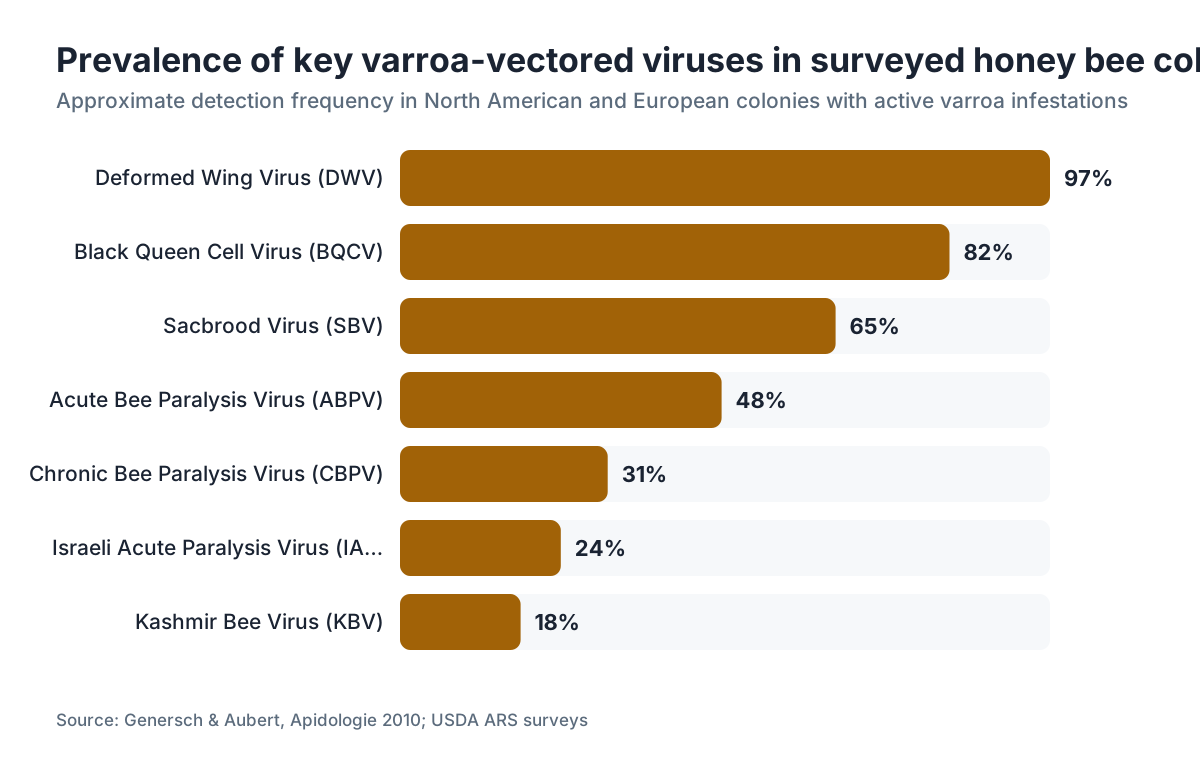
The first four (DWV, ABPV, IAPV, KBV) show up most often when a colony visibly collapses in North America and Europe [4]. Troubleshooting a dying hive? Start there.
DWV alone may account for more colony losses than every other bee pathogen combined. USDA Agricultural Research Service work identifies varroa, mainly through DWV transmission, as the single most damaging pest of managed honey bees worldwide [5].
What does Deformed Wing Virus actually do to a colony?
DWV is the big one. It replicates inside the developing pupa while the mite feeds in the capped cell. When the bee emerges you see the classic signs: crumpled or stubby or missing wings, a shortened bloated abdomen, and damage you can't see at all. Infected foragers get lost coming home. Infected nurse bees learn tasks slower. Infected winter bees die younger than healthy ones, which wrecks overwintering.
DWV comes in strains. Strain A was the original. Strain B showed up later and now dominates many regions. A 2016 analysis in PLOS Pathogens found DWV-B spread faster and hit higher titers in varroa-infested colonies than DWV-A [3]. Some evidence suggests DWV-B is displacing DWV-A globally. Worth watching.
Below roughly 2 percent (2 mites per 100 bees), plenty of colonies carry DWV at subclinical levels with no visible symptoms. Push past 3 to 5 percent and deformed bees start appearing on the landing board. By the time you see a pile of them, the colony is in real trouble and may not make winter. Visible deformity is late-stage evidence of a much wider infection.
Colonies can carry DWV for seasons without dying if mite levels stay low. That's the whole logic behind treatment thresholds: keep mites under 2 percent through summer and under 1 percent going into winter, and DWV mostly stays a background problem instead of a lethal one [1].
Which varroa-vectored viruses cause the fastest colony death?
ABPV, IAPV, and KBV are the sprint killers. High mite loads plus these viruses can take a colony from functional to dead in a matter of weeks.
Acute Bee Paralysis Virus makes adult bees tremble and die near the entrance. Surveys find it at high prevalence in dying, varroa-infested apiaries across Europe and North America [4]. IAPV causes similar shivering and got briefly blamed for Colony Collapse Disorder in 2007, though later work put it among several stressors rather than a single cause. Kashmir Bee Virus is arguably the most lethal of the three in the lab. Field surveys catch it less often, maybe because the colonies it infects collapse too fast to sample.
Black Queen Cell Virus belongs in this section even though it's less acutely lethal to adults. BQCV kills queen larvae and pupae inside queen cells and turns them black. A colony trying to requeen under stress (exactly when mite loads tend to climb) can fail attempt after attempt, which speeds the whole spiral downward.
Chronic Bee Paralysis Virus paints a distinct picture: shiny, hairless abdomens, trembling bees, and healthy hive-mates shoving them away from the entrance. CBPV can flare without high mite loads, but varroa boosts its spread a lot.
What is Sacbrood Virus and how does varroa make it worse?
Sacbrood is one of the oldest documented bee pathogens, described in detail by G.F. White in 1917, long before varroa reached the West [12]. It kills larvae in the late larval stage and leaves a fluid-filled sac where the pupa should be. Infected larvae go yellow, then brown, then dry into a rubbery gondola-shaped scale.
Strong colonies normally suppress Sacbrood through hygienic behavior. Bees find and pull infected larvae before the virus spreads far. Varroa changes the math. Mite feeding drops bee immune function and lifts viral titers across the colony, so Sacbrood can swamp hygienic behavior in infested hives even though the mites don't replicate it in cells the way they do with DWV.
Sacbrood rarely kills a healthy colony on its own. When you see a lot of it in a varroa-infested hive, read it as a signal that mite load is grinding down colony immunity, not as a separate primary disease. Knock the mites back and sacbrood usually retreats.
Hygienic behavior aimed at Sacbrood-infected brood has been studied as a selectable trait for breeders. Selecting bees that spot and remove infected larvae faster is one piece of the long game, though it won't replace mite treatments for most people running a normal operation.
Does varroa spread different viruses in different seasons?
Yes, and the timing drives your whole management calendar.
In spring and early summer, bee populations climb fast, brood is heavy, and mites are still small in number relative to bees. Viral transmission happens, but the colony's immune response and quick turnover of bees compensate partway. DWV is present but often subclinical.
Late summer flips it. Mite numbers peak right as bee numbers start shrinking, so the ratio of mites to bees jumps. Varroa-vectored transmission ramps up at the exact moment the colony is raising the long-lived winter bees that have to survive six months or more. Winter bees infected with DWV live shorter lives, so a colony entering fall with high mite loads is already making defective winter bees before any symptoms show. That colony often dies in January or February, and the beekeeper blames the cold instead of the mites.
The Honey Bee Health Coalition's Varroa Management Guide recommends getting mite levels below 1 mite per 100 bees before winter bee production starts, which across most of North America means finishing effective treatment by mid-August [1]. Miss that window and the damage is done before you ever open a treatment package.
ABPV and the other acute paralysis viruses tend to spike in late summer and fall alongside peak mites. CBPV can turn up any time but shows more in spring, when big crowded populations make mite-mediated spread easy.
Can you test a colony for varroa-vectored viruses?
Yes, though most beekeepers don't need routine viral testing to make good decisions. A mite count is still the most actionable diagnostic you own.
PCR-based virus testing is available through a few labs. The USDA ARS Beltsville Bee Lab runs a national disease diagnosis program where beekeepers can submit samples for pathogen analysis, including viral screening [5]. Some university extension labs offer similar services. Results usually take a few weeks and cost anywhere from nothing (certain extension programs) to $30 to $80 per panel depending on the lab.
What viral testing tells you that a mite count can't: which specific viruses are present. That matters if you're trying to figure out why a colony with moderate mite loads still collapsed. It can also flag viral pressure before symptoms appear. Some researchers use viral titer as a proxy for cumulative mite damage across a season.
What viral testing won't do: change your treatment. DWV, ABPV, both, doesn't matter. The response is identical: reduce varroa. There is no antiviral for honey bee viral disease. I'll say that plainly because beekeepers sometimes hope naming the virus opens a new treatment door, and it doesn't, at least not yet.
Want a practical middle ground? An alcohol wash or sugar roll for mite count every 30 days through summer gives you faster, cheaper, more actionable data than a viral panel [1].
Are there any bee viruses that varroa does NOT spread?
Several important bee pathogens aren't primarily varroa-vectored, and knowing the difference keeps you from blaming everything on mites.
Nosema (Nosema apis and Nosema ceranae) is a microsporidian gut pathogen spread mainly through fecal contamination of food and water. Varroa doesn't meaningfully vector it. Chalkbrood, caused by the fungus Ascosphaera apis, spreads through spore-contaminated comb and food, not mites. European Foulbrood, a bacterial disease, isn't mite-transmitted either.
American Foulbrood (AFB) needs its own mention. It comes from Paenibacillus larvae spores, spreads through infected honey and contaminated gear, and has nothing to do with varroa. AFB is a regulated disease in most U.S. states, and many require you to report it to the state apiarist. It's the one bee disease where legal obligations and quarantine can kick in no matter how tight your varroa program is.
Some newer viruses coming out of sequencing don't have confirmed transmission routes yet. The Lake Sinai Viruses, for instance, show up in varroa-infested colonies, but the exact mechanism is still being worked out.
The upshot: if you're facing scale (AFB or chalkbrood) or gut symptoms (Nosema), treating varroa is still smart for colony health, but it won't fix those diseases directly. Diagnosis matters.
What treatments actually reduce viral disease from varroa?
No product on the market targets bee viruses directly. Every approved varroa treatment works by killing or suppressing mites, which cuts viral transmission secondhand. The EPA-registered acaricides (mite-killing treatments) for varroa in the U.S. include oxalic acid, formic acid (Formic Pro and MAQS), amitraz (Apivar), fluvalinate (Apistan), and coumaphos (CheckMite+) [7].
Oxalic acid hammers phoretic mites, the ones riding adult bees outside capped cells. Vaporization or dribble in a broodless colony or during winter can hit greater than 90 percent mite kill when done right [8]. It doesn't reach capped cells, so a broodless window is the ideal time to use it.
Formic acid (Formic Pro, MAQS) penetrates capped brood and kills the mites reproducing in there, a real advantage during heavy brood season. The temperature window is strict. Formic Pro requires daytime temperatures between 50 degrees F and 85 degrees F [9]. Outside that range, efficacy drops and colony damage risk climbs. Follow the label. The EPA label is the law.
Amitraz strips (Apivar) give a slow-release treatment that works on both phoretic and cell-dwelling mites over 6 to 8 weeks. Resistance to amitraz has been documented in some populations but stays less widespread than fluvalinate and coumaphos resistance in North America [10].
Fluvalinate (Apistan) and coumaphos (CheckMite+) have serious documented resistance in many varroa populations. People still use them, but don't assume they work. Always confirm with a post-treatment mite wash if you go that route.
Want to plan treatments around the seasonal viral windows above? VarroaVault's free protocol tools let you map your local bee season against treatment windows so you hit mites before they spike.
For monitoring gear (alcohol wash kits, sticky boards, refractometers), see our roundup of beekeeping supply companies.
Does genetic resistance in bees reduce viral disease from varroa?
Yes, meaningfully, though never completely. Bees with Varroa Sensitive Hygiene (VSH) behavior detect and remove mite-infested pupae from capped cells, breaking the mite reproductive cycle and holding down mite population growth. Fewer mites means less viral transmission. The link is pretty direct.
The USDA ARS Baton Rouge lab has spent decades building VSH bee stocks and documenting how they perform. Their research shows VSH bees can hold mite populations low without chemical treatment in some settings [5]. In practice, most commercial "VSH" or "hygienic" bees express partial rather than full resistance, so most beekeepers still monitor and treat, just maybe less aggressively.
Small-scale selection for hygienic traits works for beekeepers raising their own queens, but it takes several generations and careful records to see real change. Buying queens from a reputable VSH-selected program is the faster path for most hobbyists.
Grooming behavior, where bees pull mites off each other, also drops mite loads. Some stocks, including certain Russian honey bees managed through the USDA Russian Honey Bee Breeders Association, show elevated grooming that helps suppress mites [1].
Genetics is a long-term piece, not a rescue. A colony with excellent genetics sitting at 5 percent mites in August still has serious viral problems coming. Genetics plus monitoring beats either one alone.
What does a colony with high viral load actually look like?
Signs shift with the dominant virus, but a few patterns repeat across heavily infected colonies.
Deformed bees crawling near the entrance or on the landing board are the most recognizable DWV sign. Even a few a day is worth checking. Many a day means crisis. These bees aren't just ugly. They can't fly, they navigate badly, and they die fast, so the colony loses foragers and nurse bees at the same time.
Shivering or trembling adults that can't fly, sometimes clustering in dark spots outside the hive, point to CBPV or one of the acute paralysis viruses. Hairless, greasy-looking abdomens are a CBPV signature. Healthy hive-mates often drag these bees out.
Failed queen cells with dark, sunken cappings point to BQCV, which is maddening when you're trying to requeen a struggling colony. The bees keep trying to replace the queen and keep losing the queen larvae to the virus.
Broader pattern: a colony that looked fine in July but is smaller and weaker by September, with patchy brood and sluggish bees, is usually carrying the accumulated effects of high mites and viral infection all summer. The collapse feels sudden. The biological damage built for months.
Do a mite wash if you see any of this. Two mites per 100 bees in summer, one per 100 going into winter. Those are the treatment triggers the Honey Bee Health Coalition recommends [1].
Frequently asked questions
How many viruses can varroa mites carry and transmit to honey bees?
Research has confirmed varroa as a vector for at least 20 honey bee viruses, with more identified as sequencing improves. Not all are equally dangerous. The most damaging are Deformed Wing Virus, Acute Bee Paralysis Virus, Israeli Acute Paralysis Virus, and Kashmir Bee Virus. Those four account for most virus-linked colony losses in North America and Europe.
Is Deformed Wing Virus always caused by varroa mites?
DWV can spread bee to bee through food and shared surfaces without mites, but that route produces much lower viral concentrations and rarely causes visible symptoms. Mite-vectored transmission drives the high titers responsible for wing deformity and collapse. Varroa turns a manageable background infection into a lethal one. Controlling mites is the only practical way to control DWV disease.
Can you treat honey bee viral diseases directly?
No. There are no antivirals approved for honey bee use. Every viral disease linked to varroa is managed indirectly by reducing mite populations, which cuts off the main transmission pathway. EPA-registered treatments including oxalic acid, formic acid products, and amitraz strips target mites, not viruses. Genetic selection for hygienic bees is the other arm of the strategy.
What mite count level triggers serious viral disease problems?
The Honey Bee Health Coalition recommends treating when mite loads reach 2 mites per 100 bees during summer brood season and 1 mite per 100 bees in fall before winter bee production. Above those thresholds, viral transmission climbs fast and colony damage compounds. The critical window is late summer, when high mite loads infect winter bees that need to live for months.
Does Israeli Acute Paralysis Virus (IAPV) cause Colony Collapse Disorder?
IAPV was identified as a marker in CCD colonies in a 2007 Science paper, but follow-up research found it was one of several stressors present rather than a single cause. CCD's origins stay somewhat disputed, but the current consensus points to varroa, associated viruses, pesticides, and nutrition deficits acting together rather than any single pathogen.
How quickly can varroa-vectored viruses kill a colony?
It depends on the virus and mite load. Acute Bee Paralysis Virus and Kashmir Bee Virus can drive a colony into collapse within weeks when mite populations run very high. DWV usually works slower, degrading colony function over a full season before winter kills the weakened colony. Black Queen Cell Virus can speed failure by killing successive queen replacement attempts over the same period.
Are some honey bee breeds more resistant to varroa-vectored viruses?
Some breeds tolerate mites better, which indirectly reduces viral disease. VSH (Varroa Sensitive Hygiene) bees detect and remove mite-infested pupae, suppressing mite reproduction. Russian honey bee stocks show elevated grooming behavior. Neither offers complete protection, and most commercial stock expresses partial rather than full resistance. Genetic resistance supplements monitoring and treatment. It doesn't replace them.
What is Black Queen Cell Virus and why does it matter for requeening?
BQCV kills queen larvae and pupae inside queen cells, turning the cell walls dark brown to black. It's transmitted by varroa and also spreads through pollen. A colony raising emergency queens under stress can lose multiple queen cells to BQCV, making a bad situation worse. Reducing mite load before you requeen improves queen-rearing success in heavily infested colonies.
Can I test my bees for specific viruses at home?
Not reliably at home. PCR-based viral testing needs lab equipment. The USDA Beltsville Bee Lab accepts samples from beekeepers for pathogen diagnosis, and some university extension programs offer similar services. Results take weeks and cost anywhere from free to around $80 depending on the lab. For most practical purposes, regular mite counts give you actionable information faster than a viral panel does.
Does Sacbrood Virus kill colonies on its own without varroa?
Rarely. Sacbrood has been present in honey bee populations for over a century, and most healthy colonies suppress it through hygienic behavior. Varroa amplifies Sacbrood by lowering bee immune function and raising overall viral load, which can overwhelm the colony's ability to detect and remove infected larvae. Significant Sacbrood in a mite-infested colony usually signals that mite control has failed.
How does varroa mite feeding suppress bee immunity?
Varroa feeds on the bee's fat body tissue. A 2019 PNAS study revised the old assumption that it fed on hemolymph. Fat body runs bee immune function, detoxification, and protein storage. Damage during the pupal stage permanently impairs immune response in the adult, leaving it more vulnerable to viruses that arrive by mite injection and through other exposure routes.
Do oxalic acid treatments help reduce viral diseases in colonies?
Indirectly, yes. Oxalic acid kills phoretic mites on adult bees with greater than 90 percent efficacy when applied correctly in broodless conditions. Fewer mites means less virus transmission. Oxalic acid doesn't reach mites inside capped cells, so timing treatment during broodless periods, winter clusters, or after a brood break matters for getting maximum kill and maximum viral reduction.
Is Chronic Bee Paralysis Virus only spread by varroa?
No. CBPV spreads through contact and food-based routes without varroa, which is why it occasionally shows up in low-mite colonies. High bee density and crowded conditions favor its spread. Varroa amplifies CBPV prevalence and severity in infested colonies. The distinctive signs are trembling, hairless, shiny bees that others often reject. Better ventilation and less crowding can help alongside mite control.
Should I requeen a colony to help it recover from varroa-vectored viral disease?
Requeening helps if the new queen comes from high-VSH stock, which improves mite resistance going forward. But requeening without first reducing mite load rarely solves the problem, because the new bees are still reared under high viral pressure. Treat first, let mite numbers drop, then requeen with hygienic stock for the best outcome.
Sources
- Honey Bee Health Coalition, Varroa Management Guide (latest edition): Varroa 'acts as both a vector and an activator' of bee viruses; treatment thresholds of 2 mites per 100 bees in summer and 1 per 100 before winter bee production
- Wilfert L et al., Science 2016, 'Deformed wing virus is a recent global epidemic in honeybees driven by Varroa mites': Varroa confirmed as vector for at least 20 distinct honey bee viruses
- Dainty KR et al., PLOS Pathogens 2016, 'DWV-B spread and virulence comparison with DWV-A': DWV-B strains spread more rapidly and reached higher titers in varroa-infested colonies than DWV-A
- Genersch E & Aubert M, Apidologie 2010, 'Emerging and re-emerging viruses of the honey bee': DWV, ABPV, IAPV, and KBV are the viruses most commonly associated with visible colony collapse in varroa-infested apiaries
- USDA Agricultural Research Service, Beltsville Bee Lab: USDA identifies varroa, primarily through DWV transmission, as the single most damaging pest of managed honey bees worldwide; national disease diagnosis program; VSH bee research
- U.S. EPA, Pesticides program, Honey Bee protection: EPA-registered acaricides for varroa include oxalic acid, formic acid (Formic Pro, MAQS), amitraz (Apivar), fluvalinate (Apistan), and coumaphos (CheckMite+)
- Penn State Extension, Oxalic Acid for Varroa Control: Oxalic acid vaporization in broodless colonies achieves greater than 90 percent mite kill when done correctly
- Formic Pro EPA-approved label (NOD Apiary Products): Formic Pro requires daytime temperatures between 50°F and 85°F for safe and effective application
- Rinkevich FD et al., PLOS ONE, 'Resistance to miticides in U.S. Varroa populations': Resistance to amitraz documented in some varroa populations but less widespread than fluvalinate and coumaphos resistance in North America
- Ramsey SD et al., PNAS 2019, 'Varroa destructor feeds primarily on honey bee fat body tissue': Varroa feeds on fat body tissue rather than hemolymph; fat body damage permanently impairs adult bee immune function
- UC Davis, Honey Bee Research Facility, Bee diseases and pests: Sacbrood was described by G.F. White in 1917 and is normally suppressed by hygienic behavior in healthy colonies
Last updated 2026-07-09