Wax contamination from varroa treatments: long-term effects on hives
TL;DR
- Acaricides used to control varroa mites, especially fluvalinate and coumaphos, accumulate in beeswax and can persist for years.
- Studies detect residues in commercial comb at levels that impair queen sperm viability, drone fertility, and larval development.
- Organic acids and essential oils leave minimal wax residue.
- Rotating treatments and replacing old comb reduces long-term exposure.
Why do varroa treatments build up in beeswax at all?
Beeswax is a fat-soluble sponge. Most synthetic acaricides, with fluvalinate and coumaphos being the big two, are lipophilic compounds that bind to wax the way pesticides bind to soil organic matter. Every time a strip treatment sits in the hive, the active ingredient migrates out of the strip and into the comb. The bees build new wax on top of the old, and the residues get layered in.
This is not a small or theoretical problem. A widely cited 2010 study by Mullin et al. analyzed 749 wax and pollen samples from across the United States and found "over 120 different pesticides and metabolites" in the samples, with fluvalinate and coumaphos present in the majority of commercial beeswax.[1] The same study detected coumaphos in 98.5% of wax samples tested. That number is striking. It means nearly every commercial wax foundation sold or reused in that era was already contaminated before it ever went into a hive.
Why does this matter practically? Beeswax is not inert packaging. Larvae are raised in it. Queens lay eggs in it. Nurse bees eat wax scales to produce new comb. The comb is the hive's long-term reservoir for whatever chemistry you (or previous beekeepers) have used, and residues build up faster than they break down.
Which varroa treatments leave the most residue in comb?
Treatments are not equal here, and the gap matters a lot when you're deciding what to reach for. Fluvalinate and coumaphos are the problem children. Oxalic and formic acid barely register.
| Treatment | Active ingredient | Wax residue potential | Persistence in comb |
|---|---|---|---|
| Apistan strips | Fluvalinate | High | Years; half-life in wax estimated >1 year [1] |
| CheckMite+ strips | Coumaphos | High | Very persistent; found in comb years after use [1] |
| Apivar strips | Amitraz | Moderate | Shorter persistence than fluvalinate; metabolites detected [2] |
| Oxalic acid (Api-Bioxal) | Oxalic acid | Minimal | Naturally present in honey; does not accumulate [3] |
| Formic acid (Mite-Away Quick Strips, Formic Pro) | Formic acid | Minimal | Volatile; dissipates from wax rapidly [4] |
| Thymol (Apilife VAR, Apiguard) | Thymol | Low | Some residue detected but at low, rapidly declining levels [5] |
Both fluvalinate and coumaphos have strong wax affinity, one a pyrethroid, one an organophosphate. Amitraz sits in the middle. It does leave residues, but its breakdown products are less persistent than the synthetic acaricides above it on that list. Oxalic acid and formic acid are different in character. Oxalic acid occurs naturally in plant matter and honey, and the doses used for varroa treatment do not drive detectable accumulation beyond background levels.[3]
Thymol is a mixed case. Studies have found trace thymol residues in wax and honey after treatment, but levels typically fall below detection thresholds within weeks of removal, with no credible evidence of progressive accumulation across seasons the way fluvalinate shows.[5]
What levels of residue have researchers actually found in commercial comb?
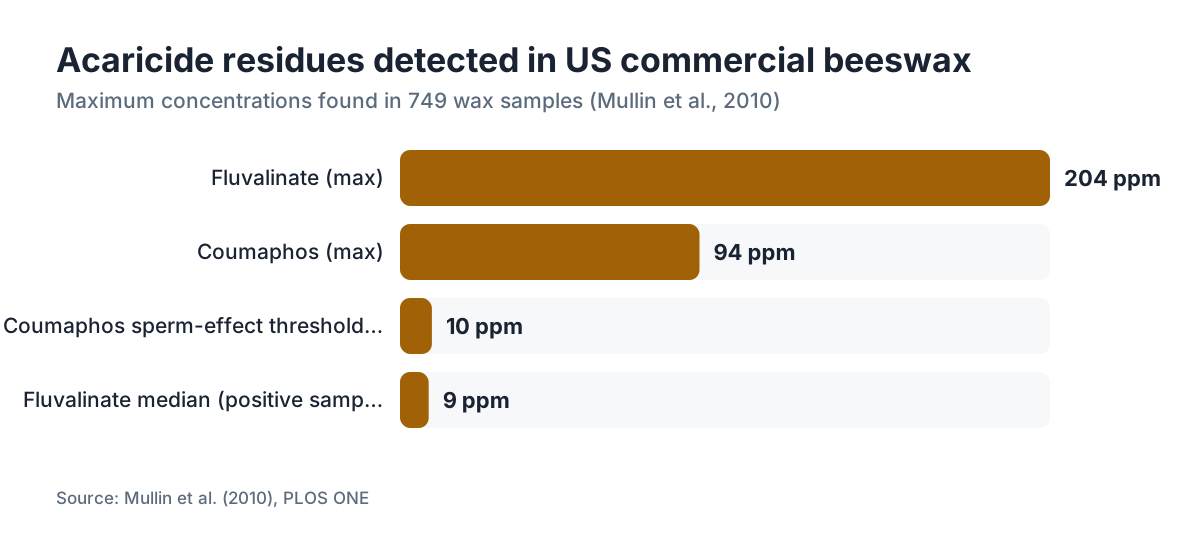
The Mullin et al. (2010) study is the foundational dataset here. Across those 749 samples from 23 states and one Canadian province, fluvalinate concentrations in wax ranged up to 204 parts per million (ppm), with a median around 9 ppm in positive samples. Coumaphos reached as high as 94 ppm in some samples.[1]
Put those numbers next to the biology. Laboratory studies on queen sperm viability show negative effects at coumaphos concentrations as low as 10 ppm in wax.[6] The range found in real commercial comb overlaps with concentrations that impair bee reproduction in controlled settings. That overlap is the whole concern in one sentence.
Amitraz residue data is thinner. A 2020 review noted that amitraz metabolites, particularly DMPF (2,4-dimethylaniline), are detectable in comb and honey, but the field database is smaller than for fluvalinate and coumaphos.[2] Part of that gap is timing: amitraz (Apivar) entered wide use later than the pyrethroids.
One practical note. If you buy commercial wax foundation, you have no control over its residue history. Rendered wax from operations that ran synthetic strips for decades carries those residues forward. Small-scale beekeepers who render their own wax from organically managed hives are in a better spot, but even then, old comb drawn on contaminated foundation contaminates the next batch of rendered wax.
Do wax residues actually harm bees, or is this a lab-only concern?
Here the data gets genuinely uncertain, and I'd rather be honest about that than oversell it.
Controlled laboratory studies show real effects at concentrations found in commercial comb. Haarmann et al. (2002) found that queens reared in coumaphos-contaminated wax had significantly lower sperm viability than controls.[6] Wu et al. (2011) found that larval exposure to field-realistic pesticide combinations in wax, fluvalinate and coumaphos included, caused reduced adult emergence rates and impaired foraging behavior in survivors.[7]
Field studies are harder to read because colonies carry so many stressors at once. Nobody has cleanly isolated wax contamination as a single variable in a large field trial and shown a mortality difference. What we have is observational. Surveys repeatedly show that colonies in heavily contaminated comb perform worse on average, but causality is hard to pin down when those same colonies also face nutrition deficits, viruses, and other pesticide exposures.
The Honey Bee Health Coalition's Varroa Management Guide keeps its language measured. It acknowledges that pesticide residues in wax are a documented concern and recommends comb replacement as a management tool, without claiming that comb replacement alone will reverse colony decline.[8] That framing is honest. Wax contamination is probably one of several factors dragging colonies down, not a single cause of collapse.
Drone fertility deserves its own note. Several studies find that drones raised in highly contaminated wax show reduced sperm quality. Because a queen mates once and stores that sperm for her entire laying life, anything that lowers sperm viability at mating time affects colony genetics and queen longevity for years afterward.
How long do fluvalinate and coumaphos residues persist in comb?
A long time. Longer than most beekeepers assume.
Fluvalinate has a reported half-life in beeswax of roughly 12 to 60 weeks depending on temperature and wax age, based on laboratory degradation studies. In practice, comb that tested positive in the Mullin survey had sat in hives long enough for many treatment applications to stack. There is no field evidence that fluvalinate fully clears from old brood comb within a typical 2 to 3 year comb-replacement cycle.[1]
Coumaphos is even more stubborn. It is an organophosphate, and while organophosphates can hydrolyze in water, beeswax is not aqueous. Coumaphos oxon, a degradation product, has also been detected in comb and is itself biologically active.[7] Degradation does not necessarily mean detoxification.
Amitraz and its metabolites show faster apparent decline in comb than fluvalinate, though the data here is thin. Some studies suggest amitraz residues drop substantially within a single brood cycle after strip removal, while metabolites hang on longer.[2]
The practical upshot: once comb is heavily contaminated with fluvalinate or coumaphos, you cannot fix it by switching to organic treatments. The residue stays. The only real remedy is pulling the comb and replacing it.
Does wax contamination affect honey, pollen, or what bees eat?
Yes, though honey residue levels run lower than wax levels because honey is water-based and these compounds are wax-soluble. Residues partition much more heavily into wax than into honey. They are not zero in honey.
The Mullin et al. study found pesticide residues in pollen samples as well as wax.[1] Pollen stored in contaminated comb picks up residues from the wax walls of the cells. Nurse bees and larvae eating that pollen get exposed through several routes at once: wax contact, pollen consumption, and royal jelly, which nurse bees produce after eating contaminated pollen and honey.
For honey headed to human tables, the EU sets maximum residue limits (MRLs) for several acaricides. The European Food Safety Authority has set the MRL for coumaphos in honey at 0.1 mg/kg.[9] US EPA-registered labels for CheckMite+ direct beekeepers not to apply the product when honey supers are on the hive, specifically to protect the honey crop from contamination.[10]
For the bees themselves, the pollen route matters more than the honey route. Pollen is the main protein source for larvae and young nurse bees. If beebread packed in contaminated cells carries acaricide residues, developing larvae get a diet-plus-contact exposure at the same time.
How does comb age relate to contamination levels?
Older comb holds more residue. In surveys the relationship is nearly linear: the darker and older the comb, the higher the measured acaricide concentrations, because each treatment season adds another layer.
Dark brood comb also carries cocoons, propolis, and fecal matter from many brood cycles, which traps lipophilic compounds even harder. The physical structure of old comb locks in residues in ways that lighter, newer comb does not.
That is why extension services and the Honey Bee Health Coalition keep recommending a brood comb rotation schedule, usually removing the oldest one-third of frames each year so no frame stays in a hive longer than three years.[8] Three-year rotation means you never carry more than three treatment seasons of residue in any single frame. Set that against comb that stays put for eight or ten years, and the reduction is real.
Inheriting equipment from another beekeeper, or buying used hive bodies, means you have no idea what treatment history the comb carries. That old dark comb may look full of character. In a contamination context it is a liability. Melting it out and replacing with fresh foundation, or letting bees draw new natural comb, is the clean-start option.
What can beekeepers actually do to reduce wax contamination over time?
The evidence points to a handful of concrete moves, some heavier hitters than others.
Rotate comb on a schedule. The three-year rule is a reasonable target. Pull the oldest, darkest frames each spring, melt them out, and either drop in clean foundation or give the bees empty frames to draw. This keeps average comb age, and average residue load, low.
Switch to organic acid treatments where your local mite pressure and climate allow. Oxalic acid and formic acid do not add to wax residue accumulation.[3][4] If you're in a climate where formic acid works (daytime highs roughly 50 to 85 degrees F), Formic Pro or Mite-Away Quick Strips clean up mites without loading your comb. Oxalic acid, vaporized or dribbled and registered under Api-Bioxal, is the lowest-residue option on the market and works well against phoretic mites.
Don't leave synthetic strips (Apistan, CheckMite+) in past the label duration. Extended exposure beyond the label dramatically increases wax loading and drives resistance in the mite population at the same time. The EPA label for Apistan sets a maximum treatment duration. Follow it.[10]
Skip commercial wax foundation if you're trying to start clean. Purchased foundation rendered from pooled commercial comb may already carry residues. Mann Lake, Brushy Mountain, and other suppliers do not generally certify the residue history of their foundation wax. If clean wax matters to you, buy from operations that document their treatment history, or let your bees draw natural comb.
Keep records. Knowing which treatments you ran in which hive body in which year tells you which equipment to retire first. The free protocol tracker at VarroaVault lets you log treatments by hive so you can see which boxes carry the heaviest synthetic history.
For broader hive health and varroa mite management context, residue control is one piece of a larger picture that also includes mite monitoring, timing, and treatment selection.
Does wax contamination contribute to varroa treatment resistance?
These are related but separate problems. Wax contamination affects bee health. It is not directly causing mite resistance. Resistance to synthetic acaricides develops through selection pressure: when some mites carry genetic variants that let them survive treatment, those variants spread. Leaving strips in too long, or leaning on the same chemistry over and over, drives that selection.
There is an indirect link worth noting, though. Heavily contaminated comb creates chronic, low-level acaricide exposure for mites even between treatment periods. In theory, that sub-lethal background exposure could apply a weak but continuous selection pressure. Nobody has proven this in field populations, but it is mechanistically plausible. The Honey Bee Health Coalition's Varroa Management Guide notes that acaricide resistance is best managed through rotation, monitoring, and avoiding over-reliance on any single chemistry.[8]
Reducing wax contamination and managing for resistance are aligned goals, not competing ones. Moving toward organic acids cuts both the residue load in your comb and the selection pressure on your mite population.
What does the EPA say about acaricide residues in beeswax?
The EPA registers varroa treatments under FIFRA (the Federal Insecticide, Fungicide, and Rodenticide Act) and sets tolerances for residues in honey and wax as part of registration. For coumaphos (CheckMite+), the EPA has established tolerances for residues in bee products.[10]
Product labels are legal documents under FIFRA, and they carry the guidance that matters. CheckMite+ labels say not to use in honey supers and to remove strips after the treatment period. Apistan labels cap treatment duration the same way. Violating label directions is a federal offense, and it also speeds up both mite resistance and wax contamination. The label is not a suggestion.
The EPA does not currently set maximum residue limits for acaricides in wax sold for commercial foundation use, a gap that researchers including Mullin et al. have pointed to.[1] There is no federal certification program for "clean wax foundation" in the United States as of 2025. Some European countries run tighter controls on wax quality through the supply chain, but US beekeepers buying commercial foundation have limited assurance about residue history.
For current label language, the National Pesticide Information Center (NPIC) maintains a searchable database of registered pesticide labels through its EPA-linked resources.[13]
Is there any safe level of wax contamination, and how do you test for it?
There is no officially established safe threshold for acaricide residues in beeswax the way there are food MRLs for honey. Lab effects on queen sperm viability show up at coumaphos concentrations around 10 ppm, which overlaps with the range found in commercial comb.[6] Whether 5 ppm is safe for colony-level outcomes over years is genuinely unknown.
Testing your own comb is possible but expensive and not a DIY job. Commercial residue analysis labs, including some that serve the wine and food industries, can run pesticide panels on wax samples. Expect $50 to $150 per sample for a multi-residue screen. University extension apiculture programs sometimes run subsidized testing; contacting your state's apiculture extension specialist is the best starting point for options near you.
Most hobbyist and sideliner beekeepers will never test their comb directly. The workable approach is to manage contamination by proxy: track comb age, track the treatments you've used, rotate on schedule, and favor organic acids going forward. If you want a concrete benchmark, a frame that has never seen a synthetic strip treatment and is under three years old is about as clean as you'll get without a lab report.
For beekeepers sourcing new equipment or beekeeping supplies, asking suppliers directly about the source and treatment history of foundation wax is fair due diligence, even if the answers often come back incomplete.
What does the research say about brood health in contaminated comb?
Wu et al. (2011) is the most detailed study on this question. The researchers reared larvae in wax containing pesticide mixtures at concentrations reported in the Mullin survey, and found reduced adult emergence, lower body weight at emergence, and impaired olfactory learning in survivors.[7] The study's stated conclusion: "The complex mixture of pesticides found in honey bee colonies may have sublethal effects on larval development that could explain some of the ongoing colony health problems."
Sublethal is the key word. The effects are not bees dropping dead in the frame. They are bees that emerge smaller, that read foraging cues less effectively, that may be more open to viral infection because their immune function is compromised. Those are the effects that drain a colony slowly with no obvious cause.
Queen quality is a specific worry. Queens are raised in the brood area and fed almost entirely from that comb environment. If the wax and pollen that nurse bees draw on to produce royal jelly is contaminated, queen larvae get exposed during the most sensitive stretch of development. Research on coumaphos specifically shows effects on larval queen development and on the sperm stored from mating.[6]
Nobody has a clean number for how much contaminated comb shortens colony lifespan. The research is solid on mechanism and on effects at realistic concentrations in lab settings. Field confirmation of population-level mortality effects is weaker, partly because clean-comb controls are hard to build in real apiaries.
How do you start reducing wax contamination in an existing apiary?
Start with an audit. Pull frames and look at comb color. Very dark brown or black brood comb with no record of regular rotation is your highest-risk equipment. If you've run Apistan or CheckMite+ in those bodies for several years straight, that comb is likely carrying the heaviest residue load.
Make a plan to retire old comb over a two to three year window rather than all at once. Replacing every frame in every hive in one season is disruptive and expensive. A rolling one-third-per-year rotation is easier on the bees and on your wallet.
Shift your treatment protocol toward organic acids. Oxalic acid vaporization (Api-Bioxal, EPA-registered) is now the most widely used organic treatment in the US and works well in broodless conditions. Formic acid products work through capped brood. Neither leaves meaningful wax residue.[3][4] If your mite counts demand treatment and organic acids alone can't keep up, consider amitraz (Apivar) as a lower-residue synthetic option rather than going back to fluvalinate or coumaphos.
For tracking which hives carry which treatment histories, VarroaVault offers free protocol tools that let you log treatments by hive body over time, which makes it easier to know which boxes to prioritize for retirement.
For a solid overview of the mite itself and why management matters, the varroa mite reference is a useful starting point if you're new to thinking about this systematically.
Finally, talk to your state apiarist or university extension program about local options. The USDA and land-grant university apiculture programs have the best current data on what treatments are working in your region and what the resistance picture looks like near you.[12]
Frequently asked questions
Can I clean or detox contaminated beeswax frames?
No practical cleaning method removes lipophilic acaricide residues from beeswax. Washing, freezing, or storing frames does not reduce fluvalinate or coumaphos levels. Rendering wax and filtering it removes some impurities but leaves dissolved acaricides in the fat fraction. The only reliable option is to melt out old comb, discard the wax if it's heavily contaminated, and replace with clean foundation or natural comb.
How often should I replace brood comb to minimize contamination?
Most extension programs and the Honey Bee Health Coalition recommend replacing the oldest one-third of brood frames each year, so no frame stays in service longer than three years. This limits residue accumulation to three treatment seasons per frame. If you've used synthetic strips historically, pull the darkest, oldest frames first. Three-year rotation is a practical target; annual full replacement is not realistic for most operations.
Does oxalic acid leave residues in wax?
Oxalic acid occurs naturally in honey, pollen, and plant material. Studies show that oxalic acid treatment at labeled rates does not drive residue levels in wax or honey above natural background concentrations. It is the lowest-residue registered varroa treatment available in the US. Api-Bioxal, the EPA-registered oxalic acid product, does not accumulate in comb with repeated use.
Are commercial wax foundation sheets contaminated?
Many are. Mullin et al. (2010) found fluvalinate and coumaphos in the majority of commercial beeswax samples tested across the United States, with coumaphos detected in 98.5% of wax samples. Commercial foundation is rendered from pooled beeswax with no residue certification standard in the US. Beekeepers who want lower-residue foundation should source from operations with documented organic-only treatment histories or let bees draw natural comb.
Does wax contamination affect honey flavor or safety for humans?
Acaricide residues partition far more strongly into wax than into honey, so honey residue levels run lower. The EU maximum residue limit for coumaphos in honey is 0.1 mg/kg. US honey sold commercially is not routinely screened for acaricide residues. For hobbyist honey, following label directions (removing strips before adding supers) is the main protection. No large-scale honey safety incidents tied to acaricide wax residue have been documented.
Can wax contamination cause queens to fail faster?
Lab studies suggest yes. Coumaphos in wax at concentrations found in commercial comb reduces queen sperm viability, according to Haarmann et al. (2002). Queens raised in contaminated wax may store less viable sperm at mating, leading to earlier brood pattern failure and supersedure. Drones raised in contaminated comb also show reduced sperm quality, which compounds the problem at mating. This is one of the more direct documented effects at field-realistic concentrations.
Is amitraz (Apivar) safer for wax than fluvalinate (Apistan)?
Probably, though the data is thinner. Amitraz has shorter persistence in wax than fluvalinate based on available studies, and less survey data showing extreme concentrations in field comb. But amitraz metabolites are detectable in comb and honey. Against fluvalinate and coumaphos, amitraz is a lower-residue choice among synthetic options. Organic acids (oxalic, formic) remain the lowest-residue treatment category overall.
What is the biggest mistake beekeepers make that increases wax contamination?
Leaving synthetic strips in the hive past the label duration. This is the single biggest driver of elevated wax residue. Apistan and CheckMite+ strips that stay in a hive for months longer than labeled concentrate far more acaricide into the wax than a properly timed treatment does. It also accelerates mite resistance. Follow the label's maximum treatment duration exactly. Treating outside the honey flow window further limits contamination of the honey crop.
Do natural comb or foundationless frames help reduce contamination?
Yes, as a starting point, if the bees draw comb from scratch without contaminated foundation. Natural comb drawn by bees with no synthetic-strip treatment history starts with zero acaricide residue. Over time, if you use synthetic treatments, it will accumulate residues just like foundation-based comb. The advantage is the clean start and the ability to trace the contamination history yourself from day one.
How do wax residues interact with other pesticides bees encounter?
Synergistically, in some cases. Wu et al. (2011) tested pesticide mixtures at field-realistic concentrations and found effects greater than expected from individual compounds alone. Ergosterol biosynthesis inhibitor fungicides, common in agriculture and found in pollen loads, are known to synergize with miticides. Bees foraging on crops treated with those fungicides and living in contaminated comb face a compounded chemical burden.
Can I sell or give away frames with heavy wax contamination?
You can legally sell used hive equipment, but ethically you should disclose treatment history to any buyer. Heavy coumaphos or fluvalinate contamination in comb is a real liability for the recipient's colony. Some beekeepers melt out old comb before selling equipment; that is the cleanest approach. Selling very old, dark, heavily treated frames as ready-to-use brood comb without disclosure is a practice worth reconsidering.
Does chilling or freezing comb reduce acaricide residue levels?
No. Freezing comb is useful for killing wax moth larvae and small hive beetles, but it does not degrade or remove lipophilic acaricide residues. Fluvalinate and coumaphos are chemically stable at freezing temperatures. The residues stay bound to the wax matrix regardless of storage temperature. Do not use freezing as a contamination-reduction strategy; use it only for pest control in stored comb.
Are there any certified organic or low-residue foundation options available?
A few small suppliers market foundation from hives managed with organic treatments only, but there is no USDA or EPA certification standard for low-residue beeswax foundation in the US as of 2025. Buyers have to rely on supplier documentation and trust. Some hobbyist beekeepers source wax from local organic operations and have it pressed into foundation at custom mills. Letting bees draw natural comb from starters is the most verifiable low-residue approach.
Sources
- PLOS ONE, Mullin et al. (2010), 'High Levels of Miticides and Agrochemicals in North American Apiaries': Fluvalinate and coumaphos found in majority of commercial wax samples; coumaphos detected in 98.5% of wax samples; over 120 different pesticides and metabolites identified in 749 wax and pollen samples from 23 US states
- Journal of Agricultural and Food Chemistry, Tananaki et al. (2020) review of amitraz residues in bee products: Amitraz metabolites including DMPF detectable in comb and honey; persistence data thinner than for fluvalinate/coumaphos
- EPA, Api-Bioxal (oxalic acid) Registration, Docket EPA-HQ-OPP-2013-0647: Oxalic acid registered for varroa treatment; oxalic acid occurs naturally in bee products and does not accumulate above background with labeled use
- EPA, Formic Pro and Mite-Away Quick Strips product registrations: Formic acid is volatile and does not accumulate in wax; labeled for varroa control with minimal residue concern
- Apidologie, Gregorc & Skerl (2007), thymol residues in honey and wax after Apilife VAR treatment: Thymol residues in wax decline rapidly after treatment removal and do not show progressive accumulation across seasons
- Apidologie, Haarmann et al. (2002), 'Effects of coumaphos on queen rearing and sperm viability': Queens reared in coumaphos-contaminated wax (concentrations found in commercial comb) showed significantly lower sperm viability than controls
- PLOS ONE, Wu et al. (2011), 'Sublethal effects of pesticide residues in brood comb on worker honey bee development': Larvae reared in wax containing field-realistic pesticide mixtures showed reduced adult emergence, lower body weight, and impaired olfactory learning; stated conclusion that 'complex mixture of pesticides found in honey bee colonies may have sublethal effects on larval development'
- Honey Bee Health Coalition, Varroa Management Guide (current edition): Coalition recommends comb rotation (oldest one-third per year) to manage residue accumulation; acknowledges acaricide residues in wax as documented concern; recommends treatment rotation to manage resistance
- European Food Safety Authority (EFSA), MRL database for coumaphos in honey: EU maximum residue limit for coumaphos in honey set at 0.1 mg/kg
- EPA, CheckMite+ and Apistan product labels (FIFRA registered): CheckMite+ label directs not to apply when honey supers are on hive; label duration limits apply; violating label directions is a federal offense under FIFRA
- Penn State Extension, Varroa Mite Management for Honey Bees: Extension guidance on comb replacement schedules and organic acid treatment options to reduce wax contamination
- National Pesticide Information Center (NPIC), pesticide label database: NPIC maintains searchable database of EPA-registered pesticide labels including varroa treatments
Last updated 2026-07-10