Coumaphos residue in beeswax: how bad is the buildup?
TL;DR
- Coumaphos is a fat-soluble organophosphate that binds tightly to beeswax and does not break down easily.
- Studies have found residues above 100 ppm in heavily treated comb, levels linked to queen failure, reduced sperm viability in drones, and larval mortality.
- Wax rotation and avoiding chronic treatment are the main ways to limit exposure.
What is coumaphos and why does it end up in wax?
Coumaphos is the active ingredient in CheckMite+ strips, an EPA-registered miticide used to control Varroa destructor and small hive beetles in honey bee colonies [1]. It's an organophosphate, the same chemical family as many agricultural insecticides, and it has one property that makes it especially problematic in the hive: it's highly lipophilic. That means it binds strongly to fats. Beeswax is essentially a fat matrix, and coumaphos dissolves into it readily and stays there.
When you hang CheckMite+ strips in a hive, the active ingredient off-gasses into the air and also migrates directly into any wax the strips contact. Worker bees pick up residues on their bodies and redistribute them as they move through the colony. Over time, wax cappings, drawn comb, and even foundation accumulate coumaphos that was never there intentionally. Because wax is reused year after year in most operations, the residue compounds with every treatment cycle.
This is not a theoretical concern. The USDA Agricultural Research Service sampled commercial and hobbyist beeswax across the United States and found coumaphos in nearly every sample. It's one of the most consistently detected pesticide residues in beeswax globally [2].
How high do coumaphos residues actually get in comb?
The numbers vary a lot depending on treatment history, but the peer-reviewed literature paints a consistent picture of accumulation over time.
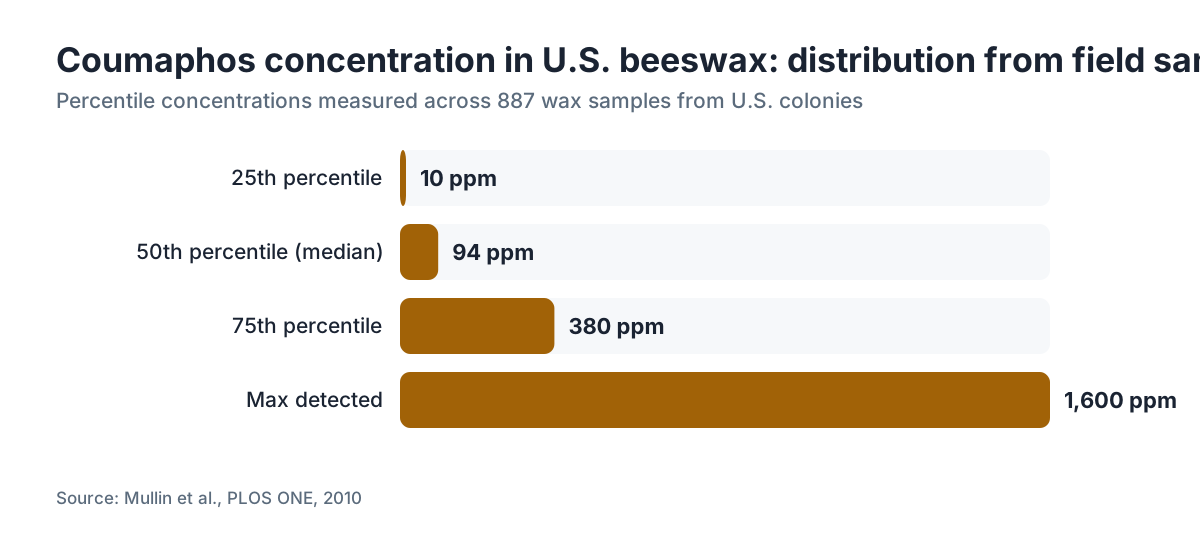
A widely cited USDA/Penn State study published in PLOS ONE in 2010 by Mullin and colleagues sampled 887 wax and pollen samples from U.S. colonies and found coumaphos in 98.8% of wax samples, with a median concentration of about 94 ppm and a maximum exceeding 1,600 ppm [2]. Those are not trace amounts. The median alone sits well above the concentrations that laboratory studies tie to sublethal effects in bees.
For context, here's roughly what the Mullin et al. data showed across the range:
| Percentile | Coumaphos concentration in wax (ppm) |
|------------|--------------------------------------|
| 25th | ~10 ppm |
| 50th (median) | ~94 ppm |
| 75th | ~380 ppm |
| Maximum detected | >1,600 ppm |
More recently, the Honey Bee Health Coalition's Varroa management guide notes that coumaphos residues in wax are "persistent" and advises beekeepers to rotate comb regularly to reduce accumulation [3]. Pennsylvania State Extension and others echo this: wax is the primary reservoir, and older comb in a frequently treated colony carries the heaviest load.
One thing worth knowing: even "clean" commercial foundation purchased from a supplier can contain coumaphos if it was rendered from wax collected from treated colonies. A 2017 study in PLOS ONE by Traynor and colleagues confirmed widespread contamination in foundation sold commercially, at median concentrations around 27 ppm [4]. So starting with "fresh" wax is not always as clean as it sounds.
Does contaminated wax actually harm bees?
This is where the science gets uncomfortable. Yes, at the concentrations commonly found in field comb, coumaphos residues are associated with real biological effects. The question is which effects are dose-dependent and which represent chronic background risk.
The most replicated finding is reproductive harm to drones. A series of studies from Washington State University and others found that drone sperm viability declined significantly when drones were reared in comb containing coumaphos at concentrations in the range of 60 to 100 ppm [5]. Sperm motility dropped, and drone lifespan shortened. Since queen mating depends entirely on drone sperm quality, this translates to a potential colony-level fitness cost that most beekeepers would never notice directly.
Queen health takes a hit too. Research published in PLOS ONE found that queens reared in coumaphos-contaminated wax laid fewer eggs and had higher supersedure rates than queens reared in clean wax [4]. The authors measured ovary development and found physical differences at coumaphos concentrations that are common in field comb.
For worker larvae, the picture is more mixed. Sublethal effects have been documented at moderate concentrations, but worker adult mortality from wax residues alone appears to require concentrations higher than what most hobbyist comb reaches. The chronic sublethal effects, shorter lifespan, reduced learning ability, impaired navigation, are harder to pin on wax residues specifically because colonies face so many simultaneous stressors.
The honest summary: the reproductive effects on drones and queens are well-supported, the effects on workers are real but harder to isolate. Nobody has a clean study showing "this exact ppm in field comb caused this exact colony loss" because field conditions are too messy. What the data does support is that heavily contaminated wax raises the baseline stress load on a colony.
How long does coumaphos persist in wax once it's there?
A long time. Coumaphos does not degrade meaningfully in a wax matrix under hive conditions. Studies have found detectable residues in comb stored for years after the last treatment. This is fundamentally different from treatments like oxalic acid or formic acid, which break down or dissipate within days to weeks.
The half-life of coumaphos in beeswax has not been precisely determined under real hive conditions, but the Mullin et al. 2010 data showed high concentrations in comb from apiaries that had not used CheckMite+ in recent years, suggesting persistence well beyond a single season [2]. Rendering wax at high temperatures reduces concentrations somewhat, but does not eliminate residues, and commercial wax rendered from heavily contaminated sources still tests positive [4].
UV exposure and oxidation can degrade coumaphos slowly, but comb inside a dark hive body gets almost none of that. Once coumaphos is in your wax, it's there until you replace the wax.
Is coumaphos in wax a concern for honey contamination?
Less than you might expect, but not zero. Honey is mostly water-based, and coumaphos has low water solubility, so it does not migrate into honey the way it accumulates in wax. The Mullin et al. 2010 study found coumaphos in pollen far more often than in honey, and at much lower concentrations in honey when it was detected [2].
That said, honey samples from heavily treated colonies have tested positive for coumaphos at low ppb levels. The EPA has set a tolerance for coumaphos residues in honey at 0.1 ppm (100 ppb) [1]. Most honey from treated colonies falls below this threshold, but the tolerance exists precisely because contamination is possible.
The bigger food-safety concern is pollen. Pollen is lipid-rich and sits in open cells in direct contact with wax, so it accumulates coumaphos and other fat-soluble residues at levels much closer to what's found in wax itself. Beekeepers who sell or consume beehive pollen from hives with a coumaphos treatment history should be aware of this. The Mullin et al. study found coumaphos in 100% of pollen samples, with concentrations ranging up to several hundred ppm [2].
How does coumaphos residue compare to other in-hive treatment residues?
Not all varroa treatments leave the same residue footprint. This comparison matters for making real decisions about your treatment rotation.
| Treatment | Wax persistence | Primary concern | Notes |
|-----------|----------------|-----------------|-------|
| Coumaphos (CheckMite+) | Years; very high | Reproductive toxicity to drones, queen failure | Most persistent in wax of common treatments |
| Fluvalinate (Apistan) | Months to years; high | Varroa resistance; queen/drone sublethal effects | Also fat-soluble; similar accumulation pattern |
| Amitraz (Apivar) | Weeks to a few months | Lower persistence; some sublethal data | Degrades faster than coumaphos or fluvalinate |
| Oxalic acid | Days | Near zero wax residue | Water-soluble; does not accumulate |
| Formic acid (MAQS, Formic Pro) | Days | Near zero wax residue | Volatilizes; no meaningful accumulation |
| Thymol (ApiLife VAR, Apiguard) | Days to weeks | Very low residue | Minimal accumulation at label rates |
This table is the core practical argument for rotating away from coumaphos toward organic acid or thymol-based treatments. The varroa mite treatment toolkit has grown a lot since CheckMite+ was the primary option, and the residue persistence of coumaphos is a real reason to use it sparingly. The Honey Bee Health Coalition's Varroa guide recommends organic acids and thymol as first-line treatments precisely because of their cleaner residue profiles [3].
What threshold concentration is considered harmful to bees?
The research does not give us a single clean "safe" threshold, which is frustrating. Different studies use different endpoints (drone fertility, larval survival, queen egg-laying) and different exposure routes (wax, diet, topical). The numbers vary accordingly.
The most cited figures come from Pettis et al. (2004), who found that drone sperm viability was significantly impaired at coumaphos concentrations of approximately 60 ppm in wax [5]. The Traynor et al. 2017 study found queen effects at concentrations in the 90 to 150 ppm range [4]. A 2017 paper by Wu and colleagues found that wax concentrations above about 100 ppm were associated with increased larval mortality in bioassay conditions.
Given that the median field concentration in the Mullin et al. data was roughly 94 ppm, a large fraction of U.S. colonies are living in wax that is at or above the levels associated with sublethal reproductive effects. That's not a prediction of imminent collapse. It's a persistent background stressor that compounds with Varroa pressure, pesticide drift, and nutritional deficits.
The practical takeaway is that there's no comfortable "safe" threshold to aim for. The goal should be reducing total cumulative load, not hitting a target number.
How should you manage and reduce coumaphos residues in your apiary?
The most effective intervention is systematic wax rotation. Replace old comb every three to five years, and more aggressively if you've had a history of coumaphos use. The specific recommendation from Penn State Extension and the Honey Bee Health Coalition is to retire the oldest 20% of frames per year, which cycles out all your wax over roughly five years [3][6]. Faster is better if your comb is heavily contaminated.
When you pull old frames, don't render and recycle that wax back into foundation. Sell or discard it. Rendering reduces concentrations somewhat but does not clean the wax, and contaminated foundation starts the next generation of comb with a residue load already in place.
Choose treatments with lower wax persistence whenever efficacy allows. Oxalic acid, formic acid, and thymol-based treatments leave essentially no meaningful wax residue. Coumaphos and fluvalinate both persist for years. If you're managing Varroa primarily with organic acids, you're automatically reducing future wax contamination. For beekeepers who want a structured seasonal protocol that integrates treatment choices and wax management, VarroaVault's free protocol builder walks through exactly this kind of decision.
When you do use coumaphos (it still has legitimate uses, particularly for small hive beetle control and as a rescue treatment when other options fail or resistance is confirmed), minimize the treatment period. The EPA label for CheckMite+ specifies a maximum of 6 to 8 weeks per treatment period, with limits on annual applications [1]. Don't leave strips in longer than the label allows. Extra exposure time increases wax loading without improving efficacy against Varroa.
Buying foundation from a supplier who tests their wax is worth asking about, though testing is not universal in the industry. Some suppliers source wax from operations with minimal synthetic miticide use. Nobody can guarantee zero contamination, but the provenance of your wax matters.
One more habit: monitor your queens. Elevated supersedure rates and poor brood patterns in well-managed colonies can have many causes, but chronic coumaphos exposure in old comb is one that's easy to miss.
Does the EPA label for CheckMite+ address the residue issue?
Partially. The EPA-registered label for CheckMite+ (coumaphos 10% impregnated strips) includes use restrictions designed to limit residue accumulation: it specifies no more than two treatments per year, removal of strips after 42 to 45 days, and removal of honey supers during treatment [1]. These restrictions reflect genuine regulatory concern about residue buildup and contamination of hive products.
The label language does not, however, set a specific wax residue limit or require wax testing. The regulatory framework addresses application restrictions rather than cumulative wax loading over time. That means a colony could be legally treated per label year after year and still accumulate wax concentrations well above biologically concerning levels. The label is a floor, not a ceiling for responsible use.
The EPA's registration review process for coumaphos has considered bee safety endpoints, but the published tolerance for honey (0.1 ppm) is the clearest numerical standard in federal regulation [1]. Wax itself doesn't carry a federal tolerance, because wax is not a food product per se, even though it's the substrate in which larvae develop and in which pollen and honey sit.
Should you stop using coumaphos entirely?
That's a reasonable position for many beekeepers, and it's one I'd personally lean toward for routine Varroa management given the alternatives available now. Oxalic acid dribble and vaporization, formic acid pads, and thymol treatments are all EPA-registered, effective when used correctly, and leave essentially no wax residue [3].
Coumaphos still has two situations where it's hard to replace. First, it's registered for small hive beetle larval control (as a trap bait), where there's no organic acid equivalent. Second, it's occasionally needed as a backup when oxalic acid resistance is suspected or when a beekeeper needs an alternative mode of action. Resistance to coumaphos in Varroa populations has been documented and is another reason to avoid over-reliance on it [7].
If you're a hobbyist with a few hives, the calculus is pretty clear: use organic acids as your primary treatment, reserve coumaphos for specific situations where it adds something the alternatives don't, and rotate your wax on a schedule. If you're a sideliner with dozens of colonies, the economics and logistics of wax rotation matter more, but the biology doesn't change. Heavy reuse of old comb treated with coumaphos is a long-term drag on colony health that doesn't show up on your accounting spreadsheet.
For guidance on putting together a full-season treatment plan that accounts for residue management, the Honey Bee Health Coalition's Varroa Management guide is the single best free resource, and VarroaVault has free tools to help structure your seasonal protocol around lower-residue options.
What does this mean for beekeepers who buy used equipment?
It's a real consideration. Used frames and drawn comb are one of the most common ways that coumaphos residues enter a clean operation. When you buy or accept used drawn comb, you have essentially no way of knowing the treatment history that wax has been through. Even comb that looks clean and well-maintained can carry significant residue loads.
The safest approach with used equipment is to assume the wax is contaminated and plan to replace it on an accelerated schedule. Use the frames for a season or two to give the bees drawn comb to start with, but rotate it out rather than building your long-term comb stock from it. If you're buying used beekeeping supplies that include drawn comb, factor in the cost of eventual frame replacement.
New plastic foundation coated with wax carries the same caveat mentioned earlier: the wax coating may itself be sourced from contaminated stock. For beekeepers who are highly concerned about residues, foundation made from certified organic wax or from your own clean wax supply is the more defensible option, though it's harder to source and more expensive.
Checking with beekeeping supply companies about wax sourcing practices is a reasonable step, even if you don't get a definitive answer every time.
Frequently asked questions
How long does coumaphos stay in beeswax after treatment?
Coumaphos persists in beeswax for years, possibly indefinitely under normal hive conditions. It's lipophilic and binds tightly to the wax matrix. Studies have detected significant concentrations in comb from hives that hadn't received CheckMite+ for several seasons. Unlike oxalic or formic acid, which dissipate within days, coumaphos does not degrade meaningfully in a dark, temperature-stable hive environment.
What ppm of coumaphos in wax is considered dangerous to bees?
No universally agreed safe threshold exists. Pettis et al. (2004) found significant drone sperm damage at roughly 60 ppm. Traynor et al. (2017) associated queen reproductive effects with approximately 90 to 150 ppm. The median concentration measured in U.S. field comb by Mullin et al. (2010) was about 94 ppm, placing typical treated comb right at the range where sublethal reproductive effects have been documented.
Can you remove coumaphos from contaminated beeswax by rendering it?
Rendering reduces coumaphos concentrations somewhat through dilution and some thermal degradation, but it does not eliminate the residue. Studies have found coumaphos in commercially rendered wax and in foundation made from rendered contaminated comb. Rendering is not a reliable cleanup method. The practical recommendation is to dispose of heavily contaminated wax rather than recycling it back into foundation.
Does coumaphos in wax affect queens?
Yes. Research by Traynor and colleagues, published in PLOS ONE in 2017, found that queens reared in coumaphos-contaminated comb had reduced ovary development, laid fewer eggs, and experienced higher supersedure rates compared to queens reared in clean wax. These effects occurred at concentrations commonly found in field comb, making queen quality a practical concern in apiaries with chronic coumaphos use history.
Is the honey safe to eat from a hive treated with coumaphos?
In most cases, yes, within regulatory tolerances. Coumaphos is fat-soluble and does not migrate readily into honey, which is mostly water. The EPA tolerance for coumaphos in honey is 0.1 ppm. Most honey from treated hives falls below this level when CheckMite+ is used per label directions. The label also requires removing honey supers before treatment, which further reduces the risk of honey contamination.
How often should you replace frames to reduce coumaphos accumulation?
The Honey Bee Health Coalition and Penn State Extension recommend retiring roughly 20% of your oldest frames each year, cycling out all wax over five years. If your operation has a history of frequent coumaphos use, a faster rotation of three years is more protective. Replace with clean foundation and, ideally, choose treatments going forward that don't accumulate in wax, such as oxalic acid or formic acid.
Does coumaphos in wax harm drone bees specifically?
Yes, and this is one of the best-documented effects. Drones reared in coumaphos-contaminated comb show reduced sperm viability, lower sperm motility, and shorter adult lifespan. Research from Washington State University and Pettis et al. (2004) established these effects at wax concentrations around 60 ppm. Since colony reproduction depends on drone sperm quality, this is a colony-level fitness concern, more than an individual bee concern.
Can you buy foundation wax that is free of coumaphos?
It's difficult but possible. Most commercial beeswax is rendered from comb with mixed treatment histories, and the Mullin et al. 2010 study found coumaphos in virtually all U.S. wax samples tested. Some suppliers source from operations using only organic acid treatments, and certified organic wax exists. Asking suppliers directly about testing and sourcing practices is your best option. Zero contamination cannot be guaranteed without batch testing.
Is coumaphos residue worse than fluvalinate residue in wax?
Both are fat-soluble synthetic miticides with multi-year persistence in wax, and both appear in field comb at concerning concentrations. Coumaphos is generally found at higher median concentrations in U.S. surveys. Both are linked to sublethal effects on drones and queens at commonly occurring field concentrations. If you're trying to reduce synthetic residue load, the practical approach is to minimize use of both and shift to organic acid and thymol-based treatments.
Does coumaphos residue affect pollen stored in the hive?
Yes, significantly. Pollen is lipid-rich and sits in open cells in direct contact with wax, so it accumulates fat-soluble residues at high levels. Mullin et al. (2010) found coumaphos in 100% of pollen samples tested, often at concentrations similar to or higher than wax. Beekeepers who harvest and sell pollen from hives with coumaphos treatment history should be aware of this residue pathway.
What treatments can replace coumaphos without leaving wax residue?
Oxalic acid (Api-Bioxal) is the cleanest option, with essentially no wax residue. Formic acid treatments (MAQS, Formic Pro) and thymol-based treatments (Apiguard, ApiLife VAR) also leave minimal residues. All are EPA-registered for Varroa control. The Honey Bee Health Coalition's Varroa management guide recommends these as first-line options, in part because of their favorable residue profiles compared to coumaphos and fluvalinate.
Has varroa developed resistance to coumaphos?
Yes. Coumaphos resistance in Varroa destructor populations has been documented in the United States and Europe. Resistance develops when coumaphos is used repeatedly in the same apiary, which is another argument against making it a routine treatment. Monitoring treatment efficacy with mite washes before and after treatment is the only way to catch resistance early in your own hives.
Should I worry about coumaphos in wax if I've never used CheckMite+ myself?
Possibly. Commercial foundation is often made from rendered wax pooled across many operations with varied treatment histories. Studies have found coumaphos in foundation purchased from commercial suppliers at median concentrations around 27 ppm. If you started with commercially purchased drawn comb or foundation, there's a reasonable chance it carries some background coumaphos residue, even if you've never used the product.
Sources
- EPA, CheckMite+ (coumaphos) pesticide registration and label: CheckMite+ label specifies maximum 2 treatments per year, 42-45 day maximum strip exposure, honey super removal during treatment, and honey tolerance of 0.1 ppm
- Mullin CA et al., 'High Levels of Miticides and Agrochemicals in North American Apiaries: Implications for Honey Bee Health', PLOS ONE, 2010: Coumaphos found in 98.8% of wax samples, median ~94 ppm, maximum >1600 ppm; found in 100% of pollen samples; detected in honey at low ppb levels
- Honey Bee Health Coalition, Varroa Management Guide: Coumaphos residues in wax are persistent; organic acids and thymol recommended as first-line treatments due to lower residue profiles; 20% annual frame rotation recommended
- Traynor KS et al., 'Multivariable Examination of Honey Bee (Hymenoptera: Apidae) Exposure to Pesticides: Beehive, Landscape, and Behavior Matter', PLOS ONE, 2017: Queens reared in coumaphos-contaminated wax had reduced ovary development and higher supersedure rates; commercial foundation tested at median ~27 ppm coumaphos
- Pettis JS et al., 'Pesticide exposure in honey bees results in increased levels of the gut pathogen Nosema', Naturwissenschaften, 2004 (drone sperm data also reported in related USDA ARS research): Drone sperm viability significantly impaired at coumaphos wax concentrations of approximately 60 ppm
- Penn State Extension, Bee and Insect Programs: Recommends retiring oldest 20% of frames annually to cycle out contaminated wax over five years
- Sammataro D et al., 'Parasitic Mites of Honey Bees: Life History, Implications, and Impact', Annual Review of Entomology, 2000; resistance data updated in subsequent USDA ARS monitoring: Coumaphos resistance in Varroa destructor documented in U.S. and European populations following repeated use
- UC Davis Department of Entomology and Nematology, Bee Research Facility: Coumaphos is lipophilic and accumulates in beeswax; organic acid treatments do not leave significant wax residues
- USDA Agricultural Research Service, Bee Research Laboratory: Coumaphos is one of the most consistently detected pesticide residues in U.S. beeswax; rendering does not reliably eliminate residues
- EPA, Pesticide Tolerances for Coumaphos in Honey (40 CFR Part 180): Federal tolerance for coumaphos residues in honey set at 0.1 ppm (100 ppb)
Last updated 2026-07-10