What does varroa damage look like on bees?
TL;DR
- Varroa mites cause two kinds of visible damage: physical marks on adult bees (reddish-brown mites clinging to the abdomen, chewed cuticle) and developmental deformities in newly emerged bees, most obviously crumpled, stubby wings from Deformed Wing Virus.
- Heavy infestations add crawling bees, a shrinking population, and eventually a dead hive with honey still in the frames.
What does a varroa mite actually look like on a bee?
The mite is small but you can see it without magnification. Adult female varroa run about 1.1 mm wide and 1.6 mm long, reddish-brown, shaped like a flattened oval that reminds people of a tiny crab shell.[1] Males are smaller, paler, and almost never leave the capped cell, so you won't find one riding an adult bee.
On a living bee, mites tuck between the abdominal segments on the underside, where the soft intersegmental membrane gives them a way into the bee's fat body. That placement is why they hide from a quick top-down look, and it's why plenty of beekeepers walk right past them. See a reddish speck riding near the thorax-abdomen junction on a frame of bees? That's a mite. Under a loupe or a phone camera it's unmistakable.
Here's a detail that changed how the whole hobby thinks about mites: they feed by piercing the cuticle and eating the bee's fat body, more than sucking hemolymph as everyone believed for decades.[2] One mite feeding on a developing bee removes a measurable chunk of that fat body. The fat body fuels winter survival, immune function, and brood care, so even a moderate mite load hits harder than the raw numbers suggest.
You'll also find mites on the bottom board after a powdered sugar roll shakes them loose, or in the debris on a sticky board under a screened bottom board. On a sticky board, dead mites look like tiny reddish-brown flecks scattered among light wax crumbs and pollen.
What physical damage does varroa cause on adult bees?
The loudest symptom on adult bees is Deformed Wing Virus (DWV). When a bee pupates in a cell that holds reproducing mites, the mite injects DWV straight into the pupa's hemolymph.[3] The bee emerges with wings that are crumpled, shrunken, or twisted, sometimes reduced to useless stubs about a quarter of normal length. Those bees can't fly. They crawl at the entrance or on the ground, dragging their ruined wings, and they die within days.
The abdomen tells you something too. A normal worker abdomen runs around 6 to 7 mm; a parasitized bee emerges noticeably stubbier because the fat body that should pack the abdomen got eaten during pupation. Body weight drops with it, typically 10 to 30 percent below unparasitized bees in studies that weighed them.[4]
Color is another tell. Healthy newly emerged workers are pale yellow-tan with soft, unpigmented cuticle that darkens over the first 24 to 48 hours. Varroa-damaged bees sometimes emerge already dark or mottled, which means development got disrupted.
Crawling, shaking, or twitching bees near the entrance is one of the most dependable field signs of a real varroa problem. People mistake it for pesticide kill all the time. The difference is timing. Pesticide events dump a sudden pile of dead and dying bees over a day or two. Varroa crawlers keep showing up over days and weeks, and they're always the most recently emerged bees.
What does varroa brood damage look like inside capped cells?
This is where most varroa damage hides. The mite slips into a brood cell right before capping, lays eggs on the pupa, and her offspring mate inside the sealed cell. When you uncap brood to check, look for three things.
Start with the mites. Pry open a handful of capped worker cells and a handful of drone cells with an uncapping fork or a hive tool tine. Drone brood is the preferred nursery because the longer capping period (about 24 days versus 12 for workers) gives mites more time to finish a reproductive cycle.[5] Mites in cells are the same reddish-brown, though a single one is easy to miss. Two or more mites in one cell means the infestation is heavy.
Now the pupa. A healthy late-stage pupa has white, well-formed legs, wings, and face. A parasitized pupa may show white lesions or pitting on the cuticle from feeding. In bad cases the pupa looks malformed before it ever emerges.
Last, read the brood pattern. Varroa doesn't directly cause the scattered, sunken, discolored cappings of American Foulbrood or European Foulbrood, but heavy mite pressure knocks the colony's immune system down far enough that secondary infections walk in. Mix varroa damage with a secondary bacterial infection and the brood looks patchy and sick in ways that take experience to untangle. The Honey Bee Health Coalition's field guide describes varroa as setting the stage for multiple secondary diseases to amplify, beyond DWV alone.[6]
An alcohol wash or sugar roll beats visual inspection for counting mites, but opening brood cells gives you confirmation and context you can't get any other way.
What does a varroa-damaged colony look like at the hive level?
A colony sliding toward varroa collapse follows a fairly predictable path, and the hive-level signs are real once you know the pattern.
Late summer and fall, the population should be peaking or holding steady. A collapsing infested colony shrinks instead. The brood nest contracts, the cluster gets smaller, the bees act listless. The mite-to-bee ratio is climbing fast right when the long-lived winter bees (the ones that have to survive until spring) are being parasitized hardest.
More crawlers pile up outside the entrance. You may see bees dragged out or dead bees stacking up. Uncap some brood and you'll find a rising share of cells with deformed emerging bees.
By late fall or early winter, a heavily infested colony can crash all at once. The classic scene is a hive that looked fine going into winter, found dead in early spring with honey still in the frames and a tiny cluster or no bees at all. People call this Colony Collapse Disorder in casual talk, but across most of North America it's plain catastrophic varroa-driven population loss stacked on top of DWV and other viruses.[7]
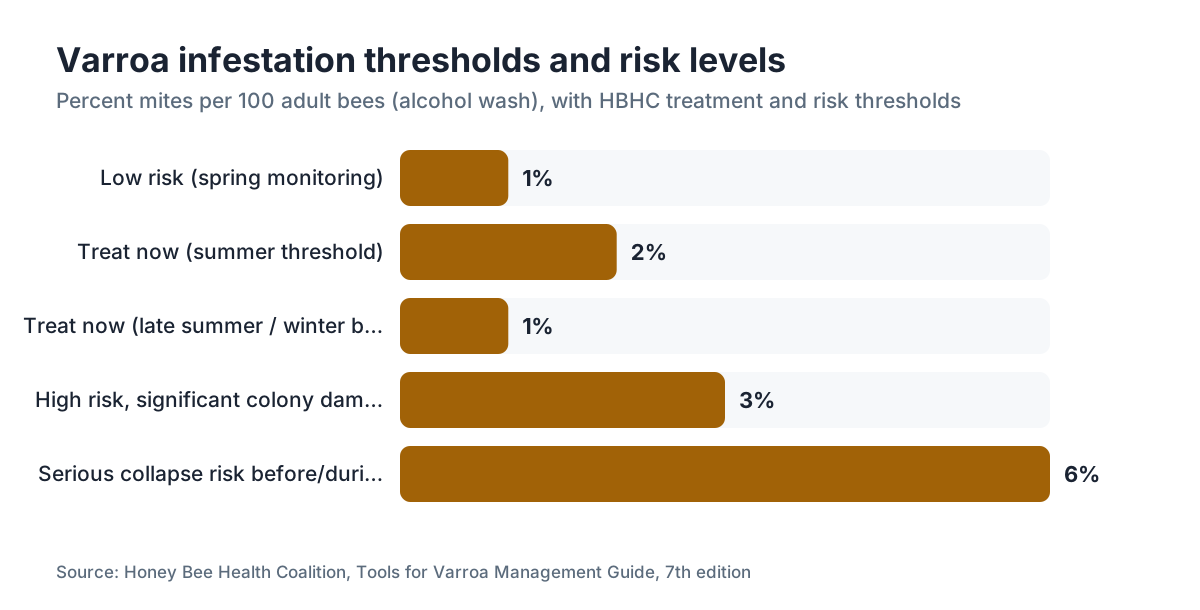
One more late-stage sign is a brood nest cranking out DWV bees. A mite infestation above 3 percent of adult bees (3 mites per 100 in an alcohol wash) tracks with real colony damage, and above 5 to 6 percent the colony is at serious risk of collapsing before or during winter.[8] For most of the United States, the Honey Bee Health Coalition recommends treating once the mite count hits 2 percent during the summer brood-rearing period.[6]
How is varroa damage different from other bee diseases or problems?
This trips up newer beekeepers because several conditions produce crawling or dead bees, and they can look alike from the doorstep.
| Condition | Key visual sign | Timing | Location |
|---|---|---|---|
| Varroa + DWV | Crumpled/stub wings, crawlers, mites visible | Persistent, peaks late summer | Entrance, ground near hive |
| Pesticide poisoning | Sudden mass die-off, twitching | Acute, 1-3 day event | Front of hive, foragers |
| American Foulbrood | Sunken, discolored cappings, ropiness, foul smell | Spring/summer | Inside hive, brood frames |
| Sacbrood virus | Sac-shaped larvae, scale | Spring | Inside hive, brood frames |
| Nosema | Dysentery, streaking on front of hive | Early spring | Outside hive, entrances |
| Chalkbrood | White/gray mummified larvae | Spring | Entrance, floor, brood frames |
The single most distinctive sign of varroa damage is the crumpled wing. It's almost always DWV delivered by mite feeding during pupation, and no other common bee pathogen produces that specific deformity. See it, and varroa is present at a level that matters. Confirm with a mite wash the same day.
Nosema also drives crawling bees, but those show distended abdomens and brown dysentery streaking. Pesticide-poisoned bees tremble and move like they're uncoordinated, but their wings are normal. American Foulbrood has a ropy, coffee-brown look and a sour smell when you pull a twig out of a discolored cell, and it's a reportable disease in most states.[12]
Want the biology behind all this? The varroa mite life cycle explains why the damage patterns look the way they do.
Can you see varroa damage before the colony starts collapsing?
Yes, and catching it early is the entire game. The trouble is that varroa grows exponentially. Mite populations roughly double every 25 to 30 days under good brood-rearing conditions.[9] A colony sitting at 1 percent in June can hit 5 percent by August with no treatment, crossing the line where winter bees take real damage.
Early signs are quiet. Maybe one or two bees with slightly crumpled wings emerging in an otherwise healthy hive. Maybe the colony seems a touch less lively than its neighbors. Maybe a single mite on a bee or in a brood cell during a routine look.
Relying on your eyes alone has a fatal flaw: by the time deformed wings are common, the mite load is already high. Alcohol washes and sugar rolls catch trouble before it shows. The Honey Bee Health Coalition's Varroa guide recommends starting counts in March or April and repeating every 30 days through the treatment season.[6]
Visual cues still earn their keep. They tell you something broke and you need to count right now. Any bee with crumpled or stubby wings should trigger a mite wash on the spot. Don't wait for the next scheduled inspection.
If you're building a management system, VarroaVault's free protocol tools help you schedule monitoring counts and track infestation trends across a season, so you're acting on numbers instead of a hunch.
What do varroa mites look like on drone brood specifically?
Drone brood is the fastest spot to eyeball mites in capped cells because reproduction there runs much higher than in worker cells. A single foundress mite produces 2 to 3 viable offspring in a drone cell versus about 1.3 in a worker cell.[5] Mite numbers in drone cells often land 8 to 10 times higher than worker cells at the same moment.
To check: pull a section of capped drone brood with an uncapping fork or a curved hive tool, roughly 30 to 50 cells. Mites show as reddish-brown oval specks about 1 mm wide, sitting on the white pupal body or the cell wall. A moderately infested colony gives you maybe 1 mite per 10 to 20 cells. A heavily infested one gives you several mites per cell.
This check isn't precise enough to set a treatment threshold (you need an alcohol wash for that), but it's a quick way to confirm mites are present and gauge roughly how bad things look. Finding mites in most cells you open? Treat immediately and run a proper count to set a baseline.
What does the fat body damage from varroa do to bee health?
This is the least visible and most consequential form of varroa damage. Research published in PNAS in 2019 confirmed that varroa mites feed primarily on the fat body of developing bees, not the hemolymph that earlier models assumed.[2] The fat body works like a combined liver and fat reserve. It stores vitellogenin (a protein tied to immune function, longevity, and brood care), lipids, and glycogen.
A bee that develops next to feeding mites emerges with a permanently drained fat body. These bees mostly look normal. No deformed wings, nothing obvious. But they live shorter lives, rear fewer larvae, make less wax and royal jelly, handle immune challenges poorly, and never build the fat reserves winter demands. That invisible damage is exactly why colonies with moderate mite counts still fail over winter with no visible symptoms.
The same study noted that fat body depletion from mite feeding looks a lot like the depletion seen in bees hit with sublethal pesticide doses, which may help explain why varroa-infested colonies also seem more sensitive to pesticides.[2]
There's no way to see fat body damage in the field. It surfaces in the aggregate: shorter-lived bees, faster population decline, higher winter losses. The practical takeaway is blunt. Visual inspection alone won't save you. Regular mite counts are the only way to catch this before it stacks up to a colony-killing level.
How do you confirm varroa is causing the symptoms you're seeing?
Deformed wings or crawlers point straight at varroa, but confirmation needs a mite count. The two standard methods are the alcohol wash and the sugar roll.[6]
For an alcohol wash, scoop about 300 bees (roughly half a cup) off a brood frame (not the queen) into a jar, add isopropyl alcohol, shake, and pour the alcohol through fine mesh. Count the mites that drop out. Divide by 300 and multiply by 100 for the percentage. A result of 2 percent or higher in summer is a treatment threshold under Honey Bee Health Coalition guidance.[6]
Sugar rolls use powdered sugar instead of alcohol, so the bees live, but most researchers rate alcohol washes as more accurate because some mites cling on through a sugar roll.
A sticky board under a screened bottom board for 24 to 72 hours gives a mite drop count, but turning that into an infestation percentage is rough because it depends on colony size. Sticky boards track trends better than they set treatment decisions.
Find plenty of deformed wing bees AND a mite count above 2 percent? You're watching active DWV transmission, and you treat immediately, using an approved oxalic acid or organic acid product or a synthetic miticide depending on the season and whether supers are on.[10] The EPA maintains registrations and label requirements for miticide products.[11]
Not sure what beekeeping supplies you need for monitoring? An alcohol wash kit runs about $10 to $15 for the jar and mesh lid, and a postal scale accurate to 0.1 grams lets you pull a consistent bee sample by weight instead of eyeballing volume.
What does a dead-out from varroa look like compared to winter starvation?
Spring dead-outs are one of the most common gut-punches in beekeeping, and varroa is the leading cause. Reading the scene right helps you fix next year.
A varroa-collapse dead-out usually shows:
- Plenty of honey left in the frames (the colony died before it could eat it)
- A very small cluster or no bees at all, some dead bees head-first in cells (the classic starvation pose, confusing because there's food)
- High numbers of chalkbrood or other secondary diseases in the brood area
- Mites on the dead bees if you look closely
- A mix of normal and DWV-deformed dead bees in the cluster area
A starvation dead-out usually shows:
- Empty or nearly empty honey stores near where the cluster died
- A larger cluster of dead bees, often tightly balled
- Bees head-first in cells, working the last honey
- No obvious mite damage
Honey still in the frames next to a dead or tiny cluster is the key clue for varroa collapse. The colony didn't starve. It lost bees so fast it couldn't hold cluster temperature, or the winter bees were so depleted they died early. Usually both.
Find a spring dead-out? Run a mite check on the dead bees (mites often stay on the corpses), look for deformed wings, and use what you learn to set treatment timing for the coming year.
When should visible varroa damage trigger immediate treatment?
See deformed wing bees in any real number (more than a handful) and treat now, without waiting for a count. The count confirms what you already suspect and sets a baseline, but the visible deformity means DWV transmission is live.
The Honey Bee Health Coalition's published thresholds are 2 percent during the summer brood-rearing period and, in some recommendations, as low as 1 percent in late summer (July and August) when the winter bee generation is being raised.[6] Those thresholds protect the bees being raised right now, not the current adult crowd.
For broodless colonies in winter, oxalic acid dribble or vaporization works extremely well because the mites have nowhere to hide with no capped brood, and it's the treatment window most beekeepers skip.[10] The EPA approved oxalic acid as a miticide for honey bees, available in several formulations including oxalic acid dihydrate (Api-Bioxal is the EPA-registered commercial version).[11]
Timing matters more than most people expect. A July treatment in the eastern US protects the August and September bees that will overwinter. A September treatment saves some of them and misses others. October treatments help but may land too late for bees already damaged during development. That's why monitoring every 30 days through summer isn't optional if you want live colonies in spring.
Frequently asked questions
Can you see varroa mites without a magnifying glass?
Yes. Adult female varroa measure about 1.1 mm wide and 1.6 mm long, just large enough to spot with the naked eye in good light. They look like a tiny reddish-brown speck on the bee's abdomen. A loupe, 10x magnifying glass, or a phone camera with zoom makes identification far easier and is worth keeping in your kit.
Do all bees with varroa get deformed wings?
No. Deformed Wing Virus only hits bees that developed alongside reproducing mites inside a capped cell. Adult bees infested after emergence can carry mites for days with no visible wing deformity. That's why a colony can hold a heavy mite load with few or no deformed bees early on, which makes regular mite counts the only reliable way to track what's happening.
How many varroa mites are too many?
The Honey Bee Health Coalition recommends treating when an alcohol wash shows 2 percent or more mites during the summer brood-rearing period, meaning 2 mites per 100 bees. HBHC guidance drops that to 1 percent in late summer (July and August) because the bees developing then are the colony's winter population. Above 5 to 6 percent, winter survival is at serious risk.
What does varroa damage look like in early spring?
Early spring varroa damage often shows up as a small or failing colony in a hive that had good numbers going into fall. You may find dead-outs with honey still in the frames and a tiny dead cluster, or a living colony with an unusually small cluster, a scattered brood pattern, and crawlers at the entrance. DWV bees in early spring mean the colony was heavily infested the previous fall when winter bees were raised.
Are drone bees more affected by varroa than worker bees?
Drone brood is far more heavily parasitized because varroa prefer the longer capping period of drone cells (about 24 days versus 12 for workers), which gives mites more time to complete a reproductive cycle. A single foundress mite produces about 2 to 3 viable offspring in drone brood versus roughly 1.3 in worker brood. Drone brood with visible mites often signals a heavy overall infestation.
Can a colony survive varroa without treatment?
In most managed honey bee populations in North America and Europe, no, not sustainably. The exceptions are specific survivor or VSH (Varroa Sensitive Hygiene) lines with genetic resistance, and feral colonies under selection pressure for decades. For standard managed colonies, untreated infestations typically lead to collapse within 2 to 3 seasons. Treatment isn't optional if you want to keep bees alive.
How do I know if crawling bees are from varroa or pesticide exposure?
Pesticide-related crawlers usually appear suddenly over 1 to 3 days in large numbers, often including foragers, with normal wing shape but trembling, uncoordinated movement. Varroa crawlers appear persistently over weeks, involve newly emerged bees, and typically have deformed or crumpled wings. Checking the crawlers for mites under magnification gives you a quick confirmation.
What is the white material sometimes found with varroa in brood cells?
The white material is varroa feces plus mite eggs or shed skins from developing mites. Mites defecate inside the cell during their reproductive cycle. Under a loupe you can see small white streaks or dots on the cell wall or the pupa itself. This material is one of the things you're hunting for when you uncap drone or worker cells to check for mites.
How fast does varroa damage build up in a colony?
Varroa populations roughly double every 25 to 30 days during peak brood-rearing season. A colony at 1 percent infestation in June can reach 5 to 6 percent by August with no treatment. The Honey Bee Health Coalition notes that this exponential growth means colonies can go from manageable to critical within a single brood cycle, which is why monthly monitoring counts from spring through fall are standard practice.
Does varroa damage look different in package bees versus established colonies?
Package bees start with relatively low mite loads because they come from monitored colonies. Damage builds over the first season. In an established second- or third-year colony that hasn't been treated, damage is more likely to show as deformed wing bees, crawlers, and a declining population. New packages rarely show obvious deformed wing bees in their first spring, though the mite population is quietly growing.
Can you see varroa damage on a quick hive inspection without opening the hive?
Sometimes. Watch the entrance for crawling bees with crumpled or stub wings, a reliable visual flag. You can also slide a sticky board under a screened bottom board to collect mite drop without opening anything. But you can't reliably estimate infestation rate from entrance watching alone. An alcohol wash means opening the hive and pulling a frame.
Does a strong, booming colony in summer mean varroa isn't a problem?
Not at all. A large colony in July can look completely healthy while carrying an infestation rate climbing toward the danger line. More bees means more brood and more mite reproduction sites. Big colonies often mask mite problems because the visual signs (crawlers, deformed bees, population decline) get proportionally less noticeable against a huge population. Monthly alcohol washes matter no matter how good the colony looks.
What secondary diseases does varroa damage open the door to?
Varroa transmits Deformed Wing Virus directly and also vectors several other bee viruses including Acute Bee Paralysis Virus and Black Queen Cell Virus. The fat body depletion from mite feeding impairs immune function, making colonies more vulnerable to Nosema and bacterial diseases. The Honey Bee Health Coalition describes varroa as the primary driver of multiple-pathogen collapses in managed colonies.
Sources
- Honey Bee Health Coalition, Tools for Varroa Management Guide (7th edition): Adult female varroa mites are approximately 1.1 mm wide and 1.6 mm long, reddish-brown, and oval-shaped
- Samuel Ramsey et al., PNAS, 2019, 'Varroa destructor feeds primarily on honey bee fat body tissue and not hemolymph': Varroa mites primarily consume the fat body of developing bees rather than hemolymph; fat body depletion resembles sublethal pesticide exposure effects
- University of Minnesota Extension, Varroa mite management: Varroa mites transmit Deformed Wing Virus (DWV) directly into bee hemolymph during parasitization of developing pupae, causing crumpled, shortened wing deformity
- Penn State Extension, Varroa mite life cycle and control: Adult bees parasitized by varroa during development show 10-30 percent lower body weight than unparasitized bees in controlled studies
- Honey Bee Health Coalition, Tools for Varroa Management Guide: Varroa prefer drone brood because the 24-day capping period allows 2-3 viable offspring per foundress mite versus approximately 1.3 in worker cells with a 12-day capping period
- Honey Bee Health Coalition, Tools for Varroa Management Guide: The HBHC recommends treating at 2 percent mite infestation during summer brood-rearing and as low as 1 percent in late summer; varroa creates conditions for multiple secondary diseases to amplify
- USDA Agricultural Research Service, Varroa destructor overview: Most colony losses attributed to Colony Collapse Disorder in North America are linked to varroa-driven population decline combined with DWV and secondary viruses
- Honey Bee Health Coalition, Tools for Varroa Management Guide: Mite infestation above 3 percent correlates with significant colony damage; above 5-6 percent the colony faces serious collapse risk before or during winter
- University of Georgia Honey Bee Program, Varroa mite biology: Varroa populations roughly double every 25-30 days during peak brood-rearing season under favorable conditions
- University of California Agriculture and Natural Resources, Oxalic acid treatments for varroa: Oxalic acid dribble or vaporization is highly effective during broodless periods because mites cannot hide in capped brood; winter application is a commonly missed treatment window
- U.S. Environmental Protection Agency, Varroa mite pesticide registrations: The EPA approved oxalic acid (commercially available as Api-Bioxal) as a registered miticide for honey bees; label requirements govern timing and application method
- North Carolina State University Extension, Honey bee diseases and pests: American Foulbrood produces sunken, discolored cappings with ropiness and a foul smell distinguishing it from varroa-related brood damage
Last updated 2026-07-09