Winter bees and varroa damage to fat body tissue explained
TL;DR
- Varroa mites feed on honey bee fat body tissue during larval development, more than hemolymph.
- Winter bees need large, intact fat bodies to store vitellogenin and survive 5-6 months without brood.
- A colony heading into winter with high mite loads produces physiologically depleted bees that die early, collapsing the cluster by January or February even when honey stores are full.
What are winter bees and why are they different from summer bees?
Winter bees are more than summer bees that live longer. They are a physiologically distinct caste produced by the same workers, triggered by shortening days and dropping temperatures in late summer and fall. A summer forager lives roughly 6 weeks. A winter bee lives 4 to 6 months, sometimes longer in cold climates where the cluster stays tight from October through March [1].
The difference comes down to fat body tissue. Winter bees develop massive, well-developed fat bodies, the internal organs that function as a bee's liver, immune system, and protein reserve all at once. Fat bodies store vitellogenin, a yolk precursor protein that suppresses juvenile hormone, keeps the bee in a physiologically "young" state, and fuels the production of royal jelly needed to rear spring brood [2]. A summer worker burns through her fat body feeding larvae and foraging. A winter bee builds fat body reserves and holds onto them.
This switch happens in late summer when nurse bees stop being called on to rear large amounts of brood. The colony slows brood production as days shorten. Nurse bees that experience low juvenile hormone and high vitellogenin signaling during this window develop the fat body phenotype that defines a winter bee [2].
Get this transition right and your colony sails through winter. Get it wrong, and you have a box full of bees that look fine in October and are dead by February.
How does varroa damage fat body tissue in developing bees?
For decades, the textbook said varroa mites fed on bee hemolymph, the insect equivalent of blood. A 2019 study by Samuel Ramsey and colleagues at the University of Maryland and USDA changed that picture [3]. Ramsey's team used tissue tracers and showed that varroa preferentially consume fat body tissue, not hemolymph. The mites attach to the fat body of developing pupae and feed there throughout the capped brood stage.
This matters enormously for winter bees. A bee that emerges from a cell where a reproducing varroa female and her offspring spent 10 to 14 days feeding on its fat body has a smaller, structurally damaged fat body than a mite-free bee [3]. The damage is not subtle. Ramsey's work showed the fat body of parasitized bees was visibly depleted. Vitellogenin levels drop. Immune function drops. The bee emerges with a shortened lifespan baked in.
That shortened lifespan hurts year-round, but it turns catastrophic in fall. The bees emerging in August, September, and early October are precisely the ones that need to survive through March. If a big share of them carry varroa-induced fat body damage, the colony's winter population is physiologically compromised before a single cold night arrives.
One nuance worth knowing: varroa damage is not uniform. A bee parasitized by one mite has measurable but potentially survivable fat body reduction. A bee that hosted multiple mite offspring in the same cell, which happens at high mite loads, ends up far worse. This is one reason mite threshold data tends to show a steep population cliff rather than a gradual slide.
Why does fat body damage during late summer brood production cause winter colony death?
Here is the timing problem that kills colonies. Varroa populations grow inside capped brood. The mite population roughly doubles every month during peak brood season [4]. A colony that enters July with a 1-2% mite infestation rate can easily hit 5-8% or higher by September if left untreated. That means a large fraction of the bees emerging in September and October, the future winter bees, are coming out of cells that hosted active mite reproduction.
Those bees are already physiologically old at emergence. Their fat bodies are damaged. Their vitellogenin titers are low. Their immune response to viruses like Deformed Wing Virus (DWV), which varroa transmit directly during feeding, is compromised [5].
The colony may look normal heading into fall. Bee numbers can seem adequate. The cluster forms. But instead of a cluster where each bee carries 4 to 6 months of physiological reserve, you have a cluster of bees that will metabolically burn out in 6 to 10 weeks. By December or January, the cluster has contracted past the point of thermal regulation. By February, the colony is dead with honey still in the frames, one of the diagnostic signatures of a varroa-driven winter collapse.
Full honey stores with a dead cluster is not a starvation death. It is almost always a bee population death, and late-season varroa damage to fat body tissue is the most common cause [6].
What mite levels are actually dangerous for winter bee production?
The Honey Bee Health Coalition recommends treating before mite levels exceed 2% (2 mites per 100 bees on an alcohol wash) during the late summer window when winter bees are being produced [6]. Some university extension programs put the action threshold even lower, at 1-2%, specifically for the August through September period because of the fat body damage risk [11].
The table below shows treatment thresholds by season, based on HBHC guidance:
| Season | Action Threshold | Why it matters |
|---|---|---|
| Spring (buildup) | 2% | Mite levels set the summer trajectory |
| Summer (peak brood) | 2% | Population doubling rate is fastest |
| Late summer/fall | 1-2% | Winter bee fat bodies forming; damage is irreversible |
| Broodless winter | <2% (if brood present) | Few bees to wash; treat if colony at risk |
These thresholds exist because the damage from even a moderate mite load during the August-September window is permanent. You cannot fix fat body damage in a bee that has already emerged. Treating in October helps protect the remaining bees from additional mite exposure, but it does not restore the fat bodies of bees that were parasitized as pupae in August [6].
This is why the timing of your fall treatment matters as much as doing it at all. Treating in mid-August, when broodless windows may still be available through drone brood removal or queen interruption, gives the largest share of winter bees a chance to emerge mite-free. Treating in October beats not treating, but it cannot undo the damage done to bees already in the cluster [4].
What viruses does varroa transmit that compound fat body damage?
Varroa is a vector for at least 19 known honey bee viruses [5]. Deformed Wing Virus is the most consequential. DWV replicates in fat body tissue and in the brains of developing pupae. Varroa feeding on fat body during pupal development injects DWV directly into the tissue it is already damaging mechanically. The result is a double assault: physical destruction of fat body cells plus viral replication inside that tissue.
Bees with high DWV loads have measurably shorter lifespans, impaired navigation, and reduced learning ability [5]. For winter bees, the navigation and learning deficits matter less than the lifespan reduction. A winter bee with a heavy DWV load may survive only 6 to 8 weeks instead of 4 to 6 months, effectively behaving like a summer bee trapped in a winter cluster.
Sacbrood virus, Black Queen Cell Virus, and Chronic Bee Paralysis Virus also travel on varroa, though DWV is the dominant driver of colony loss in most studies [5]. The practical implication is that mite load is a proxy for viral pressure. When you measure mites, you are indirectly measuring DWV exposure in the developing brood. This is one reason the Honey Bee Health Coalition's "Tools for Varroa Management" guide treats mite monitoring as the foundation of any health protocol, more than a number to track [6].
How do you test whether your late-summer bees have adequate fat bodies?
You cannot look at a bee and see its fat body. But there are practical indirect indicators.
The most direct field test is the alcohol wash or sugar roll to measure mite load. If your late-summer wash comes back below 2%, you have a reasonable chance the majority of your winter bees are developing under low mite pressure. If it comes back at 4% or higher in August, a meaningful share of the bees currently capped in brood are being parasitized right now, and their fat bodies will be compromised at emergence [6].
A second indicator is the hypopharyngeal gland condition, which tracks closely with fat body development. Well-nourished winter bees have large, fully developed hypopharyngeal glands. Mite-damaged and protein-stressed bees have atrophied glands. In practice, you cannot assess this without dissection and magnification, so it is not a field tool, but it explains why colonies headed into winter on pollen-poor forage and high mite loads fare so badly: both factors independently cut fat body and gland development.
Pollen availability in late summer is therefore not separate from varroa management; it is part of the same winter survival picture. Bees that have adequate pollen to consume as nurse bees in August and September build fat bodies better even under moderate mite pressure [12]. This does not mean pollen fixes a mite problem, but managing both together gives your winter bees the best physiological starting point.
For how to make sure your colony has access to adequate pollen stores heading into the fall buildup, see our guide on beehive pollen.
When is the right time to treat for varroa to protect winter bees?
The window that matters most is roughly 6 to 8 weeks before your local first hard frost, which across most of the continental United States means treating in August [4]. The logic is simple. Winter bees are produced in the brood cycle running through August, September, and early October. Treat in mid-August, and the bees that emerge afterward come from cells where mite reproduction was suppressed during their pupal development. Those bees have intact fat bodies.
Wait until October to treat, and you have reduced mite pressure on your cluster, which is genuinely helpful. But the winter bees already in that cluster were pupae in August and September, when mite levels were high. Their fat bodies are already damaged. The October treatment protects the remaining bees from further virus transmission and mite burden, but the physiological cohort that has to carry the colony through winter is already set.
The most effective protocol many experienced beekeepers use is a summer broodless treatment window. By temporarily interrupting egg laying, either through a short queen cage, a split, or the natural broodless period in a swarm colony, you expose all mites to the treatment instead of just the phoretic (non-reproducing) mites riding adult bees. Oxalic acid vaporization works best in a broodless colony precisely because all mites are exposed [7]. Extended-release formulations like Api-Life VAR and Apivar work across brood cycles but take longer.
A realistic August protocol for most beekeepers using a full colony: alcohol wash in late July, treat with formic acid (Mite Away Quick Strips or MAQS if temps allow) or start Apivar strips by August 1, remove strips per label, and do a confirmatory wash before the main nectar flow ends. Check your specific product label since application restrictions vary by product and ambient temperature [7].
For tracking your mite counts, treatment windows, and product application dates across multiple hives, VarroaVault's free protocol tools let you set threshold alerts and log washes by hive so you do not lose track of where each colony sits in the treatment cycle.
Which treatments are approved for use during the fall and do they harm winter bees?
All EPA-registered varroa treatments used correctly have acceptable safety profiles for adult bees, but temperature, timing, and colony condition matter a lot [7].
Oxalic acid (Api-Bioxal) drizzle or vapor is the most commonly recommended treatment for fall and winter use. The EPA label specifies it works best when bees are broodless, which happens naturally in northern climates from November through January [7]. The USDA Agricultural Research Service has published guidance confirming oxalic acid vapor does not significantly damage adult bee fat bodies at label-compliant doses. That makes it a good choice for the broodless winter window, though remember: treating in November protects survivors, it does not restore fat bodies damaged in August.
Apivar (amitraz strips) is a fall workhorse for many beekeepers. The label calls for 6 to 8 weeks of continuous exposure, which fits an August or September treatment well. It works through brood cycles. The known concern with amitraz is resistance building in some mite populations, so rotating chemistries across years is worth doing.
Formic acid products (MAQS, Formic Pro) penetrate capped brood and kill mites inside cells, which makes them uniquely useful during brood-on periods. The tradeoff is temperature sensitivity. MAQS requires daytime highs between 50°F and 85°F, and at the high end can stress or kill queens in small colonies [8]. Formic Pro has a longer treatment period and somewhat broader temperature tolerance.
Thymol-based products (Apiguard, Api-Life VAR) also need warm temperatures and are generally not useful after mid-September in northern climates. By the time winter bees are fully set, the window for thymol has usually closed.
The honest answer is that no single fall treatment is universally best. The right choice depends on your mite load, the date, ambient temperature, and whether the colony has brood. The varroa mite overview on this site covers the full treatment comparison in more detail.
Can a colony recover if varroa damaged the winter bee cohort?
Sometimes, but the options narrow fast once winter has started.
If you catch the problem in October and mite loads are still high, treating immediately cuts ongoing viral transmission and mite burden on the remaining bees. Some of those bees will live longer than they would have untreated. A colony that might have collapsed by January might make it to February or even March if a late treatment stops additional damage.
One management option in regions with mild enough winters is to combine a struggling colony with a strong one in October or early November. The combined colony's winter bee cohort is larger and draws from the stronger colony's population. This is a genuine survival strategy, more than a way to conserve equipment.
In climates where brood rearing resumes by February (parts of the South and Pacific Coast), colonies that survive long enough to raise new brood can sometimes recover their physiological standing. New bees raised in February from a low-mite environment have intact fat bodies and can gradually replace the depleted winter cohort. But in northern states, February is still deep winter, and most colonies that enter January with a physiologically compromised cluster do not make it to see new brood.
The clear takeaway from every study and field observation I have seen is that recovery is far harder than prevention. The August treatment window is the single most impactful intervention point in the annual varroa cycle for winter survival.
What does research actually show about varroa and winter colony loss rates?
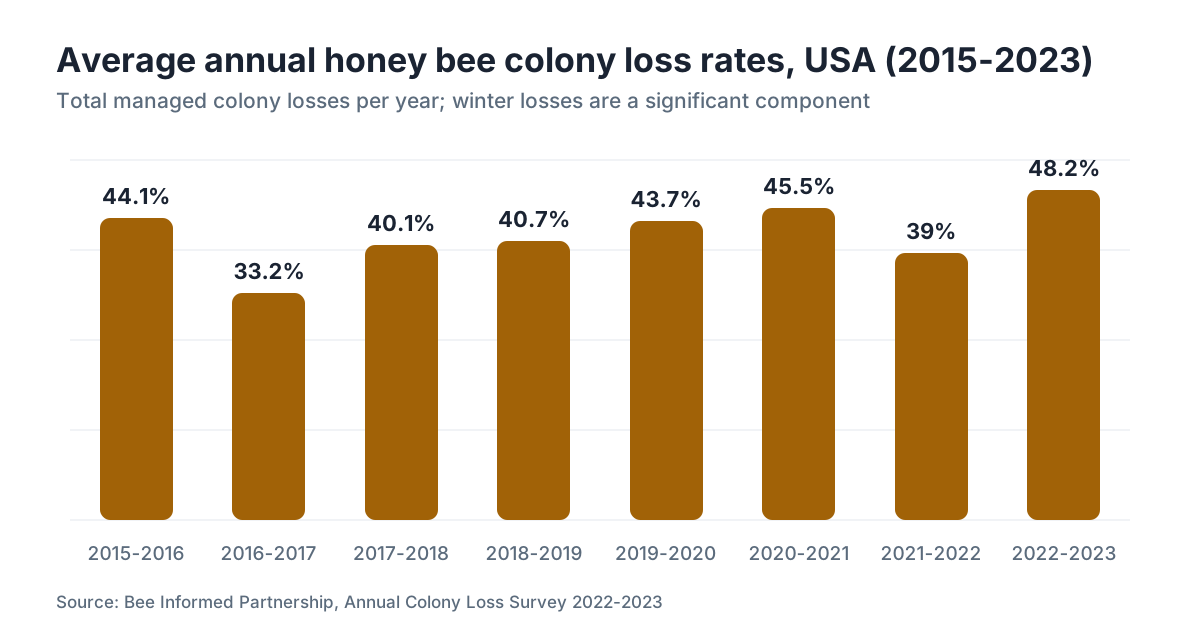
The USDA National Agricultural Statistics Service has tracked honey bee colony loss annually since 2006 [10]. The Bee Informed Partnership, which runs the most detailed beekeeper survey in the United States, reports that managed colony annual losses have averaged between 30% and 40% per year since 2006-2007, with winter losses (October through April) typically running 20-30% in years with representative survey data [9].
The Bee Informed Partnership's 2022-2023 survey reported an estimated 48.2% total annual colony loss rate among respondents, with winter losses accounting for a large portion [9]. These numbers swing year to year based on weather, forage, and regional disease pressure, but they have not declined meaningfully in 15 years despite better beekeeper awareness.
USDA and university research consistently names varroa and varroa-associated viruses as the leading contributor to winter losses, ahead of pesticides, weather, or nutrition alone [4]. Colony loss analyses have repeatedly found that untreated or inadequately treated colonies die over winter at several times the rate of colonies under effective varroa control.
The Honey Bee Health Coalition states in their "Tools for Varroa Management" guide: "Varroa mites are the single most damaging pest of honey bee colonies in the world today" [6]. That assessment is backed by loss data accumulated over two decades of colony mortality tracking in North America and Europe.
What can beekeepers do right now to protect winter bee fat body integrity?
A practical checklist, ordered by timing:
July: Do an alcohol wash on every colony. If any colony is above 2%, treat immediately. Do not wait for the "fall" treatment date you penciled in back in spring.
August: This is the month that decides the winter. Treat any colony above 1-2% before the main winter bee production window peaks. If you can create a broodless period, even 5 to 7 days by caging the queen, an oxalic acid vapor treatment during that window knocks mites down faster than any other method [7]. Get another wash 2 to 3 weeks after treatment to confirm it worked.
September: Confirm pollen stores or supplement with quality pollen substitute patties if forage is poor. Protein availability in September directly shapes the fat body accumulation of bees developing right now [12]. A well-stocked colony heading into October has more physiological buffer than a protein-stressed one.
October: Do one more wash. If mite levels have crept back up, treat again. Oxalic acid vapor or Apivar strips (started early enough to run the full 6-8 week cycle before cluster formation) are both options depending on temperature.
November through March: If the colony is in a natural broodless period and mite loads were not well-controlled earlier, a single oxalic acid treatment during the broodless window can help surviving bees live longer into spring. It will not resurrect a colony with an already-compromised winter cohort, but it strips mite pressure off bees that might otherwise survive.
For beekeepers running multiple hives, keeping accurate per-hive records of wash dates, mite counts, and treatment applications makes all of this manageable. VarroaVault's free hive tracking tools are built for this exact workflow, so you can see at a glance which colonies are behind on monitoring and which are on schedule.
For a full list of supplies you may need for fall treatments and monitoring, our beekeeping supply companies guide covers reputable sources.
Frequently asked questions
What is fat body tissue in honey bees and why does it matter for winter?
Fat body tissue is a diffuse internal organ in honey bees that stores proteins, lipids, and glycogen. It produces vitellogenin, the protein that keeps bees physiologically young and fuels spring brood rearing. Winter bees need large, intact fat bodies to survive 4 to 6 months in a cluster. Without adequate fat body reserves, winter bees burn out in weeks rather than months, causing colonies to die before spring even with full honey stores.
Do varroa mites feed on blood or fat body tissue?
A 2019 study by Samuel Ramsey and colleagues showed that varroa mites primarily feed on honey bee fat body tissue, not hemolymph (bee blood) as previously believed. The mites attach directly to the fat body of developing pupae inside capped brood cells. This finding explains why parasitized bees emerge with measurably depleted fat bodies, shorter lifespans, and lower immune function than mite-free bees from the same colony.
How do I know if varroa damaged my winter bees before they emerged?
You cannot directly inspect fat body condition in the field. The practical proxy is your late-summer mite wash. A colony that ran above 2% mite infestation in August and September almost certainly produced winter bees with fat body damage, since mites were reproducing in brood cells throughout that period. Emerging bees from parasitized cells show no obvious external symptoms but carry compromised physiology from the start.
What is the latest in the fall I can treat varroa and still protect my winter bees?
The effective deadline for protecting the winter bee cohort is roughly mid-August to early September. Winter bees are produced in the brood cycle running through August and September. Treating in August means bees emerging afterward develop in lower-mite cells. Treating in October reduces mite pressure on the cluster, which helps surviving bees live longer, but cannot undo fat body damage in bees that were pupae when mite loads were high.
Can strong honey stores compensate for varroa-damaged winter bees?
No. Honey stores fuel the cluster's energy needs, but they cannot restore fat body tissue that was damaged during pupal development. Colonies with full honey stores and high mite loads still die over winter at high rates. The classic diagnostic is a dead winter cluster surrounded by capped honey, which points to bee population failure driven by physiologically depleted winter bees, not starvation.
Does pollen availability in late summer affect fat body development?
Yes, significantly. Bees need dietary protein from pollen to build and maintain fat body tissue. Nurse bees that consume ample pollen in late summer develop larger fat bodies and higher vitellogenin titers. Poor forage or limited pollen stores in August and September compound the damage from varroa, since bees face both physical fat body depletion from mites and too little protein to rebuild reserves. Managing pollen availability is part of winter prep.
How does Deformed Wing Virus relate to fat body damage from varroa?
Varroa transmits Deformed Wing Virus directly into bee tissue during feeding. DWV replicates in fat body tissue and brain cells of developing pupae, adding viral damage on top of the mechanical fat body destruction from mite feeding. Bees with high DWV loads have shortened lifespans, impaired immunity, and in severe cases visible wing deformities. For winter bees, the lifespan reduction from DWV alone can turn a 5-month bee into one that lives 6 to 8 weeks.
What mite percentage on an alcohol wash should trigger an emergency fall treatment?
The Honey Bee Health Coalition sets the action threshold at 2% (2 mites per 100 bees) year-round, with extra urgency during the late-summer window when winter bees are forming. Many experienced beekeepers treat at 1% or higher in August specifically because of fat body damage risk. If a late-July or early-August wash comes back at 3% or higher, treat immediately, without waiting for a planned September date.
Is oxalic acid safe to use on winter bees?
Yes. Oxalic acid (Api-Bioxal) used at label-compliant doses does not significantly damage adult bee fat bodies or shorten winter bee lifespans. It is the recommended treatment for the natural broodless winter period because it is effective against phoretic mites on adult bees and leaves minimal residue. The EPA label calls for a broodless or near-broodless colony for best efficacy, which matches natural winter cluster conditions.
Why do some colonies die in February with honey still in the hive?
A dead cluster surrounded by capped honey is almost always a population failure, not a starvation death. The most common cause is varroa-driven fat body damage that produced a winter bee cohort with shortened lifespans. The cluster shrank faster than normal, eventually contracting too small to maintain thermal regulation. No amount of honey can compensate once the viable bee population drops below the threshold needed to heat the cluster core.
Does the varroa mite problem differ between different honey bee species or subspecies?
Yes. Varroa destructor evolved as a parasite of Apis cerana (Asian honey bee), which developed behavioral defenses including shorter capping periods and hygienic uncapping that limit mite reproduction. The Western honey bee Apis mellifera, which most beekeepers manage, has no such coevolved defenses and is highly susceptible. Some Apis mellifera lines with Varroa Sensitive Hygiene (VSH) or mite-biting traits show better resistance, but no commercially available stock is immune.
How long do winter bees normally live compared to summer bees?
Summer foragers typically live 5 to 7 weeks, with the final weeks spent outside the hive in intensive foraging that burns through their fat body reserves fast. Winter bees, with intact fat bodies and no foraging duties, live 4 to 6 months under normal conditions. Varroa-damaged winter bees with depleted fat body tissue can see lifespan cut to 6 to 10 weeks, which makes them physiologically indistinguishable from summer bees trapped in a cold-weather cluster.
What is vitellogenin and how does varroa affect it?
Vitellogenin is a yolk precursor protein produced in honey bee fat body tissue. In worker bees, high vitellogenin levels suppress juvenile hormone, keeping bees in a physiologically young, long-lived state. It also fuels royal jelly production for spring brood rearing. Varroa damage to fat body tissue during pupal development cuts the bee's capacity to produce and store vitellogenin, shortening lifespan and impairing both immune function and early spring colony buildup.
Can I use Apivar strips in the fall without harming winter bees?
Apivar (amitraz) strips started in August or early September are a standard and effective fall varroa treatment. The active ingredient does not measurably harm winter bee physiology at label-compliant doses. The main practical concern is ensuring strips run the full 6 to 8 weeks required before the colony fully clusters, and watching for amitraz resistance in local mite populations, which is an emerging issue in some regions. Rotate chemistries across years as a precaution.
Sources
- Amdam et al., 2004, PNAS: Viability and phenotype in honey bee workers: Vitellogenin suppresses juvenile hormone in winter bees, producing the long-lived fat body phenotype
- Ramsey et al., 2019, PNAS: 'Varroa destructor feeds primarily on honey bee fat body tissue': Varroa mites feed primarily on fat body tissue, not hemolymph, causing structural fat body depletion in parasitized bees
- USDA Agricultural Research Service, Honey Bee Health: Varroa mite populations roughly double monthly during peak brood season; August treatment timing guidance
- Nazzi & Pennacchio, 2014, PLOS Pathogens: Honey bee viruses and varroa: Varroa is a vector for at least 19 honey bee viruses including Deformed Wing Virus, which replicates in fat body tissue
- Honey Bee Health Coalition, Tools for Varroa Management Guide (current edition): 2% action threshold for mite infestation rate; 'Varroa mites are the single most damaging pest of honey bee colonies in the world today'
- EPA, Api-Bioxal (oxalic acid) product label and registration: Oxalic acid is most effective in broodless colonies; label-compliant doses do not significantly harm adult bees
- EPA, Mite Away Quick Strips (formic acid) product label: MAQS requires daytime ambient temperatures between 50°F and 85°F; queen loss risk in small colonies at high temperatures
- Bee Informed Partnership, Annual Colony Loss Survey 2022-2023: Estimated 48.2% total annual colony loss rate in 2022-2023; annual losses have averaged 30-40% since 2006-2007
- USDA National Agricultural Statistics Service, Honey Bee Colonies report: Annual colony loss data tracking since 2006; winter losses typically 20-30% in survey years
- Pennsylvania State University Extension, Varroa Mite Management: Late-summer 1-2% mite action threshold specifically for winter bee production window
- University of California Agriculture and Natural Resources, Bee Health: Protein availability in late summer directly affects fat body accumulation and winter bee development
Last updated 2026-07-09