What to do with equipment from a varroa-collapsed hive
TL;DR
- After a varroa collapse, freeze drawn comb 48 hours at 0°F to kill wax moths and small hive beetles, then store it sealed.
- Scrape and scorch boxes, or replace frames damaged past a third of the comb.
- Never move disease-carrying comb into a healthy hive without checking for American Foulbrood first.
- Most equipment is salvageable if you act within a couple of weeks.
What actually happens inside a hive when varroa collapse kills a colony?
Varroa collapse rarely looks like a sudden die-off. You open the hive and find a shrunken cluster, then a few weeks later almost nothing. Empty bees on the bottom board. Comb full of honey, pollen, maybe a patch of capped brood the colony never finished.
The mites did more than kill bees directly. They spread Deformed Wing Virus and other pathogens through the whole colony, so the comb itself carries viral particles, mite eggs, and sometimes secondary fungal or bacterial infections that were already running when the last bees gave out [1].
Here's the trap. A collapsed hive looks like a windfall: honey, drawn comb, frames, boxes. Every piece of it has a history you need to read before you reuse it. Robbing bees from nearby colonies strip the honey within days of collapse, and that carries whatever was in that hive straight into your other hives. Wax moths move in fast, sometimes inside a week in warm weather. Small hive beetles follow.
So the clock starts the moment you find a dead-out. You get maybe two to four weeks in summer before wax moths do real comb damage, longer in cool climates or winter. Your first job is containment, not salvage.
Is equipment from a varroa-collapsed hive safe to reuse?
Yes, with conditions. The varroa mite itself does not last more than a few days without a bee host at normal temperatures, so the mites are not your long-term worry [2]. Three things are.
- Viral load in wax and comb. Deformed Wing Virus and Sacbrood can persist in wax and honey for weeks to months under the right conditions. A study in PLOS ONE detected DWV RNA in honey stored at room temperature for over a year, though whether that RNA represents infectious virus is still argued [3].
- American Foulbrood spores. If AFB was a co-factor in your collapse, spores can survive in wax for 50 years. Rule out AFB before you touch anything else.
- Wax moth and small hive beetle damage, which can wreck otherwise good comb in a matter of weeks.
Boxes, bottom boards, lids, feeders, and hardware all clean up easily. Drawn comb is the tricky part. Empty drawn comb is worth real money in build-up time for a new package or split, so save it if it's clean and sound.
AFB changes everything. In most U.S. states, AFB-positive equipment legally has to be burned or irradiated [4]. Your state apiarist can test a sample. Do not try to bleach or freeze your way around it.
How do you check for American Foulbrood before doing anything else?
Pull a frame with capped brood, or any sunken, discolored cappings. AFB-infected larvae turn brown and ropy. The field test is simple: push a small twig or matchstick into a suspect cell and pull it out slowly. If the contents stretch into a thread more than about an inch before snapping, that points hard at AFB [5]. The smell gives it away too, a sour-rotten odor unlike normal hive scent or fermented honey.
See the ropy stretch and smell the rot? Stop. Bag everything in heavy garbage bags on site, call your state department of agriculture, and wait for their instructions. Most states have an apiarist who inspects for free or a small fee [4]. This is not the moment to improvise.
If the brood looks normal, or the hive has sat empty long enough that any brood dried out, AFB is less likely. Stay careful anyway. Freezing does not kill AFB spores, so a clean freeze proves nothing about foulbrood.
Everything else in this article assumes you've ruled out AFB. If you haven't, come back after you get confirmation.
What should you do with drawn comb from a collapsed hive?
Good drawn comb is the most valuable thing in your collapsed hive. A package installed on drawn comb builds up much faster than one starting on foundation, because the workers aren't burning honey to draw wax. Protect it if you can.
Start with assessment. Hold each frame up to sunlight. Comb worth saving is light to medium gold, structurally sound (cells not collapsed), and free of slime or a spotty pattern. Black comb that's raised brood for ten-plus years is worth scrapping regardless. Comb laced with wax moth webbing and frass is gone. Honey-heavy frames that have started to ferment smell sharp and sweet at once.
Next, freeze it. USDA and university extension programs recommend freezing comb a minimum of 24 to 48 hours at 0°F (-18°C) to kill wax moth eggs, larvae, and small hive beetles at every life stage [6]. Most chest freezers hold 0°F without trouble. Seal the frames in garbage bags first, freeze, then let them warm back to room temperature inside the sealed bag so condensation forms on the outside of the bag instead of on the cold wax. Wax that gets wet from condensation molds in storage.
Then store it. Keep frozen-and-thawed comb in sealed plastic bins or bags with moth crystals (paradichlorobenzene, never naphthalene), or stack supers with tight lids and use Para-Moth per the label [6]. Skip the old-style naphthalene mothballs. They leave a residue that contaminates honey. PDB evaporates clean.
Comb heavy with honey you can't extract before storage will ferment, crystallize, or draw pests. You have three real options. Extract it and harvest or feed it back as syrup. Freeze it and hand it to a strong colony to clean up. Or accept that honey-loaded frames are harder to store long-term than dry comb.
How do you clean and sanitize the wooden hive boxes?
Boxes, bottom boards, inner covers, and outer covers are the easy part. Take a hive tool and scrape every surface down to bare wood. Propolis, wax, dead bees, comb scraps, all of it. Get into the corners.
For basic sanitizing, scorch the wood with a propane torch. Run the flame across all interior surfaces until the wood just turns light tan, not charred black. You're killing surface pathogens, not making charcoal. About 30 seconds per box if you keep the flame moving. The heat will blister old paint, so keep the torch on interior surfaces [7].
Some beekeepers wipe boxes with a dilute bleach solution (1 part bleach to 9 parts water) after scraping, then dry them fully in sun. That helps with Nosema spores and surface bacteria. It does nothing for AFB spores and won't reach deep into the grain. Scorching does more for anything you're genuinely worried about.
Metal parts (queen excluders, frame rests, mouse guards) go in boiling water for 10 minutes or take a quick torch pass. Plastic parts get a scrape and a bleach wipe, since heat warps them.
Boxes with obvious mold inside from sitting wet should get scrapped, or used only for storage. Mold itself won't hurt bees much. But a box that stayed wet long enough to grow visible mold is probably rotting, and that's the real reason to retire it.
What do you do with honey left in a collapsed hive?
Honey from a varroa-collapsed hive is fine for people to eat if it looks and smells normal, the cappings are intact, and you're sure there's no AFB. No evidence shows that Deformed Wing Virus or varroa make honey unsafe for humans [3].
Feeding that honey back to your own bees is a different question. Most extension programs flag it as a disease-transmission risk. If the collapsed colony carried a viral load or Nosema, that honey is a vector. The Honey Bee Health Coalition's Varroa Management Guide states that honey from colonies of unknown health status should not be fed back to other colonies without weighing the disease risk [1].
So extract it and keep it for yourself, and use it like any other honey. If you insist on feeding it back, freeze it first (which kills wax moths and some pathogens), then give it as a supplement to a strong colony during a stretch when they can process it fast. Don't leave wet frames with a weak or freshly installed colony that can't fend off robbers.
Crystallized or fermenting honey is better composted or tossed. Bees rob fermenting honey, and the fermentation products cause dysentery.
Can you immediately reuse equipment from a collapsed hive for a new package or split?
You can, with caveats. Drop a new package straight into a collapsed hive's boxes on drawn comb and it builds up fast. That's the upside. The downside is you're handing naive bees whatever pathogen load lives in that comb.
The Honey Bee Health Coalition recommends treating any new colony for varroa at installation and watching it closely for the first 30 days [1]. Installing into equipment from a collapse, I'd add one thing: run a mite wash by week three no matter what. Those bees didn't bring the mites, but viral particles in the comb can stress them early.
Same logic for a split off a healthy colony. The split's bees are young and mostly mite-free, but comb with DWV residue is an unknown you're introducing. Freezing the comb first cuts the risk in a meaningful way.
Don't rush it. Freeze the comb, air the boxes out a week in full sun, then install. That beats immediate reuse. A week of sun and airflow on an empty box does more than people give it credit for.
When should you just throw frames away instead of saving them?
Some frames aren't worth the effort. My rule of thumb: if the comb has any of the following, it goes in the trash or the burn pile.
- Wax moth damage covering more than about a third of the comb. The webbing, frass, and tunnels weaken it, and it collapses in the hive.
- Black, heavily mineralized comb used for brood over many years. The cocoons, shed larval skins, and pesticide residues that build up in old brood comb are documented [8]. Most experienced beekeepers rotate out the darkest comb on a schedule anyway.
- Any confirmed or strongly suspected AFB.
- Mold through the cells, more than surface spots.
- Physical damage: cracked or missing bottom bars, broken frames, comb that's partly detached.
The wood usually survives even when the comb is done. Cut out the old comb, scrape the frame clean, torch it, re-foundation it. About ten minutes per frame, and worth it for good wooden frames. Cheap plastic frames that have warped or cracked get discarded.
Once you've done your equipment audit, checking reputable beekeeping supply companies for replacement frames and foundation is the practical next step.
How do you store equipment long-term after a collapse?
The enemies of stored equipment are wax moths, small hive beetles, moisture, and rodents. Here's how to beat each, in rough order of importance.
Wax moths are the top threat to stored comb. The moth doesn't do the damage. The larvae do, tunneling through and destroying comb in weeks during warm weather. Para-Moth (paradichlorobenzene) crystals at the label rate, or cold storage at 0°F, are your two reliable methods [6]. Stack supers with a sheet of newspaper between each one, pour PDB crystals on the top sheet, and cover the stack tight. The gas sinks and kills larvae through the whole stack. Re-apply monthly if you're storing through summer.
Small hive beetles are a lesser problem in stored comb, because without live bees they can't reproduce well. They can still slime comb in warm, humid conditions. Keep stored supers cool and dry. A garage or basement under 60°F through summer beats a hot shed by a mile.
Moisture is the sleeper threat. Wet comb molds. Dry comb stores for years. If your boxes and frames sat in a hive with dead bees and condensation, dry everything in sun for several days before you seal it up.
Rodents chew comb and nest in equipment. Store boxes off the ground on shelves or pallets, and seal the stacks with tape or tight lids. A collapsed stack in the corner of the barn is a rodent invitation.
Hardware (bottom boards, entrance reducers, and the like) stores indefinitely once scraped and dried. Rust is the only concern, and a light coat of raw linseed oil on exposed metal slows it down.
What's the protocol for dealing with dead bees and wax debris from the collapse?
Dead bees, wax cappings, and bottom-board debris can go straight into your compost or garden. There's no human health risk from dead honey bees or wax scrapings. Varroa mites in the debris die within a couple of days without a host.
One exception. If you're in a region where AFB shows up and you're not certain your colony was clean, bag the debris and put it in sealed trash rather than compost. AFB spores in compost could spread if that compost gets moved near another apiary. It's a low-probability path, but it's real.
You can leave dead bees in place if you're freezing frames and supers before storage. The freeze kills any hitchhiking parasites, and you brush the bees off after thawing. More practically, shake or brush them off before bagging for the freezer. They pile into the bottom corners and trap moisture in a sealed bag.
Wax scrapings and cappings melt down and clean up for other uses. Wax from a collapsed hive isn't contaminated in any way that hurts its use for candles, cosmetics, or foundation. Melting, filtering, and re-solidifying removes most of the particulate junk. The exception, again, is AFB: wax from AFB-positive equipment should not be rendered and reused, because the spores survive normal rendering temperatures.
How do you prevent the same collapse from happening in your next colony?
This is the real question. Equipment hygiene matters, but it's downstream of the cause. A varroa collapse almost always traces back to mite levels that crossed 2 to 3% in late summer and went untreated, or a treatment that didn't work [1].
The Honey Bee Health Coalition's Varroa Management Guide is free to download and the most useful single document on this topic in North American beekeeping. It puts the point plainly: treatment thresholds and timing windows exist because late-summer brood-rearing creates a narrow window where intervention actually works [1].
Monitoring is the piece most beekeepers who've lost a colony skipped or did too rarely. Monthly alcohol wash or sugar roll counts through the active season, acting at 2% (2 mites per 100 bees) or above, is what the University of Minnesota Extension supports as a treatment threshold [11]. Midwinter counts are less actionable but tell you how you're starting the year.
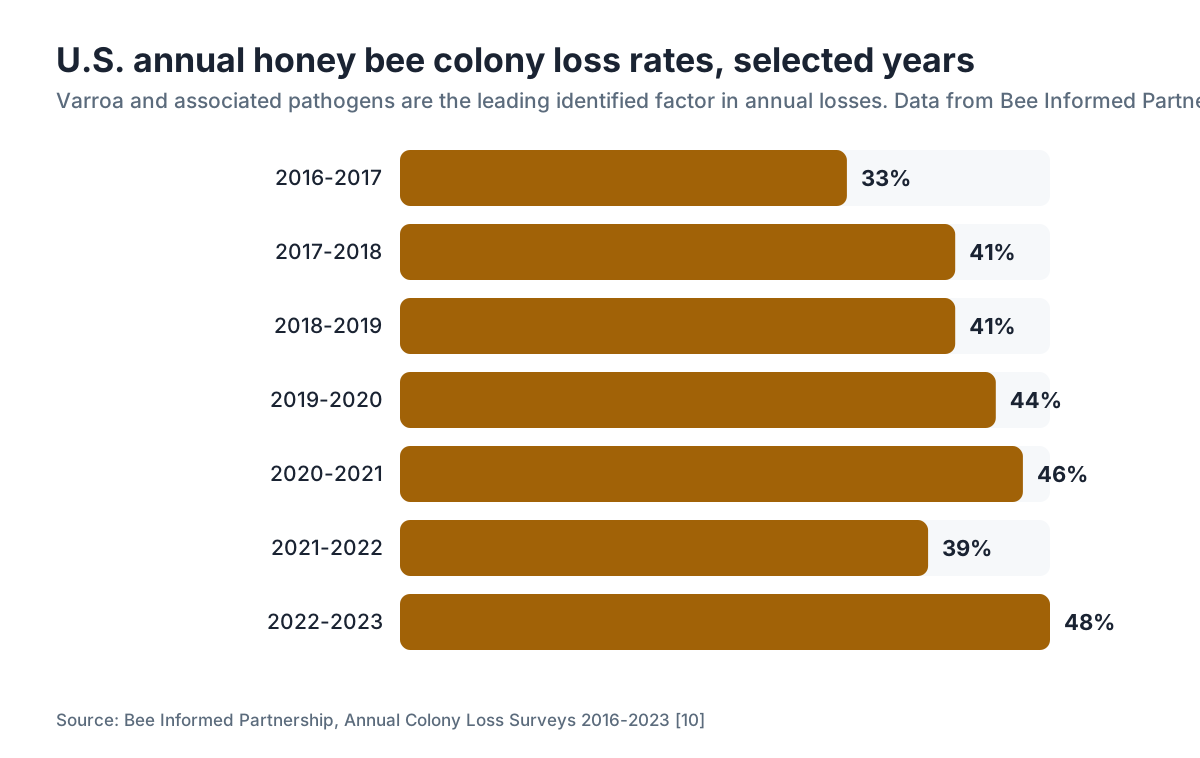
U.S. beekeepers reported roughly 48% annual colony loss in 2022-2023, with varroa and associated pathogens named as the leading factor, according to the Bee Informed Partnership [10]. That's the backdrop every hobbyist is working against.
For the rebuilt apiary, tools that track your monitoring history and treatment windows save more colonies than any single product. VarroaVault's free protocol tools give you a season-long tracking structure instead of a one-time count.
One more thing to check after a loss: did robbing carry mites from the collapsed colony into your other hives in the weeks before or during collapse? Robbing-driven mite transfer is one of the most underappreciated vectors for late-season collapse across a whole apiary.
What regulations apply to equipment from a collapsed hive?
Most U.S. states regulate AFB and hive equipment specifically. The general shape: if a state apiarist confirms AFB, the beekeeper usually has to destroy (burn or bury) all frames, comb, and sometimes the wooden boxes, depending on state law. A few states allow irradiation instead [4].
For a varroa-only collapse with no AFB, no federal rules restrict what you do with the equipment. The EPA regulates the treatments, not the boxes. Registered miticides carry a valid EPA registration number and must be used exactly per the label, which is legally binding under FIFRA [9]. There's no EPA rule about equipment from a dead-out.
Some states require you to register apiaries or report colony losses to the department of agriculture. This varies a lot. Check with your state department of agriculture or cooperative extension for your local rules. Oregon, for example, runs an apiary program with AFB reporting and equipment-destruction requirements that give a sense of how these state rules read [12]. USDA APHIS maintains a directory of state apiarists [4].
Moving used beekeeping equipment across state lines is regulated in some states, largely to stop AFB from traveling. If you plan to sell or move used boxes and frames, check the destination state's requirements first.
Frequently asked questions
How long do varroa mites survive on empty comb after a colony collapses?
Varroa mites can't survive without a bee host for more than a few days at normal temperatures, usually 2 to 5 days depending on humidity and heat. That means the mites themselves aren't a real risk in stored equipment after a week or two. Your main concerns in stored gear are wax moths, small hive beetles, and any viral or bacterial pathogens that persist in the wax and honey.
Can I use honey from a varroa-collapsed hive for human consumption?
Yes, if the honey looks and smells normal, the cappings are intact, and you've ruled out AFB. Varroa mites and the viruses they spread aren't known to make honey unsafe for people. Feeding that honey back to other colonies is the risky part. Extract it for your own use, or discard it, rather than putting it back into your apiary without freezing it first.
Does freezing comb kill AFB spores?
No. Freezing at 0°F is highly effective against wax moth larvae and eggs, small hive beetles, and some other pests, but it doesn't kill American Foulbrood spores. AFB spores are extraordinarily heat-resistant and survive even boiling. If you suspect AFB, contact your state apiarist and follow their guidance, which usually means burning the affected equipment.
How long should I freeze drawn comb before storing it?
A minimum of 24 to 48 hours at 0°F (-18°C) is what USDA and university extension programs recommend to kill wax moths and small hive beetles at all life stages, eggs included. Let the bags warm to room temperature while still sealed before you open them, so condensation forms on the outside of the bag instead of on the comb. Wet comb molds in storage.
Is it safe to give comb from a collapsed hive to a new package of bees?
Generally yes, if you've ruled out AFB and frozen the comb first. The drawn comb helps a new package build up much faster. Install the package on the cleaned equipment, start varroa monitoring by week three, and plan a treatment if counts reach 2% or above. The viral load in old comb is a real but manageable risk with steady monitoring.
What's the difference between paradichlorobenzene and naphthalene for wax moth control?
Paradichlorobenzene (PDB, sold as Para-Moth) is the registered product for wax moth control in stored beekeeping equipment. It evaporates clean and leaves no problem residue if you air the equipment out before use. Naphthalene (old-fashioned mothballs) isn't registered for this and leaves a residue that contaminates honey and harms bees. Use PDB and follow the label rate.
Should I disinfect boxes with bleach after a varroa collapse?
A dilute bleach solution (1:9 bleach to water) reduces surface pathogens and Nosema spores on wooden boxes, and it's cheap. It won't reach deep into the grain and does nothing for AFB spores. Scorching interior surfaces with a propane torch does more for overall sanitizing. Many beekeepers do both: scrape, bleach wipe, dry, then torch. For a clean varroa collapse with no AFB, bleach alone is probably adequate.
Can robbing bees spread mites from my collapsed hive to my other colonies?
Yes, and it's one of the most damaging and least appreciated paths. When a colony collapses, nearby bees rob out the honey fast. Those robbers meet live mites (if the collapse just happened) or, more often, pick up viral particles from the comb and honey that speed mite damage back home. Close the entrance of a collapsing colony early if you can, and run emergency mite checks on your other hives after any collapse.
How do I know if my hive collapsed from varroa versus another cause?
Varroa collapse has a signature: a fast population drop in late summer or fall, bees with Deformed Wing Virus (crumpled wings, small abdomens), a high mite count on your last check, and a hive that empties out leaving honey and some pollen behind. Other causes read differently. A pile of dead bees at the entrance suggests pesticide. An empty hive with no honey suggests starvation. Mite counts taken before collapse are the most definitive data point.
What do I do with plastic frames and foundation from a collapsed hive?
Plastic frames and foundation scrape clean and reuse fine. Don't torch them; the heat warps plastic. A bleach wipe and full drying in sun is enough sanitizing for a varroa collapse. If the plastic foundation has heavy wax moth damage or badly compromised comb, it's usually easier to scrape the comb off completely and re-wax the surface than to repair it.
Is old, dark brood comb from a collapsed hive worth saving?
Usually not. Black or very dark brown brood comb has stacked up years of larval cocoons, shed skins, fecal matter, and pesticide residues. Research has shown old brood comb can carry elevated pesticide concentrations that may affect larval development. If the comb is black rather than dark brown, I'd cut it out and melt it for wax rather than put it back in service. The wax is still usable; the comb is not.
Can I sell used equipment from a collapsed hive?
In most states, yes, if you've confirmed there's no AFB and cleaned it properly. Some states restrict moving used beekeeping equipment across state lines to slow disease spread. Be honest with buyers about the equipment's history. Gear from a varroa collapse isn't inherently dangerous once cleaned, but a buyer deserves to know what they're getting so they can take precautions before installing bees.
How soon after finding a collapsed hive should I act?
Within days in summer, within a couple of weeks in fall or winter. In warm weather, wax moths do serious comb damage in one to two weeks. Robbing bees from neighboring hives or feral colonies strip honey from an open collapsed hive within 48 to 72 hours. Close the entrance, remove or cover supers if you can't deal with them right away, and get to the full assessment and cleanup within a week.
Do I need to report a varroa-related colony collapse to any government agency?
No federal reporting requirement exists for varroa losses in the U.S. Some states ask beekeepers to report significant losses to the department of agriculture or state apiarist, but that's advisory in most cases. USDA collects colony loss data through the Bee Informed Partnership and USDA NASS honey bee surveys, which beekeepers can contribute to voluntarily. If you suspect AFB, your state may require you to notify the apiarist.
Sources
- Honey Bee Health Coalition, Varroa Management Guide (2023 edition): Treatment thresholds, monitoring frequency, and guidance against feeding honey from unknown-health-status colonies back to other bees
- Penn State Extension, Varroa Mite Biology and Life Cycle: Varroa mites cannot survive without a bee host for more than a few days under normal conditions
- PLOS ONE, Ribiere et al., Persistence of Deformed Wing Virus in honey and wax: DWV RNA was detectable in stored honey at room temperature for extended periods; honey from varroa-collapsed hives is not known to be unsafe for human consumption
- University of Florida IFAS Extension, American Foulbrood Disease of Honey Bees: The ropy-stretch test using a matchstick is the standard field diagnostic for American Foulbrood
- USDA Agricultural Research Service, Wax Moth Control in Stored Comb: Freezing comb at 0°F for 24-48 hours kills wax moths at all life stages; paradichlorobenzene (Para-Moth) is the registered chemical option for stored comb
- Michigan State University Extension, Cleaning and Disinfecting Beekeeping Equipment: Scorching interior surfaces with a propane torch is a standard sanitization method for wooden hive boxes
- PLOS ONE, Mullin et al. (2010), High Levels of Miticides and Agrochemicals in North American Apiaries: Old brood comb accumulates pesticide residues over successive brooding cycles at potentially elevated concentrations
- U.S. EPA, Federal Insecticide, Fungicide, and Rodenticide Act (FIFRA) label compliance: EPA-registered miticide labels are legally binding and must be followed exactly; violation is a federal offense under FIFRA
- Bee Informed Partnership, Annual Colony Loss Survey 2022-2023: U.S. beekeepers reported approximately 48% annual colony loss in 2022-2023, with varroa and associated pathogens as the leading identified factor
- University of Minnesota Extension, Varroa Mite Management: 2% mite load (2 mites per 100 bees by alcohol wash) is the action threshold recommended for treatment during brood-rearing season
- Oregon Department of Agriculture, Apiary Program and AFB regulations: Example of state-level AFB reporting requirements and equipment destruction regulations
Last updated 2026-07-10