Where to buy oxalic acid for beekeeping legally in the US
TL;DR
- In the US, oxalic acid varroa treatments must be EPA-registered products, specifically Api-Bioxal.
- You can buy it legally from beekeeping supply retailers, farm supply stores, online vendors, and some co-ops.
- Raw oxalic acid sold for wood-bleaching is not legal for hive use.
- Expect to pay $20 to $40 for a 35-gram packet, which treats roughly 50 to 70 colonies by dribble.
Why does it matter where you buy oxalic acid for bees?
Most new beekeepers skip this question. It's the one that can land you in real trouble. Not all oxalic acid is the same thing under federal law, and using the wrong product in a honey-producing colony is a pesticide violation.
The EPA classifies oxalic acid as a pesticide when you use it to kill varroa mites. That means the only legal product for US beekeepers is one that carries an EPA registration number on its label. Right now, the only EPA-registered oxalic acid product approved for honey bee colonies is Api-Bioxal, made by Véto-Pharma [1]. Buying industrial or "wood bleach" oxalic acid from a hardware store and drizzling it on your bees is a federal violation, full stop.
This matters beyond the legal risk. Api-Bioxal is formulated at a specific dihydrate concentration (5.7% oxalic acid dihydrate in a sugar-water carrier for the liquid form, or pure crystalline form for vaporization), and the label sets application rates, timing, and safety precautions grounded in actual efficacy data. Off-label products give you no reliable dosing guidance and no residue data for honey safety.
The Honey Bee Health Coalition's Tools for Varroa Management guide puts it plainly: use of any pesticide in a hive contrary to its label is a violation of federal law [2]. That includes using a product not registered for the intended use, even if the active ingredient is chemically identical.
What is the only legal oxalic acid product for US beekeepers?
Api-Bioxal is the single EPA-registered oxalic acid product for varroa treatment in the United States [1]. Its EPA registration number is 86064-3. The label allows three application methods: trickle (dribble) onto bees in cluster, spraying onto package bees, and vaporization (sublimation) using an approved vaporizer device.
The label specifies:
- Trickle method: 50 mL of 2.1% oxalic acid solution (prepared per label) per colony, once per treatment period, only when the colony is broodless.
- Vaporization method: 2.05 grams of Api-Bioxal per brood box, up to three times at five-day intervals, with or without brood present.
- Spray method: for package bees only.
The EPA product label is the law. If the label says "broodless colony only" for dribble, that's not a suggestion [1]. Vaporization has more flexibility because it can treat colonies with capped brood, reaching mites as they emerge over multiple treatments.
Api-Bioxal comes in a 35-gram packet. One 35-gram packet makes enough solution for roughly 35 dribble treatments or provides enough material for roughly 17 vaporization treatments per brood box at 2.05 g each, though real-world yield varies slightly by colony count and box configuration.
Where can you legally buy Api-Bioxal in the United States?
You have several reliable options. Here's where most beekeepers actually find it:
Dedicated beekeeping supply retailers. Mann Lake, Dadant, Brushy Mountain (now part of Mann Lake), and similar vendors stock Api-Bioxal year-round. These are the most reliable sources because staff understand the product and it's stored properly. If you're already buying frames or foundations, add it to the same order. See our overview of beekeeping supply companies for a broader vendor list, and check which ones offer free shipping honey bee supply companies to cut costs on heavier orders.
Amazon and other online marketplaces. Api-Bioxal is listed by multiple sellers on Amazon. The product is legitimate when sold by established bee supply vendors through the platform. The risk is third-party sellers with questionable storage conditions or counterfeit listings, so verify the seller's identity and check that the listing shows the correct EPA registration number (86064-3) on the label photo before buying.
Farm supply and co-op stores. Tractor Supply Co., some Southern States co-ops, and regional farm stores carry it in areas with active beekeeping populations. Stock is seasonal and spotty, so call ahead. Some local beekeeping associations negotiate bulk purchases through co-ops for members.
State apiarist offices and extension programs. A handful of state programs sell or subsidize Api-Bioxal through extension offices, especially for new beekeepers. This varies by state. Your state's department of agriculture website is the place to check.
Local beekeeping clubs. Many local associations do group buys to reduce per-unit cost. If you're treating a small number of hives, splitting a bulk order with a club is one of the best moves financially. A single 35-gram packet at $20 to $40 retail goes a long way for a hobbyist.
Prices as of mid-2025 range from roughly $20 to $40 per 35-gram packet depending on vendor and shipping costs. Bulk packs (several packets together) bring the per-packet cost down to the $15 to $25 range. These prices shift; check current vendor listings for exact figures [3].
Can you use wood-bleach or industrial oxalic acid in hives?
No. This comes up constantly in beekeeping forums, and the answer hasn't changed since Api-Bioxal received EPA registration in 2015. Using industrial oxalic acid (sold for wood bleaching, metal cleaning, or rust removal) in a honey bee colony is a violation of FIFRA, the Federal Insecticide, Fungicide, and Rodenticide Act [4].
FIFRA section 12 prohibits using any pesticide in a manner inconsistent with its labeling. An industrial oxalic acid product carries no label language permitting use in beehives. The fact that the molecule is identical to Api-Bioxal's active ingredient is legally irrelevant.
Beyond the legal problem, there are practical ones. Industrial oxalic acid comes in varying purity grades, and contaminants aren't controlled the way they are in a pesticide registration. Honey residue data submitted to the EPA during Api-Bioxal's registration was generated at the specific formulation and application rates on that label, not for whatever concentration a beekeeper mixes up from hardware store powder.
Some older European protocols predate the US registration and circulated widely online. Those protocols are legal in different regulatory contexts. They're not legal here, regardless of how many forum posts say otherwise.
If you're outside the US, your country's regulatory agency sets the rules. Canada's Pest Management Regulatory Agency, for example, has its own registered products and label requirements.
Do you need a prescription or license to buy Api-Bioxal?
No prescription is required for hobbyist beekeepers in the US. Api-Bioxal is available over the counter. This is a meaningful distinction from some other varroa treatments. Amitraz-based strips (Apivar) and some coumaphos products require a veterinary feed directive (VFD) in some contexts, but oxalic acid does not currently fall under that requirement for non-commercial beekeepers [5].
Some states have their own pesticide licensing requirements for commercial applicators, but those thresholds typically apply to large-scale commercial operations or professional pest control businesses, not hobbyist or sideliner beekeeping. Check with your state department of agriculture if you're unsure where you fall.
You do need to follow the label. The label is a federal document, and "following the label" means the method, rate, timing, and safety equipment specified. You don't need a license to buy the product, but you are legally responsible for applying it correctly.
How much does Api-Bioxal cost, and is it worth it?
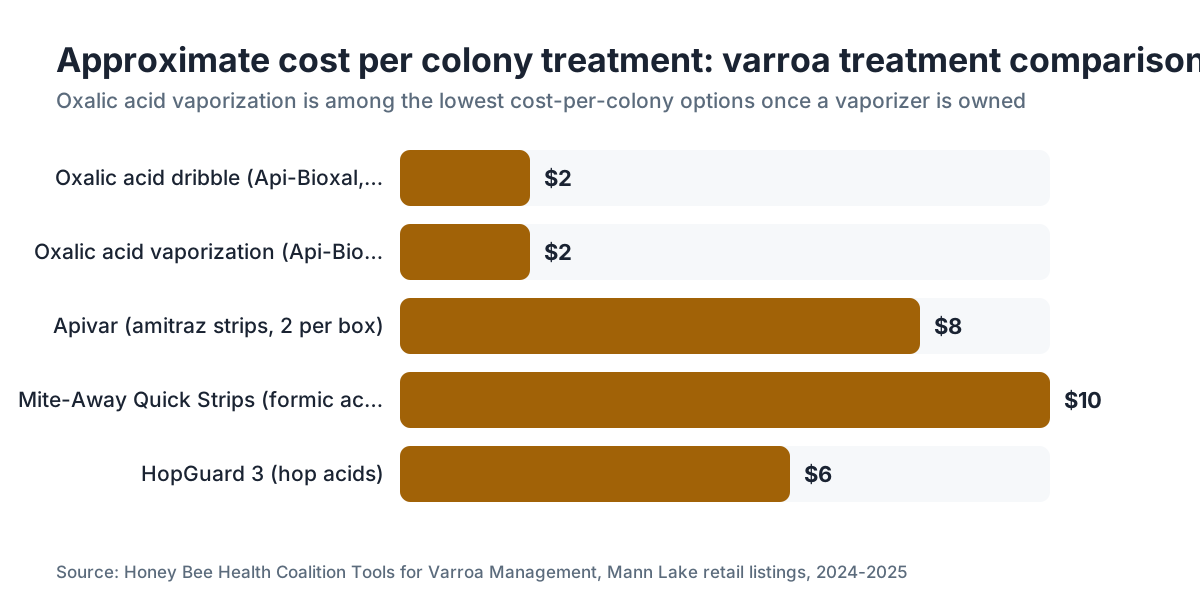
At $20 to $40 per 35-gram packet, Api-Bioxal is one of the least expensive varroa treatments per colony once you do the math. A single packet used for vaporization at 2.05 grams per brood box covers roughly 17 single-brood-box treatments, putting the per-colony cost of one treatment at $1.20 to $2.35, depending on what you paid.
Compare that to Apivar strips at roughly $1.50 to $2.50 per strip with two strips required per brood box, or formic acid products (Mite-Away Quick Strips) at $7 to $12 per colony treatment. Oxalic acid vaporization is genuinely cheap at the per-colony level once you own a vaporizer.
The vaporizer is the real upfront cost. A basic electric vaporizer (the Varrox, ProVap, or similar) runs $150 to $350. Battery-powered units built for treating many hives fast run higher. That's a real capital cost for a hobbyist with three hives, but it pays back quickly if you treat several times a year across a growing operation [6].
For someone with fewer than five hives doing a single broodless-period dribble treatment each winter, a vaporizer may not pencil out. The dribble method needs no equipment beyond a syringe and the solution, so the total cost per colony can be under $2 including equipment.
VarroaVault's free protocol tools can help you map out treatment timing and cost per colony across your specific operation, which is useful when you're deciding which method makes sense.
What application methods are legal under the Api-Bioxal label?
The EPA-registered Api-Bioxal label permits exactly three methods [1]:
- Trickle (dribble): A 2.1% oxalic acid solution is dribbled directly onto the bees between frames, 5 mL per seam of bees up to a maximum of 50 mL per colony. This method is only legal when the colony is broodless, because oxalic acid does not penetrate capped brood and treating with brood present leaves a large reservoir of protected mites. One treatment per year is permitted by this method.
- Vaporization (sublimation): 2.05 grams of Api-Bioxal crystals are heated in an approved vaporizer until they sublimate into a gas that coats bees and comb. This can be done with brood present, and up to three treatments at five-day intervals are permitted. Multiple-brood-box hives require treatment of each box separately or use of a vaporizer rated for the configuration.
- Spray: Only for package bees. Not applicable to established colonies.
Nothing else is on the label. Extended-release oxalic acid products (glycerin-soaked cardboard, sponges, shop towels) come up often online. As of mid-2025, no extended-release oxalic acid product carries EPA registration for use in the US, meaning those methods are currently off-label regardless of what research has shown about their efficacy [7]. Watch for regulatory updates; this space has been moving.
For a thorough look at the mite itself and why treatment timing matters so much, the varroa mite overview on this site explains the biology behind brood-cycle timing.
When is the best time to treat with oxalic acid, and does the method change where you buy it?
Timing is where the method choice really bites. For the dribble method, the label restricts you to broodless colonies. In most of the continental US, that means a window in late fall or early winter when the queen has stopped laying, typically November through January depending on your climate [2]. Miss that window and the dribble method is off the table legally and practically.
Vaporization gives you more flexibility. Three treatments at five-day intervals can be applied during the brood-rearing season, which makes it useful for summer mite spikes, splits, and swarms.
None of this changes where you buy the product. Api-Bioxal is the same product regardless of whether you're dribbling or vaporizing. What changes is the amount you need. For a dribble treatment on ten broodless hives, a single 35-gram packet is more than enough. For a three-round vaporization treatment of thirty hives, you'll need to do the math (2.05 g per brood box, times three rounds, times 30 colonies, equals about 185 grams, so roughly six packets).
Order ahead. Api-Bioxal sometimes goes out of stock at major vendors in the fall when everyone is treating simultaneously. Late summer is a good time to stock up for winter treatments.
The Honey Bee Health Coalition's Tools for Varroa Management guide includes a treatment timing calendar that cross-references mite load thresholds with seasonal colony conditions. It's free and worth keeping on your phone [2].
Are there state-specific rules about buying or using oxalic acid for bees?
Federal EPA registration sets the floor, but states can layer their own pesticide regulations on top. A few things to know:
California requires that all pesticide purchases above a certain threshold be reported, and commercial applicators need a license. Hobbyist beekeepers in California generally fall under an exemption, but the California Department of Pesticide Regulation is the authority to consult if you're unsure [8].
Some states require hive registration with the state department of agriculture before you can legally treat. This isn't an oxalic acid rule specifically, but treating unregistered hives can compound a violation. Many states have free or nominal-fee hive registration programs. Check your state's department of agriculture website.
No state has banned Api-Bioxal. A few states have historically been slow to adopt new EPA registrations into their own state pesticide lists, but as of 2025 oxalic acid treatment is generally available across the US.
In Canada, the comparable product is Oxalic Acid Dihydrate registered by Health Canada's Pest Management Regulatory Agency. The vendor landscape is similar (beekeeping supply retailers, some farm stores) but the specific product and label differ from Api-Bioxal.
What equipment do you need, and where do you get it alongside the product?
For the dribble method, you need the Api-Bioxal packet, a measuring scale accurate to at least 1 gram, warm water, granulated white sugar, and a large syringe (60 mL works well). Total equipment cost beyond the product itself: under $30 if you don't own a kitchen scale already. Any beekeeping supplier selling Api-Bioxal will also stock syringes, and most carry small scales.
For vaporization, you need an approved oxalic acid vaporizer. "Approved" means it has an EPA registration number or is explicitly referenced in the Api-Bioxal label context. Several electric units are widely sold: the Varrox, ProVap 110, and Varrojet are common choices. You also need a respirator rated for oxalic acid vapor (NIOSH P100 or better), eye protection, and a way to seal the hive entrance during treatment. Oxalic acid vapor is a serious respiratory irritant. The label is explicit about PPE requirements, and this is one label instruction that's worth taking seriously regardless of legal obligation [1].
Your beekeeping supplies checklist should include all of this before your first treatment season.
For a sideliner running 50 or more colonies, a battery-powered vaporizer with a long probe earns its price. For a hobbyist with five hives, a basic electric unit on a car battery does the job. Nobody needs to spend $500 on a vaporizer for ten hives.
How do you verify a seller is selling the real, registered product?
A few checks before you buy:
EPA registration number. The label or listing should show EPA Reg. No. 86064-3. If it's not there, skip it.
Manufacturer name. Api-Bioxal is made by Véto-Pharma. Legitimate retailers source it from authorized US distributors of Véto-Pharma products.
Packet weight. Standard retail units are 35 grams. Some bulk options exist. If someone is selling "oxalic acid for bees" in bulk bags without the Api-Bioxal brand name and EPA number, that's a red flag.
Product appearance. Api-Bioxal crystalline product is white to off-white crystalline powder. The liquid formulation comes pre-mixed. Sellers offering loose bulk powder labeled only as "oxalic acid dihydrate" without the EPA registration are selling an unregistered pesticide for this use.
Reputable vendors like Mann Lake and Dadant have sold this product since its 2015 EPA registration and stake their business reputation on product integrity. For an unfamiliar online vendor, check for reviews from other beekeepers and confirm they stock other standard beekeeping equipment, which suggests they know the market.
To evaluate beekeeping vendors more broadly, the beekeeping supply companies page covers what to look for.
What mite thresholds should trigger an oxalic acid treatment?
Buying the product is step one. Knowing when to use it is what actually saves colonies. The Honey Bee Health Coalition recommends treating when mite levels reach 2% or higher in the brood-rearing season (2 mites per 100 bees on an alcohol wash) and using an economic threshold of 2% as the trigger for most of the year [2]. Some researchers advocate treating at 1% in late summer, when the colony is rearing the winter bees that will carry it through to spring.
The University of Minnesota Extension puts it directly: late summer treatment before the winter bee population is raised is one of the highest-leverage moves a beekeeper can make [9]. Treat in August or September with an effective product, and the bees going into winter are mite-free. Wait until November, and the damage to those winter bees is already done.
Oxalic acid's limitation is that it only kills phoretic mites (mites on adult bees, not mites inside capped brood cells). The dribble method used in a broodless colony kills close to 95% of the mite population because nearly all mites are phoretic [10]. The same treatment on a colony with heavy brood kills only the phoretic fraction, leaving the brood-cell population untouched. This is exactly why matching timing and method matters so much.
If you're not monitoring with alcohol washes or sugar rolls, you're guessing. The equipment costs under $10 and the technique takes about ten minutes per hive.
Frequently asked questions
Can I buy oxalic acid for bees at Tractor Supply?
Sometimes. Tractor Supply Co. stocks Api-Bioxal in regions with active beekeeping populations, but availability is seasonal and varies by store. Call your local store before making a trip. If they don't carry it, Mann Lake, Dadant, and other dedicated beekeeping retailers ship reliably. Don't buy generic oxalic acid wood bleach from Tractor Supply for hive use; that product is not EPA-registered for bees and its use in hives violates federal law.
Is Api-Bioxal the same as oxalic acid dihydrate sold at hardware stores?
The active molecule is the same, but they are legally different products. Api-Bioxal carries EPA registration number 86064-3, which authorizes its use in honey bee colonies. Hardware store oxalic acid carries no such registration. Using unregistered pesticides in hives violates FIFRA regardless of chemical similarity. The formulation and purity standards also differ; Api-Bioxal's concentration and carrier were validated through EPA's registration process.
How long does a 35-gram packet of Api-Bioxal last?
For vaporization at 2.05 grams per brood box, one 35-gram packet gives you roughly 17 single-box treatments. For dribble, the label calls for preparing a solution from about 1 gram of Api-Bioxal per treated colony (using 35 mL water, 35 g sugar, and 1 g Api-Bioxal per colony roughly). Real-world yield depends on your colony count and configuration. A single packet is usually enough for a hobbyist treating 5 to 10 hives once.
Do I need a prescription to buy Api-Bioxal?
No. Api-Bioxal is available over the counter for hobbyist and sideliner beekeepers in the US. No veterinary prescription or feed directive is required. This differs from some other varroa treatments. You are still legally required to follow the product label exactly, including application rates, timing restrictions, and personal protective equipment requirements.
What's the cheapest legal way to get oxalic acid for bees?
Joining a local beekeeping association and participating in a group buy is usually the cheapest route. Bulk purchasing through a club can bring the per-packet price down by 20 to 40 percent compared to retail. If you're buying individually, compare prices across Mann Lake, Dadant, and Amazon listings from established bee supply sellers. Factor in shipping; sometimes a slightly higher per-unit price with free shipping wins.
Can I use oxalic acid on colonies with brood?
It depends on the method. The dribble method is label-restricted to broodless colonies only. Vaporization is permitted on colonies with or without brood, for up to three treatments at five-day intervals. The reason is biology: oxalic acid kills only phoretic mites (those on adult bees), so it can't reach mites inside capped brood cells regardless of method. Multiple vaporization rounds catch mites as they emerge from cells.
Is oxalic acid treatment safe for honey I'll harvest?
The EPA registration process for Api-Bioxal included residue studies. The label allows treatment without a pre-harvest interval when used correctly, because oxalic acid occurs naturally in honey and the treatment does not meaningfully raise residue levels above background when applied per label. Do not treat in honey supers, and follow all label instructions. Using unregistered oxalic acid products removes any residue safety assurance.
How do I know what mite level means I should buy and use oxalic acid?
The Honey Bee Health Coalition recommends treating when alcohol wash results show 2% or more mite infestation (2 mites per 100 bees) during brood-rearing season. In late summer, many experienced beekeepers treat at 1% to protect winter bees. If you haven't done a mite wash, do one before spending money on treatment products. Treating blindly can mean treating too late or treating when it's not yet necessary.
Are extended-release oxalic acid methods (glycerin shop towels) legal?
As of mid-2025, no extended-release oxalic acid product has EPA registration for use in US honey bee colonies. Research has been published on glycerin-soaked sponges and similar methods, and some beekeepers use them, but doing so is an off-label pesticide use and technically violates FIFRA. Watch for EPA registration updates; this area has been under regulatory review.
What PPE do I need when applying Api-Bioxal?
The Api-Bioxal label requires a NIOSH-approved respirator (N95 minimum for dribble; P100 or supplied-air for vaporization), chemical-resistant gloves, protective eyewear, and a long-sleeved shirt. Oxalic acid vapor is a serious irritant to lungs, eyes, and mucous membranes. The vaporization method carries higher respiratory risk because the sublimated gas disperses. Never vaporize in an enclosed space without ventilation and proper respiratory protection.
Can I buy Api-Bioxal in Canada?
Canada has its own registered oxalic acid product approved by Health Canada's Pest Management Regulatory Agency. It is not Api-Bioxal under that exact brand in all cases; check the PMRA registered products database for the current approved product name and registrant. Canadian beekeeping suppliers (Betterbee Canada, Propolis, local co-ops) carry the registered product. Application rules differ from the US label, so read the Canadian label specifically.
How do I store Api-Bioxal once I've bought it?
Store Api-Bioxal in a cool, dry location away from direct sunlight, food, and children. The sealed packet is stable for at least two years under normal storage conditions. Once opened, the crystalline product can absorb moisture; fold and clip the packet or transfer to an airtight container. Mixed solution (for dribble) should be prepared fresh and used within a single treatment session rather than stored.
Sources
- EPA, Api-Bioxal Product Label (EPA Reg. No. 86064-3): Api-Bioxal is the only EPA-registered oxalic acid product for varroa treatment in US honey bee colonies; label specifies three legal application methods and rates.
- Honey Bee Health Coalition, Tools for Varroa Management Guide (7th edition): Use of pesticides in hives contrary to their label violates federal law; 2% mite infestation threshold recommended for treatment trigger.
- Mann Lake Bee & Agriculture Supply, Api-Bioxal product listings: Retail price range of $20 to $40 per 35-gram packet as observed at major US beekeeping supply retailers.
- EPA, Summary of the Federal Insecticide, Fungicide, and Rodenticide Act: FIFRA prohibits using any pesticide in a manner inconsistent with its labeling; industrial oxalic acid has no label permitting hive use.
- FDA, Veterinary Feed Directive: Some antibiotic and drug-based hive treatments require a veterinary feed directive; oxalic acid does not currently fall under that requirement for non-commercial beekeepers.
- Pennsylvania State University Extension, Varroa Mite Management: Electric oxalic acid vaporizers range approximately $150 to $350; vaporization is cost-effective across multiple hives once capital equipment is purchased.
- USDA Agricultural Research Service, Oxalic Acid Extended Release Research: Extended-release oxalic acid methods (glycerin-based) have been studied but as of 2025 carry no EPA registration for use in US honey bee colonies.
- California Department of Pesticide Regulation, Pesticide Use and Licensing: California requires pesticide purchase reporting above certain thresholds and licenses for commercial applicators; hobbyist beekeepers may fall under exemptions.
- University of Minnesota Extension, Varroa Mite Management in Honey Bee Colonies: Late summer treatment before winter bee rearing is one of the highest-impact varroa management interventions; treating in August or September protects overwintering bees.
- Honey Bee Health Coalition, Tools for Varroa Management Guide (7th edition): Oxalic acid dribble applied to a broodless colony achieves approximately 95% mite kill because nearly all mites are phoretic and accessible.
- Véto-Pharma, Api-Bioxal manufacturer product information: Api-Bioxal is manufactured by Véto-Pharma and distributed to US beekeeping retailers through authorized channels; EPA Reg. No. 86064-3.
- Oregon State University Extension, Honey Bee Varroa Mite Management: Monitoring with alcohol wash at 2% threshold and treating with registered products including oxalic acid is standard extension guidance for Pacific Northwest beekeepers.
Last updated 2026-07-10