Where to buy oxalic acid for bees: the complete sourcing guide
TL;DR
- EPA-registered oxalic acid dihydrate for varroa treatment sells at beekeeping supply companies, farm and livestock co-ops, and online retailers.
- The only federally legal products for bees in the US carry an EPA-registered label, and Api-Bioxal (EPA Reg.
- No.
- 86203-1) is the common brand.
- Prices run roughly $8 to $35 by package size.
- Industrial oxalic acid sold for wood-bleaching is illegal for hive use.
What is oxalic acid and why does it need to be a specific product?
Oxalic acid is an organic acid found in many plants, from rhubarb to spinach. In a hive it kills Varroa destructor mites on contact while staying relatively safe for adult bees at treatment concentrations. It does nothing to mites capped inside brood cells. That single fact drives every decision about timing and method.
Here is what trips up new beekeepers. Not every oxalic acid product is legal in a beehive. The EPA requires that any pesticide applied to a managed colony be registered for that exact use. A bag of oxalic acid sold for stripping wood or cleaning boat decks carries no such registration. Putting it in a hive is a federal pesticide violation under FIFRA, even though the molecule is identical [1].
The product you want is Api-Bioxal, made by Véto-pharma. It holds the full EPA registration for varroa treatment in US honey bee colonies [2]. A handful of states have run their own registered products over the years, but Api-Bioxal ships to and works in all 50 states. When beekeepers say they're buying oxalic acid for bees, this is almost always what they mean.
Where can you buy Api-Bioxal or registered oxalic acid for bees?
You have more sources than most people expect, and prices swing enough that knowing all of them pays off. Beekeeping supply companies are the reliable backbone; the rest fill gaps.
Beekeeping supply companies stock it consistently. National retailers like Mann Lake, Dadant, Brushy Mountain (now part of Mann Lake), and others carry Api-Bioxal in 35-gram and 175-gram packages. The beekeeping supply companies roundup lists a broader set of suppliers. Some run free shipping on honey bee supplies above certain order thresholds, which changes your real per-gram cost more than the sticker price does.
Local beekeeping associations often organize group buys or keep a small equipment library open to members. Run five or fewer hives? This is the cheapest route by a wide margin. A 35-gram packet treats roughly three to five hives depending on method, so a shared 175-gram bag across a club stretches a long way.
Farm supply and agricultural co-ops are underrated. Tractor Supply Company and regional farm co-ops in many states carry Api-Bioxal, especially where beekeeping is popular. Stock varies by store and season, so call ahead.
Online marketplaces (Amazon, eBay, Walmart.com) list Api-Bioxal through third-party sellers. That's fine when the product arrives as the real registered item in factory-sealed packaging. The risk is counterfeit or mislabeled product from sellers nobody has vetted. Stick with strong-review sellers and confirm the label shows EPA registration number 86203-1 [2].
State apiarist offices and extension programs sometimes distribute treatment through subsidized programs for small-scale beekeepers. It's patchy and varies by state. Worth a phone call to your state department of agriculture if money is tight.
How much does oxalic acid for bees cost?
Prices move with the supply chain and the retailer. Here is the honest range as of mid-2025.
A 35-gram packet of Api-Bioxal runs roughly $8 to $14 at most beekeeping supply retailers. That's enough for one to two full treatment rounds on a small apiary, depending on method. The 175-gram size runs roughly $25 to $35 and wins if you have four or more hives or plan to treat twice a year.
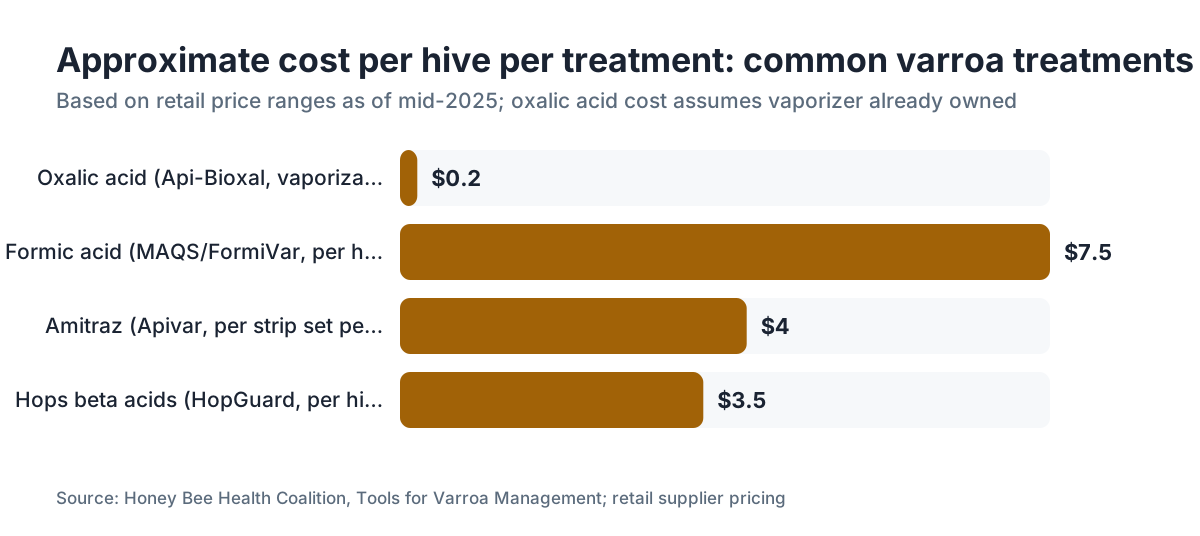
Set that against the alternatives. Apivar (amitraz strips) costs roughly $30 to $45 for a 10-pack treating five hives. Mite Away Quick Strips (formic acid) run about $20 to $30 for a two-pack treating two hives. Per hive, oxalic acid by vaporization is among the cheapest treatments you can buy.
Shipping punishes small orders. A single 35-gram packet can cost $8 to $12 to ship, which nearly doubles the price. Order it alongside other beekeeping supplies, or find a local source and skip the hit entirely.
Industrial oxalic acid is cheaper, sometimes wildly so. You'll see it for $10 to $20 per kilogram. Don't. Past the legal problem, purity is the real issue: Api-Bioxal is tested to pharmaceutical-grade standards, while industrial-grade product can carry heavy metal impurities at levels that harm bees or end up in your honey.
What are the legal requirements for using oxalic acid in US hives?
Short version: use Api-Bioxal, follow the label, done. Under FIFRA, the label is the law.
The Api-Bioxal label lists three application methods: direct contact (dribble/trickle), sublimation (vaporization), and extended-release using glycerin-soaked pads [2]. Each has its own dose rate, timing window, and PPE requirement. The label also bars treatment of colonies with a honey super that will be harvested for people. Stop treating before you add those supers.
The Veterinary Feed Directive that tightened oversight on medicated feed antibiotics did not add prescription requirements for oxalic acid in most states. Some states do stack their own pesticide registration on top of the federal label. California, for one, has its own registration requirements that Api-Bioxal meets and an unregistered product does not [3]. Check your state department of agriculture site before you assume the federal label is the whole story.
The Honey Bee Health Coalition's varroa guide states that "oxalic acid is approved for use in the United States for Varroa control in honey bee colonies," listing it among the tools for broodless colonies or as a supplemental treatment during the brood cycle via extended-release methods [4]. That's the plain public summary from a trusted multi-stakeholder body.
One more thing that isn't optional fine print. If you vaporize, you need a vaporizer that heats the crystals into oxalic acid vapor, and that vapor wrecks lungs and eyes. The label calls for a respirator rated for acid vapors (minimum OV/P100 cartridge), goggles, and gloves. Wear all three, every time.
What is the Barnyard Bees oxalic acid video and is it worth watching?
"Barnyard Bees" is a YouTube channel run by a hobbyist beekeeper who has posted several widely watched videos on oxalic acid treatment and vaporization. The Barnyard Bees oxalic acid videos lean hard into hands-on how-to: sealing a hive for vaporization, how long to leave it closed, what gear to actually wear in the yard.
Those clips spread through beginner groups and pulled a lot of people into the buy-oxalic-acid-for-bees conversation. The demonstrations help. Two caveats, though. A YouTube tutorial from any individual beekeeper, however seasoned, is no substitute for reading the current Api-Bioxal label. Techniques on video can lag a label update, or reflect what's legal in one place but not another.
Watch for technique intuition. Then check every dose, timing, and PPE detail against the current Api-Bioxal label from the EPA or the manufacturer. Video for feel, label for facts. That's how you get this right.
Dribble vs. vaporization: does the method change where you buy or what you buy?
No. The product is identical across methods. Api-Bioxal is the registered product for all three application methods on the label, so you never need a different formulation for vaporization versus dribble.
What changes is the gear beside the product. Dribble needs a measured syringe and a 3.5% oxalic acid-in-sugar-water solution mixed per label instructions. Vaporization needs a vaporizer (most beekeepers run an electric model like the Varomorus or a ProVap, roughly $80 to $200) plus acid-vapor respiratory protection.
The extended-release glycerin pad method is newer. It uses a treatment card soaked in an oxalic acid-glycerin mix at label ratios. Some beekeepers make their own from Api-Bioxal; others buy pre-made pads when a supplier has them. As of mid-2025, commercial pre-made pads have shown up and sold out on and off.
Here's how the three methods stack up on the parameters that decide your protocol:
| Method | Brood present? | Treatments needed | Typical efficacy | Equipment cost |
|---|---|---|---|---|
| Dribble/trickle | No (broodless only) | 1 | 90-95% [5] | Minimal (<$5) |
| Vaporization | Yes or no | 3 (every 5 days, broodless) or up to 5+ (with brood) | 90-95%+ [5] | $80, $200 vaporizer |
| Extended-release (OAE) | Yes or no | 1 pad per hive | 80-95% depending on conditions [10] | Minimal if DIY |
For most hobbyists, vaporization during a broodless window or late fall is the protocol that makes the most sense. It's fast, one to two minutes per hive once you own the gear, the efficacy data is strong, and the product cost per hive barely registers.
How do you know if the oxalic acid you're buying is actually legal for bee use?
Find the EPA registration number on the label: 86203-1 for Api-Bioxal [2]. Every EPA-registered pesticide sold in the US must show that number. Buying online? Zoom into the listing photos and find it before you order.
Check the manufacturer name too: Véto-pharma. Api-Bioxal packaging shows the Véto-pharma name, the EPA registration number, net weight, and directions written for bee use. Industrial oxalic acid carries none of that. A bag may shout "99% pure," but it will never carry a pesticide registration for apiary use.
Still unsure about a product? The EPA's pesticide product label system at EPA.gov lets you search registered products by company name or registration number and download the current official label [1]. That search is the ground truth. Trust it over any retailer's photo or printout.
Does oxalic acid expire, and how should you store it?
Api-Bioxal prints a shelf life on the package, usually two to three years from manufacture. It's a dry crystalline powder. Kept cool, dry, and out of direct sun and moisture, it stays stable across that window.
Moisture is the enemy. A bag left open or parked in a humid shed lets the crystals clump. Clumping doesn't automatically mean dead product, but it fouls accurate measurement. Weigh doses on a kitchen scale instead of measuring by volume for anything that matters.
Pre-mixed dribble solution has a short working life. Mix only what the day's treatments need and toss the rest. Don't store prepared liquid.
Buy a 175-gram package for one or two hives and you'll sit on most of it for two or three seasons. That's fine if storage is good and you're inside the expiration date. A club purchase-share program sidesteps the whole problem.
Can you buy oxalic acid for bees in Canada or the UK?
Yes, though the product names and regulators change at the border.
In Canada, oxalic acid for varroa is registered through Health Canada's Pest Management Regulatory Agency (PMRA). The registered product as of mid-2025 is Api-Bioxal, the same Véto-pharma product, under a Canadian label with Canadian directions. Canadian beekeeping supply retailers stock it [7].
In the UK, oxalic acid is authorized for varroa treatment under the Veterinary Medicines Directorate (VMD). Products including Oxuvar and Api-Bioxal sell through UK beekeeping suppliers. The UK authorization covers dribble and vaporization [8].
Outside these countries, check your national veterinary or pesticide authority. The science holds everywhere. What shifts is which specific product label is authorized and what dosing or method rules apply locally.
Knowing the varroa mite itself, its biology and life cycle, tells you when to apply any registered product regardless of where you keep bees.
What do university extension programs say about buying and using oxalic acid?
Extension apiculture programs at land-grant universities are the best free help a hobbyist can find, and most have refreshed their varroa publications to cover oxalic acid.
The University of Minnesota Bee Lab recommends oxalic acid as a primary tool for winter treatment when colonies are broodless, pointing to both its efficacy and its low residue in hive products [5]. Penn State Extension's varroa publication (last updated 2023) names Api-Bioxal as the registered product and gives mixing and safety instructions that track the label [9]. Ohio State University Extension publishes similar guidance and stresses that the dribble method works only in broodless conditions.
The Honey Bee Health Coalition's Tools for Varroa Management guide is probably the single most useful free document a beekeeper can read. It covers every registered treatment including the oxalic acid methods, compares them on efficacy and brood safety, and gets regular updates from a coalition that includes USDA-ARS researchers, state apiarists, extension specialists, and industry groups [4]. Download it and read it before you buy anything.
VarroaVault's free varroa management tools build on the same research base, with decision-support tools tuned to hobbyist and sideliner schedules. The HBHC guide and your nearest extension publication still belong on your reading list.
Is it cheaper to buy in bulk or split a purchase with other beekeepers?
Splitting almost always wins for hobbyists. Run the math and it's obvious.
A 175-gram package of Api-Bioxal retails for roughly $25 to $35. At label dosing for vaporization (about 1 gram per hive per treatment), that bag holds 175 treatments. Five hives treated three times a year burns 15 grams. That single bag lasts more than a decade, long past its expiration date.
Five beekeepers, five hives each, pooling one 175-gram purchase makes far more sense. Each person pays $5 to $7 for a share and still has plenty for a full season.
Associations often formalize this. Some keep a lending library with a vaporizer you can borrow plus shared-cost treatment supplies. If your club doesn't, proposing it is a genuinely useful thing to bring to the group.
Buying from beekeeping supply companies that offer volume pricing or free shipping thresholds trims cost per gram further. Check whether a combined order across members clears a free shipping cutoff. That alone can save $10 to $15 on a small order.
What should you order alongside oxalic acid when stocking up?
Placing an Api-Bioxal order? A few companion items are worth adding to the cart.
Start with PPE. The label requires eye protection and acid-vapor respiratory protection for vaporization. A half-face respirator with combination OV/P100 cartridges costs roughly $30 to $50 and lasts years with proper cartridge swaps. Add chemical-splash goggles if your veil doesn't shield your eyes. Chemical-rated nitrile gloves finish the kit.
Next, a vaporizer if you don't own one. Electric models run $80 to $200. The Varomorus and similar units get good marks from hobbyists. Pan-style propane vaporizers cost less but demand careful technique so you don't overheat the crystals.
Then a precision scale. Dosing oxalic acid by weight matters. A kitchen scale accurate to 0.1 gram costs $10 to $20 and kills the guesswork.
Finally, mite wash supplies (alcohol wash or sugar roll kit) to check mite levels before and after treatment. Treating without measuring is flying blind. The Honey Bee Health Coalition recommends treating when an alcohol wash shows 2 or more mites per 100 bees [4].
For the full picture of what belongs on hand, the beekeeping supplies guide covers the rest of the toolkit.
Frequently asked questions
Can I use industrial or wood-bleaching oxalic acid in my beehive?
No. Under FIFRA, any pesticide applied to a managed beehive must be EPA-registered for that specific use. Industrial oxalic acid carries no such registration. Using it is a federal pesticide violation regardless of chemical purity. The product you need is Api-Bioxal (EPA registration 86203-1), sold specifically for varroa treatment, and tested to pharmaceutical-grade purity.
Does Tractor Supply sell oxalic acid for bees?
Some Tractor Supply locations stock Api-Bioxal, mostly in regions with strong beekeeping communities, but availability shifts by store and season. Call ahead before you drive over. Mann Lake, Dadant, and other dedicated beekeeping supply retailers are more reliable sources if your local Tractor Supply doesn't carry it.
How much Api-Bioxal do I need for 10 hives?
For vaporization, the Api-Bioxal label specifies about 1 gram of product per hive per treatment. Treating 10 hives three times uses 30 grams. A 35-gram packet is barely enough for one round of three treatments; a 175-gram package covers multiple seasons. Buy the larger size if you run more than four or five hives.
What is the best time of year to buy and apply oxalic acid?
Order before you need it. Late summer through fall (roughly August to November in most of the US) is the peak treatment window, and suppliers often run short in October. For application, a broodless window in late fall or winter gives the highest single-treatment efficacy because every mite is exposed on adult bees rather than protected inside capped cells.
Is the Barnyard Bees oxalic acid vaporization technique accurate?
The Barnyard Bees YouTube channel shows practical technique that many beekeepers find useful for understanding the physical process of vaporization. Always verify any technique against the current Api-Bioxal label, though. Labels get updated periodically, and a video posted two or three years ago may not reflect current dose rates or PPE requirements.
Do I need a prescription to buy oxalic acid for bees in the US?
As of mid-2025, Api-Bioxal needs no veterinary prescription for the dribble or vaporization methods in most US states. The extended-release glycerin pad method described in some supplemental guidance can involve prescription rules in certain states. Check with your state department of agriculture or a local veterinarian if you're unsure about your state's rules.
Can I buy oxalic acid online and have it shipped to any US state?
Yes, Api-Bioxal ships to all 50 states. It's classified as a pesticide, so carriers handle it accordingly, but it isn't a restricted-use pesticide requiring a purchase license. Standard shipping applies. The main caution with online orders is verifying the product is genuine Api-Bioxal with EPA registration number 86203-1 on the label, not an unregistered industrial product.
How does oxalic acid compare in cost to Apivar or formic acid treatments?
Per hive, oxalic acid by vaporization is typically the cheapest option once you own a vaporizer. Api-Bioxal runs roughly $0.15 to $0.20 per gram, with about 1 gram per treatment per hive. Apivar (amitraz strips) costs roughly $3 to $5 per hive per treatment. Formic acid pads (MAQS or FormiVar) run roughly $5 to $10 per hive per treatment.
What PPE is legally required when applying oxalic acid by vaporization?
The Api-Bioxal label requires a NIOSH-approved respirator with an organic vapor and particulate filter (OV/P100), chemical-splash goggles or equivalent eye protection, and chemical-resistant gloves. Do not enter the hive or inhale any vapor during treatment. Seal the hive entrance and step back until the treatment period ends (typically 10 minutes sealed).
Will oxalic acid harm my bees or contaminate honey?
At label doses, oxalic acid has low toxicity to adult bees. It doesn't harm brood because it can't penetrate capped cells, which is also why it works poorly when brood is present. Oxalic acid occurs naturally in honey at low levels. Studies find that treatment with Api-Bioxal does not significantly raise honey oxalic acid concentrations above the natural baseline.
Are there any states where oxalic acid for bees is not legal?
Api-Bioxal is federally registered and legal in all 50 US states. A few states add registration requirements that Api-Bioxal already meets. No state currently prohibits it. State rules do change, so a quick check with your state department of agriculture's pesticide registration office is smart if you want certainty for your exact location.
Where can I find the Api-Bioxal label and dosing instructions?
The official current label lives on the EPA's pesticide product label system at EPA.gov. Search for 'Api-Bioxal' or registration number 86203-1. The Véto-pharma website also hosts the label. Always use the label downloaded directly from one of these sources, not a copy printed by a retailer, which may be outdated.
How do I know if my mite levels actually need oxalic acid treatment?
Monitor with an alcohol wash or sticky board count before treating. The Honey Bee Health Coalition recommends treating when an alcohol wash of about 300 bees shows 2 or more mites per 100 bees (a 2% infestation rate). Treating without measuring first means you may treat colonies that don't need it and skip colonies that urgently do.
Can I buy pre-made oxalic acid glycerin pads instead of mixing my own?
Commercial pre-made oxalic acid-glycerin extended-release pads have had on-and-off availability in the US as of mid-2025. Some specialty beekeeping retailers carry them when in stock. Many beekeepers make their own using Api-Bioxal and food-grade glycerin at the label proportions. Check current stock at your preferred beekeeping supplier, since availability changes seasonally.
Sources
- US EPA, Federal Insecticide, Fungicide, and Rodenticide Act (FIFRA) overview: Any pesticide applied to managed bee colonies in the US must be EPA-registered for that specific use under FIFRA.
- US EPA, Api-Bioxal product registration (EPA Reg. No. 86203-1): Api-Bioxal (EPA registration number 86203-1) is the EPA-registered oxalic acid product for varroa mite control in US honey bee colonies; label specifies dribble, vaporization, and extended-release methods.
- California Department of Pesticide Regulation, pesticide registration: California requires state-level pesticide registration in addition to federal EPA registration; Api-Bioxal satisfies California requirements.
- Honey Bee Health Coalition, Tools for Varroa Management guide: The HBHC states that 'oxalic acid is approved for use in the United States for Varroa control in honey bee colonies' and recommends treating when alcohol wash shows 2 or more mites per 100 bees.
- University of Minnesota Bee Lab, varroa management resources: University of Minnesota Bee Lab recommends oxalic acid as a primary broodless-period treatment and cites 90-95% efficacy for dribble and vaporization methods in broodless colonies.
- UK Veterinary Medicines Directorate, bee medicines: The UK VMD has authorized oxalic acid products including Api-Bioxal for varroa treatment via dribble and vaporization methods.
- Penn State Extension, varroa treatment options for beekeepers: Penn State Extension (updated 2023) identifies Api-Bioxal as the registered oxalic acid product and outlines application methods with PPE requirements consistent with the EPA label.
- USDA Agricultural Research Service, honey bee research: USDA-ARS research supports oxalic acid as an effective, low-residue varroa treatment; oxalic acid occurs naturally in honey and treatment does not significantly elevate honey concentrations above baseline. Extended-release oxalic acid efficacy ranges roughly 80-95% depending on conditions.
Last updated 2026-07-09