Apiguard vs Api Life Var: which thymol treatment works better?
TL;DR
- Both Apiguard and Api Life Var are thymol treatments with similar mite kill (roughly 74-93% in field conditions) when used right.
- Apiguard is a slow-release gel in two doses.
- Api Life Var is vermiculite wafers in three applications.
- Apiguard tolerates cooler weather (59F floor vs 64F).
- Temperature, colony size, and brood interruption decide which fits your operation.
What are Apiguard and Api Life Var, and how do they work?
Both are thymol-based acaricides registered with the EPA for varroa control in honey bee colonies. Thymol is a compound derived from thyme oil that disrupts the nervous and respiratory systems of Varroa destructor. It volatilizes at hive temperature and spreads through the colony as vapor. Mites walking across treated surfaces on adult bees and nurse bees absorb lethal doses through contact and inhalation.
Apiguard is a thymol gel made by Vita (Europe) Ltd and registered in the United States. Each tray holds 25 grams of gel at 25% thymol by weight. You set an open tray on top of the brood frames, leave it about two weeks, then swap in a second tray. The gel releases thymol as bees physically haul it out of the tray, so colony size matters. A big, active cluster removes gel faster and exposes itself to more vapor, which is generally what you want [1].
Api Life Var comes from Chemicals Laif. It uses thymol as the active ingredient too, but blends in eucalyptol, menthol, and camphor. The product ships as compressed vermiculite wafers. You break one wafer into four pieces, tuck them in the corners on top of the brood box, and replace them every seven to ten days for three total rounds. The extra volatile compounds may nudge vapor spread up a bit, but independent data on whether they add measurable kill beyond thymol alone is thin [2].
Neither leaves residues in honey when used per label. Neither is systemic. They work purely through vapor contact. That's also why neither one reaches mites sealed inside capped brood. Both share that limitation equally.
How effective is each treatment at actually killing varroa mites?
Efficacy numbers for thymol swing more than they do for oxalic acid or amitraz. Temperature, colony population, ventilation, and whether you used a brood break all push results around hard. The published data still gives us a workable range.
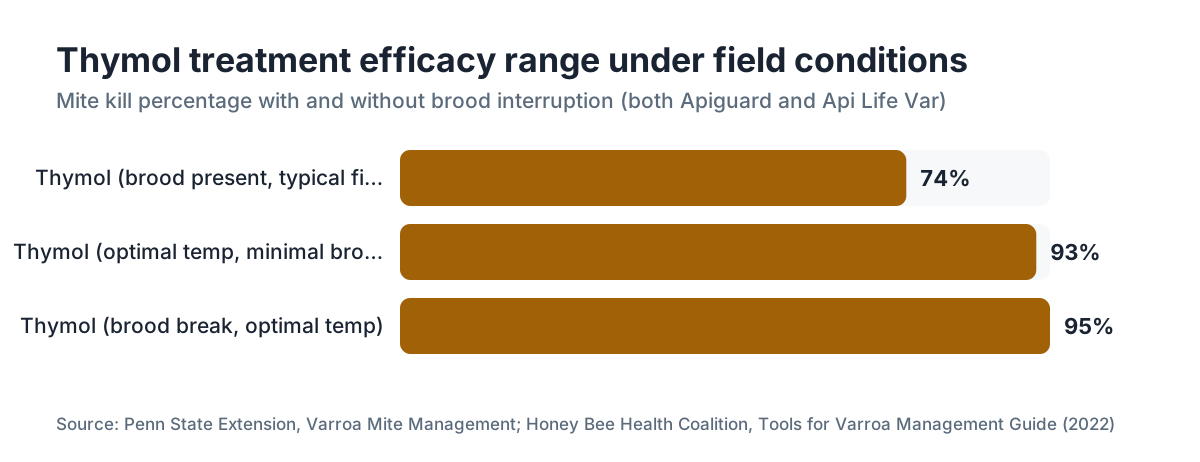
A Penn State Extension review of registered varroa treatments put thymol products at 74-93% efficacy under field conditions, with the top of that range coming from treatments applied when little or no capped brood was present [3]. The Honey Bee Health Coalition's varroa management guide (2022) places both Apiguard and Api Life Var in the same efficacy tier, calling thymol "highly effective under proper temperature and timing conditions" [4].
Here's the honest part: head-to-head studies are rare, and the ones that exist are often funded by one maker or the other. Treat any specific efficacy gap between the two with suspicion. The biggest real difference isn't the active ingredient. It's application length and the temperature window. Apiguard's label requires 59F (15C) minimum and recommends 60-105F for best results. Api Life Var's label specifies 64-105F (18-40C) [2][1]. That five-degree gap decides some early-fall treatment windows.
| Factor | Apiguard | Api Life Var |
|---|---|---|
| Active ingredient | Thymol 25% | Thymol + eucalyptol + menthol + camphor |
| Form | Gel tray | Vermiculite wafer |
| Number of applications | 2 (each ~2 weeks apart) | 3 (every 7-10 days) |
| Minimum temperature | 59F (15C) | 64F (18C) |
| Total treatment duration | ~4 weeks | ~3-4 weeks |
| EPA registration | Yes | Yes |
| Honey super removal required | Yes | Yes |
| Safe for honey production | Yes, when label followed | Yes, when label followed |
Both require removal of honey supers before treatment. Neither can be used with supers on the hive, per their EPA-registered labels.
What are the real temperature requirements, and why do they matter so much?
Thymol doesn't work as a vapor if the hive runs cold. Below the minimum threshold, volatilization slows until mites never take a lethal dose. This isn't a minor label caveat. It's the single biggest reason thymol treatments fail.
Apiguard needs at least 59F ambient during the day, ideally above 65F. Api Life Var needs at least 64F. In plain terms, if you're in the northern U.S. or Canada and your window runs late August into September, a cool rainy stretch can sink either product. Apiguard has a modest edge here because its floor sits five degrees lower.
Heat cuts the other way. Above 105F (40.6C), both products can damage brood and cost you a queen, because too much thymol vapor stacks up in the hive at once. Leaving Apiguard trays in during a July heat wave is a genuine risk. Most experienced beekeepers using thymol in the South either time treatments for early spring or early fall or switch chemistries entirely.
The rule of thumb: if your window reliably runs above 65F with no super on, either product works. If you're borderline on temperature, Apiguard's lower floor buys you a little slack.
Which treatment is easier to apply, and does that affect real-world results?
Application matters because dosing and placement errors drop efficacy. Here's how they stack up in practice.
Apiguard is two visits. Peel back the foil, set the tray gel-side-up on the top bars, close the hive. Two weeks later you check. Empty tray, put in the second one. Gel still there, wait a few more days. It's genuinely simple. The main mistake beekeepers make is not peeling the foil back far enough, which throttles gel exposure and cuts vapor output.
Api Life Var asks you to split a wafer into four equal pieces and set one in each corner of the top brood box. Three rounds every seven to ten days means more hive visits. That's not a problem by itself, but it's three disruptions over about three weeks instead of two. Each visit does give you a chance to read mite drop and check colony health, which some beekeepers like.
In a sideliner operation running 50 to 150 hives, Apiguard's fewer-visits advantage adds up fast. For a hobbyist with three hives who's already in there weekly, Api Life Var's schedule costs nothing extra. If you're sourcing supplies, beekeeping supply companies usually carry both, though Apiguard tends to be easier to find in the U.S. market.
Does brood interruption improve efficacy for either product?
Yes, and by a lot. This matters more than which of these two products you pick.
Neither Apiguard nor Api Life Var can kill mites sealed inside capped brood cells. Varroa reproduce inside those cells, so a colony with a full brood nest always has a shielded mite population riding out the entire treatment. The Honey Bee Health Coalition's guide shows that brood breaks (natural ones like a swarm or supersedure, or managed ones like caging the queen for about 24 days before treatment) can push thymol efficacy past 90% by putting the whole mite population out on adult bees where the vapor reaches it [4].
Time your thymol treatment to line up with a natural brood break, or cage your queen for a couple of weeks beforehand, and either product gets meaningfully stronger. Thymol isn't special here. Oxalic acid dribble also performs far better with no capped brood in the way. The 74-93% range cited earlier mostly reflects the gap between colonies treated with and without brood present [3].
For most hobbyists doing a single late-summer treatment, full brood interruption isn't practical. A post-harvest treatment starting in early August still knocks mites down worthwhile even with brood present. You just accept that you'll want a follow-up oxalic acid treatment in November or December, once the cluster goes broodless.
Are there risks of queen loss or brood damage with either product?
Yes. Both carry some risk, and it runs higher than most beekeepers expect from an "organic" treatment.
Thymol irritates bees at high concentrations. In hot weather (above 95-100F), vapor builds fast and bees may abscond or the queen may get hit. Extension guidance from the University of Florida notes that thymol treatments during peak summer heat can cause temporary brood reduction and, in rare cases, queen loss, especially in small colonies or nucs [5].
Apiguard trays hold 25 grams of gel. The slower the gel comes out (smaller or cooler colony), the longer the exposure runs, but at lower concentration. Api Life Var wafers release vapor a bit faster up front thanks to the combined volatiles. In practice, neither product has a clearly worse safety record than the other when used per label. Both still demand that you:
- Keep honey supers off.
- Give the hive adequate ventilation (open screened bottom boards help).
- Cut the dose for nucs or very small colonies.
- Skip application when temperatures sit consistently above 95F.
Apiguard's label says to use only half a tray to start on a weak colony or a nuc. Api Life Var's label lets you use fewer wafer pieces in smaller colonies. Both makers plan for this.
Know your local varroa mite pressure and colony strength before you set application rates. A late-season colony heading into October that's already thin on bees is a poor candidate for any thymol product.
How much do Apiguard and Api Life Var cost per hive?
Prices move with supplier and order size. As of mid-2025, the typical U.S. retail ranges look like this.
Apiguard comes in tubs of 10 trays (5 complete treatments) for roughly $25-35, or about $5-7 per hive per treatment. Api Life Var packs usually hold enough wafers for 2 complete hive treatments and sell for around $10-15, or about $5-8 per hive per treatment cycle.
The cost gap is small enough that it shouldn't drive your choice. Labor shifts the math. If your time is tight and you'd rather make fewer hive visits, Apiguard's two-application protocol saves you one trip per colony over Api Life Var's three. At scale, that adds up.
For hobbyists buying a season's worth at once, checking free shipping honey bee supply companies can cut real money off the total.
Can I use Apiguard or Api Life Var during a honey flow?
No. Full stop. Both EPA-registered labels require honey supers off before treatment and prohibit use while supers are on for honey production [1][2].
Thymol is fat-soluble and does move into wax and honey at detectable levels when treatment and nectar storage overlap. Thymol shows up naturally in some honeys (it's a natural constituent of certain plant nectars), but the FDA and EPA hold that intentional treatment during a honey flow violates the label and counts as adulteration. Selling honey from supers that were on the hive during thymol treatment is illegal and opens you to food safety liability.
The practical timing: pull supers when the main flow ends, treat right away, and don't put supers back until the treatment course finishes and thymol residues have had time to clear (usually 2-4 weeks after the last application). Honey stored in the brood boxes during treatment has never been shown to reach unsafe levels for bees or for people eating surplus frames, but whether you can legally sell or extract that honey is a separate question that varies by state.
When should you choose one over the other?
Here's the honest decision framework, built on the evidence rather than brand loyalty.
Choose Apiguard if your window sometimes dips close to 60F at night, you're running multiple hives and want fewer inspections per cycle, or you prefer a well-studied gel with dead-simple dosing.
Choose Api Life Var if your temperatures stay reliably above 64F through the whole window, you plan to inspect more often anyway (which hands you more mite-drop data), or your supplier keeps it in stock more reliably than Apiguard.
Choose neither if you're treating in a cool fall when daytime highs are already sliding into the 50s. At that point oxalic acid (vaporization, or extended-release with formic products like MAQS or Formic Pro) fits better. The Honey Bee Health Coalition recommends matching treatment to the temperature window [4], and no experienced beekeeper should push a thymol product past its effective range just because that's what's on the shelf.
VarroaVault's free protocol builder walks you through timing and treatment selection for your location and season if you want a structured checklist.
What do beekeepers and extension researchers actually say about long-term resistance risk?
Varroa resistance to thymol has turned up in Europe, though it stays uncommon in the U.S. as of 2025. A 2020 review in PLOS ONE found that varroa from some European populations showed reduced sensitivity to thymol after repeated exposure across multiple seasons [6]. The mechanism isn't fully worked out, but researchers suspect behavioral shifts (mites moving deeper into brood frames and spending less time on adult bees) rather than true biochemical resistance.
The Honey Bee Health Coalition recommends rotating chemistries across treatment cycles specifically to slow resistance in your local mite population [4]. Running thymol every treatment cycle, year after year, in the same apiary is probably a bad long-term bet even if it's working right now.
Rotating thymol-based treatments with oxalic acid or amitraz is the standard line from most university extension programs. The University of Minnesota Extension, for example, spells out an integrated approach that treats thymol as one tool in the rotation rather than the whole toolbox [9].
The short answer: neither Apiguard nor Api Life Var is inherently riskier for resistance than the other, since both ride on thymol. What matters is not leaning on thymol every single cycle forever.
Are both products legal and EPA-registered in all U.S. states?
Both hold EPA federal registrations, but federal registration doesn't automatically make them legal in every state. Some states require their own state-level registration before a pesticide can be sold or used inside their borders.
Apiguard's EPA registration number is 72997-3. Api Life Var's is 72997-4. You can verify current registration status and any state-specific restrictions through the EPA's pesticide registration section [7].
As of 2025, both are broadly available and legally usable across the continental United States. But if you're in a state with an aggressive pesticide regulator (California's DPR, for example, keeps its own registration list), check before ordering. Your state department of agriculture apiarist or local extension office can confirm current status in about five minutes.
How should you monitor mite loads before and after either treatment?
Treatment selection is step two. Step one is knowing your mite count.
The standard action threshold is 3% infestation (3 mites per 100 bees) during the brood-rearing season, per Honey Bee Health Coalition guidance [4]. A 300-bee alcohol wash or sugar roll gives you a reliable estimate. Sticky board counts help you spot trends but won't hand you a true infestation percentage on their own.
After you finish either Apiguard or Api Life Var, wait at least one brood cycle (roughly 21 days) before you recount. Washing too soon after treatment ends inflates the apparent efficacy, because mites killed by the treatment are still dropping during your recount window.
If your post-treatment count still sits above 2-3%, you need a follow-up with a different chemistry, not another round of the same thymol. Repeating a treatment that didn't work points to resistance, inadequate temperature during treatment, or reinfestation from neighboring colonies. Oxalic acid vaporization is the standard follow-up when thymol falls short.
Frequently asked questions
Can I use Apiguard or Api Life Var in fall when temperatures drop below 60F at night?
It's risky. Apiguard needs at least 59F ambient and Api Life Var needs 64F for adequate thymol volatilization. If your daytime highs still hit 65-70F and nights run cool, Apiguard may still work, but efficacy falls as the average temperature drops. Once daytime highs settle into the 50s, switch to oxalic acid vaporization, which has no temperature minimum comparable to thymol products.
What is the minimum hive population needed to use these treatments safely?
Both makers advise against full-dose application in weak colonies or nucs. For Apiguard, the label suggests half a tray (12.5 grams) for a single brood box or nucleus. Api Life Var recommends two wafer pieces instead of four in smaller colonies. Many beekeepers use a rough floor of 6-8 frames of bees before applying thymol. Below that, the odds of queen loss and brood damage climb noticeably.
Does Api Life Var work better than Apiguard because it has extra active ingredients?
The claim that eucalyptol, menthol, and camphor add meaningful kill beyond thymol alone isn't well supported by independent studies. Both products post similar mite kill rates in comparable conditions. The Honey Bee Health Coalition groups them in the same efficacy tier. Choose on temperature window and application preference, not on the extra ingredients in Api Life Var.
Can I use Apiguard or Api Life Var when my hive has a laying queen and open brood?
Yes, and that's the normal case for most beekeepers. The catch is that mites in capped brood stay protected from thymol vapor the whole time they're sealed in. Expect lower overall efficacy (74-85% range) with brood present versus 90%+ with a brood break. Treating with an active queen is still worthwhile. Just plan a follow-up oxalic acid treatment when the colony goes broodless in late fall or winter.
How long after the last Apiguard or Api Life Var application can I add honey supers back?
Neither label names an exact waiting period after treatment ends, which is an honest gap in the guidance. Most extension recommendations and the Honey Bee Health Coalition suggest waiting at least two to four weeks after the final application before adding supers, to let thymol residues in wax clear. If you sell honey commercially, document treatment dates carefully for any regulatory or certification audit.
Are Apiguard and Api Life Var approved for organic beekeeping certification?
Thymol sits on the USDA National Organic Program's National List of allowed substances for livestock. Both products are generally accepted under USDA organic certification when used per label. Certifiers vary in how they read the full formulation, though. Check with your specific certifying agent before assuming either qualifies. Some agents scrutinize the added compounds in Api Life Var more closely than plain thymol.
What happens if I accidentally leave Apiguard in too long or apply it during a heat wave?
Excess thymol vapor can drive heavy bearding outside the hive, chill or kill brood in the bottom of cells, and in bad cases stop the queen from laying or trigger supersedure. If you see heavy bearding during treatment and temperatures top 95F, pull the tray or wafer temporarily and put it back once things cool. Colony recovery is usually complete within a week or two if you catch it early.
Which treatment works faster, Apiguard or Api Life Var?
Api Life Var's wafer format tends to release thymol vapor a little faster in the first few days, because the vermiculite exposes more surface area than gel. You'll often see higher mite drop on sticky boards in the first week with Api Life Var. Apiguard releases more gradually over its two-week tray cycle. Total mite kill at the end of a full course is comparable, so faster early drop doesn't mean a better final result.
Can Apiguard or Api Life Var be used alongside other varroa treatments at the same time?
No. Combining thymol products with other treatments (oxalic acid, amitraz, formic acid) in the same period isn't label-compliant and stacks chemical stress on the bees. Treat one thing at a time. The standard approach is a summer thymol treatment after honey harvest, then an oxalic acid treatment in November or December on a broodless cluster if mite counts warrant it.
How do I know if thymol treatment failed and mites are becoming resistant in my apiary?
If a correctly applied, temperature-appropriate thymol treatment produces less than 70% mite reduction (measured by pre- and post-treatment alcohol wash), suspect resistance, reinfestation, or both. True thymol resistance in North American varroa is uncommon but documented in some European apiaries. Switch to amitraz or oxalic acid for the next cycle, report unusual results to your state apiarist, and test again after one full season without thymol.
Do I need a prescription or license to buy Apiguard or Api Life Var?
No. Both are over-the-counter products in the United States and don't require a veterinary prescription or pesticide applicator license for hobby or sideliner use. They're available through most beekeeping supply retailers. Amitraz-based products like Apivar also don't require prescriptions in the U.S., though some other countries treat certain varroa products as prescription-only.
What mite count threshold should trigger me to treat with Apiguard or Api Life Var?
The Honey Bee Health Coalition sets 3% infestation (3 mites per 100 bees on an alcohol wash) as the action threshold during the brood-rearing season. Some researchers suggest treating at 2% in late summer to protect the winter bees developing in August and September, since those bees carry the colony through winter. Test monthly during peak mite season (July through September), and don't wait for visible bee damage before treating.
Can I use Apiguard in a top-bar hive or a Warre hive?
You can, but it's fussier than a Langstroth setup. The tray needs to sit on or very near the top bars above the brood area so vapor concentrates where the bees and mites are. In a top-bar hive, placement at the brood-cluster end of the bar arrangement works reasonably well. Make sure the hive has enough ventilation that vapor doesn't build to damaging levels. Top-bar hives with tight covers may need a small ventilation gap during treatment.
Sources
- Vita (Europe) Ltd, Apiguard EPA-Registered Product Label (EPA Reg. No. 72997-3): Apiguard label specifies minimum temperature of 59F (15C) and requires honey super removal before treatment
- Chemicals Laif, Api Life Var EPA-Registered Product Label (EPA Reg. No. 72997-4): Api Life Var label specifies minimum temperature of 64F (18C), three applications every 7-10 days, honey supers must be removed
- Penn State Extension, Varroa Mite Management review of registered treatments: Thymol-based products achieved 74-93% efficacy under field conditions, with higher numbers from treatments applied during low or no capped brood; integrated approach recommended with thymol as one tool in rotation
- Honey Bee Health Coalition, Tools for Varroa Management Guide (2022): Apiguard and Api Life Var placed in the same efficacy tier; 3% infestation threshold recommended for treatment; brood break can push thymol efficacy past 90%; rotating chemistries recommended to slow resistance; thymol described as 'highly effective under proper temperature and timing conditions'; 300-bee alcohol wash recommended as standard monitoring method
- University of Florida IFAS Entomology and Nematology, Varroa Mite information: Thymol treatments during peak summer heat can cause temporary brood reduction and, rarely, queen loss in small colonies
- PLOS ONE, review of acaricide resistance mechanisms in Varroa destructor (2020): Varroa mites from some European populations showed reduced sensitivity to thymol following repeated exposure over multiple seasons
- U.S. EPA, Pesticide Registration: Federal EPA registration numbers for Apiguard (72997-3) and Api Life Var (72997-4); state registration requirements may vary
- University of Minnesota Extension, Varroa Management: Integrated varroa management including thymol as one tool in rotation with other chemistries; brood interruption recommended to improve thymol efficacy
Last updated 2026-07-09