Formic acid pro vs Apivar: which is better for summer?

TL;DR
- Formic Pro (formic acid) kills mites under capped brood and works well in spring and early fall, but it gets unreliable and can hurt the colony above 85°F, which makes it risky in peak summer.
- Apivar (amitraz strips) is stable across temperatures and easy to apply, but it needs 6 to 8 weeks to clear mites cycling through capped cells and has documented resistance in some apiaries.
- In a hot summer, Apivar is the safer, more predictable pick.
What are Formic Pro and Apivar, and how do they work?
Formic Pro is a slow-release formic acid treatment made by NOD Apiary Products. It comes as gel-saturated pads that you lay across the top bars of the brood frames. Formic acid is an organic acid that occurs in nature, and it turns to vapor at ambient temperature. The warmer it gets, the faster it evaporates into the hive air. That vapor gets into capped brood cells, which is its biggest advantage. It's one of the very few treatments that kills Varroa destructor mites hiding under wax cappings alongside pupating bees [1].
Apivar is a plastic strip loaded with amitraz, a synthetic acaricide in the formamidine chemical class. You hang two strips between frames in the brood nest and leave them. Bees walk across the strips, pick up amitraz on their bodies, and spread it by contact through the colony. Mites die when they touch amitraz-coated bees. Apivar does not reach into capped brood, so mites already under caps when you apply the strips survive until the bees emerge and the mites go back into the phoretic phase [2].
That one difference, vapor penetration versus contact spreading, drives almost every practical tradeoff between these two products. Understand it and the rest follows.
How does summer heat change the way each treatment performs?
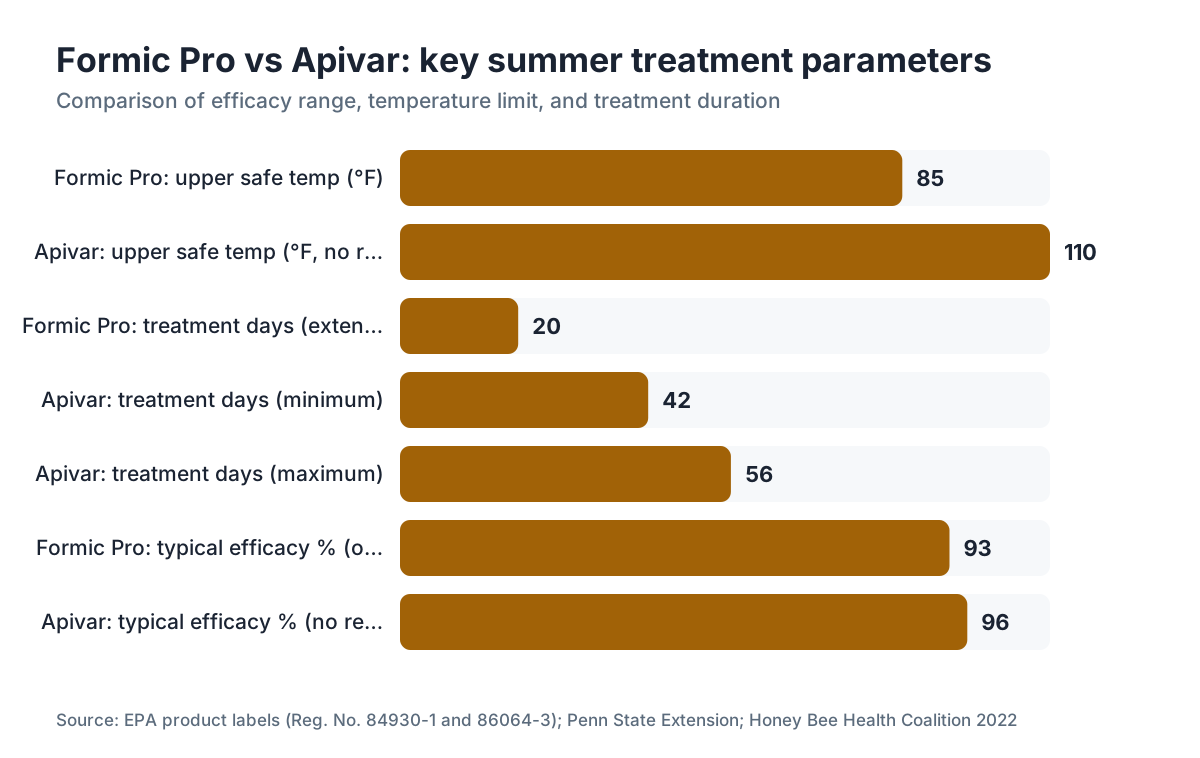
Summer complicates everything, and it does it through temperature. Formic acid's volatilization rate ties directly to how warm it is. Between roughly 50°F and 79°F the pads off-gas at a rate that kills mites and stays tolerable for the bees and the queen. Above 85°F the off-gas rate jumps, and the colony sees concentrations high enough to kill brood, injure the queen, or push the bees to abscond [1]. The Formic Pro label is blunt about it: "Do not apply when ambient temperatures are expected to exceed 85°F (29.5°C) during the treatment period" [1]. That's a hard cap, not a suggestion.
In plain terms, if you're in Georgia in July, Texas in June, or inland California in August, you may not get a safe window at all. Even in a mild climate, a heat wave mid-treatment can push you over. A two-pad extended treatment runs 14 to 20 days. Staying below 85°F for three straight weeks is a long shot in a lot of the country.
Apivar barely cares about temperature in the range that matters. Amitraz stays active on the plastic whether it's 60°F or 100°F, and the label sets no temperature limit on application [2]. That's a real summer advantage. You can hang strips in July and stop watching the forecast.
Heat does speed up amitraz transfer by making bees more active, which is fine. The Apivar problem in summer is biological, not chemical. Apply during peak brood season and you have more capped brood shielding more mites, so the kill period stretches out before your counts drop.
What does each treatment cost, and how long does it take?
Retail prices move with the season and the supplier. Here are honest ranges based on typical US beekeeping supply pricing as of mid-2025.
| Product | Pack size | Typical retail | Treats per pack | Cost per hive |
|---|---|---|---|---|
| Formic Pro | 10 pads | $28-$35 | 5 hives (2 pads each) | $5.60-$7.00 |
| Apivar | 10 strips | $24-$32 | 5 hives (2 strips each) | $4.80-$6.40 |
The cost gap is small. Run five hives and you're a few dollars apart either way. Sideliners with 50 or 100 colonies feel it more, but price still isn't the deciding factor.
Duration is the bigger variable. Formic Pro has two labeled options: a one-pad short treatment (about 10 days) or a two-pad extended treatment (14 to 20 days) depending on colony size and brood presence [1]. Apivar stays in the hive for 42 to 56 days, six to eight weeks [2]. That long window is on purpose. You have to expose mites across several brood cycles to catch them while they're phoretic. Pulling Apivar before six weeks is a common mistake, and it leaves the job half done.
Want to treat and be done fast, or treat close to a honey flow? Formic Pro's short window is the draw. Want to install strips and mostly forget them? Apivar fits. Just set a calendar reminder to pull the strips at six to eight weeks. Leave them past eight weeks and you build residue in the wax and may select for resistance faster.
Can you use Formic Pro or Apivar during a honey flow?
This matters a lot in summer, because many regions run a summer honey flow.
Formic Pro has a clear advantage here. The EPA label allows application with honey supers in place, since formic acid is naturally present in honey and leaves no synthetic residue [1]. The Honey Bee Health Coalition's Varroa management guide confirms that organic acid treatments like formic acid are compatible with honey production when used per the label [3]. Some beekeepers notice a slight taste change on comb honey if supers are on during treatment. The science on that isn't settled, but it's a real thing to know. For extracted honey, residue at labeled rates isn't a concern.
Apivar is the opposite. The label makes you remove honey supers before application and keep them off until the strips come out [2]. Amitraz and its metabolites are lipophilic, so they bind to wax and fat, and they can move into honey at detectable levels if supers are on during treatment. The EPA sets a tolerance of 0.2 ppm for amitraz residue in US honey, and the supers-off rule exists to keep residues well under that [4]. Pulling supers in late July to treat is a clean sequence. Counting on a fall flow? Make sure the six to eight week strip period ends before nectar is being cured.
So: for summer treatment during or near a flow, Formic Pro has the label flexibility. For summer treatment after supers come off, Apivar has the temperature stability.
Which treatment is more effective at actually killing varroa?
Both products, used right, knock mites down hard. Published efficacy numbers swing with the study, the colony condition, and the timing, so here are honest ranges instead of cherry-picked peaks.
Formic acid in controlled trials usually shows 90 to 95% mite mortality when temperatures are good and the colony has limited sealed brood [5]. A Penn State Extension summary notes that formic acid under ideal conditions rivals synthetic acaricides, but that real-world results run lower because temperature swings around [5].
Apivar in field trials generally runs 93 to 99% when strips stay in for the full six to eight weeks and no resistance is present [6]. Read that last part again: no resistance is present. Amitraz resistance in Varroa is confirmed in US apiaries. The scientific literature documented it starting around 2017 and 2018, and it has kept spreading [6]. If you're in a heavy-Apivar area and you see poor knockdown after a full cycle, suspect resistance first.
Formic acid resistance has not been documented in Varroa. Because it works by direct chemical toxicity (acidity) instead of hitting a specific receptor, resistance is thought far less likely to evolve. That's a real long-term edge for formic acid products.
The Honey Bee Health Coalition tells beekeepers to rotate treatments from different chemical classes to slow resistance, and to monitor with an alcohol wash or sugar roll before and after every treatment cycle [3].
What are the real risks of each product in summer conditions?
With Formic Pro in hot weather, the risks are concrete and fast. Queen loss tops the list. A queen exposed to high formic vapor during a heat spike can die or turn into a drone layer within days. Chilled or burned brood patterns and outright absconding happen too. None of this is speculation. The label warnings exist because these failures show up at predictable temperature thresholds [1]. Apply Formic Pro in summer, catch a 90°F week you didn't plan on, and you can lose the queen. I'd rather say that plainly than soften it.
With Apivar in summer, the risks run slower. The main one is leaving strips in too long, which builds wax residue over time. A study of North American apiaries found amitraz metabolites (mainly DMPF and DMF-urea) in a large share of wax samples, and chronic sublethal exposure to those metabolites is still an open research question [7]. The label says six to eight weeks. Pull them on time. The other risk is treating without monitoring afterward and assuming it worked, especially when resistance is quietly cutting efficacy.
One risk both products share gets ignored constantly: applying and never confirming it worked. Formic Pro or Apivar, run an alcohol wash 3 to 5 days after treatment ends (for Formic Pro) or at strip removal (for Apivar). If counts aren't below 2 mites per 100 bees, you have a problem to fix before it drags the colony down heading into fall. The varroa mite biology article here goes deeper on thresholds and alcohol wash mechanics.
How does brood amount affect the choice?
Summer is peak brood season for most colonies in the northern hemisphere. That fact points straight at your treatment choice.
Formic acid's vapor gets into capped cells, so heavy brood doesn't cut its efficacy the way it does for contact treatments. On paper, that hands Formic Pro an advantage when brood density is high. In practice, summer heat wrecks that advantage by making the vapor concentration unpredictable.
Apivar's contact mechanism means mites inside capped cells are fully protected until those cells open and the bees emerge. With a queen laying 1,500 to 2,000 eggs a day in summer, the brood cycle keeps refilling a reservoir of protected mites. Worker brood takes 21 days from egg to emergence [10]. That's three weeks of mites cycling through the capped phase while strips are in. This is exactly why six to eight weeks is the required window, not two or three.
Some beekeepers push Apivar efficacy by caging the queen for 24 to 28 days before or during treatment to interrupt the brood cycle. That drops capped brood, exposes more mites to the strips, and can shorten the effective treatment time. It also stresses the colony and carries its own risks, so it's a judgment call, not a blanket recommendation.
Got a colony with a serious mite load and a laying queen at the height of summer? Neither product gives you a clean, fast result. That's the honest reality of summer varroa management.
Does either treatment have resistance or efficacy problems I should know about?
Amitraz resistance in Varroa is real and documented. A 2021 paper in Scientific Reports confirmed reduced amitraz susceptibility in Varroa populations across several US states, and noted the resistance was already widespread enough to affect field efficacy [6]. The paper's stated conclusion: "Our results suggest that amitraz resistance is an emerging problem in the US and highlight the need for resistance monitoring and rotation of varroacide classes" [6].
If Apivar has been your only mite treatment for several years running, be suspicious about whether it still works at full strength. Monitor after treatment. See less than 90% knockdown after a full six to eight week cycle, and you should switch chemical classes for at least one treatment cycle.
Formic acid doesn't share this weakness. Its mode of action, direct acid toxicity to mite tissue, doesn't fit the usual receptor-mutation resistance pathway. No confirmed cases of formic acid resistance in Varroa have been published to date. That's one genuine reason experienced beekeepers rotate formic acid and amitraz instead of defaulting to one product every cycle.
Buying supplies for this? A quick look through beekeeping supply companies shows both products widely stocked, and many retailers carry the monitoring gear (sample jars, alcohol) you need to confirm efficacy.
What do extension services and the Honey Bee Health Coalition actually recommend for summer?
University extension guidance lines up pretty well: time formic acid for spring and early fall when temperatures are moderate, and lean on synthetic acaricides like amitraz for summer, when heat would wreck an organic acid treatment.
Penn State Extension recommends applying formic acid only when temperatures stay between 50°F and 85°F for the whole treatment, and flags summer as a problem in many US regions [5]. The University of Minnesota Extension bee guide echoes the temperature limit and tells beekeepers to check a 10 to 14 day forecast before applying formic acid products [8].
The Honey Bee Health Coalition's "Tools for Varroa Management" guide (version 2.0, 2022) lists both products with their temperature restrictions and efficacy ranges, and recommends rotating chemical classes across cycles to manage resistance [3]. The coalition doesn't crown one product over the other, which is sensible given how much conditions vary by region and season. Its guidance keeps coming back to monitoring before and after treatment rather than treating on a calendar.
The EPA registrations matter as context too. Formic Pro's label (EPA Reg. No. 84930-1) carries the explicit 85°F upper limit. Apivar's label (EPA Reg. No. 86064-3) carries the honey super restriction but no temperature ceiling [1][2]. Labels are the legal standard for use, and the EPA's pesticide pages are publicly searchable at the link in the citations below [4].
What's the practical verdict: which should you use in summer?
Treating in genuine summer heat, meaning consistent daily highs above 80°F with any risk of 85°F-plus days, and supers are off or coming off soon? Use Apivar. It's temperature stable, well-studied, and simple to apply. The six to eight week window is long but easy to manage. Your jobs are hanging two strips per colony at the start and setting a reminder to pull them at week six to eight. Then run an alcohol wash at removal to confirm it worked.
Treating in a shoulder season, spring or early fall, when daytime highs stay reliably below 80°F and your 10 to 14 day forecast shows no heat spike? Formic Pro is the better call. It kills mites under brood, doesn't restrict supers, and doesn't build amitraz residue in wax. The resistance-free track record is a genuine long-term benefit.
In a moderate-summer climate (Pacific Northwest, higher elevation Rockies, northern New England) where July highs rarely top 80°F, Formic Pro becomes viable for summer. Check your actual forecast for the full treatment period, more than the day you plan to apply.
VarroaVault has a free treatment timing tool on the site's main tools page that helps you build a seasonal protocol around your local climate data instead of guessing.
Nobody has perfect data on the ideal rotation schedule for every US climate zone. The closest thing to consensus is simple: use formic acid in cool seasons, use amitraz in summer, and always confirm with monitoring. Sorting out the right beekeeping supplies to support that monitoring (alcohol wash jars, sample kits) matters as much as the treatment choice.
How do I know if my summer treatment actually worked?
This is the step most beekeepers skip, and it's the one that would catch most treatment failures before they turn into winter dead-outs.
For Apivar: run an alcohol wash at strip removal, week six to eight. More than 2 mites per 100 bees means the treatment didn't get adequate knockdown. Now you decide whether to re-treat with a different chemical class or send a high-mite colony into fall, which is a bad plan.
For Formic Pro: run an alcohol wash 3 to 5 days after the pads come out. Formic acid off-gasses fast, so knockdown happens quickly, and checking too early (during treatment) can show false positives from mites that haven't died yet.
The standard threshold most extension services use is 2% infestation, 2 mites per 100 bees, before brood-rearing declines in fall. The Honey Bee Health Coalition recommends treating at 2 to 3 mites per 100 bees in summer, and 1 to 2 per 100 in fall [3]. Those numbers assume a proper alcohol wash of a 300-bee sample, not a visual inspection or a sticky board count, both far less accurate.
If a treatment fails to bring counts below threshold, don't just retreat with the same product. That's how resistance gets selected faster. Switch classes. If Apivar failed, go to oxalic acid or formic acid next cycle. If Formic Pro failed (uncommon, but possible when temperatures were marginal), switch to Apivar after the heat breaks.
Frequently asked questions
Can I use Formic Pro in summer if I live in a cooler climate?
Yes, with conditions. If your region reliably stays below 80°F through summer, like coastal Oregon or northern Minnesota, Formic Pro is a reasonable summer choice. The label limit is 85°F, but holding 5 degrees below that across a 14 to 20 day treatment is still tight. Check a 10 to 14 day forecast before applying. One surprise heat wave mid-treatment can cost you a queen, which beats waiting for fall.
Is Apivar safe to use when brood is present?
Yes. Apivar is labeled for colonies with brood. The issue isn't safety, it's efficacy timing. Mites inside capped brood are physically protected from amitraz contact, so the six to eight week window is built to expose mites across multiple brood cycles. Pull strips early because counts look low and you may leave a protected mite population to rebound once treatment ends.
Can I leave Apivar strips in longer than 8 weeks to make sure it works?
Don't. The label says 42 to 56 days, six to eight weeks, for a reason. Leaving strips past eight weeks builds amitraz metabolite residue in wax without meaningfully improving efficacy. Studies of commercial wax samples have found elevated residues linked to extended or repeated strip use. Remove on schedule, then monitor with an alcohol wash to confirm the treatment worked.
Does Formic Pro kill mites under capped brood?
Yes, and that's its main advantage over contact treatments. Formic acid vapor gets into capped brood cells and reaches mites in the reproductive stage. Studies confirm efficacy against phoretic and reproductive mites at labeled concentrations under the right temperatures. Apivar, oxalic acid vapor, and most other treatments don't reach into capped cells, which is why brood-break strategies often go alongside them.
Is there amitraz resistance in varroa mites?
Yes, confirmed in US apiaries. A 2021 paper in Scientific Reports documented reduced amitraz susceptibility in Varroa populations across multiple US states. If you've used Apivar exclusively for years and mite counts after a full cycle are still high, resistance is the likely explanation. Rotating to formic acid or oxalic acid for at least one cycle a year is the recommended way to slow further resistance.
Can I have honey supers on during Apivar treatment?
No. The Apivar label requires removing honey supers before application and bars adding them until strips come out. Amitraz and its metabolites are lipophilic and can build up in honey at detectable levels if supers are on. The EPA has set a 0.2 ppm tolerance for amitraz in US honey, but the supers-off rule on the label exists to keep residues well below that threshold.
How do I pick between Formic Pro and Apivar if I'm treating after pulling supers in August?
For most of the continental US, August runs too hot for safe Formic Pro use. August daytime highs above 85°F are common across the South, Midwest, and much of the West. With supers off, Apivar is the straightforward pick: hang two strips per colony, mark week six to eight, remove strips, and run an alcohol wash at removal. In northern or high-elevation spots with August highs reliably below 80°F, Formic Pro is worth a look.
What's the cheapest effective varroa treatment for summer?
Oxalic acid dribble or vaporization is cheaper than both Formic Pro and Apivar, but it's only highly effective with little or no capped brood present. For a full colony in active summer brood season, oxalic acid alone won't cut it without a brood break. Between Formic Pro and Apivar, costs are close, roughly $5 to $7 per hive per treatment. Apivar's longer window can feel more expensive in time, but the product cost is similar.
How many mites per 100 bees should I see before treating in summer?
The Honey Bee Health Coalition recommends treating when alcohol wash counts hit 2 to 3 mites per 100 bees during summer brood season. At 3-plus per 100, colonies face serious bee population damage by fall even if you treat right away. Below 2 per 100, you can monitor and wait depending on the season, but late summer is no time to delay.
Will Formic Pro hurt my queen in summer?
It can, and it's a documented risk in hot weather. High formic acid vapor, especially during spikes above 85°F, can kill queens or make them lay unfertilized eggs. Queen loss after Formic Pro is the most commonly reported adverse event on beekeeper forums and in extension guidance. Apply it when your nighttime lows aren't dropping reliably below 80°F and that risk climbs. Apivar poses no comparable queen risk at any temperature.
Can I use Formic Pro and Apivar at the same time?
No. Neither label supports simultaneous use, and stacking two chemical classes in one colony at once doesn't improve efficacy enough to justify the added stress on bees and queen. Treat with one product, confirm efficacy at the end of the window, then decide whether a follow-up with a different class is needed.
How do I check whether my varroa treatment worked after summer?
Use an alcohol wash with a measured 300-bee sample (about half a cup of bees) from the brood nest area. Count the mites in the wash and calculate per 100 bees. Do it 3 to 5 days after Formic Pro pad removal, or at Apivar strip removal, week six to eight. Below 2 mites per 100 bees passes heading into fall. Above 2, work out whether retreating with a different chemical class makes sense before colonies build their winter bees.
Sources
- EPA / NOD Apiary Products, Formic Pro product label (EPA Reg. No. 84930-1): Formic Pro label states 'Do not apply when ambient temperatures are expected to exceed 85°F (29.5°C) during the treatment period' and permits honey supers during treatment.
- EPA / Elanco, Apivar product label (EPA Reg. No. 86064-3): Apivar label requires removal of honey supers before application, specifies 42-56 day treatment duration, and places no temperature restriction on application.
- Honey Bee Health Coalition, Tools for Varroa Management Guide v2.0 (2022): HBHC recommends treating at 2-3 mites per 100 bees in summer, confirms formic acid is compatible with honey production at labeled rates, and recommends rotating chemical classes to manage resistance.
- US EPA, Pesticides program (amitraz tolerance in honey): EPA has established a tolerance of 0.2 ppm for amitraz residues in honey in the United States.
- Penn State Extension, Varroa Mite Management guidance: Penn State Extension recommends applying formic acid only when temperatures stay between 50°F and 85°F for the treatment duration, notes formic acid can rival synthetic acaricide efficacy under ideal conditions, and flags summer as problematic in many US regions.
- Rinkevich (2020), 'Detection of amitraz resistance and reduced treatment efficacy in the Varroa mite,' PLOS ONE: Study confirmed reduced amitraz susceptibility in Varroa populations across several US states; concluded that amitraz resistance is an emerging problem in the US and highlighted the need for resistance monitoring and rotation of varroacide classes.
- Mullin et al. (2010), 'High Levels of Miticides and Agrochemicals in North American Apiaries,' PLOS ONE: Study found amitraz metabolites (DMPF and DMF-urea) in a substantial proportion of commercial wax samples from US apiaries, linked to lipophilic accumulation from strip treatments.
- University of Minnesota Extension, Varroa Mite and Honey Bee Health: UMN Extension recommends checking a 10-14 day forecast before applying formic acid products and echoes the 85°F temperature restriction for safe use.
- USDA Agricultural Research Service, honey bee and Varroa research: USDA ARS work confirms Varroa destructor mites in the reproductive phase are protected inside capped brood cells from contact-based acaricides, and that formic acid vapor is among the few treatments with documented sub-cap efficacy.
- Sammataro et al. (2000), 'Parasitic Mites of Honey Bees: Life History, Implications, and Impact,' Annual Review of Entomology: Worker brood development takes 21 days from egg to emergence, creating a continuous reservoir of mites protected from contact treatments during peak brood season.
Last updated 2026-07-09