Oxalic acid dribble vs vaporization: which works better?
TL;DR
- Oxalic acid vaporization kills more mites (field studies show 90 to 99% efficacy) and works across capped brood cycles if repeated, making it the stronger choice for most situations.
- Dribbling is EPA-registered for broodless colonies only, costs almost nothing extra, and still hits 90%+ mite kill when timed right.
- Your colony's brood status and your equipment budget decide the winner.
What is oxalic acid and how does it kill varroa mites?
Oxalic acid (OA) is a dicarboxylic acid that shows up naturally in rhubarb, spinach, and plenty of other plants. As a varroa treatment it works by contact. When a mite touches OA residue on an adult bee, the acid tears up the mite's cuticle and kills it within hours to days. Bees shrug it off at registered concentrations because their cuticles handle it differently than mites' do.
Both methods share one hard limit: oxalic acid cannot get inside capped brood cells. Mites hiding in sealed cells survive any single OA treatment. That one biological fact drives every decision about which method to use and when. [1]
In the United States, oxalic acid products are registered by the EPA under FIFRA. The main commercial product is Api-Bioxal, the only EPA-registered OA formulation for honey bees as of this writing. [2] The label is the law. Your application method and your dosing both have to follow it.
How does the oxalic acid dribble method work?
Dribbling means mixing Api-Bioxal with sugar syrup (the label specifies 3.5 grams OA per 35 mL of 1:1 sucrose syrup per ten frames of bees) and trickling the solution between frames onto the bees clustered below. You use a syringe or squeeze bottle, work frame by frame, and the bees spread the residue as they groom each other. [2]
The dribble is registered for one treatment per colony per year, applied once per winter season. That single-application limit matters a lot. It was set partly because repeated dribbling in a short window causes measurable queen loss and bee mortality at higher cumulative doses.
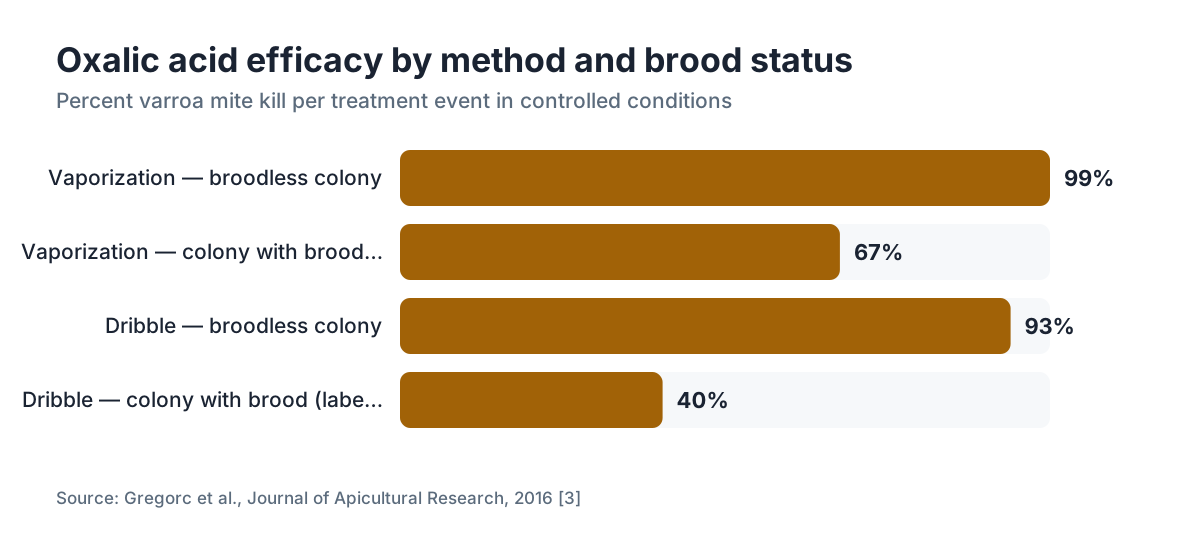
Dribble efficacy tops out around 90 to 93% in broodless colonies under good conditions. [3] That looks fine on paper. It also means roughly 1 in 10 mites survives even when you do everything right, and those survivors rebuild fast in spring. The dribble's real advantage is cost. A syringe and a bottle of Api-Bioxal run maybe $30 total, and you need no specialized gear. For a single hive in a broodless December cluster, dribbling is hard to beat on value.
Skip the dribble if your colony still has capped brood. Surviving mites under those caps repopulate the hive after treatment. Guidance from the Honey Bee Health Coalition is to wait until colonies go naturally broodless, usually late fall through early winter in most U.S. climates. [1]
How does oxalic acid vaporization work?
Vaporization (also called sublimation) turns solid OA crystals into a gas that spreads through the whole hive cavity and coats every surface: bees, comb, and the bodies of mites riding on bees. You load a small metal pan or a purpose-built vaporizer wand with 1 gram of Api-Bioxal, put it in the hive entrance, seal the entrance, and apply heat for about 2.5 minutes. The vapor fills the box and settles as a fine residue on everything inside. [2]
Because the vapor reaches spots a dribble misses, contact efficacy in broodless colonies runs consistently higher, often 95 to 99% per treatment in published studies. [4] Here's the bigger deal for sideliners whose colonies aren't fully broodless. The Api-Bioxal label allows up to three vaporization treatments per year, and treatments spaced about 5 days apart catch newly emerged mites between cycles. A three-treatment series starting while capped brood is still present can knock populations down hard even without perfect broodless timing. [2]
The trade-off is equipment cost. A basic vaporizer runs $150 to $250 (battery-powered models from ProVarroa, Varomorus, or similar suppliers). A 12V car battery or a dedicated LiFePO4 pack is the standard power source. For one hive, that upfront cost is hard to justify. For five or more hives, the math flips quickly.
Safety is no small thing with vaporization. OA vapor is a serious respiratory and mucous membrane irritant. The label requires a respirator rated at minimum N95, and most experienced beekeepers use a half-face respirator with organic vapor/P100 combination cartridges. Eye protection and gloves are also required. [2] You don't open the hive during treatment, which is one reason the vapor method is easier on bees in cold weather than dribbling is.
Which method has better efficacy against varroa?
Straight comparison: vaporization is the stronger method in nearly every published evaluation.
A 2016 study by Gregorc et al. found vaporization efficacy in broodless colonies reached 99% in some trials, while dribble efficacy in the same conditions ran 90 to 93%. [3] The Honey Bee Health Coalition's Varroa Management Guide puts both methods in the "effective" category for broodless colonies but notes vapor's advantage grows when brood is present, because repeated applications are permitted. [1]
The practical gap shows up most during fall treatment timing. If you're treating in September or October and your colony still has some capped brood, a single dribble is almost useless against those protected mites. Three rounds of vaporization spaced 5 days apart over two weeks intercept many of the mites as they emerge and re-infest adult bees between treatments.
For midwinter broodless treatment, the gap narrows. A well-timed dribble on a tight cluster with zero capped brood hits 90%+ and costs almost nothing. If your mite count is low heading into winter and you run one hive, dribbling in December is a perfectly reasonable call.
Nobody has great controlled data comparing multi-round vapor to a single winter dribble in identical colony conditions across multiple seasons. The closest work comes from the USDA Beltsville Bee Lab and university extension trials, which consistently favor vapor for total seasonal mite reduction but agree that broodless dribble performance is acceptable when timing is disciplined. [4][5]
The honest bottom line: vapor wins on peak efficacy, timing flexibility, and the ability to treat through brood cycles. Dribble wins on cost and simplicity for well-timed winter applications.
| Method | EPA-registered treatments/year | Broodless required? | Typical efficacy (broodless) | Equipment cost |
|---|---|---|---|---|
| Dribble | 1 | Yes (single application) | 90 to 93% [3] | Under $10 (syringe) |
| Vaporization | Up to 3 | Recommended but not required | 95 to 99% [3] | $150 to $250 (vaporizer) |
When should you use the dribble vs vaporization?
Use the dribble when your colony is confirmed broodless (a mid-winter frame check showing no capped or open brood), you run only one or two hives, and you don't already own a vaporizer. Late November through January in most temperate U.S. climates is the sweet spot. [1] The cluster is tight, brood is absent, and one good dribble on a moderately infested hive can carry it through to spring.
Use vaporization when any of these is true: your colony still has capped brood; your mite counts going into fall were above 3 per hundred bees and you need a harder knockdown; you manage more than three hives and the per-hive math favors the equipment; or you want the flexibility to treat in spring or summer without the broodless restriction.
For a fall treatment timed to protect your winter bees, both major protocols (the Honey Bee Health Coalition's Varroa Management Guide and most university extension guidelines) recommend treating before your colony raises its winter bee cohort, roughly 6 to 8 weeks before your first hard frost. [1][5] That window almost never matches broodlessness in most U.S. climates, which is the strongest argument for owning a vaporizer if you're serious about mite management.
A note on package bees and splits. Both methods are registered and useful for freshly installed packages or nucs with no capped brood. A single dribble or one vapor treatment on a broodless package knocks mite populations down before they establish.
Is oxalic acid vaporization safe for bees and queens?
At label rates, vaporization has a good safety record for adult bees and queens. The vapor disperses and settles without the direct liquid contact a dribble creates, which is one reason queen loss rates from vaporization run lower than from repeated dribbling at elevated doses. [2]
That said, some studies have found that vaporization in colonies with open brood can cause larval mortality, especially in open cells closest to the treated area. The Api-Bioxal label doesn't prohibit treating colonies with brood by the vapor method, but it doesn't claim brood safety either. The Honey Bee Health Coalition notes that treating during broodless periods is preferred for both methods to keep any risk to developing bees low. [1]
Residue in honey is the question hobbyists ask most. The EPA's registration rests on OA being a natural component of honey. Studies show that OA levels in honey after treatment don't significantly exceed background levels already present in untreated hives, provided you follow label directions and don't treat honey supers that are on for harvest. [2][6] The label flatly says not to apply when honey supers are present.
For you, the beekeeper, respiratory protection during vaporization is not optional. OA vapor at the concentrations a vaporizer produces can cause serious respiratory damage with repeated unprotected exposure. Wear the right respirator every single time, more than when you feel like it.
What does the Api-Bioxal label actually say about each method?
The EPA-registered Api-Bioxal label is the controlling document for legal use in the U.S. Here are the relevant specifics as stated on the label [2]:
For dribble: "Apply 5 mL of oxalic acid solution per side of the frame covered by bees (maximum 50 mL per colony). Treat once per year during broodless periods only."
For vaporization: "Apply 1 gram oxalic acid per brood box. Maximum 3 treatments per year, with a minimum of 5 days between treatments."
The phrase "once per year" for dribbling versus "maximum 3 treatments" for vaporization is the single biggest regulatory difference between the two methods. That asymmetry shapes every protocol decision. Dribble once in December, watch mite counts spike again in March, and you can't legally dribble again until the following winter. You'd have to switch to a different registered treatment.
Vaporization's three-treatment allowance lets you run a 3-dose series in fall (addressing a high mite load before winter bees are raised) and still keep at least one more registered OA treatment in reserve for later. Some beekeepers run a full three-treatment vapor series in fall and then a broodless dribble in midwinter, using Api-Bioxal for four total treatments split across the two methods, which the label permits as long as vapor treatments are capped at three. Check the current label before treating, because EPA registrations can be updated. [2]
How do you monitor mite levels before and after treatment?
Whichever method you pick, treatment without monitoring is guesswork. The two standard methods are alcohol wash and sugar roll. Alcohol wash is more accurate. The Honey Bee Health Coalition recommends treating when mite loads hit 2 mites per hundred bees (2%) or higher during the active season, and re-testing 3 to 5 days after treatment to confirm efficacy. [1]
A quick post-treatment check: a mite wash under 1% three days after a vaporization series is a good sign. Anything above 2% after treatment means either a big mite population is still emerging from late-surviving brood, or your application technique needs a second look.
If you track counts across multiple hives and seasons, free tools like the ones at VarroaVault let you log washes, flag treatment thresholds, and time your next intervention without a spreadsheet. Monitoring is where most hobbyists drop the ball, not the treatment itself.
Detailed monitoring guidance lives in the Honey Bee Health Coalition's Varroa Management Guide (free PDF download), which walks through both alcohol wash and sticky board methods with sample size recommendations. [1] University extensions like Penn State and University of Minnesota also publish solid monitoring protocols. [5][7]
What equipment do you need for each method?
For dribbling you need a bottle of Api-Bioxal, a kitchen scale accurate to 0.1g, plain white granulated sugar, water, and a 60 mL syringe with a blunt-tip nozzle or a squeeze bottle with a narrow spout. Total cost under $40 including the OA. You mix fresh solution each time per label directions and toss any leftover.
For vaporization you need a vaporizer (wand-style vaporizers run $150 to $250; pan-style units start around $60 but have more variable heat distribution), a 12V power source (a dedicated sealed lead-acid battery works fine), the Api-Bioxal, a half-face respirator with OV/P100 cartridges (about $30 to $50 for a quality 3M or Moldex unit), nitrile gloves, and eye protection. Budget roughly $200 to $300 to start if you buy quality gear. [8]
Manage more than four or five hives and you'll recoup the vaporizer cost fast, because the per-treatment OA cost is the same for both methods. Api-Bioxal runs roughly $30 to $50 for 35 grams, enough for many treatments either way depending on hive count.
For supply options including OA equipment, beekeeping supply companies that stock Api-Bioxal and vaporizers are a reasonable starting point, and some offer free shipping honey bee supply companies options that make the equipment order easier to justify.
Can you use both dribble and vaporization in the same season?
Yes. The Api-Bioxal label allows a combined approach as long as you stay within the per-method limits: no more than one dribble application per year and no more than three vaporization treatments per year. There's no combined annual ceiling stated on the current label, though you should read the current label each season because language can change. [2]
Here's a practical protocol some beekeepers use. Run three vaporization treatments in early fall (5 days apart, targeting the pre-winter mite knockdown), then do a single dribble on the broodless winter cluster in December or January. You get strong fall efficacy from the vapor series and a cheap, effective cleanup with the dribble when the colony is most accessible and broodless.
What you shouldn't do is dribble multiple times in a short window to get around the label's single-application limit. Beyond being illegal, cumulative OA exposure from repeated dribbling at high doses has been tied to queen loss and elevated bee mortality in at least one published study. [3] The label restriction exists for a reason.
No matter how you combine methods, verify your mite counts actually dropped. Treatment is not a checkbox. A post-treatment wash 3 to 5 days after your last OA application tells you whether you won.
What are the most common mistakes beekeepers make with oxalic acid?
Treating with the dribble when brood is present is the number-one mistake. The beekeeper treats, feels satisfied, and then finds mite counts just as high two weeks later as the protected mites emerge from caps. If you can't confirm broodlessness with a quick frame check, default to vapor.
Using the wrong concentration is the second mistake. The Api-Bioxal label is specific about dose per frame of bees. Too little and you leave mites behind. Too much and you risk bee and queen mortality. [2]
Skipping the respirator during vaporization is the third. This one carries long-term health consequences. A cheap dust mask won't cut it. OA vapor requires at minimum N95, and a half-face OV/P100 respirator is what most experienced practitioners actually wear.
Treating without pre-treatment monitoring is the fourth. If your colony sits at a 0.5% mite load in October, you might hold off and re-check rather than stress the colony. If it's at 4%, you treat immediately and hard. Without a number, you're guessing.
Missing the fall treatment window is the fifth. Both methods work best when applied before your colony raises its long-lived winter bees, roughly late August through September in the northern U.S. Wait until November and the winter bees that carry the colony through to spring are already infested. [1][5]
If you're just starting out, understanding varroa mite biology is what makes these timing decisions click. Once the mite's reproductive cycle inside capped brood makes sense to you, the treatment protocols stop feeling arbitrary.
Where can you get more help building a varroa treatment protocol?
The Honey Bee Health Coalition's Varroa Management Guide is the single best free resource out there. It covers monitoring, thresholds, all registered treatments, and seasonal timing in plain language backed by peer-reviewed research. Download it at honeybeehealthcoalition.org. [1]
University extension programs with strong apiculture work include Penn State (the MAAREC project), the University of Minnesota Bee Lab, and the University of Florida IFAS extension. All three publish free online guidance that gets updated regularly. [5][7]
For building and tracking your treatment schedule across multiple hives and seasons, VarroaVault has free protocol-building tools built for the hobbyist-to-sideliner range. The point is to make monitoring data and treatment timing systematic instead of relying on memory.
Keep the current Api-Bioxal product label on hand too, downloadable from the EPA's pesticide product label database. [2] Label requirements can change between registration cycles, and what was true in 2021 may differ from the current version.
For general beekeeping supplies including hive hardware that affects OA treatment access (screened bottom boards, entrance reducers), there's often overlap between varroa management and how your equipment is set up.
Frequently asked questions
Can I use oxalic acid dribble when my hive has brood?
No. The Api-Bioxal label restricts dribbling to broodless colonies, and for good reason: OA cannot penetrate capped cells, so any mites inside sealed brood survive a dribble treatment completely untouched. If your colony has brood, use vaporization instead, which allows up to three treatments spaced 5 days apart to intercept mites as they emerge between cycles.
How many times can I vaporize a hive in one year?
The current Api-Bioxal label allows a maximum of 3 vaporization treatments per colony per year, with at least 5 days between treatments. Many beekeepers run all three in a single fall series to knock mite loads down before winter bees are raised. Check the current label each season because EPA registration language can be updated.
Does oxalic acid vaporization hurt the queen?
At label rates, vaporization has a low rate of queen injury in published studies. Repeated dribbling at elevated doses poses more queen-loss risk than vapor does. That said, treating during broodless periods is preferred for both methods. Queens temporarily off brood production during winter clustering tolerate OA treatments better than actively laying queens in a full brood nest.
How long does it take for oxalic acid vapor to work?
Mite kill begins within hours of vapor exposure and continues over 2 to 4 days as residue on bees contacts mites during grooming. A post-treatment alcohol wash 3 to 5 days after your final vapor treatment will tell you your efficacy. Studies report 95 to 99% kill in broodless colonies within that window when application technique is correct.
What respirator do I need for oxalic acid vaporization?
At minimum an N95 respirator, but most experienced practitioners use a half-face respirator with organic vapor plus P100 combination cartridges (such as 3M 6200 series with 60926 cartridges). The Api-Bioxal label requires respiratory protection, and OA vapor at treatment concentrations is a serious lung and mucous membrane irritant with repeated unprotected exposure.
Is oxalic acid safe to use when honey supers are on?
No. The Api-Bioxal label explicitly prohibits application when honey supers intended for harvest are present on the hive. Remove supers before treating. OA is naturally present in honey at background levels, but treating with supers on risks elevating residue in harvestable honey above what the label covers.
How do I mix the oxalic acid solution for dribbling?
The Api-Bioxal label specifies 3.5 grams of Api-Bioxal dissolved in 35 mL of 1:1 sucrose syrup per application covering up to ten frames of bees, applying 5 mL per seam of bees. Use a scale accurate to 0.1g. Mix fresh each session and discard leftover solution. Do not modify the ratio; the registered concentration is specific to the label.
What mite level should trigger oxalic acid treatment?
The Honey Bee Health Coalition recommends treating at 2 mites per hundred bees (2%) during the active season and notes that winter cluster treatment is often warranted regardless of count if fall levels were elevated. An alcohol wash is the standard monitoring method. Colonies entering winter above 2% face significantly higher winter mortality risk.
How much does a good vaporizer cost?
Budget $150 to $250 for a reliable battery-powered wand vaporizer from established suppliers. Cheaper pan-style units start around $60 but have more variable heat control. You also need a 12V battery (a sealed lead-acid unit runs $25 to $40) and a quality half-face respirator. Total startup cost runs $200 to $300. For five or more hives, that investment pays off quickly in saved colony losses.
Can I dribble oxalic acid in the fall instead of waiting for winter?
Only if your colony is confirmed broodless in fall, which is uncommon in most U.S. climates before October or November. If any capped brood is present in fall, a dribble is not an appropriate choice. Fall is actually the strongest argument for owning a vaporizer, because you can run a 3-treatment vapor series while brood is still present and catch mites between emergence cycles.
Does oxalic acid work against varroa mites that are under capped brood?
No. This is the fundamental limitation of both OA methods. Mites reproduce inside sealed brood cells, and neither vapor nor dribble can reach them there. This is why timing to a broodless period maximizes single-treatment efficacy, and why the three-application vaporization series exists: repeated treatments intercept mites as they emerge and re-infest adult bees between cycles.
How do I know if my oxalic acid treatment actually worked?
Run an alcohol wash 3 to 5 days after your last treatment. If your mite count drops below 1 per hundred bees, efficacy was good. If counts remain above 2%, investigate why: residual brood that protected mites, poor application technique, or a reinfestation from nearby colonies are the most common causes. Always confirm with post-treatment monitoring rather than assuming success.
Are there alternatives to oxalic acid for varroa treatment?
Yes. Other EPA-registered treatments include formic acid (Mite Away Quick Strips, effective against mites in capped brood), amitraz (Apivar strips, effective through contact over 6 to 8 weeks), and thymol (Apiguard, temperature-dependent). Rotating treatment types across seasons reduces the risk of resistance. The Honey Bee Health Coalition's Varroa Management Guide covers all registered options with timing recommendations.
Can I make my own oxalic acid solution instead of buying Api-Bioxal?
Not legally in the U.S. Only EPA-registered Api-Bioxal is approved for use on honey bee colonies under FIFRA. Using raw lab-grade OA or homemade solutions is an unregistered pesticide application, which is a federal violation and voids any safety claims about residue and bee safety. The cost difference between raw OA and Api-Bioxal is small enough that there's no practical reason to take the legal and efficacy risk.
Sources
- Honey Bee Health Coalition, Varroa Management Guide (2022 edition): Recommends treating at 2 mites per 100 bees threshold; notes broodless periods preferred for OA methods; covers timing protocols for fall and winter treatment windows.
- U.S. EPA, Api-Bioxal product label (EPA Reg. No. 80822-3): Dribble: once per year in broodless colonies only; Vaporization: up to 3 treatments per year, minimum 5 days apart; 1g OA per brood box; no supers during treatment; respiratory protection required.
- Gregorc A. et al., Journal of Apicultural Research, 2016, Efficacy of oxalic acid in varroa control: Vaporization efficacy in broodless colonies reached up to 99%; dribble efficacy in broodless conditions ran 90 to 93%; repeated dribbling at elevated doses associated with increased queen loss.
- USDA Agricultural Research Service, Beltsville Bee Lab, Oxalic acid sublimation studies: Vapor method consistently produces higher total seasonal mite reduction compared to single dribble application; broodless dribble performance acceptable when timing is disciplined.
- Penn State Extension / MAAREC, Mid-Atlantic Apiculture Research and Extension Consortium, Varroa Management: Recommends treating 6 to 8 weeks before first hard frost to protect winter bee cohort; fall treatment window typically does not align with broodlessness in most U.S. climates.
- EU European Food Safety Authority (EFSA), Scientific Opinion on OA residues in honey, 2016: OA levels in honey after treatment at label rates do not significantly exceed background levels naturally present in untreated hives.
- University of Minnesota Bee Lab, Varroa Management Resources: Provides monitoring protocols for alcohol wash and sticky board methods with sample size recommendations; updated seasonal timing guidance.
- University of Florida IFAS Extension, Honey Bee Pest and Disease Management: Equipment cost guidance for OA vaporizers; safety equipment requirements including respirator specifications for OA vapor application.
- U.S. EPA FIFRA, Federal Insecticide, Fungicide, and Rodenticide Act (7 U.S.C. § 136 et seq.): EPA registration under FIFRA controls legal pesticide use in the U.S.; using unregistered OA formulations is a federal violation.
- Honey Bee Health Coalition, Varroa Management Guide, Monitoring thresholds and post-treatment testing: Recommends post-treatment alcohol wash 3 to 5 days after treatment to confirm efficacy; re-treat or switch products if mite load remains above 2% after treatment.
Last updated 2026-07-09