Apistan strips for varroa mites: what actually works and what doesn't

TL;DR
- Apistan (tau-fluvalinate) strips are EPA-registered plastic strips hung in the brood nest for 42 to 56 days.
- They kill close to 90% of mites where the population is still susceptible.
- Resistance is common across the U.S.
- now, so confirm susceptibility with a before-and-after alcohol wash before you trust it.
- The label allows use with honey supers on.
What is Apistan and how does it kill varroa mites?
Apistan is plastic PVC strip soaked with tau-fluvalinate, a synthetic pyrethroid. Each strip holds about 800 mg of active ingredient [1]. Bees walk across the strip, pick up a residue, and carry it through the colony by grooming and body contact. The mite absorbs fluvalinate through its cuticle, its nervous system misfires, and it dies. The bee lives, because bees break fluvalinate down far faster than mites do.
The strips only reach phoretic mites riding on adult bees. They do almost nothing to mites sealed inside capped brood cells. That single fact explains the whole treatment window. The label requires 42 to 56 days because that span covers roughly two brood cycles and gives the strips time to catch mites as they crawl out of emerging cells and back onto adult bees [2].
Apistan has been sold in the U.S. since 1987 and ruled varroa treatment for about a decade [11]. It's EPA-registered and comes in packs of 10 strips. Two strips treat one standard 10-frame hive. Four strips treat a double-deep. That dosing math matters more than most beekeepers think, and under-dosing is one of the fastest ways to breed resistant mites. For the biology behind every treatment decision, see varroa mite.
How effective is Apistan at reducing varroa mite loads?
In susceptible mite populations, Apistan kills between 85% and 99% of mites in controlled trials [3]. The Honey Bee Health Coalition's Varroa Guide says synthetic pyrethroids like fluvalinate "can achieve greater than 90% efficacy when mite populations are susceptible" [4]. That's a strong number, right alongside oxalic acid under good conditions.
The whole result hangs on that one word: susceptible. Fluvalinate resistance has been documented in the United States since the late 1990s and in Europe even earlier [3]. Where resistance is established, a full six-week Apistan treatment can kill almost nothing. Six weeks, wasted.
You can test before you commit. One approach is a bioassay: drop a strip fragment in a small container with mites pulled from your hive and check 24-hour knockdown. Some university extension labs run these; others lean on field observation with alcohol washes. The field test is the one I trust most. Wash before treatment, treat for 42 days, wash again. If the drop is under 80%, assume resistance and switch.
Nobody has clean national numbers on what share of U.S. mites are now resistant. The closest published work, a 2016 survey of commercial apiaries, found fluvalinate resistance genes (kdr mutations) in mite populations across every sampled region, though the frequency swung widely [3]. So if you're reaching for Apistan today without testing first, treatment failure isn't a rare fluke. It's a live risk.
How do you use Apistan strips correctly?
The EPA-registered label [1] is the legal ceiling on how you can use Apistan, and label directions carry the force of federal law. Here's what it requires.
- Hang two strips per 10-frame brood box, one between frames 3 and 4 and one between frames 7 and 8 of the brood nest.
- Leave strips in for at least 42 days and no more than 56.
- Pull every strip by day 56. Leaving them longer speeds up resistance.
- Wear gloves. Fluvalinate is a pyrethroid, and skin absorption is low-risk at these doses but still worth skipping.
- No more than two treatments per year in the same hive.
Timing matters. Apistan can stay in while honey supers are on, which is exactly why commercial outfits chasing spring and summer crops liked it. The label allows this because residues in honey stay low at labeled dose and duration [1][10]. Plenty of beekeepers still prefer to treat after the last honey pull, and that's a fair conservative call.
Running a double-deep brood nest? Use four strips, two per box. The strips need bees moving past them, so put them where the cluster actually works. Deep-and-medium setups get the same logic.
One label detail beekeepers skip: use disposable nitrile gloves, not cloth. Fluvalinate soaks into fabric and then doses your skin every time you pick up a hive tool.
What does fluvalinate resistance look like and how did it develop?
Resistance in varroa to fluvalinate is textbook selection pressure. Back when Apistan was the only approved treatment and millions of colonies got dosed at once, mites carrying a mutation that shrugged off fluvalinate out-bred the ones that didn't. Over a small number of mite generations, those resistance alleles spread through the population [3].
The main mechanism is a target-site mutation in the sodium channel gene, the same kind of kdr (knockdown resistance) mutation seen in pyrethroid-resistant insects. Mites carrying it aren't just a little tougher. They can be effectively immune, riding out a full label-rate treatment with nothing to show for it.
In the hive, resistance looks like this. You put in strips, do an alcohol wash or sticky board count four weeks in, and the mite load sits the same or climbs. The mites walk across the strips like they aren't even there.
The other driver is sublethal exposure. Leave strips in past 56 days hoping to squeeze out more kill, or reuse old strips, and you expose the surviving (resistant) mites to a dose too weak to kill but strong enough to select for more survivors. Pull the strips on time. Every time.
Rotating to a different mode of action, say oxalic acid, then coming back to fluvalinate years later can slow resistance from building. But where resistance is already locked in, no rotation resets it.
How does Apistan compare to other varroa treatments?
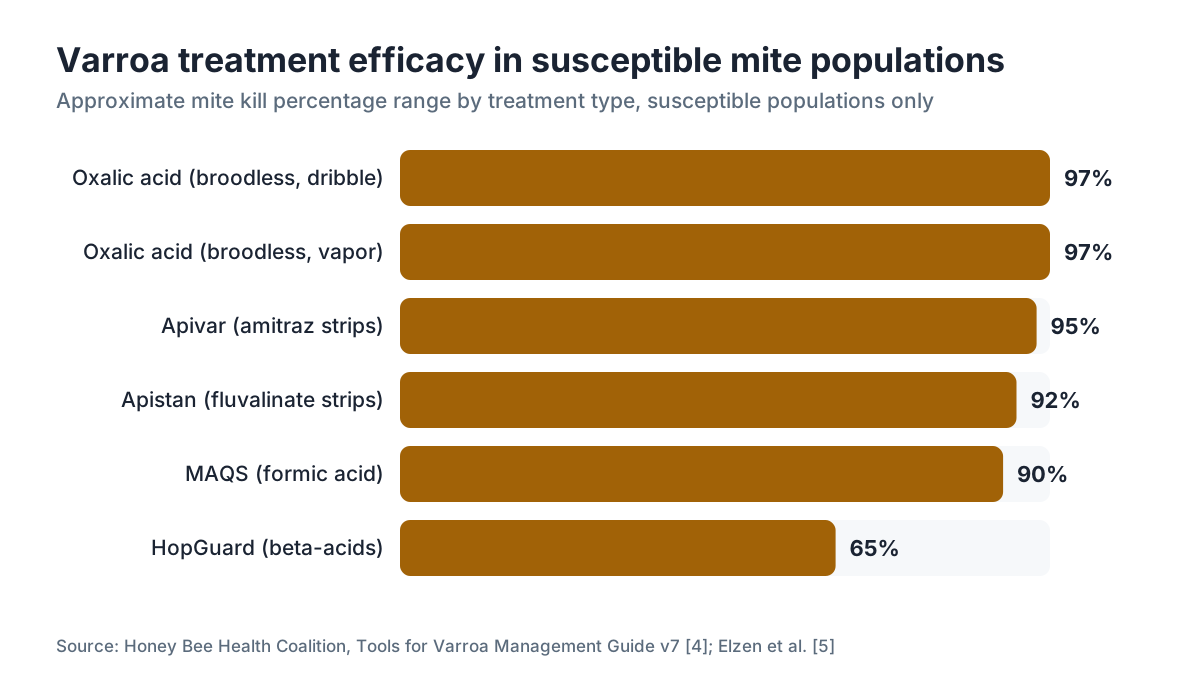
Here's a plain comparison of the main options U.S. beekeepers have [2][4][5]:
| Treatment | Active ingredient | Mode of action | Efficacy (susceptible mites) | Super-on use | Resistance documented |
|---|---|---|---|---|---|
| Apistan | Tau-fluvalinate | Pyrethroid | 85-99% | Yes | Yes, widespread |
| Apivar | Amitraz | Formamidine | 90-99% | No | Yes, emerging |
| Mite Away Quick Strips | Formic acid | Organic acid | 85-95% | Conditional | No |
| Oxalic acid dribble | Oxalic acid | Organic acid | 90-99% (broodless) | No | No |
| Oxalic acid vaporization | Oxalic acid | Organic acid | 90-99% (broodless) | No | No |
| HopGuard | Beta-acids (hops) | Contact | 50-80% | Yes | No |
Apistan sits mid-pack now. It's convenient (the label allows honey supers), widely stocked by beekeeping supply companies, and it works where mites are still susceptible. It trails oxalic acid and formic acid on the resistance question, because neither of those has a documented resistance mechanism in varroa after decades of use.
Apivar (amitraz) gets called the stronger synthetic today, with less established resistance in most U.S. populations. That said, amitraz resistance is emerging and worth watching [5].
My honest take. If you've never run Apistan in your apiary and your bees sit in a fairly isolated spot, it might still work well. If you're near other apiaries, in a long-settled beekeeping area, or you've used Apistan in the past decade, run the before-and-after alcohol wash. Don't assume it's working.
Is Apistan safe to use on hives with honey supers?
Yes. The EPA-registered label explicitly permits Apistan with honey supers in place [1]. That's a real edge over treatments like Apivar, which make you pull the supers first.
Tau-fluvalinate is lipophilic, so it binds to wax far more than it moves into water-based honey. Studies have found fluvalinate in beeswax at low levels after treatment, and the wax builds up residue over repeated seasons. One analysis of wax from commercial operations found fluvalinate in a large share of samples, often left over from historical treatments rather than the current one [6]. Honey residues at labeled dose and duration usually land below detection limits or under EPA tolerances [10].
The wax buildup is the part worth knowing. Treat with Apistan for years, then render that old comb, and the wax carries residue with it. For anyone selling comb honey or running foundationless frames, rotating out old dark comb handles this on its own, and most beekeepers do that anyway.
Running a certified organic operation or selling to buyers who want zero synthetic residue? Apistan is off the table. Those programs allow organic acids only.
When is the best time of year to apply Apistan?
The 42 to 56 day window drives every timing choice. You need a stretch that long where treatment makes sense, the hive has a brood nest for the strips to sit in, and you're not colliding with your next management step.
Most U.S. extension programs point to late summer or early fall, after the main flow ends but before the colony raises its winter bees. The logic is simple: winter bees have to be mite-free to survive to spring. The USDA Bee Research Laboratory and Penn State Extension apiculturists generally call late August through October the prime window in the northern U.S. [2][7].
Spring is the second common slot, before populations build and before supers go on. Apistan's super-compatible label makes spring especially easy.
Midwinter treatment on a tight cluster works poorly. Bees move less, so they spread the residue less. There's often little or no brood, which means most mites are already exposed, but the cold cluster undercuts contact anyway.
Summer treatment during an active flow is legal under the label. But mite reproduction peaks in summer brood cycles, so you need high efficacy right when resistance testing matters most.
How do you know if Apistan is actually working in your hive?
The only honest way to know is to measure mite loads before and after treatment with an alcohol wash or sugar roll [4][8]. A sticky board count shows mites are dropping, but it can't tell you what fraction of the colony's load you actually cleared.
Here's the protocol I'd run.
- Collect a 300-bee sample from the brood nest and do an alcohol wash before you install strips. Record mites per 100 bees.
- Install strips per label.
- At day 42 to 56, do another alcohol wash before pulling the strips.
- Calculate the reduction: (pre-count minus post-count) divided by pre-count, times 100.
Under 80% reduction? Suspect resistance. Under 50%? Resistance is almost certainly the cause, and you should switch treatments right away.
The Honey Bee Health Coalition's Varroa Guide [4] is the best free reference for action thresholds. The common trigger is 2 mites per 100 bees (2%) during the brood-rearing season, and 1 mite per 100 bees heading into winter.
Tracking counts across several treatment cycles in your own apiary, which tools like VarroaVault's free mite tracking logs are built for, is what lets you catch resistance early instead of after a colony collapses.
What are the rules around Apistan in different countries?
Apistan's regulatory status shifts a lot by country, which matters if you're sourcing product from abroad or reading research from other regions.
In the United States, Apistan is EPA-registered under FIFRA. Elanco Animal Health (formerly Bayer Animal Health) makes it, and you have to follow the label, which carries the force of federal law [1].
In the European Union, tau-fluvalinate is approved as a veterinary medicinal product for bee use in most member states, but that framework differs from U.S. pesticide registration. Some EU countries add restrictions based on national resistance surveys.
In Canada, Apistan is registered through Health Canada's Pest Management Regulatory Agency (PMRA).
In the post-Brexit United Kingdom, it falls under the Veterinary Medicines Directorate.
Australia has had varroa since 2022 and its rules are moving fast. Check the Australian Pesticides and Veterinary Medicines Authority (APVMA) for current status.
European resistance data is worth watching. Italy and France documented fluvalinate resistance early and thoroughly, and much of the foundational resistance research came out of European labs [3]. That work carries over to U.S. populations.
Can Apistan hurt bees or the beekeeper?
At labeled doses, tau-fluvalinate has low acute toxicity to adult honey bees. It's selective enough that bees tolerate far more of it than mites do, which is the whole reason you can put it inside a hive.
There's a sublethal side, though. Laboratory studies show low-concentration fluvalinate can disrupt bee learning and navigation [6]. Whether that shows up as measurable colony harm in the field at labeled doses is less settled. The lab evidence is there. The field-scale confirmation isn't conclusive.
Queen safety comes up sometimes. The label warns against strips directly covering the queen, and some beekeepers report occasional queen loss during treatment. That's mostly anecdotal across the references; I haven't found a controlled study that pins the risk down. Practical move: position strips so they aren't sitting right on top of where the queen clusters.
For you, the beekeeper: this is a pyrethroid. Skin contact causes tingling or burning. Wear nitrile gloves. Get it in your eyes, flush with water. It's not acutely dangerous at strip concentrations, but don't handle it carelessly.
Dispose of used strips by local pesticide rules. Don't burn them. Don't compost them.
Where can you buy Apistan and what does it cost?
Apistan sells through beekeeping supply retailers, farm supply stores, and online dealers. Most shops carrying beekeeping supplies stock it.
A 10-strip pack, the standard retail unit, usually runs $22 to $35 depending on supplier and shipping (as of mid-2025; check current pricing). Two strips treat one hive, so a pack covers five single-brood-box hives or roughly two to three double-deeps. Per-hive cost lands around $4.50 to $7.00 at those prices, which puts it among the cheaper chemical treatments per hive.
Bulk buying drops the cost more once you're past 20 hives. Some larger distributors sell 100-strip packs.
Supply is usually good in spring and fall treatment seasons, though some retailers sell out in peak months. If you run two to five hives, buying a pack in late July for an August treatment beats scrambling in September.
To compare shipping across suppliers, the free shipping honey bee supply companies article covers what the major retailers offer.
Should you still use Apistan or switch to something else?
Here's the honest answer. Apistan is a reasonable pick in one narrow case: you've never used fluvalinate in your apiary, you have reason to think mite pressure is low to moderate, and you want a super-compatible treatment for a spring honey crop. In that spot, do a pre-treatment alcohol wash, treat, confirm with a post-treatment wash, and you've managed the risk.
For most hobbyists in established beekeeping areas, I lean toward oxalic acid as the primary tool. No resistance. Two delivery methods (dribble for broodless colonies, vapor during brood rearing). Very low toxicity to bees and beekeeper at label doses. The catch is that vaporization needs an EPA-compliant vaporizer and, in some states, a state-issued applicator certificate [7].
Formic acid (MAQS) earns a spot in your rotation because it penetrates capped brood cells, which neither Apistan nor oxalic acid does well.
Apistan's place in a well-run rotation might look like this: use it every three or four years, but only if susceptibility testing shows your local mites haven't turned resistant, and alternate with amitraz and organic acids in between. Rotating modes of action is basic resistance management [9].
To build a full-year mite calendar, VarroaVault's free protocol tools let you plug in your region, colony count, and treatment history for a schedule across your whole apiary.
The Honey Bee Health Coalition's Varroa Guide [4] is still the single best free resource for seeing how all the treatments fit together across a year.
Frequently asked questions
How many Apistan strips do I need per hive?
Two strips per 10-frame single brood box, per the EPA label. For a double-deep hive, use four strips total, two in each box. Position them between frames 3 and 4 and between frames 7 and 8 of the brood nest so bees moving through the cluster make frequent contact. Using fewer strips than labeled is under-dosing and it speeds up resistance.
Can I leave Apistan strips in longer than 56 days?
No. The EPA label sets a maximum of 56 days. Leaving strips in longer doesn't raise efficacy, but it does expose surviving mites (likely the most resistant ones) to a prolonged low dose. That's the exact condition that selects for stronger resistance. Remove strips between 42 and 56 days, no exceptions.
Does Apistan work when there's brood in the hive?
It works on phoretic mites riding adult bees, but not on mites sealed in capped brood. That's why treatment runs 42 to 56 days, covering about two brood cycles. As mites emerge onto adult bees, they pick up fluvalinate from the strips. Broodless colonies can reach higher efficacy because nearly all mites are phoretic, but Apistan isn't the first choice there. Oxalic acid dribble is far cheaper and just as effective in that window.
Is Apistan the same as Apivar?
No. Apistan contains tau-fluvalinate, a synthetic pyrethroid. Apivar contains amitraz, a formamidine. They're different chemicals with different modes of action. Resistance to one doesn't confer resistance to the other, which is why rotating between them (and organic acids) is recommended in a resistance management program. Always read the label of whatever product you're using.
Why isn't Apistan working in my hive?
The most likely answer is fluvalinate-resistant mites. Resistance has been documented across the U.S. and Europe since the late 1990s. Confirm with pre- and post-treatment alcohol washes. If your mite reduction is below 80%, switch to a different mode of action: amitraz (Apivar), formic acid (MAQS), or oxalic acid. Don't repeat a failed Apistan treatment hoping for a different outcome.
Can I use Apistan while honey supers are on the hive?
Yes. The EPA-registered label explicitly permits use with honey supers in place, one of its practical advantages over Apivar. Tau-fluvalinate binds to wax rather than moving into honey at meaningful levels at labeled doses. Beeswax does accumulate fluvalinate residue over repeated treatments, though. Beekeepers on certified organic programs or those avoiding all synthetics should use organic acid treatments instead.
How do I know if varroa mites in my area are resistant to Apistan?
Do an alcohol wash before treatment for a baseline count, then repeat at day 42 to 56 before pulling the strips. Calculate the percentage reduction. Less than 80% suggests resistance. Some university extension labs offer mite bioassay testing; ask your state apiarist or local extension service. Fluvalinate resistance is well-documented nationwide, so testing before you rely on Apistan is the prudent move.
What happens if I accidentally give bees too much Apistan?
Using more strips than labeled (say four in a single brood box) doesn't improve mite kill and may raise fluvalinate residue in wax. At very high doses, pyrethroid exposure can disrupt bee behavior. Follow the label: two strips per 10-frame brood chamber. If you suspect an overdose, pull the excess strips and watch the colony. Contact your state apiarist if you see unusual bee mortality.
Can I use Apistan in the winter?
Possible, but not ideal. In a tight winter cluster, bees move less, so the residue spreads poorly. There's also little to no brood in midwinter in most temperate climates, which makes oxalic acid dribble a more effective and cheaper option for that window. If you must treat in winter and your mites are fluvalinate-susceptible, position strips close to the cluster rather than at standard frame positions.
How long do Apistan strips stay effective once the package is opened?
Unopened packages carry a manufacturer shelf life on the label, usually two to three years from production date. Once opened, keep unused strips in their original sealed packaging away from heat and direct sunlight. Fluvalinate degrades under prolonged heat and UV. Don't use strips from a pack opened a year ago and stored badly. When in doubt, check the product's expiration date.
Is there a risk of Apistan residue in honey?
At labeled doses and duration, honey residues usually land below EPA tolerance thresholds. Tau-fluvalinate is lipophilic and binds to wax far more than it moves into honey. The bigger concern is beeswax accumulation from repeated treatments over years. For anyone producing comb honey or wax products, that's worth factoring into your treatment choices. Using Apistan on a rotation basis instead of every cycle keeps long-term wax residue down.
What should I do with used Apistan strips after removal?
Follow local pesticide disposal rules. Most guidance says wrap used strips in their original packaging and put them in household waste, not compost or a fire. Don't leave used strips in or around the apiary. Some states or municipalities run pesticide collection programs; check with your local agricultural extension office or county waste management for options near you.
Can I use Apistan on nucleus colonies or splits?
Yes, but scale the strip count to colony size. A 5-frame nuc gets one strip, positioned in the brood area where bees regularly contact it. Very small colonies have fewer bees to spread the residue, so efficacy may run slightly lower than in a full colony. Monitor mite levels before and after treatment regardless of colony size.
How does Apistan fit into an integrated varroa management plan?
It fits as one rotation option in a multi-year, multi-mode-of-action schedule. Use it when susceptibility is confirmed, pair it with cultural controls like brood breaks or drone comb removal, and alternate it with amitraz and organic acids to reduce selection pressure. The Honey Bee Health Coalition's Varroa Guide lays out a full integrated framework. Relying on Apistan alone year after year is the fastest path to treatment failure.
Sources
- EPA - Pesticide Registration (Apistan, Elanco Animal Health, EPA Reg. No. 65331-1): Apistan strips contain approximately 800 mg tau-fluvalinate per strip; EPA label permits use with honey supers in place; 42-56 day treatment duration required; maximum two treatments per year
- USDA Agricultural Research Service - Bee Research Laboratory, Beltsville MD: Treatment window timing recommendations for late summer/fall varroa management in temperate U.S. climates; strip placement in brood nest spanning two brood cycles
- Pettis JS et al., Journal of Apicultural Research - Fluvalinate resistance in Varroa destructor: Fluvalinate resistance documented in U.S. varroa mite populations via kdr-type sodium channel mutations; resistance genes found across all sampled U.S. regions in 2016 survey
- Honey Bee Health Coalition - Tools for Varroa Management Guide (Version 7): Synthetic pyrethroids like fluvalinate can achieve greater than 90% efficacy when mite populations are susceptible; 2% mite infestation threshold for treatment; integrated management framework
- Elzen PJ et al., Apidologie - Amitraz resistance in Varroa destructor: Amitraz resistance in varroa is emerging in some U.S. mite populations; comparison of pyrethroid vs. formamidine efficacy
- Mullin CA et al., PLOS ONE - High Levels of Miticides and Agrochemicals in North American Apiaries: Tau-fluvalinate residues detected in beeswax at measurable levels in commercial operation samples; sublethal fluvalinate exposure affects bee learning and navigation in laboratory settings
- Pennsylvania State University Extension - Varroa Mite Management for Honey Bee Colonies: Late August through October recommended as prime varroa treatment window in northern U.S.; oxalic acid vaporization applicator certification requirements by state
- University of Florida IFAS Extension - Varroa Mite: A Serious Honey Bee Pest: Alcohol wash and sugar roll methods for mite monitoring; pre- and post-treatment mite count protocols for assessing treatment efficacy
- NC State Extension Apiculture - Varroa Mite Management: Treatment efficacy comparison across registered varroa treatments; resistance management rotation recommendations
- EPA - Pesticide Tolerances (Tau-fluvalinate in honey): EPA tolerance thresholds for tau-fluvalinate residues in honey and beeswax at labeled application rates
- Sammataro D and Yoder JA - Honey Bee Colony Health: Challenges and Sustainable Solutions (USDA ARS): Historical context of Apistan introduction in 1987; resistance development timeline in U.S. populations through the late 1990s
Last updated 2026-07-09