Varroa mite treatment strips: the complete guide for beekeepers
TL;DR
- Varroa treatment strips hang inside the hive and release an active ingredient that kills mites on adult bees over four to eight weeks.
- The main options are amitraz (Apivar), fluvalinate (Apistan), formic acid (MAQS), and oxalic acid.
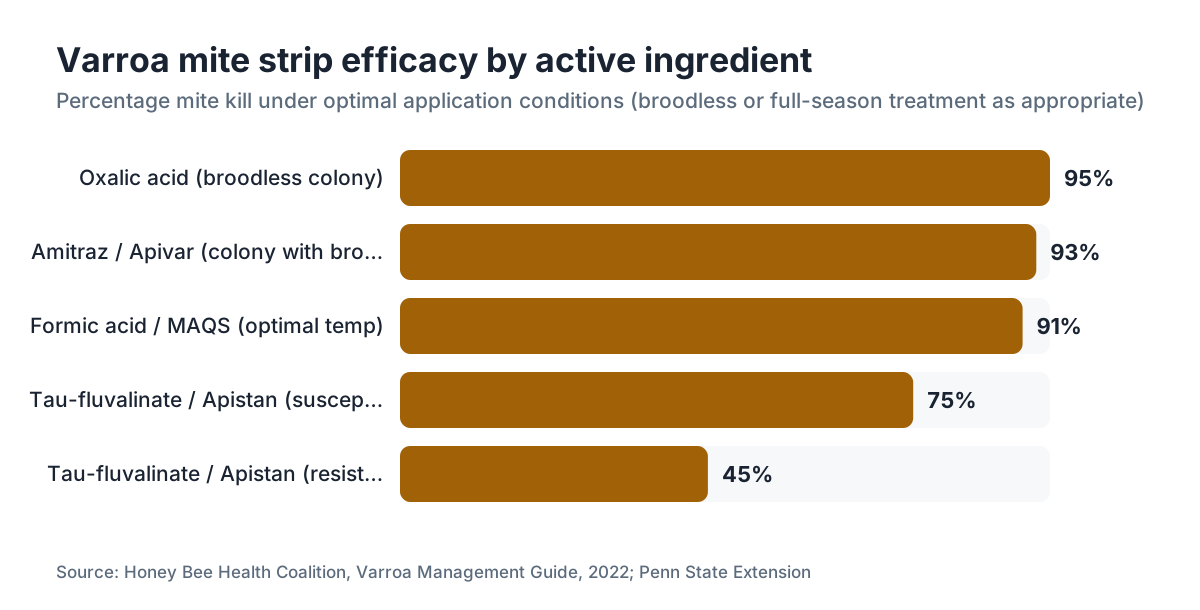
- Efficacy runs from roughly 75% to over 95% depending on the product, your resistance history, and whether brood is present.
- Pyrethroid resistance is now common in U.S.
- mite populations.
What are varroa mite treatment strips and how do they work?
Varroa treatment strips are flat pieces of plastic or cardboard soaked with an active ingredient that bees pick up and carry through the colony as they move past. Contact strips work when bees brush against them, get the chemical on their bodies, and pass it around during grooming and feeding. Vapor strips, like the formic acid product sold as Mite-Away Quick Strips (MAQS), release a gas that spreads through the hive.
The strip format exists for a practical reason. Beekeepers used to spray or dribble treatments straight onto bees, which is messy and hard to dose the same way twice. A strip gives you a slow, controlled release across the whole treatment period. That matters because varroa spend most of their reproductive cycle sealed inside capped brood cells where no topical treatment can reach them. A multi-week release means the mites that were hiding under cappings on day one still meet the chemical when they emerge on day thirty.
Most strips hang between frames in the brood nest. The usual dose is two strips per brood box, set in the gaps closest to where the cluster is working. They stay in for a set period, usually four to eight weeks, then you pull them. Leaving strips in past the label window raises resistance pressure and leaves more residue in your wax. Pull them on time.
Strips are not magic. They work in the brood nest and nowhere else. Treat one box of a colony that is spread across three, and your efficacy drops. Read the label. In the U.S. that label is a federal document, and you are legally required to follow it.
What types of varroa mite strips are registered for use in the U.S.?
Four active ingredients are available in strip or slow-release form for U.S. beekeepers as of 2025 [1].
| Product name | Active ingredient | Class | Strip-in period | Requires broodless period? |
|---|---|---|---|---|
| Apivar | Amitraz | Acaricide (formamidine) | 6-8 weeks | No |
| Apistan | Tau-fluvalinate | Pyrethroid | 6-8 weeks | No |
| MAQS (Mite-Away Quick Strips) | Formic acid | Organic acid | 7 days | No |
| Api-Bioxal (oxalic acid) | Oxalic acid | Organic acid | Extended-release version varies | Broodless period strongly preferred for full efficacy |
Apivar is the most widely used strip among hobbyist and sideliner beekeepers in the U.S. right now [5]. It came back onto the market after years away and became the default choice fast, mostly because amitraz resistance, while documented in some European apiaries, stays far less widespread here than pyrethroid resistance.
Apistan ruled for decades and is still sold, but fluvalinate-resistant varroa are common across much of the U.S. now [3]. Used Apistan heavily, or inherited colonies from someone who did? Run a wash before and after treatment to confirm the product is actually killing mites. A wash that barely moves after a full Apistan course is a loud signal of resistance.
MAQS earns its place because formic acid kills mites under the cappings, which almost nothing else does. The catch is temperature. MAQS works best between 50 degrees F and 85 degrees F (10 C to 29 C) and can cost you the queen or damage brood in hot weather [4]. Some beekeepers see queen loss when temperatures spike; others use it for years without trouble. The queen-loss risk is real, so plan the timing around your weather.
Oxalic acid gets the most attention for broodless windows, whether you apply it by dribble, vapor, or an extended-release towel. The Honey Bee Health Coalition's Varroa Management Guide states that oxalic acid efficacy in colonies with capped brood "may be reduced" because the acid does not penetrate cappings [5]. That is not a dealbreaker. It just means you either make several applications or time the treatment to a broodless stretch.
How effective is Apivar (amitraz) compared to other varroa strips?
Apivar has the most consistent efficacy data under current U.S. conditions. University extension trials and the Honey Bee Health Coalition's Varroa Management Guide put amitraz efficacy in the 90-99% range when applied correctly [5]. That number drops if the colony is very large, if the strips sit in the wrong spot, or if you cut the treatment short.
Fluvalinate resistance is the headline problem with pyrethroids. In populations with documented resistance, Apistan efficacy can fall below 50% [3]. The resistance comes from a single-point mutation in the sodium channel gene that gives mites a survival edge with almost no cost to their fitness, so resistant populations spread fast and stay that way.
Formic acid (MAQS) kills mites in the 90%-plus range in studies run under good temperatures [4]. The under-cappings kill is the selling point. A single seven-day MAQS application reaches mites sealed in brood, which a six-week Apivar course cannot fully match on the same timeline.
Oxalic acid during a broodless period is the strongest single treatment beekeepers have. Studies and the Honey Bee Health Coalition put broodless oxalic acid efficacy at 90-97% [5]. With brood present, repeated treatments push efficacy up, but no single application touches the broodless-window result.
Here is the honest ranking. Apivar is your workhorse for colonies with brood. MAQS is worth a look when you want brood penetration and your weather cooperates. Apistan is not worth the resistance gamble unless you have tested susceptibility in your own bees. Oxalic acid is the best tool you have in a broodless window, whether that comes from a natural winter pause or a managed split.
To track mite counts before and after any treatment, VarroaVault has free alcohol wash calculators and protocol worksheets you can print and use right at the hive.
When is the right time to apply varroa mite strips?
Timing a strip treatment is simple, but getting it wrong is one of the most common reasons treatments flop. You want to treat before the mite population crosses a threshold that damages the colony, and you want conditions that suit the product you chose.
The Honey Bee Health Coalition recommends treating when an alcohol wash hits 2% (2 mites per 100 bees) during the honey flow, and at 1% or higher in late summer and early fall while the winter bees are being raised [5]. Those winter bees carry the colony to spring. Mite-infested winter bees live shorter lives and fight off less. Treating from late July through August, right after the honey supers come off, is the single most important window most temperate North American beekeepers have.
For Apivar, the label allows treatment any time no honey super meant for harvest is on the hive. The six-to-eight-week window means a late-July start has you pulling strips in September, just as the colony wraps up winter-bee production.
For MAQS, temperature runs the show. Application is approved with supers on because formic acid occurs naturally in honey, but you need a seven-day stretch with daytime highs under 85 degrees F. Beekeepers in hot climates often run MAQS in early spring or mid-fall instead of peak summer.
A second window gets overlooked: late fall or early winter, when the colony is broodless or close to it. This is oxalic acid's moment. Even after a full Apivar course in August, any mites that survived or arrived late reproduce through September. A broodless oxalic acid treatment in November or December clears that leftover load before the colony settles into winter [5].
Do not treat during a honey flow if the label says no. Amitraz residue in honey is not something you want on your table. Follow the label. Seriously.
How do you apply Apivar strips correctly?
Apivar comes in packs of ten. A standard two-box colony gets two strips. Running three boxes? The label still calls for two strips as the registered dose for a standard colony, so position them in the lower brood box where the cluster is densest.
Hang the strips between frames in the brood nest, never on the outside edges of the box. They need to sit in a lane bees use constantly. Most beekeepers hang one strip between the second and third frame from one side and the other strip between the second and third frame from the opposite side, so the pair sits roughly symmetrical in the brood area. Do not pin them against the walls.
Wear gloves. Amitraz is an acaricide, and there is no reason to give it prolonged skin contact. Human risk is low at label doses, but skip the cavalier handling.
Leave strips in for the full six to eight weeks. The most common mistake is pulling them early because you see dead mites on the bottom board and figure the job is done. The slow release is the whole point. Mites emerging from capped brood across the treatment period need to meet the strips after they come out.
Two to three days after you pull the strips, run an alcohol wash to confirm the treatment worked. A 90%-plus drop from your pre-treatment count is a good result. A smaller drop should make you question placement, colony size, or resistance.
Toss used strips as the label directs. In most states that means wrapping them and putting them in household trash. Do not compost them or leave them in the hive. Used strips still carry residual amitraz and keep selecting for resistance if they sit in the box.
For sourcing strips and other supplies, our roundup of beekeeping supply companies points you to reputable vendors.
Can varroa mites develop resistance to treatment strips?
Yes, and it has happened with the pyrethroid class (Apistan, Mavrik) over and over, worldwide [3]. Tau-fluvalinate resistance turned up in Europe in the late 1990s and has since been confirmed across large parts of the U.S. The mechanism is well understood: a mutation in the sodium channel gene that the pyrethroid targets makes the mite essentially immune to the whole chemical class.
Amitraz resistance has been documented in some commercial and research apiaries in the U.S. and more broadly in parts of Europe [6]. It is not yet widespread in North American hobbyist apiaries, but it will spread if beekeepers keep hitting Apivar without rotating to other modes of action. The Honey Bee Health Coalition specifically recommends rotation and post-treatment efficacy checks to catch resistance early [5].
Organic acids (formic, oxalic) and physical controls (drone comb removal, broodless splits) do not build resistance, because they kill through mechanisms with no single protein target the mite can mutate around. That is why the beekeeping community keeps pushing toward integrated pest management instead of leaning on one strip product.
Here is the practical rule: rotate active ingredients. Use Apivar in late summer, then oxalic acid in the winter broodless window rather than a second round of Apivar. If you truly need two Apivar treatments in a season, space them out and run post-treatment washes both times. Never reach for Apistan without confirmed susceptibility. And measure everything. A treatment that drops your load from 3% to 2.5% is not working, and running that strip for a full eight weeks on a resistant population actively breeds more resistance.
What do you do if varroa strips aren't bringing mite counts down?
Check your application first. Strips in the wrong spot, pulled too early, or dropped into a colony that had already grown too big for the bees to contact them are the usual suspects. This is not a rare problem.
If placement was right and the treatment period ran full, run an alcohol wash to measure real efficacy. Figure the percentage drop from your pre-treatment wash. A reduction under 85-90% points hard toward resistance or a treatment failure [5].
Switch active ingredients right away. Used Apivar (amitraz)? Move to formic acid or oxalic acid. Do not run a second round of the same product on a population that may be resistant.
See whether a broodless treatment is doable. A managed split that leaves the laying queen in one box temporarily without brood, paired with oxalic acid on the broodless side, is one of the strongest rescue moves you have. It takes labor, but it works.
Call your state apiarist. Many states run varroa resistance monitoring programs or can connect you with a university extension specialist who confirms resistance. Do not guess when data is a phone call away.
For the biology behind all of this, the varroa mite page digs into the pest you are managing.
Are varroa mite treatment strips safe for honey bees and for honey?
Each strip class has a different safety profile, and the label tells you most of what you need to know.
Amitraz (Apivar) carries a no-treatment-with-supers rule for good reason. Amitraz and its breakdown products can build up in beeswax and, at very high levels, in honey. Studies of treated colonies have found amitraz residue in wax at low but detectable levels after repeated treatments [7]. The rule most experienced beekeepers follow: never treat with Apivar while harvest supers are on, pull supers before treating, and replace heavily used foundation wax over time in hives you treat a lot.
Fluvalinate (Apistan) shows a similar buildup pattern in wax. Because so many beekeepers ran Apistan for years before the resistance problem got clear, a lot of old drawn comb in the U.S. carries fluvalinate residue. That is part of why some colonies on old wax show odd queen problems; the residue can have sublethal effects on queens and larvae [7].
Formic acid (MAQS) and oxalic acid are organic compounds that either fade fast or occur naturally in honey. Formic acid is present in untreated honey at low levels. Oxalic acid occurs naturally in many plants. Neither builds up in wax the way synthetic acaricides do. That is a genuine advantage if residue worries you.
The effect on the bees themselves varies by product and dose. MAQS at high temperatures can kill open brood and, in some cases, the queen. Apivar at label rates is generally well tolerated. Oxalic acid applied correctly has low bee toxicity. Overdosing any of these is a mistake, and the most common overdose is adding extra strips on the theory that more is better. It is not.
How much do varroa mite treatment strips cost and where do you buy them?
Pricing shifts by vendor and pack size, but as of mid-2025, here are approximate U.S. retail ranges.
| Product | Pack size | Approximate cost | Cost per colony treatment |
|---|---|---|---|
| Apivar | 10 strips | $25-$35 | $5-$7 (2 strips) |
| Apistan | 10 strips | $20-$30 | $4-$6 (2 strips) |
| MAQS | 2 strips | $15-$22 | $15-$22 (one application) |
| Api-Bioxal (OA) | 35g bag | $12-$18 | $1-$2 per treatment |
These ranges come from national suppliers, and they move with supply chains and distributor pricing. Oxalic acid is the cheapest option per treatment by a wide margin. MAQS costs the most per application but covers under-capped brood in a single seven-day window, which is worth real money.
You can buy strips from most major beekeeping distributors, local bee clubs, or co-ops. Buying through a local club or state beekeeping association often gets you better pricing, especially in bulk with other beekeepers. Some veterinary distributors also carry Apivar; check your state's current requirements, because the rules around who can sell and buy it have been in flux.
Do not buy strips from unregistered overseas sources. Counterfeit and gray-market strips with wrong active-ingredient concentrations have been documented. Beyond the resistance risk, using a product not registered in the U.S. on honey-producing colonies opens up legal and food-safety problems.
For vetted suppliers, the free shipping honey bee supply companies roundup covers vendors with clear shipping policies.
What does an integrated varroa management protocol actually look like?
A strip treatment is one tool in a program, not the program itself. Here is a practical annual protocol for a temperate North American hobbyist, built from monitoring and treatment together.
Early spring (April): Run an alcohol wash when the cluster breaks and bees are foraging. At or above 1%, treat. Below 1%, monitor monthly.
Pre-flow or early flow (May): Alcohol wash. Most treatments cannot go on with supers, so if you need to treat during the flow, MAQS is the only registered strip that allows supers on.
Post-honey-harvest (late July/August): The most important window. Pull supers, run a wash, and if you are at or above 1-2%, hang Apivar for six to eight weeks. This protects the winter-bee cohort. The Honey Bee Health Coalition calls this timing the highest-priority treatment window for temperate beekeepers [5].
Fall (September/October): Pull the Apivar strips. Run a post-treatment wash to confirm efficacy. If loads are still above 1%, ask whether you have resistance or reinfestation from a neighbor's collapsing hive.
Late fall/early winter (November/December): If the colony is broodless or nearly so, this is your oxalic acid window. A single broodless oxalic acid treatment can drop residual mite loads by 90-97% [5]. This is the cleanup round.
Drone comb management all season: Varroa breed preferentially in drone brood. Removing capped drone comb every 21 days during the drone-rearing season pulls out a chunk of the mite population with no chemical at all. It is tedious, and it genuinely works.
VarroaVault's free protocol worksheets and mite count calculators help you record washes, track treatment dates, and flag when counts cross thresholds. Run them across a few seasons and you will see whether your apiary has a reinfestation pattern or a resistance trend before it turns into a crisis.
What are the legal requirements for using varroa strips in the U.S.?
Every varroa strip product in the U.S. must be an EPA-registered pesticide, and the label is a legally binding document under the Federal Insecticide, Fungicide, and Rodenticide Act (FIFRA) [8]. Using a product against its label, including treating with honey supers on when the label forbids it, or using a product not registered in your state, is a federal violation.
Amitraz (Apivar) is classified as a veterinary drug in some contexts, but it is sold as a pesticide strip for honey bees and does not currently require a Veterinary Feed Directive (VFD) for hobbyist use in most states as of 2025. That can change; check with your state department of agriculture or state apiarist for the current status where you keep bees.
Oxalic acid (Api-Bioxal) is EPA-registered for use in honey bee colonies [1]. The label allows dribble, vaporization, or extended-release application, each with its own dosing. The vapor method requires a respirator; the label is explicit, and it is not optional.
Some states pile on extra registration requirements. California runs its own pesticide registration process, and products cleared nationally can have different status there. The California Department of Pesticide Regulation keeps a current list [9].
Keep your original product label, or a copy, at the apiary. If a state apiary inspector ever shows up, being able to prove you are using a registered product correctly matters.
Frequently asked questions
How long do you leave varroa mite strips in the hive?
Apivar and Apistan strips stay in for six to eight weeks per the product label. MAQS comes out after seven days. Oxalic acid extended-release strips vary by product but usually stay in for the full broodless treatment window. Pulling strips early cuts efficacy, because mites emerging from capped brood late in the period need to meet the active ingredient. Never exceed the label's maximum strip-in time.
Can you use varroa strips when honey supers are on?
MAQS (formic acid) is the only strip product currently registered for use with honey supers in place, because formic acid dissipates and occurs naturally in honey. Apivar (amitraz) and Apistan (fluvalinate) require removing honey supers first. Running synthetic acaricide strips with supers on violates the federal FIFRA label and risks leaving residue in harvestable honey.
How many varroa strips do you need per hive?
The Apivar label specifies two strips for a standard colony in one or two brood boxes. MAQS uses two strips per colony regardless of size. Extra strips do not improve results proportionally, and they raise residue buildup and resistance pressure. Place strips in the active brood nest where bee traffic runs highest, not on the outside edges of the box.
What is the difference between Apivar and Apistan?
Apivar contains amitraz, a formamidine-class acaricide. Apistan contains tau-fluvalinate, a synthetic pyrethroid. Both hang as strips for six to eight weeks. The difference that matters is resistance: fluvalinate resistance is widespread in U.S. varroa after decades of heavy use, while amitraz resistance stays less common in North America. Current recommendations favor Apivar over Apistan unless resistance testing confirms susceptibility.
Do varroa strips kill mites under capped brood?
Most strips do not penetrate capped brood. Amitraz and fluvalinate strips kill mites on adult bees or mites that emerge from cells after capping, which is why the six-to-eight-week window is necessary. Formic acid (MAQS) is the exception: it works as a vapor and does reach capped cells, killing phoretic and reproductive mites. That penetration is the main reason MAQS stays valuable despite its temperature limits.
How do you know if varroa strips are working?
Run an alcohol wash before treatment to set a baseline count. Run another two to three days after you pull the strips. A working treatment should cut the mite percentage by at least 85-90% from baseline. Less than that points toward placement problems first, then possible resistance. Dead mites on the bottom board feel encouraging, but they are not a reliable efficacy measurement on their own.
Can you use oxalic acid strips with brood in the hive?
Oxalic acid works best during broodless periods because it kills phoretic mites on adult bees but does not penetrate capped cells. With brood present, single-application efficacy drops sharply. The Honey Bee Health Coalition notes that multiple applications over several weeks with brood present can partly make up for it, but no single oxalic acid treatment in a colony with capped brood matches the 90-97% efficacy of a broodless-window application.
When is the best time of year to treat with varroa mite strips?
The late-summer window after honey supers come off, usually late July through August in temperate North America, is the highest-priority timing. That is when winter bees are being reared, and high mite loads then directly damage the bees that carry the colony through winter. A secondary window in late fall or early winter, using oxalic acid during the broodless period, clears residual mite loads before spring.
Is a Veterinary Feed Directive required to buy Apivar strips?
As of 2025, Apivar is sold as an EPA-registered pesticide for honey bee colonies and does not require a Veterinary Feed Directive (VFD) for hobbyist beekeepers in most U.S. states. The regulatory status of amitraz products has moved around, though. Check with your state department of agriculture or a veterinarian familiar with apiculture for the current requirement in your state before buying.
What are the risks of varroa strips to the queen?
Amitraz and fluvalinate strips at label rates generally show low direct queen toxicity, though some beekeepers report occasional queen loss after Apivar. MAQS (formic acid) carries a documented queen-loss risk, estimated at roughly 5-15% in some studies, especially during temperature spikes above 85 degrees F. Monitor for the queen after any strip treatment. Treating a colony with a newly mated or valuable queen calls for extra caution with formic acid.
Can you reuse varroa mite strips for a second treatment?
No. Used strips have burned through their active ingredient and belong in the trash per label instructions. Reusing them kills almost no mites, builds false confidence that you treated, and still pushes selection pressure on the population without real control. Every treatment window needs fresh strips. Dispose of used strips in household trash, wrapped to prevent secondary contact, and do not compost them.
Do varroa strips leave residue in beeswax?
Synthetic acaricide strips, fluvalinate and amitraz in particular, build up in beeswax over repeated cycles. Studies have found fluvalinate residue in commercially produced wax at low but detectable levels after years of use. Organic acid strips (formic, oxalic) do not accumulate meaningfully in wax. Beekeepers using synthetic strips long-term should rotate out and replace heavily used drawn comb, especially old foundation near the brood nest.
How do varroa mite strips fit into an integrated pest management program?
Strips are one component, not a full program. An effective integrated approach combines regular alcohol wash monitoring (at least four times a year), strip treatments timed to monitoring and season, drone comb removal during the production season, and broodless oxalic acid in winter. Rotating active ingredients cuts resistance risk. The Honey Bee Health Coalition's Varroa Management Guide lays out a full framework that most U.S. extension apiculturists follow.
Sources
- EPA, Pesticide Registration: Oxalic acid is EPA-registered for use in honey bee colonies in dribble, vaporization, and extended-release forms; label specifies broodless-period use for highest efficacy.
- Journal of Economic Entomology (Oxford Academic): Tau-fluvalinate (Apistan) resistance documented widely in U.S. and European varroa populations; efficacy can fall below 50% in resistant mite populations.
- Honey Bee Health Coalition, Varroa Management Guide (2022 edition): Recommends treating at 2% mite load during honey flow and 1% in late summer; oxalic acid efficacy in broodless colonies cited at 90-97%; late summer treatment called highest-priority window for temperate beekeepers; amitraz efficacy cited at 90-99% under proper conditions.
- USDA Agricultural Research Service, Bee Research Laboratory: Amitraz resistance documented in some U.S. commercial and research apiaries; less widespread than pyrethroid resistance but confirmed as a growing concern.
- PLOS ONE (Mullin et al., 2010, pesticide residues in honey bee wax): Tau-fluvalinate and amitraz residues detected in beeswax at low but measurable levels following repeated treatment cycles; fluvalinate found in large majority of commercial wax samples tested.
- EPA, Federal Insecticide, Fungicide, and Rodenticide Act (FIFRA): FIFRA mandates that pesticide product labels are legally binding; using a product inconsistently with label directions is a federal violation.
- California Department of Pesticide Regulation: California maintains its own pesticide registration process; nationally approved products may have different or additional requirements for use in California.
- Penn State Extension, Honey Bee Health and Varroa Management: Formic acid (MAQS) works best between 50 and 85 degrees F and can cause queen loss or brood damage in hot weather; mite kill reaches 90%-plus under optimal temperature conditions.
- Apidologie (Springer, Elzen et al., 1999, fluvalinate resistance in varroa): Fluvalinate resistance in varroa populations confirmed in North Carolina in the late 1990s, with the resistance mechanism identified as a target-site mutation in the sodium channel gene.
Last updated 2026-07-09