Apivar strips directions: how to use them correctly and get results

TL;DR
- Apivar strips contain 3.3% amitraz.
- Hang 2 strips per brood box (about 1 strip per 5 frames of bees) in direct contact with the cluster for 6 to 8 weeks, then pull them.
- Treatment works best after the summer honey flow and again in fall or early spring.
- Most failures trace to under-dosing, leaving strips in too long, or skipping a mite wash before and after.
What is Apivar and how does it kill varroa mites?
Apivar is a polymer strip loaded with 3.3% amitraz, a formamidine acaricide that disrupts the nervous system of Varroa destructor mites [1]. Each strip carries 500 mg of amitraz. Bees walk across the strips, pick up trace residues, and spread them through the colony by normal contact. Mites absorb the compound through their cuticle and die.
Amitraz kills phoretic mites, the ones riding on adult bees. It reaches mites in capped brood cells only indirectly, because it cannot penetrate the cappings. That is why a treatment spanning multiple brood cycles matters. As bees emerge from capped cells, the newly exposed mites contact amitraz-carrying bees and die before they reproduce again [1].
Apivar is made by Veto-Pharma and registered with the U.S. EPA under Reg. No. 86052-6. It is approved in the United States, Canada, and many EU countries, though withdrawal periods and application windows change country to country. Everything below follows U.S. label directions unless noted.
How many Apivar strips do you need per hive?
Two strips per brood box for a standard colony. That covers most single and double-deeps [1]. The dosing rule is roughly 1 strip per 5 frames of bees. A weak nuc clustered down to 4 or 5 frames still gets a minimum of 1 strip.
Under-dosing is the number one reason Apivar fails. A strong double-deep colony filling both boxes needs 2 strips, one hung in each box (or both centered in the lower brood area). The strips have to sit inside the cluster. A strip parked in an empty frame gap where bees rarely walk does almost nothing.
For three-box colonies or very large hives, the label allows up to 4 strips [1]. Read your lot's insert. Veto-Pharma has updated label language over the years, and the current version always governs.
| Colony size | Strips required |
|---|---|
| Nuc or weak colony (fewer than 5 frames of bees) | 1 strip |
| Standard single-deep or medium (5-10 frames of bees) | 2 strips |
| Double-deep, full strength | 2 strips (1 per box) |
| Very large (3+ boxes of brood) | Up to 4 strips |
Source: Apivar U.S. label, Veto-Pharma [1]
Where exactly do you place Apivar strips in the hive?
Hang the strips vertically between two frames of bees, centered in the brood nest. Bee-to-strip contact is what moves the amitraz, so placement matters as much as dose. Drop both strips side by side in the bottom box of a double-deep and the top box bees barely touch them.
For a double-deep, hang one strip about three or four frames in from each side of the lower box, or hang one strip in each box near the center of the brood. Either way works. The goal is heavy bee traffic across both strips.
Never lay strips flat on the bottom board. They need to hang between frames where foragers, nurses, and young house bees pass all day. Treating a nuc in a 5-frame box? Center the single strip between frames 2 and 3.
Pull any queen excluder sitting between the brood nest and the cluster before you insert strips, or at least confirm the whole cluster can reach them. A strong upper cluster behind an excluder can be walled off from the treatment zone entirely.
How long do you leave Apivar strips in the hive?
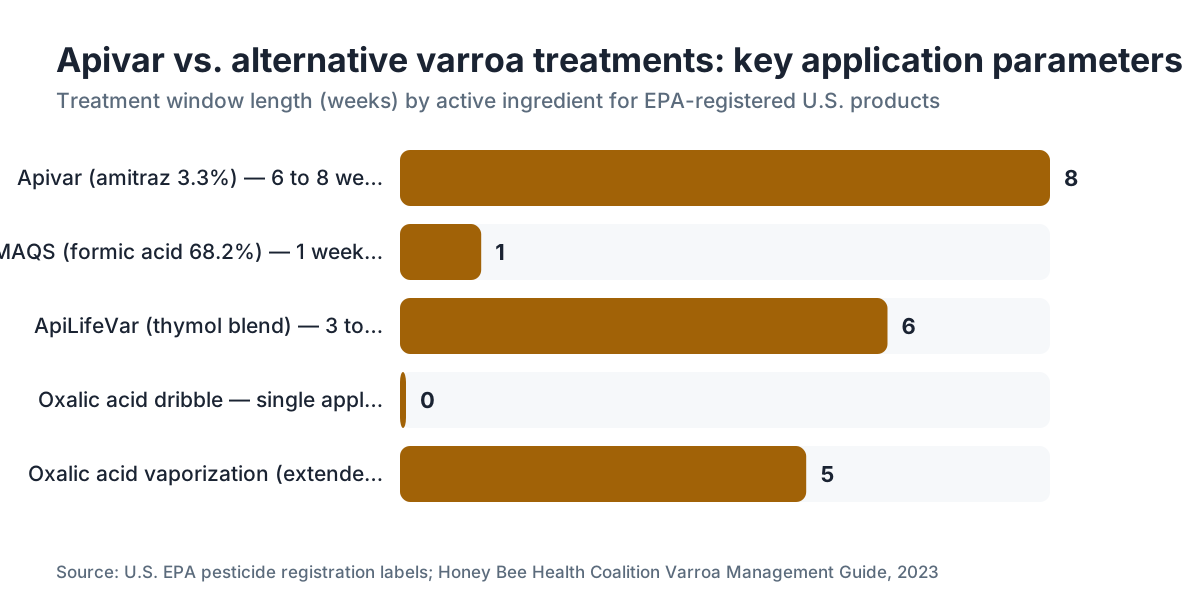
Six weeks minimum, 8 weeks maximum [1]. Six weeks is the floor because that is how long it takes to cover at least two full brood cycles (a worker cell runs about 21 days from egg to emergence). Eight weeks is the ceiling because leaving strips longer raises the risk of amitraz building up in wax and honey.
Mark the removal date on insertion day. Seriously, write it on the hive body with a paint marker. It is embarrassingly easy to lose track of when strips went in, especially across a yard full of hives.
One nuance. If the colony had a real brood break (you caged the queen, or it swarmed and went queenless), 6 weeks can get you near full kill, because most mites are phoretic and fully exposed during a break. With continuous brood, some researchers push for the full 8 weeks [2].
Do not restart the clock by reinserting the same strips. Once they come out, they are done. Amitraz degrades, and used strips have unpredictable residual activity.
What time of year should you apply Apivar?
The two best windows in North America are late summer, after the main flow ends (usually August into September), and early spring (March into April, before the flow starts) [2][3].
The fall treatment matters more. The bees heading into winter are the long-lived winter bees that carry the colony through to spring. Load them with mites and losses follow. The Honey Bee Health Coalition's Varroa management guide says to treat when mite levels hit 2% or higher in late summer, before the colony starts rearing those winter bees [2].
Spring treatment knocks down mites that survived winter and heads off an early population spike before the flow. The catch: never apply Apivar with honey supers on or when a flow is producing extractable honey. Amitraz accumulates in honey, and the label flatly prohibits treatment with supers on [1].
Southern and warmer climates run on a different calendar. Year-round brood means you match your windows to your regional dearth or post-flow period. A mite wash (alcohol wash or sugar roll) before you decide when to treat is the right starting point anywhere [3].
If you want to track loads across the season, varroa mite biology and population dynamics are worth understanding in depth.
Can you use Apivar when honey supers are on?
No. The U.S. label prohibits applying Apivar while honey supers meant for human consumption are on the hive [1]. Pull every super before you insert strips. Wait until treatment is done and strips are out before you put supers back.
This is not fine-print language. It is a federal legal requirement under FIFRA. Treating with supers on is a label violation and can leave honey with amitraz residues above safe limits.
The practical move: start treatment right after your last harvest. In many northern U.S. yards the main flow ends in July or early August, which lines up with an August insertion and an October removal before winter prep.
Do you need to do a mite wash before and after Apivar treatment?
Yes, and this step separates the beekeepers who get consistent results from the ones who wonder why Apivar did nothing. An alcohol wash (the most accurate method) before treatment tells you your starting load and confirms treatment is warranted [2][3]. The Honey Bee Health Coalition recommends washing about 300 bees (roughly half a cup) from the brood nest and counting mites against the total to get a percentage [2].
A second wash about a week after strip removal tells you whether it worked. Start at 4% and finish at 0.5%, the treatment did its job. Start at 4% and finish at 3%, something broke: wrong dose, poor placement, resistant mites, or reinfestation from a collapsing colony next door.
The University of Minnesota Extension recommends treating at 2% in summer and 1% in fall, then re-testing to confirm efficacy [3]. Nobody has clean data on the exact post-treatment threshold that should trigger a retreat, but most experienced beekeepers use 2% as the re-treatment signal regardless of season.
A few free tools help you read mite counts and plan timing. VarroaVault's mite tracker (free at varroavault.com) lets you log washes and flag threshold crossings across multiple hives.
For alcohol wash supplies and strip applicators, a reliable beekeeping supply companies list saves time.
How do you handle Apivar strips safely?
Wear gloves. Amitraz absorbs through skin and can cause headache, dizziness, and nausea with prolonged contact. Nitrile is the minimum; some beekeepers use chemical-resistant gloves. Wash your hands after handling strips even if you wore gloves [1].
Do not eat, drink, or smoke while inserting strips. Store unused strips in the original sealed packaging in a cool, dry spot out of sunlight and away from children and pets. Amitraz is toxic to dogs even at low doses. Lock it away.
Dispose of used strips per your state's pesticide disposal rules. Do not burn them. Do not leave them in the hive after the window closes. Some states run pesticide collection programs; check your state department of agriculture's website for options [4].
Do not crush or cut strips. The polymer matrix releases amitraz at a controlled rate, and disrupting the strip causes uneven release and puts concentrated material against your skin.
What if Apivar does not seem to be working?
Confirm the diagnosis first. Wash before and after treatment. If post-treatment levels are still high, run this checklist before you decide you have resistant mites.
Wrong strip count: A single strip in a strong double-deep is the classic under-dose. Go back to the dosing table above.
Poor placement: Strips hanging in an empty gap with little traffic do almost nothing. Pull them and move them into the cluster.
Strips left past 8 weeks: Sounds backwards, but very old strips can degrade enough to lose punch, and the colony sees only low-level exposure. Remove on schedule.
Reinfestation: If a good treatment rebounds fast, the source is often mite-laden drifting or robbing bees from collapsing colonies nearby. This spikes in late fall. You cannot treat your way out of a chronic reinfestation source without managing drift.
Actual amitraz resistance: Resistance is documented in European populations and being watched in North America, though through published data into 2023, widespread clinical resistance in U.S. colonies stays uncommon [5]. If you have ruled out every application error and loads stay high, an oxalic acid treatment (dribble or vaporization) with a different mode of action is the right next move. Rotating amitraz and oxalic acid also lowers long-term resistance pressure.
The Honey Bee Health Coalition's Varroa management guide advises that beekeepers consider an alternative treatment if mite levels are not brought below the treatment threshold after treatment [2].
Can you use Apivar during a brood break?
Yes, and a brood break makes Apivar more effective, not less. With no capped brood, every mite is phoretic and fully exposed to amitraz from the strips. A 6-week window during a brood break can reach mite kill above 95% according to field data cited in the Honey Bee Health Coalition guide [2].
Brood breaks happen on their own after a swarm, while a virgin queen mates, or when you make a split. You can force one by caging the queen for 21 to 24 days, which lets all existing brood emerge before you start Apivar. That trick shines when you suspect a very high load and want maximum kill from a single treatment.
During a break, 6 weeks is usually enough instead of the full 8. The mites have nowhere to hide.
Does Apivar harm the queen or brood?
At labeled doses, Apivar is considered safe for adult bees, brood, and queens [1]. Amitraz is selective enough at these concentrations to kill mites without killing bees under normal conditions.
Still, beekeepers report queen losses shortly after inserting strips. Whether that is a direct chemical effect or coincidence is genuinely unclear. Nobody has published a clean controlled study isolating Apivar as the cause of queen supersedure in U.S. hives. The closest evidence is anecdotal forum data, which is not reliable for conclusions.
Here is what to do. Assess your queen before treatment. If she is old, failing, or the colony was already set to supersede her, do not blame the strips when she is gone three weeks later. Treat a colony with a healthy, laying queen and note any changes during the window.
Do not lay strips directly over a frame where the queen is actively laying. Place them a frame or two away from where you last saw her.
How does Apivar compare to other varroa treatments?
The main U.S. alternatives are oxalic acid (dribble and vapor), formic acid (Mite Away Quick Strips), and ApiLifeVar (thymol-based). Each has a different mode of action, temperature range, and brood penetration.
| Treatment | Active ingredient | Works in capped brood? | Temperature limits | Honey supers allowed? |
|---|---|---|---|---|
| Apivar | Amitraz (3.3%) | Partial (contact phoretic mites only) | No hard temp limit; works in cold | No |
| Oxalic acid dribble | Oxalic acid | No | Works in cold; best broodless | No |
| Oxalic acid vaporization | Oxalic acid | Limited (extended vaporization only) | Works in cold | No (most labels) |
| MAQS (Formic acid) | Formic acid (68.2%) | Yes | 50-85°F daytime | Short-term use allowed on some labels |
| ApiLifeVar | Thymol blend | No | 60-105°F | No |
Sources: EPA registration labels, Honey Bee Health Coalition [1][2][7]
Apivar's strengths: it works at low temperatures (handy for fall), needs no temperature monitoring during application, and the 6 to 8 week slow release keeps you out of daily management decisions. Its weaknesses: the no-supers requirement, and resistance risk if amitraz is your only miticide year after year.
The Honey Bee Health Coalition recommends rotating modes of action every year to manage resistance [2]. A common rotation runs Apivar in late summer, oxalic acid vaporization in winter.
Step-by-step Apivar strip application checklist
Use this as your field reference before you open the hive.
Before treatment:
- Remove all honey supers. Confirm none remain on the hive.
- Alcohol-wash a sample of 300 brood-nest bees. Record the mite percentage.
- Confirm the load is at or above threshold (2% in summer; 1% in fall heading into winter).
- Put on gloves and eye protection.
- Count strips: 2 per standard colony, up to 4 for large hives, 1 for nucs.
Insertion:
- Find the brood cluster by looking for capped worker brood.
- Hang one strip between two frames near the center of the cluster. For double-deeps, hang one strip in each box near the brood center.
- The strip's loop or hook should sit over the top bar, hanging vertically between the combs.
- Do not remove the paper wrapper if your version has one; check your label.
- Record the insertion date and planned removal date on the hive or in your notes.
During treatment:
- Check at week 3 or 4 to confirm strips are in place and the cluster has not moved off them.
- Do not add supers during this period.
After treatment:
- Remove strips at 6 to 8 weeks. Do not leave them longer.
- Dispose of used strips per state pesticide guidelines.
- Alcohol-wash 5 to 7 days after removal to confirm efficacy.
- If the post-treatment load is above 2%, decide your next step: re-treat with a different mode of action or call your state apiarist.
Tracking results across hives is easier with a purpose-built tool. VarroaVault's free protocol tracker at varroavault.com logs insertion dates, removal dates, and wash results so you can spot trends across your operation.
Frequently asked questions
How many Apivar strips per hive do I need?
Two strips per brood box for a standard colony, a minimum of 1 for a small nuc, and up to 4 for a very large three-box hive. The dosing rule is roughly 1 strip per 5 frames of bees. Under-dosing is the leading reason Apivar fails, so lean toward the higher end when your colony is strong.
Can I leave Apivar strips in longer than 8 weeks?
No. The label sets 8 weeks as the maximum. Leaving strips in longer raises amitraz accumulation in wax and honey and does not meaningfully improve mite kill. By 8 weeks the strips have largely spent their active ingredient anyway. Pull them on schedule and do a mite wash to confirm results.
Do I need to remove honey supers before using Apivar?
Yes, absolutely. The EPA label prohibits treatment with honey supers present. Amitraz can accumulate in honey above safe residue limits. Remove all supers before inserting strips, and wait until strips are out before adding supers back. Treating with supers on is a federal label violation.
When is the best time of year to treat with Apivar?
Late summer (August to September) after the main flow ends is the more important window, because you are protecting the long-lived winter bees before they are reared. Early spring (March to April) is the second best. Avoid treating during an active honey flow or when supers are on.
How do I know if my Apivar treatment worked?
Alcohol-wash 300 brood-nest bees about 5 to 7 days after removing the strips. A good treatment drops levels below 2%, ideally below 1% heading into winter. If loads stay above 2%, check for application errors first: wrong dose, poor placement, or reinfestation from nearby colonies.
Can Apivar be used in a nuc?
Yes. Use 1 strip for a 5-frame nuc, centered between frames 2 and 3 in the brood area. The same 6 to 8 week window applies. Make sure the colony holds enough bees to keep cluster contact with the strip through treatment. A nuc that shrinks to a tiny cluster mid-treatment may not spread amitraz well.
Does Apivar work in cold weather?
Yes, and that is one of its practical edges over formic acid and thymol. Amitraz moves through bee-to-bee contact and does not need to volatilize, so it works at the low temperatures common in fall and early spring. Colonies cluster tighter in the cold, which actually concentrates bee traffic across the strips.
Are varroa mites developing resistance to Apivar?
Amitraz resistance is documented in Europe and being monitored in North America. Through published literature into 2023, widespread clinical resistance in U.S. hives is not well established, though confirmed cases exist. Rotating between amitraz (Apivar) and oxalic acid, which uses a different mode of action, is the recommended way to slow resistance.
Can I use Apivar and oxalic acid at the same time?
The labels do not prohibit simultaneous use, but no well-controlled study shows a meaningful synergistic benefit in standard hives. Most experienced beekeepers rotate instead of combine: Apivar for the main fall treatment with brood present, then an oxalic acid dribble or vaporization in winter when the colony is broodless. Combining adds cost without clear added kill.
How should I store unused Apivar strips?
Keep them in the original sealed foil packaging at room temperature, away from heat, direct sunlight, and moisture. Do not store near food or animal feed. Amitraz is toxic to dogs at very low doses, so locked storage matters if pets can reach your bee gear. Check the expiration date; degraded amitraz has unpredictable efficacy.
What do I do with used Apivar strips after removal?
Dispose of them as pesticide waste per your state's guidelines. Do not burn used strips, since burning releases amitraz vapor. Do not leave them in the hive or a compost pile. Many states run annual pesticide collection events through their department of agriculture. Seal used strips in a zip-lock bag before disposal.
Can Apivar hurt my queen or cause her to fail?
At labeled doses, Apivar is considered safe for queens per the EPA registration. Some beekeepers report queen losses coinciding with treatment, but no published controlled study has established a direct causal link in field conditions. Assess your queen's health before treatment. Do not place strips directly next to where she is actively laying.
How does Apivar compare to MAQS (formic acid strips) for varroa control?
Apivar and MAQS both reach mites in capped brood to some degree, but the profiles differ. MAQS gets inside capped cells more directly and can be used during a flow depending on the label version. It also carries strict temperature limits (50-85°F) and more bee and brood stress. Apivar is easier to run in fall with fewer side effects, but it cannot be applied with supers on at any point.
Sources
- Veto-Pharma, Apivar U.S. EPA-registered label (EPA Reg. No. 86052-6): Apivar contains 3.3% amitraz (500 mg per strip); 2 strips per brood box; maximum 8 weeks; prohibited with honey supers present
- Honey Bee Health Coalition, Varroa Management Guide (latest edition): Recommends treating at 2% mite load in summer; rotating modes of action; brood breaks increase Apivar efficacy to above 95% mite kill
- University of Minnesota Extension, Varroa Mite Management: Recommends alcohol wash threshold of 2% in summer and 1% in fall; alcohol wash of ~300 bees for accurate mite counts
- U.S. EPA, Pesticides program (disposal and storage guidance): Used pesticide strips must be disposed of per state pesticide disposal regulations; burning is not an approved disposal method
- Maggi, M. et al. (2010), 'Varroa destructor resistance to acaricides', Apidologie 41(3): Amitraz resistance has been documented in European Varroa destructor populations; resistance mechanisms include metabolic detoxification
- U.S. EPA, Pesticide registration (oxalic acid for honey bee varroa control): Oxalic acid is registered as an alternative varroa miticide with a different mode of action from amitraz; label prohibits use with honey supers on most formulations
- Pennsylvania State University Extension, Varroa Mite Treatment Options: Summary of approved varroa treatments including Apivar, oxalic acid, formic acid, and thymol-based products; temperature ranges and efficacy comparisons
- USDA Agricultural Research Service, Honey Bee Research: Ongoing monitoring of Varroa mite treatment efficacy and resistance patterns in North American honey bee populations
- Rosenkranz, P. et al. (2010), 'Biology and control of Varroa destructor', Journal of Invertebrate Pathology 103: Varroa mites spend a phoretic phase on adult bees; capped brood cells protect mites from contact acaricides; worker brood cycle is approximately 21 days
- North Carolina State University Apiculture, Varroa Mite Management: Fall treatment timing important for protecting the winter bee cohort; recommends a mite wash before and after treatment to confirm efficacy
Last updated 2026-07-09