Apivar strips for bees: how they work, when to use them, and what to watch out for
TL;DR
- Apivar strips hold 500 mg of amitraz each and kill varroa by contact as bees walk across them.
- Use two strips per brood box, leave them in 6 to 8 weeks, and you'll usually get 90-plus percent knockdown when placement is right.
- They work in any temperature.
- They also carry real resistance risk with repeated use, and they cannot be in the hive during a honey flow you plan to harvest.
What are Apivar strips and how do they work?
Apivar is an amitraz-based acaricide the EPA registered specifically for varroa control in honey bee colonies [1]. Each plastic strip holds 500 mg of amitraz embedded in a polymer matrix. The amitraz doesn't vaporize into the hive air in any meaningful amount. Bees pick it up directly by walking across the strip, then spread it through normal body contact as they move around the colony. That transfer is the whole mechanism.
Because the action depends on physical contact rather than fumigation, placement matters more than almost anything else. Strips hung in dead space away from brood and cluster do close to nothing. The amitraz moves from strip to bee to mite, and mites feeding on bees or brood die from neurological disruption. The amitraz binds to octopamine receptors in the mite's nervous system [2].
One thing Apivar can't do is reach into capped brood cells. Varroa reproduce inside those capped cells, so any mite sealed in when you hang the strips emerges with the next batch of bees and only then gets exposed. That's the main reason the label demands at least 6 weeks. You need enough time for all capped brood to hatch and expose the mites inside. A shorter treatment leaves a reservoir of protected mites behind.
The strips look like plain tan polymer rectangles, roughly 25 cm long. You hang them vertically between frames using the notch cut into the top edge, one strip per 5 frames of bees, with a minimum of two per colony. Most double-box colonies get two strips total, both hung in the lower brood box where the queen and most of the brood live.
What does the Apivar label actually require?
The EPA-registered Apivar label is the legal document that governs every part of use. Breaking label instructions is a federal violation under FIFRA [1]. Here's what it specifies in plain terms:
- Two strips per colony for up to 10 frames of bees. Colonies over 10 frames need one more strip per 5 additional frames.
- Minimum treatment: 6 weeks. Maximum: 8 weeks. Never leave strips in past 8 weeks.
- Remove and discard strips after treatment. Do not reuse them.
- Do not treat when honey supers meant for human consumption are on the hive. Pull supers before applying strips.
- Place strips in the brood area, in direct contact with the cluster.
- Wear chemical-resistant gloves when handling strips. Amitraz is a monoamine oxidase inhibitor and absorbs through skin.
That last point is the one beekeepers skip most. Amitraz toxicity in humans is real, and the glove requirement is there for a reason. Nitrile gloves are the usual choice. Latex isn't chemical-resistant enough for extended handling.
The label also tells you to treat in spring after the honey flow and in fall before the winter cluster forms, or any time mite levels pass your action threshold. The Honey Bee Health Coalition's Varroa Management Guide puts the economic threshold at 2 percent or higher (2 mites per 100 bees on an alcohol wash) during brood-rearing season, and 1 percent before winter bees are being raised [3].
How effective is Apivar at killing varroa mites?
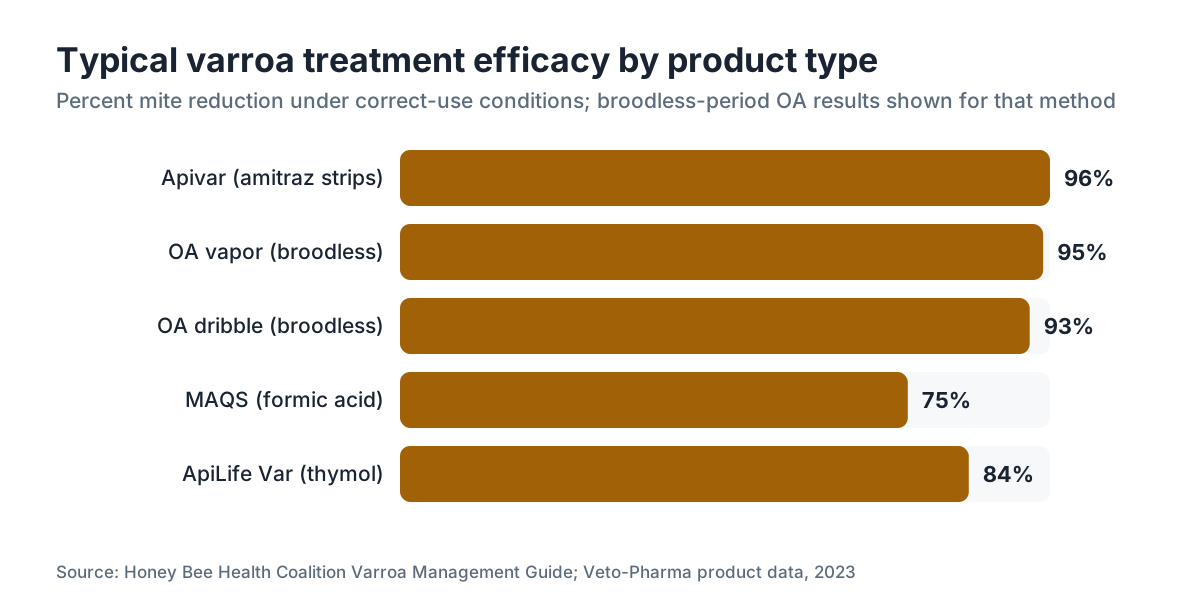
Apivar works well when you use it correctly and when resistance isn't present in your local mite population. The manufacturer (Veto-Pharma) and several university studies report 93 to 99 percent knockdown under ideal conditions [4]. Real-world results run lower because hives vary, placement isn't always perfect, and resistance shows up in more regions every year.
A 2021 study in PLOS ONE that examined amitraz resistance in U.S. varroa populations found that some mite populations showed sharply reduced sensitivity to amitraz, with survivors passing resistance genes to their offspring [5]. The practical takeaway: if you treat with Apivar and your counts aren't dropping by week 6, resistance belongs on your short list of suspects.
Apivar has one big edge over oxalic acid. It works with capped brood present, which OA dribble and vapor don't penetrate at useful concentrations. That makes Apivar practical during the active brood-rearing season and one of the few realistic fall options for colonies still carrying a lot of brood. Against formic acid products like MAQS, Apivar has no temperature ceiling. Formic efficacy drops in cool weather and risks queen loss in heat. Apivar doesn't care about the thermometer, which makes it dependable in the swings of a typical fall.
| Treatment | Works with capped brood | Temperature limits | Honey-on restriction | Typical efficacy |
|---|---|---|---|---|
| Apivar (amitraz) | Yes | None significant | Yes, remove supers | 93-99% [4] |
| OA vapor | No | Below ~50°F works best | No restriction | 90-99% (broodless) |
| OA dribble | No | No | No restriction | 90-97% (broodless) |
| MAQS (formic) | Partial | 50-85°F label range | No restriction | 60-90% |
| ApiLife Var (thymol) | Partial | 59-105°F label range | No restriction | 74-95% |
Where exactly do you place Apivar strips in the hive?
Placement is the single biggest thing you control, and it decides whether treatment works. The strips need to hang vertically in the brood nest, one on either side of the main brood cluster, in the lanes with the heaviest bee traffic. Picture the two busiest highways through the hive and hang a strip in each.
For a single-box colony: hang the strips in frames 3-4 and 7-8, bracketing the brood nest.
For a two-box colony: both strips usually go in the lower box, again bracketing the cluster. If brood spans both boxes heavily, put one strip in each box. The goal never changes. Maximum bee-strip contact.
Strips must not be folded, bent, or bunched. They hang fully extended so the largest possible surface touches bees. The notch at the top hooks over the top bar of a frame. That's it. No stapling, no taping.
Every 7 to 10 days during treatment, open the hive and shift the strips slightly. Bees will propolize the surface, coating it and cutting transfer. Moving each strip a frame or two and scraping off propolis keeps efficacy up through the full period. A lot of beekeepers skip this step, and they probably shouldn't.
When the cluster contracts in late fall and moves up into a second box, strips left in the lower box can lose contact with the bees. Watch cluster position and move strips if the bees leave them behind.
When is the best time of year to use Apivar?
Most experienced beekeepers treat twice a year. Once in late summer or early fall (August through October depending on region), and once in spring before supers go on. The fall treatment is the one that matters most. Bees raised in August and September are the winter bees that carry the colony to spring, and the varroa load on those bees directly predicts winter survival [11].
The Honey Bee Health Coalition's Varroa Management Guide, the closest thing the U.S. industry has to a consensus protocol, says to treat when counts pass your threshold, with the fall window as the top priority. The aim is to knock mites below 1 percent before the colony starts rearing its overwintering bees. In many temperate climates that means treating by mid-August at the latest [3].
Spring treatment works as a reset after winter, especially if your fall counts ran higher than you wanted, or if you lost a colony and want to start clean. The catch is that supers have to come off before strips go in, so you're fighting the nectar calendar. Plenty of beekeepers treat in early spring before the main flow, pull strips before supers go on, and accept a gap in coverage.
Apivar can be used any time mites pass threshold, but the 8-week no-super rule makes mid-flow treatment economically painful in a strong producer. Plan around your local flow.
Can Apivar residues contaminate honey or beeswax?
This is a real concern, and it's exactly why the label bars strips during a harvestable flow. Amitraz and its breakdown products, DMPF among them, build up in beeswax over time [6]. Wax is lipophilic, so fat-soluble compounds bind into it readily. Every treatment cycle adds a small increment of residue to your comb.
A study by Mullin and colleagues in the Journal of Agricultural and Food Chemistry found amitraz metabolites in commercial U.S. beeswax at detectable levels across a large share of samples, a sign of how widely the industry uses it [6]. That doesn't make honey from treated hives dangerous at typical levels. It does mean cumulative wax contamination is real and worth managing.
How to hold the residue load down:
- Never treat with honey supers on the hive (label requirement, not a suggestion).
- Rotate old brood comb out on a 3-to-5-year cycle. Dark old comb carries the highest residue.
- Don't treat more often than you need to. Let mite counts justify a treatment instead of running a calendar.
Honey contamination stays below detection in most studies when you follow the label, but the research isn't as clean as I'd like. Nobody has run a large, well-controlled study of honey residues from properly managed Apivar treatments in recent years. The honest version: follow the label, pull the supers, rotate your comb, and your risk stays low.
What is the risk of varroa resistance to Apivar?
Amitraz resistance in varroa is real and documented in the United States. A peer-reviewed study confirmed it in 2021, though beekeepers had reported suspicious treatment failures for years before that [5]. Resistance builds when a small share of mites carry a mutation that dulls their sensitivity to amitraz. Those mites survive treatment, breed, and hand the trait to their offspring.
The main driver is selection pressure from leaning on the same chemical class over and over. If every beekeeper in your region runs Apivar for every treatment every year, you're selecting hard for resistant mites.
The Honey Bee Health Coalition and most university extension programs tell you to rotate chemical classes between treatments [3]. A sensible rotation for someone who treats twice a year: Apivar in fall, oxalic acid (broodless period or extended vapor) in winter or early spring. That hits mites with two different modes of action across the year and slows selection.
Signs of possible resistance: counts not dropping after 4 weeks of correctly placed strips, or a post-treatment count still above 2 percent after the full 6-to-8-week run. If you see that, switch chemical class for the next treatment. But give resistance some skepticism too. Rule out placement errors and confirm you're counting right before you blame the mites.
You can find testing protocols and sentinel-hive programs through some state apiarist offices. Virginia, for one, has taken part in regional resistance monitoring.
How do you monitor mite levels before and after Apivar treatment?
You can't manage what you don't measure. Treat without counting first and you don't know if treatment was needed. Treat without counting after and you don't know if it worked.
The alcohol wash is the most accurate method for counting phoretic mites in colonies with active brood. Collect about 300 bees (roughly half a cup) from a frame of open brood, drop them into 70 percent isopropyl alcohol in a mason jar, shake for 60 seconds, strain through a mesh lid, and count the mites in the liquid. Divide mites by bees and multiply by 100 for your percentage [3].
Count before treatment to confirm you're above threshold. Count again 3 weeks in to see if the strip is working. Count once more 2 weeks after strip removal to check final efficacy. Those three data points tell you a lot: baseline load, how fast the treatment responded, and whether mites are rebounding.
If you want to push your monitoring further, the VarroaVault mite tracking tool lets you log wash results and plot your mite trajectory over time, so you see trends across colonies and treatment cycles instead of single snapshots.
Sugar rolls are gentler (the bees live) but less accurate. They typically undercount by 30 to 40 percent against an alcohol wash [10]. Use the alcohol wash for treatment decisions. A sugar roll is fine for rough periodic checks if the wash feels impractical.
The Honey Bee Health Coalition's Varroa Management Guide has a free step-by-step alcohol wash protocol with photos [3].
How much do Apivar strips cost and how many do you need?
Apivar sells in packs of 10 strips (5 doses for standard colonies) and packs of 50 (25 doses). As of mid-2025, a 10-strip pack runs about $25 to $35 depending on supplier and shipping, which works out to $5 to $7 per colony treated [7]. A 50-strip pack runs roughly $90 to $120, dropping the per-colony cost to around $3.60 to $4.80.
Running 20 or more colonies? The 50-strip packs from a reputable beekeeping supply company are the obvious economic move. Most major bee supply retailers carry them.
One thing to watch. Apivar has a shelf life of about 2 years from manufacture. Buy what you'll use inside that window. The polymer matrix can degrade in hot storage and slow the amitraz release rate. Keep unused strips cool, dark, and in their sealed original packaging.
A 10-colony hobby operation doing two treatments a year burns 40 strips annually. That's one 50-pack, which holds your per-colony cost at the bulk rate. Budget roughly $100 to $120 a year for Apivar at that scale, not counting monitoring supplies.
Are there any safety concerns for the beekeeper or the bees?
For you, the main hazard is amitraz absorbing through skin. Amitraz is a monoamine oxidase inhibitor, and human exposures have caused dizziness, nausea, slowed heart rate, and sedation, mostly in agricultural settings with heavier exposure than typical beekeeping [8]. The label's glove requirement isn't bureaucratic padding. Wear nitrile or neoprene gloves every time you touch strips: opening packages, inserting them, repositioning mid-treatment, and pulling them at the end.
Wash your hands thoroughly after inspections during treatment even if you wore gloves. Dispose of used strips per label: wrap in paper, put in household trash. Don't burn strips and don't bury them.
Bees tolerate Apivar well at label rates. Colony populations don't drop noticeably in research settings when the product is used correctly [4]. Some beekeepers see a slight bump in bees cleaning strips or clustering near them early on, which is normal. What you should not see: dead bees piling at the entrance above normal, queen loss, or a sudden population crash. If those show up, something else is wrong.
Apivar is acutely toxic to fish and aquatic invertebrates. Don't rinse packaging or gloves in waterways. That's on the label and worth taking seriously if your apiary sits near a stream.
What do you do if Apivar isn't working?
Rule out the obvious first. Are the strips in the brood cluster, or hanging in empty space? Have bees coated them with propolis? Are you counting mites with an alcohol wash, or eyeballing it?
If placement is right, contact time is adequate, and counts still won't drop, suspect resistance. Switch to a different chemical class for your next treatment. Oxalic acid vapor during a broodless period (natural or induced) is the most effective rescue play, and there's no documented oxalic acid resistance in varroa as of current USDA monitoring [9]. If it's fall and you can cage the queen for 24 days to force a broodless window, you erase the capped-brood problem and can treat with OA vapor to very high efficacy.
Report persistent failures to your state apiarist. Some states actively track amitraz resistance, and your data feeds the regional picture.
Don't respond to a failure by leaving strips in past 8 weeks. That's a label violation and it won't touch resistant mites. It will pile on wax residue and selection pressure.
The varroa mite biology page here at VarroaVault breaks down the varroa life cycle and why resistance develops, which helps if you're trying to understand what's happening in a treatment that's failing you.
How does Apivar fit into a full-season varroa management plan?
Apivar is a tool, not a program. The colonies that keep surviving varroa belong to beekeepers who treat on counts, rotate chemical classes, and monitor after every treatment. No single product, run alone and repeatedly, wins over the long haul.
A workable two-treatment year for temperate North America looks like this. Treat in late summer (August) with Apivar for 6 to 8 weeks, aiming for sub-1-percent loads before October. Then in December or January, when the colony is naturally broodless or close to it, run an oxalic acid vapor treatment. Recount in February. Treat in spring if counts sit above 2 percent before supers go on, using whichever class you didn't use in fall.
The Honey Bee Health Coalition's Varroa Management Guide is the best free resource for building your seasonal protocol. It covers thresholds, timing windows, and the tradeoffs of each registered treatment class, with beginner and advanced tracks [3].
For supply sourcing as you build your program, comparing options across beekeeping supply companies helps you find the best bulk pricing on Apivar, OA equipment, and monitoring gear.
The beekeepers who lose the fewest colonies to varroa almost never found a magic product. They count mites on a schedule, act on the data, and stay skeptical of any single solution.
Frequently asked questions
How long do you leave Apivar strips in the hive?
The Apivar label requires a minimum of 6 weeks and a maximum of 8 weeks. The 6-week minimum makes sure all capped brood has hatched, exposing mites that were protected during the first cycle. Leaving strips in past 8 weeks violates the label and doesn't boost efficacy. It only adds to wax residue. Remove and discard strips promptly at the 8-week mark.
Can you use Apivar strips when honey supers are on?
No. The Apivar label explicitly prohibits use when honey supers meant for human consumption are on the hive. Pull all supers before inserting strips. This is a legal requirement under FIFRA, not a suggestion. Amitraz and its metabolites can build up in honey and wax, and treating during a flow risks contaminating harvestable honey above acceptable levels.
How many Apivar strips per hive do you need?
The label calls for two strips per colony up to 10 frames of bees. For bigger colonies, add one strip per 5 additional frames. Most hobby and sideliner hives in a single or double brood box use exactly two strips. Position them in the brood nest, one on each side of the main cluster, for maximum contact with the bees walking past.
Does Apivar work in cold weather?
Yes, and that's one of its main edges over formic acid and thymol treatments. Apivar has no meaningful temperature ceiling or floor on the label. It works by contact transfer instead of vaporization, so ambient temperature doesn't touch the chemistry. That makes it a dependable fall treatment even in climates where temperatures drop into the 40s Fahrenheit during the treatment period.
What is the active ingredient in Apivar?
Apivar's active ingredient is amitraz, at 500 mg per strip. Amitraz is a formamidine-class acaricide that kills varroa by binding to octopamine receptors in the mite's nervous system and disrupting normal function. It sits in a different chemical class from oxalic acid and formic acid, which is why rotating between them slows the development of resistance.
Can varroa mites develop resistance to Apivar?
Yes. A 2021 peer-reviewed study confirmed amitraz resistance in U.S. varroa populations. Resistance develops when mites carrying mutations that reduce amitraz sensitivity survive treatment and breed. Running Apivar exclusively for every treatment cycle speeds this up. Rotating to oxalic acid or formic acid on alternate cycles reduces selection pressure and slows resistance.
Is Apivar safe for the queen and colony?
At label rates with correct placement, colonies tolerate Apivar well. Queen loss tied to correctly applied Apivar isn't documented in the research literature. You shouldn't see unusual brood pattern disruption or population decline during treatment. If you do, investigate other causes. Those symptoms aren't consistent with normal Apivar use at the labeled dose.
How do you dispose of used Apivar strips?
The label says to wrap used strips in paper and discard them in household trash. Don't burn them; amitraz combustion products are hazardous. Don't bury them and don't rinse packaging in waterways. Amitraz is acutely toxic to fish and aquatic invertebrates. Treat used strips as chemical waste in that sense, even though they qualify for standard trash disposal after treatment.
Can you use Apivar and oxalic acid at the same time?
There's no strong evidence of a harmful interaction, but there's also no clear benefit to using them together. OA dribble and vapor don't penetrate capped brood, so running OA during an Apivar treatment adds little to what Apivar already handles. The better approach is sequential: Apivar for the brood-rearing period, then OA for a broodless-period follow-up or winter treatment.
What should mite counts look like after Apivar treatment?
A successful Apivar treatment should bring counts below 1 percent (1 mite per 100 bees on an alcohol wash) by the end of the treatment for winter prep, and below 2 percent during the active season. Count 2 weeks after strip removal. If counts stay above 2 percent after a full 6-to-8-week run with correctly placed strips, treat resistance as a likely factor and plan a chemical-class switch.
Where do you buy Apivar strips and what do they cost?
Apivar is available from most major beekeeping supply retailers in packs of 10 (roughly $25 to $35) or 50 (roughly $90 to $120). Buying 50-strip packs cuts per-colony cost to around $3.60 to $4.80 per treatment. Check expiration dates before buying; strips have about a 2-year shelf life and lose efficacy in hot storage. Comparing pricing across suppliers before a bulk buy pays off.
Do Apivar strips work if the hive is queenless?
Yes. Amitraz transfer doesn't need a queen present. But a queenless colony has a natural broodless period, which actually makes it an ideal candidate for oxalic acid vapor instead, since OA works best without capped brood. If you use Apivar in a queenless colony anyway, the shorter natural broodless cycle means you may still need the 6-week window for any emergency queen cells to hatch.
How do you know if Apivar strips have lost potency?
There's no reliable visual test for potency. The best indicator is outcome. Count mites before treatment, then again at 3 weeks. If the phoretic load isn't dropping by week 3 of a well-placed treatment, the strip may have degraded, or resistance may be present. Buy strips with long remaining shelf life, store them cool and dry, and buy from suppliers with steady turnover so you're not getting old inventory.
Sources
- EPA - Pesticide Registration: Apivar is an EPA-registered acaricide; violating label directions is a federal violation under FIFRA
- University of Florida IFAS Extension - EDIS: Amitraz kills varroa mites by binding to octopamine receptors in the mite's nervous system
- Honey Bee Health Coalition - Varroa Management Guide: Action threshold is 2 percent during brood season and 1 percent before winter bees are reared; alcohol wash protocol recommended; chemical class rotation advised
- Veto-Pharma - Apivar Product Information: Apivar efficacy of 93-99 percent under correct use conditions; colony populations well-tolerated at label rates
- PLOS ONE - Amitraz Resistance in Varroa destructor (2021): Amitraz resistance in U.S. varroa populations confirmed; reduced sensitivity documented with heritable genetic basis
- Mullin et al. - Pesticide Residues in U.S. Beeswax (Journal of Agricultural and Food Chemistry): Amitraz metabolites including DMPF detected in commercial U.S. beeswax samples; lipophilic accumulation in comb documented
- Mann Lake Ltd - Apivar Strips Retail Pricing: Apivar 10-strip pack retails approximately $25-$35; 50-strip pack approximately $90-$120 from major bee supply retailers
- National Pesticide Information Center (NPIC) - Amitraz Technical Fact Sheet: Amitraz is a monoamine oxidase inhibitor; human dermal exposure can cause dizziness, nausea, bradycardia, and sedation
- USDA ARS Bee Research Laboratory: No documented oxalic acid resistance in varroa mite populations as of current monitoring data
- Pennsylvania State University Extension - Varroa Mite Monitoring and Management: Sugar roll undercounts mites by 30-40 percent compared to alcohol wash; alcohol wash recommended for treatment threshold decisions
- University of Minnesota Extension - Honey Bee Diseases and Pests: Fall varroa treatment timing matters for winter bee health; winter bee phoretic mite load directly predicts winter survival
Last updated 2026-07-09