Apivar strips for sale: what to buy, where, and how to use them
TL;DR
- Apivar (amitraz 3.3% strips) kills varroa at rates above 90% when you use it right.
- A 10-strip pack runs about $35 to $60 USD and treats five colonies, two strips each.
- You can buy it over the counter from most US bee supply retailers.
- Canada needs a veterinary prescription.
- New Zealand sells it through licensed remedy retailers.
What are Apivar strips and how do they work?
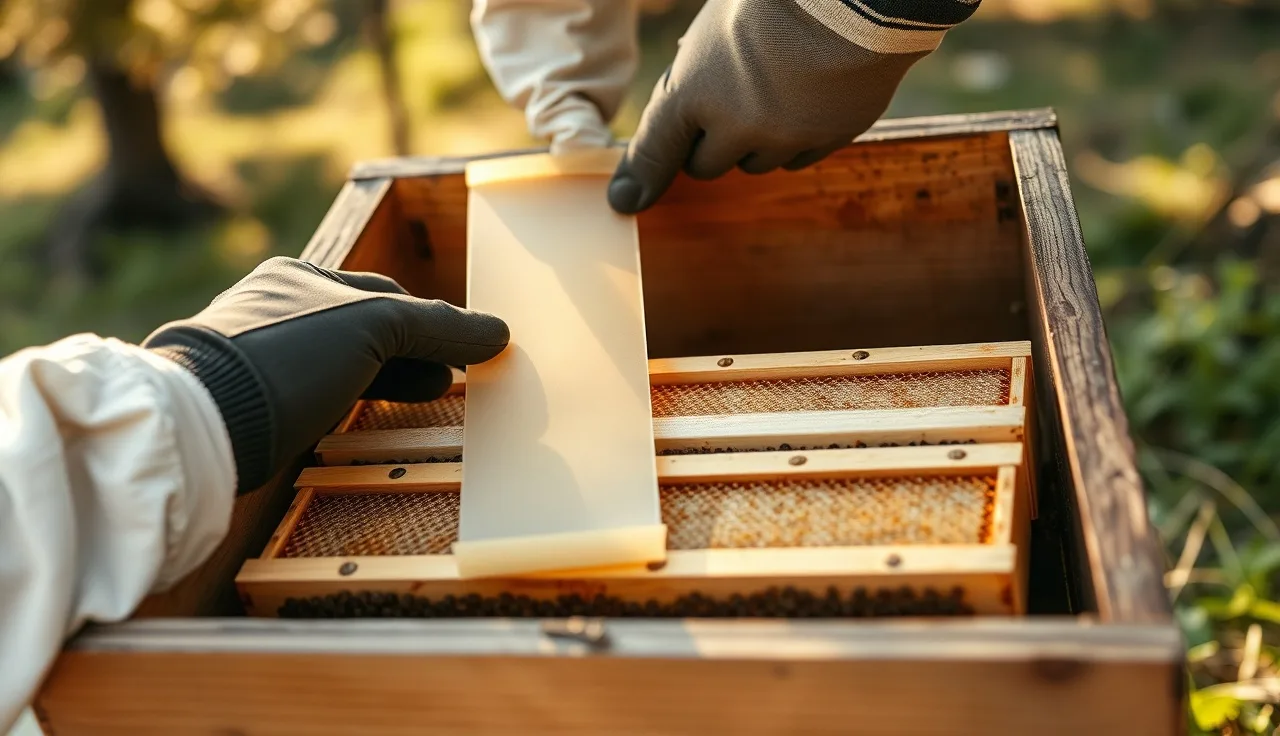
Apivar is an acaricide strip made by Veto-Pharma. Each strip holds 3.3% amitraz, a contact-mode insecticide in the formamidine class. The strips hang between frames in the brood nest. Bees walk across them, pick up amitraz on their bodies, and spread it through normal hive traffic. Mites feeding on those bees contact the compound and die.
Amitraz does not reach mites hiding under capped brood. That single fact drives everything about how you use the product. You need weeks of exposure to catch mites as they emerge with each new adult bee [1]. That is why the label sets a 6-to-10-week treatment window instead of something shorter. Pulling strips early is the most common mistake beekeepers make, and it is exactly how subtherapeutic exposure breeds resistant mites.
Amitraz hits a bee's nervous system too, at high enough doses. Placement and dose matter for that reason. The EPA-registered label is the legal document governing Apivar use in the United States, and it is free to read through the EPA pesticide registration site [1].
How much do Apivar strips cost, and what does a pack treat?
A 10-strip pack of Apivar treats five standard colonies at two strips per hive, and it runs roughly $35 to $60 USD at most US suppliers as of 2025. Per-colony cost lands around $7 to $12. That beats an oxalic acid vaporizer setup, which needs equipment up front, and it comes in under Apiguard thymol treatments at $10 to $15 per colony at current retail.
Sideliners buy bigger packs. The 50-strip pack treats 25 hives and usually prices around $130 to $175, which drops per-colony cost to $5 to $7. A 100-strip commercial pack shows up through some distributors, generally $230 to $280. Prices move with the supplier and with whether a veterinary directive is involved (see the Canada section below).
Apivar ships light, so most online suppliers move it at standard rates. Ordering other gear at the same time? Check free shipping honey bee supply companies for retailers that waive shipping on larger orders.
Where can you buy Apivar strips in the United States?
Apivar is EPA-registered (Reg. No. 87602-2-8097) and sold over the counter in the United States with no prescription [1]. No veterinarian needed, which is a real difference from some other hive medications. US purchasing is about as simple as buying anything else for the hive.
Here are the channels that actually stock it:
- Major online bee supply retailers. Mann Lake, Dadant, Brushy Mountain (now part of Mann Lake), and similar beekeeping supply companies all carry Apivar. Stock runs thin in spring and fall when everyone treats at once, so order a few weeks before your treatment window.
- Local beekeeping supply stores. Many stock it year-round. Prices sometimes sit a little above online, but you skip the shipping wait.
- Amazon and general marketplaces. Apivar shows up here. Verify the seller is an authorized distributor first. Gray-market stock is a genuine risk with any regulated pesticide.
- State beekeeping associations. Some run group buys that cut per-strip cost hard, which helps sideliners most.
Before you buy anywhere, check that the package is sealed and the expiration date leaves you a full treatment season. Amitraz degrades over time. Expired product is weaker, and using it is a legal gray area [1].
Where can you buy Apivar strips for sale in Canada?
Canada makes this harder. Amitraz treatments there fall under the Pest Control Products Act and are handled as prescription medications for honeybee colonies, with Health Canada's Pest Management Regulatory Agency (PMRA) doing the regulating [2]. In practice, Canadian beekeepers need a valid prescription or veterinary oversight to buy Apivar legally, and the exact path depends on the province.
As of 2024, most Canadian beekeepers go through a Veterinary Health Product (VHP) certification or a prescription from a licensed vet who has assessed the hives. Several provincial associations have set up streamlined access through vets who work with apiarists, so the wall is lower than it first sounds.
Canadian suppliers carrying Apivar (with the right paperwork) include Benson's Bee Supplies, Vesey's, and various provincial agricultural co-ops. A 10-strip pack runs roughly CAD $50 to $75, which reflects the regulatory overhead plus the exchange rate on USD-priced product. Ordering from US suppliers and importing it yourself is not legal without proper import permits under the PMRA framework.
For Apivar strips for sale in Canada specifically, the reliable move is to call your provincial apiculture specialist (every province has one) and ask which veterinarians they recommend for prescription access. Alberta, Ontario, and British Columbia all run active apiculture programs with current guidance [2].
Where can you buy Apivar strips in New Zealand?
New Zealand treats varroa as a national biosecurity priority, and Apivar is a registered treatment there under the Agricultural Compounds and Veterinary Medicines (ACVM) Act. Apivar strips in NZ sell through licensed animal remedy retailers and agricultural supply stores with no prescription. You still have to follow the New Zealand label, which sets its own withholding periods and application rules [3].
Apiary supply companies like Ceracell Beekeeping Supplies and Franklin Veste carry amitraz strips for the New Zealand market, and New Zealand Beekeeping Inc. member suppliers run seasonal promotions. A 10-strip pack runs approximately NZD $35 to $55, though it varies by region and supplier.
New Zealand beekeepers also get Apitraz, a second amitraz strip product. When you shop locally, compare the active ingredient concentration and label instructions between products. Do not assume every amitraz strip behaves the same. The NZ Food Safety (MPI) register lists current registration status for hive treatments [3].
How do you use Apivar strips correctly?
The US label is specific. Place two strips per brood box, hanging vertically between the two combs nearest the center of the brood nest, one strip on each side of the cluster [1]. If a colony runs two brood boxes, put one strip in each box (still two strips total per colony). Never lay strips flat on the bottom board. Contact with comb and bees is the whole mechanism.
Leave the strips in for six weeks minimum, ten weeks maximum. This part is not negotiable. Amitraz contact does not kill mites sealed on capped pupae, so you need enough weeks to catch mites emerging across several brood cycles. Six weeks covers roughly three brood cycles in a healthy colony [4].
Temperature works in your favor here. Apivar stays effective across a wider range than thymol treatments, which is why cool-climate beekeepers reach for it. The label says it works at temperatures as low as 10°C (50°F), so fall treatment stays feasible even in northern apiaries [1].
After you pull the strips, do not slap in another Apivar treatment. The Honey Bee Health Coalition's Varroa management guide recommends rotating chemical classes to slow resistance [4]. Treat with Apivar in fall, follow with oxalic acid in winter, then reach for a different class the next spring.
Wear gloves every time you handle strips. Amitraz absorbs through skin and can cause dizziness and lowered blood pressure in humans. The personal protective equipment on the label is there because people have gotten sick.
When is the best time to use Apivar during the beekeeping season?
Most beekeepers in temperate climates get the best results from a late-summer or early-fall treatment, timed so strips go in after the honey supers come off and before the queen slows her laying [4]. That window runs roughly late July through September depending on your latitude. It is when varroa numbers usually peak, and treating then protects the winter bees that carry the colony to spring.
Spring is the second common window, after brood rearing kicks in but before you add supers. The label bans use with honey supers in place because amitraz residues build up in honey [1]. Breaking that rule is illegal and a food safety problem, so super timing stays strict.
Midsummer treatment while running supers is off the table with Apivar. If you have to treat during a flow, oxalic acid dribbled on a broodless split, or a hive with no supers, is the better tool.
Start your timing decision with a mite wash, not a calendar. The Honey Bee Health Coalition recommends treating when your infestation rate hits or passes 2 infested bees per 100 bees (2%) during the brood-rearing season [4]. Treating at 0.5% in spring is a different call than treating at 4% in August. You only know which one you are facing if you count.
What is the actual efficacy of Apivar, and how does it compare to other treatments?
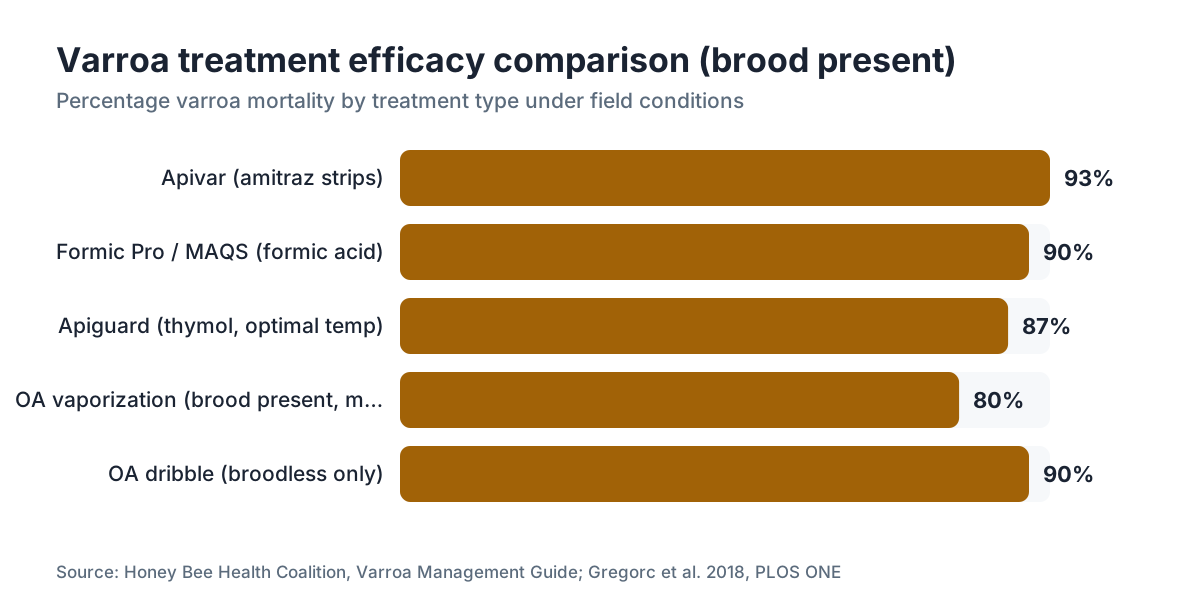
Applied correctly, amitraz strips have shown varroa mortality above 90% in controlled trials, and closer to 95% in some studies [5]. That is strong. Oxalic acid on broodless colonies runs about as high; applied during brood rearing by vaporization, it needs multiple rounds to get there. Apiguard (thymol gel) usually lands at 80 to 93% in good temperatures but falls off hard below 15°C [4].
Here is a simplified comparison drawn from published extension and HBHC guidance:
| Treatment | Active Ingredient | Efficacy (brood present) | Temperature Limit | Super Restriction |
|---|---|---|---|---|
| Apivar | Amitraz 3.3% | 90 to 95% [5] | Works above 10°C | No supers allowed |
| Apiguard | Thymol 25% | 80 to 93% [4] | Needs above 15°C | No supers allowed |
| MAQS / Formic Pro | Formic acid | 85 to 95% [4] | 10 to 29°C ideal | Restricted window |
| OA Vaporization | Oxalic acid | 90%+ broodless; lower with brood [6] | Down to 5 to 10°C | No supers; food-grade waiver varies |
| OA Dribble | Oxalic acid | ~90% broodless only [6] | Low temps OK | No supers |
The Honey Bee Health Coalition's Varroa Management Guide states: "Amitraz is available as impregnated plastic strips (Apivar) and controls varroa during the colony's brood-rearing period" [4]. That one line captures why Apivar earns its place: it works with a full brood nest present, which most other treatments handle less cleanly.
For the biology behind why mite population dynamics make timing matter so much, the varroa mite guide walks through the lifecycle in detail.
Is amitraz resistance a real problem, and how do you manage it?
Yes. Amitraz resistance in Varroa destructor is documented and spreading, with confirmed resistant populations in Europe, the Americas, and parts of Asia [7]. The resistance comes from mutations in the octopamine receptor gene that amitraz targets, which drops mite sensitivity to the compound at normal field concentrations.
A 2021 study in Scientific Reports confirmed reduced amitraz efficacy in Varroa populations across several US states. The authors found that some populations showed greater than 1,000-fold resistance compared to susceptible reference strains [7]. That is not a rounding error. A thousand-fold shift in the LC50 means the strips do nothing against those mites.
The practical answer is rotation. Treat with Apivar in fall, then do not use it again in spring. Reach for a different chemical class, oxalic acid or formic acid, for the next round. Then you can come back to Apivar the following fall. This is not about distrust of any single product. It is about refusing to give a resistant genotype uninterrupted selection pressure.
Always run a post-treatment mite count three to four weeks after pulling strips. If counts have not dropped substantially, ideally below 1% infestation [4], treat that as a warning. Do not assume the treatment worked just because you applied it by the book.
Can Apivar be used alongside other hive treatments?
No, not at the same time. The Apivar label does not authorize tank mixing or co-application with other miticides. Combining chemical classes in one hive at once raises both efficacy questions and bee safety concerns. Some combinations are documented as trouble: amitraz and organophosphates can interact in ways that harm bees [1].
What you can do is sequence treatments. Ran Apivar in fall and your post-treatment count is still up? An oxalic acid treatment on a broodless or near-broodless winter cluster is a reasonable follow-up, once the strips are out. The two compounds share no resistance mechanism, and oxalic acid leaves no residue that interferes with amitraz.
Keep detailed records of what you applied, when, and what your mite counts were before and after. This is the only way to catch resistance building in your own apiary. VarroaVault's free treatment tracking tools log counts and treatments across multiple hives without a separate spreadsheet.
For the rest of a complete hive health program, beekeeping supplies covers the equipment and products that go alongside your varroa management.
What do buyers need to watch out for when purchasing Apivar online?
The main risk with any online pesticide buy is counterfeit or expired product. Amitraz strips have a finite shelf life, and the EPA requires you use the product within its labeled expiration date. Buying from a gray-market reseller who sourced strips meant for another country's market is a real problem: the label may not match US EPA requirements, the concentration may differ, and any legal fallout is yours to absorb.
Check that the pack shows the EPA registration number (87602-2-8097 for the current Veto-Pharma Apivar registration) and an expiration date at least 12 months past your purchase [1]. If a deal on Apivar comes in far below the going rate from a known supplier, ask why.
Watch the brand names, too. Apivar sells under different names in different countries. In some markets it goes by Apitraz, and there is also Taktic, the agricultural amitraz formulation that is not labeled for honey bees and has no business in a hive. These are not the same product. Using non-labeled formulations breaks the Federal Insecticide, Fungicide, and Rodenticide Act (FIFRA) and can hurt your bees [1].
For a wider look at supplier reliability and shipping terms, the guide on free shipping honey bee supply companies covers what separates a good bee supply retailer from a risky one.
What does the research say about Apivar residues in honey and wax?
Amitraz residues build up in beeswax over time with repeated treatments, and wax is the bigger residue concern. Honey residues stay lower but are measurable if the product goes in with supers on [8]. A review published in Apidologie found amitraz and its breakdown products (mainly DMPF) in beeswax samples globally, with concentrations tracking treatment frequency and wax age [8].
This is not a reason to drop Apivar. It is a reason to follow the label: pull honey supers before treatment, run strips for the full labeled period but no longer, and rotate to other treatments to keep cumulative wax loading down. Beeswax holds lipophilic compounds for years, so cycling old dark comb out on a schedule is part of the longer residue picture.
Honey residues from properly labeled use generally sit below EU and US tolerance thresholds [8]. The problem is misuse, specifically treating with supers on, which turns trace residue into active contamination.
Where can you find protocols and support for using Apivar effectively?
The Honey Bee Health Coalition's Varroa Management Guide is the most useful free resource in North America [4]. It covers treatment timing, efficacy comparisons, resistance management, and monitoring, all in one document that gets updated periodically and reviewed by working scientists.
University extension programs come next. Penn State Extension [9], the University of Minnesota Bee Lab [10], and Oregon State University Extension [12] all publish regionally calibrated guidance that beats generic national advice if you live in a specific climate.
The EPA's pesticide registration site gives you the actual legal document, not somebody's summary [1]. If you are ever unsure whether a use practice is compliant, the label settles it.
VarroaVault's free varroa management tools include a dosing calculator, treatment calendar, and mite count tracker that pull monitoring and application into one workflow, no spreadsheet juggling.
For the pest itself, including lifecycle diagrams and population modeling, the varroa mite article on this site goes deeper on biology than most treatment-focused guides.
Frequently asked questions
How many Apivar strips do I need per hive?
Two strips per colony is the standard dose for a single brood box. If your colony runs two brood boxes, still use two strips total, one in each box. Do not go beyond two strips no matter how big the colony is. Higher doses do not improve efficacy and they raise the risk of bee toxicity. The EPA-registered label sets this dosing.
Can I use Apivar with honey supers on the hive?
No. The Apivar label flatly prohibits use while honey supers meant for human consumption sit on the hive. Amitraz accumulates in honey at measurable levels. Remove all supers before placing strips, and do not add supers while treatment runs. This restriction is a legal requirement under FIFRA, not a suggestion.
How long do Apivar strips stay in the hive?
The label calls for six weeks minimum and ten weeks maximum. Six weeks covers roughly three brood cycles and exposes mites emerging from cells during treatment. Leaving strips in past ten weeks is off-label use and builds residue without adding efficacy. Set a calendar reminder so you pull them on time.
Does Apivar work in cold weather?
Yes, better than most alternatives. Apivar stays effective down to 10°C (50°F), which suits fall treatment in northern climates where thymol products turn unreliable. It is not the tool for a broodless winter cluster, though, since bee contact is how amitraz spreads through the hive and cold clusters move less.
How do I know if Apivar is working?
Run an alcohol wash or sugar roll count before treatment, then again about three weeks after you pull the strips. A successful treatment should drop your infestation below 1 mite per 100 bees (1%). If counts stay high, resistance may be building in your mite population. Switch chemical classes and call your local extension apiculturist.
Can I reuse Apivar strips for a second treatment?
No. Strips are single-use. The amitraz load depletes during treatment, so reusing spent strips delivers subtherapeutic doses that speed up resistance without controlling mites. Dispose of used strips per the label: wrap them in paper and put them in household trash. Do not compost or burn them.
Where can I buy Apivar strips in Canada legally?
Canada handles Apivar as a prescription product under the Pest Control Products Act. You need a valid veterinary prescription or a Veterinary Health Product channel. Contact your provincial apiculture specialist for a referral to a vet who works with honey bees. Suppliers include Benson's Bee Supplies and provincial agricultural co-ops. Expect CAD $50 to $75 for a 10-strip pack.
Are Apivar strips available in New Zealand?
Yes. Apivar strips are registered under New Zealand's ACVM Act and sell through licensed animal remedy retailers and agricultural supply companies with no prescription. Ceracell and Franklin Veste stock them. Pricing runs approximately NZD $35 to $55 for 10 strips. Check the NZ MPI register for current registration status and approved label requirements before use.
What happens if I overdose my hive with Apivar?
More than two strips per brood box is off-label use and can poison adult bees and brood at elevated amitraz concentrations. Signs of amitraz poisoning in bees include disorientation and trembling. There is no colony-level antidote. Stick to two strips per hive and pull them within the ten-week maximum window.
Is amitraz resistance already in the US?
Yes. A 2021 study in Scientific Reports confirmed amitraz-resistant Varroa destructor in several US states, with some populations showing resistance factors above 1,000-fold compared to susceptible lab strains. The practical response is to rotate chemical classes between treatments and always run a post-treatment mite count to catch treatment failure early.
What is the difference between Apivar and Apitraz?
Both use amitraz as the active ingredient, but they are separate registered products. In some countries, including New Zealand, Apitraz is the locally registered brand. In the US, Apivar (Reg. No. 87602-2-8097) is the EPA-registered product. Using Apitraz in the US, or using agricultural amitraz formulations like Taktic, breaks FIFRA and is not labeled for honey bee use.
How should I store Apivar strips before use?
Store unopened packs at room temperature, out of direct sunlight and away from moisture. The strips come individually sealed in foil pouches. Do not save opened strips for later; once the pouch is open, use the strips promptly. Amitraz degrades with heat and UV exposure, and degraded strips deliver a lower active ingredient dose.
Can Apivar be used in a nucleus colony or small split?
Yes, but cut to one strip per nucleus if the brood area is very small (fewer than four frames of brood). A full two-strip dose in a tiny nuc delivers disproportionately high amitraz contact. Monitor closely. Some beekeepers treat full-sized colonies, then move those strips into nucs for the rest of the period rather than opening fresh strips.
Does Apivar affect the queen?
At labeled doses, Apivar is generally considered queen-safe, and most beekeepers do not report queen loss they can pin on correctly dosed amitraz. There are case reports of queens becoming less productive after treatment, and some researchers note amitraz can affect insect reproductive signaling at elevated doses. Follow label dosing and pull strips on time.
Sources
- US EPA, Pesticide Product Label: Apivar (Amitraz 3.3% Strips), Reg. No. 87602-2-8097: Apivar is EPA-registered, requires no prescription in the US, prohibits use while honey supers are present, and specifies two strips per colony for 6 to 10 weeks at temperatures above 10°C.
- New Zealand Ministry for Primary Industries (MPI), Agricultural Compounds and Veterinary Medicines (ACVM) Register: Apivar is registered under New Zealand's ACVM Act for varroa treatment and is available through licensed animal remedy retailers.
- Honey Bee Health Coalition, Varroa Management Guide (latest edition): HBHC states treatment is recommended at or above 2% infestation rate; Apivar efficacy is 90 to 95%; chemical class rotation is essential; six weeks minimum treatment duration covers three brood cycles.
- Gregorc, A. et al. (2018). Field application of amitraz-impregnated strips in honey bee colonies. PLOS ONE.: Field trials of amitraz strips demonstrated varroa mortality rates above 90% when applied at labeled doses for the full treatment period.
- Rademacher, E. and Harz, M. (2006). Oxalic acid for the control of varroosis in honey bee colonies. Apidologie, 37(1), 98 to 120.: Oxalic acid dribble is approximately 90% effective in broodless colonies; efficacy drops significantly when brood is present.
- Kamler, M. et al. (2021). Widespread amitraz resistance in Varroa destructor. Scientific Reports, 11, 20304.: Some Varroa populations in the US and Europe showed greater than 1,000-fold resistance to amitraz compared to susceptible reference strains.
- Bogdanov, S. (2006). Contaminants of bee products. Apidologie, 37(1), 1 to 18.: Amitraz and its metabolite DMPF accumulate in beeswax with repeated treatment; honey residues remain below tolerance thresholds when the label's super-removal requirement is followed.
- Penn State Extension, Center for Pollinator Research, Varroa Mite Management: Penn State Extension publishes regionally calibrated varroa treatment and monitoring guidance for northeastern US beekeepers.
- University of Minnesota Bee Lab, Varroa Mite Resources: University of Minnesota Bee Lab publishes varroa management protocols including treatment efficacy comparisons and resistance monitoring guidance.
- Oregon State University Extension Service, Honey Bee Health and Varroa Mites: OSU Extension provides regionally appropriate varroa treatment timing and Apivar application guidance for Pacific Northwest beekeepers.
Last updated 2026-07-09