Apivar strips storage: how to keep them potent and safe
TL;DR
- Store unopened Apivar strips at 41 to 77°F (5 to 25°C) in the original sealed foil pouch, away from light and moisture.
- Once opened, use within one treatment cycle and reseal the pouch between hive visits.
- Properly stored strips hold efficacy until the printed expiration date, usually 2 to 3 years from manufacture.
- Never freeze them or leave them in a hot vehicle or shed.
What are the official storage conditions for Apivar strips?
The EPA-registered Apivar label calls for storage between 41°F and 77°F (5°C and 25°C), in the original sealed packaging, away from direct light, heat, and moisture [1]. That range matters more than most beekeepers think. Amitraz, the active ingredient at 3.3% concentration, breaks down faster than you'd guess once temperatures push past that upper limit for any length of time [2]. A summer shed hits 110°F on a hot afternoon. A truck cab can top 130°F. Both knock down efficacy well before the printed expiration date.
The foil laminate pouch is part of the storage system, more than packaging. It blocks light and limits oxygen, and both of those speed up amitraz breakdown. If you've torn the pouch too badly to reseal, move the unused strips into a zip-lock freezer bag, squeeze the air out, and store it in a cool indoor spot right away.
One thing the label does not say outright: don't freeze them. Older label language never flatly banned freezing, but Elanco, the manufacturer, states in product guidance that freezing is not recommended because it can affect the polymer matrix that controls slow amitraz release [3]. Cold storage just above the 41°F floor, like the bottom shelf of a fridge, works fine for long-term stock as long as you let the strips warm to room temperature before you open the pouch. Open a cold package in warm humid air and condensation wets the strips, which can speed up hydrolysis of the amitraz.
A cool, dry indoor closet or basement is your best option. A dedicated mini-fridge set to 45°F handles multi-season storage without any fuss.
How long do Apivar strips stay effective in storage?
Apivar carries a manufacturer-printed expiration date that usually falls 2 to 3 years after production [1]. That date only holds if you store the strips under label conditions. Abuse the temperature range and you're probably looking at real potency loss before that date, though nobody has published a clean degradation curve for amitraz in the Apivar polymer matrix under abused storage specifically. The closest data comes from general amitraz stability work, which shows the compound hydrolyzes under heat and moisture into breakdown products with no acaricidal activity [2].
Once you open the foil pouch, the clock speeds up. The label gives no hard "use within X days" rule, but Elanco's guidance is to finish treatment with an opened pouch inside the same treatment cycle, roughly 6 to 8 weeks [1]. Leaving partial packs open in a toolbox over winter and applying them the next spring is a real gamble. Mite counts may not drop the way they should, and you won't find out until you do a wash and see the treatment failed.
Buying in bulk to save money? Run the shelf-life math first. A 50-strip pack covers roughly 5 to 6 colonies per treatment at two strips each, so buying that when you keep 8 hives leaves you sitting on partial packs unless you split larger orders with other beekeepers and use them the same season. Buying what you'll actually use beats stockpiling almost every time.
What temperature range is safe for storing Apivar?
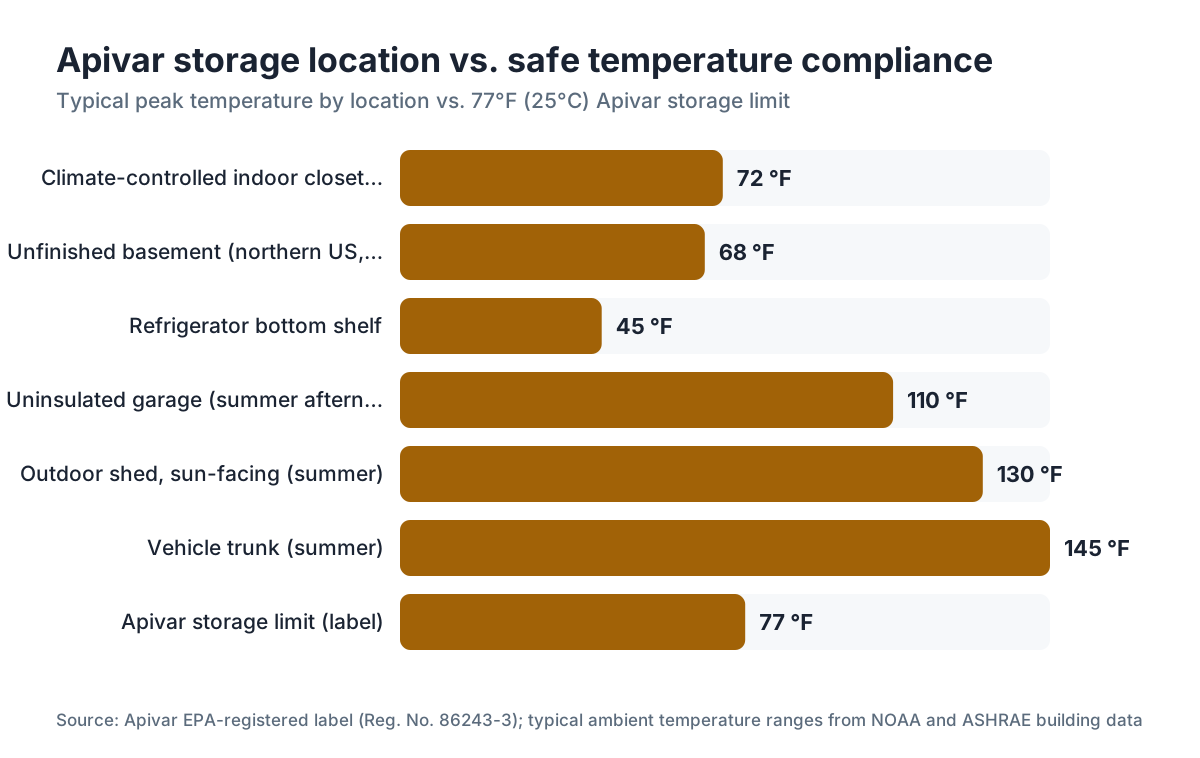
The label range is 41 to 77°F (5 to 25°C) [1]. Here's how that maps to real storage spots:
| Storage location | Typical temp range | Safe for Apivar? |
|---|---|---|
| Climate-controlled indoor closet | 60 to 72°F | Yes, ideal |
| Basement (unfinished, northern US) | 50 to 68°F | Yes |
| Refrigerator (bottom shelf) | 38 to 45°F | Yes, marginal on low end |
| Garage (uninsulated, summer) | 50 to 120°F | No, too hot in summer |
| Outdoor shed (sun-facing, summer) | 60 to 140°F | No |
| Vehicle cab or trunk (summer) | 70 to 150°F+ | No |
| Freezer | Below 32°F | Not recommended |
The danger is sustained heat, not a brief spike. A strip riding at 90°F for a couple of hours on the way to an out-yard probably survives fine. A half-used pack baking in an uninsulated shed through all of July and August almost certainly loses potency. Amitraz hydrolysis roughly doubles for every 10°C (18°F) rise above the storage range, following Arrhenius kinetics [2]. So a shed at 95°F (35°C) degrades your strips at something like 4 times the rate of a 77°F baseline.
If you run out-apiaries and haul strips in summer, use an insulated cooler bag with a gel pack. Don't press them against dry ice or a frozen gel pack. A soft-sided lunch cooler with a single 16-oz gel pack keeps the interior well inside range for several hours.
Does humidity or moisture affect stored Apivar strips?
Yes, and it's an easy thing to miss. Amitraz undergoes base-catalyzed hydrolysis in water, breaking down to 2,4-dimethylaniline and formamide derivatives that kill no mites [2]. The polymer strip is built to release amitraz slowly into the hive and onto the bees, but a wet strip or one stored in high humidity can hydrolyze at the surface before it ever reaches a hive.
The foil pouch handles this. Laminated foil has a very low moisture vapor transmission rate, so it keeps ambient humidity off the strips during storage. Open the pouch and that barrier is gone. Storing opened strips in something like a warm garage in a humid climate invites early breakdown.
So: keep opened packs in a zip-lock bag with the air pressed out, store that bag in a cool dry indoor space, and if you live somewhere like coastal Georgia or the Gulf Coast where indoor humidity regularly runs above 70%, keep even unopened packs in a dehumidified or climate-controlled room. Fresh strips feel dry and slightly waxy, not tacky or damp. If a strip feels wet or smells off compared to a fresh one, treat that as a warning.
Can you store Apivar strips after opening the package?
You can, and often you have to. Most hobbyists treat fewer than 10 colonies at a time, and Apivar comes in packs of 10 strips (one treatment for 5 colonies, at 2 strips each) or larger commercial packs. Treat 3 hives and you've got 4 strips left.
Reseal the foil pouch as tightly as you can. A binder clip across the folded-over top helps. Then drop the whole thing into a zip-lock freezer bag and store it in the coolest, driest indoor spot you have. Stored that way, leftover strips from a fall treatment should still work for a spring treatment the next year. I wouldn't stake a struggling colony on year-old opened strips, but for a maintenance spring treatment on strong colonies, it's a reasonable call.
What you should not do: leave a half-used pack in your hive tool kit, your bee vest pocket, or a warm garage. I've watched beekeepers pull strips from a truck glove box in August that had been there since spring. There's no way to eyeball amitraz potency on a strip, so at that point you're guessing. The Honey Bee Health Coalition's Varroa management guide tells you to confirm efficacy with a mite wash after any Apivar treatment [4]. That advice counts double when the strip's storage history is fuzzy.
How should you handle Apivar strips to protect yourself during storage and use?
Amitraz is a monoamine oxidase inhibitor (MAOI) and an alpha-2 adrenergic agonist. The EPA registration review documents human health concerns including central nervous system effects, especially in people taking MAO-inhibitor medications [5]. The label requires chemical-resistant gloves during handling, and that covers more than placing strips: it applies while you're storing, repackaging, and disposing of them too.
For storage: keep Apivar in a locked cabinet away from children and pets. Dogs are unusually sensitive to amitraz, and swallowing even one strip can cause serious toxicity in a medium-sized dog [5]. The original packaging lists first aid and the US Poison Control number (1-800-222-1222). Write that number somewhere obvious if you store chemicals in a bee shed.
Wear nitrile gloves when handling strips. Thin disposable nitrile at 4 mil isn't built for sustained contact, but for the quick job of moving strips in and out of storage it's adequate. Handling large numbers of strips? Step up to 8-mil chemical-resistant gloves. Wash your hands well after any contact. Keep the strips in their original packaging, not loose in a bin with other gear.
Does storing Apivar strips affect their efficacy against varroa mites?
This is the question that actually matters, and the honest answer is that badly stored strips almost certainly lose efficacy, but no published beekeeper-facing study gives a clean "X% loss after Y months at Z°F" table. The chemistry is settled (amitraz hydrolysis, as above), the label sets storage conditions for a reason, and the manufacturer's shelf-life numbers come from accelerated stability testing under controlled conditions [1][2].
The Honey Bee Health Coalition's 2022 Varroa Management Guide puts it plainly: "Always follow label directions for storage and application to achieve the best treatment results" [4]. That's not fine print. A treatment that fails from poor storage looks identical, at mite-wash time, to a treatment that failed because the mites are amitraz-resistant. Both show counts that won't drop after treatment. Blaming a storage failure on resistance is a real trap, and it can push you into rotating chemicals you didn't need to rotate, or losing colonies while you chase a problem that isn't there.
Penn State's apiculture program lines up with this: a mite wash before and after any chemical treatment is the only way to confirm efficacy, and unexplained failure should send you back through every variable, storage history included [6]. If you've had a mystery Apivar failure, ask yourself honestly where those strips lived for the 6 months before you used them.
What are the legal disposal rules for used and expired Apivar strips?
The Apivar label says used strips and empty packaging go out in line with local pesticide waste regulations [1]. In most US states, that means wrapping used strips in newspaper or sealing them in a bag and putting them in household trash. Don't compost them, don't burn them, don't leave them in the field. Some states set stricter pesticide disposal rules, and a few run periodic collection events where you can drop off expired or unused product.
For expired unopened strips, check with your state department of agriculture or local cooperative extension for the nearest pesticide collection event. The EPA maintains a contact directory for state pesticide regulatory agencies [5]. Never pour liquid pesticides down a drain, but Apivar strips are solid, and sealed trash disposal is the right route for most hobbyists. Confirm your state rules first.
Don't leave used strips in the hive past the label treatment period (6 to 8 weeks maximum) [1]. Strips left in too long add to residue buildup in wax, which can hurt honey quality and build selection pressure for resistance. Pull them on schedule and dispose of them promptly.
How does Apivar compare to other varroa treatments for storage requirements?
Storage needs vary a lot across the main varroa treatments. Apivar is one of the easier ones to store correctly, next to oxalic acid vaporization setups or Mite-Away Quick Strips (formic acid), which carry more aggressive handling and storage demands.
| Treatment | Active ingredient | Storage temp | Shelf life (sealed) | Special storage notes |
|---|---|---|---|---|
| Apivar strips | Amitraz 3.3% | 41 to 77°F (5 to 25°C) | 2 to 3 years | Away from heat, moisture, light |
| Mite-Away Quick Strips | Formic acid 68.2% | 50 to 59°F ideal; below 77°F | 18 months | Corrosive; separate storage area required |
| Oxalic acid (Api-Bioxal) | Oxalic acid 5.7% | Room temp (label: 77°F max) | 3 years | Keep dry; do not inhale dust |
| Hopguard 3 | Hop beta acids | Room temp | 18 months | Refrigerate for longer storage |
| Apistan strips | Tau-fluvalinate 10.3% | Room temp | 3 years | Less used due to widespread resistance |
Mite-Away Quick Strips ask for the most careful handling: formic acid fumes are corrosive, and the strips belong in a separate ventilated area away from living space [7]. Api-Bioxal (oxalic acid) stores easily but needs care during mixing and vaporization.
For a hobbyist short on storage space, Apivar is practical: a sealed foil pack in a cool indoor location is doable for almost anyone. For more on choosing between these options and building a full-season varroa protocol, VarroaVault's free treatment scheduling tools help you map timing against storage windows so you're not holding partial packs longer than you need to.
If you're sourcing Apivar, check reliable beekeeping supply companies to compare prices and confirm you're getting stock with a current expiration date.
Can old or degraded Apivar strips harm your bees?
There's a real difference between degraded strips (which have lost amitraz potency) and strips that have turned toxic to bees. Degraded amitraz is less likely to harm bees than fresh amitraz, because the main breakdown product, 2,4-dimethylaniline, is less acutely toxic to adult bees than the parent compound [2]. So a storage-compromised strip is more likely to underperform than to hurt your bees directly.
That said, strips cooked in extreme heat may have physical changes to the polymer matrix that alter how they release whatever amitraz is left. I'm not aware of any documented case in the published literature of heat-stored Apivar strips harming colonies, but that's a gap in the public data, not proof of safety.
At normal label doses (2 strips per brood box), Apivar has a good safety record in bees when used as directed. Some beekeepers report queen issues during treatment, and the label does note possible queen loss during treatment, though the mechanism isn't fully worked out [1]. Those effects tie to application conditions and colony stress, not storage history.
The bigger risk with degraded strips is losing the colony to varroa, not strip toxicity. A failed late-summer treatment heading into fall is one of the main drivers of winter colony death [4]. Varroa left unchecked through a treatment failure can crash a colony before you catch it. Understanding the varroa mite lifecycle shows why timing and treatment efficacy both matter so much.
Where should you buy Apivar to ensure fresh stock?
Buy from suppliers with high turnover. Large beekeeping supply companies, regional bee supply distributors, and your state beekeeping association's group purchasing programs are your best bet for strips with plenty of shelf life left. Ask the supplier about the expiration date before you order in quantity. Any reputable supplier can tell you.
Skip non-beekeeping retail channels (general farm supply stores with slow turnover, third-party resellers on auction sites) unless you can verify the expiration date and storage conditions. Product that sat in an uncontrolled warehouse for 18 months before reaching you may have less than 6 months of useful shelf life left.
Group orders through local beekeeping clubs are a practical way for hobbyists to hit bulk pricing without getting stuck with excess strips. If you keep a small operation, see if your county beekeeping association runs a cooperative order in late winter or early spring for the coming season. The pricing is better, the stock is usually fresh because the distributor turns it fast, and you avoid stockpiling.
For sourcing, comparing options across beekeeping supply companies is worth a few minutes. Some offer better pricing on larger packs when you split them with other beekeepers.
How do you know if Apivar strips have gone bad before using them?
There's no simple field test for amitraz potency. You can't smell degradation, and the strips don't change color when amitraz breaks down. That's a real limitation. The only reliable way to know your treatment worked is a mite wash (alcohol wash or oxalic acid sugar roll) before treatment and again 42 to 56 days after placing strips, looking for at least a 90% drop in mite load [4].
A few physical signs suggest a strip is compromised: it looks wet or sticky in a way fresh strips aren't, it smells strongly of ammonia or gives off a sharp chemical odor (fresh strips have a faint amitraz smell, not an acrid one), or the polymer surface looks cracked or brittle. None of these are definitive, but each is a reason for concern.
Any doubt about strips from a questionable storage history? Don't make them your primary treatment for a heavily infested colony. Reserve them, if you use them at all, for a low-infestation maintenance job where you also keep a backup plan ready. Never skip the post-treatment mite wash when there's any question about strip quality.
Frequently asked questions
Can I store Apivar strips in the refrigerator?
Yes. The bottom shelf of a refrigerator, typically 38 to 45°F, sits inside the label range of 41 to 77°F. Keep them in the sealed foil pouch, and let them warm to room temperature before opening so condensation doesn't wet the strips. A cool fridge is one of the better long-term storage options for multi-season stock.
What happens if Apivar strips freeze?
Freezing is not recommended by the manufacturer. Elanco notes that freezing can affect the polymer matrix that controls slow amitraz release. The label doesn't explicitly ban it, but if strips have frozen and thawed, their release profile may be altered even when the amitraz itself is largely intact. Treat freeze-thawed strips with extra caution and confirm efficacy with a post-treatment mite wash.
How long can opened Apivar strips be stored before they lose potency?
There's no published hard window for opened strips, but Elanco's guidance points to using an opened pack within a single treatment cycle of 6 to 8 weeks. Properly resealed opened strips kept cool and dry indoors should stay usable for the following season, though any strip from an opened pack carries more uncertainty than a freshly opened one. Always verify with a mite wash.
Do Apivar strips need to be stored separately from food or medications?
Yes. The label requires storage away from food, foodstuffs, and medications, in a locked location children can't reach. Amitraz is an MAOI, so it can interact with drugs in that class, and the strips should never sit near food prep areas or a medicine cabinet. A dedicated locked cabinet in a utility room or bee shed is the standard approach.
What is the shelf life of Apivar strips?
Apivar strips carry a manufacturer expiration date typically 2 to 3 years from production, based on accelerated stability testing under label conditions (41 to 77°F, sealed original packaging). Strips stored outside those conditions may degrade faster. Check the expiration date printed on the outer packaging before purchase and before use, and don't use expired strips.
Can you use Apivar strips that have passed the expiration date?
The EPA-registered label doesn't authorize use after the expiration date, and using an expired pesticide product can violate federal law under FIFRA. Beyond legality, the efficacy of expired strips is genuinely unknown, since degradation depends on storage history. The practical risk is a failed varroa treatment, which in late summer or fall can mean losing the colony over winter. Replace expired strips.
How should I dispose of unused or expired Apivar strips?
The Apivar label directs disposal in line with local pesticide waste regulations. For most US hobbyists, that means wrapping used or unused strips in newspaper, sealing them in a bag, and putting them in household trash. For larger quantities or expired product, check with your state department of agriculture for pesticide collection events. Don't compost or burn strips, and don't pour any liquid residue down drains.
Can I store Apivar strips in a hot shed over summer?
No. An uninsulated shed in summer easily tops 100 to 120°F, well above the 77°F upper limit. Sustained exposure at that range speeds up amitraz hydrolysis and can degrade efficacy badly before you apply the strips. Summer shed storage is one of the most common causes of mystery Apivar treatment failures. Use a climate-controlled indoor location instead.
Does moisture affect Apivar strips in storage?
Yes. Amitraz hydrolyzes in water, breaking down to compounds that kill no mites. The original foil laminate pouch guards against ambient moisture. Once opened, reseal it tightly and store the pack in a zip-lock bag in a dry location. Strips that feel wet or tacky or carry an unusual chemical odor should be considered compromised, with efficacy confirmed by a post-treatment mite wash.
How should I transport Apivar strips to an out-apiary in summer?
Use an insulated cooler bag with a gel pack to keep strips below 77°F during transport. Don't leave them in a vehicle cab or trunk in summer, where temperatures can exceed 130°F. Avoid direct contact between strips and a frozen gel pack so they don't drop below the 41°F lower bound. A standard soft-sided lunch cooler with one gel pack handles a day trip easily.
Does Apivar storage temperature affect residue levels in honey or wax?
The strip's storage temperature before use affects how much active amitraz it delivers; it doesn't directly change residue levels in wax or honey. Wax residue builds from multiple treatment cycles over years, not from storage conditions. A degraded strip that releases less amitraz also deposits less residue, though that's no reason to use poorly stored strips. Follow label rotation recommendations to manage wax residue over time.
What is the best container for storing leftover Apivar strips after opening the foil pouch?
Reseal the original foil pouch as tightly as you can, using a binder clip or folding the top over several times. Put the resealed foil pack inside a heavy-duty zip-lock freezer bag with the air pressed out. Store the bag in a cool, dry indoor location, ideally 50 to 70°F. This two-layer approach keeps humidity low around the strips and adds secondary containment if the foil pouch is compromised.
Can storage issues cause Apivar to look effective but miss mites?
A partially degraded strip likely releases less amitraz over the treatment period, lowering the concentration bees carry on their bodies. Since the main mode of action is contact transfer between adult bees, less amitraz means weaker mite kill, especially on phoretic mites emerging from capped brood. The treatment may appear to cut mite counts somewhat without hitting the 90% or greater reduction needed for colony protection. Always do a mite wash to confirm.
Sources
- EPA / Elanco, Apivar registered label (EPA Reg. No. 86243-3): Label-specified storage range of 41 to 77°F (5 to 25°C), original sealed packaging, treatment duration of 6 to 8 weeks, and disposal requirements
- Knowles CO, Casida JE, Pesticide Biochemistry and Physiology, amitraz hydrolysis and degradation chemistry: Amitraz undergoes hydrolysis in the presence of heat and moisture to breakdown products lacking acaricidal activity; degradation rate follows Arrhenius kinetics
- Elanco Animal Health, Apivar technical product information: Freezing not recommended as it may affect the polymer matrix controlling slow amitraz release
- Honey Bee Health Coalition, Varroa Management Guide (2022 edition): Always follow label directions for storage and application to achieve best treatment results; recommends pre- and post-treatment mite washes; 90% mite reduction threshold
- US EPA, Amitraz Registration Review, Human Health Assessment: Amitraz is an MAOI and alpha-2 adrenergic agonist with human health concerns including CNS effects; dogs are particularly sensitive
- Penn State Extension, Apiculture, Varroa mite monitoring and treatment: Mite wash before and after chemical treatment is the only way to confirm efficacy; unexplained failure should prompt review of all variables including storage
- National Pesticide Information Center (NPIC), Formic Acid Pesticide Fact Sheet: Mite-Away Quick Strips with formic acid require separate ventilated storage due to corrosive fumes
- University of Minnesota Extension, Bee Lab, Varroa Treatment Options: Apivar effective concentration, treatment duration, and comparative efficacy versus other registered treatments
- EPA, Pesticide Registration, Api-Bioxal (oxalic acid dihydrate) label: Api-Bioxal storage temperature of up to 77°F and 3-year shelf life under label conditions
Last updated 2026-07-09